


Joshua 10:22
Bible text: King James Version (1769 Blayney text) · Public domain
Bible text: Berean Standard Bible · Public domain
Bible text: American Standard Version (1901) · Public domain
Bible text: World English Bible, Messianic edition · Public domain
Bible text: Geneva Bible (1599) · Public domain
Bible text: Young's Literal Translation · Public domain
- וַיֹּאמֶרvai·Yo·merand he saidH559Conj-w ¦ V-Qal-ConsecImperf-3msVerb Qal Consecutive Imperfect 3rd Singular Masculineוַandיֹּאמֶרhe said
- יְהוֹשֻׁעַye·ho·Shu·a'JoshuaH3091N-proper-mNoun Proper Masculine
- פִּתְחוּpit·ChuopenH6605V-Qal-Imp-2mpVerb Qal Imperative 2nd Plural Masculine
- אֶת'et<obj.>H853DirObjMParticle Object Indicator
- פִּיpi[the] mouth ofH6310N-mscNoun Singular Masculine Construct
- הַמְּעָרָהha·me·'a·Rahthe caveH4631Art ¦ N-fsNoun Singular Feminine Absoluteהַtheמְּעָרָהcave
- וְהוֹצִיאוּve·ho·Tzi·'uand bring outH3318Conj-w ¦ V-Hiphil-Imp-2mpVerb Hiphil Imperative 2nd Plural Masculineוְandהוֹצִיאוּbring out
- אֵלַי'e·Laito meH413Prep ¦ 1csPreposition Definiteאֵלַtoיme
- אֶת'et<obj.>H853DirObjMParticle Object Indicator
- חֲמֵשֶׁתcha·Me·shet[the] fiveH2568Adj-cscAdjective Numerical Singular common gender Construct
- הַמְּלָכִיםha·me·la·Khimthe kingsH4428Art ¦ N-mpNoun Plural Masculine Absoluteהַtheמְּלָכִיםkings
- הָאֵלֶּהha·'E·leh<the> theseH428Art ¦ PrtParticle Demonstrativeהָ<the>אֵלֶּהthese
- מִןminfromH4480PrepPreposition
- הַמְּעָרָהha·me·'a·Rahthe caveH4631Art ¦ N-fsNoun Singular Feminine Absoluteהַtheמְּעָרָהcave
English is a literal word-by-word gloss of the Hebrew, not the KJV's wording. Why?
This is the original text the KJV's translators worked from — each Hebrew word with its own literal English meaning in this verse, prepared by scholars at Tyndale House, Cambridge. The KJV translates whole sentences, not word by word, so its wording differs: one Hebrew word can become several English words, and the KJV may choose “the LORD” where the gloss reads “Yahweh”. Both are faithful — they answer different questions. For the KJV's own rendering, switch to the KJV text.
Details
See on the biblical-era maps
Study this verse
Public-domain commentary
Matthew Henry
From his Commentary on the Whole Bible. Henry comments on passages, not single verses — this entry covers Joshua 10:15–27. His three-level outline is real structure in the source text, so it is rendered as structure.
It was a brave appearance, no doubt, which the five kings made when they took the field for the reducing of Gibeon, and a brave army they had following them; but they were all routed, put into disorder first, and then brought to destruction by the hail-stones. And now Joshua thought, his work being done, he might go with his army into quarters of refreshment. Accordingly it was resolved, perhaps in a council of war, that they should presently return to the camp at Gilgal (Jos 10:15), till they should receive orders from God to take possession of the country they had now conquered; but he soon finds he has more work cut out for him. The victory must be pursued, that the spoils might be divided. Accordingly he applies himself to it with renewed vigour.
I.The forces that had dispersed themselves must be followed and smitten.
When tidings were brought to Joshua where the kings were he ordered a guard to be set upon them for the present (Jos 10:18), reserving them for another day of destruction, and to be brought forth to a day of wrath, Job 21:30. He directs his men to pursue the common soldiers, as much as might be, to prevent their escaping to the garrisons, which would strengthen them, and make the reduction of them the more difficult, Jos 10:19. Like a prudent general, he does that first which is most needful, and defers his triumphs till he has completed his conquests; nor was he in such haste to insult over the captive kings but that he would first prevent the rallying again of their scattered forces. The result of this vigorous pursuit was,
1.That a very great slaughter was made of the enemies of God and Israel. And,
2.The field was cleared of them, so that none remained but such as got into fenced cities, where they would not long be safe themselves, nor were they capable of doing any service to the cities that sheltered them, unless they could have left their fears behind them.
3.None moved his tongue against any of the children of Israel, Jos 10:21. This expression intimates,
(1.)Their perfect safety and tranquillity; some think it should be read (from Exo 11:7), Against any of the children of Israel did not a dog move his tongue; no, not against any one man of them. They were not threatened by any danger at all after their victory, no, not so much as the barking of a dog. Not one single Israelite (for the original makes it so particular) was brought into any distress, either in the battle or in the pursuit.
(2.)Their honour and reputation; no man had any reproach to cast upon them, nor an ill word to give them. God not only tied the hands, but stopped the mouths, of their enraged enemies, and put lying lips to silence.
(3.)The Chaldee paraphrase makes it an expression of their unalloyed joy for this victory, reading it, There was no hurt nor loss to the children of Israel, for which any man should afflict his soul. When the army came to be reviewed after the battle, there was none slain, none wounded, none missing. Not one Israelite had occasion to lament either the loss of a friend or the loss of a limb, so cheap, so easy, so glorious, was this victory.
II.The kings that had hidden themselves must now be called to an account, as rebels against the Israel of God, to whom, by the divine promise and grant, this land did of right belong and should have been surrendered upon demand. See here,
1.How they were secured. The cave which they fled to, and trusted in for a refuge, became their prison, in which they were clapped up, till Joshua sat in judgment on them, Jos 10:18. It seems they all escaped both the hail-stones and the sword, God so ordering it, not in kindness to them, but that they might be reserved for a more solemn and terrible execution; as, for this cause, Pharaoh survived the plagues of Egypt, and was made to stand, that God might in him show his power, Exo 9:16. They all fled, and met at the same place, Providence directing them; and now those who were lately consulting against Israel were put upon new counsels to preserve themselves and agreed to take shelter in the same cave. The information brought to Joshua of this is an evidence that there were those of the country, who knew the holes and fastnesses of it, that were in his interests. And the care Joshua took to keep them there when they were there, as it is an instance of his policy and presence of mind, even in the heat of action, so, in the result of their project, it shows how those not only deceive themselves, but destroy themselves, who think to hide themselves from God. Their refuge of lies will but bind them over to God's judgment.
2.How they were triumphed over. Joshua ordered them to be brought forth out of the cave, set before him as at the bar, and their names called over, Jos 10:22, Jos 10:23. And when they either were bound and cast upon the ground unable to help themselves, or threw themselves upon the ground, humbly to beg for their lives, he called for the general officers and great men, and commanded them to trample upon these kings, and set their feet upon their necks, not in sport and to make themselves and the company merry, but with the gravity and decorum that became the ministers of the divine justice who were not herein to gratify any pride or passion of their own, but to give glory to the God of Israel as higher than the highest, who treads upon princes as mortar (Isa 41:25), and is terrible to the kings of the earth, Psa 76:12. The thing does indeed look barbarous, thus to insult over men in misery, who had suddenly fallen from the highest pitch of honour into this disgrace. It was hard for crowned heads to be thus trodden upon, not by Joshua himself (that might better have been borne), at least not by him only, but by all the captains of the army. Certainly it ought not to be drawn into a precedent, for the case was extraordinary, and we have reason to think it was by divine direction and impulse that Joshua did this.
(1.)God would hereby punish the abominable wickedness of these kings, the measure of whose iniquity was now full. And, by this public act of justice done upon these ringleaders of the Canaanites in sin, he would possess his people with the greater dread and detestation of those sins of the nations that God cast out from before them, which they would be tempted to imitate.
(2.)He would hereby have the promise by Moses made good (Deu 33:29), Thou shalt tread upon their high places, that is, their great men, which should the rather be speedily fulfilled in the letter because they are the very last words of Moses that we find upon record.
(3.)He would hereby encourage the faith and hope of his people Israel in reference to the wars that were yet before them. Therefore Joshua said (Jos 10:25): Fear not, nor be dismayed. [1.] "Fear not these kings, nor any of theirs, as if there were any danger of having this affront now put upon them in after-time revenged upon yourselves, a consideration which keeps many from being insolent towards those they have at their mercy, because they know not how soon the uncertain fate of war may turn the same wheel upon themselves; but you need not fear that any should rise up ever to revenge this quarrel." [2.] "Fear not any other kings, who may at any time be in confederacy against you, for you see these brought down, whom you thought formidable. Thus shall the Lord do to all your enemies; now that they begin to fall, to fall so low that you may set your feet on their necks, you may be confident that they shall not prevail, but shall surely fall before you," Est 6:13.
(4.)He would hereby give a type and figure of Christ's victories over the powers of darkness, and believers' victories through him. All the enemies of the Redeemer shall be made his footstool, Psa 110:1. And see Psa 18:40. The kings of the earth set themselves against him (Psa 2:2), but sooner or later we shall see all things put under Him (Heb 2:8), and principalities and powers made a show of, Col 2:15. And in these triumphs we are more than conquerors, may tread upon the lion and adder (Psa 91:13), may ride on the high places of the earth (Isa 58:14), and may be confident that the God of peace shall tread Satan under our feet, shall do it shortly and do it effectually, Rom 16:20. See Psa 149:8, Psa 149:9.
3.How they were put to death. Perhaps, when they had undergone that terrible mortification of being trodden upon by the captains of Israel, they were ready to say, as Agag, Surely the bitterness of death is past, and that sufficient unto them was this punishment which was inflicted by many; but their honours cannot excuse their lives, their forfeited devoted lives. Joshua smote them with the sword, and then hanged up their bodies till evening, when they were taken down, and thrown into the cave in which they had hidden themselves, Jos 10:26, Jos 10:27. That which they thought would have been their shelter was made their prison first and then their grave; so shall we be disappointed in that which we flee to from God: yet to good people the grave is still a hiding-place, Job 14:13. If these five kings had humbled themselves in time, and had begged peace instead of waging war, they might have saved their lives; but now the decree had gone forth, and they found no place for repentance, or the reversal of the judgment; it was too late to expect it, though perhaps they sought it carefully with tears.
Continue studying Joshua 10:22 across the web’s major study libraries — every link below opens this exact verse, chapter, or book on the destination site.
Read & Compare
 BibleGatewayThis verse in more than 200 translations and 70 languages.
 Bible.comThe YouVersion reader — hundreds of translations, reading plans, and highlights.
 ESV.orgCrossway's official English Standard Version reader.
 NET BibleThe NET translation with 60,000+ translators' notes on every rendering decision.
 STEP BibleTyndale House's free study tool — original text, vocabulary, and scholarly resources.
 BibliaLogos Bible Software's free web reader.
 USCCBThe New American Bible (Revised Edition) with the U.S. bishops' study notes.
Commentaries
 BibleHub CommentariesDozens of classic commentaries on this verse, gathered on one page.
 StudyLightMore than 100 commentary sets — the largest collection on the web.
 BibleRefPlain-English commentary on what this verse means, verse by verse.
 Enduring WordDavid Guzik's free commentary on this chapter, widely used by Bible teachers.
 Bible Study ToolsVerse commentary alongside Greek and Hebrew study aids.
Original Language & Research
- BibleHub InterlinearThe verse word by word — original language, transliteration, and English.
- BibleHub LexiconEvery word's original-language definition and Strong's entry.
 Blue Letter BibleDeep-study tools — Strong's numbers, concordance, and word studies.
 SefariaThe Hebrew text with Rashi and centuries of Jewish commentary.
Sermons, Hymns & Audio


TrulyRandomVerse is not affiliated with these sites and doesn’t control their content. They’re linked because they’re genuinely useful.
Summary
Joshua 10:22 marks the decisive culmination of Israel's miraculous victory over the Amorite coalition, as Joshua commands the retrieval of the five defeated kings from their hiding place in the cave at Makkedah. This pivotal moment transitions from the battlefield pursuit to the administration of divine judgment upon the captured rulers, powerfully underscoring God's active hand in delivering Israel's enemies and solidifying the conquest of Canaan.
Context
ShowHideLiterary Context
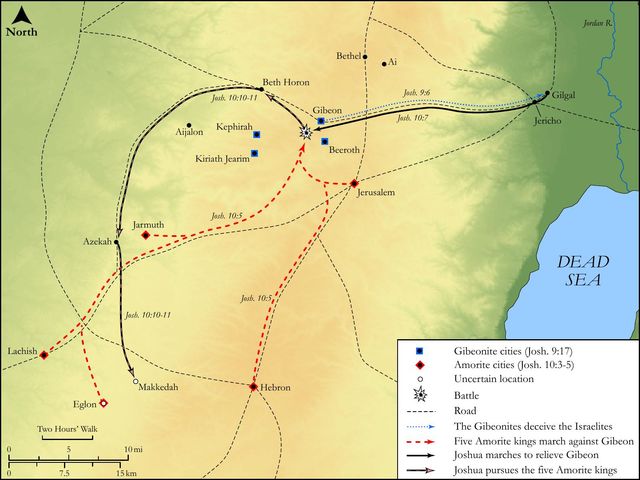
Joshua 10:22 is strategically placed within the dramatic narrative of Israel's southern campaign, immediately following the extraordinary victory at Gibeon. This battle saw a coalition of five Amorite kings (from Jerusalem, Hebron, Jarmuth, Lachish, and Eglon) launch an attack against Gibeon, which had recently made a covenant with Israel. God intervened supernaturally, sending large hailstones to decimate the enemy forces and miraculously extending daylight by causing the sun and moon to stand still at Joshua's command, allowing Israel to complete their rout. The five kings, in a desperate attempt to evade capture, fled and sought refuge in a cave at Makkedah. Recognizing their hiding place, Joshua had previously ordered the cave sealed with large stones while the pursuit of the remaining Amorite forces continued (Joshua 10:18). This verse, therefore, signals the completion of the general military engagement and the focused attention on the captured enemy leaders, setting the stage for their public humiliation and execution, which is meticulously detailed in the subsequent verses (Joshua 10:24-27).
Historical & Cultural Context
The events of Joshua 10 unfold in Canaan in the days of Joshua, a land characterized by a network of independent city-states, each ruled by its own king, often forming alliances for mutual defense or offense. The Amorites were a prominent Semitic people group, frequently mentioned in Scripture as inhabitants of Canaan, known for their fortified cities and military capabilities. Caves, abundant in the limestone topography of the Levant, served as natural shelters, storage sites, and common hiding places during conflict, as illustrated in other biblical narratives (e.g., 1 Samuel 22:1). The treatment of defeated kings among the nations of that day typically involved public humiliation, execution, and the display of their bodies. This practice, while appearing brutal by modern sensibilities, was a potent military and political statement of absolute subjugation, a deterrent to future resistance, and a clear demonstration of the transfer of power, aligning with the divine mandate for Israel to dispossess the inhabitants of Canaan.
Key Themes
ShowHideJoshua 10:22 powerfully contributes to several overarching themes central to the Book of Joshua and the broader biblical narrative. Foremost is the theme of Divine Sovereignty and Judgment, illustrating God's active and direct intervention in fighting for Israel and delivering their enemies into their hands. The kings' futile attempt to hide underscores the inescapable nature of divine justice; no refuge can shield one from God's determined judgment. It also highlights the Fulfillment of God's Promises, as the capture and impending judgment of these powerful Amorite kings signify the progressive realization of God's covenant pledge to Abraham to grant Israel the land of Canaan and subdue its inhabitants before them (Genesis 15:18-21). Furthermore, the verse emphasizes Joshua's Obedient and Decisive Leadership, as he acts with unwavering authority and precision, carrying out God's will to the letter. His command demonstrates firm control and a commitment to completing the divinely appointed task, leaving no significant enemy threat unaddressed. Finally, the fate of these kings serves as a stark reminder of the Consequences of Resistance against the sovereign will of God and His chosen people, illustrating the inevitable downfall of those who oppose divine purposes.
Exposition and Analysis
ShowHideKey Word Analysis
ShowHideThis verb is a Piel imperative plural, conveying a direct, authoritative, and immediate command from Joshua to his men. The Piel stem often denotes an intensive or causative action, emphasizing the decisive and forceful nature of the order. It signifies that the action of unsealing the cave is to be carried out without delay or question, reflecting the urgency of dealing with the captured enemy leaders and the finality of their judgment.
While literally meaning "mouth," this term is a common idiom in Hebrew (and other Semitic languages) for an opening or entrance of various objects, including a well, a sword's edge, or, as here, a cave. Its use vividly personifies the cave, portraying its entrance as a gaping aperture. The command to "open its mouth" is a forceful and visual image of exposing what was hidden, bringing it into the light for judgment.
This noun refers to a natural cavern or grotto, common geological features in the rocky terrain of Canaan. In the context of ancient warfare and daily life, caves frequently served as places of refuge, storage, or burial. Here, it initially serves as a desperate hiding place for the kings. However, under God's sovereign hand and Joshua's command, it transforms from a perceived sanctuary into an inescapable trap and the site of inevitable judgment, symbolizing the futility of human attempts to hide from divine justice.
Verse Breakdown
ShowHide"Then said Joshua"
This introductory phrase establishes Joshua's authority as the divinely appointed leader of Israel. It signifies a crucial shift in focus from the broader military pursuit of the enemy forces to the specific, decisive task of dealing with the captured kings, highlighting his strategic command and unwavering leadership in the aftermath of the battle.
"Open the mouth of the cave"
This is Joshua's direct, imperative command to his soldiers. The idiomatic phrase "mouth of the cave" refers to its entrance, emphasizing the physical act of removing the large stones that had been used to seal it. This command is not merely practical; it carries profound symbolic weight, representing the exposure of hidden evil and the inevitability of divine judgment, as the kings' attempt to conceal themselves is now undone by divine decree through human agency.
"and bring out those five kings unto me out of the cave"
This clause specifies the precise objective of the command: to retrieve the five Amorite kings. It highlights their complete capture and subjugation, demonstrating that their flight and concealment were ultimately futile. The phrase "unto me" underscores Joshua's central role in administering justice and executing God's will; he is the one who will oversee their public humiliation and subsequent execution, thereby solidifying Israel's victory and God's faithfulness to His covenant promises.
Literary Devices
ShowHideJoshua 10:22 employs several literary devices that amplify its narrative impact and theological depth. Most notably, Irony pervades the scene, as the cave, intended by the kings as a sanctuary and hiding place, becomes their inescapable prison and the very location from which they are forcibly brought forth for judgment. This dramatic reversal of expectation powerfully underscores the futility of resisting God's sovereign will. A form of Personification or Metonymy is evident in the phrase "mouth of the cave," which attributes a human anatomical feature to an inanimate object. This vivid imagery makes the cave's entrance more immediate and palpable, emphasizing the act of opening it to expose what lies hidden within. The entire verse is structured as a Command or Imperative, reflecting the direct, authoritative, and non-negotiable nature of Joshua's leadership. The straightforwardness of his speech ("Then said Joshua, Open... and bring...") conveys a sense of urgency, decisiveness, and absolute control, reinforcing the theme of divine judgment being carried out without delay. Furthermore, this action serves as potent Foreshadowing, setting the stage for the public humiliation and execution of the kings in the subsequent verses, symbolizing the complete subjugation of Israel's enemies and the triumph of God's covenant promises.
Theological and Thematic Connections
ShowHideJoshua 10:22 serves as a profound theological statement on divine justice and the inevitability of judgment for those who oppose God and His people. The kings' futile attempt to hide in the cave illustrates that there is no refuge from the sovereign hand of God when His judgment is due. This event underscores God's active involvement in human history, fulfilling His promises to Israel by dispossessing the wicked inhabitants of Canaan. It demonstrates that God is not merely a passive observer but a righteous judge who executes justice against those who defy His will. The exposure and capture of these kings symbolize the ultimate triumph of light over darkness, truth over deception, and God's kingdom over all earthly powers that stand against it.
Reflection and Application
ShowHideJoshua 10:22 offers timeless lessons for believers today, providing a powerful spiritual analogy. The "cave" can represent any area in our lives where we might attempt to hide sin, unaddressed issues, or spiritual enemies from God's penetrating scrutiny. Just as the Amorite kings were forcibly brought out to face judgment, so too will all hidden things eventually be exposed before the purifying light of God's truth. This verse encourages us to confront our spiritual battles decisively, refusing to allow sin or temptation to remain concealed or unaddressed in the shadows of our hearts. It serves as a potent reminder that no enemy, no matter how formidable or seemingly entrenched, can ultimately escape God's justice or thwart His divine purposes. For believers, this narrative instills profound confidence in God's faithfulness and His unwavering power to deliver us from our spiritual adversaries. It calls us to walk in courageous obedience, trusting that the Lord actively fights our battles and will ultimately grant us victory over all that opposes His kingdom. The decisive action of Joshua inspires us to be equally decisive in our pursuit of holiness and in casting down spiritual strongholds in our lives, knowing that our ultimate victory is secured in Christ.
Questions for Reflection
ShowHideFAQ
ShowHideWhy were the kings hidden in a cave?
ShowHideCaves were common natural formations in the rocky terrain of Canaan and frequently used as temporary shelters or hiding places during times of conflict. The five Amorite kings fled to the cave at Makkedah as a desperate attempt to escape capture and the wrath of the pursuing Israelite army after their decisive defeat. However, what they hoped would be a sanctuary ultimately became their trap and the site of their inevitable exposure and judgment, demonstrating the futility of human efforts to evade divine decree.
What happened to the kings after they were brought out of the cave?
ShowHideAfter being brought out, Joshua commanded his commanders to place their feet on the necks of the kings, symbolizing complete subjugation and victory (Joshua 10:24). Following this act of public humiliation, Joshua executed the kings and hung their bodies on five trees, leaving them exposed until evening as a public display of God's judgment and Israel's triumph. Their bodies were then taken down at sunset and thrown back into the same cave where they had initially sought refuge (Joshua 10:26-27).
What is the significance of "opening the mouth of the cave"?
ShowHideThe phrase "mouth of the cave" is an idiomatic expression for the entrance or opening of the cave. Its significance lies in the profound symbolic act of exposing what was hidden and bringing it into the light for judgment. It underscores the futility of attempting to escape God's reach or hide from His justice. No matter how deep or concealed a place might be, God's sovereign will ensures that all opposition will eventually be uncovered and dealt with. It represents the inevitable triumph of divine power over human resistance and the certainty of divine accountability.
Christ-Centered Fulfillment
ShowHideJoshua's command to "Open the mouth of the cave, and bring out those five kings" serves as a powerful Old Testament foreshadowing of Christ's ultimate victory over all the powers of darkness. Just as Joshua, whose very name is the Hebrew equivalent of "Jesus," decisively exposed and conquered the enemies of Israel, so too does Christ, the true Joshua, expose and conquer the ultimate enemies of humanity: sin, death, and the spiritual forces of evil. The kings' futile attempt to hide in the cave, only to be dragged out for judgment, powerfully parallels the futility of any power attempting to hide from the sovereign gaze and absolute authority of the Son of God. Christ's resurrection from the tomb, the ultimate "opening of the cave," signifies His triumph over death and the grave, demonstrating His absolute authority over all that seeks to imprison humanity (Matthew 28:2). He is the one who has "disarmed the powers and authorities" and "made a public spectacle of them, triumphing over them by the cross" (Colossians 2:15). Ultimately, all "kings" and authorities that oppose God's reign will be brought forth and subjected to His righteous judgment, for He "must reign until he has put all his enemies under his feet" (1 Corinthians 15:25). Thus, Joshua 10:22 points to the glorious reality that in Christ, every hidden stronghold of evil will be exposed, every enemy defeated, and His eternal kingdom will reign supreme.