


Job 13:23
Bible text: King James Version (1769 Blayney text) · Public domain
Bible text: King James Version with Strong's numbers · Public domain
Bible text: Berean Standard Bible · Public domain
Bible text: American Standard Version (1901) · Public domain
Bible text: World English Bible, Messianic edition · Public domain
Bible text: Geneva Bible (1599) · Public domain
Bible text: Young's Literal Translation · Public domain
- כַּמָּהka·Mahhow many?H4100Prep-k ¦ InterrogPronoun Interrogativeכַּhowמָּהmany?
- לִיliof mePrep-l ¦ 1csSuffix Personal 1st Singular common genderלִofיme
- עֲוֹנוֹתa·vo·Not[are] iniquitiesH5771N-fpNoun Plural Feminine Absolute
- וְחַטָּאוֹתve·cha·ta·'otand sinsH2403Conj-w ¦ N-fpNoun Plural Feminine Absoluteוְandחַטָּאוֹתsins
- פִּשְׁעִיpish·'Imy transgressionH6588N-msc ¦ 1csNoun Singular Masculine Constructפִּשְׁעִtransgressionיmy
- וְחַטָּאתִיve·cha·ta·Tiand my sinH2403Conj-w ¦ N-fsc ¦ 1csNoun Singular Feminine Constructוְandחַטָּאתִsinיmy
- הֹדִיעֵנִיho·di·'E·nimake known to meH3045V-Hiphil-Imp-2ms ¦ 1csVerb Hiphil Imperative 2nd Singular Masculineהֹדִיעֵmake known toנִיme
English is a literal word-by-word gloss of the Hebrew, not the KJV's wording. Why?
This is the original text the KJV's translators worked from — each Hebrew word with its own literal English meaning in this verse, prepared by scholars at Tyndale House, Cambridge. The KJV translates whole sentences, not word by word, so its wording differs: one Hebrew word can become several English words, and the KJV may choose “the LORD” where the gloss reads “Yahweh”. Both are faithful — they answer different questions. For the KJV's own rendering, switch to the KJV text.
Details
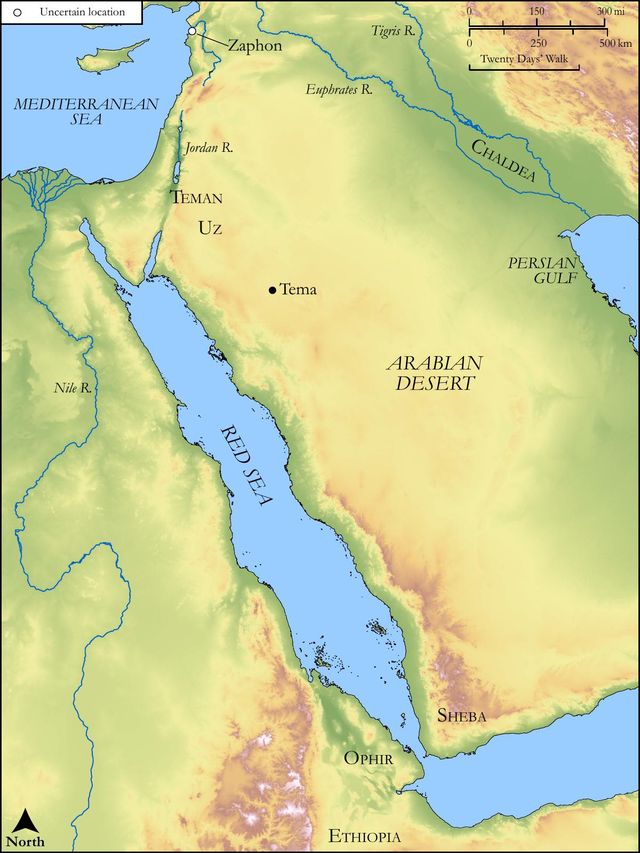
See on the biblical-era map
Study this verse
Public-domain commentary
Matthew Henry
From his Commentary on the Whole Bible. Henry comments on passages, not single verses — this entry covers Job 13:23–28. His three-level outline is real structure in the source text, so it is rendered as structure.
Here, I. Job enquires after his sins, and begs to have them discovered to him. He looks up to God, and asks him what was the number of them (How many are my iniquities?) and what were the particulars of them: Make me to know my transgressions, Job 13:23. His friends were ready enough to tell him how numerous and how heinous they were, Job 22:5. "But, Lord," says he, "let me know them from thee; for thy judgment is according to truth, theirs is not." This may be taken either, 1. As a passionate complaint of hard usage, that he was punished for his faults and yet was not told what his faults were. Or, 2. As a prudent appeal to God from the censures of his friends. He desired that all his sins might be brought to light, as knowing they would then appear not so many, nor so mighty, as his friends suspected him to be guilty of. Or, 3. As a pious request, to the same purport with that which Elihu directed him to, Job 34:32. That which I see not, teach thou me. Note, A true penitent is willing to know the worst of himself; and we should all desire to know what our transgressions are, that we may be particular in the confession of them and on our guard against them for the future.
II.He bitterly complains of God's withdrawings from him (Job 13:24):
Wherefore hidest thou thy face? This must be meant of something more than his outward afflictions; for the loss of estate, children, health, might well consist with God's love; when that was all, he blessed the name of the Lord; but his soul was also sorely vexed, and that is it which he here laments.
1.That the favours of the Almighty were suspended. God hid his face as one strange to him, displeased with him, shy and regardless of him.
2.That the terrors of the Almighty were inflicted and impressed upon him. God held him for his enemy, shot his arrows at him (Job 6:4), and set him as a mark, Job 7:20. Note, The Holy Ghost sometimes denies his favours and discovers his terrors to the best and dearest of his saints and servants in this world. This case occurs, not only in the production, but sometimes in the progress of the divine life. Evidences for heaven are eclipsed, sensible communications interrupted, dread of divine wrath impressed, and the returns of comfort, for the present, despaired of, Psa 77:7-9; Psa 88:7, Psa 88:15, Psa 88:16. These are grievous burdens to a gracious soul, that values God's loving-kindness as better than life, Pro 18:14. A wounded spirit who can bear? Job, by asking here, Why hidest thou thy face? teaches us that, when at any time we are under the sense of God's withdrawings, we are concerned to enquire into the reason of them - what is the sin for which he corrects us and what the good he designs us. Job's sufferings were typical of the sufferings of Christ, from whom not only men hid their faces (Isa 53:3), but God hid his, witness the darkness which surrounded him on the cross when he cried out, My God, my God, why hast thou forsaken me? If this were done to these green trees, what shall be done to the dry? They will for ever be forsaken.
III.He humbly pleads with God his own utter inability to stand before him (Job 13:25):
"Wilt thou break a leaf, pursue the dry stubble? Lord, is it for thy honour to trample upon one that is down already, or to crush one that neither has nor pretends to any power to resist thee?" Note, We ought to have such an apprehension of the goodness and compassion of God as to believe that he will not break the bruised reed, Mat 12:20.
IV.He sadly complains of God's severe dealings with him.
He owns it was for his sins that God thus contended with him, but thinks it hard,
1.That his former sins, long since committed, should now be remembered against him, and he should he reckoned with for the old scores (Job 13:26): Thou writest bitter things against me. Afflictions are bitter things. Writing them denotes deliberation and determination, written as a warrant for execution; it denotes also the continuance of his affliction, for that which is written remains, and, "Herein thou makest me to possess the iniquities of my youth," that is, "thou punishest me for them, and thereby puttest me in mind of them, and obligest me to renew my repentance for them." Note,
(1.)God sometimes writes very bitter things against the best and dearest of his saints and servants, both in outward afflictions and inward disquiet; trouble in body and trouble in mind, that he may humble them, and prove them, and do them good in their latter end.
(2.)That the sins of youth are often the smart of age both in respect of sorrow within (Jer 31:18, Jer 31:19) and suffering without, Job 20:11. Time does not wear out the guilt of sin.
(3.)That when God writes bitter things against us his design therein is to make us possess our iniquities, to bring forgotten sins to mind, and so to bring us to remorse for them as to break us off from them. This is all the fruit, to take away our sin.
2.That his present mistakes and miscarriages should be so strictly taken notice of, and so severely animadverted upon (Job 13:27): "Thou puttest my feet also in the stocks, not only to afflict me and expose me to shame, not only to keep me from escaping the strokes of thy wrath, but that thou mayest critically remark all my motions and look narrowly to all my paths, to correct me for every false step, nay, for but a look awry or a word misapplied; nay, thou settest a print upon the heels of my feet, scorest down every thing I do amiss, to reckon for it; or no sooner have I trodden wrong, though ever so little, than immediately I smart for it; the punishment treads upon the very heels of the sin. Guilt, both of the oldest and of the freshest date, is put together to make up the cause of my calamity." Now,
(1.)It was not true that God did thus seek advantages against him. He is not thus extreme to mark what we do amiss; if he were, there were no abiding for us, Psa 130:3. But he is so far from this that he deals not with us according to the desert, no, not of our manifest sins, which are not found by secret search, Jer 2:34. This therefore was the language of Job's melancholy; his sober thoughts never represented God thus as a hard Master.
(2.)But we should keep such a strict and jealous eye as this upon ourselves and our own steps, both for the discovery of sin past and the prevention of it for the future. It is good for us all to ponder the path of our feet.
V.He finds himself wasting away apace under the heavy hand of God, Job 13:28.
He (that is, man) as a rotten thing, the principle of whose putrefaction is in itself, consumes, even like a moth-eaten garment, which becomes continually worse and worse. Or, He (that is, God) like rottenness, and like a moth, consumes me. Compare this with Hos 5:12, I will be unto Ephraim as a moth, and to the house of Judah as rottenness; and see Psa 39:11. Note, Man, at the best, wears fast; but, under God's rebukes especially, he is soon gone. While there is so little soundness in the soul, no marvel there is so little soundness in the flesh, Psa 38:3.
Historical interpretation
Historical reception
1 surviving comment on this verse from the historical church.
57. Though the ‘calling’ and ‘answering’ may likewise be understood in another way. For God’s ‘calling’ us is His having respect to us in loving and choosing us, and our ‘answering’ is the yielding obedience to His love by good works. Where it is fitly added, Or let me speak, and answer Thou me. For we ‘speak,’ when we beg for God’s face in desire, and God answers our speaking, when He appears to us that love Him. But because whoever pants with longing for the eternal world, examines his doings, taking himself to task with great exactness, and searches lest there be aught in him, whereby he might offend the face of his Creator, he rightly adds, How many are mine iniquities and my sins? Make me to know my crimes and offences. This is the task of the righteous in this life, to find out themselves, and on finding out to bring themselves to a better state by weeping and self-chastening. And though John the Apostle tells us that there is no odds between iniquity and sin, when he says, iniquity is sin [1 John 3, 4]; yet in the simple usage of speech, ‘iniquity’ sounds something more than ‘sin,’ and every one confesses himself a ‘sinner,’ but he is sometimes ashamed to call himself an iniquitous person. Now between ‘crimes’ and ‘offences’ there is this difference, that ‘crime’ over and above exceeds the weight and measure of sin, but an ‘offence’ does not exceed the weight of sin; for thus, when a sacrifice is commanded to be offered under the Law, it is doubtless enjoined, as for a ‘sin,’ the same for an ‘offence’ too. And crime is never done but in deed, whereas offence is most commonly committed in thought alone. Hence it is said by the Psalmist, Who call, understand his offences? [Ps. 19, 12] seeing that sins of practice are known the quicker, in proportion as they appear externally, but sins of thought are the more difficult to apprehend, that they are committed out of sight. Hence anyone, who being made solicitous by the love of Eternity, has it at heart to appear clean before the Judge that shall come, examines himself so much the more exactly now, in proportion as he bethinks himself how he may then present himself free to His terribleness; and he beseeches to have it shown him, wherein he offends, that he may punish that thing in himself by penance, and by judging himself here, may be rendered unobnoxious to judgment.
58. But herein it is needful to observe, how great is the punishment of our pilgrimage which has fallen upon us, who have been brought to such a degree of blindness, that we do not know our own selves. We do evil, and yet do not quickly find it out, even when done. For the mind, being banished from the light of truth, finds in itself nothing else than darkness, and very often puts out the foot into the pit of sin, and knows it not. Which it is subject to from the blindness of the state of exile alone, seeing that, being driven away from the illumining of the Lord, it even lost the power to see itself, in that it loved not the face of its Maker.
Continue studying Job 13:23 across the web’s major study libraries — every link below opens this exact verse, chapter, or book on the destination site.
Read & Compare
 BibleGatewayThis verse in more than 200 translations and 70 languages.
 Bible.comThe YouVersion reader — hundreds of translations, reading plans, and highlights.
 ESV.orgCrossway's official English Standard Version reader.
 NET BibleThe NET translation with 60,000+ translators' notes on every rendering decision.
 STEP BibleTyndale House's free study tool — original text, vocabulary, and scholarly resources.
 BibliaLogos Bible Software's free web reader.
 USCCBThe New American Bible (Revised Edition) with the U.S. bishops' study notes.
Commentaries
 BibleHub CommentariesDozens of classic commentaries on this verse, gathered on one page.
 StudyLightMore than 100 commentary sets — the largest collection on the web.
 BibleRefPlain-English commentary on what this verse means, verse by verse.
 Enduring WordDavid Guzik's free commentary on this chapter, widely used by Bible teachers.
 Bible Study ToolsVerse commentary alongside Greek and Hebrew study aids.
Original Language & Research
- BibleHub InterlinearThe verse word by word — original language, transliteration, and English.
- BibleHub LexiconEvery word's original-language definition and Strong's entry.
 Blue Letter BibleDeep-study tools — Strong's numbers, concordance, and word studies.
 SefariaThe Hebrew text with Rashi and centuries of Jewish commentary.
Sermons, Hymns & Audio


TrulyRandomVerse is not affiliated with these sites and doesn’t control their content. They’re linked because they’re genuinely useful.
Summary
Job 13:23 encapsulates the profound anguish and intellectual honesty of the suffering patriarch, Job, as he directly challenges God to reveal the specific transgressions or sins that have supposedly led to his immense and inexplicable suffering. Amidst the relentless accusations of his friends and his own deep physical and emotional pain, Job desperately longs for clarity, understanding, and ultimately, vindication, as he perceives himself to be unjustly punished and seeks a direct, judicial accounting from his divine accuser.
Context
ShowHideLiterary Context
This verse is strategically placed within Job's third major speech (chapters 12-14), which serves as his rebuttal to the arguments of his three friends—Eliphaz, Bildad, and Zophar. These friends consistently advocate for a rigid retribution theology, asserting that Job's catastrophic suffering must be a direct consequence of his hidden sins. Job, however, vehemently maintains his integrity and denies any specific, egregious sin that would warrant such extreme divine judgment. Having previously expressed a fervent desire to present his case directly to God, rather than merely debating with his human accusers (Job 13:3), this verse marks a pivotal moment. Job moves beyond lament and philosophical debate to an impassioned, direct demand for a divine accounting. He yearns for a legal-style confrontation, desiring God to lay out the charges clearly so he can understand and respond, rather than enduring what he perceives as arbitrary and unjust punishment. This plea underscores his deep conviction of innocence regarding the cause of his suffering.
Historical & Cultural Context
The Book of Job is set in the land of Uz among the men of the east, where the prevailing worldview often linked prosperity to righteousness and calamity directly to personal wrongdoing. The concept of divine justice was largely understood through a clear cause-and-effect framework of retribution: the righteous flourished, and the wicked suffered. Job's friends are prime examples of this theological framework in action. Job's demand for God to "make me to know my transgression and my sin" reflects a deep-seated desire for a judicial process, akin to a courtroom setting where charges are formally presented, and the accused has the opportunity to defend himself. This cultural expectation of a clear relationship between sin and suffering makes Job's experience particularly perplexing, and his plea for disclosure all the more poignant. His audacious challenge to God, seeking an explanation for divine actions, highlights his profound distress and his unwavering conviction of his own integrity, even in the face of overwhelming evidence to the contrary.
Key Themes
ShowHideJob 13:23 powerfully contributes to several overarching themes within the Book of Job and the broader biblical narrative. Firstly, it underscores Job's Plea for Disclosure, where he is not necessarily denying the universal reality of human sinfulness (as acknowledged in Romans 3:23), but rather denying any specific, egregious transgression that would justify his current, extreme affliction. He desires a precise enumeration of his offenses, not a vague accusation. Secondly, the verse highlights the profound Mystery of Suffering, particularly the suffering of the righteous. Job's demand for an explanation encapsulates the enduring human struggle to reconcile intense, unmerited suffering with the justice, goodness, and omnipotence of God. It challenges simplistic theological answers that attempt to reduce all suffering to a direct consequence of personal sin. Lastly, it reveals Job's deep Desire for Vindication. He seeks not merely knowledge of his sin, but also public and divine vindication before God and his friends. He longs for his integrity to be recognized, even if it means God revealing some previously unknown fault that could explain his plight. This desire for a clear accounting is a recurring motif in his speeches, as seen in his longing for a face-to-face encounter with God in Job 23:3-5.
Exposition and Analysis
ShowHideKey Word Analysis
ShowHideThis term (H5771) denotes perversity, moral evil, or a twistedness of character or action that deviates from God's righteous standard. It often implies a deliberate distortion or a bent away from what is right. It can refer to the moral culpability itself, the act of wrongdoing, or even the punishment resulting from that wrongdoing. Job uses it to encompass the deep-seated moral failures that might incur divine wrath.
This common Hebrew word (H2403) fundamentally means "to miss the mark," to fall short of a standard, or to err. It encompasses a broad range of wrongdoing, including both intentional and unintentional failures to meet divine expectations or deviations from God's law. It can also refer to the penalty for sin, the occasion of sin, or even a sin offering. Job employs this term broadly to cover any form of moral failing, whether by commission or omission.
This term (H6588) carries a stronger connotation than "sin," implying a deliberate revolt, rebellion, or a conscious breach of a covenant or relationship. It suggests an act of defiance, a willful turning away from God or His commands, often with an element of breaking faith or trust. By using these three distinct terms—iniquities (moral perversity), sins (missing the mark), and transgression (rebellion)—Job comprehensively challenges God to pinpoint the exact nature and extent of his alleged offenses, leaving no category of wrongdoing unaddressed.
Verse Breakdown
ShowHide"How many [are] mine iniquities and sins?"
This is a profound rhetorical question, not an admission of guilt, but an expression of Job's utter bewilderment and frustration. He is not asking for a numerical count of his sins, but rather challenging God to reveal the magnitude and specific nature of any wrongdoing that could possibly warrant his catastrophic suffering. Job is essentially saying, "If my suffering is indeed a direct consequence of my sins, then show me the scale and details of them, because I cannot identify anything in my life that warrants this extreme divine judgment." It underscores his perceived innocence regarding the cause of his suffering and his conviction that the punishment is disproportionate.
"make me to know my transgression and my sin."
This is a direct, imperative plea to God, shifting from a rhetorical question to an urgent demand for clarity and specificity. Job wants God to lay out the charges against him explicitly, as in a formal legal proceeding. This request reflects his desperate desire for an explanation, an opportunity to understand the divine rationale behind his suffering, and implicitly, an opportunity to defend himself or acknowledge a specific fault if it were clearly revealed. It is a plea for transparency in the divine court.
Literary Devices
ShowHideJob 13:23 masterfully employs several literary devices to convey Job's intense emotional and spiritual state. The verse opens with a powerful Rhetorical Question ("How many [are] mine iniquities and sins?"), which is not meant to elicit a numerical answer but to express Job's profound sense of injustice and his challenge to God's perceived arbitrary punishment. This question underscores his conviction that his suffering is disproportionate to any sin he has committed. The verse also utilizes Synonymous Parallelism in its structure, repeating similar concepts with slightly varied terminology ("iniquities and sins" followed by "transgression and sin"). This repetition emphasizes the comprehensive nature of Job's challenge, covering all possible categories of wrongdoing and highlighting Job's thoroughness in seeking an explanation. Finally, the verse functions as a powerful Plea or Supplication, a direct and audacious request from a suffering human to the Almighty, demonstrating Job's raw honesty and his refusal to simply accept his fate without understanding or explanation.
Theological and Thematic Connections
ShowHideJob 13:23 grapples with the profound theological tension between human suffering and divine justice, a tension that permeates the entire book. While the Bible consistently teaches that all humanity is fallen and prone to sin (Romans 3:23), Job's specific demand for an accounting challenges the simplistic notion that all suffering is a direct, punitive consequence of individual sin. This verse forces us to confront the mystery of God's ways, acknowledging that His purposes often extend beyond our immediate comprehension or our neat theological frameworks. It highlights the enduring human desire for meaning and explanation in the face of adversity, and the courageous faith that dares to bring its deepest questions and complaints directly before God, trusting in His ultimate righteousness even when His actions seem inscrutable. This honest wrestling with God is a hallmark of authentic faith throughout Scripture, demonstrating a profound trust in God's character even when His methods are perplexing.
Reflection and Application
ShowHideJob's desperate cry in Job 13:23 resonates deeply with anyone who has faced inexplicable suffering, felt unjustly accused, or wrestled with the perceived silence of God in times of pain. While we may not, like Job, demand a direct accounting from God in the same confrontational manner, this verse invites us into a space of profound honesty before our Creator. It encourages us to engage in sincere self-examination, asking if there are unconfessed sins that need to be addressed and brought before God for forgiveness and cleansing (1 John 1:9). However, it also serves as a crucial reminder that not all suffering is a direct punitive consequence of specific sin, challenging us to trust in God's sovereign wisdom and goodness even when His plans and purposes remain shrouded in mystery. Job's boldness in bringing his raw questions and complaints directly to God models a vital aspect of authentic faith: a willingness to wrestle with difficult truths and to approach God with our whole selves—including our doubts, pain, and confusion—knowing that He is big enough to handle our questions and faithful enough to sustain us through them. This verse encourages a faith that is both humble in self-assessment and audacious in its pursuit of God's truth.
Questions for Reflection
ShowHideFAQ
ShowHideWhy does Job ask God to reveal his sins if he claims to be innocent?
ShowHideJob's request is not an admission of guilt, but rather a desperate demand for clarity and a profound challenge to God's perceived justice. Throughout the book, Job vehemently maintains his integrity and denies having committed any sin egregious enough to warrant his catastrophic suffering. His friends, however, rigidly adhere to a retribution theology, insisting that his suffering must be due to hidden sin. Job's question, "How many are mine iniquities and sins?" is rhetorical, expressing his utter bewilderment and challenging God to present the evidence. He's essentially saying, "If I am guilty, then show me the specific charges, because I am unaware of them, and this suffering seems utterly disproportionate to anything I have done." He longs for a legal-style confrontation, as he expresses elsewhere, desiring to "argue my case before Him" (Job 13:3). He seeks not only understanding but also vindication, hoping that if God were to reveal his sins, he could then respond or clear his name, thereby proving his integrity against the accusations of his friends and the perceived injustice of his situation.
Christ-Centered Fulfillment
ShowHideJob's desperate plea for God to "make me to know my transgression and my sin" finds its ultimate and profound fulfillment in the person and redemptive work of Jesus Christ. Job, an innocent sufferer, yearned for a mediator, a "daysman" (Job 9:33) who could stand between him and God, to arbitrate his case. This longing is perfectly met in Christ, who is "God with us" (Matthew 1:23) and our ultimate High Priest and Advocate (Hebrews 4:14-16; 1 John 2:1). Unlike Job, who was righteous but still a sinner by nature, Jesus was truly innocent, "who knew no sin" (2 Corinthians 5:21). Yet, in an astonishing act of divine love and justice, He bore the full weight of humanity's "iniquities and sins," taking upon Himself the very transgression that Job sought to have revealed and accounted for. On the cross, Jesus became the answer to Job's question, absorbing the divine judgment for all sin, so that we might be declared righteous before God (Romans 5:19). The mystery of suffering, so central to Job's experience, is ultimately illuminated at the cross, where God Himself suffered for us, demonstrating His profound love and unwavering justice simultaneously. Through Christ, we are not left to demand an accounting for our sins, but rather invited to receive forgiveness and reconciliation, knowing that our ultimate Advocate has already paid the price for our every "transgression and sin" (Romans 5:8). He is the one who truly knows our iniquities and sins, not to condemn us, but to cleanse us and present us blameless before the Father (Colossians 1:22).