


Job 12:13
Bible text: King James Version (1769 Blayney text) · Public domain
Bible text: King James Version with Strong's numbers · Public domain
Bible text: Berean Standard Bible · Public domain
Bible text: American Standard Version (1901) · Public domain
Bible text: World English Bible, Messianic edition · Public domain
Bible text: Geneva Bible (1599) · Public domain
Bible text: Young's Literal Translation · Public domain
- עִמּוֹi·mo[are] with himH5973Prep ¦ 3msPrepositionעִמּ[are] withוֹhim
- חָכְמָהchokh·mahwisdomH2451N-fsNoun Singular Feminine Absolute
- וּגְבוּרָהu·ge·vu·Rahand mightH1369Conj-w ¦ N-fsNoun Singular Feminine Absoluteוּandגְבוּרָהmight
- לוֹlo[belong] to himPrep-l ¦ 3msSuffix Personal 3rd Singular Masculineל[belong] toוֹhim
- עֵצָה'e·TzahcounselH6098N-fsNoun Singular Feminine Absolute
- וּתְבוּנָהu·te·vu·Nahand understandingH8394Conj-w ¦ N-fsNoun Singular Feminine Absoluteוּandתְבוּנָהunderstanding
English is a literal word-by-word gloss of the Hebrew, not the KJV's wording. Why?
This is the original text the KJV's translators worked from — each Hebrew word with its own literal English meaning in this verse, prepared by scholars at Tyndale House, Cambridge. The KJV translates whole sentences, not word by word, so its wording differs: one Hebrew word can become several English words, and the KJV may choose “the LORD” where the gloss reads “Yahweh”. Both are faithful — they answer different questions. For the KJV's own rendering, switch to the KJV text.
Details
See on the biblical-era map
Study this verse
Public-domain commentary
Matthew Henry
From his Commentary on the Whole Bible. Henry comments on passages, not single verses — this entry covers Job 12:12–25. His three-level outline is real structure in the source text, so it is rendered as structure.
This is a noble discourse of Job's concerning the wisdom, power, and sovereignty of God, in ordering and disposing of all the affairs of the children of men, according to the counsel of his own will, which none dares gainsay or can resist. Take both him and them out of the controversy in which they were so warmly engaged, and they all spoke admirably well; but, in that, we sometimes scarcely know what to make of them. It were well if wise and good men, that differ in their apprehensions about minor things, would see it to be for their honour and comfort, and the edification of others, to dwell most upon those great things in which they are agreed. On this subject Job speaks like himself. Here are no passionate complaints, no peevish reflections, but every thing masculine and great.
I.He asserts the unsearchable wisdom and irresistible power of God.
It is allowed that among men there is wisdom and understanding, Job 12:12. But it is to be found only with some few, with the ancient, and those who are blessed with length of days, who get it by long experience and constant experience; and, when they have got the wisdom, they have lost their strength and are unable to execute the results of their wisdom. But now with God there are both wisdom and strength, wisdom to design the best and strength to accomplish what is designed. He does not get counsel or understanding, as we do, by observation, but he has it essentially and eternally in himself, Job 12:13. What is the wisdom of ancient men compared with the wisdom of the ancient of days! It is but little that we know, and less that we can do; but God can do every thing, and no thought can be withheld from him. Happy are those who have this God for their God, for they have infinite wisdom and strength engaged for them. Foolish and fruitless are all the attempts of men against him (Job 12:14): He breaketh down, and it cannot be built again. Note, There is no contending with the divine providence, nor breaking the measures of it. As he had said before (Job 9:12), He takes away, and who can hinder him? so he says again. What God says cannot be gainsaid, nor what he does undone. There is no rebuilding what God will have to lie in ruins; witness the tower of Babel, which the undertakers could not go on with, and the desolations of Sodom and Gomorrah, which could never be repaired. See Isa 25:2; Eze 26:14; Rev 18:21. There is no releasing those whom God has condemned to a perpetual imprisonment; if he shut up a man by sickness, reduce him to straits, and embarrass him in his affairs, there can be no opening. He shuts up in the grave, and none can break open those sealed doors - shuts up in hell, in chains of darkness, and none can pass that great gulf fixed.
II.He gives an instance, for the proof of this doctrine in nature, Job 12:15.
God has the command of the waters, binds them as in a garment (Pro 30:4), holds them in the hollow of his hand (Isa 40:12); and he can punish the children of men either by the defect or by the excess of them. As men break the laws of virtue by extremes on each hand, both defects and excesses, while virtue is in the mean, so God corrects them by extremes, and denies them the mercy which is in the mean.
1.Great droughts are sometimes great judgments: He withholds the waters, and they dry up; if the heaven be as brass, the earth is as iron; if the rain be denied, fountains dry up and their streams are wanted, fields are parched and their fruits are wanted, Amo 4:7.
2.Great wet is sometimes a great judgment. He raises the waters, and overturns the earth, the productions of it, the buildings upon it. A sweeping rain is said to leave no food, Pro 28:3. See how many ways God has of contending with a sinful people and taking from them abused, forfeited, mercies; and how utterly unable we are to contend with him. If we might invert the order, this verse would fitly refer to Noah's flood, that ever memorable instance of the divine power. God then, in wrath, sent the waters out, and they overturned the earth; but in mercy he withheld them, shut the windows of heaven and the fountains of the great deep, and then, in a little time, they dried up.
III.He gives many instances of it in God's powerful management of the children of men, crossing their purposes and serving his own by them and upon them, overruling all their counsels, overpowering all their attempts, and overcoming all their oppositions. What changes does God make with men! what turns does he give them! how easily, how surprisingly!
1.In general (Job 12:16): With him are strength and reason (so some translate it), strength and consistency with himself: it is an elegant word in the original. With him are the very quintessence and extract of wisdom. With him are power and all that is; so some read it. He is what he is of himself, and by him and in him all things subsist. Having this strength and wisdom, he knows how to make use, not only of those who are wise and good, who willingly and designedly serve him, but even of those who are foolish and bad, who, one would think, could be made no way serviceable to the designs of his providence: The deceived and the deceiver are his; the simplest men that are deceived are not below his notice; the subtlest men that deceive cannot with all their subtlety escape his cognizance. The world is full of deceit; the one half of mankind cheats the other, and God suffers it to be so, and from both will at last bring glory to himself. The deceivers make tools of the deceived, but the great God makes tools of them both, wherewith he works, and none can hinder him. He has wisdom and might enough to manage all the fools and knaves in the world, and knows how to serve his own purposes by them, notwithstanding the weakness of the one and the wickedness of the other. When Jacob by a fraud got the blessing the design of God's grace was served; when Ahab was drawn by a false prophecy into an expedition that was his ruin the design of God's justice was served; and in both the deceived and the deceiver were at his disposal. See Eze 14:9. God would not suffer the sin of the deceiver, nor the misery of the deceived, if he knew not how to set bounds to both and bring glory to himself out of both. Hallelujah, the Lord God omnipotent thus reigns; and it is well he does, for otherwise there is so little wisdom and so little honesty in the world that it would all have been in confusion and ruin long ago.
2.He next descends to the particular instances of the wisdom and power of God in the revolutions of states and kingdoms; for thence he fetches his proofs, rather than from the like operations of Providence concerning private persons and families, because the more high and public the station is in which men are placed the more the changes that befal them are taken notice of, and consequently the more illustriously does Providence shine forth in them. And it is easy to argue, If God can thus turn and toss the great ones of the earth, like a ball in a large place (as the prophet speaks, Isa 22:18), much more the little ones; and with him to whom states and kingdoms must submit it is surely the greatest madness for us to contend. Some think that Job here refers to the extirpation of those powerful nations, the Rephaim, the Zuzim, the Emim, and the Horites (mentioned Gen 14:5, Gen 14:6; Deu 2:10, Deu 2:20), in which perhaps it was particularly noticed how strangely they were infatuated and enfeebled: if so, it is designed to show that whenever the like is done in the affairs of nations it is God that does it, and we must therein observe his sovereign dominion, even over those that think themselves most powerful, politic, and absolute. Compare this with that of Eliphaz, Job 5:12, etc. Let us gather up the particular changes here specified, which God makes upon persons, either for the destruction of nations and the planting of others in their room or for the turning out of a particular government and ministry and the elevation of another in its room, which may be a blessing to the kingdom; witness the glorious Revolution in our own land twenty years ago, in which we saw as happy an exposition as ever was given of this discourse of Job's.
(1.)Those that were wise are sometimes strangely infatuated, and in this the hand of God must be acknowledged (Job 12:17): He leadeth counsellors away spoiled, as trophies of his victory over them, spoiled of all the honour and wealth they have got by their policy, nay, spoiled of the wisdom itself for which they have been celebrated and the success they promised themselves in their projects. His counsel stands, while all their devices are brought to nought and their designs baffled, and so they are spoiled both of the satisfaction and of the reputation of their wisdom. He maketh the judges fools. By a work on their minds he deprives them of their qualifications for business, and so they become really fools; and by his disposal of their affairs he makes the issue and event of their projects to be quite contrary to what they themselves intended, and so he makes them look like fools. The counsel of Ahithophel, one in whom this scripture was remarkably fulfilled, became foolishness, and he, according to his name, the brother of a fool. See Isa 19:13, The princes of Zoan have become fools; they have seduced Egypt, even those that are the stay of the tribes thereof. Let not the wise man therefore glory in his wisdom, nor the ablest counsellors and judges be proud of their station, but humbly depend upon God for the continuance of their abilities. Even the aged, who seem to hold their wisdom by prescription, and think they have got it by their own industry and therefore have an indefeasible title to it, may yet be deprived of it, and often are, by the infirmities of age, which make them twice children: He taketh away the understanding of the aged, Job 12:20. The aged, who were most depended on for advice, fail those that depended on them. We read of an old and yet foolish king, Ecc 4:13.
(2.)Those that were high and in authority are strangely brought down, impoverished, and enslaved, and it is God that humbles them (Job 12:18): He looseth the bond of kings, and taketh from them the power wherewith they ruled their subjects, perhaps enslaved them and ruled them with rigour; he strips them of all the ensigns of their honour and authority, and all the supports of their tyranny, unbuckles their belts, so that the sword drops from their side, and then no marvel if the crown quickly drops from their head, on which immediately follows the girding of their loins with a girdle, a badge of servitude, for servants went with their loins girt. Thus he leads great princes away spoiled of all their power and wealth, and that in which they pleased and prided themselves, Job 12:19. Note, Kings are not exempt from God's jurisdiction. To us they are gods, but men to him, and subject to more than the common changes of human life.
(3.)Those that were strong are strangely weakened, and it is God that weakens them (Job 12:21) and overthrows the mighty. Job 12:19. Strong bodies are weakened by age and sickness; powerful armies moulder and come to nothing, and their strength will not secure them from a fatal overthrow. No force can stand before Omnipotence, no, not that of Goliath.
(4.)Those that were famed for eloquence, and entrusted with public business, are strangely silenced, and have nothing to say (Job 12:20): He removeth away the speech of the trusty, so that they cannot speak as they intended and as they used to do, with freedom and clearness, but blunder, and falter, and make nothing of it. Or they cannot speak what they intended, but the contrary, as Balaam, who blessed those whom he was called to curse. Let not the orator therefore be proud of his rhetoric, nor use it to any bad purposes, lest God take it away, who made man's mouth.
(5.)Those that were honoured and admired strangely fall into disgrace (Job 12:21): He poureth contempt upon princes. He leaves them to themselves to do mean things, or alters the opinions of men concerning them. If princes themselves dishonour God and despise him, if they offer indignities to the people of God and trample upon them, they shall be lightly esteemed, and God will pour contempt upon them. See Psa 107:40. Commonly none more abject in themselves, nor more abused by others when they are down, than those who were haughty and insolent when they were in power.
(6.)That which was secret, and lay hidden, is strangely brought to light and laid open (Job 12:22): He discovers deep things out of darkness. Plots closely laid are discovered and defeated; wickedness closely committed and artfully concealed is discovered, and the guilty are brought to condign punishment - secret treasons (Ecc 10:20), secret murders, secret whoredoms. The cabinet-councils of princes are before God's eye, Kg2 6:11.
(7.)Kingdoms have their ebbings and flowings, their waxings and wanings; and both are from God (Job 12:23): He sometimes increases their numbers, and enlarges their bounds, so that they make a figure among the nations and become formidable; but after a while, by some undiscerned cause perhaps, they are destroyed and straitened, made few and poor, cut short and many of them cut off, and so they are rendered despicable among their neighbours, and those that were the head become the tail of the nations. See Psa 107:38, Psa 107:39.
(8.)Those that were bold and courageous, and made nothing of dangers, are strangely cowed and dispirited; and this also is the Lord's doing (Job 12:24): He taketh away the heart cf the chief of the people, that were their leaders and commanders, and were most famed for their martial fire and great achievements; when any thing is to be done they are heartless, and ready to flee at the shaking of a leaf. Psa 76:5.
(9.)Those that were driving on their projects with full speed are strangely bewildered and at a loss; they know not where they are nor what they do, are unsteady in their counsels and uncertain in their motions, off and on, this way and that way, wandering like men in a desert (Job 12:24), groping like men in the dark, and staggering like men in drink, Job 12:25. Isa 59:10. Note, God can soon nonplus the deepest politicians and bring the greatest wits to their wits' end, to show that wherein they deal proudly he is above them.
Thus are the revolutions of kingdoms wonderfully brought about by an overruling Providence. Heaven and earth are shaken, but the Lord sits King for ever, and with him we look for a kingdom that cannot be shaken.
Historical interpretation
Two Centuries of Reception
2 surviving comments on this verse. Each one is dated, so this reads as a timeline rather than a list.
Select a marker to jump to its quote. Markers stagger vertically where authors wrote within a few decades of each other.
“In the length of time is wisdom, and in long life knowledge.” In this passage it can be gathered that reason is natural to humanity as well as eating; or, at the beginning he said, “Are you really the only men?” Since I am a man, he means, I can understand what you also understand. “In length of time,” he says, “is wisdom.” It seems to me that he is criticizing them. “Do you believe,” he says, “that you have found out all things?” Even if we possess reason to discern, we need a long time to find out things. “With him are wisdom and power, with him counsel and understanding.” “All wisdom indeed,” he says, “is in God, in his fullness, and it is in him without any need of time.” … Therefore, is it possible that since we know that, we also know all things? I know that the wicked are punished; but I am punished despite my justice, so time is needed to understand this.
11. We not unfitly interpret these words of the Only begotten Son of the Supreme Father, so as to understand Him to be Himself ‘the Wisdom and Strength of God.’ For Paul also bears testimony to our interpretation, in the words, Christ the Power of God and the Wisdom of God. [1 Cor. 1, 24] Who is ever ‘with Him,’ in that, In the Beginning was the Word, and the Word was with God, and the Word was God. [John 1, 1] But God ‘hath counsel and understanding;’ ‘counsel,’ in that He orders His own matters, ‘understanding,’ in that He knows ours. By the naming of ‘counsel’ may also be denoted the mere delay of secret judgment alone, as that He is sometimes slow in striking offenders, not because the sin of bad men is not seen, but that their sentence of condemnation, which is delayed for the practising of penance, may seem as if out of counsel slow to issue forth. And so what the public declaration one day reveals without, that lay hid with the Almighty Lord in counsel before the world began.
Continue studying Job 12:13 across the web’s major study libraries — every link below opens this exact verse, chapter, or book on the destination site.
Read & Compare
 BibleGatewayThis verse in more than 200 translations and 70 languages.
 Bible.comThe YouVersion reader — hundreds of translations, reading plans, and highlights.
 ESV.orgCrossway's official English Standard Version reader.
 NET BibleThe NET translation with 60,000+ translators' notes on every rendering decision.
 STEP BibleTyndale House's free study tool — original text, vocabulary, and scholarly resources.
 BibliaLogos Bible Software's free web reader.
 USCCBThe New American Bible (Revised Edition) with the U.S. bishops' study notes.
Commentaries
 BibleHub CommentariesDozens of classic commentaries on this verse, gathered on one page.
 StudyLightMore than 100 commentary sets — the largest collection on the web.
 BibleRefPlain-English commentary on what this verse means, verse by verse.
 Enduring WordDavid Guzik's free commentary on this chapter, widely used by Bible teachers.
 Bible Study ToolsVerse commentary alongside Greek and Hebrew study aids.
Original Language & Research
- BibleHub InterlinearThe verse word by word — original language, transliteration, and English.
- BibleHub LexiconEvery word's original-language definition and Strong's entry.
 Blue Letter BibleDeep-study tools — Strong's numbers, concordance, and word studies.
 SefariaThe Hebrew text with Rashi and centuries of Jewish commentary.
Sermons, Hymns & Audio


TrulyRandomVerse is not affiliated with these sites and doesn’t control their content. They’re linked because they’re genuinely useful.
Summary
Job 12:13 stands as a profound declaration within Job's impassioned discourse, asserting the inherent and complete attributes of God, emphasizing His perfect wisdom, unchallengeable strength, deliberate counsel, and infinite understanding. This verse serves as a foundational statement of divine sovereignty, contrasting God's absolute perfection with the limited human perspective and the flawed theological assumptions presented by Job's friends. It underscores that God's ways are beyond full human comprehension, yet His character is the ultimate source of all truth and power, providing a bedrock for faith amidst life's most perplexing trials.
Context
ShowHideLiterary Context
Job 12:13 is situated within Job's eloquent and often sarcastic rebuttal to his three friends, Eliphaz, Bildad, and Zophar, who have consistently maintained that Job's immense suffering is a direct consequence of his sin. Chapters 12-14 represent Job's most comprehensive defense of his integrity and his profound struggle with divine justice. While Job acknowledges God's absolute power and sovereignty, even stating that God holds the "life of every living thing and the breath of all mankind" in His hand, as highlighted in Job 12:10, he simultaneously grapples with the apparent injustice of his own situation. Job challenges the simplistic cause-and-effect theology of his friends, asserting that God's actions are often inscrutable and not always aligned with human notions of fairness. He reminds them that the wisdom of the world is foolishness compared to God's. Verse 13, therefore, is a direct and emphatic statement of God's inherent perfection, serving as a theological anchor in Job's argument against the limited and often erroneous counsel of his companions.
Historical & Cultural Context
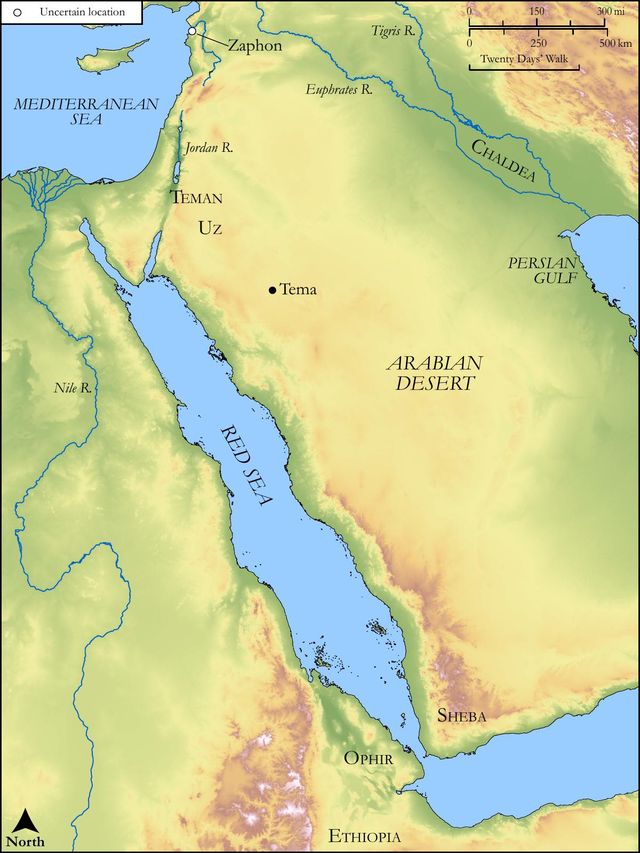
The Book of Job is set in the land of Uz, a location generally believed to be outside of Israel, perhaps in Edom or northern Arabia. This suggests a wisdom tradition that predates or exists alongside the Mosaic Law, focusing on universal truths about God, humanity, and suffering rather than specific covenantal obligations. The cultural context reflects a patriarchal society where elders and friends offered counsel, often rooted in conventional wisdom that linked prosperity to righteousness and suffering to sin. This "retribution theology" was prevalent among the men of the east, not just among the Israelites, and Job's friends represent this dominant worldview. Job's challenge to this simplistic framework was radical, implying that God's justice operates on a plane far beyond human understanding or formulaic application. The dialogue reflects a deep engagement with the fundamental questions of divine governance and human suffering that transcended specific national or religious boundaries of the time.
Key Themes
ShowHideJob 12:13 encapsulates several overarching themes central to the Book of Job and biblical theology. Firstly, it powerfully asserts Divine Sovereignty and Omnipotence, emphasizing that God's rule is absolute and His power unchallengeable, a theme echoed in Isaiah 46:10 where God declares the end from the beginning. Secondly, it highlights Divine Wisdom and Inscrutability, positing that God's wisdom and understanding are boundless and often beyond human comprehension, directly challenging the idea that humans can fully grasp God's ways or motives, as seen in Romans 11:33. Thirdly, the verse underscores the theme of Human Limitation and Humility, contrasting God's infinite attributes with the finite knowledge and flawed counsel of humanity. This calls for a posture of humility and trust, rather than demanding answers or presuming to understand God's complex purposes. Finally, it subtly introduces the theme of God's Righteousness and Justice, implying that even when His actions seem inexplicable to humans, they are always rooted in perfect counsel and understanding, ensuring His ultimate justice, a concept foundational to the entire book and reinforced by passages like Deuteronomy 32:4.
Exposition and Analysis
ShowHideKey Word Analysis
ShowHideThis term (H2451) signifies not merely intellectual knowledge but also practical skill, discernment, and the ability to apply knowledge effectively and righteously. In a divine context, it refers to God's perfect, inherent capacity to order creation, govern the universe, and execute His will with optimal effectiveness and moral rectitude. It is the attribute by which God knows the best means to achieve the best ends, always acting skilfully and wisely.
The Hebrew word (H1369) denotes force, might, and valor. When applied to God, it speaks of His omnipotence – His absolute, inherent ability to accomplish anything consistent with His nature. This strength ensures that His plans are unchallengeable, His decrees are irresistible, and His will is always brought to fruition, regardless of any opposition or perceived obstacle, demonstrating His mastery and mighty power.
This term (H6098) refers to deliberate plans, strategic advice, and divine purpose. It highlights God's intentionality and foresight in all His actions. God does not act impulsively or reactively; rather, His every deed flows from a perfectly conceived, eternal plan. This counsel is infallible and ultimately works towards His sovereign purposes, even when the immediate outcomes are inscrutable to human observers, demonstrating His prudence.
This term (H8394) denotes intelligence, discernment, and comprehensive insight. It refers to God's profound grasp of all things, His ability to discern the truth, and His perfect comprehension of every situation, past, present, and future. This understanding informs His counsel and guides His wisdom, ensuring that His plans are not only powerful but also perfectly conceived, righteous, and executed with ultimate skilfulness and reason.
Verse Breakdown
ShowHide"With him [is] wisdom and strength"
This opening clause immediately establishes God's inherent possession of two fundamental attributes: perfect wisdom and absolute power. The preposition "with him" (עִמּוֹ, 'immo) emphasizes that these qualities are not acquired or external but are intrinsic to God's very being. His wisdom ensures His actions are always right and effective, while His strength guarantees their accomplishment. This pairing highlights God's perfect capacity to conceive and execute His will, demonstrating His comprehensive ability to govern all things.
"he hath counsel and understanding"
This second clause further elaborates on God's cognitive and volitional perfection. "Counsel" speaks to His deliberate and purposeful planning, indicating that all His deeds are part of an overarching, eternal design that is both intentional and strategic. "Understanding" refers to His deep insight, discernment, and comprehensive grasp of all things. It is the perfect intelligence that informs His counsel and guides His wisdom, ensuring that His plans are not only powerful but also perfectly conceived, righteous, and fully comprehended by Him. Together, these clauses paint a picture of a God who is both infinitely capable and infinitely intelligent in His governance of all creation.
Literary Devices
ShowHideJob 12:13 primarily employs Parallelism, a hallmark of Hebrew poetry, to amplify its theological assertion. The verse presents two balanced clauses: "With him [is] wisdom and strength" and "he hath counsel and understanding." This structure creates a sense of completeness and reinforces the idea that these attributes are intrinsically linked and comprehensively present in God. The use of Merism can also be observed, where "wisdom and strength" alongside "counsel and understanding" together encompass the full spectrum of divine intellectual and executive power. This rhetorical device suggests that God possesses all aspects of these qualities, leaving no room for deficiency or limitation in His being. Furthermore, the verse functions as an Assertion or Declaration, a direct statement of truth intended to counter the flawed arguments of Job's friends, serving as a foundational theological premise within Job's defense of God's unsearchable ways.
Theological and Thematic Connections
ShowHideJob 12:13 serves as a profound theological statement on the nature of God, connecting directly to the broader biblical understanding of divine attributes. It establishes God as the ultimate source of all wisdom, power, and purposeful design, challenging any human attempt to fully comprehend or constrain His actions within finite frameworks. This verse underscores the concept of divine aseity – God's self-existence and independence from all creation – as His wisdom, strength, counsel, and understanding are inherent, not acquired. It calls believers to a posture of humble trust in God's sovereign plan, even when circumstances are perplexing, affirming that His character is the ultimate bedrock for faith. The truth presented here provides a crucial counterpoint to the human tendency to judge God based on limited experience or to assume a full grasp of His intricate purposes, ultimately encouraging a deeper reverence for the Creator.
Reflection and Application
ShowHideIn a world often characterized by chaos, uncertainty, and suffering, Job 12:13 offers a profound anchor for the soul. It invites us to shift our gaze from our limited circumstances and understanding to the infinite wisdom and unshakeable strength of God. When life's trials seem inexplicable, or when we are tempted to question God's goodness or presence, this verse reminds us that His counsel is perfect and His understanding boundless. It cultivates humility, urging us to acknowledge that our finite minds cannot fully grasp the depths of His ways, and therefore, we must trust His character even when we cannot trace His hand. This trust liberates us from the burden of needing to understand everything, allowing us to rest in the assurance that a perfectly wise and powerful God is sovereignly orchestrating all things for His ultimate purposes, which are always good. It calls us to surrender our anxieties, knowing that the One who holds all wisdom and strength is actively working, even in the midst of our deepest pain, and that His plans, though often mysterious, are always for our ultimate good and His glory.
Questions for Reflection
ShowHideFAQ
ShowHideWhy does Job emphasize God's attributes in this context?
ShowHideJob emphasizes God's attributes of wisdom, strength, counsel, and understanding in Job 12:13 primarily to refute the simplistic and often harsh theology of his friends. His friends argued that Job's suffering was a direct result of his sin, implying that God's justice operates on a straightforward, predictable retribution principle. Job, however, asserts that God's ways are far more complex and inscrutable than human logic can grasp. By highlighting God's infinite wisdom and power, Job underscores that God's actions are not always comprehensible to humans, and His sovereignty extends beyond our limited understanding of cause and effect. He acknowledges God's absolute control over all things, as seen in Job 12:10, even as he struggles with the apparent injustice of his own situation. This emphasis serves to humble his friends and to affirm God's transcendence, reminding them that God's wisdom is not like human wisdom.
How does Job 12:13 relate to the problem of evil and suffering?
ShowHideJob 12:13 doesn't directly solve the problem of evil and suffering, but it provides a crucial theological framework for approaching it. By declaring God's perfect wisdom, strength, counsel, and understanding, the verse insists that God is not capricious, weak, or ignorant in the face of suffering. Instead, it posits that even when suffering seems inexplicable or unjust from a human perspective, it occurs within the context of God's perfect and sovereign plan. This doesn't mean God causes all suffering directly, but that He is ultimately in control and His purposes, though often hidden, are always wise and good. It calls believers to trust God's character even when His actions are mysterious, reinforcing the idea that His ways are higher than ours, as Isaiah 55:8-9 declares. The verse encourages a posture of humble submission to God's inscrutable will, rather than demanding immediate answers or explanations for the presence of evil.
Christ-Centered Fulfillment
ShowHideJob 12:13, with its profound declaration of God's inherent wisdom, strength, counsel, and understanding, finds its ultimate and most glorious fulfillment in the person and work of Jesus Christ. He is revealed as the very Wisdom of God incarnate, through whom all things were created and by whom all things are sustained, as affirmed in Colossians 1:16-17. In Christ, God's perfect counsel and understanding are made manifest, for He is the "Word" who was "with God" and "was God" (John 1:1), embodying divine thought and purpose. The strength of God, so powerfully declared in Job, is demonstrated in Christ's triumph over sin and death through His crucifixion and resurrection, a power that now works in believers (Ephesians 1:19-20). The "counsel" of God, His eternal plan for redemption, is perfectly executed through Christ's atoning sacrifice, providing the only way for humanity to be reconciled to a holy God (Romans 5:8). Thus, what Job dimly perceived and declared about God's attributes in the midst of his suffering, Christians fully apprehend in the face of Jesus Christ, who is the "power of God and the wisdom of God" (1 Corinthians 1:24), the ultimate revelation of the divine character and the perfect embodiment of all God's attributes for our salvation and understanding.