


Isaiah 10:3
- וּמַהu·mahand what?H4100Conj-w ¦ InterrogPronoun Interrogativeוּandמַהwhat?
- תַּעֲשׂוּta·'a·Suwill you doH6213V-Qal-Imperf-2mpVerb Qal Imperfect 2nd Plural Masculine
- לְיוֹםle·Yomto [the] day ofH3117Prep-l ¦ N-mscNoun Singular Masculine Constructלְtoיוֹם[the] day of
- פְּקֻדָּהpe·ku·DahpunishmentH6486N-fsNoun Singular Feminine Absolute
- וּלְשׁוֹאָהu·le·sho·'Ahand to [the] devastationH7722Conj-w ¦ Prep-l ¦ N-fsNoun Singular Feminine Absoluteוּandלְtoשׁוֹאָה[the] devastation
- מִמֶּרְחָקmi·mer·Chak[which] from a distanceH4801Prep-m ¦ N-msNoun Singular Masculine Absoluteמִ[which] fromמֶּרְחָקa distance
- תָּבוֹאta·Vo'it will comeH935V-Qal-Imperf-3fsVerb Qal Imperfect 3rd Singular Feminine
- עַל'altoH5921PrepPreposition
- מִיmiwhom?H4310InterrogPronoun Interrogative
- תָּנוּסוּta·Nu·suwill you fleeH5127V-Qal-Imperf-2mpVerb Qal Imperfect 2nd Plural Masculine
- לְעֶזְרָהle·'ez·Rahfor helpH5833Prep-l ¦ N-fsNoun Singular Feminine Absoluteלְforעֶזְרָהhelp
- וְאָנָהve·'A·nahand where?H575Conj-w ¦ InterrogParticle Interrogativeוְandאָנָהwhere?
- תַעַזְבוּta·'az·Vuwill you leaveH5800V-Qal-Imperf-2mpVerb Qal Imperfect 2nd Plural Masculine
- כְּבוֹדְכֶםke·Vod·Khemyour abundanceH3519N-msc ¦ 2mpNoun Singular Masculine Constructכְּבוֹדְabundanceכֶםyour
English is a literal word-by-word gloss of the Hebrew, not the KJV's wording. Why?
This is the original text the KJV's translators worked from — each Hebrew word with its own literal English meaning in this verse, prepared by scholars at Tyndale House, Cambridge. The KJV translates whole sentences, not word by word, so its wording differs: one Hebrew word can become several English words, and the KJV may choose “the LORD” where the gloss reads “Yahweh”. Both are faithful — they answer different questions. For the KJV's own rendering, switch to the KJV text.
Details
See on the biblical-era map
Study this verse
Public-domain commentary
Matthew Henry
From his Commentary on the Whole Bible. Henry comments on passages, not single verses — this entry covers Isaiah 10:1–4. His two-level outline is real structure in the source text, so it is rendered as structure.
Whether they were the princes and judges of Israel of Judah, or both, that the prophet denounced this woe against, is not certain: if those of Israel, these verses are to be joined with the close of the foregoing chapter, which is probable enough, because the burden of that prophecy (for all this his anger is not turned away) is repeated here (Isa 10:4); if those of Judah, they then show what was the particular design with which God brought the Assyrian army upon them - to punish their magistrates for mal-administration, which they could not legally be called to account for. To them he speaks woes before he speaks comfort to God's own people. Here is,
I.The indictment drawn up against these oppressors, Isa 10:1, Isa 10:2. They are charged,
1.With making wicked laws and edicts: They decree unrighteous decrees, contrary to natural equity and the law of God: and what mischief they prescribe those under them write it, enrol it, and put it into the formality of a law. "Woe to the superior powers that devise and decree these decrees! they are not too high to be under the divine check. And woe to the inferior officers that draw them up, and enter them upon record - the writers that write the grievousness, they are not too mean to be within the divine cognizance. Principal and accessaries shall fall under the same woe." Note, It is bad to do hurt, but it is worse to do it with design and deliberation, to do wrong to many, and to involve many in the guilt of doing wrong.
2.With perverting justice in the execution of the laws that were made. No people had statutes and judgments to righteous as they had, and yet corrupt judges found ways to turn aside the needy from judgment, to hinder them from coming at their right and recovering what was their due, because they were needy and poor, and such as they could get nothing by nor expect any bribes from.
3.With enriching themselves by oppressing those that lay at their mercy, whom they ought to have protected. They make widows' houses and estates their prey, and they rob the fatherless of the little that is left them, because they have no friend to appear for them. Not to relieve them if they had wanted, not to right them if they were wronged, would have been crime enough in men that had wealth and power; but to rob them because on the side of the oppressors there was power, and the oppressed had no comforter (Ecc 4:1), was such apiece of barbarity as one would think none could ever be guilty of that had either the nature of a man or the name of an Israelite.
II.A challenge given them with all their pride and power to outface the judgments of God (Isa 10:3):
"What will you do? To whom will you flee? You can trample upon the widows and fatherless; but what will you do when God riseth up?" Job 31:14. Great men, who tyrannise over the poor, think they shall never be called to account for their tyranny, shall never hear of it again, or fare the worse for it; but shall not God visit for these things? Jer 5:29. Will there not come a desolation upon those that have made others desolate? Perhaps it may come from far, and therefore may be long in coming; but it will come at last (reprieves are not pardons), and coming from far, from a quarter whence it was least expected, it will be the greater surprise and the more terrible. What will then become of these unrighteous judges? Now they see their help in the gate (Job 31:21); but to whom will they then flee for help? Note,
1.There is a day of visitation coming, a day of enquiry and discovery, a searching day, which will bring to light, to a true light, every man, and every man's work.
2.The day of visitation will be a day of desolation to all wicked people, when all their comforts and hopes will be lost and gone, and buried in ruin, and themselves left desolate.
3.Impenitent sinners will be utterly at a loss, and will no know what to do in the day of visitation and desolation. They cannot fly and hide themselves, cannot fight it out and defend themselves; they have no refuge in which either to shelter themselves from the present evil (to whom will you flee for help?) or to secure to themselves better times hereafter: "Where will you leave your glory, to find it again when the storm is over?" The wealth they had got was their glory, and they had no place of safety in which to deposit that, but they should certainly see it flee away. If our souls be our glory, as they ought to be, and we make them our chief care, we know where to leave them, and into whose hands to commit them, even those of a faithful Creator.
4.It concerns us all seriously to consider what we shall do in the day of visitation, in a day of affliction, in the day of death and judgment, and to provide that we may do well.
III.Sentence passed upon them, by which they are doomed, some to imprisonment and captivity (they shall bow down among the prisoners, or under them - those that were most highly elevated in sin shall be most heavily loaded and most deeply sunk in trouble), others to death: they shall fall first, and so shall fall under the rest of the slain. Those that had trampled upon the widows and fatherless shall themselves be trodden down, Isa 10:4. "This it will come to," says God, "without me, that is, because you have deserted me and driven me away from you." Nothing but utter ruin can be expected by those that live without God in the world, that cast him behind their back, and so cast themselves out of his protection.
And yet, for all this, his anger is not turned away, which intimates not only that God will proceed in his controversy with them, but that they shall be in a continual dread of it; they shall, to their unspeakable terror, see his hand still stretched out against them, and there shall remain nothing but a fearful looking for of judgment.
Historical interpretation
Historical reception
3 surviving comments on this verse. Each one is dated, so this reads as a timeline rather than a list.
Select a marker to jump to its quote. Markers stagger vertically where authors wrote within a few decades of each other.
[Christ] said to Peter, the prince of the apostles, “Simon, [son] of John, do you love me more than these?” He answered, “Lord, you know I love you.” He said to him, “Feed my lambs.” He asked him a second time, “Simon [son] of John, do you love me?” He answered, “Yes, Lord, you know I love you.” He said to him, “Feed my sheep.” And he ordered him to feed his sheep a third time, and in Peter he enjoined this office on all of us, diligently to feed the sheep of the Lord, that on the day of his visitation we may, for our toil and watchfulness, receive what he promised us in the gospel, saying, Father, I wish that where I am, there also shall be my minister. Let us look to the promises and rewards; then in an attitude of faith we will more easily stand all our pains, walking as the Lord himself walked, who is the one promising the rewards.
“What shall we do in the day of visitation?” One of the prophets terrifies me [with this question], whether that of the righteous sentence of God against us or that upon the mountains and hills, of which we have heard. Whatever and whenever it may be, he will reason with us and oppose us and set before us those bitter accusers, which are our sins, contrasting our wrongdoings with our benefits, striking thought with thought, scrutinizing action with action and calling us to account for the image that has been blurred and spoiled by wickedness. He will finally lead us away self-convicted and self-condemned, no longer able to say that we are being unjustly treated—a thought that is able even here sometimes to console in their condemnation those who are suffering.
(Chapter X—1 onwards) — Woe to those who establish unjust laws and write injustice, in order to oppress the poor in judgment and to do violence to the cause of the humble people of my nation, so that widows may be their prey and they may plunder the orphans. What will you do on the day of visitation and the calamity that comes from afar? To whom will you flee for help? And where will you leave your glory? Do not be bent down under a chain and fall among the slain. His rage is not turned away, but his hand is still stretched out. Most people still believe that these things are said against the ten tribes who lived in Samaria, because they too joined in the previous crimes. But to us it seems that the prophetic word is crying out against the judges of the tribe of Judah and Jerusalem, namely the Scribes and the Pharisees, because they have written unjust laws against God's law and have undermined the truth of justice with their traditions. For God says: Honor your father and mother (Exodus XX, 12); but they, on the contrary, advised children to say to their parents: Whatever gift you might have received from me, it will be helpful to you, so that they would not honor (Al. honor) their father and mother (Matthew XV, 5, 6; Mark VII, 11), and similar things. Therefore, they wrote wicked laws in order to oppress the poor and lowly people, to plunder widows, and to prey upon orphans. Those who are asked what they will do, when the day of either captivity or judgment comes, and the calamity from afar, which was foretold long before. To whom, he says, will you flee for help, when you offend God, who is the true helper, and where will you leave your glory? For riches will not profit on the day of wrath, lest the Assyrian lead the bound into a hostile land, lest you fall in battle (Proverbs 11:4). And finally, just as he had often said against Samaria in the previous episodes: In all these things his anger is not turned away, but still his hand is stretched out, even against Judah, because there is no end to their evil (or malice); even in the enemy territory of the Lord, the sword pursues them. According to the allegory, every heretic writes injustice in order to deceive the poor and humble people, and to plunder widows and orphans. For indeed, the wealthy person, of whom we read: 'The redemption of the soul of a man is his own wealth' (Prov. XIII, 8), does not endure threat, nor is he easily captured by them. But the poor person, who is humble and small among the people, is easily scandalized by them. Likewise, the widow who has lost her husband and the orphan who has lost his Creator, of whom it is written: 'You have forsaken God who begot you, and have forgotten the God who brought you up' (Deut. XXXII, 18), are easily overthrown. So what will they do on the day of judgment, when they have deceived so many and the calamity from afar is coming? Just as it is said to the righteous man, 'The word is near you, in your mouth and in your heart' (Rom. X, 8); and in another place: 'The kingdom of God is within you' (Luke XVII, 2); so the calamity of the heretics will come from afar, prepared for them in due time. To whom will they flee, when they have a false god? To whom will they give their glory, when everything is feigned? And they will not be able to escape the bond by which they have bound many. Therefore, even in the vision of the valley of Zion, which has been deserted by the height of God and deceived by heretical humility, it is said of the false masters of the name of knowledge: All your leaders have fled, and those who have been captured are tightly bound (Isaiah 22:3). And although they may fall with each one being killed, and perish in the death of others, and suffer greatly, and the day of visitation will come, there will be no end to their destruction, but they will always tremble at the hand of the Lord that is impending upon them. Until now, there has been a threat from God against ten and a half tribes, that is, against Samaria and Jerusalem, which began during the reign of Achaz. Two and a half tribes were captured under his rule, and the remaining tribes were captured under Hezekiah, who succeeded Achaz as king (2 Kings 16:17). The following prophecy is written against the Assyrians.
Continue studying Isaiah 10:3 across the web’s major study libraries — every link below opens this exact verse, chapter, or book on the destination site.
Read & Compare
 BibleGatewayThis verse in more than 200 translations and 70 languages.
 Bible.comThe YouVersion reader — hundreds of translations, reading plans, and highlights.
 ESV.orgCrossway's official English Standard Version reader.
 NET BibleThe NET translation with 60,000+ translators' notes on every rendering decision.
 STEP BibleTyndale House's free study tool — original text, vocabulary, and scholarly resources.
 BibliaLogos Bible Software's free web reader.
 USCCBThe New American Bible (Revised Edition) with the U.S. bishops' study notes.
Commentaries
 BibleHub CommentariesDozens of classic commentaries on this verse, gathered on one page.
 StudyLightMore than 100 commentary sets — the largest collection on the web.
 BibleRefPlain-English commentary on what this verse means, verse by verse.
 Enduring WordDavid Guzik's free commentary on this chapter, widely used by Bible teachers.
 Bible Study ToolsVerse commentary alongside Greek and Hebrew study aids.
Original Language & Research
- BibleHub InterlinearThe verse word by word — original language, transliteration, and English.
- BibleHub LexiconEvery word's original-language definition and Strong's entry.
 Blue Letter BibleDeep-study tools — Strong's numbers, concordance, and word studies.
 SefariaThe Hebrew text with Rashi and centuries of Jewish commentary.
Sermons, Hymns & Audio


TrulyRandomVerse is not affiliated with these sites and doesn’t control their content. They’re linked because they’re genuinely useful.
Summary
Isaiah 10:3 delivers a stark prophetic warning to the unrighteous leaders and people of Judah and Israel, confronting them with the terrifying reality of impending divine judgment. Through a series of penetrating rhetorical questions, the prophet Isaiah underscores their utter powerlessness and the futility of their earthly securities—their wealth, status, and alliances—when faced with God's "day of visitation" and the "desolation" brought by a distant, formidable enemy. The verse compels them to reckon with a future where their self-reliant glory will offer no refuge, highlighting the inescapable nature of God's righteous reckoning and the ultimate transience of all human endeavors.
Context
ShowHideLiterary Context
Isaiah 10:3 is strategically placed within a series of "woes" (Isaiah 5:8-23; 9:8-10:4) pronounced by the prophet Isaiah, primarily targeting the Northern Kingdom of Israel (Ephraim) but also serving as a severe warning to Judah. Chapter 9 concludes with a vivid description of God's unceasing wrath against Israel's persistent pride and unrepentance, depicting a people who refuse to turn back to the Lord (see Isaiah 9:13). Chapter 10 opens with a specific "woe" against those who enact unjust laws, deprive the poor of justice, and exploit the vulnerable (Isaiah 10:1-2). Verse 3 directly follows this indictment, posing the inescapable consequence of such pervasive injustice and moral decay. The subsequent verses (Isaiah 10:5ff) dramatically reveal that Assyria will be God's chosen, albeit unwitting, instrument for this judgment, though Assyria itself will later face judgment for its own arrogance and overreach (see Isaiah 10:12). This verse thus serves as a pivotal transition, moving from the detailed description of Israel's sin to the declaration of its inevitable, devastating outcome, framing the impending destruction as a direct result of divine judgment.
Historical & Cultural Context
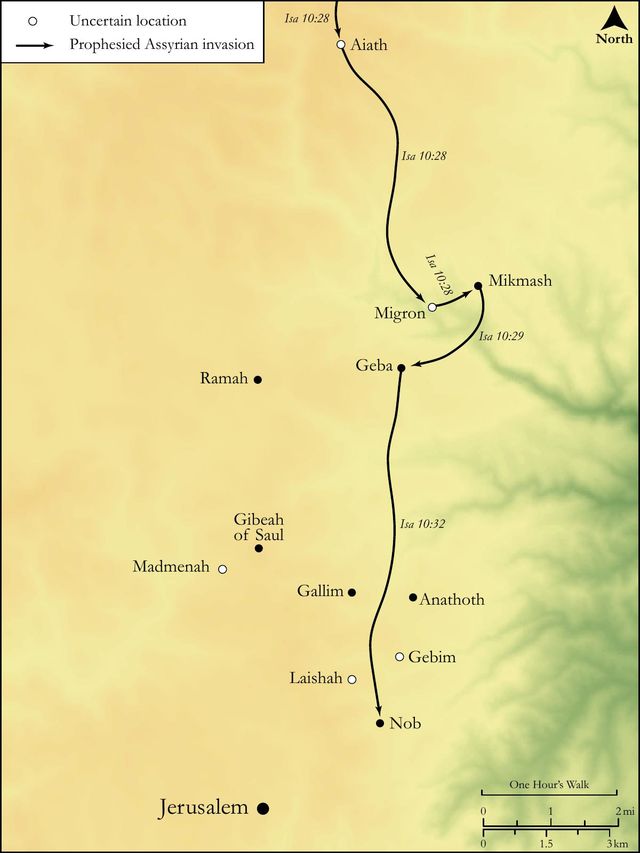
The late 8th century BCE was a period of intense political turmoil and existential threat for the kingdoms of Israel and Judah in the Ancient Near East. The powerful and ruthless Assyrian Empire was rapidly expanding its dominion, conquering surrounding nations with brutal efficiency. The Northern Kingdom of Israel was ultimately conquered by Assyria in 722 BCE, and Judah, while not yet falling, was under immense pressure, often seeking alliances with other regional powers (like Egypt) rather than trusting in God for deliverance. Internally, the societal elite in both kingdoms had become deeply corrupt, accumulating wealth through oppression, neglecting justice, and relying on their own strength, military might, or foreign treaties for security. Isaiah's prophecy speaks directly into this volatile context, challenging their false sense of security and their spiritual complacency. The phrase "desolation which shall come from far" is a direct and chilling reference to the impending Assyrian military might, an external force that God would orchestrate to execute His righteous judgment upon a rebellious people.
Key Themes
ShowHideThis verse powerfully contributes to several overarching themes in the book of Isaiah and the broader biblical narrative. Firstly, it emphasizes Divine Judgment and Accountability, portraying God as the sovereign judge who holds nations and individuals accountable for their moral and social transgressions. The "day of visitation" is a time of reckoning that no one can escape, underscoring that God's justice is not merely punitive but also serves His ultimate redemptive purposes, aiming to purify His people. Secondly, it highlights the Futility of Earthly Reliance, challenging the common human tendency to trust in wealth, military might, political alliances, or human ingenuity. The rhetorical questions "to whom will ye flee for help?" and "where will ye leave your glory?" expose the utter inadequacy of human defenses against divine wrath, echoing themes found throughout the Psalms, such as the declaration that God alone is our refuge and strength, an ever-present help in trouble. Finally, the verse speaks to the Transient Nature of Earthly "Glory," revealing that all human achievements, status, and possessions are ultimately meaningless and cannot endure in the face of God's overwhelming power and judgment. This theme is consistently found in wisdom literature, as seen in Proverbs 11:4, which states that riches do not profit in the day of wrath, but righteousness delivers from death.
Exposition and Analysis
ShowHideKey Word Analysis
ShowHideThis word carries a rich semantic range, primarily meaning "inspection" or "reckoning." While it can denote a positive, benevolent visit from God (e.g., God visiting Sarah in Genesis 21:1), in this context, it unequivocally signifies a punitive visitation, a time of divine judgment where sins are brought to account and consequences are meted out. It implies a precise and thorough inventory of actions, leading to inevitable punishment for disobedience. It is the appointed time for God to intervene and settle accounts.
This term is derived from an unused root meaning "to rush over," and denotes a tempest, ruin, devastation, or calamity. It paints a vivid picture of utter destruction and waste, emphasizing the overwhelming and destructive force of the impending judgment. The phrase "which shall come from far" directly points to a foreign invasion, specifically the Assyrians, as the instrument of this widespread devastation, highlighting the comprehensive and inescapable nature of the coming ruin.
This term, from a root meaning "to be heavy," signifies weight, honor, reputation, wealth, splendor, and dignity. In this verse, it refers to all that the people esteemed as their security, status, and source of pride—their material possessions, social standing, political power, and even their national identity. The rhetorical question about where they will "leave" their glory highlights its utter uselessness and the fact that it cannot be preserved or protected in the face of God's judgment; it will be stripped away or rendered worthless, demonstrating its transient and ultimately empty nature.
Verse Breakdown
ShowHide"And what will ye do in the day of visitation,"
This opening rhetorical question immediately confronts the audience with their utter helplessness. The "day of visitation" is the appointed time of God's judgment and reckoning, a moment of divine intervention. The question "what will ye do?" implies that all their usual strategies, their accumulated wealth, their military might, and their political alliances, will be utterly ineffective and provide no solution or escape. It forces them to acknowledge their complete lack of agency and control in the face of divine wrath.
"and in the desolation [which] shall come from far?"
This clause further specifies the nature of the "visitation" as a widespread, destructive calamity. The "desolation" is not a minor setback but a comprehensive ruin, a complete laying waste. The phrase "from far" clearly indicates a foreign invasion, a powerful and distant enemy (Assyria) that God will use as His instrument of judgment, emphasizing the external, overwhelming, and inescapable nature of the impending doom, leaving no local refuge.
"to whom will ye flee for help?"
This second rhetorical question directly challenges their misplaced trust. It exposes the futility of their reliance on human alliances, pagan idols, or even their own strength and ingenuity. When the true crisis arrives, all their conventional sources of "help" will prove inadequate or nonexistent. It underscores that there will be no human deliverer or earthly refuge capable of standing against God's judgment, forcing them to confront their ultimate isolation.
"and where will ye leave your glory?"
The final question targets the very core of their pride and security. Their "glory"—their accumulated wealth, social status, political power, and reputation—which they cherished and built their lives upon, will be utterly useless. The question implies that they will have no safe place to store it, no way to protect it, and it will ultimately be stripped away or become a burden rather than a blessing. It highlights the transient nature of all earthly achievements and the devastating reality that what they valued most will be lost or rendered meaningless in the face of eternal judgment.
Literary Devices
ShowHideIsaiah 10:3 is rich in Rhetorical Questions, a dominant literary device here. The prophet poses three direct questions ("what will ye do?", "to whom will ye flee?", "where will ye leave?") not to elicit an answer, but to underscore the utter hopelessness and lack of options for those facing God's judgment. These questions compel the audience to confront their own vulnerability and the futility of their self-reliance, creating a powerful sense of impending doom. The phrase "desolation [which] shall come from far" employs a subtle form of Personification, giving the abstract concept of desolation an active, almost predatory quality, as if it is an entity purposefully traveling from a distance to inflict ruin. Furthermore, there is profound Irony in the final question, "where will ye leave your glory?" The very "glory" they pursued and trusted in—their wealth, status, and power—will become a meaningless burden, unable to protect them, and will be lost in the very "visitation" they sought to avoid. This highlights the ironic reversal of their perceived security into ultimate vulnerability and loss.
Theological and Thematic Connections
ShowHideIsaiah 10:3 serves as a profound theological statement on God's absolute sovereignty and His unwavering commitment to justice. It reminds us that while humanity may pursue earthly glory and trust in fleeting power, God ultimately holds the scales of judgment, and His purposes will prevail. The "day of visitation" is a recurring biblical motif, signifying a time when God intervenes directly in human history to bring about His purposes, often involving judgment for sin and vindication for the righteous. This verse underscores the principle that true security and lasting help are found only in God, not in human accomplishments or alliances, and that all earthly "glory" is temporary and cannot withstand divine scrutiny. It is a powerful call to humility, repentance, and a reorientation of priorities towards eternal values, recognizing God as the ultimate source of refuge and strength.
Reflection and Application
ShowHideIsaiah 10:3 stands as a timeless and sobering mirror for all generations, urging us to deeply examine the foundations of our security and the objects of our ultimate trust. In a world that often values wealth, status, and self-sufficiency as the highest pursuits, this verse challenges us to consider what truly endures when crisis strikes, whether it be a personal calamity, a societal upheaval, or the ultimate divine reckoning. It compels us to ask ourselves if our "glory"—our achievements, possessions, reputation, or even our self-made identities—is something we can truly rely on, or if it is merely a fleeting illusion that will vanish in the "day of visitation." The call is to shift our reliance from the temporal to the eternal, recognizing that only God provides genuine refuge and lasting glory. This verse encourages us to live with an eternal perspective, building our lives on the unshakable truth of God's Word and character, rather than on the shifting sands of human endeavors. It is a powerful reminder that true wisdom lies in acknowledging God's sovereignty, humbling ourselves before Him, and seeking His help above all else.
Questions for Reflection
ShowHideFAQ
ShowHideWhat does "the day of visitation" mean in this context?
ShowHideIn Isaiah 10:3, "the day of visitation" refers to a specific, appointed time of divine judgment and reckoning. While the Hebrew word for "visitation" (pᵉquddâh) can sometimes imply a positive, benevolent visit from God, here it carries a strong connotation of punitive inspection and accountability. It is the day when God will call His people, particularly their unjust leaders and those who have oppressed the vulnerable, to account for their sins and bring about the consequences of their disobedience. This "visitation" will manifest as a devastating "desolation" brought by a foreign power, specifically the Assyrian Empire, which God uses as an instrument of His wrath and justice (as seen in Isaiah 10:5).
What is the "glory" that the people will not be able to "leave" or protect?
ShowHideThe "glory" (kâbôwd) in this verse refers to all that the people of Judah and Israel held in high esteem and trusted in for their security and identity. This includes their accumulated wealth, social status, political power, military strength, and national reputation. It encompasses everything they prided themselves on and believed would protect them. The rhetorical question "where will ye leave your glory?" implies that in the face of God's overwhelming judgment and the impending "desolation," all these earthly achievements and possessions will be utterly useless. They cannot be protected, stored away, or used as a ransom. They will either be stripped away, destroyed, or rendered meaningless, highlighting the transient and ultimately futile nature of trusting in anything other than God. This aligns with the biblical teaching that true and lasting glory belongs to God alone, and human glory is fleeting, as reflected in 1 Peter 1:24-25).
Christ-Centered Fulfillment
ShowHideIsaiah 10:3, with its stark warning of a "day of visitation" and the futility of human "glory" in the face of divine judgment, finds its ultimate fulfillment and profound reinterpretation in the person and work of Jesus Christ. While the immediate context points to the Assyrian invasion as God's instrument of judgment, the New Testament reveals that all such historical judgments foreshadow the ultimate divine reckoning that will be executed through Christ. Christ Himself is the one through whom all judgment is executed, for the Father judges no one, but has given all judgment to the Son. The ultimate "day of visitation" for humanity is the day of Christ's return, when every eye will see Him, even those who pierced Him. In that day, all earthly "glory"—wealth, power, status, and self-righteousness—will indeed prove utterly worthless and unable to provide refuge, for what good will it be for someone to gain the whole world, yet forfeit their soul?. However, for those who trust in Christ, He is the ultimate "help" and "refuge" in the day of judgment, for there is now no condemnation for those who are in Christ Jesus. Furthermore, the true "glory" that endures is not earthly, but is found in union with Christ; for believers, when Christ, who is your life, appears, then you also will appear with Him in glory. Thus, Isaiah's warning, while terrifying for the unrepentant, becomes a powerful call to find our ultimate security, help, and eternal glory in the crucified and resurrected Lord Jesus, who alone can deliver us from the wrath to come.