


Genesis 41:30
Bible text: King James Version (1769 Blayney text) · Public domain
Bible text: King James Version with Strong's numbers · Public domain
Bible text: Berean Standard Bible · Public domain
Bible text: American Standard Version (1901) · Public domain
Bible text: World English Bible, Messianic edition · Public domain
Bible text: Geneva Bible (1599) · Public domain
Bible text: Young's Literal Translation · Public domain
- וְקָמוּVe·ka·muand they will ariseH6965Conj-w ¦ V-Qal-ConsecPerf-3cpVerb Qal Consecutive Perfect 3rd Plural common genderוְandקָמוּthey will arise
- שֶׁבַעShe·va'sevenH7651Adj-csAdjective Numerical Singular common gender Absolute
- שְׁנֵיshe·Neiyears ofH8141N-mpcNoun Plural Masculine Construct
- רָעָבra·'AvfamineH7458N-msNoun Singular Masculine Absolute
- אַחֲרֵיהֶן'a·cha·rei·Henafter themH310Adj-mpc ¦ 3fpAdjective Numerical Plural Masculine Constructאַחֲרֵיafterהֶןthem
- וְנִשְׁכַּחve·nish·Kachand it will be forgottenH7911Conj-w ¦ V-Niphal-ConsecPerf-3msVerb Niphal Consecutive Perfect 3rd Singular Masculineוְandנִשְׁכַּחit will be forgotten
- כָּלkolallH3605N-mscNoun Singular Masculine Construct
- הַשָּׂבָעha·sa·Va'the plentyH7647Art ¦ N-msNoun Singular Masculine Absoluteהַtheשָּׂבָעplenty
- בְּאֶרֶץbe·'E·retzin [the] land ofH776Prep-b ¦ N-fscNoun Singular Feminine Constructבְּinאֶרֶץ[the] land of
- מִצְרָיִםmitz·Ra·yimEgyptH4714N-properNoun Proper Location
- וְכִלָּהve·khi·Lahand it will destroyH3615Conj-w ¦ V-Piel-ConsecPerf-3msVerb Piel Consecutive Perfect 3rd Singular Masculineוְandכִלָּהit will destroy
- הָרָעָבha·ra·'Avthe famineH7458Art ¦ N-msNoun Singular Masculine Absoluteהָtheרָעָבfamine
- אֶת'et<obj.>H853DirObjMParticle Object Indicator
- הָאָרֶץha·'A·retzthe landH776Art ¦ N-fsNoun Singular Feminine Absoluteהָtheאָרֶץland
English is a literal word-by-word gloss of the Hebrew, not the KJV's wording. Why?
This is the original text the KJV's translators worked from — each Hebrew word with its own literal English meaning in this verse, prepared by scholars at Tyndale House, Cambridge. The KJV translates whole sentences, not word by word, so its wording differs: one Hebrew word can become several English words, and the KJV may choose “the LORD” where the gloss reads “Yahweh”. Both are faithful — they answer different questions. For the KJV's own rendering, switch to the KJV text.
Details
See on the biblical-era maps


Study this verse
Public-domain commentary
Matthew Henry
From his Commentary on the Whole Bible. Henry comments on passages, not single verses — this entry covers Genesis 41:17–32. His two-level outline is real structure in the source text, so it is rendered as structure.
Here, I. Pharaoh relates his dream. He dreamt that he stood upon the bank of the river Nile, and saw the kine, both the fat ones and the lean ones, come out of the river. For the kingdom of Egypt had no rain, as appears, Zac 14:18, but the plenty of the year depended upon the overflowing of the river, and it was about one certain time of the year that it overflowed. If it rose to fifteen or sixteen cubits, there was plenty; if to twelve or thirteen only, or under, there was scarcity. See how many ways Providence has of dispensing its gifts; yet, whatever the second causes are, our dependence is still the same upon the first Cause, who makes every creature that to us that it is, be it rain or river.
II.Joseph interprets his dream, and tells him that it signified seven years of plenty now immediately to ensue, which should be succeeded by as many years of famine. Observe,
1.The two dreams signified the same thing, but the repetition was to denote the certainty, the nearness, and the importance, of the event, Gen 41:32. Thus God has often shown the immutability of his counsel by two immutable things, Heb 6:17, Heb 6:18. The covenant is sealed with two sacraments; and in the one of them there are both bread and wine, wherein the dream is one, and yet it is doubled, for the thing is certain.
2.Yet the two dreams had a distinct reference to the two things wherein we most experience plenty and scarcity, namely, grass and corn. The plenty and scarcity of grass for the cattle were signified by the fat kine and the lean ones; the plenty and scarcity of herb for the service of man by the full ears and the thin ones.
3.See what changes the comforts of this life are subject to. After great plenty may come great scarcity; how strong soever we may think our mountain stands, if God speak the word, it will soon be moved. We cannot be sure that tomorrow shall be as this day, next year as this, and much more abundant, Isa 56:12. We must learn how to want, as well as how to abound.
4.See the goodness of God in sending the seven years of plenty before those of famine, that provision might be made accordingly. Thus he sets the one over-against the other, Ecc 7:14. With what wonderful wisdom has Providence, that great housekeeper, ordered the affairs of this numerous family from the beginning hitherto! Great variety of seasons there have been, and the product of the earth is sometimes more and sometimes less; yet, take one time with another, what was miraculous concerning the manna is ordinarily verified in the common course of Providence, He that gathers much has nothing over, and he that gathers little has no lack, Exo 16:18.
5.See the perishing nature of our worldly enjoyments. The great increase of the years of plenty was quite lost and swallowed up in the years of famine; and the overplus of it, which seemed very much, yet did but just serve to keep men alive, Gen 41:29-31. Meat for the belly, and the belly for meats, but God shall destroy both it and them, Co1 6:13. There is bread which endures to everlasting life, which shall not be forgotten, and which it is worth while to labour for, Joh 6:27. Those that make the things of this world their good things will find but little pleasure in remembering that they have received them, Luk 16:25.
6.Observe, God revealed this beforehand to Pharaoh, who, as king of Egypt, was to be the father of his country, and to make prudent provision for them. Magistrates are called shepherds, whose care it must be, not only to rule, but to feed.
Continue studying Genesis 41:30 across the web’s major study libraries — every link below opens this exact verse, chapter, or book on the destination site.
Read & Compare
 BibleGatewayThis verse in more than 200 translations and 70 languages.
 Bible.comThe YouVersion reader — hundreds of translations, reading plans, and highlights.
 ESV.orgCrossway's official English Standard Version reader.
 NET BibleThe NET translation with 60,000+ translators' notes on every rendering decision.
 STEP BibleTyndale House's free study tool — original text, vocabulary, and scholarly resources.
 BibliaLogos Bible Software's free web reader.
 USCCBThe New American Bible (Revised Edition) with the U.S. bishops' study notes.
Commentaries
 BibleHub CommentariesDozens of classic commentaries on this verse, gathered on one page.
 StudyLightMore than 100 commentary sets — the largest collection on the web.
 BibleRefPlain-English commentary on what this verse means, verse by verse.
 Enduring WordDavid Guzik's free commentary on this chapter, widely used by Bible teachers.
 Bible Study ToolsVerse commentary alongside Greek and Hebrew study aids.
Original Language & Research
- BibleHub InterlinearThe verse word by word — original language, transliteration, and English.
- BibleHub LexiconEvery word's original-language definition and Strong's entry.
 Blue Letter BibleDeep-study tools — Strong's numbers, concordance, and word studies.
 SefariaThe Hebrew text with Rashi and centuries of Jewish commentary.
Sermons, Hymns & Audio


TrulyRandomVerse is not affiliated with these sites and doesn’t control their content. They’re linked because they’re genuinely useful.
Summary
Genesis 41:30 is a pivotal prophetic declaration within the narrative of Joseph in Egypt, foretelling a period of catastrophic famine that would utterly eclipse the preceding seven years of unprecedented abundance. This verse, part of Joseph's divinely inspired interpretation of Pharaoh's troubling dreams, reveals God's meticulous plan for the land of Egypt and, by extension, for the preservation of Joseph's family, thereby setting the stage for the unfolding of His providential purposes for His covenant people.
Context
ShowHideLiterary Context
This verse immediately follows Joseph's interpretation of Pharaoh's first dream, which foretold seven years of abundant harvest throughout Egypt (Genesis 41:29). Pharaoh had been deeply disturbed by two recurring dreams: one of fat and lean cows, and another of full and blighted ears of grain. Joseph, having been brought from prison specifically to interpret these dreams, attributes the interpretation directly to God, stating that the two dreams are one and reveal God's imminent action (Genesis 41:25-28). Verse 30 specifically details the second phase of this divine revelation—the nature and intensity of the impending famine—creating a stark contrast with the preceding plenty and emphasizing the comprehensive impact it would have on the land and its inhabitants. This divine forewarning is crucial, as it provides the opportunity for preparation and sets the stage for Joseph's elevation to a position of immense power and responsibility.
Historical & Cultural Context
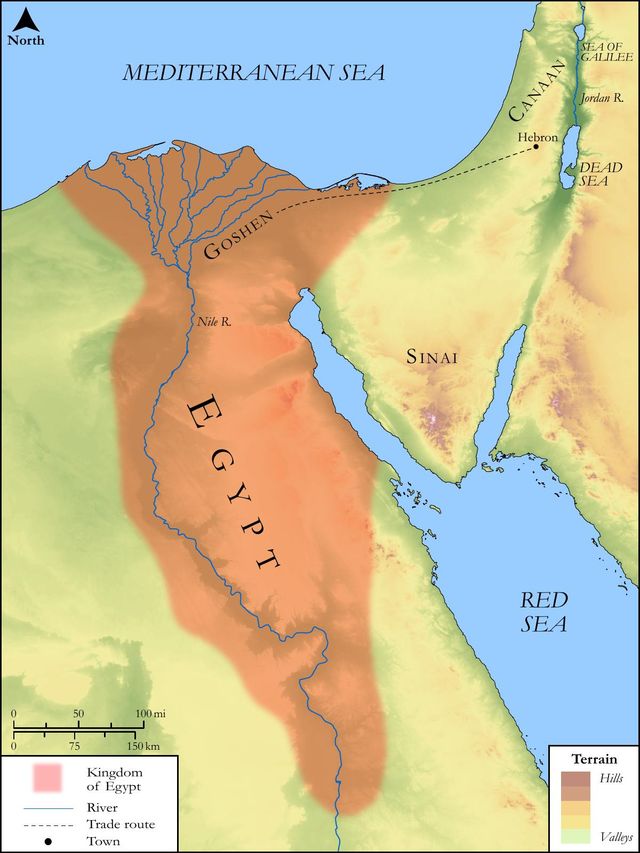
Ancient Egypt's prosperity was almost entirely dependent on the annual flooding of the Nile River, which deposited fertile silt onto the agricultural lands. Fluctuations in the Nile's inundation directly impacted crop yields, making famine a constant, existential threat. A multi-year famine, as described here, would have been catastrophic, leading to widespread starvation, societal collapse, and potentially mass migration. Dreams were considered significant divine communications in Egypt and among the nations round about, often interpreted by priests or wise men to discern the will of the gods or predict future events. Pharaoh's distress over his dreams reflects this cultural understanding of their prophetic weight. The concept of storing grain during abundant years was a known, albeit challenging, practice, but the scale of the famine described here would demand an unprecedented, centrally managed effort, highlighting the extraordinary nature of God's intervention and Joseph's subsequent role.
Key Themes
ShowHideGenesis 41:30 contributes significantly to several overarching themes within the book of Genesis. Foremost is Divine Sovereignty and Providence, demonstrating God's absolute control over natural phenomena like weather and agricultural cycles, and His ability to orchestrate human events to fulfill His purposes. The stark Contrast between Abundance and Scarcity is also a central theme, highlighting the transient nature of earthly prosperity and the necessity of wisdom and foresight. This verse also underscores the theme of Divine Revelation and Warning, as God reveals His plans through dreams, not to cause fear, but to enable preparation and demonstrate His faithfulness to His covenant promises, particularly as this famine will eventually bring Jacob's family to Egypt, fulfilling earlier prophecies about their descent into a foreign land (Genesis 15:13). Finally, it sets the stage for the theme of Wisdom and Preparedness, as Joseph's God-given insight will lead to a national strategy that saves not only Egypt but also his own family from utter destruction.
Exposition and Analysis
ShowHideGenesis 41:30 presents the dire prophecy of the coming famine, emphasizing its severity and the profound impact it would have on Egypt. Joseph's interpretation is direct and unambiguous, revealing God's sovereign control over the natural world and His intention to bring about a significant shift in Egypt's fortunes. The language employed underscores the comprehensive and devastating nature of the impending crisis.
Key Word Analysis
ShowHideThis primitive root means "to rise" in various applications, including literal, figurative, intensive, and causative. In this context, it signifies the beginning or emergence of the famine. It suggests an active, almost personified, coming into being, rather than a passive occurrence. The famine will not merely happen; it will "arise," implying a powerful, undeniable force that will establish itself over the land. This emphasizes the divine decree behind its onset.
Derived from a root meaning "to be hungry," this noun denotes hunger, scarcity, or dearth, often describing a widespread and severe lack of food. The repetition of this word in the verse ("seven years of famine," "the famine shall consume") stresses its central role and devastating nature. It is not merely a shortage but a profound, life-threatening condition that will grip the entire nation.
This primitive root means "to end," "to cease," "to be finished," or "to perish." Transitively, it means "to complete," "to prepare," or "to consume." Here, it powerfully describes the famine's ability to utterly exhaust, devastate, and bring to an end the prosperity and resources of the land. It implies a thorough and destructive process, leaving nothing in its wake, signifying not just a lack of food but a comprehensive depletion of the land's vitality and resources.
Verse Breakdown
ShowHide"And there shall arise after them seven years of famine"
This clause precisely delineates the duration and nature of the coming hardship. The "them" refers to the preceding seven years of abundance, creating a stark, divinely ordained contrast. The verb "arise" (H6965, qûwm') suggests a powerful, inevitable emergence of this period of scarcity, indicating it is not a random event but a divinely appointed phase. This specific timing highlights God's meticulous planning and revelation, allowing for strategic preparation.
"and all the plenty shall be forgotten in the land of Egypt"
This powerful statement conveys more than just a physical lack of food; it speaks to the profound psychological and societal impact of the famine. The idea that "all the plenty shall be forgotten" suggests that the hardship would be so overwhelming and prolonged that the very memory of the preceding abundance would vanish, consumed by the immediate and desperate struggle for survival. This indicates a famine of such magnitude that it would erase the concept of prosperity from the collective consciousness, a testament to its profound and traumatic effect on the people and their experience.
"and the famine shall consume the land"
The repetition of "famine" underscores its central role and devastating power. The verb "consume" (H3615, kâlâh') describes the famine's ability to utterly exhaust, devastate, and bring to an end the resources and vitality of the land. This is not merely a localized scarcity but a widespread, destructive force that would affect the entire nation, impacting every aspect of life and economy, leaving nothing in its wake. This comprehensive destruction sets the stage for Joseph's pivotal role in managing the crisis.
Literary Devices
ShowHideThe verse effectively employs several literary devices to convey the gravity of the prophecy. Foreshadowing is central, as the verse explicitly predicts a future event of immense consequence, setting up the subsequent narrative of Joseph's rise and the preservation of his family. The most prominent device is Contrast, as the "seven years of famine" are directly juxtaposed with the "seven years of plenty" mentioned in the preceding verse, highlighting the dramatic shift in Egypt's fortunes and emphasizing the cyclical, yet divinely controlled, nature of events. Hyperbole is evident in the phrase "all the plenty shall be forgotten," which, while perhaps not literally meaning every memory would vanish, powerfully conveys the overwhelming and psychologically devastating impact of the famine, suggesting it would utterly overshadow any past prosperity. Finally, a subtle form of Personification is present in the phrase "the famine shall consume the land," attributing an active, destructive agency to the famine itself, as if it were a living entity devouring the nation.
Theological and Thematic Connections
ShowHideGenesis 41:30 profoundly illustrates God's absolute sovereignty over creation and human affairs, demonstrating His ability to orchestrate natural events to fulfill His redemptive purposes. This divine foreknowledge, revealed through Joseph, serves as a mercy, providing a crucial warning that enables preparation and ultimately leads to the preservation of many lives, including God's chosen family. It highlights the transient nature of earthly prosperity and the importance of wisdom and foresight in managing resources, recognizing that seasons of abundance can quickly give way to periods of severe hardship. This narrative powerfully underscores that even in the face of impending disaster, God is actively at work, using challenging circumstances to bring about His greater plan.
Reflection and Application
ShowHideGenesis 41:30 offers timeless lessons for believers today, underscoring the vital importance of wisdom, foresight, and faithful stewardship in every season of life. Just as Joseph advised Pharaoh to store up grain during the years of plenty (Genesis 41:33-36), we are called to exercise prudence and discipline in managing our resources—whether financial, relational, or spiritual. This includes not only saving and investing wisely for future needs but also cultivating spiritual disciplines during times of ease, building a reservoir of faith and resilience for inevitable seasons of scarcity or trial. Furthermore, this narrative reminds us that even when faced with difficult prophecies or challenging circumstances, God remains sovereign and actively involved. He often reveals future events or allows hardships, not to punish indiscriminately, but for a greater redemptive purpose—to test and strengthen our faith, to reorient our focus from fleeting earthly comforts to eternal values, and to deepen our reliance on Him as our ultimate provider and sustainer. Our response to seasons of plenty and famine reveals the true object of our trust.
Questions for Reflection
ShowHideFAQ
ShowHideWhy did God send a famine after years of plenty?
ShowHideGod sent the famine to demonstrate His absolute sovereignty over all creation and human affairs, revealing His power to both give and take away. It served multiple, interconnected purposes within His overarching redemptive plan. First, it was a divine judgment that also acted as a catalyst to elevate Joseph to a position of immense power and influence in Egypt, fulfilling God's earlier prophetic dreams given to Joseph (Genesis 37:5-11). Second, it was a means to preserve a remnant of humanity, including Jacob's family, during a global crisis, ultimately bringing them into Egypt where they would grow into a great nation, fulfilling God's covenant promises to Abraham (Genesis 12:2-3). Finally, it served as a practical lesson in wisdom, preparedness, and dependence on divine revelation, not just for Egypt but for all who would read this account.
How does this prophecy relate to God's general revelation?
ShowHideWhile God's general revelation is seen in the consistent laws of nature (e.g., the sun rising, seasons changing) and the moral conscience of humanity, this prophecy is a clear example of specific, special revelation. It is a direct, supernatural communication from God through dreams and their divinely inspired interpretation, providing precise details about future events that could not be known through natural observation or human reason alone. This highlights God's ability and willingness to intervene directly in human history and communicate His specific plans, warnings, and purposes beyond what can be discerned from the created order.
Is the "forgetting of plenty" a literal or metaphorical description?
ShowHideIt is both literal and metaphorical, emphasizing the profound impact of the famine. Literally, the phrase "all the plenty shall be forgotten" implies that the famine would be so severe, prolonged, and all-consuming that the physical memory of the abundant years would be overshadowed and virtually erased by the immediate, desperate struggle for survival. People would be so focused on their present hunger and lack that the past abundance would feel like a distant, unreal dream. Metaphorically, it speaks to the human tendency to quickly forget past blessings and provision when faced with overwhelming hardship. It highlights the profound psychological and emotional toll the famine would take, demonstrating how easily prosperity can be eclipsed by adversity, leading to a collective amnesia regarding former ease and comfort.
Christ-Centered Fulfillment
ShowHideGenesis 41:30, with its stark prophecy of devastating famine following a period of abundance, finds profound Christ-centered fulfillment in several compelling ways. Joseph, who receives and interprets this prophecy, serves as a powerful type of Christ. Just as Joseph was sent by God, suffered rejection, was unjustly imprisoned, and yet was ultimately exalted to a position of immense power and authority to save his family and many nations from physical starvation, so Christ, sent by the Father, suffered rejection, was unjustly crucified, and yet was exalted to provide spiritual sustenance and eternal salvation for all who believe, saving humanity from the spiritual famine of sin and judgment. Christ is the ultimate "storehouse" of grace and truth, the true "bread of life" (John 6:35), who ensures that those who come to Him will never hunger or thirst spiritually. His provision is not merely for earthly trials but for eternal life, offering a spiritual abundance that transcends any earthly scarcity and can never be forgotten or consumed. Through Christ, the ultimate famine of separation from God is overcome, and eternal life is secured for all who trust in Him, just as Joseph secured physical life for those who came to him.