


Genesis 29:3
Bible text: King James Version (1769 Blayney text) · Public domain
Bible text: King James Version with Strong's numbers · Public domain
Bible text: Berean Standard Bible · Public domain
Bible text: American Standard Version (1901) · Public domain
Bible text: World English Bible, Messianic edition · Public domain
Bible text: Geneva Bible (1599) · Public domain
Bible text: Young's Literal Translation · Public domain
- וְנֶאֶסְפוּve·ne·'es·fuand they were gatheredH622Conj-w ¦ V-Niphal-ConsecPerf-3cpVerb Niphal Consecutive Perfect 3rd Plural common genderוְandנֶאֶסְפוּthey were gathered
- שָׁמָּהSha·mahthere towardsH8033Adv ¦ SfxAdverbשָׁמָּthereהtowards
- כָלkholallH3605N-mscNoun Singular Masculine Construct
- הָעֲדָרִיםha·'a·da·Rimthe flocksH5739Art ¦ N-mpNoun Plural Masculine Absoluteהָtheעֲדָרִיםflocks
- וְגָלֲלוּve·ga·la·Luand they rolledH1556Conj-w ¦ V-Qal-ConsecPerf-3cpVerb Qal Consecutive Perfect 3rd Plural common genderוְandגָלֲלוּthey rolled
- אֶת'et<obj.>H853DirObjMParticle Object Indicator
- הָאֶבֶןha·'E·venthe stoneH68Art ¦ N-fsNoun Singular Feminine Absoluteהָtheאֶבֶןstone
- מֵעַלme·'Alfrom overH5921Prep-m ¦ PrepPrepositionמֵfromעַלover
- פִּיpi[the] mouth ofH6310N-mscNoun Singular Masculine Construct
- הַבְּאֵרha·be·'Erthe wellH875Art ¦ N-fsNoun Singular Feminine Absoluteהַtheבְּאֵרwell
- וְהִשְׁקוּve·hish·Kuand they wateredH8248Conj-w ¦ V-Hiphil-ConsecPerf-3cpVerb Hiphil Consecutive Perfect 3rd Plural common genderוְandהִשְׁקוּthey watered
- אֶת'et<obj.>H853DirObjMParticle Object Indicator
- הַצֹּאןha·Tzonthe sheepH6629Art ¦ N-csNoun Singular common gender Absoluteהַtheצֹּאןsheep
- וְהֵשִׁיבוּve·he·Shi·vuand they put backH7725Conj-w ¦ V-Hiphil-ConsecPerf-3cpVerb Hiphil Consecutive Perfect 3rd Plural common genderוְandהֵשִׁיבוּthey put back
- אֶת'et<obj.>H853DirObjMParticle Object Indicator
- הָאֶבֶןha·'E·venthe stoneH68Art ¦ N-fsNoun Singular Feminine Absoluteהָtheאֶבֶןstone
- עַל'aloverH5921PrepPreposition
- פִּיpi[the] mouth ofH6310N-mscNoun Singular Masculine Construct
- הַבְּאֵרha·be·'Erthe wellH875Art ¦ N-fsNoun Singular Feminine Absoluteהַtheבְּאֵרwell
- לִמְקֹמָהּlim·ko·Mahto its placeH4725Prep-l ¦ N-msc ¦ 3fsNoun Singular Masculine Constructלִtoמְקֹמָplaceהּits
English is a literal word-by-word gloss of the Hebrew, not the KJV's wording. Why?
This is the original text the KJV's translators worked from — each Hebrew word with its own literal English meaning in this verse, prepared by scholars at Tyndale House, Cambridge. The KJV translates whole sentences, not word by word, so its wording differs: one Hebrew word can become several English words, and the KJV may choose “the LORD” where the gloss reads “Yahweh”. Both are faithful — they answer different questions. For the KJV's own rendering, switch to the KJV text.
Details
See on the biblical-era maps


Study this verse
Public-domain commentary
Matthew Henry
From his Commentary on the Whole Bible. Henry comments on passages, not single verses — this entry covers Genesis 29:1–8.
All the stages Israel's march to Canaan are distinctly noticed, but no particular journal is kept of Jacob's expedition further than Beth-el; no, he had no more such happy nights as he had at Beth-el, no more such visions of the Almighty. That was intended for a feast; he must not expect it to be his daily bread. But, 1. We are here told how cheerfully he proceeded in his journey after the sweet communion he had with God at Beth-el: Then Jacob lifted up his feet; so the margin reads it, Gen 29:1. Then he went on with cheerfulness and alacrity, not burdened with his cares, nor cramped with his fears, being assured of God's gracious presence with him. Note, After the visions we have had of God, and the vows we have made to him in solemn ordinances, we should run the way of his commandments with enlarged hearts, Heb 12:1. 2. How happily he arrived at his journey's end. Providence brought him to the very field where his uncle's flocks were to be watered, and there he met with Rachel, who was to be his wife. Observe, (1.) The divine Providence is to be acknowledged in all the little circumstances which concur to make a journey, or other undertaking, comfortable and successful. If, when we are at a loss, we meet seasonably with those that can direct us - if we meet with a disaster, and those are at hand that will help us - we must not say that it was by chance, nor that fortune therein favoured us, but that it was by Providence, and that God therein favoured us. Our ways are ways of pleasantness, if we continually acknowledge God in them. (2.) Those that have flocks must look well to them, and be diligent to know their state, Pro 27:23. What is here said of the constant care of the shepherds concerning their sheep (Gen 29:2, Gen 29:3, Gen 29:7, Gen 29:8) may serve to illustrate the tender concern which our Lord Jesus, the great Shepherd of the sheep, has for his flock, the church; for he is the good Shepherd, that knows his sheep, and is known of them, Joh 10:14. The stone at the well's mouth, which is so often mentioned here, was either to secure their property in it (for water was scarce, it was not there usus communis aquarum - for every one's use), or it was to save the well from receiving damage from the heat of the sun, or from any spiteful hand, or to prevent the lambs of the flock from being drowned in it. (3.) Separate interests should not take us from joint and mutual help; when all the shepherds came together with their flocks, then, like loving neighbours, at watering-time, they watered their flocks together. (4.) It becomes us to speak civilly and respectfully to strangers. Though Jacob was no courtier, but a plain man, dwelling in tents, and a stranger to compliment, yet he addresses himself very obligingly to the people he met with, and calls them his brethren, Gen 29:4. The law of kindness in the tongue has a commanding power, Pro 31:26. Some think he calls them brethren because they were of the same trade, shepherds like him. Though he was now upon his preferment, he was not ashamed of his occupation. (5.) Those that show respect have usually respect shown to them. As Jacob was civil to these strangers, so he found them civil to him. When he undertook to teach them how to despatch their business (Gen 29:7), they did not bid him meddle with his own concerns and let them alone; but, though he was a stranger, they gave him the reason of their delay, Gen 29:8. Those that are neighbourly and friendly shall have neighbourly and friendly usage.
Continue studying Genesis 29:3 across the web’s major study libraries — every link below opens this exact verse, chapter, or book on the destination site.
Read & Compare
 BibleGatewayThis verse in more than 200 translations and 70 languages.
 Bible.comThe YouVersion reader — hundreds of translations, reading plans, and highlights.
 ESV.orgCrossway's official English Standard Version reader.
 NET BibleThe NET translation with 60,000+ translators' notes on every rendering decision.
 STEP BibleTyndale House's free study tool — original text, vocabulary, and scholarly resources.
 BibliaLogos Bible Software's free web reader.
 USCCBThe New American Bible (Revised Edition) with the U.S. bishops' study notes.
Commentaries
 BibleHub CommentariesDozens of classic commentaries on this verse, gathered on one page.
 StudyLightMore than 100 commentary sets — the largest collection on the web.
 BibleRefPlain-English commentary on what this verse means, verse by verse.
 Enduring WordDavid Guzik's free commentary on this chapter, widely used by Bible teachers.
 Bible Study ToolsVerse commentary alongside Greek and Hebrew study aids.
Original Language & Research
- BibleHub InterlinearThe verse word by word — original language, transliteration, and English.
- BibleHub LexiconEvery word's original-language definition and Strong's entry.
 Blue Letter BibleDeep-study tools — Strong's numbers, concordance, and word studies.
 SefariaThe Hebrew text with Rashi and centuries of Jewish commentary.
Sermons, Hymns & Audio


TrulyRandomVerse is not affiliated with these sites and doesn’t control their content. They’re linked because they’re genuinely useful.
Summary
Genesis 29:3 offers a vivid snapshot of daily life in the land of the people of the east, detailing the communal protocols surrounding a vital water source. It describes the gathering of all flocks at a well, the collective effort required by shepherds to roll away a heavy stone covering its mouth, the subsequent watering of their sheep, and the careful replacement of the stone. This seemingly mundane pastoral routine is meticulously portrayed, setting the stage for Jacob's pivotal and divinely orchestrated encounter with Rachel.
Context
ShowHideLiterary Context
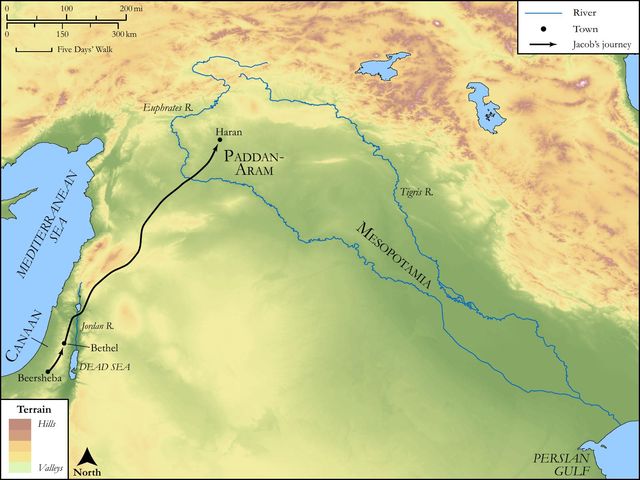
This verse is deeply embedded within the narrative of Jacob's journey to Haran, a significant turning point after his departure from Beersheba and his profound encounter with God at Bethel, where the Abrahamic covenant was reaffirmed and expanded (Genesis 28:10-22). Having fled Esau's wrath, Jacob is now in a foreign land, seeking refuge and a wife among his mother's kin. The scene at the well immediately precedes his meeting with Rachel, serving as a crucial transitional moment that connects his past divine encounter with his future family and destiny. It establishes the physical setting and the social customs that will facilitate this providential meeting.
Historical & Cultural Context
In the semi-arid country of Haran and Canaan, water sources like wells were indispensable for survival, not only for human communities but especially for their livestock. Wells were often communally owned or managed, and their precious water needed protection from evaporation, contamination, and unauthorized use. The practice of covering wells with large, heavy stones, as described here, was a common protective measure. The requirement for "all the flocks" to gather before the stone was moved reflects a communal agreement or customary law, ensuring fair access and preventing any single shepherd from monopolizing or depleting the water supply. This system fostered cooperation and shared responsibility within the pastoral society.
Key Themes
ShowHideGenesis 29:3 contributes to several overarching themes within the book of Genesis. It highlights the theme of Divine Providence, demonstrating how God orchestrates seemingly ordinary events and daily routines to bring about His purposes, as seen in Jacob's encounter with Rachel at this very well. The verse also underscores the theme of Stewardship of Resources, illustrating the careful management and protection of a vital commodity in a harsh environment. Furthermore, it subtly introduces the theme of Communal Life and Cooperation, emphasizing the shared effort and responsibility necessary for the well-being of the community. The well itself functions as a recurring motif in Genesis, often serving as a significant Place of Encounter and Covenantal Development, where pivotal relationships are formed and divine promises advanced, echoing similar scenes in Genesis 24:11-20 and Exodus 2:15-21.
Exposition and Analysis
ShowHideKey Word Analysis
ShowHideThis word (H5739) refers to an "arrangement" or "muster of animals," specifically a "drove, flock, or herd." Its use here emphasizes the collective nature of the animals being watered, underscoring the communal gathering of multiple shepherds and their respective livestock.
As a primitive root (H1556), "gâlal" means "to roll (literally or figuratively)." In this context, it denotes the physical action of moving the heavy stone. The verb implies a significant effort, suggesting that the stone was substantial enough to require more than one person, reinforcing the communal aspect of the task.
This term (H4725), properly meaning "a standing" or "a spot," is used broadly for a "locality" or "space." The phrase "in his place" signifies the precise and customary position where the stone was returned, indicating order, established practice, and the restoration of the well's protected state.
Verse Breakdown
ShowHide"And thither were all the flocks gathered:"
This opening clause establishes the setting and the communal nature of the watering process. It indicates that shepherds did not water their flocks individually or at random times, but rather waited for a designated gathering, implying a shared schedule or agreement among them.
"and they rolled the stone from the well's mouth,"
This phrase describes the collective action required. The "stone" (H68, ʼeben) covering the "well's mouth" (H6310, peh) was evidently large and heavy, necessitating the combined strength of "they," referring to the assembled shepherds. This highlights the physical challenge and the cooperative effort involved in accessing the water.
"and watered the sheep,"
Once the barrier was removed, the primary purpose of the gathering was fulfilled: the sheep (H6629, tsôʼn) were given water (H8248, shâqâh). This was a daily, essential task for the survival and well-being of the livestock in an arid environment.
"and put the stone again upon the well's mouth in his place."
This final clause emphasizes the immediate and careful restoration of the well's protection. The repetition of "put... again" (H7725, shûwb) signifies the customary practice of re-covering the well. "In his place" (H4725, mâqôwm) denotes the specific, accustomed position, ensuring the well's continued preservation from debris, evaporation, and unauthorized access, thus maintaining the communal system.
Literary Devices
ShowHideThe verse employs several literary devices to enhance its description and thematic depth. Realism is prominent, offering a detailed, unvarnished depiction of ancient pastoral life and its practical challenges. The Repetition of "the stone" and "the well's mouth" throughout the short verse emphasizes the centrality of these elements to the scene and the routine. Furthermore, the entire scene functions as a subtle form of Foreshadowing. The communal gathering and the shared effort to move the stone, leading to the watering of the flocks, sets the stage for Jacob's arrival and his own significant act of rolling the stone for Rachel, which will disrupt and then reshape these established customs, leading to his pivotal encounter and future. The well itself can be seen as Symbolism, representing not just a source of physical sustenance but also a nexus for divine encounters and the unfolding of God's redemptive plan.
Theological and Thematic Connections
ShowHideGenesis 29:3, while describing a seemingly ordinary event, subtly reveals profound theological truths. It underscores the concept of divine providence, demonstrating how God's sovereign hand orchestrates even the mundane details of daily life to bring about His greater purposes. The communal effort to access the life-giving water also speaks to the importance of shared responsibility and cooperation within a community, particularly in stewarding vital resources. This echoes a broader biblical principle that God often works through human diligence and communal effort, even as He directs the outcome. The well, as a focal point of gathering and sustenance, serves as a recurring motif for significant encounters and the unfolding of God's plan throughout salvation history.
Reflection and Application
ShowHideThe scene at the well in Genesis 29:3 offers profound lessons for contemporary life, highlighting the enduring value of cooperation, shared responsibility, and diligent stewardship. In a world often characterized by individualism and competition, this ancient practice reminds us that some of life's most significant "stones"—whether they be community challenges, family needs, or societal problems—require collective effort to move. It challenges us to look beyond personal gain and embrace the power of unity and mutual aid in managing shared resources, be they environmental, social, or spiritual. Moreover, this verse subtly teaches us to cultivate an attentiveness to God's providential hand in the seemingly ordinary routines of our lives. Just as Jacob's destiny was shaped at this common well, our own paths are often guided by divine orchestration through everyday interactions and responsibilities, calling us to trust that God is at work even in the most mundane moments.
Questions for Reflection
ShowHideFAQ
ShowHideWhy was a large stone used to cover the well, and why did it require collective effort to move?
ShowHideThe use of a large stone to cover the well served multiple crucial purposes for the shepherds of Haran. Primarily, it protected the precious water source from contamination by debris, sand, or animals. In an arid climate, it also significantly reduced evaporation, preserving the limited water supply. Furthermore, its substantial weight, often requiring the combined strength of several shepherds to move, enforced a communal agreement or custom. This ensured regulated and fair access to the water, preventing any single individual from monopolizing or depleting the well. It underscored the shared responsibility of the community for this vital resource, fostering cooperation among shepherds as they awaited the gathering of all flocks before watering could commence, as seen in Genesis 29:7-8.
Christ-Centered Fulfillment
ShowHideWhile Genesis 29:3 describes a physical well providing literal water for flocks, it profoundly foreshadows Christ as the ultimate source of spiritual "living water" (John 4:10). Just as the well was indispensable for the physical life of the sheep, Jesus declares Himself to be the essential sustenance for the spiritual life of humanity, inviting all who thirst to come to Him and drink (John 7:37-38). The communal gathering around the well and the shared effort to access its life-giving water can be seen as a beautiful type of the New Covenant community, the Church. In Christ, the barrier to God's life-giving presence, which was once a heavy stone of sin and separation, has been rolled away by His sacrificial work on the cross (Hebrews 10:19-22). Now, believers collectively draw from Christ, the wellspring of salvation, and are empowered by His Spirit to share this spiritual nourishment with one another and with a thirsty world (Revelation 22:17).