


Exodus 38:31
Bible text: King James Version (1769 Blayney text) · Public domain
Bible text: King James Version with Strong's numbers · Public domain
Bible text: Berean Standard Bible · Public domain
Bible text: American Standard Version (1901) · Public domain
Bible text: World English Bible, Messianic edition · Public domain
Bible text: Geneva Bible (1599) · Public domain
Bible text: Young's Literal Translation · Public domain
- וְאֶתve·'Etand <obj.>H853Conj-w ¦ DirObjMParticle Object Indicatorוְandאֶת<obj.>
- אַדְנֵי'ad·Nei[the] bases ofH134N-mpcNoun Plural Masculine Construct
- הֶחָצֵרhe·cha·Tzerthe courtyardH2691Art ¦ N-csNoun Singular common gender Absoluteהֶtheחָצֵרcourtyard
- סָבִיבsa·Vivall aroundH5439N-csNoun Singular common gender Absolute
- וְאֶתve·'Etand <obj.>H853Conj-w ¦ DirObjMParticle Object Indicatorוְandאֶת<obj.>
- אַדְנֵי'ad·Nei[the] bases ofH134N-mpcNoun Plural Masculine Construct
- שַׁעַרSha·'ar[the] gate ofH8179N-mscNoun Singular Masculine Construct
- הֶחָצֵרhe·cha·Tzerthe courtyardH2691Art ¦ N-csNoun Singular common gender Absoluteהֶtheחָצֵרcourtyard
- וְאֵתve·'Etand <obj.>H853Conj-w ¦ DirObjMParticle Object Indicatorוְandאֵת<obj.>
- כָּלkolallH3605N-mscNoun Singular Masculine Construct
- יִתְדֹתyit·Dot[the] tent pegs ofH3489N-fpcNoun Plural Feminine Construct
- הַמִּשְׁכָּןha·mish·Kanthe tabernacleH4908Art ¦ N-msNoun Singular Masculine Absoluteהַtheמִּשְׁכָּןtabernacle
- וְאֶתve·'Etand <obj.>H853Conj-w ¦ DirObjMParticle Object Indicatorוְandאֶת<obj.>
- כָּלkolallH3605N-mscNoun Singular Masculine Construct
- יִתְדֹתyit·Dot[the] tent pegs ofH3489N-fpcNoun Plural Feminine Construct
- הֶחָצֵרhe·cha·Tzerthe courtyardH2691Art ¦ N-csNoun Singular common gender Absoluteהֶtheחָצֵרcourtyard
- סָבִיבsa·Vivall aroundH5439N-csNoun Singular common gender Absolute
English is a literal word-by-word gloss of the Hebrew, not the KJV's wording. Why?
This is the original text the KJV's translators worked from — each Hebrew word with its own literal English meaning in this verse, prepared by scholars at Tyndale House, Cambridge. The KJV translates whole sentences, not word by word, so its wording differs: one Hebrew word can become several English words, and the KJV may choose “the LORD” where the gloss reads “Yahweh”. Both are faithful — they answer different questions. For the KJV's own rendering, switch to the KJV text.
Details
See on the biblical-era maps

Study this verse
Public-domain commentary
Matthew Henry
From his Commentary on the Whole Bible. Henry comments on passages, not single verses — this entry covers Exodus 38:21–31.
Here we have a breviat of the account which, by Moses's appointment, the Levites took and kept of the gold, silver, and brass, that was brought in for the tabernacle's use, and how it was employed. Ithamar the son of Aaron was appointed to draw up this account, and was thus by less services trained up and fitted for greater, Exo 38:21. Bezaleel and Aholiab must bring in the account (Exo 38:22, Exo 38:23), and Ithamar must audit it, and give it in to Moses. And it was thus: - 1. All the gold was a free-will offering; every man brought as he could and would, and it amounted to twenty-nine talents, and 730 shekels over, which some compute to be about 150,000l. worth of gold, according to the present value of it. Of this were made all the golden furniture and vessels. 2. The silver was levied by way of tax; every man was assessed half a shekel, a kind of poll-money, which amounted in the whole to 100 talents, and 1775 shekels over, Exo 38:25, Exo 38:26. Of this they made the sockets into which the boards of the tabernacle were let, and on which they rested; so that they were as the foundation of the tabernacle, Exo 38:27. The silver amounted to about 34,000l. of our money. The raising of the gold by voluntary contribution, and of the silver by way of tribute, shows that either way may be taken for the defraying of public expenses, provided that nothing be done with partiality. 3. The brass, though less valuable, was of use not only for the brazen altar, but for the sockets of the court, which probably in other tents were of wood: but it is promised (Isa 60:17), For wood I will bring brass. See how liberal the people were and how faithful the workmen were, in both which respects their good example ought to be followed.
Continue studying Exodus 38:31 across the web’s major study libraries — every link below opens this exact verse, chapter, or book on the destination site.
Read & Compare
 BibleGatewayThis verse in more than 200 translations and 70 languages.
 Bible.comThe YouVersion reader — hundreds of translations, reading plans, and highlights.
 ESV.orgCrossway's official English Standard Version reader.
 NET BibleThe NET translation with 60,000+ translators' notes on every rendering decision.
 STEP BibleTyndale House's free study tool — original text, vocabulary, and scholarly resources.
 BibliaLogos Bible Software's free web reader.
 USCCBThe New American Bible (Revised Edition) with the U.S. bishops' study notes.
Commentaries
 BibleHub CommentariesDozens of classic commentaries on this verse, gathered on one page.
 StudyLightMore than 100 commentary sets — the largest collection on the web.
 BibleRefPlain-English commentary on what this verse means, verse by verse.
 Enduring WordDavid Guzik's free commentary on this chapter, widely used by Bible teachers.
 Bible Study ToolsVerse commentary alongside Greek and Hebrew study aids.
Original Language & Research
- BibleHub InterlinearThe verse word by word — original language, transliteration, and English.
- BibleHub LexiconEvery word's original-language definition and Strong's entry.
 Blue Letter BibleDeep-study tools — Strong's numbers, concordance, and word studies.
 SefariaThe Hebrew text with Rashi and centuries of Jewish commentary.
Sermons, Hymns & Audio


TrulyRandomVerse is not affiliated with these sites and doesn’t control their content. They’re linked because they’re genuinely useful.
Summary
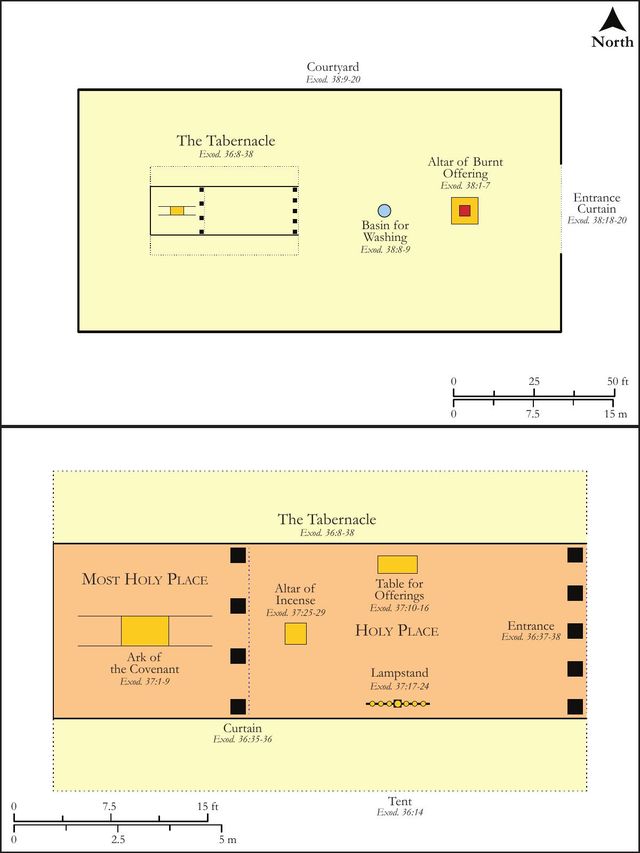
Exodus 38:31 meticulously concludes the detailed accounting of the bronze components used in the construction of the Tabernacle's outer court. Specifically, it enumerates the foundational sockets for the court's perimeter and its gate, alongside all the securing pins for both the Tabernacle proper and the surrounding court. This verse serves as a final, comprehensive summary of these essential structural elements, underscoring the completeness and precise adherence to God's divine blueprint for His sacred dwelling place among His people in the wilderness, emphasizing the importance of every detail in establishing a holy and stable sanctuary.
Context
ShowHideLiterary Context
Exodus 38:31 brings to a close a significant literary block (chapters 35-38) that chronicles the execution of the Tabernacle's construction, meticulously mirroring the divine instructions given by God to Moses on Mount Sinai in earlier chapters (Exodus 25-Exodus 31). This verse, in particular, follows the detailed description of the court's hangings, pillars, and gate, acting as a concluding summary of the bronze materials that provided structural integrity and stability to the outer perimeter. The repetitive use of "all" throughout the verse emphasizes the exhaustive and comprehensive nature of the work, highlighting that Bezalel, Oholiab, and the skilled craftsmen faithfully fulfilled every divine specification, ensuring no foundational or securing element was overlooked in the construction of God's sanctuary.
Historical & Cultural Context
The Tabernacle was designed as a portable sanctuary, essential for Israel's nomadic journey through the wilderness following their exodus from Egyptian bondage. Unlike the permanent temple structures common among the nations, the Tabernacle's design underscored God's dynamic presence with His people wherever they went. The materials, including the bronze detailed in this verse, were largely free-will offerings from the people (Exodus 35:4-9), signifying a communal investment in worship. Bronze, a durable and resilient metal, was strategically chosen for foundational elements and securing pins, providing crucial stability against the harsh desert elements. Its application for the sockets and pins of the court, which demarcated the sacred boundary, reinforced the concept of a consecrated space, set apart for the holy God, accessible only through prescribed means—a concept vital to Israelite worship and identity in their transient existence.
Key Themes
ShowHideExodus 38:31 contributes to several overarching themes within the book of Exodus and the Pentateuch. Firstly, it powerfully illustrates the theme of Divine Precision and Order. God's meticulous instructions for the Tabernacle, down to the smallest component like sockets and pins, reveal His character as a God who values order, exactness, and complete obedience in all matters pertaining to His worship and presence. This precision is evident from the initial commands in Exodus 25 through their faithful execution in Exodus 38. Secondly, the verse highlights the theme of Holiness and Separation. The Tabernacle, and especially its court, functioned as a sacred boundary, separating the holy from the common. The foundational sockets and securing pins physically established and maintained this boundary, emphasizing the need for purity and prescribed access when approaching a holy God. Finally, it reinforces the central theme of God's Dwelling Among His People. The entire Tabernacle project, culminating in these final structural details, was designed to create a tangible space for God's presence to reside with Israel, fulfilling His promise to be their God and walk among them (Exodus 29:45).
Exposition and Analysis
ShowHideKey Word Analysis
ShowHideFrom a root conveying strength, this term (H134) refers to the heavy, cast bronze bases or pedestals into which the wooden pillars of the Tabernacle court were firmly set. These sockets served as the foundational anchors, providing essential stability and support for the vertical posts that held the court's linen hangings. Their substantial weight and durable material were crucial for maintaining the integrity of the sacred enclosure in a shifting desert environment, symbolizing the unshakeable nature of God's dwelling and the foundational truths upon which His covenant with Israel was built.
Derived from an unused root meaning "to pin through or fast," this term (H3489) denotes tent pegs or stakes, also made of bronze, which were driven into the ground around the perimeter of the Tabernacle and its court. Ropes extended from the curtains and hangings to these pins, securing the entire structure against wind and ensuring its tautness and stability. The "pins" highlight the practical necessity of anchoring the portable sanctuary, signifying the importance of securing one's faith and life to firm ground, particularly in the transient and challenging journey of faith.
Verse Breakdown
ShowHide"And the sockets of the court round about"
This clause refers to the numerous bronze bases that provided the foundational support for the pillars forming the outer perimeter of the Tabernacle's courtyard. These sockets were indispensable for defining the sacred space and ensuring the structural stability of the entire enclosure, marking the boundary between the holy and the common.
"and the sockets of the court gate"
This specifies the particular sockets designated for the entrance of the court. The gate was a distinct and highly significant feature, marking the sole point of entry into the holy space. Its foundational supports were specifically called out, emphasizing its critical role as a threshold that regulated access to God's presence.
"and all the pins of the tabernacle"
This refers to the bronze tent pegs used to secure the innermost Tabernacle structure itself. It implies that ropes extended from the Tabernacle's coverings down to these pins, anchoring the inner sanctuary against the elements and ensuring its stability. This detail underscores the comprehensive nature of the construction, securing even the most sacred part of the dwelling.
"and all the pins of the court round about"
This refers to the bronze pins that secured the outer court's hangings and pillars, driven into the ground to hold the entire perimeter firm. The repetition of "all" for the pins, both for the Tabernacle and the court, emphasizes the meticulous and exhaustive nature of the construction, ensuring that every single part, no matter how seemingly minor, was firmly anchored and complete according to divine specification.
Literary Devices
ShowHideExodus 38:31 employs several literary devices to convey its profound message. Repetition is prominently featured, with "sockets" and "pins" mentioned multiple times, along with "court round about." This repetition serves to emphasize the thoroughness and completeness of the construction, underscoring that every single foundational and securing element was accounted for and properly installed, leaving no part of God's dwelling unstable or incomplete. Furthermore, the detailed listing of these seemingly minor, yet critically important, components functions as Merism. By enumerating specific parts (sockets, pins) that are essential for the whole, the text implies the integrity, stability, and comprehensive nature of the entire Tabernacle complex. This highlights that the entire structure, from its grand design to its smallest securing detail, was divinely ordained and meticulously executed. Finally, Symbolism is inherent in the materials and functions described. Bronze, known for its strength, durability, and association with judgment and purification in the Tabernacle's context, symbolizes the enduring nature of God's presence and the unshakeable foundation of His truth. The sockets and pins, as foundational and securing elements, symbolize the necessity of strong spiritual foundations and the importance of being firmly anchored in God's Word and will, even amidst life's uncertainties and challenges.
Theological and Thematic Connections
ShowHideExodus 38:31, though appearing as a technical detail, profoundly illustrates God's character and His relationship with humanity. It reveals a God of meticulous order, who values precision and completeness in all things, especially in matters pertaining to His presence and worship. The emphasis on foundational elements and securing pins underscores the theological principle that a stable and holy dwelling for God requires unwavering adherence to His divine blueprint, down to the smallest detail. This speaks to the importance of strong spiritual foundations in our own lives and ministries, reminding us that seemingly minor acts of obedience and faithfulness contribute significantly to the overall integrity of our walk with God. The Tabernacle's construction, meticulously detailed and faithfully executed, served as a tangible representation of God's desire to dwell among His people, a theme that finds its ultimate fulfillment in Christ.
Reflection and Application
ShowHideThe detailed accounting of the Tabernacle's sockets and pins in Exodus 38:31 offers profound lessons for contemporary believers. It reminds us that God is a God of order and precision, who cares deeply about every aspect of our lives, not just the grand gestures. Just as the Tabernacle's stability depended on these seemingly humble, yet critical, components, our spiritual lives require strong foundations and diligent attention to the "small" details of obedience, truth, and discipline. Are we ensuring that our faith is firmly anchored in the unshakeable truths of God's Word, or are we neglecting the "sockets" and "pins" that provide stability against the winds of doubt and temptation? This verse challenges us to embrace a holistic view of discipleship, recognizing that every act of faithfulness, no matter how small, contributes to the integrity and effectiveness of our walk with God. It also calls us to value the "unseen" work—the foundational elements that support the visible structure—and to serve with diligence and integrity, knowing that God sees and values every detail of our obedience, for His glory and the stability of His kingdom.
Questions for Reflection
ShowHideFAQ
ShowHideWhy is so much detail given to these seemingly minor parts like sockets and pins?
ShowHideThe extensive detail given to every component of the Tabernacle, including the seemingly minor sockets and pins, serves several crucial purposes. Firstly, it underscores God's absolute precision and meticulousness in His instructions. Every part was divinely ordained, emphasizing that God is a God of order and that worship must be conducted according to His specific will. Secondly, it highlights the importance of every single component for the integrity and stability of the whole. Without these foundational sockets and securing pins, the entire structure, despite its grandeur, would be unstable and vulnerable. This teaches us that even the "small" or "unseen" details are vital for the proper functioning and stability of God's work, whether it's the physical Tabernacle or the spiritual "building" of His people. Finally, it demonstrates the faithfulness of the craftsmen, Bezalel and Oholiab, and the people of Israel in executing God's commands with exactness, emphasizing the value of obedience in all things, as seen throughout Exodus 35 to Exodus 38.
What is the significance of bronze being used for these elements?
ShowHideBronze was a significant material in the Tabernacle's construction, particularly for items related to the outer court. It was used for the altar of burnt offering (Exodus 27:1-8) and the laver (Exodus 30:17-21). Bronze is a strong, durable metal, symbolizing strength, endurance, and judgment. Its use for the sockets and pins of the court, which demarcated the sacred space, reinforces themes of strength and the necessary separation required for approaching a holy God. The outer court, with its bronze elements, was the place of sacrifice and purification, signifying the initial steps of atonement and cleansing required before drawing nearer to God's presence. Thus, the bronze sockets and pins not only provided physical stability but also symbolically pointed to the strength and enduring nature of the divine requirements for holiness and access to God.
Christ-Centered Fulfillment
ShowHideThe meticulous construction of the Tabernacle, with its foundational sockets and securing pins, finds its ultimate and perfect fulfillment in Jesus Christ. The Tabernacle was God's temporary dwelling place among His people, a shadow of a greater reality. John 1:14 powerfully declares that "the Word became flesh and dwelt among us," with the Greek word for "dwelt" (ἐσκήνωσεν, eskēnōsen) literally meaning "tabernacled." Jesus is the true and ultimate Tabernacle, the perfect embodiment of God's presence among humanity, a dwelling not made with human hands or secured by bronze pins, but by divine power and eternal truth. Just as the Tabernacle's stability rested on its foundational elements, Christ is the unshakeable foundation of our faith, as affirmed in 1 Corinthians 3:11: "For no one can lay a foundation other than that which is laid, which is Jesus Christ." The temporary nature of the wilderness Tabernacle, with its portable sockets and pins, foreshadowed the permanent dwelling of God with His people, made possible through Christ's perfect sacrifice on the cross (Hebrews 9:11-14). This ultimate reality is fully realized in the new heaven and new earth, where God's dwelling will be permanently with humanity (Revelation 21:3), a security established not by bronze, but by the finished work of the Lamb of God, who makes all things new.