


Exodus 36:32
Bible text: King James Version (1769 Blayney text) · Public domain
Bible text: Berean Standard Bible · Public domain
Bible text: American Standard Version (1901) · Public domain
Bible text: World English Bible, Messianic edition · Public domain
Bible text: Geneva Bible (1599) · Public domain
Bible text: Young's Literal Translation · Public domain
- וַחֲמִשָּׁהva·cha·mi·Shahand fiveH2568Conj-w ¦ Adj-csAdjective Numerical Singular common gender Absoluteוַandחֲמִשָּׁהfive
- בְרִיחִםve·ri·ChimbarsH1280N-mpNoun Plural Masculine Absolute
- לְקַרְשֵׁיle·kar·Sheifor [the] frames ofH7175Prep-l ¦ N-mpcNoun Plural Masculine Constructלְforקַרְשֵׁי[the] frames of
- צֶלַעtze·la'[the] side ofH6763N-fscNoun Singular Feminine Construct
- הַמִּשְׁכָּןha·mish·Kanthe tabernacleH4908Art ¦ N-msNoun Singular Masculine Absoluteהַtheמִּשְׁכָּןtabernacle
- הַשֵּׁנִיתha·she·Nit<the> secondH8145Art ¦ Adj-fsAdjective Numerical Position Singular Feminine Absoluteהַ<the>שֵּׁנִיתsecond
- וַחֲמִשָּׁהva·cha·mi·Shahand fiveH2568Conj-w ¦ Adj-csAdjective Numerical Singular common gender Absoluteוַandחֲמִשָּׁהfive
- בְרִיחִםve·ri·ChimbarsH1280N-mpNoun Plural Masculine Absolute
- לְקַרְשֵׁיle·kar·Sheifor [the] frames ofH7175Prep-l ¦ N-mpcNoun Plural Masculine Constructלְforקַרְשֵׁי[the] frames of
- הַמִּשְׁכָּןha·mish·Kanthe tabernacleH4908Art ¦ N-msNoun Singular Masculine Absoluteהַtheמִּשְׁכָּןtabernacle
- לַיַּרְכָתַיִםlai·yar·kha·Ta·yimfor the innermost partsH3411Prep-l ¦ N-fdNoun Dual Feminine Absoluteלַfor theיַּרְכָתַיִםinnermost parts
- יָמָּהYa·mahwest -wardH3220N-ms ¦ SfxNoun Singular Masculine Absoluteיָמָּwestה-ward
English is a literal word-by-word gloss of the Hebrew, not the KJV's wording. Why?
This is the original text the KJV's translators worked from — each Hebrew word with its own literal English meaning in this verse, prepared by scholars at Tyndale House, Cambridge. The KJV translates whole sentences, not word by word, so its wording differs: one Hebrew word can become several English words, and the KJV may choose “the LORD” where the gloss reads “Yahweh”. Both are faithful — they answer different questions. For the KJV's own rendering, switch to the KJV text.
Details
See on the biblical-era maps

Study this verse
Public-domain commentary
Matthew Henry
From his Commentary on the Whole Bible. Henry comments on passages, not single verses — this entry covers Exodus 36:14–34.
Here, 1. The shelter and special protection that the church is under are signified by the curtains of hair-cloth, which were spread over the tabernacle, and the covering of rams' skins and badgers' skins over them, Exo 36:14-19. God has provided for his people a shadow from the heat, and a covert from storm and rain, Isa 4:6. They are armed against all weathers; the sun and the moon shall not smite them: and they are protected from the storms of divine wrath, that hail which will sweep away the refuge of lies, Isa 28:17. Those that dwell in God's house shall find, be the tempest ever so violent, or the dropping ever so continual, it does not rain in. 2. The strength and stability of the church, though it is but a tabernacle, are signified by the boards and bars with which the curtains were borne up, Exo 36:20-34. The boards were coupled together and joined by the bars which shot through them; for the union of the church, and the hearty agreement of those that are its stays and supporters, contribute abundantly to its strength and establishment.
Continue studying Exodus 36:32 across the web’s major study libraries — every link below opens this exact verse, chapter, or book on the destination site.
Read & Compare
 BibleGatewayThis verse in more than 200 translations and 70 languages.
 Bible.comThe YouVersion reader — hundreds of translations, reading plans, and highlights.
 ESV.orgCrossway's official English Standard Version reader.
 NET BibleThe NET translation with 60,000+ translators' notes on every rendering decision.
 STEP BibleTyndale House's free study tool — original text, vocabulary, and scholarly resources.
 BibliaLogos Bible Software's free web reader.
 USCCBThe New American Bible (Revised Edition) with the U.S. bishops' study notes.
Commentaries
 BibleHub CommentariesDozens of classic commentaries on this verse, gathered on one page.
 StudyLightMore than 100 commentary sets — the largest collection on the web.
 BibleRefPlain-English commentary on what this verse means, verse by verse.
 Enduring WordDavid Guzik's free commentary on this chapter, widely used by Bible teachers.
 Bible Study ToolsVerse commentary alongside Greek and Hebrew study aids.
Original Language & Research
- BibleHub InterlinearThe verse word by word — original language, transliteration, and English.
- BibleHub LexiconEvery word's original-language definition and Strong's entry.
 Blue Letter BibleDeep-study tools — Strong's numbers, concordance, and word studies.
 SefariaThe Hebrew text with Rashi and centuries of Jewish commentary.
Sermons, Hymns & Audio


TrulyRandomVerse is not affiliated with these sites and doesn’t control their content. They’re linked because they’re genuinely useful.
Summary
Exodus 36:32 meticulously details the fabrication of five connecting bars for one of the Tabernacle's long sides (likely the north or south) and another five bars for its western, or rear, side. This verse is an integral part of the larger narrative in Exodus that chronicles the faithful and precise execution of God's divine architectural blueprint for His sacred dwelling place among the Israelites, underscoring the structural integrity, divine order, and symbolic significance inherent in every component of the portable sanctuary.
Context
ShowHideLiterary Context
This verse is situated within the latter half of the book of Exodus, which transitions from the miraculous deliverance of Israel from Egypt and the giving of the Law at Mount Sinai to the detailed instructions for and subsequent construction of the Tabernacle. Following God's comprehensive blueprint for the Tabernacle (outlined in Exodus 25-31), chapters Exodus 35-40 meticulously recount the diligent and Spirit-empowered work of Bezalel, Oholiab, and other skilled artisans. Exodus 36 specifically focuses on the initial phases of construction, detailing the collection of materials and the fabrication of core components like the curtains, frames, and connecting bars. The preceding verses would have described the construction of the upright boards themselves and the bars for other sections, making this verse a continuation of that precise inventory and construction report, highlighting the systematic and thorough adherence to the divine pattern.
Historical & Cultural Context
The Tabernacle was the central point of worship and the tangible symbol of God's presence among the nomadic Israelites during their forty years of wilderness wanderings. While temples were common among the nations, a portable sanctuary was unique, reflecting Israel's transient state and God's dynamic, covenantal relationship with His people. The meticulous instructions for its construction, including the precise number and placement of these connecting bars, underscored the absolute holiness of God and the sacredness of His dwelling. Every detail, from the materials to the dimensions and the interlocking mechanisms like these bars, was divinely ordained, not left to human discretion. This level of precision was crucial for a structure designed to house the very presence of the Almighty, ensuring its stability, portability, and symbolic perfection as an image of God's ordered creation. The "boards" (often translated as "frames" or "planks") were the gold-overlaid acacia wood uprights that formed the walls, and the bars, running through rings on these boards, provided the essential lateral stability, holding the entire structure firmly together.
Key Themes
ShowHideExodus 36:32 contributes to several overarching themes in the book of Exodus and the Pentateuch. Foremost is the theme of Divine Blueprint and Human Obedience. God's detailed instructions for the Tabernacle (e.g., Exodus 25:9) and the Israelites' faithful execution demonstrate the importance of obedience to God's revealed will. Another key theme is God's Dwelling Among His People, as the Tabernacle served as the tangible manifestation of God's immanent presence, a concept central to the covenant relationship established at Sinai. The structural elements, like the bars, also contribute to the theme of Unity and Order, reflecting God's character as a God of order and His desire for His people to be unified in their worship and purpose. The meticulous construction also emphasizes the Holiness of God and the sacredness required in approaching Him, as every detail contributed to a sanctuary fit for the Almighty. This verse, therefore, is not merely architectural detail but a theological statement about God's nature and His relationship with Israel.
Exposition and Analysis
ShowHideKey Word Analysis
ShowHideFrom the root meaning "to flee" or "to bolt," this term refers to a "bolt" or "bar." In the context of the Tabernacle, these were long, sturdy pieces of acacia wood, overlaid with gold, designed to pass through rings attached to the upright boards. Their primary function was to provide crucial structural integrity, binding the individual boards together into a unified and stable wall. The repeated mention of "five bars" for each section (as also seen in the initial instructions in Exodus 26:26-28) emphasizes a deliberate and non-negotiable aspect of the design, ensuring uniform strength and cohesion across the entire sacred structure.
From an unused root meaning "to split off," this word denotes a "slab" or "plank." These were the upright "planks" or "frames" that formed the walls of the Tabernacle. Made of acacia wood and overlaid with gold, they were the primary structural components to which the rings for the bars were attached. The "boards" were designed to fit into silver sockets at their bases, providing vertical stability. The bars, therefore, were essential for horizontal stability, preventing the individual boards from separating and ensuring the integrity of the entire sanctuary as a single, cohesive unit.
From an unused root meaning "to roar," this word primarily means "sea" or "large body of water." However, it is also used locally to refer to the "west," as the Mediterranean Sea lay to the west of Israel. In the context of the Tabernacle, "westward" precisely defines the orientation of the rear wall, indicating that this side faced the west. This geographical detail underscores the meticulous nature of the Tabernacle's design and construction, where even directional alignment was divinely specified and faithfully executed.
Verse Breakdown
ShowHide"And five bars for the boards of the other side of the tabernacle,"
This clause specifies the precise number and purpose of the bars intended for one of the two long walls of the Tabernacle. Given the Tabernacle's rectangular layout, "the other side" refers to either the north or south long wall, complementing previous descriptions of the first long wall. The emphasis on "five bars" highlights the meticulous adherence to God's divine blueprint, underscoring the uniformity and structural strength required for the sacred dwelling. These bars were crucial for binding the individual upright boards into a cohesive and stable wall.
"and five bars for the boards of the tabernacle for the sides westward."
This second clause details the fabrication of the bars for the rear wall of the Tabernacle, which was oriented to face the west. The reiteration of "five bars" reinforces the consistent application of the divine design across all structural sides of the sanctuary. This meticulous attention to every segment of the structure, including its specific orientation, demonstrates the thoroughness of the construction process and the critical importance of every component in maintaining the overall integrity, stability, and sacredness of God's dwelling place.
Literary Devices
ShowHideThe primary literary devices at play in Exodus 36:32, and indeed throughout the Tabernacle construction accounts, are Repetition and Meticulous Detail. The consistent reiteration of specific numbers (e.g., "five bars") and precise measurements across multiple chapters serves to emphasize the divine origin of the design and the exactitude required in its execution. This Precision is not merely for structural integrity but also functions symbolically, underscoring God's perfect order, His sovereignty over creation, and His demand for obedience and faithfulness in the smallest of tasks. The detailed enumeration of components also creates a sense of Completeness and Thoroughness, assuring the reader that every part of God's plan was faithfully carried out, leaving nothing to chance or human improvisation. Furthermore, there is an element of Symbolism inherent in the bars themselves, as they represent the essential unity and cohesion necessary for the Tabernacle's structure, foreshadowing the spiritual unity God desires for His people. This literary approach elevates the physical construction to a profound theological statement about God's character and His relationship with His people.
Theological and Thematic Connections
ShowHideExodus 36:32, with its focus on the Tabernacle's connecting bars, speaks profoundly to God's character of divine order, precision, and His desire for a unified dwelling place among His people. The meticulous instructions for the Tabernacle's construction reveal a God who is not chaotic but perfectly ordered, demanding exactness in the execution of His will. The bars, which bound the individual boards into a single, stable structure, symbolize the essential unity and cohesion required within the community of faith. Just as the physical dwelling needed to be securely held together, so too does God desire His people to be bound together by common purpose, divine principles, and mutual support, reflecting His own unified nature. This physical structure foreshadowed the spiritual reality of God dwelling among His people and the importance of their corporate unity. The Tabernacle, held together by these bars, served as a powerful visual aid for the Israelites, demonstrating that God's presence brings stability and unity to His people.
Reflection and Application
ShowHideThe detailed account of the Tabernacle's construction, even down to the specific number of bars for each side, offers profound lessons for contemporary believers. It reminds us that God is a God of order and precision, valuing faithfulness in seemingly small details as much as in grand undertakings. Our spiritual lives and corporate worship should reflect this divine standard, not in rigid legalism, but in a reverent commitment to excellence and intentionality in all we do for Him. Just as the bars provided stability and unity to the Tabernacle, so too are we called to be "bars" of unity within the body of Christ, holding one another up, strengthening the collective structure of the Church, and ensuring its stability in a fractured world. This passage encourages us to consider how our individual contributions, no matter how seemingly minor, contribute to the overall strength and integrity of God's dwelling place in the world today. It challenges us to embrace the divine call to unity and to recognize that our faithfulness in small, precise acts of obedience can have a profound impact on the larger spiritual structure God is building.
Questions for Reflection
ShowHideFAQ
ShowHideWhy were there "five bars" specifically mentioned for each side?
ShowHideThe number "five" is consistently mentioned in the Tabernacle instructions (e.g., Exodus 26:26-28) for each set of bars. This specific number was part of God's precise divine blueprint, not an arbitrary human choice. The instructions indicate that the middle bar ran the full length of the wall, while the other four (two on each side of the middle) were shorter. This arrangement ensured maximum structural integrity and stability for the Tabernacle's walls, allowing it to withstand the rigors of travel and provide a secure dwelling for the Lord. It underscores God's meticulous attention to every detail of His sacred space, ensuring its perfection and durability.
What is meant by "the other side" and "the sides westward" in relation to the Tabernacle?
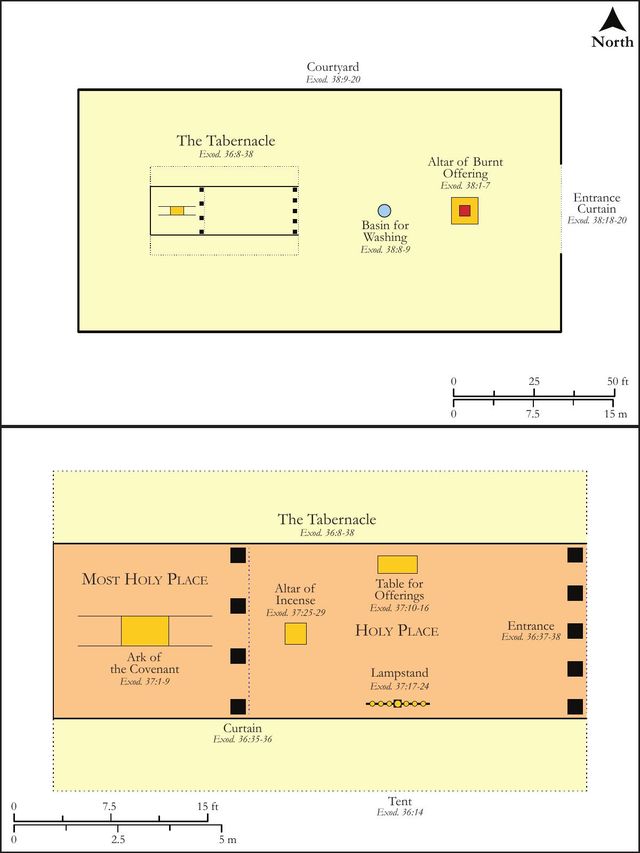
ShowHideThe Tabernacle was a rectangular structure, typically oriented with its entrance facing east. "The other side" likely refers to one of the two long walls (either the north or south), complementing a previous description of the first long wall. The "sides westward" refers to the back wall of the Tabernacle, which faced the west, opposite the entrance. This verse, therefore, completes the description of the bars for the remaining walls after the initial instructions for the first long wall and the front. This precise geographical orientation and detailing highlight the comprehensive and exact nature of the construction process, ensuring every part of the divine design was fulfilled.
Christ-Centered Fulfillment
ShowHideThe Tabernacle, with its meticulously crafted components like the connecting bars, served as a powerful type and shadow of the ultimate dwelling place of God among humanity: Jesus Christ. While the physical bars held together a temporary, earthly sanctuary, Christ himself is the eternal and perfect "bar" who unifies all things, holding together not just a structure but all of creation (see Colossians 1:17). He is the true meeting place between God and humanity, the ultimate fulfillment of God's desire to dwell among His people, as explicitly stated in John 1:14). Furthermore, just as the Tabernacle's bars ensured its unity and stability, Christ is the foundation and unifying head of His spiritual body, the Church. Through His sacrifice and resurrection, He binds together believers from every tribe and tongue into one unified temple, where God now dwells by His Spirit (Ephesians 2:19-22). The precision seen in Exodus 36:32 thus foreshadows the perfect, divinely ordained plan of salvation executed in Christ, where every detail of God's purpose for redemption is flawlessly fulfilled, establishing a new and living way for humanity to draw near to God through the one mediator, Jesus Christ.