


Exodus 36:31
Bible text: King James Version (1769 Blayney text) · Public domain
Bible text: Berean Standard Bible · Public domain
Bible text: American Standard Version (1901) · Public domain
Bible text: World English Bible, Messianic edition · Public domain
Bible text: Geneva Bible (1599) · Public domain
Bible text: Young's Literal Translation · Public domain
- וַיַּעַשׂvai·Ya·'asand he madeH6213Conj-w ¦ V-Qal-ConsecImperf-3msVerb Qal Consecutive Imperfect 3rd Singular Masculineוַandיַּעַשׂhe made
- בְּרִיחֵיbe·ri·Cheibars ofH1280N-mpcNoun Plural Masculine Construct
- עֲצֵי'a·Tzeiwood<s> ofH6086N-mpcNoun Plural Masculine Construct
- שִׁטִּיםshi·TimacaciaH7848N-mpNoun Plural Masculine Absolute
- חֲמִשָּׁהcha·mi·Shahfive [bars]H2568Adj-csAdjective Numerical Singular common gender Absolute
- לְקַרְשֵׁיle·kar·Sheifor [the] frames ofH7175Prep-l ¦ N-mpcNoun Plural Masculine Constructלְforקַרְשֵׁי[the] frames of
- צֶלַעtze·la'[the] side ofH6763N-fscNoun Singular Feminine Construct
- הַמִּשְׁכָּןha·mish·Kanthe tabernacleH4908Art ¦ N-msNoun Singular Masculine Absoluteהַtheמִּשְׁכָּןtabernacle
- הָאֶחָתha·'e·Chat<the> oneH259Art ¦ Adj-fsAdjective Numerical Singular Feminine Absoluteהָ<the>אֶחָתone
English is a literal word-by-word gloss of the Hebrew, not the KJV's wording. Why?
This is the original text the KJV's translators worked from — each Hebrew word with its own literal English meaning in this verse, prepared by scholars at Tyndale House, Cambridge. The KJV translates whole sentences, not word by word, so its wording differs: one Hebrew word can become several English words, and the KJV may choose “the LORD” where the gloss reads “Yahweh”. Both are faithful — they answer different questions. For the KJV's own rendering, switch to the KJV text.
Details
See on the biblical-era maps

Study this verse
Public-domain commentary
Matthew Henry
From his Commentary on the Whole Bible. Henry comments on passages, not single verses — this entry covers Exodus 36:14–34.
Here, 1. The shelter and special protection that the church is under are signified by the curtains of hair-cloth, which were spread over the tabernacle, and the covering of rams' skins and badgers' skins over them, Exo 36:14-19. God has provided for his people a shadow from the heat, and a covert from storm and rain, Isa 4:6. They are armed against all weathers; the sun and the moon shall not smite them: and they are protected from the storms of divine wrath, that hail which will sweep away the refuge of lies, Isa 28:17. Those that dwell in God's house shall find, be the tempest ever so violent, or the dropping ever so continual, it does not rain in. 2. The strength and stability of the church, though it is but a tabernacle, are signified by the boards and bars with which the curtains were borne up, Exo 36:20-34. The boards were coupled together and joined by the bars which shot through them; for the union of the church, and the hearty agreement of those that are its stays and supporters, contribute abundantly to its strength and establishment.
Continue studying Exodus 36:31 across the web’s major study libraries — every link below opens this exact verse, chapter, or book on the destination site.
Read & Compare
 BibleGatewayThis verse in more than 200 translations and 70 languages.
 Bible.comThe YouVersion reader — hundreds of translations, reading plans, and highlights.
 ESV.orgCrossway's official English Standard Version reader.
 NET BibleThe NET translation with 60,000+ translators' notes on every rendering decision.
 STEP BibleTyndale House's free study tool — original text, vocabulary, and scholarly resources.
 BibliaLogos Bible Software's free web reader.
 USCCBThe New American Bible (Revised Edition) with the U.S. bishops' study notes.
Commentaries
 BibleHub CommentariesDozens of classic commentaries on this verse, gathered on one page.
 StudyLightMore than 100 commentary sets — the largest collection on the web.
 BibleRefPlain-English commentary on what this verse means, verse by verse.
 Enduring WordDavid Guzik's free commentary on this chapter, widely used by Bible teachers.
 Bible Study ToolsVerse commentary alongside Greek and Hebrew study aids.
Original Language & Research
- BibleHub InterlinearThe verse word by word — original language, transliteration, and English.
- BibleHub LexiconEvery word's original-language definition and Strong's entry.
 Blue Letter BibleDeep-study tools — Strong's numbers, concordance, and word studies.
 SefariaThe Hebrew text with Rashi and centuries of Jewish commentary.
Sermons, Hymns & Audio


TrulyRandomVerse is not affiliated with these sites and doesn’t control their content. They’re linked because they’re genuinely useful.
Summary
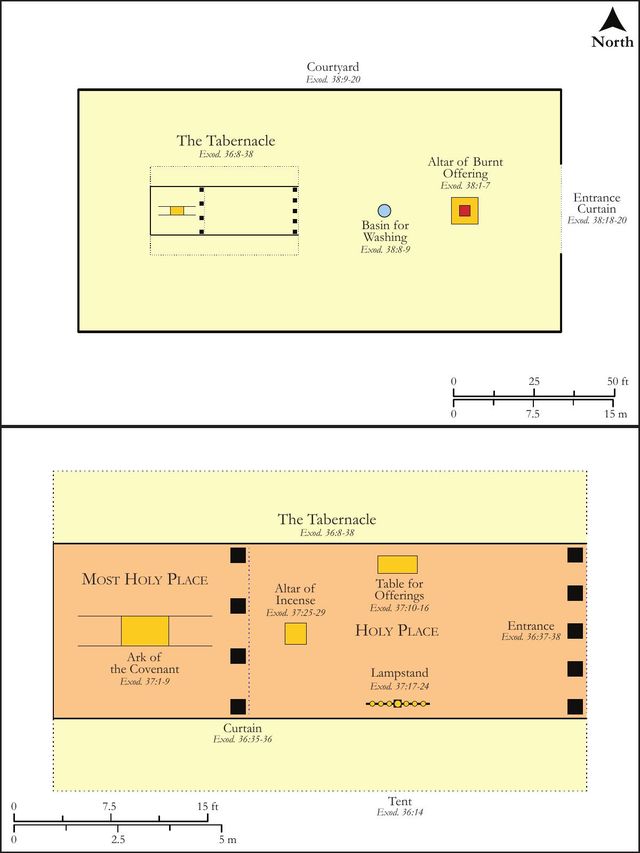
Exodus 36:31 meticulously chronicles a specific detail in the construction of the Tabernacle: the crafting of the connecting bars from shittim (acacia) wood. These five bars were indispensable for the structural integrity and cohesive unity of the Tabernacle's walls, designed to interlock and firmly bind the individual upright boards. This verse not only highlights the precise execution of God's elaborate blueprint for His dwelling place but also underscores the Israelites' faithful obedience in bringing the portable sanctuary to fruition in the wilderness.
Context
ShowHideLiterary Context
Exodus 36:31 is embedded within the broader narrative of the Tabernacle's construction, following God's detailed instructions given to Moses on Mount Sinai in Exodus 25-31. Chapters 35-40 then describe the actual fulfillment of these divine commands by the Israelite community, under the leadership of divinely gifted artisans like Bezalel and Oholiab. Specifically, Chapter 36 focuses on the construction of the Tabernacle's core framework, including the various curtains, coverings, and the essential wooden boards and their connecting bars. This verse, therefore, represents a granular yet vital detail within the larger account of the Israelites' diligent and faithful obedience to God's architectural specifications, ensuring the stability and unity of the sanctuary's walls before the inner and outer coverings were applied.
Historical & Cultural Context
The construction of the Tabernacle unfolded during Israel's formative forty-year sojourn in the Sinai wilderness, a period profoundly shaped by God's direct presence and guidance. The Tabernacle was designed as the central hub of worship, sacrifice, and divine encounter for this nomadic nation. The selection of "shittim wood" (acacia) was highly practical, as this durable and resilient timber was indigenous and readily available in the Sinai peninsula. The very concept of a portable sanctuary was paramount for a people constantly on the move, and every component, including these connecting bars, was engineered for both robust durability and ease of assembly and disassembly. The meticulous attention to detail in God's instructions (as seen in Exodus 26) and the Israelites' faithful execution reflects a profound reverence for God's holiness and the imperative of creating a dwelling place fitting for His glorious presence among His covenant people.
Key Themes
ShowHideThis verse contributes significantly to several overarching themes within Exodus. Firstly, it exemplifies the theme of Divine Precision and Order. God's instructions for the Tabernacle are not vague but incredibly specific, down to the number and material of the connecting bars, underscoring His nature as a God of perfect order. Secondly, it highlights Human Obedience and Faithfulness. The Israelites, through Bezalel and Oholiab, meticulously followed every command, demonstrating their commitment to God's will, a theme prevalent throughout Exodus 35-40. Thirdly, the bars, by unifying individual boards, contribute to the theme of Unity and Cohesion. The Tabernacle's structural integrity, achieved through these binding elements, foreshadows the unity desired within God's people, the spiritual dwelling place He would later inhabit, as hinted at in passages like Ephesians 2:21-22.
Exposition and Analysis
ShowHideKey Word Analysis
ShowHideDerived from a root meaning "to flee" or "to bolt," this term refers to a bolt or a bar. In the context of the Tabernacle, these were long, sturdy wooden poles designed to be inserted through rings attached to the upright boards, thereby binding them together. The term emphasizes their function as a securing and unifying element, ensuring the walls were not merely a collection of individual planks but a single, rigid, and stable structure. This system was crucial for the Tabernacle's ability to withstand the rigors of desert travel and frequent assembly/disassembly.
This specifically denotes acacia wood, a tree common in the Sinai desert (from its "scourging thorns"). It is renowned for its exceptional hardness, durability, and natural resistance to decay and insects. God's choice of shittim wood for the Tabernacle's structural components—including the boards, altars, and the Ark of the Covenant—underscores the practical wisdom embedded in the divine design, ensuring the longevity and integrity of His sacred dwelling in a harsh environment. Its inherent strength also subtly points to the enduring nature of God's covenant and His steadfast presence.
From a root meaning "to dwell," this word signifies a residence or dwelling place. While it can refer to a shepherd's hut or even the lair of animals, its specific application here is to the Tabernacle, particularly its wooden walls. This term encapsulates the very essence of the structure: it was God's portable dwelling place among His people, the physical manifestation of His presence, where He would meet with them and receive their worship. The meticulous construction of every part, including the bars, was essential for the integrity of this sacred dwelling.
Verse Breakdown
ShowHide"And he made bars of shittim wood;"
This initial clause identifies the material and the action of creation. "He" refers to Bezalel, the chief craftsman, and his skilled team, who meticulously fashioned these bars in direct obedience to God's detailed instructions. The use of "shittim wood" (acacia) highlights the selection of a material known for its strength, durability, and resistance to the harsh desert environment, ensuring the longevity and integrity of the Tabernacle's structure.
"five for the boards of the one side of the tabernacle,"
This specifies the precise number of bars required for each of the Tabernacle's long sides (north and south). The "five" bars were crucial for interlocking the upright boards, transforming them from individual planks into a cohesive and sturdy wall. As detailed in Exodus 26:26-28, these bars provided essential reinforcement, with a central bar running the full length of the wall, signifying the complete unity and stability of the entire structure.
Literary Devices
ShowHideExodus 36:31 employs several potent literary devices. Precision is strikingly evident in the exact specification of "five" bars for "the one side," reflecting the highly detailed and unyielding nature of God's architectural instructions for the Tabernacle. This meticulousness underscores the divine order and the imperative of exact obedience in matters pertaining to God's holy presence. The broader context of Exodus 36, which repeatedly affirms that the artisans made everything "as the LORD commanded Moses," exemplifies Repetition of the theme of faithful obedience. This constant reiteration emphasizes the unwavering commitment of the Israelites to executing God's will, highlighting that no detail, however seemingly insignificant, was overlooked in the creation of God's holy dwelling. Furthermore, the bars themselves function as a powerful Symbolism, representing the essential unity and structural integrity required for God's dwelling place and, by extension, for His covenant people.
Theological and Thematic Connections
ShowHideExodus 36:31, though a granular detail in the Tabernacle's construction, profoundly illustrates God's character as a God of order, precision, and purposeful design. Every single component of the Tabernacle, from the magnificent Ark of the Covenant to these humble connecting bars, was indispensable for the whole, reflecting a divine design where nothing is superfluous or accidental. This meticulousness speaks volumes about the holiness of God and the reverence required in approaching Him, emphasizing that His dwelling among His people was to be perfect in every conceivable respect. The bars, by binding individual boards into a unified wall, also powerfully prefigure the theological theme of unity within God's people, where diverse individuals are brought together, bound by common purpose and divine design, to form a cohesive spiritual dwelling for God's presence.
Reflection and Application
ShowHideThe seemingly mundane detail of connecting bars in Exodus 36:31 offers profound spiritual lessons for believers today. Just as these bars provided essential stability and unity to the physical Tabernacle, our spiritual lives and the corporate body of believers require foundational truths and unifying principles to stand firm amidst the shifting sands of life. God's meticulous attention to every part of the Tabernacle reminds us that He is a God of divine order, and He desires that our personal lives, our families, and our churches reflect His integrity and purpose. We are called to be intentional in building our lives upon the unchanging truth of His Word, allowing His Holy Spirit to bind us together in love, shared mission, and spiritual purpose. We must ask ourselves: What are the "bars" that provide stability and unity in my personal walk with God and in my community of faith? Am I actively contributing to the structural integrity and spiritual cohesion of the house God is building?
Questions for Reflection
ShowHideFAQ
ShowHideWhy were five bars used for each side, and what was their function?
ShowHideThe five bars were absolutely essential for the structural integrity and stability of the Tabernacle's walls. As detailed in Exodus 26:26-28, two bars were positioned high, two low, and one central bar ran through the very middle of the boards, extending from one end of the wall to the other. These bars passed through rings attached to the upright boards, effectively interlocking them. This system transformed individual planks into a unified, rigid, and stable wall, ensuring the Tabernacle could withstand the elements during travel and maintain its form when erected at each new encampment.
What was the significance of using "shittim wood" for these bars and other Tabernacle components?
ShowHide"Shittim wood" refers to acacia wood, a material that was abundant in the Sinai wilderness where the Israelites sojourned. Its significance lies in its exceptional properties: it is remarkably hard, durable, and naturally resistant to decay, insects, and the harsh desert environment. This made it an ideal and divinely chosen material for the structural elements of the Tabernacle, including the boards, altars, and the Ark of the Covenant. Its use ensured the longevity and integrity of God's sacred dwelling place. The selection of a readily available yet highly suitable material also demonstrates God's practical wisdom and provision in His design for His people.
Christ-Centered Fulfillment
ShowHideThe Tabernacle, with its intricate design and every meticulously crafted component—including these unifying bars—served as a profound shadow, pointing forward to the ultimate dwelling of God among humanity, perfectly fulfilled in Jesus Christ. Just as the shittim wood bars provided indispensable stability and unity to the physical structure of the Tabernacle, Christ is the foundational "cornerstone" who perfectly holds together the spiritual temple, His Church (Ephesians 2:20-22). The Tabernacle's primary purpose was to facilitate God's tangible presence with His people, a purpose perfectly and eternally fulfilled in Christ, who is "God with us" (Immanuel, as prophesied in Isaiah 7:14 and confirmed in Matthew 1:23). He is the true and perfect meeting place between a holy God and sinful humanity, the one through whom we have direct access to the Father (John 14:6). Moreover, the structural unity provided by these connecting bars powerfully foreshadows the spiritual unity that Christ brings to His body, the Church, where believers, though diverse in gifts and backgrounds, are bound together by the Holy Spirit into one cohesive spiritual house for God's glory (1 Corinthians 12:12-13). Thus, the humble bars of shittim wood whisper of Christ, the one who perfectly unifies and eternally sustains God's dwelling place among His redeemed people.