


Deuteronomy 2:4
Bible text: King James Version (1769 Blayney text) · Public domain
Bible text: King James Version with Strong's numbers · Public domain
Bible text: Berean Standard Bible · Public domain
Bible text: American Standard Version (1901) · Public domain
Bible text: World English Bible, Messianic edition · Public domain
Bible text: Geneva Bible (1599) · Public domain
Bible text: Young's Literal Translation · Public domain
- וְאֶתve·'Etand <obj.>H853Conj-w ¦ DirObjMParticle Object Indicatorוְandאֶת<obj.>
- הָעָםha·'Amthe peopleH5971Art ¦ N-msNoun Singular Masculine Absoluteהָtheעָםpeople
- צַוtzavcommandH6680V-Piel-Imp-2msVerb Piel Imperative 2nd Singular Masculine
- לֵאמֹרle·Mor<to> sayingH559Prep-l ¦ V-Qal-InfVerb Qal Infinitive Constructלֵ<to>אמֹרsaying
- אַתֶּם'a·TemyouH859Pro-2mpPronoun Personal 2nd Plural Masculine
- עֹבְרִים'oe·Rim[are] about to passH5674V-Qal-Prtcpl-mpVerb Qal Participle Plural Masculine Absolute
- בִּגְבוּלbig·Vulin [the] territory ofH1366Prep-b ¦ N-mscNoun Singular Masculine Constructבִּinגְבוּל[the] territory of
- אֲחֵיכֶם'a·chei·Khemyour relativesH251N-mpc ¦ 2mpNoun Plural Masculine Constructאֲחֵיrelativesכֶםyour
- בְּנֵיbe·nei[the] descendants ofH1121N-mpcNoun Plural Masculine Construct
- עֵשָׂו'e·SavEsauH6215N-proper-mNoun Proper Masculine
- הַיֹּשְׁבִיםhai·yo·she·Vimwho dwellH3427Art ¦ V-Qal-Prtcpl-mpVerb Qal Participle Plural Masculine Absoluteהַwhoיֹּשְׁבִיםdwell
- בְּשֵׂעִירbe·se·'Irin SeirH8165Prep-b ¦ N-properNoun Proper LocationבְּinשֵׂעִירSeir
- וְיִירְאוּve·yi·re·'Uso they may be afraidH3372Conj-w ¦ V-Qal-ConjImperf-3mpVerb Qal Conjunction+Imperfect 3rd Plural Masculineוְsoיִירְאוּthey may be afraid
- מִכֶּםmi·Kemfrom youPrep-m ¦ 2mpSuffix Personal 2nd Plural Masculineמִfromכֶּםyou
- וְנִשְׁמַרְתֶּםve·nish·mar·Temand you will take heedH8104Conj-w ¦ V-Niphal-ConsecPerf-2mpVerb Niphal Consecutive Perfect 2nd Plural Masculineוְandנִשְׁמַרְתֶּםyou will take heed
- מְאֹדme·'OdexceedinglyH3966Adj-msAdjective Numerical Singular Masculine Absolute
English is a literal word-by-word gloss of the Hebrew, not the KJV's wording. Why?
This is the original text the KJV's translators worked from — each Hebrew word with its own literal English meaning in this verse, prepared by scholars at Tyndale House, Cambridge. The KJV translates whole sentences, not word by word, so its wording differs: one Hebrew word can become several English words, and the KJV may choose “the LORD” where the gloss reads “Yahweh”. Both are faithful — they answer different questions. For the KJV's own rendering, switch to the KJV text.
Details
See on the biblical-era maps
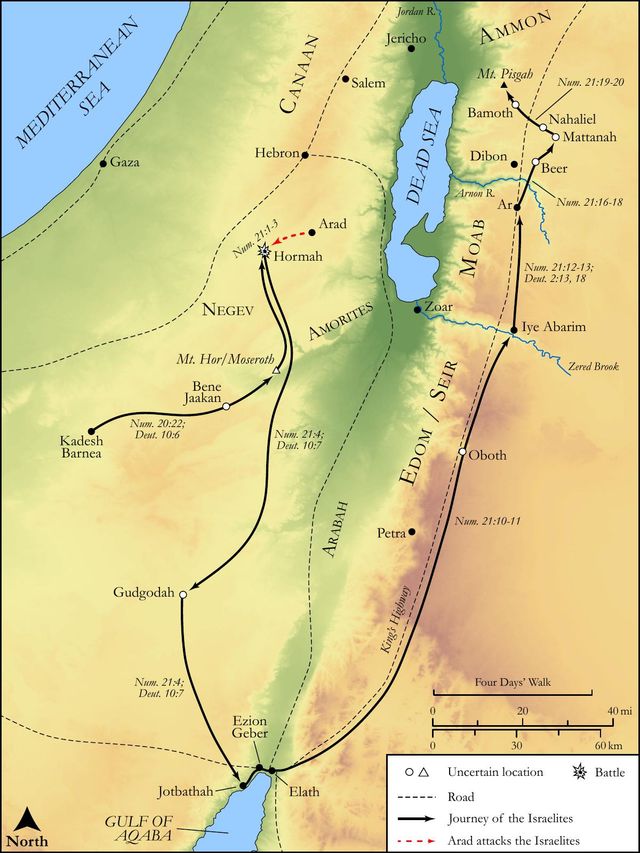
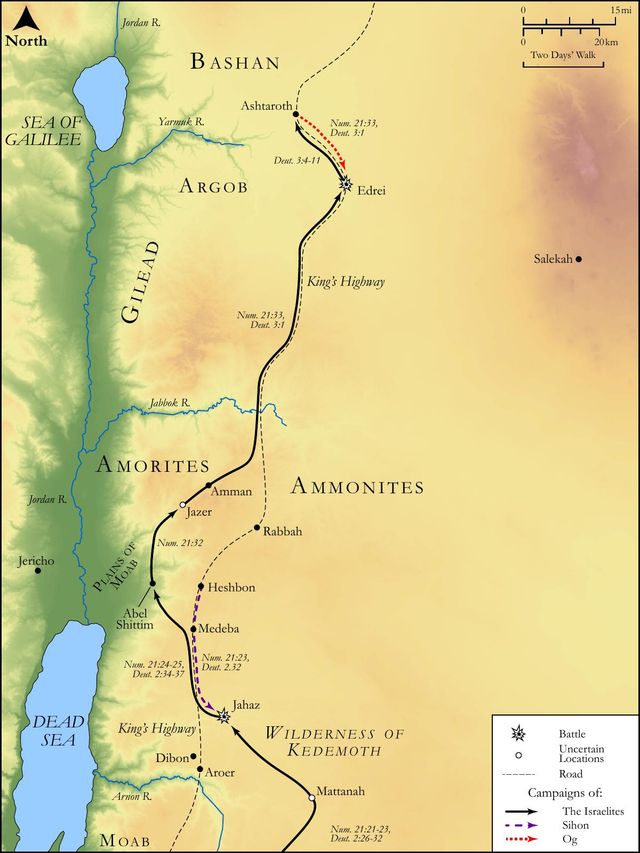
Study this verse
Public-domain commentary
Matthew Henry
From his Commentary on the Whole Bible. Henry comments on passages, not single verses — this entry covers Deuteronomy 2:1–7. His three-level outline is real structure in the source text, so it is rendered as structure.
Here is, I. A short account of the long stay of Israel in the wilderness: We compassed Mount Seir many days, Deu 2:1. Nearly thirty-eight years they wandered in the deserts of Seir; probably in some of their rests they staid several years, and never stirred; God by this not only chastised them for their murmuring and unbelief, but, 1. Prepared them for Canaan, by humbling them for sin, teaching them to mortify their lusts, to follow God, and to comfort themselves in him. It is a work of time to make souls meet for heaven, and it must be done by a long train of exercises. 2. He prepared the Canaanites for destruction. All this time the measure of their iniquity was filling up; and, though it might have been improved by them as a space to repent in, it was abused by them to the hardening of their hearts. Now that the host of Israel was once repulsed, and after that was so long entangled and seemingly lost in the wilderness, they were secure, and thought the danger was over from that quarter, which would make the next attempt of Israel upon them the more dreadful.
II.Orders given them to turn towards Canaan.
Though God contend long, he will not contend for ever. Though Israel may be long kept waiting for deliverance or enlargement, it will come at last: The vision is for an appointed time, and at the end it shall speak, and not lie.
III.A charge given them not to annoy the Edomites.
1.They must not offer any hostility to them as enemies: Meddle not with them, Deu 2:4, Deu 2:5.
(1.)They must not improve the advantage they had against them, by the fright they would be put into upon Israel's approach: "They shall be afraid of you, knowing your strength and numbers, and the power of God engaged for you; but think not that, because their fears make them an easy prey, you may therefore prey upon them; no, take heed to yourselves." There is need of great caution and a strict government of our own spirits, to keep ourselves from injuring those against whom we have an advantage. Or this caution is given to the princes; they must not only not meddle with the Edomites themselves, but not permit any of the soldiers to meddle with them.
(2.)They must not avenge upon the Edomites the affront they gave them in refusing them passage through their country, Num 20:21. Thus, before God brought Israel to destroy their enemies in Canaan, he taught them to forgive their enemies in Edom.
(3.)They must not expect to have any part of their land given them for a possession: Mount Seir was already settled upon the Edomites, and they must not, under pretence of God's covenant and conduct, think to seize for themselves all they could lay hands on. Dominion is not founded in grace. God's Israel shall be well placed, but must not expect to be placed alone in the midst of the earth, Isa 5:8.
2.They must trade with them as neighbours, buy meat and water of them, and pay for what they bought, Deu 2:6. Religion must never be made a cloak for injustice. The reason given (Deu 2:7), is, "God hath blessed thee, and hitherto thou hast lacked nothing; and therefore," (1.) "Thou needest not beg; scorn to be beholden to Edomites, when thou hast a God all-sufficient to depend upon. Thou hast wherewithal to pay for what thou callest for (thanks to the divine blessing!); use therefore what thou hast, use it cheerfully, and do not sponge upon the Edomites." (2.) "Therefore thou must not steal. Thou hast experienced the care of the divine providence concerning thee, in confidence of which for the future, and in a firm belief of its sufficiency, never use any indirect methods for thy supply. Live by the faith and not by thy sword."
Continue studying Deuteronomy 2:4 across the web’s major study libraries — every link below opens this exact verse, chapter, or book on the destination site.
Read & Compare
 BibleGatewayThis verse in more than 200 translations and 70 languages.
 Bible.comThe YouVersion reader — hundreds of translations, reading plans, and highlights.
 ESV.orgCrossway's official English Standard Version reader.
 NET BibleThe NET translation with 60,000+ translators' notes on every rendering decision.
 STEP BibleTyndale House's free study tool — original text, vocabulary, and scholarly resources.
 BibliaLogos Bible Software's free web reader.
 USCCBThe New American Bible (Revised Edition) with the U.S. bishops' study notes.
Commentaries
 BibleHub CommentariesDozens of classic commentaries on this verse, gathered on one page.
 StudyLightMore than 100 commentary sets — the largest collection on the web.
 BibleRefPlain-English commentary on what this verse means, verse by verse.
 Enduring WordDavid Guzik's free commentary on this chapter, widely used by Bible teachers.
 Bible Study ToolsVerse commentary alongside Greek and Hebrew study aids.
Original Language & Research
- BibleHub InterlinearThe verse word by word — original language, transliteration, and English.
- BibleHub LexiconEvery word's original-language definition and Strong's entry.
 Blue Letter BibleDeep-study tools — Strong's numbers, concordance, and word studies.
 SefariaThe Hebrew text with Rashi and centuries of Jewish commentary.
Sermons, Hymns & Audio


TrulyRandomVerse is not affiliated with these sites and doesn’t control their content. They’re linked because they’re genuinely useful.
Summary
Deuteronomy 2:4 records a crucial divine directive given to the Israelites through Moses as they prepared to complete their wilderness journey and enter the Promised Land. God commands His people to pass through the territory of their kinsmen, the Edomites (descendants of Esau), who resided in Seir, without engaging in conflict. Despite the Edomites' anticipated fear of the formidable Israelite multitude, the Lord explicitly warns Israel to exercise extreme caution and self-control, emphasizing strict adherence to His non-confrontational plan and respect for established boundaries.
Context
ShowHideLiterary Context
Deuteronomy 2:4 is embedded within Moses' extensive second discourse to the new generation of Israelites, delivered on the plains of Moab just before their entry into Canaan. This chapter functions as a historical recap, meticulously detailing the final stages of Israel's wilderness wanderings from Kadesh-barnea to their current encampment. Moses' recounting of God's past guidance serves to remind the people of divine faithfulness and their ongoing obligation to obey. This specific verse initiates the narrative of Israel's approach to Edomite territory, establishing a distinct protocol for interaction with them, which stands in stark contrast to the later commands for the dispossession of the Canaanites. It powerfully underscores God's sovereign control over all nations and His precise instructions for Israel's conduct, even when they possess overwhelming numerical and spiritual advantage.
Historical & Cultural Context
The "children of Esau" are the Edomites, descendants of Esau, Jacob's twin brother, which establishes a unique, albeit often strained, familial relationship with Israel. Their homeland, Seir, was a rugged, mountainous region situated southeast of the Dead Sea, known for its fortified settlements and difficult terrain. Historically, the Edomites had developed into a recognized kingdom and regional power. The command to "pass through the coast" (border/territory) was a common request for large groups or armies needing transit, as Israel itself made to Edom and to Sihon king of the Amorites, but it frequently led to conflict. God's directive here acknowledges the Edomites' established sovereignty over their land, differentiating them from the Canaanite nations whose land Israel was divinely appointed to inherit. This instruction also subtly curbed any potential presumption on Israel's part, reminding them that their forty years of divine provision and military successes did not grant them a universal right to conquer any land they encountered.
Key Themes
ShowHideThis verse significantly contributes to several profound themes woven throughout Deuteronomy. Firstly, it highlights Divine Guidance and Sovereignty, demonstrating God's meticulous and active involvement in directing Israel's path and dictating their interactions with other nations. He not only commands their precise route but also prophetically declares the Edomites' future reaction ("they shall be afraid of you"), showcasing His power over the hearts of men and His providential care for Israel. Secondly, the verse emphasizes Respect for Boundaries and Divine Distinction. Despite Israel's strength and divine backing, God commands them to respect Edomite territory, setting a precedent for how Israel was to treat certain nations differently from the Canaanites. This aligns with the broader theme of God's righteous judgment and His specific plans for each people group, as further detailed in Deuteronomy 2:5-6. Lastly, the imperative "take ye good heed unto yourselves therefore" underscores the critical theme of Obedience and Self-Control. It is a strong warning for Israel to remain disciplined, avoid provocation, and adhere strictly to God's precise instructions, even when they possess a clear advantage. This caution is vital for Israel's continued journey and their covenant relationship with God, reminding them that their success depends not on their might, but on their faithful submission to God's will, a principle evident throughout their wilderness wanderings.
Exposition and Analysis
ShowHideKey Word Analysis
ShowHideThis term refers to a boundary, border, or the territory enclosed by such a boundary. In Deuteronomy 2:4, it signifies the clearly defined land and jurisdiction of the Edomites. The command for Israel to "pass through the coast" implies traversing their established domain without infringing upon their sovereignty, claiming their land, or settling within it. It underscores the necessity of a respectful, albeit temporary, transit through another nation's recognized and divinely appointed territory.
This primitive word denotes a brother or kinsman, used broadly to describe both literal familial relationships and metaphorical affinity. Here, it explicitly highlights the shared ancestry between Israel (descendants of Jacob) and Edom (descendants of Esau). Despite generations of separation and historical tensions, God reminds Israel of this blood kinship. This relationship is the foundational reason for God's specific command to treat Edom differently from the Canaanites, emphasizing a unique divine restraint and a call for Israel to acknowledge these familial bonds, however distant.
This primitive root means "to hedge about," "guard," "keep," "watch," or "be careful." The KJV's "take ye good heed" powerfully conveys the intensity of this warning. It demands vigilant, disciplined self-control and a conscious effort to avoid any action that might provoke conflict, violate God's command, or lead to covetousness or aggression. It is a profound call to internal and external restraint, guarding against any deviation from the precise divine mandate, especially in a situation where Israel possessed a clear advantage.
Verse Breakdown
ShowHide"And command thou the people, saying,"
This opening clause establishes the absolute divine authority and non-negotiable nature of the instruction that follows. It is not Moses' strategic counsel but a direct, authoritative word from God Himself, delivered through His chosen leader to the entire nation. This highlights the command's paramount importance and its binding character for every Israelite.
"Ye [are] to pass through the coast of your brethren the children of Esau, which dwell in Seir;"
This clause precisely outlines Israel's immediate objective and identifies the specific people and territory involved. Israel's divinely appointed path leads them directly through the established territory of the Edomites. The designation "your brethren the children of Esau" is crucial, underscoring the unique familial relationship and providing the theological basis for the non-confrontational approach. Seir is explicitly identified as the Edomites' rightful and established dwelling place, reinforcing their legitimate claim to the land.
"and they shall be afraid of you:"
This is a divine declaration, a prophetic insight into the Edomites' future reaction. It reveals God's sovereign power to instill fear in surrounding nations, demonstrating His active presence with Israel and His ability to supernaturally clear their path. This statement also serves as a subtle, yet potent, warning against pride for Israel, reminding them that their intimidating presence and the fear they inspire are a direct result of God's work on their behalf, not their own inherent might or prowess.
"take ye good heed unto yourselves therefore:"
This concluding imperative is a powerful warning and an urgent call to extreme vigilance and self-control. The conjunction "therefore" directly links this caution to the preceding declaration of Edom's fear. Because Israel will appear formidable and inspire dread, they must be exceptionally careful not to exploit this advantage, provoke conflict, or deviate from God's specific instructions for peaceful passage. It emphasizes the critical need for discipline, humility, and strict obedience to avoid any action that might lead to sin, dishonor God, or disrupt His meticulously planned journey.
Literary Devices
ShowHideDeuteronomy 2:4 masterfully employs several literary devices to convey its profound message. The most evident is Direct Command, as God issues a clear, unambiguous, and authoritative instruction to Moses, which is then relayed to the people. This highlights the immediate and binding nature of the divine will and the expectation of instant obedience. There is also a strong element of Prophecy or Foreshadowing in the declarative statement "they shall be afraid of you," which not only reassures Israel of God's active presence but also subtly sets the stage for their required cautious behavior. The repeated use of Kinship Terminology ("your brethren the children of Esau") functions as a powerful rhetorical device, serving as a constant reminder to Israel of their shared lineage and providing the theological and ethical basis for the specific, non-aggressive approach God commands. Finally, the concluding phrase, "take ye good heed unto yourselves therefore," employs intense Emphasis through its strong imperative and the use of the reflexive pronoun, underscoring the critical importance of self-control, vigilance, and precise obedience in this unique and potentially volatile interaction.
Theological and Thematic Connections
ShowHideDeuteronomy 2:4 unveils profound theological truths about God's sovereignty, His justice, and His exacting expectations for His covenant people. It powerfully demonstrates that God is not merely the God of Israel but the supreme sovereign ruler over all nations, meticulously determining their boundaries, their dwelling places, and their interactions. His command to respect Edomite territory, despite Israel's overwhelming power and divine backing, showcases His differentiated plan for various peoples and His unwavering commitment to justice, even for those not in direct covenant with Him. This teaches Israel, and us, that divine favor and power do not grant license for indiscriminate conquest, exploitation, or self-serving aggression. Instead, they demand greater responsibility, humility, and precise obedience to God's specific instructions, which may sometimes involve counter-intuitive restraint rather than overt aggression. The fear instilled in the Edomites further testifies to God's active, intimidating presence with His people, serving as a constant reminder that Israel's true strength and security originate solely from Him, not from their own might or numbers.
Reflection and Application
ShowHideDeuteronomy 2:4 offers timeless and profoundly relevant principles for believers navigating the complex relationships and challenging circumstances of a world often driven by self-interest, power dynamics, and territoriality. It calls us to a deep and unwavering trust in God's specific guidance, even when His instructions seem counter-intuitive, limit our perceived advantages, or demand a path of humility rather than conquest. Just as Israel was divinely commanded to respect the established boundaries of their "brethren" the Edomites, we are called to exercise disciplined self-control and genuine respect for others, even those with whom we might have historical tensions, differing beliefs, or who seem weaker or less significant. This means actively resisting the pervasive temptation to exploit situations for personal gain, to impose our will through force or manipulation, or to act aggressively when God calls for restraint, patience, or reconciliation. True spiritual strength and genuine influence are found not in our own might or cleverness, but in humble, precise obedience to God's commands, allowing Him to open doors, protect us, and vindicate His name. Our spiritual journey, much like Israel's wilderness trek, requires constant vigilance against pride, covetousness, and presumption, demanding a disciplined adherence to God's Word, ensuring that our actions consistently reflect His character of justice, mercy, and divine order.
Questions for Reflection
ShowHideFAQ
ShowHideWhy did God command Israel to pass through Edom peacefully, especially given later hostilities between the two nations?
ShowHideGod's command in Deuteronomy 2:4 is deeply rooted in the unique familial relationship between Israel (descendants of Jacob) and Edom (descendants of Esau), whom God explicitly refers to as "brethren." Unlike the Canaanite nations, whose land was divinely designated for Israel's inheritance due to their extreme wickedness and idolatry, Edom was not marked for dispossession. God, as the sovereign ruler of all nations, had established the Edomites in their own territory, specifically stating, "I have given Mount Seir unto Esau for a possession" (Deuteronomy 2:5). This command highlights God's perfect justice and His differentiated plans for various peoples. While later historical accounts, such as Edom's hostile refusal to grant Israel passage in Numbers 20:14-21 and their subsequent enmity, clearly demonstrate their failure to uphold the familial bond, God's initial command to Israel reflects His perfect will for peaceful coexistence where possible, based on established boundaries and kinship.
What is the significance of the Edomites being "afraid" of Israel?
ShowHideThe prophetic statement "they shall be afraid of you" (Deuteronomy 2:4) serves multiple crucial purposes. Firstly, it is a divine declaration, powerfully demonstrating God's sovereign power to instill fear and awe in the hearts of nations before His people, thereby supernaturally clearing their path and validating His active presence with Israel. This fear is not merely a result of Israel's military might alone but a supernatural dread inspired by the God who had miraculously delivered them from Egypt and sustained them in the wilderness. Secondly, this foreknowledge of Edom's fear functions as a profound warning to Israel. Because they would appear formidable and inspire such dread, they were to be even more diligent in "taking good heed" to themselves, ensuring they did not exploit this psychological advantage, act presumptuously, or provoke unnecessary conflict. It powerfully reinforces that their strength and the fear they inspired were divine gifts, to be stewarded with profound humility and precise obedience, rather than used for self-aggrandizement or unrighteous conquest.
Christ-Centered Fulfillment
ShowHideDeuteronomy 2:4, with its profound emphasis on divine guidance, the respectful adherence to boundaries, and the critical importance of disciplined obedience, finds its ultimate and perfect fulfillment in the person and redemptive work of Jesus Christ. As the quintessential Israelite and the embodiment of God's covenant faithfulness, Jesus perfectly exemplified the "good heed" that God commanded His people to take. He meticulously fulfilled every divine instruction, not seeking His own will but always that of the Father (John 5:30). Where ancient Israel often faltered in maintaining self-control or respecting established boundaries, frequently succumbing to pride, covetousness, or aggression, Christ demonstrated perfect humility, unwavering restraint, and impeccable obedience, even when facing immense power, provocation, or profound injustice (Matthew 26:53). He did not come to conquer earthly kingdoms by military force or political might, but to establish a spiritual kingdom through humble service and sacrificial love (John 18:36). Furthermore, the "brethren" motif in this verse points profoundly to Christ as our ultimate Brother (Hebrews 2:11), through whom we are miraculously reconciled to God and brought into His eternal spiritual family. His perfect obedience, culminating in His sacrificial death and resurrection, enables us, by the indwelling power of His Holy Spirit, to truly "take good heed" to God's commands, to walk in love and profound respect for others, and to navigate the world's complexities with divine wisdom, trusting implicitly in His sovereign guidance for our journey toward the heavenly promised land and the eternal Sabbath rest that remains for the people of God (Hebrews 4:9-11).