


2 Samuel 17:11
- כִּיkiforH3588PrtParticle Conditional
- יָעַצְתִּיya·'Atz·tiI counselH3289V-Qal-Perf-1csVerb Qal Perfect 1st Singular common gender
- הֵאָסֹףHe·'a·sofcertainly <to be gathered>H622V-Niphal-InfAbsVerb Niphal Infinitive Absolute
- יֵאָסֵףye·'a·Seflet it be gatheredH622V-Niphal-Imperf-3msVerb Niphal Imperfect 3rd Singular Masculine
- עָלֶיךָ'a·Lei·khato youH5921Prep ¦ 2msPreposition Definiteעָלֶיtoךָyou
- כָלkholallH3605N-mscNoun Singular Masculine Construct
- יִשְׂרָאֵלYis·ra·'ElIsraelH3478N-properNoun Proper Location
- מִדָּןmi·Danfrom DanH1835Prep-m ¦ N-properNoun Proper LocationמִfromדָּןDan
- וְעַדve·'adand toH5704Conj-w ¦ PrepPrepositionוְandעַדto
- בְּאֵרbe·'ErBeerH884N-properNoun Proper Location
- שֶׁבַעShe·va'ShebaH884N-properNoun Proper Location
- כַּחוֹלka·Chollike the sandH2344Prep-k ¦ N-msNoun Singular Masculine Absoluteכַּlike theחוֹלsand
- אֲשֶׁר'a·SherwhichH834RelParticle Relative
- עַל'al[is] atH5921PrepPreposition
- הַיָּםhai·Yamthe seaH3220Art ¦ N-msNoun Singular Masculine Absoluteהַtheיָּםsea
- לָרֹבla·Rofor multitudeH7230Prep-l ¦ N-msNoun Singular Masculine Absoluteלָforרֹבmultitude
- וּפָנֶיךָu·fa·Nei·khaand your faceH6440Conj-w ¦ N-mpc ¦ 2msNoun Plural Masculine Constructוּandפָנֶיfaceךָyour
- הֹלְכִיםho·le·Khim[will be] goingH1980V-Qal-Prtcpl-mpVerb Qal Participle Plural Masculine Absolute
- בַּקְרָבbak·Ravin the battleH7128Prep-b ¦ N-msNoun Singular Masculine Absoluteבַּin theקְרָבbattle
English is a literal word-by-word gloss of the Hebrew, not the KJV's wording. Why?
This is the original text the KJV's translators worked from — each Hebrew word with its own literal English meaning in this verse, prepared by scholars at Tyndale House, Cambridge. The KJV translates whole sentences, not word by word, so its wording differs: one Hebrew word can become several English words, and the KJV may choose “the LORD” where the gloss reads “Yahweh”. Both are faithful — they answer different questions. For the KJV's own rendering, switch to the KJV text.
Details
See on the biblical-era map
Study this verse
Public-domain commentary
Matthew Henry
From his Commentary on the Whole Bible. Henry comments on passages, not single verses — this entry covers 2 Samuel 17:1–14. His four-level outline is real structure in the source text, so it is rendered as structure.
Absalom is now in peaceable possession of Jerusalem; the palace-royal is his own, as are the thrones of judgment, even the thrones of the house of David. His good father reigned in Hebron, and only over the tribe of Judah, above seven years, and was not hasty to destroy his rival; his government was built upon a divine promise, the performance of which he was sure of in due time, and therefore he waited patiently in the mean time. But the young man, Absalom, not only hastens from Hebron to Jerusalem, but is impatient there till he has destroyed his father, cannot be content with his throne till he has his life; for his government is founded in iniquity, and therefore feels itself tottering and thinks itself obliged to do every thing with violence. That so profligate a wretch as Absalom should aim at the life of so good a father is not so strange (there are here and there monsters in nature); but that the body of the people of Israel, to whom David had been so great a blessing in all respects, should join with him in his attempt, is very amazing. But their fathers often mutinied against Moses. The best of parents, and the best of princes will not think it strange if they be made uneasy by those who should be their support and joy, when they consider what sons and what subjects David himself had.
David and all that adhered to him must be cut off. This was resolved, for aught that appears, nemine contradicente - unanimously. None durst mention his personal merits, and the great services done to his country, in opposition to this resolve, nor so much as ask, "Why, what evil has he done to forfeit his crown, much less his head?" None durst propose that his banishment should suffice, for the present, nor that agents should be sent to treat with him to resign the crown, which, having so tamely quitted the city, they might think he would easily be persuaded to do. It was not long since that Absalom himself fled for a crime, and David contented himself with his being an exile, though he deserved death, nay, he mourned and longed for him; but so perfectly void of all natural affection is this ungrateful Absalom that he eagerly thirsts after his own father's blood. It is past dispute that David must be destroyed; all the question is how he may be destroyed.
I.Ahithophel advises that he be pursued immediately, this very night, with a flying army (which he himself undertakes the command of), that the king only be smitten and his forces dispersed, and then the people that were now for him would fall in with Absalom of course, and there would not be such a long war as had been between the house of Saul and David: The man whom thou seekest is as if all returned, Sa2 17:1-3. By this it appears that Absalom had declared his design to be upon David's life, and Ahithophel concurs with him in it. Smite the shepherd, and the sheep will be scattered, and be an easy prey to the wolf. Thus he contrives to include the war in a little compass, by fighting neither with small nor great but the king of Israel only, and to conclude it in a little time, by falling upon him immediately. Nothing could be more fatal to David than the taking of these measures. It was too true that he was weary and weak-handed, that a little thing would make him afraid, else he would not have fled from his house upon the first alarm of Absalom's rebellion; it was probable enough that upon a fierce attack, especially in the night, the small force he had would be put into confusion and disorder, and it would bean easy thing to smite the king only, and then the business would be done, the whole nation would be reduced, of course, and all the people, says he, shall be in peace. See how a general ruin is called by usurpers a general peace; but thus the devil's palace is in peace, while he, as a strong man armed, keeps it. Compare with this the plot of Caiaphas (that second Ahithophel) against the Son of David, to crush his interest by destroying him. Let that one man die for the people, Joh 11:50. Kill the heir, and the inheritance shall be ours, Mat 21:38. But the counsel of them both was turned into foolishness. Yet the children of light may, in their generation, learn wisdom from the children of this world. What our hand finds to do let us do quickly, and with all our might. It is prudence to be vigorous and expeditious, and not to lose time, particularly in our spiritual warfare. If Satan flee from us, let us follow our blow. Those that have quarrelled with crowned heads have generally observed the decorum of declaring only against their evil counsellors, and calling them to an account (The king himself can do no wrong, it is they that do it); but Absalom's bare-faced villany strikes at the king directly, nay, at the king only; for (would you think it?) this saying, I will smite the king only, pleased Absalom well (Sa2 17:4), nor had he so much sense of humor and virtue left him to pretend to startle at it or even to be reluctant in this barbarous and monstrous resolution. What good can stand before the heat of a furious ambition?
II.Hushai advises that they be not too hasty in pursuing David, but take time to draw up all their force against him, and to overpower him with numbers, as Ahithophel had advised to take him by surprise. Now Hushai, in giving this counsel, really intended to serve David and his interest, that he might have time to send him notice of his proceedings, and that David might gain time to gather an army and to remove into those countries beyond Jordan, in which, lying more remote, Absalom had probably least interest. Nothing would be of greater advantage to David in this juncture than time to turn himself in; that he may have this, Hushai counsels Absalom to do nothing rashly, but to proceed with caution and secure his success by securing his strength. Now,
1.Absalom gave Hushai a fair invitation to advise him. All the elders of Israel approved of Ahithophel's counsel, yet God overruled the heart of Absalom not to proceed upon it, till he had consulted Hushai (Sa2 17:5): Let us hear what he saith. Herein he thought he did wisely (two heads are better than one), but God taketh the wise in their own craftiness. See Mr. Poole's note on this.
2.Hushai gave very plausible reasons for what he said.
(1.)He argued against Ahithophel's counsel, and undertook to show the danger of following his advice. It is with modesty, and all possible deference to Ahithophel's settled reputation, that he begs leave to differ from him, Sa2 17:7. He acknowledges that the counsel of Ahithophel is usually the best, and such as may be relied on; but, with submission to that noble peer, he is of opinion that his counsel is not good at this time, and that it is by no means safe to venture so great a cause as that in which they are now engaged upon so small a number, and such a hasty sally, as Ahithophel advises, remembering the defeat of Israel before Ai, Jos 7:4. It has often proved of bad consequence to despise an enemy. See how plausibly Hushai reasoned. [1.] He insisted much upon it that David was a great soldier, a man of great conduct, courage, and experience; all knew and owned this, even Absalom himself: "Thy father is a man of war (Sa2 17:8), a mighty man (Sa2 17:10), and not so weary and weak-handed as Ahithophel imagines. His retiring from Jerusalem must be imputed, not to his cowardice, but his prudence." [2.] His attendants, though few, were mighty men (Sa2 17:8), valiant men (Sa2 17:10), men of celebrated bravery and versed in all the arts of war. Ahithophel, who perhaps had worn the gown more than the sword, would find himself an unequal match for them. One of them would chase a thousand. [3.] They were all exasperated against Absalom, who was the author of all this mischief, were chafed in their minds, and would fight with the utmost fury; so that, what with their courage, and what with their rage, there would be no standing before them, especially for such raw soldiers as Absalom's generally were. Thus did he represent them as formidable as Ahithophel had made them despicable. [4.] He suggested that probably David and some of his men would lie in ambush, in some pit, or other close place, and fall upon Absalom's soldiers before they were aware the terror of which would put them to flight; and the defeat, though but of a small party, would dispirit all the rest, especially their own consciences at the same time accusing them of treason against one that, they were sure, was not only God's anointed, but a man after his own heart, Sa2 17:9. "It will soon be given out that there is a slaughter among Absalom's men, and then they will all make the best of their way, and the heart of Ahithophel himself, though now it seems like the heart of a lion, will utterly melt. In short, he will not find it so easy a matter to deal with David and his men as he thinks it is; and, if he be foiled, we shall all be routed."
(2.)He offered his own advice, and gave his reasons; and,
[1.]He counselled that which he knew would gratify Absalom's proud vain-gloriuos humour, though it would not be really serviceable to his interest. First, He advised that all Israel should be gathered together, that is, the militia of all the tribes. His taking it for granted that they are all for him, and giving him an opportunity to see them all together under his command, would gratify him as much as any thing. Secondly, He advises that Absalom go to battle in his own person, as if he looked upon him to be a better soldier than Ahithophel, more fit to give command and have the honour of the victory, insinuating that Ahithophel had put a slight upon him in offering to go without him. See how easy it is to betray proud men, by applauding them, and feeding their pride.
[2.]He counselled that which seemed to secure the success, at last, infallibly, without running any hazard. For, if they could raise such vast numbers as they promised themselves, wherever they found David they could not fail to crush him. First, If in the field, they should fall upon him, as the dew that covers the face of the ground, and cut off all his men with him, Sa2 17:12. Perhaps Absalom was better pleased with the design of cutting off all the men that were with him, having a particular antipathy to some of David's friends, than with Ahithophel's project of smiting the king only. Thus Hushai gained his point by humouring his revenge, as well as his pride. Secondly, If in a city, they need not fear conquering him, for they should have hands enough, if occasion were, to draw the city itself into its river with ropes, Sa2 17:13. This strange suggestion, how impracticable soever, being new, served for an amusement, and recommended itself by pleasing the fancy, for they would all smile at the humour of it.
(3.)By all these arts, Hushai gained not only Absalom's approbation of his advice, but the unanimous concurrence of this great counsel of war; they all agreed that the counsel of Hushai was better than the counsel of Ahithophel, Sa2 17:14. See here,
[1.]How much the policy of man can do; If Hushai had not been there, Ahithophel's counsel would certainly have prevailed; and, though all had given their opinion, nothing could be really more for Absalom's interest than that which he advised; yet Hushai, with his management, brings them all over to his side, and none of them are aware that he says all this in favour of David and his interest, but all say as he says. See how the unthinking are imposed upon by the designing part of mankind; what tools, what fools, great men make of one another by their intrigues; and what tricks there are often in courts and councils, which those are happiest that are least conversant with.
[2.]See how much more the providence of God can do. Hushai managed the plot with dexterity, yet the success is ascribed to God, and his agency on the minds of those concerned: The Lord had appointed to defeat the good counsel of Ahithophel. Be it observed, to the comfort of all that fear God, he turns all men's hearts as the rivers of water, though they know not the thoughts of the Lord. He stands in the congregation of the mighty, has an overruling hand in all counsels and a negative voice in all resolves, and laughs at men's projects against his anointed.
Continue studying 2 Samuel 17:11 across the web’s major study libraries — every link below opens this exact verse, chapter, or book on the destination site.
Read & Compare
 BibleGatewayThis verse in more than 200 translations and 70 languages.
 Bible.comThe YouVersion reader — hundreds of translations, reading plans, and highlights.
 ESV.orgCrossway's official English Standard Version reader.
 NET BibleThe NET translation with 60,000+ translators' notes on every rendering decision.
 STEP BibleTyndale House's free study tool — original text, vocabulary, and scholarly resources.
 BibliaLogos Bible Software's free web reader.
 USCCBThe New American Bible (Revised Edition) with the U.S. bishops' study notes.
Commentaries
 BibleHub CommentariesDozens of classic commentaries on this verse, gathered on one page.
 StudyLightMore than 100 commentary sets — the largest collection on the web.
 BibleRefPlain-English commentary on what this verse means, verse by verse.
 Enduring WordDavid Guzik's free commentary on this chapter, widely used by Bible teachers.
 Bible Study ToolsVerse commentary alongside Greek and Hebrew study aids.
Original Language & Research
- BibleHub InterlinearThe verse word by word — original language, transliteration, and English.
- BibleHub LexiconEvery word's original-language definition and Strong's entry.
 Blue Letter BibleDeep-study tools — Strong's numbers, concordance, and word studies.
 SefariaThe Hebrew text with Rashi and centuries of Jewish commentary.
Sermons, Hymns & Audio


TrulyRandomVerse is not affiliated with these sites and doesn’t control their content. They’re linked because they’re genuinely useful.
Summary
Second Samuel 17:11 presents Hushai the Archite's masterful and deceptive counsel to Absalom, a strategic counter-proposal designed to thwart the militarily superior advice of Ahithophel and ultimately secure King David's escape and survival. Operating as a loyal double agent for David, Hushai proposes a seemingly grand but strategically flawed military plan to Absalom. This counsel, skillfully appealing to Absalom's vanity and desire for an overwhelming show of force, was meticulously calculated to delay the rebel prince, thereby providing David with crucial time to flee and regroup his loyal forces.
Context
ShowHideLiterary Context
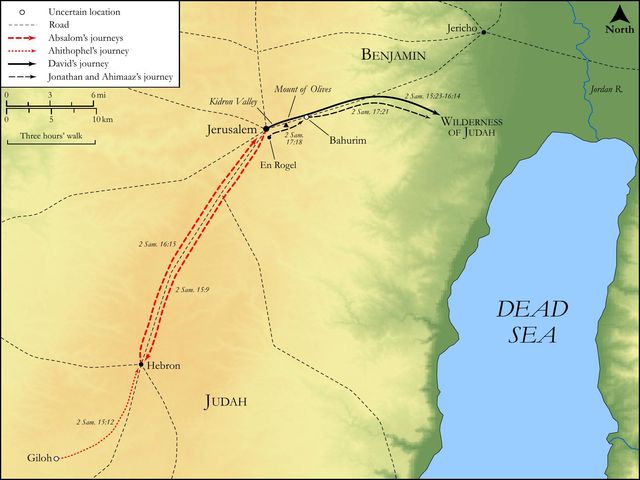
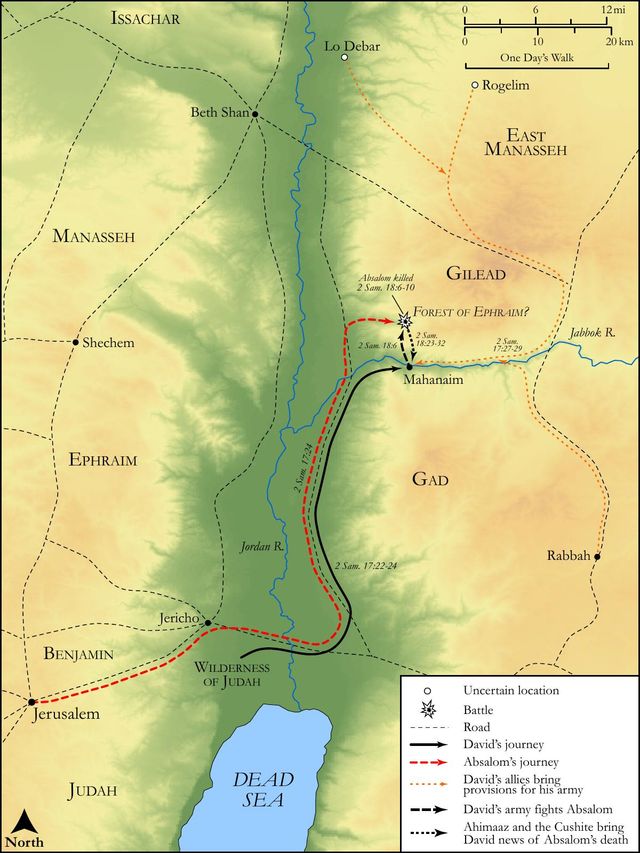
This verse is a pivotal turning point in the unfolding narrative of Absalom's rebellion against his father, King David, as detailed in the books of 2 Samuel. Immediately preceding this, Ahithophel, David's former trusted counselor who had defected to Absalom's side, offered militarily sound advice for a swift, decisive strike against David while he was vulnerable and weary (2 Samuel 17:1-4). David, upon hearing of Ahithophel's defection and his shrewd counsel, had prayed that the Lord would "turn the counsel of Ahithophel into foolishness" (2 Samuel 15:31). God answers this prayer precisely through Hushai, whom David had intentionally sent back to Jerusalem to act as a counter-intelligence agent (2 Samuel 15:32-37). Hushai's counter-proposal, meticulously detailed in this verse and the surrounding passages (2 Samuel 17:7-13), is a masterful act of strategic deception, crafted to appeal to Absalom's ego and delay him, thereby giving David precious time to escape beyond the Jordan River and prepare his forces for the inevitable confrontation (2 Samuel 17:22).
Historical & Cultural Context
The setting is ancient Israel during a period of monarchical rule, where succession disputes and rebellions were common and often violently resolved. Counselors like Ahithophel and Hushai wielded immense influence, their strategic advice often determining the fate of kings and kingdoms. The phrase "from Dan even to Beersheba" was a widely understood idiom signifying the entire geographical breadth of Israel, from its northernmost city to its southernmost. Its use here by Hushai was a powerful rhetorical device, emphasizing the idea of a comprehensive national mobilization and appealing to Absalom's desire for overwhelming popular support and an unbeatable force. This cultural understanding made Hushai's proposal of gathering "all Israel" sound impressively legitimate and strategically overwhelming. Furthermore, the concept of a king or leader personally leading troops into battle was a common expectation, especially for a new or rebellious leader seeking to demonstrate courage, inspire loyalty, and solidify their claim to authority. Hushai shrewdly exploited this cultural expectation to Absalom's detriment, knowing it would expose him to greater danger.
Key Themes
ShowHideThis verse powerfully illustrates several key themes central to the narrative of David's reign and God's overarching providence. Firstly, it highlights Divine Intervention and Sovereignty, demonstrating how God actively orchestrates events, even using human deceit and political maneuvering, to protect His anointed king and fulfill His purposes. David's desperate prayer in 2 Samuel 15:31 is directly answered through Hushai's actions. Secondly, it showcases Strategic Deception as a tool in ancient warfare and political intrigue, though its moral implications are complex within a biblical framework. Hushai's counsel is a brilliant, albeit morally ambiguous, act of espionage that serves a higher loyalty and a divinely ordained outcome. Thirdly, the narrative underscores the dangers of Leadership and Ego. Hushai shrewdly plays on Absalom's vanity by suggesting he personally lead a vast, slow-moving army, a move that would ultimately place Absalom in greater danger and contribute directly to his downfall, contrasting sharply with the humble reliance on God demonstrated by David throughout his trials (Psalm 3:1-8). Finally, the core purpose of Hushai's advice was to buy The Value of Time, a precious commodity that allowed David to escape, regroup, and prepare for the inevitable confrontation, turning the tide of the rebellion in his favor (2 Samuel 17:22).
Exposition and Analysis
ShowHideKey Word Analysis
ShowHideMeaning "to advise; reflexively, to deliberate or resolve." Hushai's "counsel" here is presented as a strategic alternative to Ahithophel's. While appearing to be sound advice for Absalom, its true purpose, divinely orchestrated, was to lead Absalom to ruin. This word highlights the central role of wisdom and strategy in ancient leadership, but also how human counsel, even when seemingly brilliant, is ultimately subject to divine will.
Meaning "to gather for any purpose; hence, to receive, take away, i.e. remove." The proposed "gathering" of all Israel "from Dan even to Beersheba" was the cornerstone of Hushai's deceptive plan. This word emphasizes the immense scale of the proposed mobilization, which would inherently require significant time, thereby fulfilling Hushai's true objective of delaying Absalom and giving David time to escape.
Meaning "the face (as the part that turns); used in a great variety of applications (literally and figuratively); also (with prepositional prefix) as a preposition (before, etc.)." The phrase "in thine own person" highlights Absalom's direct, personal involvement in leading the battle. This was a crucial element of Hushai's deception, appealing to Absalom's pride and desire for glory. By insisting Absalom lead the entire host, Hushai not only ensured a delay but also placed Absalom squarely in harm's way, increasing the likelihood of his defeat and death, which ultimately came to pass (2 Samuel 18:9-15).
Verse Breakdown
ShowHide"Therefore I counsel that all Israel be generally gathered unto thee,"
Hushai begins his counsel by framing it as the logical and superior alternative to Ahithophel's swift, targeted strike. He proposes a grand, national mobilization, subtly appealing to Absalom's desire for widespread legitimacy and overwhelming numerical superiority. This opening establishes the premise of a universally supported and irresistible force.
"from Dan even to Beersheba,"
This phrase specifies the immense, nationwide scale of the proposed gathering, indicating that every able-bodied man from the northernmost (Dan) to the southernmost (Beersheba) reaches of Israel should be conscripted. This detail enhances the perception of an unbeatable force, but critically, it also underscores the immense logistical challenge and the significant time required for such a comprehensive mobilization, which was Hushai's true objective.
"as the sand that [is] by the sea for multitude;"
This vivid simile amplifies the image of an innumerable army, reinforcing the idea of an overwhelming force that no one could possibly stand against. It is a powerful rhetorical device designed to inflate Absalom's confidence and make Hushai's plan seem irresistible due to its sheer, unquantifiable magnitude, playing directly into Absalom's ego.
"and that thou go to battle in thine own person."
This final clause is the masterstroke of Hushai's deception. It appeals directly to Absalom's pride and desire for personal glory as a military leader. While a king leading his troops was customary, in this specific context, it was a fatal miscalculation. It diverted Absalom from Ahithophel's swift, targeted strike against David and instead placed him at the head of a massive, slow-moving army, exposing him to direct combat and ultimately leading to his defeat and death.
Literary Devices
ShowHideThe passage masterfully employs several literary devices to convey its dramatic tension and thematic depth. Dramatic Irony is paramount, as the reader is fully aware of Hushai's true allegiance and deceptive intent, while Absalom remains tragically ignorant, believing Hushai's flattery to be genuine wisdom. This creates a profound sense of foreboding and highlights Absalom's fatal flaw of pride. The Simile "as the sand that is by the sea for multitude" vividly portrays the imagined overwhelming force, appealing to Absalom's ego and desire for glory. This hyperbolic imagery, while appealing, cleverly masks the practical impossibility and time-consuming nature of such a gathering. Furthermore, the entire scene functions as a powerful example of Foreshadowing, as Hushai's counsel, particularly the insistence that Absalom "go to battle in thine own person," directly leads to Absalom's personal involvement in the decisive battle and his eventual death, thereby fulfilling God's judgment upon him.
Theological and Thematic Connections
ShowHideThis pivotal moment in 2 Samuel 17 is a profound testament to God's active sovereignty and His ability to orchestrate human events, even through seemingly mundane or morally complex means, to achieve His divine purposes. David's desperate prayer for Ahithophel's counsel to be turned into foolishness is answered not by a miraculous thunderbolt, but by the cunning and loyalty of a human agent, Hushai. This demonstrates that God's providence is not limited to overt miracles but often works through the intricate web of human relationships, decisions, and even strategic deception. It underscores the biblical truth that human wisdom, no matter how shrewd (like Ahithophel's), is ultimately subject to God's overarching plan. What appeared to be a brilliant military strategy was confounded by God's intervention, protecting His anointed king and preserving the lineage through which the Messiah would come.
Reflection and Application
ShowHideThe narrative of Hushai's counsel reminds us that God is always at work, even behind the scenes of human conflict and political intrigue. It challenges us to look beyond immediate circumstances and trust in the unseen hand of divine providence. When faced with overwhelming odds or seemingly insurmountable challenges, we are called to pray and trust that God can confound the wisdom of the world and turn adverse situations to His glory and our good. This passage also serves as a potent cautionary tale against the dangers of pride and vanity. Absalom's downfall was hastened by his ego, which made him susceptible to flattery and blinded him to sound, albeit unglamorous, advice. For leaders, it underscores the importance of humility, seeking counsel from diverse sources, and discerning true wisdom from self-serving flattery. For all believers, it encourages patience and reliance on God's timing, rather than rushing into ill-conceived plans driven by personal ambition or impatience.
Questions for Reflection
ShowHideFAQ
ShowHideWhy did Absalom choose Hushai's counsel over Ahithophel's, which was militarily superior?
ShowHideAbsalom chose Hushai's counsel primarily due to a combination of divine intervention and his own character flaws. The text explicitly states that "the Lord had purposed to defeat the good counsel of Ahithophel, to the intent that the Lord might bring evil upon Absalom" (2 Samuel 17:14). Beyond divine decree, Hushai's counsel appealed powerfully to Absalom's vanity and desire for popular acclaim. Ahithophel's plan was swift, surgical, and would have given David no time to escape, but it offered Absalom little personal glory. Hushai's plan, however, flattered Absalom by suggesting he personally lead an immense, unified national army, promising an overwhelming and glorious victory. This appeal to Absalom's ego and his desire for a grand spectacle outweighed the strategic soundness of Ahithophel's more pragmatic advice.
Christ-Centered Fulfillment
ShowHideThe narrative of God's providential protection of David, His anointed king, through the cunning of Hushai, finds its ultimate fulfillment in the person and work of Jesus Christ, the true and eternal King. Just as God preserved David's life to ensure the continuation of the messianic line, so too did He orchestrate all of history to bring about the coming of His Son. The "foolishness" of Hushai's counsel in human terms ultimately served God's wise purpose, much like the "foolishness" of the cross, which to human wisdom is a stumbling block, but to those who are being saved is the power and wisdom of God (1 Corinthians 1:18-25). While Hushai's deception was a means to an end, Jesus, the ultimate wise counselor (Isaiah 9:6), always acted in perfect truth and integrity. Yet, like Hushai's counsel, God's plan of salvation often unfolds in ways that confound human expectations, relying not on overwhelming earthly armies but on the singular, personal sacrifice of the Lamb of God, who takes away the sin of the world!. Jesus truly went "to battle in His own person," not leading a multitude from Dan to Beersheba, but bearing the full weight of sin on the cross, achieving the ultimate victory over sin and death, a victory far greater than any earthly triumph, securing eternal life for all who believe (Colossians 2:15).