


1 Kings 4:20
- יְהוּדָהye·hu·DahJudahH3063N-properNoun Proper Location
- וְיִשְׂרָאֵלve·Yis·ra·'Eland IsraelH3478Conj-w ¦ N-properNoun Proper LocationוְandיִשְׂרָאֵלIsrael
- רַבִּיםra·Bim[were] numerousH7227Adj-mpAdjective Plural Masculine Absolute
- כַּחוֹלka·Chollike the sandH2344Prep-k ¦ N-msNoun Singular Masculine Absoluteכַּlike theחוֹלsand
- אֲשֶׁר'a·SherwhichH834RelParticle Relative
- עַל'al[is] atH5921PrepPreposition
- הַיָּםhai·Yamthe seaH3220Art ¦ N-msNoun Singular Masculine Absoluteהַtheיָּםsea
- לָרֹבla·Rofor multitudeH7230Prep-l ¦ N-msNoun Singular Masculine Absoluteלָforרֹבmultitude
- אֹכְלִים'o·khe·Lim[they were] eatingH398V-Qal-Prtcpl-mpVerb Qal Participle Plural Masculine Absolute
- וְשֹׁתִיםve·sho·Timand [were] drinkingH8354Conj-w ¦ V-Qal-Prtcpl-mpVerb Qal Participle Plural Masculine Absoluteוְandשֹׁתִים[were] drinking
- וּשְׂמֵחִיםu·se·me·Chimand [were] joyfulH8056Conj-w ¦ Adj-mpAdjective Plural Masculine Absoluteוּandשְׂמֵחִים[were] joyful
English is a literal word-by-word gloss of the Hebrew, not the KJV's wording. Why?
This is the original text the KJV's translators worked from — each Hebrew word with its own literal English meaning in this verse, prepared by scholars at Tyndale House, Cambridge. The KJV translates whole sentences, not word by word, so its wording differs: one Hebrew word can become several English words, and the KJV may choose “the LORD” where the gloss reads “Yahweh”. Both are faithful — they answer different questions. For the KJV's own rendering, switch to the KJV text.
Details
See on the biblical-era map

Study this verse
Public-domain commentary
Matthew Henry
From his Commentary on the Whole Bible. Henry comments on passages, not single verses — this entry covers 1 Kings 4:20–28. His three-level outline is real structure in the source text, so it is rendered as structure.
Such a kingdom, and such a court, surely never any prince had, as Solomon's are here described to be.
I.Such a kingdom.
Never did the crown of Israel shine so brightly as it did when Solomon wore it, never in his father's days, never in the days of any of his successors; nor was that kingdom ever so glorious a type of the kingdom of the Messiah as it was then. The account here given of it is such as fully answers the prophecies which we have concerning it in Ps. 72, which is a psalm for Solomon, but with reference to Christ.
1.The territories of his kingdom were large and its tributaries many; so it was foretold that he should have dominion from sea to sea, Psa 72:8-11. Solomon reigned not only over all Israel, who were his subjects by choice, but over all the neighbouring kingdoms, who were his subjects by constraint. All the princes from the river Euphrates, north-east to the border of Egypt south-west, not only added to his honour by doing him homage and holding their crowns from him, but added to his wealth by serving him, and bringing him presents, Kg1 4:21. David, by his successful wars, compelled them to this subjection, and Solomon, by his admirable wisdom, made it easy and reasonable; for it is fit that the fool should be servant to the wise in heart. If they gave him presents, he gave them instructions, and still taught the people knowledge, not only his own people, but those of other nations: and wisdom is better than gold. He had peace on all sides, Kg1 4:24. None of all the nations that were subject to him offered to shake off his yoke, or to give him any disturbance, but rather thought themselves happy in their dependence upon him. Herein his kingdom typified the Messiah's; for to him it is promised that he shall have the heathen for his inheritance and that princes shall worship him, Isa 49:6, Isa 49:7; Isa 53:12.
2.The subjects of his kingdom and its inhabitants, were many and cheerful.
(1.)They were numerous and country was exceedingly populous (Kg1 4:20): Judah and Israel were many, and that good land was sufficient to maintain them all. They were as the sand of the sea in multitude. Now was fulfilled the promise made to Abraham concerning the increase of his seed (Gen 22:17), as well as that concerning the extent of their dominion, Gen 15:18. This was their strength and beauty, the honour of their prince, the terror of their enemies, and an advancement of the wealth of the nation. If they grew so numerous that the place was any where too strait for them, they might remove with advantage into the countries that were subject to them. God's spiritual Israel are many, at least they will be so when they come all together, Rev 7:9.
(2.)They were easy, they dwelt safely, or with confidence and assurance (Kg1 4:25), not jealous of their king or of his officers, not disaffected either to him or one to another, nor under any apprehension or danger from enemies foreign or domestic. They were happy and knew it, safe and willing to think themselves so. They dwelt every man under his vine and fig-tree. Solomon invaded no man's property, took not to himself their vineyards and olive-yards, as sometimes was the manner of the king (Sa1 8:14), but what they had they could call their own: he protected every man in the possession and enjoyment of his property. Those that had vines and fig-trees ate the fruit of them themselves; and so great was the peace of the country that they might, if they pleased, dwell as safely under the shadow of them as within the walls of a city. Or, because it was usual to have vines by the sides of their houses (Psa 128:3), they are said to dwell under their vines.
(3.)They were cheerful in the use of their plenty, eating and drinking, and making merry, Kg1 4:20. Solomon did not only keep a good table himself, but enabled all his subjects, according to their rank, to do so too, and taught them that God gave them their abundance that they might use it soberly and pleasantly, not that they might hoard it up. There is nothing better than for a man to eat the labour of his hands (Ecc 2:24), and that with a merry heart, Ecc 9:7. His father, in the Psalms, had led his people into the comforts of communion with God, and now he led them into the comfortable use of the good things of this life. This pleasant posture of Israel's affairs extended, in place, from Dan to Beer-sheba - no part of the country was exposed nor upon any account uneasy; and it continued a long time, all the days of Solomon, without any material interruption. Go where you would, you might see all the marks of plenty, peace, and satisfaction. The spiritual peace, and joy, and holy security, of all the faithful subjects of the Lord Jesus were typified by this. The kingdom of God is not, as Solomon's was, meat and drink, but, what is infinitely better, righteousness, and peace, and joy in the Holy Ghost.
II.Such a court Solomon kept as can scarcely be paralleled.
We may guess at the vast number of his attendants, and the great resort there was to him, by the provision that was made daily for his table. Of bread there were so many measures of flour and meal as, it is computed, would richly serve 3000 men (Carellus computes above 4800 men), and the provision of flesh (Kg1 4:23) was rather more in proportion. What vast quantities were here of beef, mutton, and venison, and the choicest of all fatted things, as some read that which we translate fatted fowl! Ahasuerus, once in his reign, made a great feast, to show the riches of his kingdom, Est 1:3, Est 1:4. But it was much more the honour of Solomon that he kept a constant table and a very noble one, not of dainties or deceitful meats (he himself witnessed against them, Pro 23:3), but substantial food, for the entertainment of those who came to hear his wisdom. Thus Christ fed those whom he taught, 5000 at a time, more than ever Solomon's table would entertain at once: and all believers have in him a continual feast. Herein he far outdoes Solomon, that he feeds all his subjects, not with the bread that perishes, but with that which endures to eternal life. It added much both to the strength and glory of Solomon's kingdom that he had such abundance of horses, 40,000 for chariots and 12,000 for his troops, 1000 horse, perhaps, in every tribe, for the preserving of the public peace, Kg1 4:26. God had commanded that their king should not multiply horses (Deu 17:16), nor, according to the account here given, considering the extent and wealth of Solomon's kingdom, did he multiply horses in proportion to his neighbours; for we find even the Philistines bringing into the field 30,000 chariots (Sa1 13:5) and the Syrians at least 40,000 horse, Sa2 10:18. The same officers that provided for his house provided also for his stable, Kg1 4:27, Kg1 4:28. Every one knew his place, and work, and time; and so this great court was kept without confusion. Solomon, that had vast incomes, lived at a vast expense, and perhaps wrote that with application to himself, Ecc 5:11. When goods increase those are increased that eat them; and what good is there to the owners thereof, saving the beholding of them with their eyes, unless withal they have the satisfaction of doing good with them?
Continue studying 1 Kings 4:20 across the web’s major study libraries — every link below opens this exact verse, chapter, or book on the destination site.
Read & Compare
 BibleGatewayThis verse in more than 200 translations and 70 languages.
 Bible.comThe YouVersion reader — hundreds of translations, reading plans, and highlights.
 ESV.orgCrossway's official English Standard Version reader.
 NET BibleThe NET translation with 60,000+ translators' notes on every rendering decision.
 STEP BibleTyndale House's free study tool — original text, vocabulary, and scholarly resources.
 BibliaLogos Bible Software's free web reader.
 USCCBThe New American Bible (Revised Edition) with the U.S. bishops' study notes.
Commentaries
 BibleHub CommentariesDozens of classic commentaries on this verse, gathered on one page.
 StudyLightMore than 100 commentary sets — the largest collection on the web.
 BibleRefPlain-English commentary on what this verse means, verse by verse.
 Enduring WordDavid Guzik's free commentary on this chapter, widely used by Bible teachers.
 Bible Study ToolsVerse commentary alongside Greek and Hebrew study aids.
Original Language & Research
- BibleHub InterlinearThe verse word by word — original language, transliteration, and English.
- BibleHub LexiconEvery word's original-language definition and Strong's entry.
 Blue Letter BibleDeep-study tools — Strong's numbers, concordance, and word studies.
 SefariaThe Hebrew text with Rashi and centuries of Jewish commentary.
Sermons, Hymns & Audio


TrulyRandomVerse is not affiliated with these sites and doesn’t control their content. They’re linked because they’re genuinely useful.
Summary
First Kings 4:20 masterfully encapsulates the unparalleled peace, demographic flourishing, and material abundance that characterized the united kingdom of Judah and Israel during the zenith of King Solomon's reign. This verse serves as a powerful declaration of a golden age, portraying a nation enjoying profound security, contentment, and joy, where the people lived free from want or external threat, celebrating the tangible blessings of God's unwavering faithfulness to His ancient covenant promises. It signifies a period of divinely ordained prosperity, marking a high point in Israel's national history.
Context
ShowHideLiterary Context
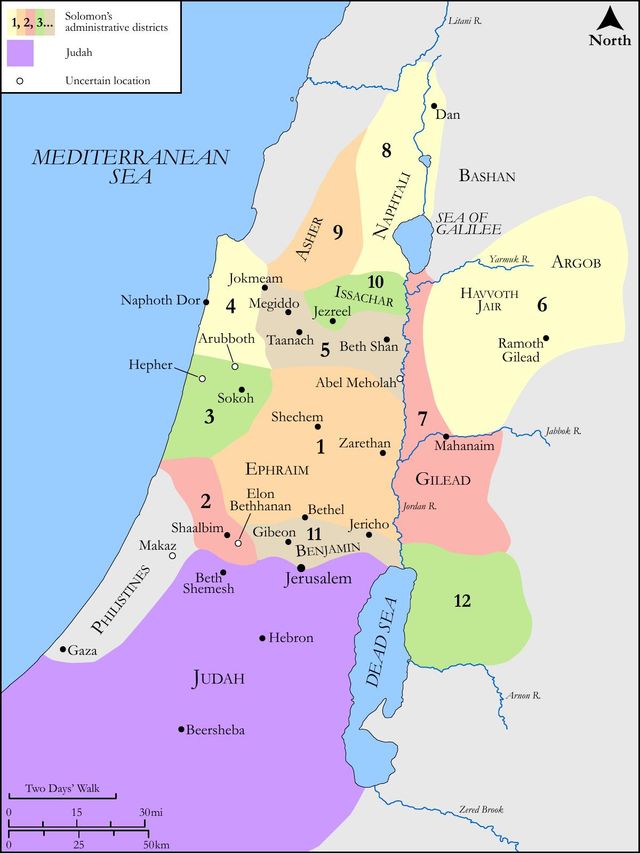
This verse is strategically positioned within a broader literary unit (1 Kings 4:1-34) that meticulously details the administrative structure, vast dominion, unparalleled wisdom, and immense prosperity of Solomon's kingdom. Following the consolidation of his rule and the establishment of peace with surrounding nations, particularly the Philistines and the Arameans (1 Kings 4:21-24), 1 Kings 4:20 functions as a climactic summary statement of the resulting national well-being. It immediately follows the detailed account of Solomon's extensive provisions for his household and administrative districts (1 Kings 4:7-19) and precedes the description of his vast wisdom and international renown (1 Kings 4:29-34). The verse thus serves as a powerful affirmation of God's blessings, setting the stage for the narrative's subsequent focus on Solomon's wisdom and monumental building projects, most notably the construction of the Temple.
Historical & Cultural Context
King Solomon's reign (c. 970-931 BC) represents a unique period of peace and unprecedented prosperity for Israel, largely facilitated by his strategic diplomatic alliances, extensive international trade networks, and the absence of major external military threats. The imagery of "sand which is by the sea" directly echoes the foundational covenant promises God made to Abraham, Isaac, and Jacob concerning their innumerable descendants and their secure possession of the promised land (e.g., Genesis 22:17). Culturally, the phrase "eating and drinking, and making merry" was a powerful idiom in the ancient Near East, signifying a society that was not merely surviving but genuinely thriving—a hallmark of profound peace, security, and economic stability. This era stands in stark contrast to the preceding turbulent period of the Judges and the often-embattled early united monarchy under Saul and David, highlighting a divinely orchestrated era of rest and abundance for the nation.
Key Themes
ShowHideThis verse powerfully contributes to several overarching themes within the book of 1 Kings and the broader biblical narrative. Firstly, it underscores Divine Blessing and Covenant Fulfillment, showcasing God's faithfulness in bringing to fruition the promises made generations prior to the patriarchs. The vast population and widespread prosperity are tangible evidence of divine favor and the fulfillment of the Abrahamic covenant. Secondly, it highlights Abundance and Prosperity, depicting a nation enjoying unparalleled material well-being, peace, and security, which are consistently presented in Scripture as blessings for obedience and righteous governance, as seen in the covenant stipulations of Deuteronomy 28. Lastly, the verse emphasizes National Unity and Contentment, as both the northern kingdom of Israel and the southern kingdom of Judah are united in their shared experience of this golden age. This collective enjoyment of peace and plenty fostered a rare and precious sense of stability and joy across the entire kingdom, a stark contrast to the future division of the monarchy.
Exposition and Analysis
ShowHideKey Word Analysis
ShowHideThis word (H7227) denotes abundance in quantity, size, or number. In 1 Kings 4:20, it emphasizes the sheer numerical strength and demographic flourishing of the united kingdom, signifying a population that had grown exceedingly large, a direct fulfillment of God's promise to multiply Abraham's descendants.
Referring to (H2344) "sand (as round or whirling particles)," this term, especially when paired with "sea" (H3220, yâm'), forms a powerful idiom for an immeasurable, countless multitude. Its use here explicitly links Solomon's prosperous reign to the faithful fulfillment of God's ancient covenant promises to the patriarchs concerning their innumerable offspring.
This word (H8056) describes a state of being blithe, gleeful, or joyful. In the context of "eating and drinking" (H398, ʼâkal' and H8354, shâthâh'), it vividly conveys a widespread atmosphere of peace, security, and material well-being, indicating a society free from want or threat, able to celebrate and enjoy life.
Verse Breakdown
ShowHide"Judah and Israel were many"
This initial clause establishes the demographic strength and national unity of Solomon's kingdom. It highlights the vast population that now inhabited the land, signifying a direct fulfillment of God's promise to multiply Abraham's descendants and underscoring the breadth of Solomon's dominion over both the southern and northern tribes.
"as the sand which is by the sea in multitude"
This powerful simile hyperbolically reinforces the concept of an immense, uncountable population. It directly echoes the covenant promises found in Genesis 22:17 and Genesis 32:12, serving as a clear indicator of divine faithfulness to the ancestral covenants and the miraculous growth and blessing bestowed upon the nation.
"eating and drinking, and making merry"
This final clause vividly describes the quality of life enjoyed by the people. It signifies a profound state of peace, security, and material abundance. "Eating and drinking" implies plentiful provisions and a thriving economy, while "making merry" indicates a joyful, celebratory atmosphere, free from the anxieties of war, famine, or oppression. It paints a comprehensive picture of national contentment and well-being.
Literary Devices
ShowHideThe verse employs several potent literary devices to convey its message of national prosperity and divine blessing. The most prominent is Simile, evident in the phrase "as the sand which is by the sea," which draws a direct comparison between the vast population of Israel and the countless grains of sand. This simile also functions as Hyperbole, exaggerating the number to emphasize the immense, almost unimaginable, multitude, thereby underscoring the miraculous fulfillment of God's ancient promises to the patriarchs. Furthermore, the concluding phrase "eating and drinking, and making merry" acts as a vivid Idiom, a common expression in ancient Near Eastern literature used to denote a time of profound peace, abundance, and celebration. Together, these devices paint a rich, evocative picture of a kingdom at its peak, enjoying unprecedented security and joy under divine favor.
Theological and Thematic Connections
ShowHideThis verse stands as a powerful testament to God's unwavering faithfulness to His covenant promises. The flourishing of Judah and Israel, described in terms of both demographic strength and material abundance, is a direct fulfillment of the blessings promised to Abraham and his descendants, particularly the promise of innumerable offspring and possession of the land. It illustrates that God's desire for His people often includes not only spiritual well-being but also a tangible experience of peace, security, and prosperity when they walk in obedience and are led by righteous leadership. This period under Solomon serves as a historical high point, demonstrating the potential for human flourishing under divine favor, a foreshadowing of the ultimate peace and abundance found in God's eternal kingdom.
Reflection and Application
ShowHideFirst Kings 4:20 offers a compelling glimpse into a period of profound blessing and peace for God's people, a time when divine promises were visibly manifest in national prosperity and contentment. While this earthly abundance was a specific covenantal blessing for ancient Israel, it reminds us that God desires the holistic well-being of His people—not just spiritually, but often in tangible ways—when they align with His will. It challenges us to consider what true "merry-making" looks like in our lives: a joy rooted in security, peace, and the satisfaction of needs, rather than fleeting pleasures or material excess. This historical account serves as a powerful testament to God's faithfulness and the blessings that can flow from wise and righteous leadership, prompting us to pray for leaders who seek God's wisdom and to live in a manner that honors Him, trusting in His provision and ultimate promises of peace that transcend earthly circumstances.
Questions for Reflection
ShowHideFAQ
ShowHideWhat is the significance of "as the sand which is by the sea" in this verse?
ShowHideThe phrase "as the sand which is by the sea" is a deeply significant biblical idiom. In 1 Kings 4:20, it primarily signifies the immense, countless multitude of the people of Judah and Israel, highlighting their demographic strength and widespread presence in the land. More profoundly, it serves as a direct fulfillment of God's ancient covenant promises to Abraham, Isaac, and Jacob. For instance, in Genesis 22:17, God promised Abraham that his descendants would be "as the sand on the seashore." Thus, this verse in 1 Kings powerfully demonstrates God's faithfulness in bringing His divine assurances to fruition through the flourishing population during Solomon's reign, showcasing His power to multiply and bless His chosen people.
Does this verse imply that material prosperity is always a sign of God's favor?
ShowHideWhile 1 Kings 4:20 clearly depicts material prosperity as a sign of God's favor and covenant blessing for Israel during Solomon's reign, it's crucial to interpret this within its specific historical and theological context. For ancient Israel under the Old Covenant, obedience often brought tangible blessings like land, numerous offspring, and material abundance, as outlined in Deuteronomy 28. However, the New Testament introduces a broader and more nuanced understanding of God's favor. While God certainly cares for our physical needs and can bless us materially, true spiritual prosperity, peace, and joy are not always tied to outward wealth. Jesus taught about the dangers of riches (Matthew 19:23-24) and emphasized the spiritual nature of His kingdom (John 18:36). Therefore, while 1 Kings 4:20 celebrates a specific historical blessing, it does not establish a universal principle that material prosperity is always an indicator of divine favor for all believers in all eras.
Christ-Centered Fulfillment
ShowHideWhile 1 Kings 4:20 describes the zenith of an earthly kingdom, its true Christ-centered fulfillment points to the superior and eternal reign of Jesus Christ. Solomon's reign, with its unparalleled peace, prosperity, and joy, serves as a powerful, albeit imperfect, type of the coming Messiah's kingdom. The "sand of the sea" multitude, "eating and drinking, and making merry," foreshadows the vast, innumerable company of believers from every nation, tribe, people, and language who will find ultimate peace and joy in Christ's spiritual and eternal kingdom. Unlike Solomon's temporary reign, which eventually declined and divided, Christ's kingdom is eternal, unshakable, and ever-expanding (Daniel 2:44). Jesus himself is the true King of Peace, who brings not just material abundance but an infinitely richer "life, and have it more abundantly" (John 10:10). His kingdom is characterized by "righteousness and peace and joy in the Holy Spirit" (Romans 14:17), a spiritual feast that transcends all earthly delights. In Christ, the ultimate "merry-making" is found in the forgiveness of sins, reconciliation with God, and the promise of a new heaven and new earth where there will be no more sorrow, crying, or pain (Revelation 21:4). Thus, Solomon's golden age, glorious as it was, ultimately serves to heighten our longing for and appreciation of the perfect, everlasting reign of our Lord Jesus Christ.