


2 Samuel 10:2
Bible text: King James Version (1769 Blayney text) · Public domain
Bible text: King James Version with Strong's numbers · Public domain
Bible text: Berean Standard Bible · Public domain
Bible text: American Standard Version (1901) · Public domain
Bible text: World English Bible, Messianic edition · Public domain
Bible text: Geneva Bible (1599) · Public domain
Bible text: Young's Literal Translation · Public domain
- וַיֹּאמֶרvai·Yo·merand he saidH559Conj-w ¦ V-Qal-ConsecImperf-3msVerb Qal Consecutive Imperfect 3rd Singular Masculineוַandיֹּאמֶרhe said
- דָּוִדda·VidDavidH1732N-proper-mNoun Proper Masculine
- אֶעֱשֶׂה'e·'e·sehI will doH6213V-Qal-Imperf-1csVerb Qal Imperfect 1st Singular common gender
- חֶסֶדChe·sedcovenant loyaltyH2617N-msNoun Singular Masculine Absolute
- עִם'imwithH5973PrepPreposition
- חָנוּןcha·NunHanunH2586N-proper-mNoun Proper Masculine
- בֶּןben[the] son ofH1121N-mscNoun Singular Masculine Construct
- נָחָשׁna·ChashNahashH5176N-proper-mNoun Proper Masculine
- כַּאֲשֶׁרka·'a·Sherjust asH834Prep-k ¦ RelParticle Relativeכַּjustאֲשֶׁרas
- עָשָׂה'a·Sahhe didH6213V-Qal-Perf-3msVerb Qal Perfect 3rd Singular Masculine
- אָבִיו'a·Vivhis fatherH1N-msc ¦ 3msNoun Singular Masculine Constructאָבִיfatherוhis
- עִמָּדִי'i·ma·Diwith meH5978Prep ¦ 1csPrepositionעִמָּדִwithיme
- חֶסֶדChe·sedcovenant loyaltyH2617N-msNoun Singular Masculine Absolute
- וַיִּשְׁלַחvai·yish·Lachand he sentH7971Conj-w ¦ V-Qal-ConsecImperf-3msVerb Qal Consecutive Imperfect 3rd Singular Masculineוַandיִּשְׁלַחhe sent
- דָּוִדda·VidDavidH1732N-proper-mNoun Proper Masculine
- לְנַחֲמוֹle·na·cha·Moto comfort himH5162Prep-l ¦ V-Piel-Inf ¦ 3msVerb Piel Infinitive Constructלְtoנַחֲמcomfortוֹhim
- בְּיַדbe·yadby [the] hand ofH3027Prep-b ¦ N-cscNoun Singular common gender Constructבְּbyיַד[the] hand of
- עֲבָדָיו'a·va·Davhis servantsH5650N-mpc ¦ 3msNoun Plural Masculine Constructעֲבָדָיservantsוhis
- אֶל'elconcerningH413PrepPreposition
- אָבִיו'a·Vivhis fatherH1N-msc ¦ 3msNoun Singular Masculine Constructאָבִיfatherוhis
- וַיָּבֹאוּvai·ya·Vo·'uand they cameH935Conj-w ¦ V-Qal-ConsecImperf-3mpVerb Qal Consecutive Imperfect 3rd Plural Masculineוַandיָּבֹאוּthey came
- עַבְדֵי'av·Dei[the] servants ofH5650N-mpcNoun Plural Masculine Construct
- דָוִדda·VidDavidH1732N-proper-mNoun Proper Masculine
- אֶרֶץ'E·retz[the] land ofH776N-fscNoun Singular Feminine Construct
- בְּנֵיbe·Nei[the] people ofH1121N-mpcNoun Plural Masculine Construct
- עַמּוֹןa·MonAmmonH5983N-proper-mNoun Proper Masculine
English is a literal word-by-word gloss of the Hebrew, not the KJV's wording. Why?
This is the original text the KJV's translators worked from — each Hebrew word with its own literal English meaning in this verse, prepared by scholars at Tyndale House, Cambridge. The KJV translates whole sentences, not word by word, so its wording differs: one Hebrew word can become several English words, and the KJV may choose “the LORD” where the gloss reads “Yahweh”. Both are faithful — they answer different questions. For the KJV's own rendering, switch to the KJV text.
Details
See on the biblical-era maps
Study this verse
Public-domain commentary
Matthew Henry
From his Commentary on the Whole Bible. Henry comments on passages, not single verses — this entry covers 2 Samuel 10:1–5. His two-level outline is real structure in the source text, so it is rendered as structure.
Here is, I. The great respect David paid to his neighbour, the king of the Ammonites, Sa2 10:1, Sa2 10:2. 1. The inducement to it was some kindness he had formerly received from Nahash the deceased king. He showed kindness to me, says David (Sa2 10:2), and therefore (having lately had satisfaction in showing kindness to Mephibosheth for his father's sake) he resolves to show kindness to his son, and to keep up a friendly correspondence with him. Thus the pleasure of doing one kind and generous action should excite us to another. Nahash had been an enemy to Israel, a cruel enemy (Sa1 11:2), and yet had shown kindness to David, perhaps only in contradiction to Saul, who was unkind to him: however, if David receives kindness, he is not nice in examining the grounds and principles of it, but resolves gratefully to return it. If a Pharisee give alms in pride, though God will not reward him, yet he that receives the alms ought to return thanks for it. God knows the heart, but we do not. 2. The particular instance of respect was sending an embassy to condole with him on his father's death, as is common among princes in alliance with each other: David sent to comfort him. Note, It is a comfort to children, when their parents are dead, to find that their parents' friends are theirs, and that they intend to keep up an acquaintance with them. It is a comfort to mourners to find that there are those who mourn with them, are sensible of their loss and share with them in it. It is a comfort to those who are honouring the memory of their deceased relations to find there are others who likewise honour it and who had a value for those whom they valued.
II.The great affront which Hanun the king of the Ammonites put upon David in his ambassadors.
1.He hearkened to the spiteful suggestions of his princes, who insinuated that David's ambassadors, under pretence of being comforters, were sent as spies, Sa2 10:3. False men are ready to think others as false as themselves; and those that bear ill-will to their neighbours are resolved not to believe that their neighbours bear any good-will to them. They would not thus have imagined that David dissembled but that they were conscious to themselves that they could have dissembled, to serve a turn. Unfounded suspicion argues a wicked mind. Bishop Patrick's note on this is that "there is nothing so well meant but it may be ill interpreted, and is wont to be so by men who love nobody but themselves." Men of the greatest honour and virtue must not think it strange if they be thus misrepresented. Charity thinketh no evil.
2.Entertaining this vile suggestion, he basely abused David's ambassadors, like a man of a sordid villainous spirit, that was fitter to rake a kennel than to wear a crown. If he had any reason to suspect that David's messengers came on a bad design, he would have done prudently enough to be upon the reserve with them, and to dismiss them as soon as he could; but it is plain he only sought an occasion to put the utmost disgrace he could upon them, out of an antipathy to their king and their country. They were themselves men of honour, and much more so as they represented the prince that sent them; they and their reputation were under the special protection of the law of nations; they put a confidence in the Ammonites, and came among them unarmed; yet Hanun used them like rogues and vagabonds, and worse, shaved off the one half of their beards, and cut off their garments in the midst, to expose them to the contempt and ridicule of his servants, that they might make sport with them and that these men might seem vile.
III.David's tender concern for his servants that were thus abused.
He sent to meet them, and to let them know how much he interested himself in their quarrel and how soon he would avenge it, and directed them to stay at Jericho, a private place, where they would not have occasion to come into company, till that half of their beards which was shaved off had grown to such a length that the other half might be decently cut to it, Sa2 10:5. The Jews wore their beards long, reckoning it an honour to appear aged and grave; and therefore it was not fit that persons of their rank and figure should appear at court unlike their neighbours. Change of raiment, it is likely, they had with them, to put on, instead of that which was cut off; but the loss of their beards would not be so soon repaired; yet in time these would grow again, and all would be well. Let us learn not to lay too much to heart unjust reproaches; after awhile they will wear off of themselves, and turn only to the shame of their authors, while the injured reputation in a little time grows again, as these beards did. God will bring forth thy righteousness as the light, therefore wait patiently for him, Psa 37:6, Psa 37:7.
Some have thought that David, in the indignity he received from the king of Ammon, was but well enough served for courting and complimenting that pagan prince, whom he knew to be an inveterate enemy to Israel, and might now remember how, when he would have put out the right eyes of the men of Jabesh-Gilead, he designed that, as he did this, for a reproach upon all Israel, 1 Sam. Psa 11:2. What better usage could he expect from such a spiteful family and people? Why should he covet the friendship of a people whom Israel must have so little to do with as that an Ammonite might not enter into the congregation of the Lord, even to the tenth generation? Deu 23:3.
Continue studying 2 Samuel 10:2 across the web’s major study libraries — every link below opens this exact verse, chapter, or book on the destination site.
Read & Compare
 BibleGatewayThis verse in more than 200 translations and 70 languages.
 Bible.comThe YouVersion reader — hundreds of translations, reading plans, and highlights.
 ESV.orgCrossway's official English Standard Version reader.
 NET BibleThe NET translation with 60,000+ translators' notes on every rendering decision.
 STEP BibleTyndale House's free study tool — original text, vocabulary, and scholarly resources.
 BibliaLogos Bible Software's free web reader.
 USCCBThe New American Bible (Revised Edition) with the U.S. bishops' study notes.
Commentaries
 BibleHub CommentariesDozens of classic commentaries on this verse, gathered on one page.
 StudyLightMore than 100 commentary sets — the largest collection on the web.
 BibleRefPlain-English commentary on what this verse means, verse by verse.
 Enduring WordDavid Guzik's free commentary on this chapter, widely used by Bible teachers.
 Bible Study ToolsVerse commentary alongside Greek and Hebrew study aids.
Original Language & Research
- BibleHub InterlinearThe verse word by word — original language, transliteration, and English.
- BibleHub LexiconEvery word's original-language definition and Strong's entry.
 Blue Letter BibleDeep-study tools — Strong's numbers, concordance, and word studies.
 SefariaThe Hebrew text with Rashi and centuries of Jewish commentary.
Sermons, Hymns & Audio


TrulyRandomVerse is not affiliated with these sites and doesn’t control their content. They’re linked because they’re genuinely useful.
Summary
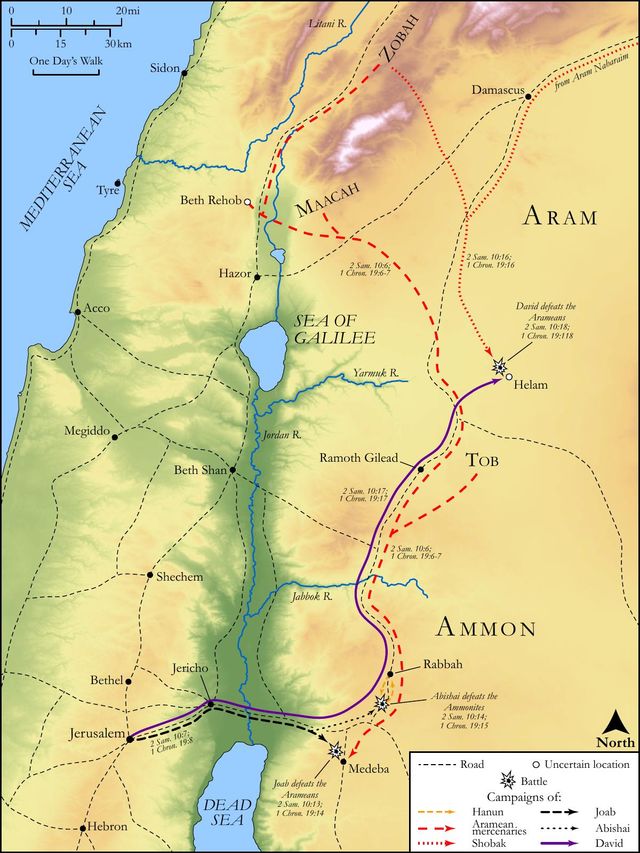
King David, remembering the past benevolence of Nahash, the recently deceased king of Ammon, resolves to extend a reciprocal act of kindness to Nahash's son, Hanun, who has now ascended to the throne. To express his condolences and solidify diplomatic ties, David dispatches a delegation of his trusted servants to comfort Hanun in the Ammonite capital, a gesture intended to honor the previous relationship and foster peace between the two kingdoms.
Context
ShowHideLiterary Context
This verse marks a pivotal moment in the narrative of David's reign, immediately following a period of significant consolidation and the establishment of Jerusalem as his capital. The preceding chapter, 2 Samuel 9, details David's profound chesed (loyal love) shown to Mephibosheth, Jonathan's son, demonstrating David's unwavering commitment to covenant faithfulness even to the remnants of Saul's house. This act of kindness to Hanun, though seemingly similar in its benevolent intent, tragically sets the stage for a major conflict. The very next verses, 2 Samuel 10:3-5, reveal the catastrophic misunderstanding and egregious insult that transform David's diplomatic overture into a catalyst for war, leading to detailed accounts of battle in the remainder of the chapter and its parallel in 1 Chronicles 19.
Historical & Cultural Context
Among the kings of that day, the death of a monarch was a critical moment for regional stability and inter-state relations. Sending envoys to offer condolences was a common and expected diplomatic custom, often serving to either reaffirm existing alliances or initiate new peaceful relations with the successor. However, the relationship between Israel and Ammon had historically been fraught with tension and conflict, exemplified by Nahash's oppressive siege of Jabesh-Gilead at the beginning of Saul's reign, as recorded in 1 Samuel 11. David's statement about Nahash's prior kindness is intriguing, as the biblical text does not explicitly record such an event, though it might refer to a non-aggression pact, a specific favor during David's fugitive years, or perhaps even a common enemy (like Saul). David's act, therefore, was a bold and potentially risky move, aiming to transcend generations of animosity through a personal bond and diplomatic outreach.
Key Themes
ShowHideDavid's action in this verse introduces several critical themes that resonate throughout the book of Samuel. First, Kindness and Reciprocity are central, as David explicitly states his desire to repay a past favor, reflecting a deep sense of gratitude and loyalty. This act of chesed (loyal love/kindness) mirrors his earlier actions towards Mephibosheth, showcasing a consistent aspect of David's character as a man committed to covenant and personal honor. Second, the theme of Diplomacy and Peacemaking is evident in David's proactive attempt to establish peaceful relations with a neighboring kingdom, choosing overture over immediate confrontation. This highlights David's strategic foresight and his desire for regional stability, rather than automatic aggression. Finally, the verse subtly introduces the theme of Misunderstanding and Its Consequences, as David's pure intentions will be tragically misconstrued by Hanun and his advisors, leading directly to devastating conflict, a stark reminder that even the most benevolent gestures can be met with suspicion and hostility, as seen later in 2 Samuel 10:4.
Exposition and Analysis
ShowHideKey Word Analysis
ShowHideThis rich Hebrew term, often translated as "lovingkindness," "mercy," or "steadfast love," denotes a loyal, covenantal love that goes beyond mere sentiment to involve active benevolence and faithfulness. When applied to human relationships, as here, it signifies a deep sense of obligation, loyalty, and a commitment to uphold a relationship, often in the context of a prior favor or agreement. David's use of chesed here elevates his act from simple courtesy to a profound expression of gratitude and fidelity to a past bond with Nahash, indicating a desire to extend favor and maintain good relations.
The verb "to comfort" carries the sense of consoling, showing compassion, or expressing sympathy. In the context of mourning a deceased king, it was a formal diplomatic gesture, signifying respect for the new monarch and the stability of his reign. David's sending of servants specifically "to comfort him for his father" underscores the official and respectful nature of his delegation, intended to alleviate grief and acknowledge Hanun's new status as king.
The term "servants" here refers to official representatives or envoys. In the diplomacy of that day, the treatment of envoys was paramount, as they embodied the honor and authority of the sending monarch. Their well-being and respectful reception were crucial for maintaining inter-kingdom relations. David's choice to send his "servants" rather than lesser individuals highlights the importance he placed on this diplomatic mission, entrusting his reputation and the prospect of peace to their conduct and the reception they would receive.
Verse Breakdown
ShowHide"Then said David, I will shew kindness unto Hanun the son of Nahash, as his father shewed kindness unto me."
This opening clause reveals David's personal resolve and the motivation behind his action. His decision is not spontaneous but a deliberate act of reciprocity, rooted in a remembered past favor from Nahash. This highlights David's character of gratitude and his commitment to honoring past relationships, even across national boundaries and despite historical animosity between their peoples.
"And David sent to comfort him by the hand of his servants for his father."
This clause describes the concrete action David took to fulfill his resolve. He dispatches an official delegation, emphasizing the formal and diplomatic nature of the gesture. The specific purpose—"to comfort him for his father"—underscores that this was a customary act of condolence and respect for a newly enthroned monarch, aiming to establish or maintain peaceful relations with the new Ammonite regime.
"And David's servants came into the land of the children of Ammon."
This final clause confirms the execution of David's command and the arrival of his envoys in Ammonite territory. It sets the geographical stage for the ensuing events, marking the point of contact between David's good intentions and the Ammonite court, where those intentions would tragically be misconstrued, leading to a dramatic turn in the narrative.
Literary Devices
ShowHideThe verse employs several significant literary devices that enrich its meaning and foreshadow the unfolding drama. Foreshadowing is subtly present, as David's benevolent act, intended for peace and reconciliation, immediately precedes a major conflict. The reader, knowing the broader narrative, senses the impending disaster, creating a powerful sense of dramatic Irony. The explicit mention of David's pure and honorable intention ("I will shew kindness") sets up a stark Contrast with the suspicious and hostile reception his envoys receive in the subsequent verses. This contrast highlights the tragic Irony of the situation: a gesture of chesed (loyal love and kindness) is met with extreme disloyalty, suspicion, and ultimately, humiliation, leading directly to war rather than the desired peace. The narrative structure here masterfully builds tension by presenting a noble intention that is about to be tragically subverted by human distrust and folly.
Theological and Thematic Connections
ShowHideThis verse beautifully illustrates the biblical principle of chesed, or loyal love and kindness, a characteristic profoundly attributed to God himself throughout Scripture. David's desire to extend kindness based on a past favor reflects a divine pattern of grace and reciprocity, even when the recipient may not inherently deserve it or is a former adversary. It speaks to the call for believers to be peacemakers and to act with integrity, extending goodwill even when the outcome is uncertain or potentially fraught with misinterpretation. While David's intentions were pure, the subsequent events serve as a poignant reminder that human actions, however well-meaning, can be tragically misunderstood, leading to unforeseen and often painful consequences, underscoring the fallen nature of human suspicion and distrust. This narrative highlights the tension between righteous human action and the unpredictable nature of human response.
Reflection and Application
ShowHideDavid's decision to show kindness to Hanun, motivated by gratitude and a sincere desire for peace, offers a profound and challenging lesson for believers today. It compels us to consider how we respond to past kindnesses we have received and whether we are willing to extend grace and goodwill even to those who might be considered adversaries, strangers, or those from whom we expect nothing in return. This passage reminds us that our intentions, however pure and noble, are not always guaranteed to be received in the spirit they are offered. We are called to act with integrity, to sow seeds of peace and kindness, even when we cannot control the harvest or the immediate response. While we strive to be peacemakers and to "live peaceably with all," as Romans 12:18 exhorts, we must also be prepared for the reality that not all gestures of reconciliation will be reciprocated, and some may even be met with suspicion or hostility. Our ultimate calling is to reflect God's chesed, His loyal and steadfast love, regardless of the immediate human response, trusting that our ultimate reward is from Him.
Questions for Reflection
ShowHideFAQ
ShowHideWhat kind of kindness did Nahash show David that prompted this act of reciprocity?
ShowHideThe Bible does not explicitly detail the specific act of kindness Nahash showed David. Scholars speculate it could have been a non-aggression pact during David's reign, or perhaps a refuge or support offered to David or his family during his flight from Saul, similar to how David sought refuge for his parents in Moab, as recounted in 1 Samuel 22:3-4. Another possibility is that Nahash, being an enemy of Saul, may have shown favor to David during David's years as a fugitive from Saul's persecution. Whatever the specific act, it was significant enough for David to remember it and feel honor-bound to reciprocate it to Nahash's son, highlighting David's character and commitment to personal loyalty and gratitude.
Why did Hanun and his advisors respond with such suspicion and hostility to David's benevolent gesture?
ShowHideHanun and his advisors viewed David's embassy through a lens of deep-seated historical animosity and political paranoia. Their suspicion, detailed in 2 Samuel 10:3, stemmed from a belief that David's condolence mission was a mere pretext for espionage, a common tactic in ancient warfare to scout enemy territory. Given David's growing power and military successes, the Ammonites likely feared his expansionist ambitions and saw his overture as a deceptive ploy to gain intelligence or weaken their kingdom. Their advisors, perhaps seeking to secure their own positions or genuinely misinterpreting David's motives, convinced Hanun that David's kindness was a ruse, leading to the tragic and insulting treatment of David's envoys.
Is it always wise to extend kindness to potential adversaries, given the risk of misunderstanding and negative consequences?
ShowHideWhile David's act of kindness here tragically led to war due to Hanun's misinterpretation, the biblical principle remains that extending kindness, even to adversaries, is a virtuous and often commanded act. It reflects the character of God, who "makes His sun rise on the evil and on the good" and "sends rain on the just and on the unjust," as taught in Matthew 5:45. However, it also requires wisdom and discernment. David's intention was pure, but he could not control Hanun's response. Believers are called to be peacemakers and to "live peaceably with all," as much as it depends on them, according to Romans 12:18, which often involves initiating goodwill. The risk of misunderstanding does not negate the command to act with love and integrity, but it does underscore the need for prayerful wisdom and reliance on God in our interactions.
Christ-Centered Fulfillment
ShowHideDavid's act of chesed in 2 Samuel 10:2, though tragically misunderstood and leading to conflict, beautifully foreshadows the ultimate and perfect chesed demonstrated by Jesus Christ. David, a king, sought to extend kindness and peace to a neighboring ruler, recalling a past favor. Yet, his good intentions were met with suspicion, rejection, and ultimately, war. In a far grander and more profound way, Jesus, the King of Kings, came not because of a past favor, but out of infinite, unmerited love for a humanity that was His spiritual adversary, alienated by sin. He came to offer ultimate comfort and reconciliation, not just for a deceased father, but for a world dead in its trespasses. Like David's envoys, Christ "came to His own, and His own did not receive Him" (John 1:11). His supreme act of kindness—the cross—was also misunderstood and rejected by many, leading to His crucifixion. However, unlike David's situation, Christ's sacrificial chesed did not lead to war but to the very possibility of peace and reconciliation between God and humanity. He is our peace, breaking down the dividing wall of hostility, as described in Ephesians 2:14-16, reconciling all things to Himself through the blood of His cross (Colossians 1:20). David's kindness was a noble human effort; Christ's kindness is divine, redemptive, and eternally effective, demonstrating God's own love toward us while we were still sinners (Romans 5:8).