


2 Kings 25:16
Bible text: King James Version (1769 Blayney text) · Public domain
Bible text: King James Version with Strong's numbers · Public domain
Bible text: Berean Standard Bible · Public domain
Bible text: American Standard Version (1901) · Public domain
Bible text: World English Bible, Messianic edition · Public domain
Bible text: Geneva Bible (1599) · Public domain
Bible text: Young's Literal Translation · Public domain
- הָעַמּוּדִיםha·'a·mu·Dimthe pillarsH5982Art ¦ N-mpNoun Plural Masculine Absoluteהָtheעַמּוּדִיםpillars
- שְׁנַיִםshe·Na·yimtwoH8147N-cdNoun Dual common gender Absolute
- הַיָּםhai·Yamthe seaH3220Art ¦ N-msNoun Singular Masculine Absoluteהַtheיָּםsea
- הָאֶחָדha·'e·Chad<the> oneH259Art ¦ N-fsNoun Singular Feminine Absoluteהָ<the>אֶחָדone
- וְהַמְּכֹנוֹתve·ha·me·kho·Notand the standsH4350Conj-w ¦ Art ¦ N-fpNoun Plural Feminine Absoluteוְandהַtheמְּכֹנוֹתstands
- אֲשֶׁר'a·SherwhichH834RelParticle Relative
- עָשָׂה'a·Sahhe had madeH6213V-Qal-Perf-3msVerb Qal Perfect 3rd Singular Masculine
- שְׁלֹמֹהshe·lo·MohSolomonH8010N-proper-mNoun Proper Masculine
- לְבֵיתle·Veitfor [the] house ofH1004Prep-l ¦ N-mscNoun Singular Masculine Constructלְforבֵית[the] house of
- יְהוָהYah·wehYahwehH3068N-properNoun Proper Title
- לֹאlo'notH3808NegParticle Negative
- הָיָהha·Yahit belongedH1961V-Qal-Perf-3msVerb Qal Perfect 3rd Singular Masculine
- מִשְׁקָלmish·KalweightH4948N-msNoun Singular Masculine Absolute
- לִנְחֹשֶׁתlin·Cho·shetto [the] bronze ofH5178Prep-l ¦ N-fscNoun Singular Feminine Constructלִtoנְחֹשֶׁת[the] bronze of
- כָּלkolallH3605N-mscNoun Singular Masculine Construct
- הַכֵּלִיםha·ke·Limthe articlesH3627Art ¦ N-mpNoun Plural Masculine Absoluteהַtheכֵּלִיםarticles
- הָאֵלֶּהha·'E·leh<the> theseH428Art ¦ PrtParticle Demonstrativeהָ<the>אֵלֶּהthese
English is a literal word-by-word gloss of the Hebrew, not the KJV's wording. Why?
This is the original text the KJV's translators worked from — each Hebrew word with its own literal English meaning in this verse, prepared by scholars at Tyndale House, Cambridge. The KJV translates whole sentences, not word by word, so its wording differs: one Hebrew word can become several English words, and the KJV may choose “the LORD” where the gloss reads “Yahweh”. Both are faithful — they answer different questions. For the KJV's own rendering, switch to the KJV text.
Details
See on the biblical-era maps
Study this verse
Public-domain commentary
Matthew Henry
From his Commentary on the Whole Bible. Henry comments on passages, not single verses — this entry covers 2 Kings 25:8–21.
Though we have reason to think that the army of the Chaldeans were much enraged against the city for holding out with so much stubbornness, yet they did not therefore put all to fire and sword as soon as they had taken the city (which is too commonly done in such cases), but about a month after (compare Kg2 25:8 with Kg2 25:3) Nebuzar-adan was sent with orders to complete the destruction of Jerusalem. This space God gave them to repent, after all the foregoing days of his patience, but in vain; their hearts (for aught that appears) were still hardened, and therefore execution is awarded to the utmost. 1. The city and temple are burnt, Kg2 25:9. It does not appear that the king of Babylon designed to send any colonies to people Jerusalem and therefore he ordered it to be laid in ashes, as a nest of rebels. At the burning of the king's house and the houses of the great men one cannot so much wonder (the inhabitants had, by their sins, made them combustible), but that the house of the Lord should perish in these flames, that that holy and beautiful house should be burnt with fire (Isa 64:11), is very strange. That house which David prepared for, and which Solomon built at such a vast expense - that house which had the eye and heart of God perpetually upon it (Kg1 9:3) - might not that have been snatched as a brand out of this burning? No, it must not be fire-proof against God's judgments. This stately structure must be turned into ashes, and it is probable the ark in it, for the enemies, having heard how dearly the Philistines paid for the abusing of it, durst not seize that, nor did any of its friends take care to preserve it, for then we should have heard of it again in the second temple. One of the apocryphal writers does indeed tell us that the prophet Jeremiah got it out of the temple, and conveyed it to a cave in Mount Nebo on the other side Jordan, and hid it there (2 Macc. 2:4, 5), but that could not be, for Jeremiah was a close prisoner at that time. By the burning of the temple God would show how little cares for the external pomp of his worship when the life and power of religion are neglected. The people trusted to the temple, as if that would protect them in their sins (Jer 7:4), but God, by this, let them know that when they had profaned it they would find it but a refuge of lies. This temple had stood about 420, some say 430 years. The people having forfeited the promises made concerning it, those promises must be understood of the gospel-temple, which is God's rest for ever. It is observable that the second temple was burnt by the Romans the same month, and the same day of the month, that the first temple was burnt by the Chaldeans, which, Josephus says, was the tenth of August. 2. The walls of Jerusalem are demolished (Kg2 25:10), as if the victorious army would be revenged on them for having kept them out so long, or at least prevent the like opposition another time. Sin unwalls a people and takes away their defence. These walls were never repaired till Nehemiah's time. 3. The residue of the people are carried away captive to Babylon, Kg2 25:11. Most of the inhabitants had perished by sword or famine, or had made their escape when the king did (for it is said, Kg2 25:5, His army was scattered from him), so that there were very few left, who with the deserters, making in all but 832 persons (as appears, Jer 52:29), were carried away into captivity; only the poor of the land were left behind (Kg2 25:12), to till the ground and dress the vineyards for the Chaldeans. Sometimes poverty is a protection; for those that have nothing have nothing to lose. When the rich Jews, who had been oppressive to the poor, were made strangers, nay, prisoners, in an enemy's country, the poor whom they had despised and oppressed had liberty and peace in their own country. Thus Providence sometimes remarkably humbles the proud and favours those of low degree. 4. The brazen vessels, and other appurtenances of the temple, are carried away, those of silver and gold being most of them gone before. Those two famous columns of brass, Jachin and Boaz, which signified the strength and stability of the house of God, were broken to pieces and the brass of them was carried to Babylon, Kg2 25:13. When the things signified were sinned away what should the signs stand there for? Ahaz had profanely cut off the borders of the bases, and put the brazen sea upon a pavement of stones (Kg2 16:17); justly therefore are the brass themselves, and the brazen sea, delivered into the enemy's hand. It is just with God to take away his ordinances from those that profane and abuse them, that curtail and depress them. Some things remained of gold and silver (Kg2 25:15) which were now carried off; but most of this plunder was brass, such a vast quantity of it that it is said to be without weight, Kg2 25:16. The carrying away of the vessels wherewith they ministered (Kg2 25:14) put an end to the ministration. It was a righteous thing with God to deprive those of the benefit of his worship who had slighted it so long and preferred false worships before it. Those that would have many altars shall now have none. 5. Several of the great men are slain in cold blood - Seraiah the chief priest (who was the father of Ezra as appears, Ezr 7:1), the second priest (who, when there was occasion, officiated for him), and three door-keepers of the temple (Kg2 25:18), the general of the army, five privy-counsellors (afterwards they made them up seven, Jer 52:25), the secretary of war, or pay-master of the army, and sixty country gentlemen who had concealed themselves in the city. These, being persons of some rank, were brought to the king of Babylon (Kg2 25:19, Kg2 25:20), who ordered them to be all put to death (Kg2 25:21), when, in reason, they might have hoped that surely the bitterness of death was past. These the king of Babylon's revenge looked upon as most active in opposing him; but divine justice, we may suppose, looked upon them as ringleaders in that idolatry and impiety which were punished by these desolations. This completed the calamity: So Judah was carried away out of their land, about 860 years after they were put in possession of it by Joshua. Now the scripture was fulfilled, The Lord shall bring thee, and the king which thou shalt set over thee, into a nation which thou hast not known, Deu 28:36. Sin kept their fathers forty years out of Canaan, and now turned them out. The Lord is known by those judgments which he executes, and makes good that word which he has spoken, Amo 3:2. You only have I known of all the families of the earth, therefore I will punish you for all your iniquities.
Continue studying 2 Kings 25:16 across the web’s major study libraries — every link below opens this exact verse, chapter, or book on the destination site.
Read & Compare
 BibleGatewayThis verse in more than 200 translations and 70 languages.
 Bible.comThe YouVersion reader — hundreds of translations, reading plans, and highlights.
 ESV.orgCrossway's official English Standard Version reader.
 NET BibleThe NET translation with 60,000+ translators' notes on every rendering decision.
 STEP BibleTyndale House's free study tool — original text, vocabulary, and scholarly resources.
 BibliaLogos Bible Software's free web reader.
 USCCBThe New American Bible (Revised Edition) with the U.S. bishops' study notes.
Commentaries
 BibleHub CommentariesDozens of classic commentaries on this verse, gathered on one page.
 StudyLightMore than 100 commentary sets — the largest collection on the web.
 BibleRefPlain-English commentary on what this verse means, verse by verse.
 Enduring WordDavid Guzik's free commentary on this chapter, widely used by Bible teachers.
 Bible Study ToolsVerse commentary alongside Greek and Hebrew study aids.
Original Language & Research
- BibleHub InterlinearThe verse word by word — original language, transliteration, and English.
- BibleHub LexiconEvery word's original-language definition and Strong's entry.
 Blue Letter BibleDeep-study tools — Strong's numbers, concordance, and word studies.
 SefariaThe Hebrew text with Rashi and centuries of Jewish commentary.
Sermons, Hymns & Audio


TrulyRandomVerse is not affiliated with these sites and doesn’t control their content. They’re linked because they’re genuinely useful.
Summary
Second Kings 25:16 provides a poignant inventory of the immense bronze artifacts plundered from Solomon's Temple by the Babylonians, specifically detailing the removal of the two monumental pillars (Jachin and Boaz), the colossal "molten sea," and the intricate bases for the lavers. The verse emphasizes the immeasurable quantity of these valuable materials, serving as a stark and somber testament to the complete subjugation of Judah, the systematic desecration of its most sacred edifice, and the fulfillment of divine judgment against a disobedient nation.
Context
ShowHideLiterary Context
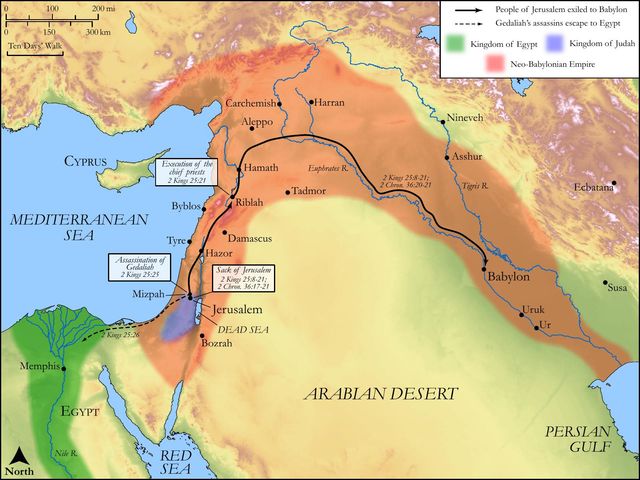
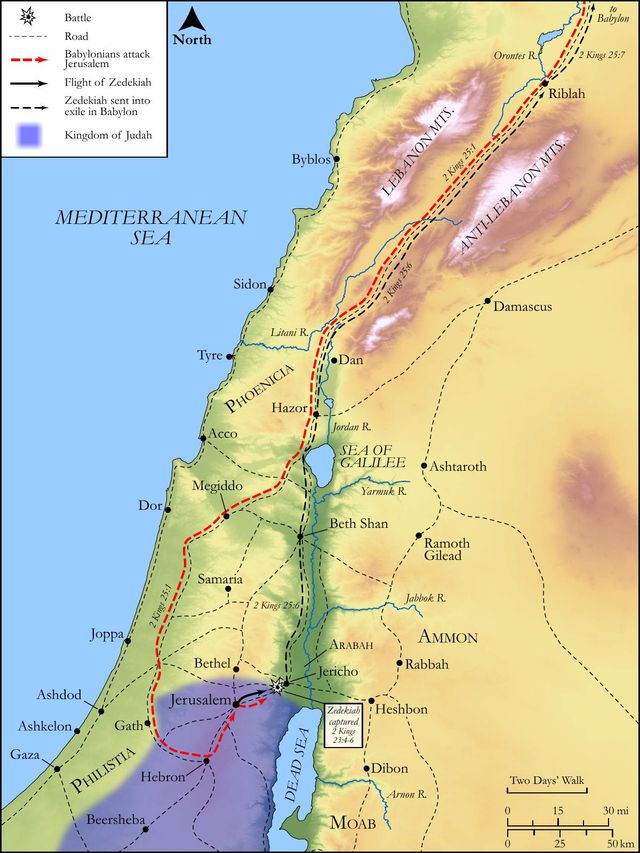
This verse is deeply embedded within the climactic and tragic narrative of Jerusalem's fall to Babylon in 2 Kings 25. Following the breaching of the city walls, the capture and blinding of King Zedekiah, and the subsequent execution of Judah's nobles, the narrative shifts its focus to the systematic destruction and plunder of the city, with particular emphasis on the Temple. Verses 13-17 meticulously list the Temple's bronze and gold articles that were broken up and carried away to Babylon, underscoring the thoroughness of the despoliation. This specific verse highlights the largest and most prominent bronze structures, setting the stage for the complete demolition of the Temple in the verses that follow (2 Kings 25:9) and the subsequent exile of the remaining population. It marks the culmination of a long history of warnings and serves as the narrative climax of the Deuteronomistic history's account of Judah's decline.
Historical & Cultural Context
The destruction of Jerusalem and its magnificent Temple by Nebuchadnezzar's Babylonian forces in 586 BC was an unparalleled catastrophe for ancient Israel. The Temple, built by King Solomon centuries earlier, was far more than a mere building; it was the sacred center of Israelite worship, the embodiment of national identity, and the perceived dwelling place of Yahweh among His people. Among the nations, the plundering and destruction of a defeated people's temple was a common and highly symbolic act, signifying the complete triumph of the conquering god over the vanquished god and the utter subjugation of the people, as the Rabshakeh boasted before Jerusalem of the gods of the lands Assyria had overcome. Bronze, an alloy of copper and tin, was a highly valued and durable metal, extensively used for both functional and ceremonial objects. The sheer scale of its removal, described as "without weight," underscores the immense wealth and resources seized by the Babylonians, further emphasizing the complete economic and spiritual devastation inflicted upon Judah.
Key Themes
ShowHideThe plundering of the Temple, as meticulously detailed in this verse, contributes significantly to several overarching themes evident throughout 2 Kings and the broader prophetic literature. It powerfully illustrates the theme of divine judgment and covenant curses being fulfilled due to Israel's persistent idolatry, oppression, and unfaithfulness, particularly as forewarned in Deuteronomy 28. The systematic stripping of the Temple's sacred items underscores the desecration of the holy and the loss of tangible divine presence, leading to the end of an era—the cessation of the Davidic monarchy in Judah and the Temple cult as it was known. The description of the plunder as "without weight" also emphasizes the theme of immeasurable loss and devastation, marking the complete collapse of the Kingdom of Judah and the beginning of the Babylonian exile, a period that profoundly reshaped Israelite identity and theology.
Exposition and Analysis
ShowHideKey Word Analysis
ShowHideMeaning "a column (as standing); also a stand, i.e. platform." In this context, it refers specifically to Jachin and Boaz, the two massive, ornate bronze columns that stood at the porch of Solomon's Temple (1 Kings 7:15-22). These were not structural supports but symbolic monuments, representing strength, stability, and God's enduring presence. Their removal by the Babylonians thus signified the complete collapse of Judah's spiritual and national foundation, and the perceived dismantling of divine support.
Meaning "a sea (as breaking in noisy surf) or large body of water; specifically (with the article), the Mediterranean Sea; sometimes a large river, or an artificial basin." Here, it refers to the "molten sea," a colossal bronze basin, approximately 15 feet in diameter and 7.5 feet deep, resting on twelve bronze oxen (1 Kings 7:23-26). It served as a large reservoir for the priests to wash themselves, symbolizing purification and the vastness of God's provision. Its plundering represented the seizure of a central ritual object and a significant source of valuable bronze.
Meaning "weight (numerically estimated); hence, weighing (the act)." The phrase "without weight" (Hebrew, lôʼ mishqâl' from H3808 "not" and H4948 "weight") is a hyperbole, meaning "immeasurable" or "beyond weighing." It emphasizes the enormous quantity and value of the bronze items taken, underscoring the vastness of the plunder and the scale of the loss incurred by Judah. It communicates that the amount was so great it defied conventional measurement, highlighting the overwhelming nature of the Babylonian despoliation.
Verse Breakdown
ShowHide"The two pillars, one sea, and the bases which Solomon had made for the house of the LORD;"
This clause precisely identifies the most prominent and massive bronze artifacts from the Temple that were targeted for plunder. "The two pillars" are Jachin and Boaz, magnificent bronze columns described in detail in 1 Kings 7:15-22, which stood at the Temple entrance. "One sea" refers to the "molten sea," a colossal bronze basin used for priestly ablutions, meticulously described in 1 Kings 7:23-26. "The bases" were intricate, wheeled stands designed for ten smaller bronze lavers, also for ritual washing, as detailed in 1 Kings 7:27-39. The concluding phrase "which Solomon had made for the house of the LORD" serves to emphasize the original grandeur, sacred purpose, and royal patronage of these items, creating a stark and tragic contrast with their current fate as plunder.
"the brass of all these vessels was without weight."
This concluding clause powerfully highlights the sheer volume and immense value of the bronze (often more accurately translated as "bronze" rather than "brass" in modern versions, as it was an alloy of copper and tin). The hyperbolic phrase "was without weight" signifies that the quantity was so immense it was beyond calculation or measurement by conventional means. This dramatic statement effectively conveys the overwhelming extent of the Babylonian plunder, not merely of precious metals like gold and silver, but also of the monumental bronze structures, underscoring the complete and devastating nature of the Temple's despoliation and the profound loss experienced by Judah.
Literary Devices
ShowHideThe verse employs several potent literary devices to heighten its emotional and theological impact. Hyperbole is prominently featured in the phrase "without weight," which dramatically emphasizes the immeasurable quantity of bronze taken from the Temple. This exaggeration serves to convey the overwhelming scale of the plunder and the profound sense of loss and devastation. Metonymy and Symbolism are also deeply at play, as the enumerated plundered items—the pillars, the sea, the bases—stand in for the entire Temple itself and, by extension, the nation of Judah. Their physical removal and destruction symbolize the complete subjugation, desecration, and ultimate downfall of the kingdom and its religious center. The stark, almost clinical enumeration of these once-sacred items, juxtaposed with the immense value implied by "without weight," also creates a powerful sense of pathos, evoking a feeling of tragedy, sorrow, and lament over the destruction of what was once glorious, sacred, and central to Israelite identity.
Theological and Thematic Connections
ShowHideThe plundering of the Temple's most iconic bronze elements, as described in 2 Kings 25:16, serves as a powerful theological statement about the dire consequences of covenant disobedience and the transient nature of even the most sacred physical structures. While the Temple was central to Israel's identity and worship, its desecration and destruction were not arbitrary acts of a foreign power, but rather the painful fulfillment of God's warnings against persistent idolatry, oppression, and unfaithfulness. This catastrophic event underscored that God's presence was not ultimately bound to a building, nor was His covenant unbreakable if His people continually rebelled. It forced Judah to confront the sobering reality that true security and blessing lay not in grand edifices or ritual objects, but in faithful adherence and obedience to the Lord Himself. This immense loss, though devastating, ultimately paved the way for a deeper, more spiritual understanding of God's presence, one that could transcend geographical location and physical structures, preparing the way for a future where God's dwelling would be among His people in a new and profound way.
Reflection and Application
ShowHideThe vivid scene of the Temple's systematic dismantling and plunder, particularly the removal of its massive bronze components, offers profound and enduring lessons for contemporary believers. It serves as a potent and sobering reminder that even the most cherished and sacred physical symbols, institutions, or traditions are ultimately temporal and vulnerable. Our security, hope, and worship must never be rooted in material possessions, impressive buildings, human-made structures, or even the outward expressions of our faith, no matter how grand or historically significant they may seem. Instead, our ultimate allegiance, trust, and confidence must reside solely in the unchanging character and enduring faithfulness of God Himself. This account challenges us to critically examine where we truly place our confidence—is it in the visible and tangible elements of our faith, or in the invisible, eternal, and sovereign God? It underscores that true worship is not confined to a specific place or ritual but is a matter of the heart, lived out in spirit and truth, even, and perhaps especially, in times of profound loss, displacement, or the crumbling of familiar structures. The destruction of the Temple, while undeniably tragic, ultimately served a divine purpose in preparing God's people for a more profound, spiritual understanding of His presence that would culminate in the person and work of Jesus Christ.
Questions for Reflection
ShowHideFAQ
ShowHideWhat were the "two pillars" and "one sea" specifically mentioned in this verse?
ShowHideThe "two pillars" refer to Jachin and Boaz, magnificent, freestanding bronze columns that stood at the entrance of Solomon's Temple. They were not load-bearing but served as powerful symbols of God's strength, stability, and covenant faithfulness. Their detailed construction is described in 1 Kings 7:15-22. The "one sea" is the "molten sea," a colossal bronze basin, approximately 15 feet in diameter and 7.5 feet deep, supported by twelve bronze oxen. It functioned as a large reservoir for the priests to perform their ritual washings, symbolizing purification and the vastness of God's provision, as described in 1 Kings 7:23-26. These were among the most prominent, valuable, and symbolically significant bronze items in the Temple complex.
Why does the verse state that the "brass of all these vessels was without weight"?
ShowHideThe phrase "without weight" (Hebrew: lôʼ mishqâl) is a powerful hyperbole, meaning the quantity of bronze was so vast that it was immeasurable, incalculable, or simply too great to be weighed by conventional means. This dramatic statement serves to emphasize the enormous scale of the plunder and the immense value of the materials taken by the Babylonians. It underscores the thoroughness and devastating impact of the Babylonian despoliation, highlighting the profound economic, symbolic, and spiritual loss suffered by Judah with the destruction of its beloved Temple. It communicates an overwhelming sense of loss that defies quantification.
What is the deeper theological significance of the Babylonians taking these specific items from the Temple?
ShowHideThe plundering of these iconic and massive Temple artifacts by the Babylonians carried profound theological and symbolic significance. First, in the eyes of the nations, it symbolized the complete and decisive victory of Nebuchadnezzar and his god (Marduk) over Judah and its God, Yahweh. Second, it represented the ultimate desecration of the sacred space, stripping it of its glory, functionality, and perceived divine presence. Third, and most crucially from a biblical perspective, it was a tangible and devastating fulfillment of the prophetic warnings of judgment against Judah for its persistent idolatry, covenant unfaithfulness, and moral corruption. It demonstrated that God would indeed allow His holy place to be destroyed if His people continued in rebellion, underscoring His justice and sovereignty. This event marked the definitive end of an era for the Davidic monarchy and the Temple cult, ushering in the Babylonian exile and forcing a re-evaluation of Israel's relationship with God.
Christ-Centered Fulfillment
ShowHideThe plundering and destruction of Solomon's Temple, as vividly depicted in 2 Kings 25:16, points forward to the ultimate fulfillment found in the person and work of Jesus Christ. While the physical Temple, a magnificent structure made with human hands, was utterly destroyed and its sacred objects carried away, the New Testament reveals that God's true dwelling place is no longer bound to a building or a geographical location, but is a spiritual reality centered in Christ. Jesus Himself declared, "Destroy this temple, and in three days I will raise it up," referring prophetically to the temple of His body. He is the ultimate and perfect Temple, the very place where God fully dwells among humanity in bodily form (Colossians 2:9). Furthermore, through Christ's atoning sacrifice and resurrection, believers are incorporated into this new spiritual edifice, becoming "living stones" built into a "spiritual house" and a "holy priesthood" (1 Peter 2:5), a holy temple in the Lord where God's Spirit now resides (Ephesians 2:21-22). The loss of the physical Temple in the Old Covenant foreshadows a greater reality where worship is no longer confined to Jerusalem or a specific mountain, but is offered "in spirit and truth" through Christ, the true High Priest (John 4:23-24; Hebrews 8:1-2). Thus, the devastation of the Old Covenant sanctuary ultimately paves the way for the enduring, unplunderable, and infinitely more glorious sanctuary found in the person and work of Jesus Christ, the Lamb of God who takes away the sin of the world and establishes a new and better covenant, making His dwelling among His people forever (Revelation 21:3).