


2 Chronicles 4:17
Bible text: King James Version (1769 Blayney text) · Public domain
Bible text: Berean Standard Bible · Public domain
Bible text: American Standard Version (1901) · Public domain
Bible text: World English Bible, Messianic edition · Public domain
Bible text: Geneva Bible (1599) · Public domain
Bible text: Young's Literal Translation · Public domain
- בְּכִכַּרbe·khi·Karin [the] valley ofH3603Prep-b ¦ N-fscNoun Singular Feminine Constructבְּinכִכַּר[the] valley of
- הַיַּרְדֵּןhai·yar·Denthe JordanH3383Art ¦ N-properNoun Proper LocationהַtheיַּרְדֵּןJordan
- יְצָקָםye·tza·Kamhe cast themH3332V-Qal-Perf-3ms ¦ 3mpVerb Qal Perfect 3rd Singular Masculineיְצָקָhe castםthem
- הַמֶּלֶךְha·Me·lekhthe kingH4428Art ¦ N-msNoun Singular Masculine Absoluteהַtheמֶּלֶךְking
- בַּעֲבִיba·'a·Viin [the] thickness ofH5672Prep-b ¦ N-mscNoun Singular Masculine Constructבַּinעֲבִי[the] thickness of
- הָאֲדָמָהha·'a·da·Mahthe groundH127Art ¦ N-fsNoun Singular Feminine Absoluteהָtheאֲדָמָהground
- בֵּיןbeinbetweenH996Adj-mscAdjective Numerical Singular Masculine Construct
- סֻכּוֹתsu·KotSuccothH5523N-properNoun Proper Location
- וּבֵיןu·Veinand betweenH996Conj-w ¦ Adj-mscAdjective Numerical Singular Masculine Constructוּandבֵיןbetween
- צְרֵדָתָהtze·re·Da·tahZeredahH6868N-properNoun Proper Location
English is a literal word-by-word gloss of the Hebrew, not the KJV's wording. Why?
This is the original text the KJV's translators worked from — each Hebrew word with its own literal English meaning in this verse, prepared by scholars at Tyndale House, Cambridge. The KJV translates whole sentences, not word by word, so its wording differs: one Hebrew word can become several English words, and the KJV may choose “the LORD” where the gloss reads “Yahweh”. Both are faithful — they answer different questions. For the KJV's own rendering, switch to the KJV text.
Details
See on the biblical-era maps
Study this verse
Public-domain commentary
Matthew Henry
From his Commentary on the Whole Bible. Henry comments on passages, not single verses — this entry covers 2 Chronicles 4:11–22.
We have here such a summary both of the brass-work and the gold-work of the temple as we had before (Kg1 7:13, etc.), in which we have nothing more to observe than, 1. That Huram the workman was very punctual: He finished all that he was to make (Ch2 4:11), and left no part of his work undone. Huram, his father, he is called, Ch2 4:16. Probably it was a sort of nickname by which he was commonly known, Father Huram; for the king of Tyre called him Huram Abi, my father, in compliance with whom Solomon called him his, he being a great artist and father of the artificers in brass and iron. He acquitted himself well both for ingenuity and industry. 2. Solomon was very generous. He made all the vessels in great abundance (Ch2 4:18), many of a sort, that many hands might be employed, and so the work might go on with expedition, or that some might be laid up for use when others were worn out. Freely he has received, and he will freely give. When he had made vessels enough for the present he could not convert the remainder of the brass to his own use; it is devoted to God, and it shall be used for him.
Continue studying 2 Chronicles 4:17 across the web’s major study libraries — every link below opens this exact verse, chapter, or book on the destination site.
Read & Compare
 BibleGatewayThis verse in more than 200 translations and 70 languages.
 Bible.comThe YouVersion reader — hundreds of translations, reading plans, and highlights.
 ESV.orgCrossway's official English Standard Version reader.
 NET BibleThe NET translation with 60,000+ translators' notes on every rendering decision.
 STEP BibleTyndale House's free study tool — original text, vocabulary, and scholarly resources.
 BibliaLogos Bible Software's free web reader.
 USCCBThe New American Bible (Revised Edition) with the U.S. bishops' study notes.
Commentaries
 BibleHub CommentariesDozens of classic commentaries on this verse, gathered on one page.
 StudyLightMore than 100 commentary sets — the largest collection on the web.
 BibleRefPlain-English commentary on what this verse means, verse by verse.
 Enduring WordDavid Guzik's free commentary on this chapter, widely used by Bible teachers.
 Bible Study ToolsVerse commentary alongside Greek and Hebrew study aids.
Original Language & Research
- BibleHub InterlinearThe verse word by word — original language, transliteration, and English.
- BibleHub LexiconEvery word's original-language definition and Strong's entry.
 Blue Letter BibleDeep-study tools — Strong's numbers, concordance, and word studies.
 SefariaThe Hebrew text with Rashi and centuries of Jewish commentary.
Sermons, Hymns & Audio


TrulyRandomVerse is not affiliated with these sites and doesn’t control their content. They’re linked because they’re genuinely useful.
Summary
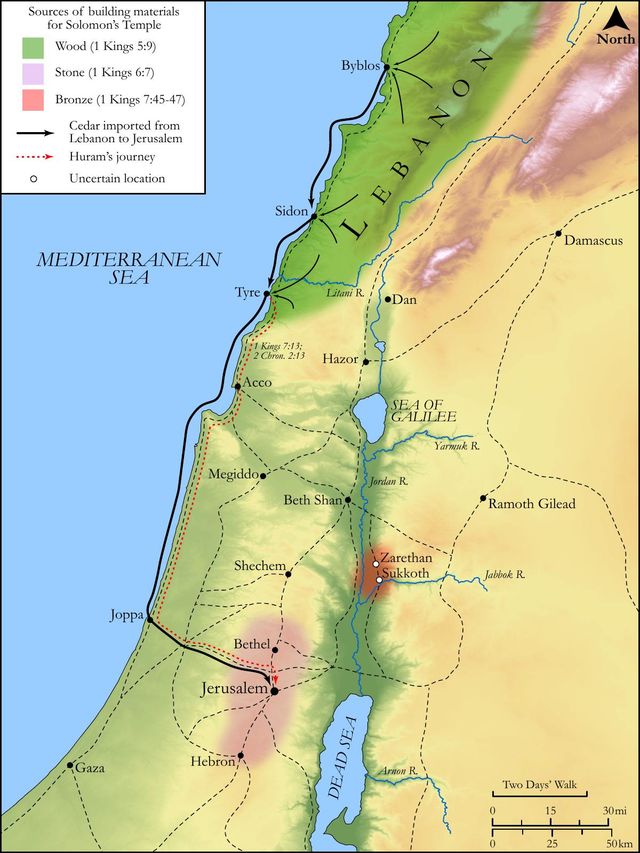
Second Chronicles 4:17 meticulously details the geographical location for the large-scale bronze casting operations vital to constructing Solomon's Temple. It specifies that the colossal bronze furnishings—such as the great pillars, the molten sea, and the bases for the lavers—were cast by the king's skilled artisans, under the direction of Hiram of Tyre, in the clay-rich plain of Jordan, precisely situated between the towns of Succoth and Zeredathah. This seemingly technical detail profoundly underscores the immense scale, meticulous planning, and advanced metallurgical expertise required for the Temple's construction, revealing the practical realities underpinning this grand divine undertaking.
Context
ShowHideLiterary Context
This verse is embedded within 2 Chronicles chapters 3-5, a section dedicated to the comprehensive description of Solomon's Temple construction and its elaborate furnishings. Chapter 4 specifically enumerates the various bronze elements, including the impressive bronze altar, the immense molten sea, the ten intricate lavers, and the two monumental pillars, Jachin and Boaz, along with their ornate decorations and accompanying stands. Verse 17 serves as a crucial logistical interjection, transitioning from a description of the finished articles to the practical reality of their manufacture. It explains the specific location where these enormous items, too large to be cast within the confines of the Temple itself, were forged. This detail grounds the preceding descriptions in a tangible, historical reality, emphasizing the sheer scale of the undertaking and the practical genius required to translate the divine blueprint into a physical edifice.
Historical & Cultural Context
The construction of the Temple was a monumental endeavor, demanding vast resources, sophisticated engineering, and highly specialized craftsmanship. In Solomon's day, large-scale bronze casting was a pinnacle of advanced metallurgy. It required immense heat generated by massive furnaces, significant quantities of raw materials (primarily copper and tin), and specific types of high-quality clay for durable molds capable of withstanding molten metal temperatures exceeding 1,000°C. The "plain of Jordan" was strategically chosen for such an operation due to its abundant deposits of suitable clay, its proximity to the Jordan River (providing essential water for the casting process and cooling), and the expansive open space necessary for the immense heat, fumes, and logistical operations. The involvement of Hiram of Tyre, a master craftsman from Phoenicia, highlights the crucial international collaboration, as Israel relied on the superior metallurgical expertise of its northern neighbors. This verse thus offers a valuable glimpse into the industrial capabilities and inter-regional cooperation characteristic of the Solomonic era.
Key Themes
ShowHideThough a technical detail, 2 Chronicles 4:17 contributes significantly to several overarching themes within the book. First, it subtly highlights Divine Detail and Precision, suggesting that God's meticulous oversight extends even to the practical logistics of constructing His dwelling place. The very specificity of the location implies that every aspect of the Temple's construction, from its grand design to the source of its materials, was part of a divinely ordered plan. Second, it underscores Human Skill and Collaboration, implicitly celebrating the extraordinary craftsmanship of Hiram and his laborers, working under Solomon's astute direction. It showcases the synergy between different peoples—Israelites and Phoenicians—united for a sacred purpose, a collaboration also detailed in 1 Kings 7:46. Finally, the Geographical Significance of "Succoth and Zeredathah" (also known as Zarethan or Zarthan) grounds the narrative in verifiable geography, affirming the historical authenticity of these events and the tangible nature of Solomon's kingdom.
Exposition and Analysis
ShowHideKey Word Analysis
ShowHideA primitive root meaning "to pour out (transitive or intransitive); by implication, to melt or cast as metal; by extension, to place firmly, to stiffen or grow hard." This verb specifically refers to the complex and dangerous process of melting metal and pouring it into a mold. Its use here emphasizes the highly specialized technical skill involved in creating the massive bronze objects for the Temple, which were not merely fashioned but meticulously formed through a sophisticated metallurgical operation.
Meaning "a circle, i.e. (by implication) a circumjacent tract or region, especially the Ghor or valley of the Jordan; also a (round) loaf; also a talent (or large [round] coin)." In this context, "plain" refers to the broad, flat expanse of the Jordan River valley. Its selection as the casting site was strategic, owing to its abundant clay deposits, access to water, and the open space necessary for a large-scale industrial operation.
Meaning "properly, an envelope, i.e. darkness (or density, 2 Chronicles 4:17); specifically, a (scud) cloud; also a copse." While this word can mean "cloud," in the context of 2 Chronicles 4:17, it refers to the dense, rich, and cohesive earth suitable for making molds. The presence of such high-quality clay was critical for constructing the robust molds capable of withstanding the extreme temperatures of molten bronze, ensuring the structural integrity and successful casting of these massive objects.
Verse Breakdown
ShowHide"In the plain of Jordan did the king cast them"
This clause establishes the primary geographical location for the immense bronze casting operations. "The king" refers to Solomon, indicating his ultimate authority and commissioning of the work, though the actual casting was executed by highly skilled artisans like Hiram. "Them" refers to the colossal bronze furnishings previously described in 2 Chronicles 4, such as the pillars, the molten sea, and the lavers, which were too large and required too much heat to be cast within the confines of the Temple precincts themselves.
"in the clay ground"
This phrase specifies the particular type of terrain within the Jordan plain that was utilized. The presence of suitable, high-quality clay was absolutely crucial for constructing the durable molds into which the molten bronze would be poured. This detail highlights the practical and material requirements for such a massive and technologically advanced undertaking in Solomon's day.
"between Succoth and Zeredathah"
These are two specific geographical markers within the Jordan plain, providing a precise location for the foundry. Succoth was situated on the east side of the Jordan River, and Zeredathah (also known as Zarethan or Zarthan) was on the west. Pinpointing the location between these two known points emphasizes the historical accuracy and meticulous record-keeping of the chronicler, grounding the grand narrative in verifiable geography.
Literary Devices
ShowHideThe Chronicler's inclusion of this seemingly technical detail employs several significant literary devices. Precision and Specificity are paramount, as the verse meticulously names the exact geographical location, moving beyond a mere general reference to "somewhere in the valley." This precise naming contributes profoundly to the Historicity and Realism of the narrative, grounding the grand account of Temple construction in tangible, verifiable facts, thereby enhancing its credibility and demonstrating the Chronicler's commitment to factual accuracy. Furthermore, there is an element of Understatement; the simple statement "did the king cast them" belies the monumental effort, advanced technology, and immense resources required for such an industrial feat in that day. The verse also subtly serves as a form of Validation, confirming the historical reality of the Temple's construction and the immense logistical challenges overcome through divine provision and human ingenuity.
Theological and Thematic Connections
ShowHideThis verse, though focused on a practical detail, resonates with profound theological implications. It illustrates that God's work, even when executed through human hands, is characterized by meticulous planning, divine provision, and the highest standards of craftsmanship. Just as God meticulously designed the universe and prepared the earth for human habitation, so too did He oversee the practicalities of His earthly dwelling place. This attention to detail in the physical construction of the Temple reflects God's character—a God of order, precision, and excellence who values every aspect of His creation and every act of service offered to Him. It reminds us that even the seemingly mundane or "behind-the-scenes" aspects of our service are significant in God's eyes and contribute to His larger purposes, demonstrating that true worship encompasses diligent execution in all things.
Reflection and Application
ShowHideThe seemingly technical detail of 2 Chronicles 4:17 offers a powerful and enduring lesson for contemporary believers: God is deeply invested in the practicalities of our service, and excellence in execution, even in what appears to be mundane or behind-the-scenes, brings Him profound glory. Just as the massive bronze castings required specific materials, a precise location, and immense skill, so too does our spiritual service require careful planning, the right resources (both spiritual and material), and dedicated effort. This verse challenges us to consider how we apply our gifts, talents, and resources, no matter how ordinary or specialized they seem, to God's purposes. It encourages resourcefulness, urging us to utilize what God has abundantly provided (like the clay in the Jordan plain) for His kingdom work. It also emphasizes the value of craftsmanship and attention to detail, reminding us that our commitment to quality and diligence in all areas of life can be a profound act of worship. Ultimately, it teaches us that every component of our lives, when offered to God with intentionality and excellence, can contribute to the building of His spiritual temple and the advancement of His eternal purposes.
Questions for Reflection
ShowHideFAQ
ShowHideWhy was the "plain of Jordan" chosen for casting the Temple's bronze items?
ShowHideThe plain of Jordan was an ideal location for several practical reasons crucial for large-scale bronze casting. Firstly, it was known for its abundant deposits of high-quality clay, which was essential for creating the durable molds needed to withstand the immense heat of molten bronze. Secondly, its proximity to the Jordan River provided a reliable water source, necessary for various stages of the casting process, including cooling. Thirdly, the relatively flat and open terrain offered ample space for the large-scale industrial operation, including the furnaces, workshops, and storage areas, and allowed for the dissipation of the intense heat and fumes generated. This strategic choice is also noted in the parallel account in 1 Kings 7:46.
Who was Hiram, and what was his role in the Temple's construction?
ShowHideHiram (or Huram in Chronicles) was a highly skilled bronze craftsman from Tyre, a prominent Phoenician city-state. He was commissioned by King Solomon to oversee and execute the intricate bronze work for the Temple, as described in 2 Chronicles 2:13-14. His expertise was crucial because Israel, while rich in resources, did not possess the advanced metallurgical knowledge and experience that Phoenicia did. Hiram was responsible for designing and casting the two massive bronze pillars (Jachin and Boaz), the enormous molten sea, the ten bronze lavers with their stands, and other essential bronze furnishings, playing a pivotal role in bringing the Temple's elaborate design to fruition.
Christ-Centered Fulfillment
ShowHideThe meticulous detail of 2 Chronicles 4:17, describing the precise location for casting the Temple's bronze furnishings, points forward to the ultimate, divinely ordained precision of God's plan of salvation in Christ. The physical Temple, with its elaborate components forged with such care, served as a tangible representation of God's presence among His people, foreshadowing the Incarnation where God's glory truly "dwelt among us" in the person of Jesus Christ, as John 1:14 declares. Just as the Temple's components were shaped through intense heat and precise processes, so too was Christ's perfect life and atoning sacrifice the culmination of God's perfectly executed plan, a work meticulously prepared "before the foundation of the world" (1 Peter 1:19-20). The "casting" process, involving transformation from raw material to sacred object, can also be seen as a metaphor for the transformative work of the Holy Spirit, making believers into a "new creation" in Christ (2 Corinthians 5:17), who together form the spiritual temple, built upon the cornerstone of Christ Himself (Ephesians 2:19-22). Thus, the earthly precision in building a temporary dwelling points to the eternal perfection of God's redemptive work, fully realized in Christ, who is the ultimate fulfillment of God's dwelling among humanity.