


Psalms 108:13
- בֵּאלֹהִיםbe·lo·Himin GodH430Prep-b ¦ N-mpNoun Plural Masculine AbsoluteבֵּinאלֹהִיםGod
- נַעֲשֶׂהna·'a·sehwe will doH6213V-Qal-Imperf-1cpVerb Qal Imperfect 1st Plural common gender
- חָיִלCha·yilstrengthH2428N-msNoun Singular Masculine Absolute
- וְהוּאve·Hu'and heH1931Conj-w ¦ Pro-3msPronoun Personal 3rd Singular Masculineוְandהוּאhe
- יָבוּסya·Vushe will tread downH947V-Qal-Imperf-3msVerb Qal Imperfect 3rd Singular Masculine
- צָרֵינוּtza·Rei·nuour opponentsH6862N-mpc ¦ 1cpNoun Plural Masculine Constructצָרֵיopponentsנוּour
English is a literal word-by-word gloss of the Hebrew, not the KJV's wording. Why?
This is the original text the KJV's translators worked from — each Hebrew word with its own literal English meaning in this verse, prepared by scholars at Tyndale House, Cambridge. The KJV translates whole sentences, not word by word, so its wording differs: one Hebrew word can become several English words, and the KJV may choose “the LORD” where the gloss reads “Yahweh”. Both are faithful — they answer different questions. For the KJV's own rendering, switch to the KJV text.
Details
See on the biblical-era map
Study this verse
Public-domain commentary
Matthew Henry
From his Commentary on the Whole Bible. Henry comments on passages, not single verses — this entry covers Psalms 108:6–13.
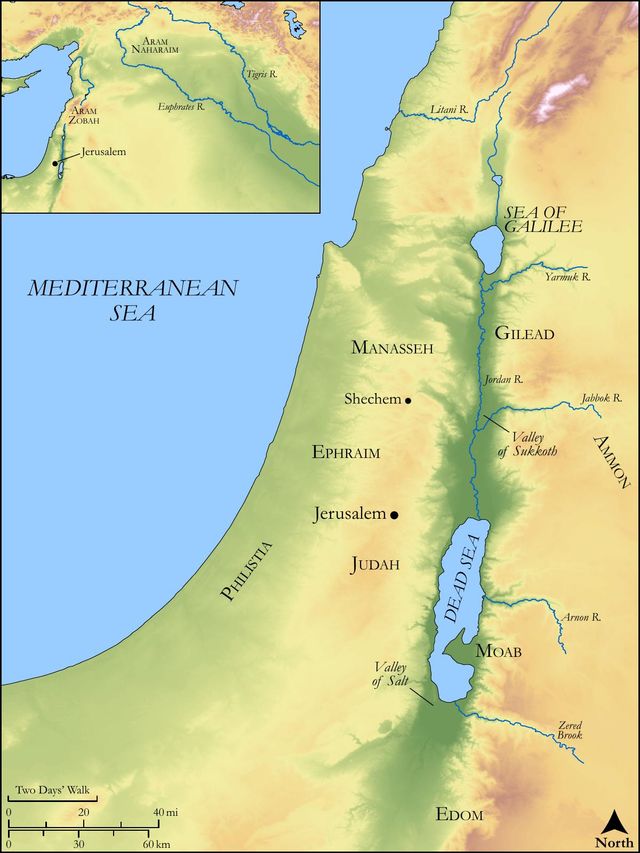
We may here learn how to pray as well as praise. 1. We must be public-spirited in prayer, and bear upon our hearts, at the throne of grace, the concerns of the church of God, Psa 108:6. It is God's beloved, and therefore must be ours; and therefore we must pray for its deliverance, and reckon that we are answered if God grant what we ask for his church, though he delay to give us what we ask for ourselves. "Save thy church, and thou answerest me; I have what I would have." Let the earth be filled with God's glory, and the prayers of David are ended (Psa 72:19, Psa 72:20); he desires no more. 2. We must, in prayer, act faith upon the power and promise of God - upon his power (Save with thy right hand, which is mighty to save), and upon his promise: God has spoken in his holiness, in his holy word, to which he has sworn by his holiness, and therefore I will rejoice, Psa 108:7. What he has promised he will perform, for it is the word both of his truth and of his power. An active faith can rejoice in what God has said, though it be not yet done; for with him saying and doing are not two things, whatever they are with us. 3. We must, in prayer, take the comfort of what God has secured to us and settled upon us, though we are not yet put in possession of it. God had promised David to give him, (1.) The hearts of his subjects; and therefore he surveys the several parts of the country as his own already: "Shechem and Succoth, Gilead and Manasseh, Ephraim and Judah, are all my own," Psa 108:8. With such assurance as this we may speak of the performance of what God has promised to the Son of David; he will, without fail, give him the heathen for his inheritance and the utmost parts of the earth for his possession, for so has he spoken in his holiness; nay, of all the particular persons that were given him he will lose none; he also, as David, shall have the hearts of his subjects, Joh 6:37. And, (2.) The necks of his enemies. These are promised, and therefore David looks upon Moab, and Edom, and Philistia, as his own already (Psa 108:9): Over Philistia will I triumph, which explains Psa 60:8, Philistia, triumph thou because of me, which some think should be read, O my soul! triumph thou over Philistia. Thus the exalted Redeemer is set down at God's right hand, in a full assurance that all his enemies shall in due time be made his footstool, though all things are not yet put under him, Heb 2:8. 4. We must take encouragement from the beginnings of mercy to pray and hope for the perfecting of it (Psa 108:10, Psa 108:11): "Who will bring me into the strong cities that are yet unconquered? Who will make me master of the country of Edom, which is yet unsubdued?" The question was probably to be debated in his privy council, or a council of war, what methods they should take to subdue the Edomites and to reduce that country; but he brings it into his prayers, and leaves it in God's hands: Wilt not thou, O God? Certainly thou wilt. It is probable that he spoke with the more assurance concerning the conquest of Edom because of the ancient oracle concerning Jacob and Esau, that the elder should serve the younger, and the blessing of Jacob, by which he was made Esau's lord, Gen 27:37. 5. We must not be discouraged in prayer, nor beaten off from our hold of God, though Providence has in some instances frowned upon us: "Though thou hast cast us off, yet thou wilt now go forth with our hosts, Psa 108:11. Thou wilt comfort us again after the time that thou hast afflicted us." Adverse events are sometimes intended for the trial of the constancy of our faith and prayer, which we ought to persevere in whatever difficulties we meet with, and not to faint. 6. We must seek help from God, renouncing all confidence in the creature (Psa 108:12): "Lord, give us help from trouble, prosper our designs, and defeat the designs of our enemies against us." It is not unseasonable to talk of trouble at the same time that we talk of triumphs, especially when it is to quicken prayer for help from heaven; and it is a good plea, Vain is the help of man. "It is really so, and therefore we are undone if thou do not help us; we apprehend it to be so, and therefore depend upon thee for help and have the more reason to expect it." 7. We must depend entirely upon the favour and grace of God, both for strength and success in our work and warfare, Psa 108:13. (1.) We must do our part, but we can do nothing of ourselves; it is only through God that we shall do valiantly. Blessed Paul will own that even he can do nothing, nothing to purpose, but through Christ strengthening him, Phi 4:13. (2.) When we have acquitted ourselves ever so well, yet we cannot speed by any merit or might of our own; it is God himself that treads down our enemies, else we with all our valour cannot do it. Whatever we do, whatever we gain, God must have all the glory.
Continue studying Psalms 108:13 across the web’s major study libraries — every link below opens this exact verse, chapter, or book on the destination site.
Read & Compare
 BibleGatewayThis verse in more than 200 translations and 70 languages.
 Bible.comThe YouVersion reader — hundreds of translations, reading plans, and highlights.
 ESV.orgCrossway's official English Standard Version reader.
 NET BibleThe NET translation with 60,000+ translators' notes on every rendering decision.
 STEP BibleTyndale House's free study tool — original text, vocabulary, and scholarly resources.
 BibliaLogos Bible Software's free web reader.
 USCCBThe New American Bible (Revised Edition) with the U.S. bishops' study notes.
Commentaries
 BibleHub CommentariesDozens of classic commentaries on this verse, gathered on one page.
 StudyLightMore than 100 commentary sets — the largest collection on the web.
 BibleRefPlain-English commentary on what this verse means, verse by verse.
 Enduring WordDavid Guzik's free commentary on this chapter, widely used by Bible teachers.
 Bible Study ToolsVerse commentary alongside Greek and Hebrew study aids.
Original Language & Research
- BibleHub InterlinearThe verse word by word — original language, transliteration, and English.
- BibleHub LexiconEvery word's original-language definition and Strong's entry.
 Blue Letter BibleDeep-study tools — Strong's numbers, concordance, and word studies.
 SefariaThe Hebrew text with Rashi and centuries of Jewish commentary.
Sermons, Hymns & Audio


TrulyRandomVerse is not affiliated with these sites and doesn’t control their content. They’re linked because they’re genuinely useful.
Summary
Psalms 108:13 serves as a profound declaration of unwavering confidence in God's supreme power to grant victory. It encapsulates the psalmist's conviction that true strength, valor, and success against any opposition—whether physical, spiritual, or circumstantial—do not originate from human might but flow directly from divine empowerment and intervention. This verse asserts that it is God Himself who actively engages in and decisively overcomes the adversaries of His people, assuring a triumphant outcome for those who trust in Him.
Context
ShowHideLiterary Context
Psalm 108 is a unique composite, skillfully crafted from select portions of two earlier Davidic psalms: Psalm 57:7-11 and Psalm 60:5-12. The first part of Psalm 108 (verses 1-6) echoes the morning prayer of praise and steadfast trust found in Psalm 57, establishing a foundation of adoration and commitment to God, despite present distress. The latter part (verses 7-13), from which our verse is drawn, mirrors the fervent plea and confident expectation of divine intervention from Psalm 60, specifically a prayer for victory in battle. This strategic combination transforms individual lament and praise into a powerful national prayer for triumph, culminating in the bold declaration of assured victory in Psalm 108:13. The psalm moves seamlessly from a heart fixed on God in worship to a confident assertion of His conquering might, setting the stage for this declaration of assured victory through Him.
Historical & Cultural Context
Attributed to King David, the source material for Psalm 108 likely reflects a period of significant national struggle or military campaign for ancient Israel, possibly against formidable adversaries such as the Edomites or Arameans, as suggested by the superscription of Psalm 60. In the ancient Near East, military success was intrinsically linked to divine favor, and kings often sought prophetic or priestly affirmation before engaging in battle. The imagery of "treading down" enemies is a common biblical and ancient Near Eastern motif signifying complete and decisive subjugation, often associated with a conquering king or deity crushing foes underfoot. This verse embodies the Israelite understanding that their true strength in warfare, unlike surrounding nations who relied on chariots and horses, came from their covenant God, the Lord of Hosts. It reflects a theological worldview where God is the ultimate warrior who fights on behalf of His people.
Key Themes
ShowHideThis verse powerfully contributes to several overarching themes within the Psalter and broader biblical narrative. Firstly, it highlights Divine Empowerment, emphasizing that human strength and valor are insufficient on their own, and all true effectiveness in life's battles stems from God's enabling power. This resonates deeply with the New Testament teaching that believers can do all things through Christ who strengthens them. Secondly, it underscores God's Sovereignty in Victory, unequivocally stating that the ultimate triumph belongs to God alone. He is the active agent who defeats opposition, whether physical foes or spiritual adversaries, assuring the believer that God is not a passive observer but is actively engaged in their battles, ensuring a decisive outcome. Finally, the verse exudes Unwavering Confidence, rooted in God's character and His past faithfulness, serving as a beacon of hope and a firm conviction in times of adversity. This confidence is a hallmark of the psalmist's trust in God's covenant promises, as seen throughout Psalm 108 and exemplified by the declaration in Psalm 20:7.
Exposition and Analysis
ShowHideKey Word Analysis
ShowHidePlural of אֱלוֹהַּ; gods in the ordinary sense; but specifically used (in the plural thus, especially with the article) of the supreme God; occasionally applied by way of deference to magistrates; and sometimes as a superlative; angels, [idiom] exceeding, God (gods) (-dess, -ly), [idiom] (very) great, judges, [idiom] mighty. This term, often translated as "God," refers to the singular, supreme God of Israel, emphasizing His divine power and authority as the ultimate source of strength and victory.
From חוּל; probably a force, whether of men, means or other resources; an army, wealth, virtue, valor, strength; able, activity, ([phrase]) army, band of men (soldiers), company, (great) forces, goods, host, might, power, riches, strength, strong, substance, train, ([phrase]) valiant(-ly), valour, virtuous(-ly), war, worthy(-ily). This word is rich in meaning, encompassing strength, might, efficiency, valor, and the capacity to achieve. When one does "valiantly" through God, it implies not merely courage, but the effective and successful execution of a task or battle, denoting the ability to achieve results and demonstrate prowess, all empowered by a divine source.
A primitive root; to trample (literally or figuratively); loath, tread (down, under (foot)), be polluted. This term carries the powerful imagery of crushing or trampling underfoot. It signifies a decisive, overwhelming, and complete defeat of enemies, much like grapes are trodden in a winepress. This emphasizes God's total and final subjugation of all opposition, leaving no room for their resurgence.
Verse Breakdown
ShowHide"Through God we shall do valiantly"
This opening clause establishes the absolute source of all effective strength and courage. The preposition "through" (בְּ, be) signifies instrumentality, indicating that human valor, prowess, and success are not inherent but are mediated and enabled by divine power. It is a profound declaration of dependence, acknowledging that any significant achievement or victory is not by human might alone but by God's empowering presence. The "we" indicates a corporate, communal confidence, likely representing Israel as a nation or the community of faith, united in their reliance on God.
"for he [it is that] shall tread down our enemies"
This second clause provides the foundational reason and absolute certainty for the confidence expressed in the first. The assurance of doing valiantly is grounded in the absolute certainty that God Himself is the active agent who will decisively defeat their adversaries. The emphatic "he [it is that]" underscores God's singular, sovereign, and active role in this victory, leaving no doubt about His direct intervention. "Tread down" vividly portrays a complete, irreversible, and humiliating subjugation of all opposition, leaving no room for their resurgence. "Our enemies" can refer to literal military foes, but also encompasses any spiritual, emotional, or circumstantial opposition that stands against God's people and His purposes.
Literary Devices
ShowHideThe verse employs several potent literary devices to convey its message of divine empowerment and assured victory. The most prominent is Metonymy, where the phrase "Through God" functions as a powerful stand-in for "through God's power," "by God's enabling presence," or "because of God's active intervention." This highlights the divine source of all human capability and success. The phrase "shall tread down our enemies" utilizes vivid Imagery and Metaphor, drawing from the ancient practice of trampling defeated foes or crushing grapes in a winepress. This creates a powerful mental picture of decisive, overwhelming, and complete subjugation, emphasizing the totality and finality of God's victory. Furthermore, there is a clear Cause-and-Effect relationship established: because God will decisively defeat the enemies, therefore His people are enabled to act valiantly. The entire verse functions as a strong Declaration or Affirmation, conveying a tone of absolute certainty and unshakeable faith rather than a mere hope or wish, reinforcing the psalmist's profound trust in God's character and power.
Theological and Thematic Connections
ShowHidePsalms 108:13 powerfully articulates the theological truth that God is not merely an observer of human struggles but an active, sovereign participant who empowers His people for victory. It underscores the biblical principle of divine enablement, where human effort, courage, and strategic planning are rendered effective only when infused with God's strength. This verse affirms God's character as a divine warrior who fights for His covenant people, assuring them that ultimate triumph over any form of opposition—be it physical adversaries, spiritual forces, or life's overwhelming challenges—is secured by His intervention. It calls believers to a posture of radical dependence, where confidence is placed not in self-reliance but in the unfailing might of the Almighty, recognizing that true valor is a divine gift, not a human achievement.
Reflection and Application
ShowHidePsalms 108:13 offers timeless encouragement for believers navigating the complexities and challenges of contemporary life. In a world that often champions self-sufficiency, individual prowess, and human ingenuity as the sole keys to success, this verse serves as a profound reminder that our true strength and capacity for "doing valiantly" come solely "through God." It invites us to surrender our self-reliance and place our full trust in His omnipotence, whether we face personal struggles, spiritual battles against unseen adversaries, or societal injustices. Knowing that God Himself will "tread down our enemies" instills a profound sense of courage, peace, and perseverance, empowering us to face difficult situations with boldness and confidence. This is not a call to passive waiting, but to active, faith-filled engagement, knowing that our efforts are divinely empowered and our ultimate victory is divinely assured. It encourages us to pray boldly, act courageously, and live with unwavering hope, understanding that with God, triumph is not merely possible, but guaranteed.
Questions for Reflection
ShowHideFAQ
ShowHideIs this verse only about literal military battles, or does it have broader application for believers today?
ShowHideWhile the historical context of Psalms 108:13 is rooted in a military setting, its principles extend far beyond literal warfare. The "enemies" can represent any form of opposition or obstacle that stands against God's purposes or the well-being of His people. For contemporary believers, this includes spiritual adversaries (as described in Ephesians 6:12), personal struggles like fear, anxiety, addiction, or illness, and even pervasive injustices or societal challenges. The verse assures us that God empowers us to act valiantly and secures victory in all these diverse "battles" of life, not just physical conflicts.
Does "doing valiantly" through God mean that human effort is unnecessary?
ShowHideNo, "doing valiantly" does not imply passive waiting or a lack of human effort. Instead, it signifies that our efforts are empowered, directed, and made effective by God. It calls for active, courageous engagement, but with the understanding that our strength and ability to achieve success ("valiantly") come from Him. It's a partnership: we act in faith and obedience, and God provides the supernatural enablement and ensures the ultimate victory. It's about reliance, not idleness, recognizing that our true effectiveness flows from His power working through us, much like the Apostle Paul's declaration that he could do all things through Christ who strengthened him.
Christ-Centered Fulfillment
ShowHidePsalms 108:13 finds its ultimate and most profound fulfillment in Jesus Christ. The psalmist's confidence that "Through God we shall do valiantly: for he [it is that] shall tread down our enemies" points directly to Christ, who is God incarnate and the ultimate Victor over all opposition. On the cross, Jesus decisively "tread down" the greatest enemies of humanity: sin, death, and the devil. Colossians 2:15 declares that He disarmed the spiritual powers and authorities, triumphing over them publicly. Through His resurrection, He conquered death, becoming the firstfruits of those who sleep, guaranteeing the future victory of all who believe. For believers, our ability to "do valiantly" in the spiritual battles of life is not by our own strength but by our union with Christ. As the Apostle Paul proclaims, we are more than conquerors through Him who loved us. The Holy Spirit, the Spirit of Christ, empowers us to live courageously and effectively, fulfilling the promise that we can do all things through Christ who strengthens us. Ultimately, the Lamb of God, who was slain, is the One found worthy to open the scroll, signifying His ultimate authority and victory over all opposition, as revealed in Revelation 5:5.