


Matthew 6:2
Bible text: King James Version (1769 Blayney text) · Public domain
Bible text: King James Version with Strong's numbers · Public domain
Bible text: Berean Standard Bible · Public domain
Bible text: American Standard Version (1901) · Public domain
Bible text: World English Bible, Messianic edition · Public domain
Bible text: Geneva Bible (1599) · Public domain
Bible text: Young's Literal Translation · Public domain
- ὍτανHotanWhenG3752CONJConjunction
- οὖνounthereforeG3767CONJConjunction
- ποιῇςpoiēasyou may doG4160V-PAS-2SVerb Present Active Subjunctive 2nd Singular
- ἐλεημοσύνηνeleēmosunēnacts of charityG1654N-ASFNoun Accusative Singular Feminine
- μὴmēnotG3361PRT-NNegative Particle Negative
- σαλπίσῃςsalpisēsmay sound a trumpetG4537V-AAS-2SVerb Aorist Active Subjunctive 2nd Singular
- ἔμπροσθένemprosthenbeforeG1715PREPPreposition
- σουsouyouG4771P-2GSPersonal pronoun Genitive 2nd Singular
- ὥσπερhōsperasG5618CONJConjunction
- οἱhoitheG3588T-NPMDefinite article Nominative Plural Masculine
- ὑποκριταὶhupokritaihypocritesG5273N-NPMNoun Nominative Plural Masculine
- ποιοῦσινpoiousindoG4160V-PAI-3PVerb Present Active Indicative 3rd Plural
- ἐνeninG1722PREPPreposition
- ταῖςtaistheG3588T-DPFDefinite article Dative Plural Feminine
- συναγωγαῖςsunagōgaissynagoguesG4864N-DPFNoun Dative Plural Feminine
- καὶkaiandG2532CONJConjunction
- ἐνeninG1722PREPPreposition
- ταῖςtaistheG3588T-DPFDefinite article Dative Plural Feminine
- ῥύμαιςrhumaisstreetsG4505N-DPFNoun Dative Plural Feminine
- ὅπωςhopōsso thatG3704CONJConjunction
- δοξασθῶσινdoxasthōsinthey may have gloryG1392V-APS-3PVerb Aorist Passive Subjunctive 3rd Plural
- ὑπὸhupofromG5259PREPPreposition
- τῶνtōn<the>G3588T-GPMDefinite article Genitive Plural Masculine
- ἀνθρώπωνanthrōpōnmenG444N-GPMNoun Genitive Plural Masculine
- ἀμὴνamēnAmenG281INJ-HEBInterjection
- λέγωlegōI sayG3004V-PAI-1SVerb Present Active Indicative 1st Singular
- ὑμῖν·huminto youG4771P-2DPPersonal pronoun Dative 2nd Plural
- ἀπέχουσινapechousinthey haveG568V-PAI-3PVerb Present Active Indicative 3rd Plural
- τὸνtontheG3588T-ASMDefinite article Accusative Singular Masculine
- μισθὸνmisthonrewardG3408N-ASMNoun Accusative Singular Masculine
- αὐτῶνautōnof themG846P-GPMPersonal pronoun Genitive Plural Masculine
English is a literal word-by-word gloss of the Greek, not the KJV's wording. Why?
This is the original text the KJV's translators worked from — each Greek word with its own literal English meaning in this verse, prepared by scholars at Tyndale House, Cambridge. The KJV translates whole sentences, not word by word, so its wording differs: one Greek word can become several English words, and the KJV may choose “charity” where the gloss reads “love”. Both are faithful — they answer different questions. For the KJV's own rendering, switch to the KJV text.
Details
See on the biblical-era maps
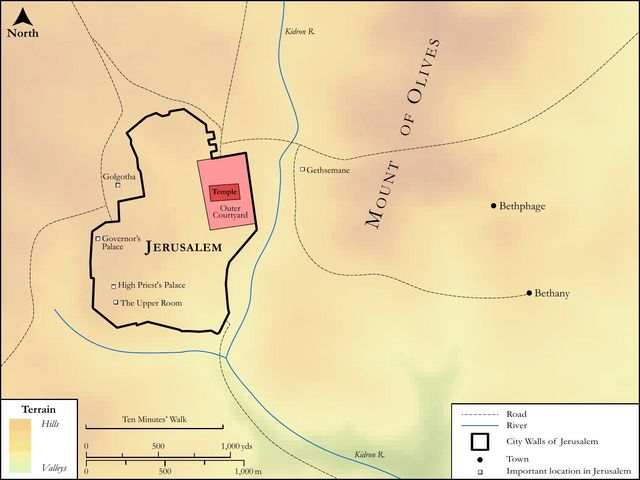
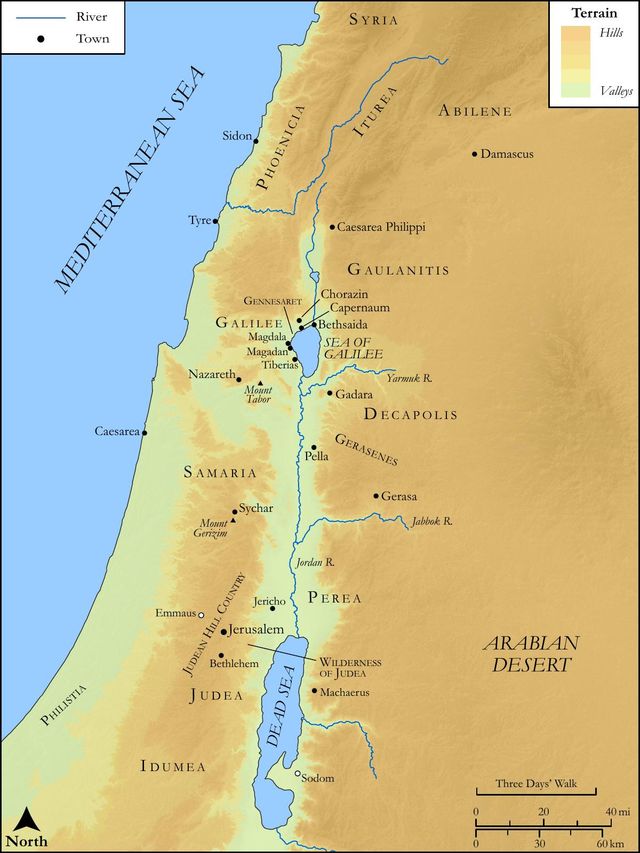
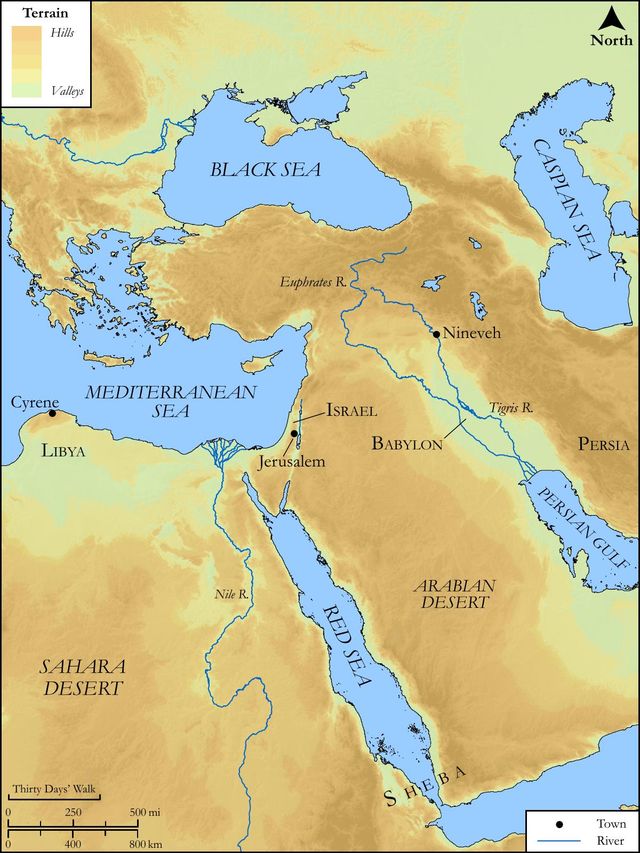
Study this verse
Public-domain commentary
Matthew Henry
From his Commentary on the Whole Bible. Henry comments on passages, not single verses — this entry covers Matthew 6:1–4. His three-level outline is real structure in the source text, so it is rendered as structure.
As we must do better than the scribes and Pharisees in avoiding heart-sins, heart-adultery, and heart-murder, so likewise in maintaining and keeping up heart-religion, doing what we do from an inward, vital principle, that we may be approved of God, not that we may be applauded of men; that is, we must watch against hypocrisy, which was the leaven of the Pharisees, as well as against their doctrine, Luk 12:1. Almsgiving, prayer, and fasting, are three great Christian duties - the three foundations of the law, say the Arabians: by them we do homage and service to God with our three principal interests; by prayer with our souls, by fasting with our bodies, by alms-giving with our estates. Thus we must not only depart from evil, but do good, and do it well, and so dwell for evermore.
Now in these verses we area cautioned against hypocrisy in giving alms. Take heed of it. Our being bid to take heed of it intimates that it is sin. 1. We are in great danger of; it is a subtle sin; vain-glory insinuates itself into what we do ere we are aware. The disciples would be tempted to it by the power they had to do many wondrous works, and their living with some that admired them and others that despised them, both which are temptations to covet to make a fair show in the flesh. 2. It is a sin we are in great danger by. Take heed of hypocrisy, for if it reign in you, it will ruin you. It is the dead fly that spoils the whole box of precious ointment.
Two things are here supposed,
I.The giving of alms is a great duty, and a duty which all the disciples of Christ, according to their ability, must abound in.
It is prescribed by the law of nature and of Moses, and great stress is laid upon it by the prophets. Divers ancient copies here for tēn eleēmosunēn - your alms, read tēn dikaiosunēn - your righteousness, for alms are righteousness, Psa 112:9; Pro 10:2. The Jews called the poor's box the box of righteousness. That which is given to the poor is said to be their due, Pro 3:27. The duty is not the less necessary and excellent for its being abused by hypocrites to serve their pride. If superstitious papists have placed a merit in works of charity, that will not be an excuse for covetous protestants that are barren in such good works. It is true, our alms-deeds do not deserve heaven; but it is as true that we cannot go to heaven without them. It is pure religion (Jam 1:27), and will be the test at the great day; Christ here takes it for granted that his disciples give alms, nor will he own those that do not.
II.That it is such a duty as has a great reward attending it, which is lost if it be done in hypocrisy.
It is sometimes rewarded in temporal things with plenty (Pro 11:24, Pro 11:25; Pro 19:17); security from want (Pro 28:27; Psa 37:21, Psa 37:25); succour in distress (Psa 41:1, Psa 41:2); honour and a good name, which follow those most that least covet them, Psa 112:9. However, it shall be recompensed in the resurrection of the just (Luk 14:14), in eternal riches.
Quas dederis, solas semper habebis, opes.
The riches you impart form the only wealth you will always retain.
- Martial.
This being supposed, observe now,
1.What was the practice of the hypocrites about this duty. They did it indeed, but not from any principle of obedience to God, or love to man, but in pride and vain-glory; not in compassion to the poor, but purely for ostentation, that they might be extolled as good men, and so might gain an interest in the esteem of the people, with which they knew how to serve their own turn, and to get a great deal more than they gave. Pursuant to this intention, they chose to give their alms in the synagogues, and in the streets, where there was the greatest concourse of people to observe them, who applauded their liberality because they shared in it, but were so ignorant as not to discern their abominable pride. Probably they had collections for the poor in the synagogues, and the common beggars haunted the streets and highways, and upon these public occasions they chose to give their alms. Not that it is unlawful to give alms when men see us; we may do it; but not that men may see us; we should rather choose those objects of charity that are less observed. The hypocrites, if they gave alms to their own houses, sounded a trumpet, under pretence of calling the poor together to be served, but really to proclaim their charity, and to have that taken notice of and made the subject of discourse.
Now the doom that Christ passes upon this is very observable; Verily I say unto you, they have their reward. At first view this seems a promise - If they have their reward they have enough, but two words in it make it a threatening.
(1.)It is a reward, but it is their reward; not the reward which God promises to them that do good, but the reward which they promise themselves, and a poor reward it is; they did it to be seen of men, and they are seen of men; they chose their own delusions with which they cheated themselves, and they shall have what they chose. Carnal professors stipulate with God for preferment, honour, wealth, and they shall have their bellies filled with those things (Psa 17:14); but let them expect no more; these are their consolation (Luk 6:24), their good things (Luk 16:25), and they shall be put off with these. "Didst thou not agree with me for a penny? It is the bargain that thou art likely to abide by."
(2.)It is a reward, but it is a present reward, they have it; and there is none reserved for them in the future state. They now have all that they are likely to have from God; they have their reward here, and have none to hope for hereafter. Apechousi ton misthon. It signifies a receipt in full. What rewards the godly have in this life are but in part of payment; there is more behind, much more; but hypocrites have their all in this world, so shall their doom be; themselves have decided it. The world is but for provision to the saints, it is their spending-money; but it is pay to hypocrites, it is their portion.
2.What is the precept of our Lord Jesus about it, Mat 6:3, Mat 6:4. He that was himself such an example of humility, pressed it upon his disciples, as absolutely necessary to the acceptance of their performances. "Let not thy left hand know what thy right hand doeth when thou givest alms." Perhaps this alludes to the placing of the Corban, the poor man's box, or the chest into which they cast their free-will offerings, on the right hand of the passage into the temple; so that they put their gifts into it with the right-hand. Or the giving of alms with the right hand, intimates readiness to it and resolution in it; do it dexterously, not awkwardly nor with a sinister intention. The right hand may be used in helping the poor, lifting them up, writing for them, dressing their sores, and other ways besides giving to them; but, "whatever kindness thy right hand doeth to the poor, let not thy left hand know it: conceal it as much as possible; industriously keep it private. Do it because it is a good work, not because it will give thee a good name." In omnibus factis, re, non teste, moveamur - In all our actions, we should be influenced by a regard to the object, not to the observer. Cic. de Fin. It is intimated,
(1.)That we must not let others know what we do; no, not those that stand at our left hand, that are very near us. Instead of acquainting them with it, keep it from them if possible; however, appear so desirous to keep it from them, as that in civility they may seem not to take notice of it, and keep it to themselves, and let it go no further.
(2.)That we must not observe it too much ourselves: the left hand is a part of ourselves; we must not within ourselves take notice too much of the good we do, must not applaud and admire ourselves. Self-conceit and self-complacency, and an adoring of our own shadow, are branches of pride, as dangerous as vain-glory and ostentation before men. We find those had their good works remembered to their honour, who had themselves forgotten them: When saw we thee an hungered, or athirst?
3.What is the promise to those who are thus sincere and humble in their alms-giving. Let thine alms be in secret, and then thy Father who seeth in secret will observe them. Note, When we take least notice of our good deeds ourselves, God takes most notice of them. As God hears the wrongs done to us when we do not hear them (Psa 38:14, Psa 38:15), so he sees the good done by us, when we do not see it. As it is a terror to hypocrites, so it is a comfort to sincere Christians, that God sees in secret. But this is not all; not only the observation and praise, but the recompence is of God, himself shall reward thee openly. Note, They who in their alms-giving study to approve themselves to God, only turn themselves over to him as their Paymaster. The hypocrite catches at the shadow, but the upright man makes sure of the substance. Observe how emphatically it is expressed; himself shall reward, he will himself be the Rewarder, Heb 11:6. Let him alone to make it up in kind or kindness; nay, he will himself be the Reward (Gen 15:1), thine exceeding great reward. He will reward thee as thy Father, not as a master who gives his servant just what he earns and no more, but as a father who gives abundantly more, and without stint, to his son that serves him. Nay, he shall reward thee openly, if not in the present day, yet in the great day; then shall every man have praise of God, open praise, thou shall be confessed before men. If the work be not open, the reward shall, and that is better.
Historical interpretation
Eleven Centuries of Reception
16 surviving comments on this verse. Each one is dated, so this reads as a timeline rather than a list.
Select a marker to jump to its quote. Markers stagger vertically where authors wrote within a few decades of each other.
Is it to please the brethren, or God Himself? If God Himself, He is as capable of beholding whatever is done in secret, as He is just to remunerate what is done for His sole honour. In fine, He enjoins us not to trumpet forth any one of those things which will merit reward in His sight, nor get compensation for them from men.
For this reason we are enjoined to ask what is sufficient for the preservation of the substance of the body: not luxury, but food, which restores what the body loses, and prevents death by hunger; not tables to inflame and drive on to pleasures, nor such things as make the body wax wanton against the soul; but bread, and that, too, not for a great number of years, but what is sufficient for us to-day.
(Comm. in Tim. 4, 8.) The sum of all Christian discipline is comprehended in mercy and piety, for which reason He begins with almsgiving.
Earlier Jesus taught that the work of justice is to be done not for the sake of humans but for the sake of God. Now we are also instructed that we should not blow the trumpet when we perform acts of charity. That is, we should not broadcast what we do, because it is not the mark of a devout mind to do any of the works of God in order to anticipate the glory of human praise. Many people, you see, make a donation for the use of the poor in order to reap from the gesture the human praise and the renown of their contemporaries. The Lord shows that they have received the reward of their work in this age. For as long as they seek the glory of this age, they lose the reward of the future promise.
Nor even at this did He stop, but proceeds yet further, by other motives also increasing their disgust. For as above He set forth publicans and heathens, by the quality of the person shaming their imitators, so also in this place the hypocrites.
"Therefore when thou doest thine alms," saith He, "do not sound a trumpet before thee, as the hypocrites do."
Not that they had trumpets, but He means to display the greatness of their frenzy, by the use of this figure of speech, deriding and making a show of them hereby.
And well hath He called them "hypocrites" for the mask was of mercy, but the spirit of cruelty and inhumanity. For they do it, not because they pity their neighbors, but that they themselves may enjoy credit; and this came of the utmost cruelty; while another was perishing with hunger, to be seeking vainglory, and not putting an end to his suffering.
It is not then the giving alms which is required, but the giving as one ought, the giving for such and such an end.
Having then amply derided those men, and having handled them so, that the hearer should be even ashamed of them, He again corrects thoroughly the mind which is so distempered: and having said how we ought not to act, He signifies on the other hand how we ought to act.
"Let not thy left hand know," saith He, "what thy right hand doeth."
Here again His enigmatical meaning is not of the hands, but He hath put the thing hyperbolically. As thus: "If it can be," saith He, "for thyself not to know it, let this be the object of thine endeavor; that, if it were possible, it may be concealed from the very hands that minister." It is not, as some say, that we should hide it from wrong-headed men, for He hath here commanded that it should be concealed from all.
And then the reward too; consider how great it is. For after He had spoken of the punishment from the one, He points out also the honor derived from the other; from either side urging them, and leading them on to high lessons. Yea, for He is persuading them to know that God is everywhere present, and that not by our present life are our interests limited, but a yet more awful tribunal will receive us when we go hence, and the account of all our doings, and honors, and punishments: and that no one will be hid in doing anything either great or small, though he seem to be hid from men. For all this did He darkly signify, when He said,
"Thy Father which seeth in secret shall reward thee openly."
Setting for him a great and august assemblage of spectators, and what He desires, that very thing bestowing on him in great abundance. "For what," saith He, "dost thou wish? is it not to have some to be spectators of what is going on? Behold then, thou hast some; not angels, nor archangels, but the God of all." And if thou desire to have men also as spectators, neither of this desire doth He deprive thee at the fitting season, but rather in greater abundance affords it unto thee. For, if thou shouldest now make a display, thou wilt be able to make it to ten only, or twenty, or (we will say) a hundred persons: but if thou take pains to lie hid now, God Himself will then proclaim thee in the presence of the whole universe. Wherefore above all, if thou wilt have men see thy good deeds, hide them now, that then all may look on them with the more honor, God making them manifest, and extolling them, and proclaiming them before all. Again, whereas now they that behold will rather condemn thee as vainglorious; when they see thee crowned, so far from condemning, they will even admire thee, all of them. When therefore by waiting a little, thou mayest both receive a reward, and reap greater admiration; consider what folly it is to cast thyself out of both these; and while thou art seeking thy reward from God, and while God is beholding, to summon men for the display of what is going on. Why, if display must be made of our love, to our Father above all should we make it; and this most especially, when our Father hath the power both to crown and to punish.
And let me add, even were there no penalty, it were not meet for him who desires glory, to let go this our theatre, and take in exchange that of men. For who is there so wretched, as that when the king was hastening to come and see his achievements, he would let him go, and make up his assembly of spectators of poor men and beggars? For this cause then, He not only commands to make no display, but even to take pains to be concealed: it not being at all the same, not to strive for publicity, and to strive for concealment.
Let not thy left hand know what thy right hand doeth, is said as an extreme expression, as much as to say, If it were possible, that you should not know yourself, and that your very hands should be hid from your sight, that is what you should most strive after.
If therefore you desire spectators of your good deeds, behold you have not merely Angels and Archangels, but the God of the universe.
He who sounds a trumpet before him when he does alms is a hypocrite. Whence he adds, as the hypocrites do.
A reward not of God, but of themselves, for they receive praise of men, for the sake of which it was that they practised their virtues.
Do not, says He, desire to become known in the same way as the hypocrites. Now it is manifest that hypocrites have not that in their heart also which they hold forth before the eyes of men. For hypocrites are pretenders, as it were setters forth of other characters, just as in the plays of the theatre. For he who acts the part of Agamemnon in tragedy, for example, or of any other person belonging to the history or legend which is acted, is not really the person himself, but personates him, and is called a hypocrite. In like manner, in the Church, or in any phase of human life, whoever wishes to seem what he is not is a hypocrite. For he pretends, but does not show himself, to be a righteous man; because he places the whole fruit [of his acting] in the praise of men, which even pretenders may receive, while they deceive those to whom they seem good, and are praised by them. But such do not receive a reward from God the Searcher of the heart, unless it be the punishment of their deceit: from men, however, says He, They have received their reward; and most righteously will it be said to them, Depart from me, you workers of deceit; you had my name, but you did not do my works. Hence they have received their reward, who do their alms for no other reason than that they may have glory of men; not if they have glory of men, but if they do them for the express purpose of having this glory, as has been discussed above. For the praise of men ought not to be sought by him who acts rightly, but ought to follow him who acts rightly, so that they may profit who can also imitate what they praise, not that he whom they praise may think that they are profiting him anything.
(Serm. in Mont. ii. 2.) Above the Lord had spoken of righteousness in general. He now pursues it through its different parts.
(ubi sup.) Thus what He says, Do not sound a trumpet before thee, refers to what He had said above, Take heed that ye do not your righteousness before men.
(ubi sup.) As then the hypocrites, (a word meaning 'one who feigns,') as personating the characters of other men, act parts which are not naturally their own—for he who personates Agamemnon, is not really Agamemnon, but feigns to be so—so likewise in the Churches, whosoever in his whole conduct desires to seem what he is not, is a hypocrite; he feigns himself righteous and is not really so, seeing his only motive is praise of men.
(Serm. in Mont. ii. 2.) And such sinners receive from God the Searcher of hearts none other reward than punishment of their deceitfulness; Verily I say unto you, they have their reward,
(ubi sup.) This refers to what He had said above, Otherwise ye shall have no reward of your Father which is in heaven; and He goes on to show them that they should not do their alms as the hypocrites, but teaches them how they should do them.
Another hermit said: ‘Unless the miller blindfolds the donkey in the treadmill, it will turn round and eat the corn. God has mercifully blindfolded us, so that we cannot see the good that we do, for then we should perhaps praise ourselves and lose our reward. That is why we are left for a time with bad thoughts, so that when we see them, we judge and condemn ourselves. Those very thoughts are the cloth that blindfolds us and prevents goodness from being seen. When a man accuses himself, he does not lose his reward.’
A brother said to Poemen, ‘If I give my brother something, for instance a piece of bread, the demons made the gift worthless by making me think that it was done to please men.’ The hermit said to him, ‘Even if it is done to please men, we still ought to give our brothers what they need.’ He told him this parable: ‘In a town there were two farmers. One of them sowed seed, and gathered a poor harvest; the other was idle and did not sow, and had no harvest to gather. If famine came, which of them would survive?’ The brother answered, ‘The one who sowed seed, even if the harvest was poor.’ He said, ‘It is the same for us. We sow a few seeds, and they are poor, but in the time of famine we shall not die.’
What shall you receive from God, who have given God nothing? What is done for God's sake is given to God, and received by Him; but what is done because of men is cast to the winds. But what wisdom is it, to bestow our goods, to reap empty words, and to have despised the reward of God? Nay you deceive the very man for whose good word you look; for he thinks you do it for God's sake, otherwise he would rather reproach than commend you. Yet must we think him only to have done his work because of men, who does it with his whole will and intention governed by the thought of them. But if an idle thought, seeking to be seen of men, mount up in any one's heart, but is resisted by the understanding spirit, he is not thereupon to be condemned of man-pleasing; for that the thought came to him was the passion of the flesh, what he chose was the judgment of his soul.
(Hom. xv.) He opposes three chief virtues, alms, prayer, and fasting, to three evil things against which the Lord undertook the war of temptation. For He fought for us in the wilderness against gluttony; against covetousness on the mount; against false glory on the temple. It is alms that scatter abroad against covetousness which heaps up; fasting against gluttony which is its contrary; prayer against false glory, seeing that all other evil things come out of evil, this alone comes out of good; and therefore it is not overthrown but rather nourished of good, and has no remedy that may avail against it but prayer only.
The trumpet stands for every act or word that tends to a display of our works; for instance, to do alms if we know that some other person is looking on, or at the request of another, or to a person of such condition that he may make us return; and unless in such cases not to do them. Yea, even if in some secret place they are done with intent to be thought praiseworthy, then is the trumpet sounded.
The Apostles in the book of the Constitutions, interpret thus; The right hand is the Christian people which is at Christ's right hand; the left hand is all the people who are on His left hand. He means then, that when a Christian does alms, the unbeliever should not see it.
For it is impossible that God should leave in obscurity any good work of man; but He makes it manifest in this world, and glorifies it in the next world, because it is the glory of God; as likewise the Devil manifests evil, in which is shown the strength of his great wickedness. But God properly makes public every good deed only in that world the goods of which are not common to the righteous and the wicked; therefore to whomsoever God shall there show favour, it will be manifest that it was as reward of his righteousness. But the reward of virtue is not manifested in this world, in which both bad and good are alike in their fortunes.
(Mor. xxxi. 13.) It should be known, that there are some who wear the dress of sanctity, and are not able to work out the merit of perfection, yet who must in no wise be numbered among the hypocrites, because it is one thing to sin from weakness, another from crafty affectation.
(Etym. x. ex Aug. Serm.) The name 'hypocrite' is derived from the appearance of those who in the shows are disguised in masks, variously coloured according to the character they represent, sometimes male, sometimes female, to impose on the spectators while they act in the games.
. The hypocrites did not actually have trumpets; the Lord is here deriding their thoughts, for they wanted their almsgiving to be trumpeted. "Hypocrites" are those who differ in appearance from what they really are. These men, therefore, appear to be merciful and generous, but are in fact the opposite. Verily I say unto you, They have received their reward. Having been praised by men, that is the only reward they will receive.
(non occ.) In the words, in the streets and villages, he marks the public places which they selected; and in those, that they may receive honour of men, he marks their motive.
Continue studying Matthew 6:2 across the web’s major study libraries — every link below opens this exact verse, chapter, or book on the destination site.
Read & Compare
 BibleGatewayThis verse in more than 200 translations and 70 languages.
 Bible.comThe YouVersion reader — hundreds of translations, reading plans, and highlights.
 ESV.orgCrossway's official English Standard Version reader.
 NET BibleThe NET translation with 60,000+ translators' notes on every rendering decision.
 STEP BibleTyndale House's free study tool — original text, vocabulary, and scholarly resources.
 BibliaLogos Bible Software's free web reader.
 USCCBThe New American Bible (Revised Edition) with the U.S. bishops' study notes.
Commentaries
 BibleHub CommentariesDozens of classic commentaries on this verse, gathered on one page.
 StudyLightMore than 100 commentary sets — the largest collection on the web.
 BibleRefPlain-English commentary on what this verse means, verse by verse.
 Enduring WordDavid Guzik's free commentary on this chapter, widely used by Bible teachers.
 Bible Study ToolsVerse commentary alongside Greek and Hebrew study aids.
Original Language & Research
- BibleHub InterlinearThe verse word by word — original language, transliteration, and English.
- BibleHub LexiconEvery word's original-language definition and Strong's entry.
 Blue Letter BibleDeep-study tools — Strong's numbers, concordance, and word studies.
 CNTR CollationThe earliest Greek manuscripts of this verse, collated letter by letter.
Sermons, Hymns & Audio


TrulyRandomVerse is not affiliated with these sites and doesn’t control their content. They’re linked because they’re genuinely useful.
Summary
In Matthew 6:2, Jesus issues a profound warning against performing acts of righteousness, specifically alms-giving, with the intention of gaining human recognition. He exposes the hypocrisy of those who publicize their charity in synagogues and streets, likening their behavior to sounding a trumpet to announce their good deeds. Jesus declares that such individuals have already received their full and only reward—the fleeting praise of people—thereby forfeiting any eternal commendation from God. This verse lays bare the critical importance of pure motives in spiritual practices, emphasizing that true righteousness is performed for God's eyes alone.
Context
ShowHideLiterary Context
This verse initiates Jesus' detailed instructions on righteous practices, following the overarching principle established in Matthew 6:1, which warns against doing good deeds "to be seen of men." Matthew 6:2 serves as the first of three specific examples—alms-giving, prayer (Matthew 6:5-15), and fasting (Matthew 6:16-18)—where Jesus contrasts the hypocritical practices of His day with the genuine, God-honoring approach. These instructions are integral to the broader Sermon on the Mount, which redefines true righteousness not merely as outward obedience to the Law, but as an internal transformation of the heart and motive.
Historical & Cultural Context
Alms-giving (charity) was a cornerstone of Jewish piety, considered a highly meritorious act alongside prayer and fasting. It was a tangible expression of faithfulness to the Mosaic Law, which commanded care for the poor and vulnerable (e.g., Deuteronomy 15:7-11). During the Second Temple period, public displays of piety were common, and some religious leaders, particularly the Pharisees, were known for their meticulous adherence to external rituals, sometimes to the neglect of internal heart attitudes. Synagogues were central places for community gathering, worship, and public announcements, while streets were bustling thoroughfares. The hyperbolic phrase "sound a trumpet before thee" likely refers to drawing public attention to one's charitable acts, perhaps through loud pronouncements or conspicuous displays, rather than a literal trumpet blast. This behavior was driven by a desire for social esteem and religious prestige within the community.
Key Themes
ShowHideThe primary theme is the sincerity of motive in religious acts. Jesus challenges the superficiality of outward performance, asserting that the true value of a deed is determined by the heart's intention, not public acclaim. This ties into the broader theme of inward righteousness versus outward show, a recurring motif throughout the Sermon on the Mount, where Jesus emphasizes the spirit of the Law over mere legalistic observance (e.g., Matthew 5:21-48). Another key theme is the warning against hypocrisy, explicitly naming "hypocrites" as those whose religious acts are a performance. Their actions are designed to impress men, not God, leading to a discussion on the nature of reward. Jesus teaches that those who seek human glory receive only that, forfeiting the eternal reward from the Father who "sees in secret" (Matthew 6:4). This highlights the ultimate futility of seeking earthly praise over divine approval.
Exposition and Analysis
ShowHideKey Word Analysis
ShowHideFrom ἔλεος; compassionateness, i.e. (as exercised towards the poor) beneficence, or (concretely) a benefaction:--alms(-deeds). This word underscores that charitable giving is fundamentally an act of mercy and compassion, flowing from a heart moved by the needs of others. Jesus' teaching here is not against the act of giving itself, but against the distortion of this compassionate act into a self-serving display.
From σάλπιγξ; to trumpet, i.e. sound a blast (literally or figuratively):--(which are yet to) sound (a trumpet). This verb, used metaphorically, vividly portrays the ostentatious behavior of those who seek to draw attention to their charitable acts. It implies a loud, public announcement, a desire to ensure that everyone notices their "generosity."
From ὑποκρίνομαι; an actor under an assumed character (stage-player), i.e. (figuratively) a dissembler ("hypocrite":--hypocrite. Jesus uses this term to describe those who perform religious duties for show, like actors on a stage. Their outward piety is a mask, concealing an inner motive of self-glory rather than genuine devotion to God or compassion for others.
Apparently a primary word; pay for service (literally or figuratively), good or bad:--hire, reward, wages. This term refers to the compensation or wages received for an action. Jesus' declaration that the hypocrites "have their reward" signifies that the human praise they crave is the only recompense they will receive. It is a complete and final payment, leaving no further reward from God.
Verse Breakdown
ShowHide"Therefore when thou doest [thine] alms, do not sound a trumpet before thee,"
Jesus begins with "Therefore" (G3767, oûn), linking this specific instruction to the general principle of Matthew 6:1. He addresses the individual ("thou") directly, emphasizing personal responsibility. The command "do not sound a trumpet before thee" is a vivid, hyperbolic prohibition against publicizing one's acts of charity. It condemns any behavior—whether literal or figurative—that draws attention to oneself for the purpose of receiving human praise.
"as the hypocrites do in the synagogues and in the streets, that they may have glory of men."
Jesus identifies the "hypocrites" (G5273, hypokritḗs) as the negative example. These individuals perform their charitable deeds in the most public venues—the synagogues, centers of religious life, and the streets, bustling public thoroughfares—precisely "that they may have glory of men." Their ultimate motive is revealed: not genuine compassion or devotion to God, but the desire for human applause, recognition, and social standing.
"Verily I say unto you, They have their reward."
Jesus concludes with a solemn, authoritative declaration, prefaced by "Verily" (G281, amḗn), emphasizing the absolute truth of His statement. The phrase "They have their reward" (G568, apéchō with G3408, misthós) signifies that they have received their payment in full. The Greek verb apéchō was often used in commercial contexts to mean "to receive in full," or "to have received payment." Thus, the fleeting praise of men is the only reward they will ever get for such actions, implying that no further, eternal reward from God awaits them.
Literary Devices
ShowHideJesus employs several potent literary devices in Matthew 6:2 to convey His message with clarity and impact. The most prominent is Hyperbole in the phrase "sound a trumpet before thee." While it's possible some form of public announcement accompanied large donations, the image of literally blowing a trumpet to herald one's alms is an exaggeration designed to vividly illustrate the extreme and ostentatious desire for public attention. This serves to condemn the spirit of self-promotion rather than a specific literal action. Jesus also uses Contrast, setting up a clear dichotomy between the actions of "hypocrites" who seek "glory of men" and the implied ideal of secret, sincere giving for God's approval. This contrast highlights the two opposing motivations and their respective outcomes. Finally, there is an element of Irony in Jesus' declaration, "They have their reward." The irony lies in the fact that what the hypocrites consider a "reward"—human praise—is presented by Jesus as a final, insufficient payment that precludes any true, eternal reward from God. Their perceived gain is, in fact, their ultimate loss.
Theological and Thematic Connections
ShowHideMatthew 6:2 is a foundational text for understanding the nature of true righteousness in God's kingdom. It underscores that God values the internal disposition and motive of the heart far more than external performance. This teaching challenges the legalistic and performance-driven religiosity common in Jesus' day and still prevalent today, asserting that actions done for human applause, no matter how outwardly "good," are spiritually bankrupt in God's eyes. It shifts the focus from horizontal (man-to-man) validation to vertical (man-to-God) accountability, emphasizing that our ultimate audience and rewarder is God alone. This principle extends beyond alms-giving to all areas of Christian life, including prayer, worship, service, and evangelism, calling believers to cultivate a heart of humility and sincerity that seeks God's glory above all else.
Reflection and Application
ShowHideThis verse serves as a piercing mirror, inviting us to critically examine the motives behind our spiritual disciplines and acts of service. It challenges the inherent human desire for recognition and applause, reminding us that true spiritual reward comes not from the fleeting praise of people, but from the eternal approval of God, who sees what is done in secret. In a world saturated with social media and public platforms, the temptation to "sound a trumpet" before our good deeds is ever-present. This passage calls us to cultivate a radical humility, to find our satisfaction in God's knowledge of our actions, and to prioritize His glory above our own. It encourages a life of quiet, consistent faithfulness, where our acts of love and generosity are driven by genuine compassion and devotion, rather than a desire for public validation.
Questions for Reflection
ShowHideFAQ
ShowHideWhat does Jesus mean by "sound a trumpet before thee"?
ShowHideJesus is using a hyperbole, an intentional exaggeration for emphasis. He is not suggesting that people literally blew trumpets before giving alms. Instead, the phrase vividly illustrates the actions of those who conspicuously publicize their charitable deeds to draw attention to themselves and gain human praise. It refers to any behavior, whether subtle or overt, that seeks to make one's generosity known to others for the purpose of self-glorification, rather than giving out of genuine compassion or devotion to God. It highlights the desire for public recognition over sincere, private piety.
Who are the "hypocrites" Jesus refers to in this verse?
ShowHideThe term "hypocrites" (Greek: hypokritḗs) literally means "an actor" or "one who wears a mask." In this context, Jesus is referring to religious individuals, often the scribes and Pharisees, who performed their spiritual duties (like alms-giving, prayer, and fasting) not out of true devotion or love for God, but as a performance designed to impress others. Their outward display of piety masked an inner motive of self-promotion and a desire for human glory. Jesus uses this term to expose the disconnect between their external religious acts and their internal, self-serving intentions, contrasting their behavior with the genuine righteousness He calls His followers to embody.
What does Jesus mean when He says, "They have their reward"?
ShowHideWhen Jesus says, "They have their reward," He means that those who perform good deeds for the purpose of receiving human praise have already received their full and final payment. The Greek word for "have" (apéchō) was commonly used in financial transactions to signify "to receive in full" or "to have received payment in full." Therefore, the fleeting applause, admiration, or social standing they gain from people is the only reward they will ever get for those actions. They have "cashed out" their spiritual capital for earthly recognition, thereby forfeiting any eternal commendation or blessing from God, who rewards those who seek His approval in secret (Matthew 6:4).
Christ-Centered Fulfillment
ShowHideMatthew 6:2 finds its ultimate fulfillment and counterpoint in the person and work of Jesus Christ. While the hypocrites sought glory from men, Jesus, though fully God, "made himself of no reputation, and took upon him the form of a servant, and was made in the likeness of men" (Philippians 2:7). His entire life was an act of selfless giving, culminating in His ultimate sacrifice on the cross, an act of unparalleled charity not for human praise, but for the glory of God and the redemption of humanity (John 3:16). Jesus consistently rejected earthly accolades and public spectacle, choosing instead to reveal His kingdom through humble service and sacrificial love. He taught His disciples to follow His example, emphasizing that true greatness in His kingdom is found not in being served, but in serving (Matthew 20:26-28), and that all acts of righteousness should ultimately point to God, not to oneself (Matthew 5:16). Thus, Jesus Himself is the perfect embodiment of the principle taught in this verse: genuine righteousness is lived out in humility, for the Father who sees in secret, and culminates in the selfless, God-glorifying act of Calvary.