


Matthew 27:7
Bible text: King James Version (1769 Blayney text) · Public domain
Bible text: Berean Standard Bible · Public domain
Bible text: American Standard Version (1901) · Public domain
Bible text: World English Bible, Messianic edition · Public domain
Bible text: Geneva Bible (1599) · Public domain
Bible text: Young's Literal Translation · Public domain
- ΣυμβούλιονSumboulionCounselG4824N-ASNNoun Accusative Singular Neuter
- δὲdethenG1161CONJConjunction
- λαβόντεςlabonteshaving takenG2983V-2AAP-NPMVerb 2nd Aorist Active Participle Nominative Plural Masculine
- ἠγόρασανēgorasanthey boughtG59V-AAI-3PVerb Aorist Active Indicative 3rd Plural
- ἐξexwithG1537PREPPreposition
- αὐτῶνautōnthemG846P-GPNPersonal pronoun Genitive Plural Neuter
- τὸνtontheG3588T-ASMDefinite article Accusative Singular Masculine
- ἀγρὸνagronfieldG68N-ASMNoun Accusative Singular Masculine
- τοῦtouof theG3588T-GSMDefinite article Genitive Singular Masculine
- κεραμέωςkerameōspotterG2763N-GSMNoun Genitive Singular Masculine
- εἰςeisforG1519PREPPreposition
- ταφὴνtaphēna burial placeG5027N-ASFNoun Accusative Singular Feminine
- τοῖςtoisfor theG3588T-DPMDefinite article Dative Plural Masculine
- ξένοιςxenoisstrangersG3581A-DPMAdjective Dative Plural Masculine
English is a literal word-by-word gloss of the Greek, not the KJV's wording. Why?
This is the original text the KJV's translators worked from — each Greek word with its own literal English meaning in this verse, prepared by scholars at Tyndale House, Cambridge. The KJV translates whole sentences, not word by word, so its wording differs: one Greek word can become several English words, and the KJV may choose “charity” where the gloss reads “love”. Both are faithful — they answer different questions. For the KJV's own rendering, switch to the KJV text.
Details
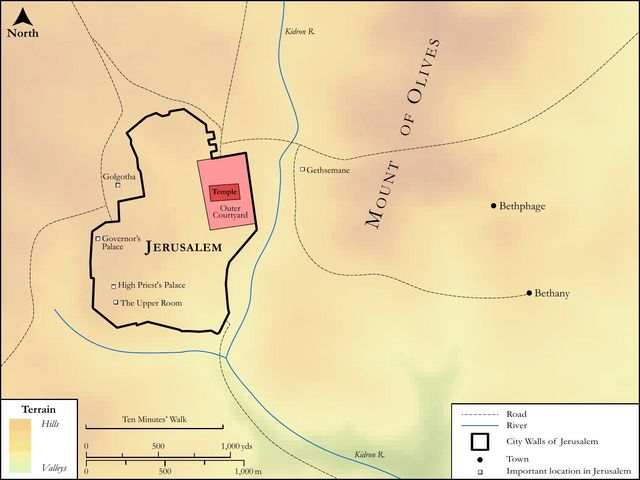
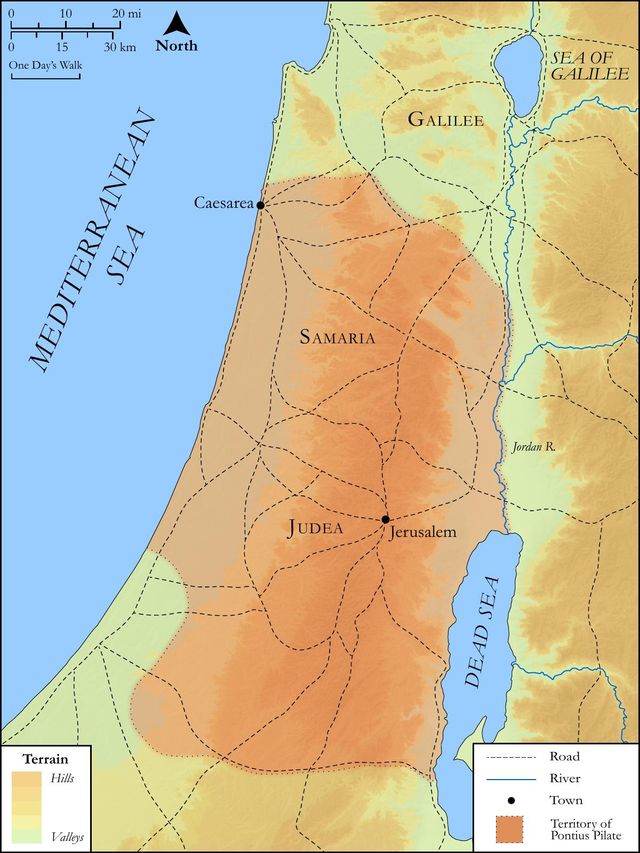
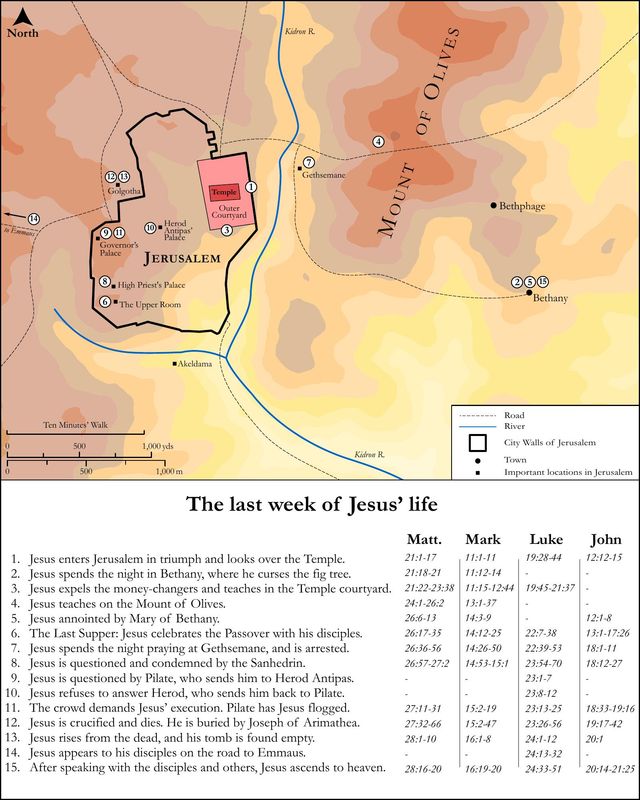
See on the biblical-era maps
Study this verse
Historical interpretation
Eleven Centuries of Reception
10 surviving comments on this verse. Each one is dated, so this reads as a timeline rather than a list.
Select a marker to jump to its quote. Markers stagger vertically where authors wrote within a few decades of each other.
(Hil. Quæst. V. et N. Test. q. 94.) Since the Chief Priests were employed about the murder of the Lord from the morning to the ninth hour, how is this proved that before the crucifixion Judas returned them the money he had received, and said to them in the temple, I have sinned, in that I have betrayed innocent blood? Whereas it is manifest that the Chief Priests and Elders were never in the temple before the Lord's crucifixion, seeing that when He was hanging on the Cross they were there to insult Him. Nor indeed can this be proved hence, because it is related before the Lord's Passion, for many things which were manifestly done before, are related after, that, and the reverse. It might have been done after the ninth hour, when Judas, seeing the Saviour dead and the veil of the temple rent, the earthquake, the bursting of the rocks, and the elements terrified, was seized with fear and sorrow thereupon. But after the ninth hour the Chief Priests and Elders were occupied, as I suppose, in the celebration of the Passover; and on the Sabbath, the Law would not have allowed him to bring money. Therefore it is to me as yet unproved on what day or at what time Judas ended his life by hanging.
Judas did not die by hanging, but lived on, having been cut down before he was suffocated. And the acts of the apostles show this, that falling head long he burst asunder in the midst, and all his bowels gushed out. This fact is related more clearly by Papias, the disciple of John, and the fourth book of the Expositions of the Oracles of the Lord as follows:
Judas walked about in this world a terrible example of impiety; his flesh swollen to such an extent that, where hay wagon can pass with ease, he was not able to pass, no, not even the mass of his head merely. They say that his eyelids swelled to such an extent that he could not see the light at all, while as for his eyes they were not visible even by a physician looking through an instrument, so far have they sunk from the surface.
His genitals appeared entirely disfigured, nauseous and large. When he carried himself about discharge and worms flowed from his entire body through his private areas only, on account of his outrages. After many agonies and punishments, he died in his own place. And on account of this the place is desolate and uninhabited even now. And to this day no one is able to go by that place, except if they block their noses with their hands. Such judgment was spread through his body and upon the earth.
They thought it meet to spend upon the dead that money which was the price of blood. But as there are differences even in burial places, they used the price of Jesus' blood in the purchase of some potter's field, where foreigners might be buried, not as they desired in the sepulchres of their fathers.
Or, the foreigners are they who to the end are aliens from God, for the righteous are buried with Christ in a new tomb hewn out in the rock. But they who are aliens from God, even to the end, are buried in the field of a potter, a worker in clay, which being bought by the price of blood, is called the field of blood.
Because the quality of resting places for the dead varies (for many are buried in their ancestral tombs which were secured by a pledge, but those who suffer misfortune are often buried in the graves of the homeless), those who received payment in exchange for the blood of Jesus used it to acquire a potter’s field for the purpose of having a place in which to bury those foreigners who could not supply a pledge to secure a proper tomb. If it is suitable to interpret these foreigners typologically, we can consider those persons to be foreigners who remained strangers to God until the end and alien to his covenants. Vagabonds such as these meet their end buried in a potter’s field acquired with blood money. The righteous are able to say, “We are buried with Christ in a new tomb cut from the rock in which no dead body had yet been laid,” but those foreigners who remain finally estranged from Christ and alien to God will have to say, “We are buried with strangers in the field which is called the ‘Field of Blood.’ ”
The Chief Priests knowing that they had purchased a murder were condemned by their own conscience; they said, It is the price of blood.
What then did that man? When he saw that he was laboring to no profit, and that they would not consent to receive the pieces of silver, "he cast them down in the temple, and went and hanged himself. And the chief priests took the pieces of silver, and said, it is not lawful for to put them into the treasury, because it is the price of blood. And they took counsel, and bought with them the potter's field to bury strangers in. Wherefore that field was called, the field of blood, unto this day. Then was fulfilled that which was spoken by Jeremy the prophet, saying, and they took the thirty pieces of silver, the price of Him that was valued, and gave them for the potter's field, as the Lord appointed me."
Seest thou them again self-condemned by their conscience? For because they knew that they had been buying the murder, they put them not into the treasury, but bought a field to bury strangers in. And this also became a witness against them, and a proof of their treason. For the name of the place more clearly than a trumpet proclaimed their blood-guiltiness. Neither did they it at random, but having taking counsel, and in every case in like manner, so that no one should be clear of the deed, but all guilty. But these things the prophecy foretold from of old. Seest thou not the apostles only, but the prophets also declaring exactly those things which were matters of reproach, and every way proclaiming the passion, and indicating it beforehand?
This was the case with the Jews without their being conscious of it. For if they had cast it into the treasury, the thing would not have been so clearly discovered; but now having bought a piece of ground, they made it all manifest even to subsequent generations.
Hear ye as many as think to do good works out of murders, and take a reward for the lives of men. These almsgiving are Judaical, or rather they are Satanical. For there are, there are now also they, that take by violence countless things belonging to others, and think that an excuse is made for all if they cast in some ten or a hundred gold pieces.
(Vers. 7, 8.) However, with a plan devised, they bought a field from that potter, for the burial of strangers, therefore that field was called Acheldemach, which means the field of blood, to this day. Indeed, they acted with a different intention, that they might leave a lasting monument of their impiety from the purchase of the land. But we, who were strangers to the Law and the prophets, have embraced their corrupt practices for salvation: and we find rest in the price of his blood. But the field is called 'figulus' because our potter is Christ.
Truly straining out the gnat, and swallowing the camel; for if they would not put the money into the treasury, because it was the price of blood, why did they shed the blood at all?
Also we, who were strangers to the Law and the Prophets, have profited by the perverse temper of the Jews to obtain salvation for ourselves.
This is not found at all in Hieremias; but in Zacharias (Zech. 11:13.), who is the last but one of the twelve Prophets, something like it is told, and though the sense is not very different, yet the arrangement and the words are different.
(ad Pam. Ep. lvii. 7.) Far be it then from a follower of Christ to suppose him guilty of falsehood, whereas his business was not to pry into words and syllables, but to lay down the staple of doctrine.
(in loc.) I have lately read in a Hebrew book given me by a Hebrew of the Nazarene sect, an apocryphal Hieremias, in which I find the very words here quoted. After all, I am rather inclined to think that the passage was taken by Matthew out of Zacharias, in the usual manner of the Apostles and Evangelists when they quote from the Old Testament, neglecting the words, and attending only to the sense.
(App. Serm. 80. 1.) It was brought about, I conceive, by God's providence, that the Saviour's price should not minister means of excess to sinners, but repose to foreigners, that thence Christ might both redeem the living by the shedding of His blood, and harbour the dead by the price of His passion. Therefore with the price of the Lord's blood the potter's field is purchased. We read in Scripture that the salvation of the whole human race has been purchased by the Saviour's blood. This field then is the whole world. The potter who is the Lord of the soil, is He who has formed of clay the vessels of our bodies. This potter's field then was purchased by Christ's blood, and to strangers who without country or home wander over the whole world, repose is provided by Christ's blood. These foreigners are the more devout Christians, who have renounced the world, and have no possession in it, and so repose in Christ's blood; for the burial of Christ is nothing but the repose of a Christian; for as the Apostle says, We are buried with him by baptism into death. (Rom. 6:4.) We are in this life then as foreigners.
(non occ.) To this day means to the time when the Evangelist was then writing. He then confirms the event by the testimony of the Prophet; Then was fulfilled that which was spoken by Jeremy the Prophet, &c.
Continue studying Matthew 27:7 across the web’s major study libraries — every link below opens this exact verse, chapter, or book on the destination site.
Read & Compare
 BibleGatewayThis verse in more than 200 translations and 70 languages.
 Bible.comThe YouVersion reader — hundreds of translations, reading plans, and highlights.
 ESV.orgCrossway's official English Standard Version reader.
 NET BibleThe NET translation with 60,000+ translators' notes on every rendering decision.
 STEP BibleTyndale House's free study tool — original text, vocabulary, and scholarly resources.
 BibliaLogos Bible Software's free web reader.
 USCCBThe New American Bible (Revised Edition) with the U.S. bishops' study notes.
Commentaries
 BibleHub CommentariesDozens of classic commentaries on this verse, gathered on one page.
 StudyLightMore than 100 commentary sets — the largest collection on the web.
 BibleRefPlain-English commentary on what this verse means, verse by verse.
 Enduring WordDavid Guzik's free commentary on this chapter, widely used by Bible teachers.
 Bible Study ToolsVerse commentary alongside Greek and Hebrew study aids.
Original Language & Research
- BibleHub InterlinearThe verse word by word — original language, transliteration, and English.
- BibleHub LexiconEvery word's original-language definition and Strong's entry.
 Blue Letter BibleDeep-study tools — Strong's numbers, concordance, and word studies.
 CNTR CollationThe earliest Greek manuscripts of this verse, collated letter by letter.
Sermons, Hymns & Audio


TrulyRandomVerse is not affiliated with these sites and doesn’t control their content. They’re linked because they’re genuinely useful.
Summary
Matthew 27:7 records the chief priests' decision regarding the thirty pieces of silver that Judas Iscariot returned after betraying Jesus. Deeming the money "blood money" and therefore unlawful to return to the temple treasury, they convened and resolved to use it to purchase a specific parcel of land, known as "the potter's field," which they designated as a burial ground for overlooked individuals, specifically "strangers" or foreigners who died in Jerusalem.
Context
ShowHideLiterary Context
This verse is situated immediately after Judas Iscariot's profound remorse, his attempt to return the thirty pieces of silver, and his subsequent suicide, as detailed in Matthew 27:3-5. The chief priests and elders are confronted with the dilemma of handling money obtained through the betrayal of an innocent man. Their legalistic concern for not defiling the temple treasury with "blood money" sets the stage for their collective decision to acquire the potter's field, highlighting their scrupulous adherence to ritual purity even as they remain deeply implicated in the unjust condemnation of Jesus. This event serves as a grim prelude to Jesus's appearance before Pilate, emphasizing the profound moral and spiritual blindness of the religious authorities.
Historical & Cultural Context
The chief priests' refusal to accept the money back into the temple treasury stemmed from a strict interpretation of Mosaic Law, particularly principles related to unlawful gain and defiled offerings, such as those found in Deuteronomy 23:18. While not a direct citation, the underlying principle that money obtained through morally reprehensible means (like prostitution or, by extension, betrayal leading to death) was considered an abomination and unfit for sacred purposes guided their decision. "The potter's field" (Aceldama, or "Field of Blood," as it later became known in Acts 1:19) was likely a piece of land of little agricultural value, perhaps exhausted from clay extraction, making it cheap to acquire. The need for a burial place for "strangers"—foreigners, pilgrims, or non-residents who died in Jerusalem without family plots—was a practical necessity in a bustling city, underscoring a societal concern for the deceased, even if driven by legalistic rather than purely compassionate motives.
Key Themes
ShowHideMatthew 27:7 significantly contributes to several key themes within the Gospel. Firstly, it underscores the consequences of unrighteous gain, illustrating how money obtained through sin, specifically the betrayal of an innocent man, becomes defiled and problematic for those who handle it. The chief priests' actions reveal the irony and hypocrisy of legalism, as they meticulously adhere to ritual purity laws regarding money while simultaneously being morally culpable for the shedding of innocent blood, demonstrating a profound spiritual blindness that prioritizes outward observance over true justice and righteousness. Secondly, the purchase of the field directly fulfills Old Testament prophecy, particularly a composite prophecy drawing from Zechariah 11:12-13 and Jeremiah 32:6-9, highlighting divine sovereignty even amidst human evil and betrayal. Finally, the designation of the field as a burial place for "strangers" subtly introduces the theme of provision for the lowly, albeit through an act born of legalistic necessity rather than genuine compassion, foreshadowing the broader scope of God's redemptive plan for all peoples.
Exposition and Analysis
ShowHideKey Word Analysis
ShowHideThis phrase combines G2983 (lambánō), meaning "to take," and G4824 (symboúlion), meaning "advisement; specially, a deliberative body, i.e. the provincial assessors or lay-court." Together, they describe a formal, collective deliberation by the chief priests and elders. It indicates a structured decision-making process, emphasizing their official capacity and the gravity with which they approached the problem of the "blood money," seeking a legally and ritually acceptable solution.
Meaning "a potter." This adjective specifies the type of field purchased, indicating it was land previously owned by or used by a potter, likely for extracting clay. Such land would typically be barren, infertile, and therefore inexpensive. Its designation as "the potter's field" not only identifies its former use but also sets the stage for its symbolic significance, particularly as it later becomes known as "the Field of Blood."
Meaning "foreign (literally, alien, or figuratively, novel); by implication, a guest or (vice-versa) entertainer." In this context, "strangers" refers to non-Jewish residents, foreigners, or those without family connections or status in Jerusalem who died there and required a burial place. This detail underscores the lowly nature of the individuals for whom the field was designated, highlighting a practical need met by the ill-gotten gains.
Verse Breakdown
ShowHide"And they took counsel"
This refers to the chief priests and elders, who, having received the returned thirty pieces of silver from Judas, gathered to deliberate on how to handle money that was deemed defiled. Their "counsel" signifies a formal, collective decision-making process, rooted in their interpretation of religious law regarding "blood money."
"and bought with them the potter's field"
Following their deliberation, the chief priests used the thirty pieces of silver to acquire a specific piece of land. The phrase "with them" explicitly links the purchase to the defiled money. The "potter's field" was likely a barren, inexpensive parcel of land, perhaps previously used for its clay deposits, making it a practical and affordable acquisition for the purpose they intended.
"to bury strangers in"
The ultimate purpose of purchasing the field was to establish a burial ground. "Strangers" refers to foreigners, non-residents, or those without family plots in Jerusalem who died there and needed a place for interment. This act, while seemingly charitable, was primarily a means for the religious leaders to dispose of the "blood money" in a way that did not violate their temple purity regulations.
Literary Devices
ShowHideMatthew 27:7 employs several significant literary devices. Irony is prominent, as the religious leaders, scrupulous about not defiling the temple treasury with "blood money," are themselves deeply complicit in the shedding of innocent blood by condemning Jesus. Their concern for ritual purity starkly contrasts with their moral culpability, highlighting their spiritual blindness. The verse also functions as Fulfillment Language, explicitly connecting the events to Old Testament prophecy, particularly a composite prophecy attributed to Jeremiah but drawing from both Zechariah 11:12-13 and Jeremiah 32:6-9. This underscores God's sovereign control over human actions, even wicked ones, to bring about His divine plan. Furthermore, the "potter's field" itself carries Symbolism, representing the lasting stain of betrayal and the defilement of unrighteous gain. Its later name, "the Field of Blood" (Aceldama), permanently links it to Judas's treachery and death, serving as a perpetual memorial to the consequences of sin.
Theological and Thematic Connections
ShowHideMatthew 27:7 powerfully illustrates the pervasive and defiling nature of sin, particularly betrayal, and the ironic lengths to which religious leaders will go to maintain outward purity while inwardly harboring profound moral corruption. The chief priests, meticulous about avoiding the defilement of "blood money" in the temple treasury, reveal their spiritual hypocrisy by participating in the unjust condemnation and death of Jesus. Yet, even in this act of human evil, God's sovereign plan unfolds, fulfilling ancient prophecies and demonstrating His ability to use even ill-gotten gains for a purpose that, however unintended by the actors, ultimately serves a practical need for the lowly. This passage reminds us that God's purposes transcend human wickedness, and His foreknowledge encompasses even the darkest deeds.
Reflection and Application
ShowHideMatthew 27:7 offers profound lessons for contemporary believers. It serves as a stark reminder of the destructive nature of sin, particularly betrayal, and how its consequences can ripple outwards, defiling not only individuals but also resources and even sacred spaces. The chief priests' actions challenge us to examine our own motives: are we more concerned with outward appearances of piety and legalistic adherence to rules, or with true righteousness, justice, and compassion? Their meticulous avoidance of "blood money" in the temple, while simultaneously orchestrating the shedding of innocent blood, exposes the dangers of spiritual hypocrisy and the need for a faith that transforms the heart, not just external practices. Ultimately, this passage assures us of God's unwavering sovereignty; even in the face of profound human evil and betrayal, His divine plan continues to unfold, fulfilling prophecy and demonstrating His ultimate control. This should inspire both humility in our own actions and unwavering trust in His overarching purposes.
Questions for Reflection
ShowHideFAQ
ShowHideWhy couldn't the money be put back into the temple treasury?
ShowHideThe chief priests and elders considered the thirty pieces of silver "blood money" because it was the price paid for the betrayal and condemnation of an innocent man, Jesus. According to their interpretation of Mosaic Law, particularly principles found in Deuteronomy 23:18, money obtained through morally reprehensible means was considered defiled and unfit to be placed in the sacred temple treasury. To do so would have ritually polluted the treasury and, by extension, the temple itself.
What was the "potter's field" and why was it chosen?
ShowHideThe "potter's field" was likely a piece of land that had been used for extracting clay for pottery, making it barren, infertile, and therefore of little agricultural value. This made it an inexpensive piece of property. It was chosen by the chief priests because it provided a practical solution for disposing of the defiled "blood money" without violating their purity laws. By purchasing this cheap land, they could use the money for a public purpose—a burial ground for "strangers"—which was seen as a necessary and acceptable way to handle the tainted funds. This field later became known as Aceldama, or "the Field of Blood," forever linking it to Judas's betrayal and death.
How does this event relate to Old Testament prophecy?
ShowHideMatthew explicitly states that the purchase of the potter's field with the thirty pieces of silver fulfills prophecy spoken by Jeremiah. While the specific wording in Matthew 27:9-10 echoes Zechariah 11:12-13 regarding the thirty pieces of silver and its being thrown to the potter in the house of the Lord, it also alludes to Jeremiah's act of buying a field as a sign of hope in Jeremiah 32:6-9. Many scholars believe Matthew is drawing from a broader prophetic tradition or combining elements from both prophets. This fulfillment underscores God's sovereign plan, demonstrating that even the wicked actions of men serve to accomplish His divine purposes.
Christ-Centered Fulfillment
ShowHideMatthew 27:7, though seemingly a mundane transaction, carries profound Christ-centered fulfillment. The "potter's field" purchased with the "blood money" of Jesus's betrayal becomes a burial place for "strangers," those without status or family connections. This ironically foreshadows Christ's ultimate sacrifice, which was made not just for Israel, but for all humanity—including the "strangers" and Gentiles who were once alienated from God's covenant people (Ephesians 2:11-13). The defiled money, unable to be returned to the temple, points to the inadequacy of human systems and sacrifices to deal with sin. Instead, it is the precious blood of Christ, shed on the cross, that truly cleanses and redeems, making a way for all, Jew and Gentile alike, to be reconciled to God (Hebrews 9:12-14). The field, later known as "the Field of Blood," serves as a grim memorial to Judas's sin, but it also silently points to the infinitely more significant "blood" of Jesus, which was not defiled but shed to purchase redemption for a lost world (1 Peter 1:18-19). Thus, even in this dark moment of betrayal and legalistic maneuvering, the narrative subtly highlights the expansive, inclusive, and redemptive work of Christ for all who are "strangers" to God, bringing them into His eternal family.