


Matthew 27:53
Bible text: King James Version (1769 Blayney text) · Public domain
Bible text: Berean Standard Bible · Public domain
Bible text: American Standard Version (1901) · Public domain
Bible text: World English Bible, Messianic edition · Public domain
Bible text: Geneva Bible (1599) · Public domain
Bible text: Young's Literal Translation · Public domain
- καὶkaiandG2532CONJConjunction
- ἐξελθόντεςexelthonteshaving gone forthG1831V-2AAP-NPMVerb 2nd Aorist Active Participle Nominative Plural Masculine
- ἐκekout ofG1537PREPPreposition
- τῶνtōntheG3588T-GPNDefinite article Genitive Plural Neuter
- μνημείωνmnēmeiōntombsG3419N-GPNNoun Genitive Plural Neuter
- μετὰmetaafterG3326PREPPreposition
- τὴνtēntheG3588T-ASFDefinite article Accusative Singular Feminine
- ἔγερσινegersinresurrectionG1454N-ASFNoun Accusative Singular Feminine
- αὐτοῦautouof HimG846P-GSMPersonal pronoun Genitive Singular Masculine
- εἰσῆλθονeisēlthonthey enteredG1525V-2AAI-3PVerb 2nd Aorist Active Indicative 3rd Plural
- εἰςeisintoG1519PREPPreposition
- τὴνtēntheG3588T-ASFDefinite article Accusative Singular Feminine
- ἁγίανhagianholyG40A-ASFAdjective Accusative Singular Feminine
- πόλινpolincityG4172N-ASFNoun Accusative Singular Feminine
- καὶkaiandG2532CONJConjunction
- ἐνεφανίσθησανenephanisthēsanappearedG1718V-API-3PVerb Aorist Passive Indicative 3rd Plural
- πολλοῖςpolloisto manyG4183A-DPMAdjective Dative Plural Masculine
English is a literal word-by-word gloss of the Greek, not the KJV's wording. Why?
This is the original text the KJV's translators worked from — each Greek word with its own literal English meaning in this verse, prepared by scholars at Tyndale House, Cambridge. The KJV translates whole sentences, not word by word, so its wording differs: one Greek word can become several English words, and the KJV may choose “charity” where the gloss reads “love”. Both are faithful — they answer different questions. For the KJV's own rendering, switch to the KJV text.
Details
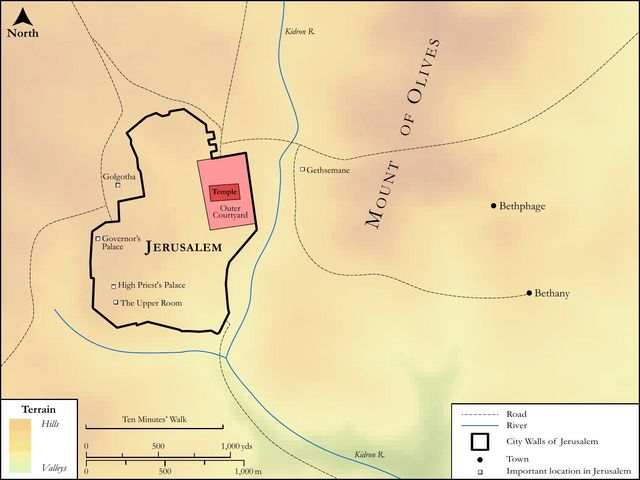
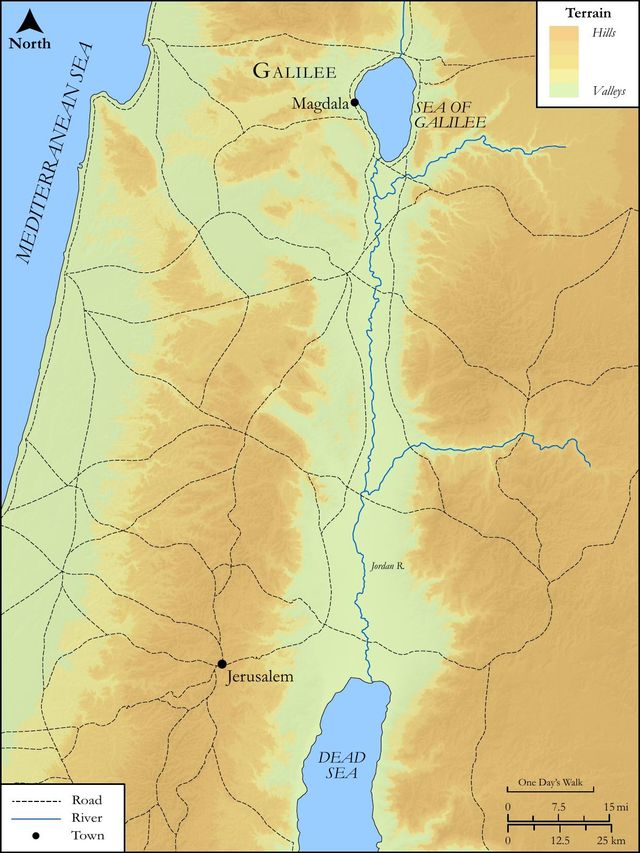
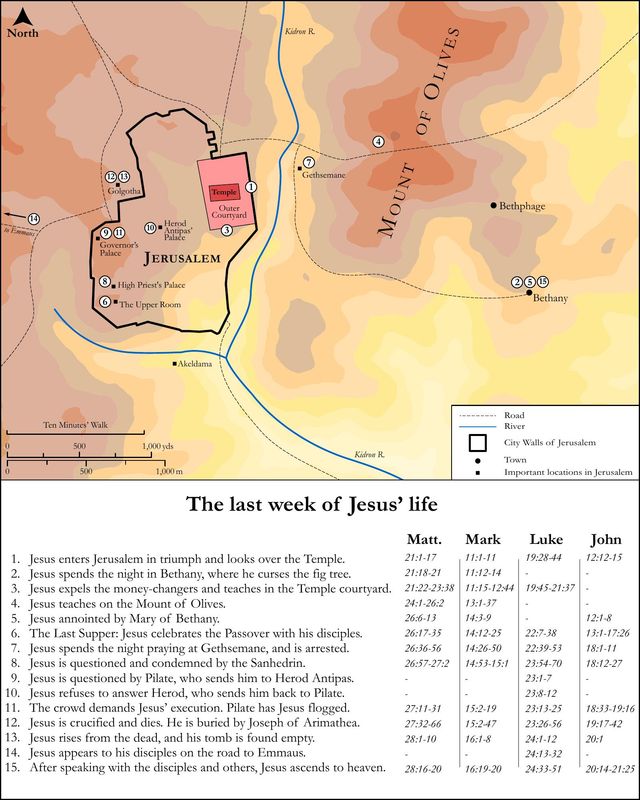
See on the biblical-era maps
Study this verse
Historical interpretation
Nine Centuries of Reception
13 surviving comments on this verse. Each one is dated, so this reads as a timeline rather than a list.
Select a marker to jump to its quote. Markers stagger vertically where authors wrote within a few decades of each other.
The graves are the bodies of sinful souls, that is, souls dead to God; but when by God's grace these souls have been raised, their bodies which before were graves, become bodies of Saints, and appear to go out of themselves, and follow Him who rose again, and walk with Him in newness of life; and such as are worthy to have their conversation in heaven enter into the Holy City at divers times, and appear unto many who see their good works.
Or, He gave up the ghost with a loud voice, in grief that He was not carrying the sins of all men.
Or, The veil of the temple is rent, because from this time the nation was dispersed, and the honour of the veil is taken away with the guardianship of the protecting Angel.
The earth quaked, because it was unequal to contain such a body; the rocks rent, for the Word of God that pierces all strong and mighty things, and the virtue of the eternal Power had penetrated them; the graves were opened, for the bands of death were loosed. And many bodies of the saints which slept arose, for illumining the darkness of death, and shedding light upon the gloom of Hades, He robbed the spirits of death.
The raising up of the saints’ bodies was announcing that the death of Christ was actually the cause of life. They certainly were not made visible prior to the Lord’s resurrection, since it was necessary that the resurrection of the Savior first be made known. Then those raised through him were seen. It is plain that they have died again, having risen from the dead in order to be a sign. For it was not possible for only some of the firstborn from the dead to be raised to the life of the age to come, but the remainder [must be raised] in the same manner. Now Luke says that the crowd passing by “beat their breasts and went away.” Thus the divine superiority did not escape the notice of the Jews, either in the Passion itself or in the obscurity of the Savior. But habitual human forgetfulness held them fast, and the deceit of the teachers led many astray.
This cry rent the veil, and opened the tombs, and made the house desolate. And He did this, not as offering insult to the temple (for how should He, who saith, "Make not my Father's house a house of merchandise," but declaring them to be unworthy even of His abiding there; like as also when He delivered it over to the Babylonians. But not for this only were these things done, but what took place was a prophecy of the coming desolation, and of the change into the greater and higher state; and a sign of His might.
And together with these things He showed Himself also by what followed after these things, by the raising of the dead. For in the instance of Elisha; one on touching a dead body rose again, but now by a voice He raised them, His body continuing up there, on the cross. And besides, those things were a type of this. For that this might be believed, therefore is that all done. And they are not merely raised, but also rocks are rent, and the earth shaken, that they might learn, that He was able to strike themselves blind, and to rend them in pieces. For He that cleft rocks asunder, and darkened the world, much more could have done these things to them, had it been His will. But He would not, but having discharged His wrath upon the elements, them it was His will to save by clemency. But they abated not their madness. Such is envy, such is jealousy, it is not easily stayed. At that time then they were impudent in setting themselves against the actual appearances; and afterwards even against the things themselves, when a seal being put upon Him, and soldiers watching Him, He rose again, and they heard these things from the very guards; they even gave money, in order both to corrupt others, and to steal away the history of the resurrection.
Marvel not therefore if at this time also they were perverse, being thus altogether prepared to set themselves impudently against all things; but observe this other point, how great signs He had wrought, some from Heaven, some on earth, some in the very temple, at once marking His indignation, and at the same time showing that what were unapproachable are now to be entered, and that Heaven shall be opened; and the work removed to the true Holy of Holies. And they indeed said, "If He be the King of Israel, let Him come down now from the cross," but He shows that He is King of all the world. And whereas those men said, "Thou that destroyest this temple, and buildest it in three days," He shows that it shall be made forever desolate. Again they said, "He saved others, Himself He cannot save." but He while abiding on the cross proved this most abundantly on the bodies of His servants. For if for Lazarus to rise on the fourth day was a great thing, how much more for all those who had long ago fallen asleep, at once to appear alive, which was a sign of the future resurrection. For, "many bodies of the saints which slept, arose," it is said, "and went into the holy city, and appeared to many." For in order that what was done might not be accounted to be an imagination, they appear, even to many, in the city. And the Centurion too then glorified God, saying, "Truly this was a righteous man. And the multitudes that came together to that sight, returned beating their breasts." So great was the power of the crucified, that after so many mockings, and scoffs, and jeers, both the centurion was moved to compunction, and the people. And some say that there is also a martyrdom of this centurion, who after these things grew to manhood in the faith.
"And many women were there beholding afar off, which had followed Him, ministering unto Him, Mary Magdalene, and Mary the mother of James, and Joses, and the mother of Zebedee's sons."
These things the women see done, these who were most inclined to feel for Him, who were most of all bewailing Him. And mark how great their assiduity. They had followed Him ministering to Him, and were present even unto the time of the dangers. Wherefore also they saw all; how He cried, how He gave up the ghost, how the rocks were rent, and all the rest.
And these first see Jesus; and the sex that was most condemned, this first enjoys the sight of the blessings, this most shows its courage. And when the disciples had fled, these were present. But who were these? His mother, for she is called mother of James, and the rest. But another evangelist saith, that many also lamented over the things that were done, and smote their breasts, which above all shows the cruelty of the Jews, for that they gloried in things for which others were lamenting, and were neither moved by pity, nor checked by fear. For indeed the things that were done were of great wrath, and were not merely signs, but signs of anger all of them, the darkness, the cloven rocks, the veil rent in the midst, the shaking of the earth, and great was the excess of the indignation.
When He remained on the cross they had said tauntingly, He saved others, himself he cannot save. But what He would not do for Himself, that He did and more than that for the bodies of the Saints. For if it was a great thing to raise Lazarus after four days, much more was it that they who had long slept should now show themselves alive; this is indeed a proof of the resurrection to come. But that it might not be thought that that which was done was an appearance merely, the Evangelist adds, And came out of the graves after his resurrection., and went into the holy city, and appeared unto many.
These women thus watching the things that are done are the most compassionate, the most sorrowful. They had followed Him ministering, and remained by Him in danger, showing the highest courage, for when the disciples fled they remained.
(Verse 53.) And many bodies of saints who had fallen asleep were raised. And coming out of the tombs after his resurrection, they went into the holy city and appeared to many. Just as Lazarus, who was dead, rose again, so too many bodies of saints rose again to show the rising of the Lord (John 11). And yet, although the tombs were opened, they did not rise before the Lord rose, so that he would be the firstborn of the resurrection from the dead. But let us understand the holy city, in which they [the risen ones] were seen, either as the heavenly Jerusalem, or as this earthly one, which was previously holy. Just as Matthew is called a tax collector, not because he still remains a tax collector, but because he retains the former title. The city of Jerusalem was called holy because of the temple and the holy of holies, and in distinction from other cities where idols were worshipped. When it is said 'truly', they appeared to many, it is shown that the resurrection was not general, which would appear to everyone: but specific to many, so that those who were worthy could see.
Another Gospel demonstrates more clearly the cause of the centurion’s astonishment after the shaking of the earth. It wasn’t until after he had seen Christ give up the spirit that he said, “Truly this was the Son of God,” for no one has the power to give up the spirit except he who is the Creator of souls. Here we can understand “soul” for “spirit” because the soul animates the body and makes it spiritual and because the spirit is the substance of the soul itself, as it is written: “You take away their spirits and they cease to be.”
It is not doubtful to any what these great signs signify according to the letter, namely, that heaven and earth and all things should bear witness to their crucified Lord.
As Lazarus rose from the dead, so also did many bodies of the Saints rise again to show forth the Lord's resurrection; yet notwithstanding that the graves were opened, they did not rise again before the Lord rose, that He might be the first-born of the resurrection from the dead. The holy city in which they were seen after they had risen may be understood to mean either the heavenly Jerusalem, or this earthly, which once had been holy. For the city of Jerusalem was called Holy on account of the Temple and the Holy of Holies, and to distinguish it from other cities in which idols were worshipped. When it is said, And appeared unto many, it is signified that this was not a general resurrection which all should see, but special, seen only by such as were worthy to see it.
Observe, that in the very midst of the offence of His passion the Centurion acknowledges the Son of God, while Arius in the Church proclaims Him a creature.
It was a Jewish custom, and held no disgrace, according to the manners of the people of old, for women to minister of their substance, food, and clothing to their teachers. This Paul says, that he refused, because it might occasion scandal among the Gentiles. They ministered to the Lord of their substance, that He might reap their carnal things, of whom they reaped spiritual things. Not that the Lord needed food of the creature, but that He might set an example for the teacher, that He should be content to receive food and clothing from His disciples. But let us see what sort of attendants He had; Among whom was Mary Magdalene, and Mary the mother of James and Joseph, and the mother of Zebedee's children.
(adv. Helvid.) 'See,' says Helvidius, 'Jacob and Joseph are the sons of Mary the Lord's mother, whom the Jews call the brethren of Christ. (Mark 6:3.) He is also called James the less, to distinguish him from James the greater, who was the son of Zebedee.' And he urges that 'it were impious to suppose that His mother Mary would be absent, when the other women were there; or that we should have to invent some other third unknown person of the name of Mary, and that too when John's Gospel witnesses that His mother was present.' O blind folly! O mind perverted to its own destruction! Hear what the Evangelist John says: There stood by the cross of Jesus, his mother, and his mother's sister, Mary the wife of Cleophas, and Mary Magdalene. (John 19:25.) No one can doubt that there were two Apostles called James; the son of Zebedee, and the son of Alpheus. This unknown James the less, whom Scripture mentions as the son of Mary, if he is an Apostle, is the son of Alpheus; if he is not an Apostle, but a third unknown James, how can he be supposed to be the Lord's brother, and why should he be styled 'The Less,' to distinguish him from 'The Greater?' For The Greater and The Less are epithets which distinguish two persons, but not three. And that the James, the Lord's brother, was an Apostle, is proved by Paul, Other of the Apostles saw I none, save James the Lord's brother. (Gal. 1:19.) But that you should not suppose this James to be the son of Zebedee, read the Acts, (Acts 12:1.) where he was put to death by Herod. The conclusion then remains, that this Mary, who is described as the mother of James the less (vid. sup. 13:55.), was wife of Alpheus, and sister of Mary the Lord's mother, called by John, Mary the wife of Cleophas. But should you incline to think them two different persons, because in one place she is called Mary the mother of James the less, and in another place Mary the wife of Cleophas, you will learn the Scripture custom of calling the same man by different names; as Raguel Moses' father-in-law is called Jethro. In like manner then, Mary the wife of Cleophas is called the wife of Alpheus, and the mother of James the less. For if she had been the Lord's mother, the Evangelist would here, as in all other places, have called her so, and not described her as the mother of James, when he meant to designate the mother of the Lord. But even if Mary the wife of Cleophas, and Mary the mother of James and Joses, were different persons, it is still certain, that Mary the mother of James and Joses was not the Lord's mother.
But the lower parts of the earth, hell, are understood to be where our Lord and Savior descended, so that He might lead with Him to the heavens the souls of the saints who were being held captive there. Hence, after His resurrection, many bodies of the righteous were seen in the holy city (Matthew 27:52-53). And that hell is in the lower part of the earth is attested by the Psalmist who says: "The earth opened and swallowed up Dathan and covered the congregation of Abiron" (Psalm 106:17). This is also explained more fully in the Book of Numbers (chapter 16). In another place we read: "Let death come upon them and let them go down alive into hell" (Psalm 55:15).
('Leo, in Serm. de Pass.' non occ.) The sudden commotion in the elements is a sufficient sign in witness of His venerable Passion, The earth quaked, and the rocks rent, and the graves were opened.
(Serm. 66. 3.) From this example then of the Centurion let the substance of the earth tremble in the punishment of its Redeemer, let the rocks of unbelieving minds be rent, and those who were pent up in these sepulchres of mortality leap forth, bursting the bonds that would detain them; and let them show themselves in the Holy City, i. e. the Church of God, as signs of the Resurrection to come; and thus let that take place in the heart, which we must believe takes place in the body.
But some one will ask, what became of those who rose again when the Lord rose. We must believe that they rose again to be witnesses of the Lord's resurrection. Some have said that they died again, and were turned to dust, as Lazarus and the rest whom the Lord raised. But we must by no means give credit to these men's sayings, since if they were to die again, it would be greater torment to them, than if they had not risen again. We ought therefore to believe without hesitation that they who rose from the dead at the Lord's resurrection, ascended also into heaven together with Him.
Whence with good reason by the Centurion is denoted the faith of the Church, which, when the veil of heavenly mysteries had been rent by the Lord's death, immediately asserts Jesus to be both very Man, and truly Son of God, while the Synagogue held its peace.
. Jesus cries with a loud voice so that we may know that it was true when He said, "I have authority to lay down My life" (Jn. 10:18). For He released His soul by His own authority. What was it that He cried with a loud voice? "Into Thy hands I commit My spirit" (Lk. 23:46). Not under compulsion, but by His own will He released His spirit. For this is what is meant by "I commit." He also shows that He will take it back again. For what is committed or deposited can be returned. Thanks be to the Lord, that when He died and committed His spirit into the hands of the Father, from that time forward the souls of the saints are also committed into the hands of the Father, and not as before into the recesses of hades. So the death of Christ became our sanctification. For this reason He summons death with a loud voice, for death did not dare to approach until it had been summoned. The veil of the temple was a cloth of fine linen hanging in the middle of the temple, separating the inner sanctuary from the outer like a partition wall. This veil was rent, and God thereby showed that the inaccessible and unseen temple, whose innermost part, the Holy of Holies, had been secluded by the veil, would be made common and profane so as to be visible and accessible to all. Some give further explanations. The veil being rent, they say, indicated that the letter of the law had been stripped away to reveal the entirety of the law which formerly had been concealed by the letter as if by a veil; and what before had been obscure and enigmatic in the law would now be made clear by its fulfillment in Christ (II Cor. 3:14-16). One might also mention that it was the custom of Jews to rend their clothing when they heard blasphemies against God. So now the divine temple rent its own clothing, the veil, as if abhorring the death of Christ. There is more that one could say, but this suffices. The elements quaked, showing at one and the same time that it was the Creator Who suffered and that all things would be changed. For earthquakes are mentioned in Scripture to mark a change in the course of affairs. And there did occur a change in the scope of God’s supervision of mankind, namely, from the Jews to the Gentiles. Even the stones, which are the stony hearts of the Gentiles, were split open to accept the seed of Truth. And those who were dead in sins arose and entered the Holy City, the heavenly Jerusalem, and appeared to the many who were walking the broad road [leading to perdition]. By appearing to them, they became an exemplary model of a good life and of repentance. For if one sees a man who was formerly deadened by many passions now changed and ascending to the holy heavenly City, he imitates that man in every way, and himself repents. These things have been explained in a rather elaborate manner; but you, O reader, understand that the raising of the dead which occurred at the Lord’s crucifixion, also revealed the freeing of the souls in hades. Those who arose at that time were seen by many, lest the event appear to have been only an apparition. They arose as a sign from God, and it is evident that they again died. Some say that after Christ’s resurrection, these arose and have not yet died; but I do not know if this should be accepted.
Continue studying Matthew 27:53 across the web’s major study libraries — every link below opens this exact verse, chapter, or book on the destination site.
Read & Compare
 BibleGatewayThis verse in more than 200 translations and 70 languages.
 Bible.comThe YouVersion reader — hundreds of translations, reading plans, and highlights.
 ESV.orgCrossway's official English Standard Version reader.
 NET BibleThe NET translation with 60,000+ translators' notes on every rendering decision.
 STEP BibleTyndale House's free study tool — original text, vocabulary, and scholarly resources.
 BibliaLogos Bible Software's free web reader.
 USCCBThe New American Bible (Revised Edition) with the U.S. bishops' study notes.
Commentaries
 BibleHub CommentariesDozens of classic commentaries on this verse, gathered on one page.
 StudyLightMore than 100 commentary sets — the largest collection on the web.
 BibleRefPlain-English commentary on what this verse means, verse by verse.
 Enduring WordDavid Guzik's free commentary on this chapter, widely used by Bible teachers.
 Bible Study ToolsVerse commentary alongside Greek and Hebrew study aids.
Original Language & Research
- BibleHub InterlinearThe verse word by word — original language, transliteration, and English.
- BibleHub LexiconEvery word's original-language definition and Strong's entry.
 Blue Letter BibleDeep-study tools — Strong's numbers, concordance, and word studies.
 CNTR CollationThe earliest Greek manuscripts of this verse, collated letter by letter.
Sermons, Hymns & Audio


TrulyRandomVerse is not affiliated with these sites and doesn’t control their content. They’re linked because they’re genuinely useful.
Summary
Matthew 27:53 records an extraordinary and unique event in the Gospel narratives: that after Jesus' resurrection, many saints who had died were raised from their graves, entered Jerusalem, and appeared to numerous people. This miraculous occurrence serves as a powerful, public testament to the eternal significance of Christ's victory over death and the dawning of a new spiritual reality inaugurated by His atoning work and glorious resurrection.
Context
ShowHideLiterary Context
This verse is situated at the climax of Matthew's Passion narrative, immediately following the crucifixion and death of Jesus. Matthew 27:51-52 describe dramatic disturbances that accompanied Christ's final breath: the temple veil tearing, an earthquake, splitting rocks, and significantly, the opening of graves. Verse 53 clarifies a crucial temporal distinction: while the graves were opened at Jesus' death, the saints within them did not emerge until after His resurrection. This sequence is vital, establishing Christ's resurrection as the prerequisite and enabling power for their own. Their subsequent entry into Jerusalem and public appearance underscore the public, undeniable nature of these miraculous events, serving as a divine commentary on the significance of Jesus' triumph.
Historical & Cultural Context
Jerusalem, referred to as "the holy city" in this verse, held profound religious and cultural significance for Jewish people as the center of their worship and the dwelling place of God's presence. The appearance of resurrected individuals within its walls would have been an event of unparalleled impact, challenging deeply held beliefs about death and the afterlife. Jewish burial practices typically involved placing bodies in tombs or caves, often outside the city walls, making the emergence from these "graves" and entry into the populated city a highly visible and shocking phenomenon. While the Old Testament contains accounts of individuals being raised (e.g., Elijah raising the widow's son, Elisha raising the Shunammite's son), a mass resurrection of this nature, tied directly to the Messiah's death and resurrection, was unprecedented and signaled a new era of God's redemptive work.
Key Themes
ShowHideMatthew 27:53 powerfully contributes to several key themes within Matthew's Gospel and broader biblical theology. Foremost is the Triumph of Christ over Death. Jesus' resurrection is presented not merely as His personal victory, but as an event that breaks the power of death for all who belong to Him. These resurrected saints serve as the firstfruits of Christ's victory, tangible proof that His resurrection inaugurates the general resurrection of believers. Furthermore, their public appearance in the holy city provides Divine Validation for Jesus' Messiahship and the truth of His claims. It is a miraculous sign, witnessed by "many," that authenticates the seismic spiritual shift that occurred through Christ's death and resurrection, confirming His identity as the Son of God, as even the centurion confessed in Matthew 27:54.
Exposition and Analysis
ShowHideKey Word Analysis
ShowHideMeaning "a resurgence (from death)." This word specifically denotes a rising up or awakening from a state of death. In the context of Matthew 27:53, it emphasizes that the emergence of the saints from their graves was a true, literal resurrection, a restoration to life, directly empowered by and subsequent to Christ's own victory over the grave. It is not merely a reanimation but a divine act of bringing life where death had reigned.
Meaning "a remembrance, i.e. cenotaph (place of interment)." This term refers to tombs, sepulchers, or memorial sites where the dead were laid to rest. The fact that these individuals came "out of the graves" underscores the physical reality of their prior death and burial, making their emergence a profound reversal of the natural order and a clear demonstration of supernatural power.
Meaning "to exhibit (in person) or disclose (by words)." This word signifies a clear, undeniable manifestation or public display. It implies that these resurrected saints were not phantoms or visions, but physically present individuals who were recognized and seen by "many." This public appearance served to validate the reality of their resurrection and, by extension, the power of Christ's resurrection that enabled it.
Verse Breakdown
ShowHide"And came out of the graves after his resurrection"
This clause establishes the critical sequence of events. The opening of the graves occurred at Jesus' death, but the actual emergence of the saints was contingent upon and occurred after Christ's own resurrection. This emphasizes that Jesus' victory over death was the foundational act that unlocked the power for others to be raised, making Him the "firstfruits" of the resurrection. It signifies a literal, physical emergence from their places of burial.
"and went into the holy city"
The "holy city" is Jerusalem, the spiritual and political capital of Judea. Their entry into this significant urban center highlights the public and observable nature of this miracle. It was not a hidden event but one that took place where it could be witnessed by many, thereby serving as a powerful sign to the Jewish people concerning the monumental events that had just transpired.
"and appeared unto many"
This final clause confirms the widespread observation of these resurrected saints. The term "appeared" (Greek emphanízō) suggests a clear, undeniable manifestation, not a fleeting glimpse or private vision. The fact that they were seen by "many" underscores the verifiable nature of this miracle, providing multiple witnesses to the reality of resurrection and the profound impact of Jesus' triumph over death.
Literary Devices
ShowHideMatthew 27:53 is rich in Symbolism. The resurrection of the saints symbolizes the breaking of death's power and the dawning of the new age inaugurated by Christ's resurrection. It is a tangible sign of the spiritual victory achieved on the cross. The "holy city" of Jerusalem itself is symbolic, representing the center of God's covenant people, and the place where divine judgment and redemption converge. This event also serves as a powerful Foreshadowing of the general resurrection of believers promised in the New Testament. The saints emerging from their graves prefigure the future bodily resurrection that awaits all who are in Christ. Furthermore, the public nature of their appearance ("appeared unto many") functions as Testimony and Validation. It is a miraculous, undeniable witness to the truth of Jesus' divine authority and the reality of His resurrection, intended to authenticate His Messiahship to a skeptical world.
Theological and Thematic Connections
ShowHideMatthew 27:53 stands as a profound theological statement, affirming the comprehensive victory of Jesus Christ over sin and death. It underscores that Christ's resurrection is not an isolated event but the decisive moment that inaugurates the new creation, breaking the dominion of death and offering the promise of bodily resurrection to all who believe. This unique occurrence highlights Jesus as the ultimate source of life, demonstrating His power to conquer the grave and foreshadowing the ultimate hope of believers. It serves as a powerful validation of His divine claims and the transformative power of His finished work on the cross, confirming that His sacrifice was indeed sufficient to overcome humanity's greatest enemies.
Reflection and Application
ShowHideMatthew 27:53 offers believers a profound source of hope and assurance. In a world constantly confronted by the reality of death, this verse provides a tangible glimpse into the future victory promised through Christ. It reminds us that Jesus' resurrection is not just a historical fact, but a living, active power that extends to all who are united with Him. This unique event reassures us that our own physical death is not the end, but a transition, and that God's ultimate plan includes a bodily resurrection for His people. It encourages us to live with an eternal perspective, trusting in God's power to bring life out of death, and to find comfort in the knowledge that Christ's triumph guarantees our ultimate triumph over the grave. This passage calls us to consider the profound implications of Christ's victory for our daily lives, empowering us to face challenges with courage and to live with the certain hope of resurrection.
Questions for Reflection
ShowHideFAQ
ShowHideWho were these "many saints" who were resurrected?
ShowHideThe text does not explicitly name these individuals, referring to them simply as "many saints" (Greek: polloi hagioi). The term "saints" (G40, hagios) in the New Testament generally refers to believers, those set apart by God. Given the context of the Old Covenant and the timing, it is widely understood that these were Old Testament believers—righteous individuals who had died in faith, awaiting the Messiah's redemptive work. Their resurrection, therefore, signifies that the power of Christ's death and resurrection extended even to those who had died before Him, demonstrating His universal dominion over death across all ages.
What happened to these resurrected saints after they appeared in Jerusalem? Did they remain on Earth?
ShowHideThe Bible does not provide further details about their fate after their appearance. Matthew's account is unique in mentioning this event, and no other New Testament book elaborates on it. This silence has led to various theological speculations. Some believe they ascended to heaven with Christ, serving as a "resurrection escort" or a sign of the new covenant's power. Others suggest they may have died again, having served their purpose as witnesses to Christ's resurrection. The primary focus of the text is on their resurrection and appearance as a powerful sign validating Jesus' triumph, rather than their ongoing earthly existence. The lack of further information emphasizes the symbolic and theological significance of the event rather than providing a detailed narrative of their post-resurrection lives.
Why is this event only recorded in Matthew's Gospel?
ShowHideThis is a unique detail to Matthew's Gospel, which often includes elements that emphasize Jesus' fulfillment of Old Testament prophecy and His identity as the Jewish Messiah. Matthew's audience was primarily Jewish, and this miraculous event would have served as a powerful sign to them, connecting the eternal significance of Jesus' death and resurrection to their own understanding of God's redemptive history. The other Gospel writers may have chosen to focus on different aspects of the Passion narrative, or perhaps this event, while significant, was not central to the specific theological or narrative purposes of Mark, Luke, or John. Its inclusion in Matthew underscores the profound, earth-shattering impact of Jesus' resurrection on the realm of the dead.
Christ-Centered Fulfillment
ShowHideMatthew 27:53 stands as a powerful, tangible demonstration of Christ's absolute sovereignty over death, serving as a profound Christ-centered fulfillment of Old Testament hopes and a living prophecy of the New Covenant's power. Jesus is not merely a prophet or a teacher; He is the Resurrection and the Life, whose victory over the grave is the ultimate assurance of life for all who believe. The resurrection of these saints, occurring "after his resurrection," unequivocally positions Jesus as the firstfruits from the dead, the pioneer who blazes the trail for all who follow Him. This event foreshadows the glorious future resurrection promised to all believers, where our perishable bodies will be raised imperishable and death will be swallowed up in victory. It underscores that Christ's atoning work on the cross not only dealt with the penalty of sin but also broke the power of death itself, thereby delivering those who were held in slavery by their fear of death. Thus, Matthew 27:53 is a vivid, historical illustration of the comprehensive scope of Christ's redemptive work, demonstrating that through Him, even the grave cannot hold those whom God has chosen.