


Matthew 24:32
- ἈπὸApoFromG575PREPPreposition
- δὲdenowG1161CONJConjunction
- τῆςtēstheG3588T-GSFDefinite article Genitive Singular Feminine
- συκῆςsukēsfig treeG4808N-GSFNoun Genitive Singular Feminine
- μάθετεmathetedo learnG3129V-2AAM-2PVerb 2nd Aorist Active Imperative 2nd Plural
- τὴνtēntheG3588T-ASFDefinite article Accusative Singular Feminine
- παραβολήν·parabolēnparableG3850N-ASFNoun Accusative Singular Feminine
- ὅτανhotanWhenG3752CONJConjunction
- ἤδηēdēalreadyG2235ADVAdverb
- ὁhotheG3588T-NSMDefinite article Nominative Singular Masculine
- κλάδοςkladosbranchG2798N-NSMNoun Nominative Singular Masculine
- αὐτῆςautēsof itG846P-GSFPersonal pronoun Genitive Singular Feminine
- γένηταιgenētaimay becomeG1096V-2ADS-3SVerb 2nd Aorist Middle Deponent Subjunctive 3rd Singular
- ἁπαλὸςhapalostenderG527A-NSMAdjective Nominative Singular Masculine
- καὶkaiandG2532CONJConjunction
- τὰtatheG3588T-APNDefinite article Accusative Plural Neuter
- φύλλαphullaleavesG5444N-APNNoun Accusative Plural Neuter
- ἐκφύῃekphuēmay it put forthG1631V-PAS-3SVerb Present Active Subjunctive 3rd Singular
- γινώσκετεginōsketeyou knowG1097V-PAI-2PVerb Present Active Indicative 2nd Plural
- ὅτιhotithatG3754CONJConjunction
- ἐγγὺςengusnear [is]G1451PREPPreposition
- τὸtotheG3588T-NSNDefinite article Nominative Singular Neuter
- θέροςtherossummerG2330N-NSNNoun Nominative Singular Neuter
English is a literal word-by-word gloss of the Greek, not the KJV's wording. Why?
This is the original text the KJV's translators worked from — each Greek word with its own literal English meaning in this verse, prepared by scholars at Tyndale House, Cambridge. The KJV translates whole sentences, not word by word, so its wording differs: one Greek word can become several English words, and the KJV may choose “charity” where the gloss reads “love”. Both are faithful — they answer different questions. For the KJV's own rendering, switch to the KJV text.
Details
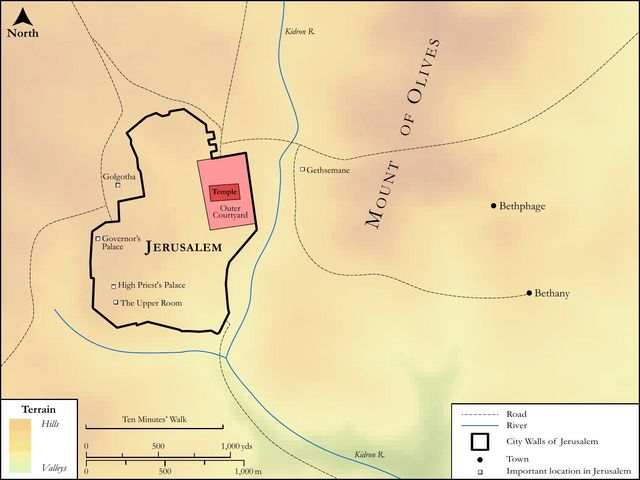
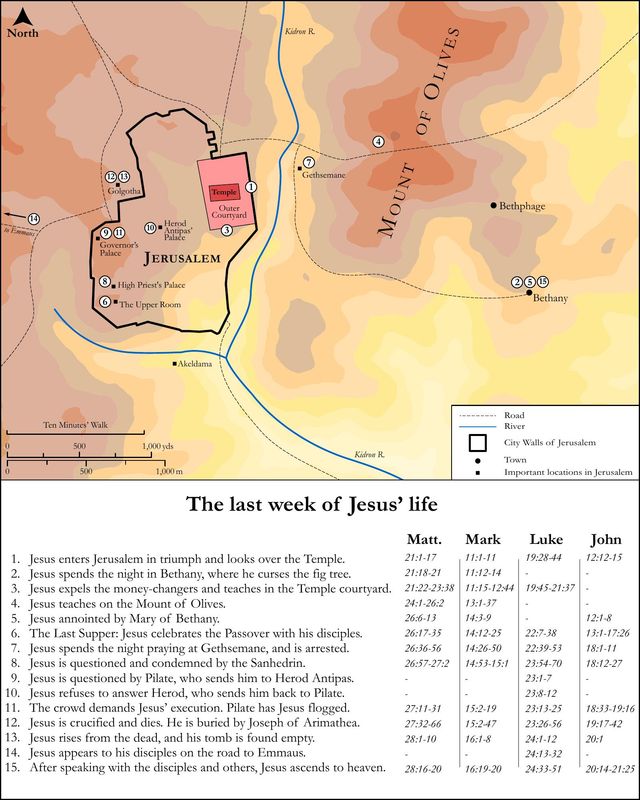
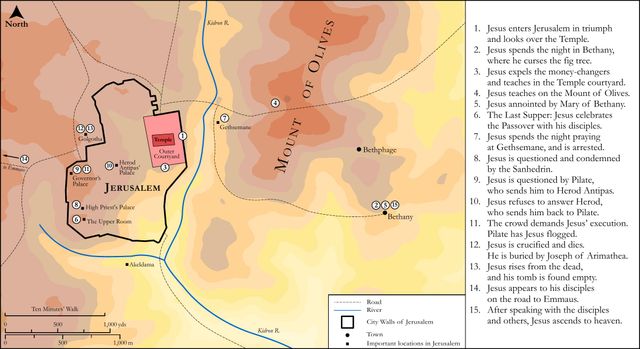
See on the biblical-era map
Study this verse
Historical interpretation
Eight Centuries of Reception
13 surviving comments on this verse. Each one is dated, so this reads as a timeline rather than a list.
Select a marker to jump to its quote. Markers stagger vertically where authors wrote within a few decades of each other.
Watch for your life's sake. Let not your lamps be quenched, nor your loins unloosed; but be ye ready, for ye know not the hour in which our Lord cometh. But often shall ye come together, seeking the things which are befitting to your souls: for the whole time of your faith will not profit you, if ye be not made perfect in the last time. For in the last days false prophets and corrupters shall be multiplied, and the sheep shall be turned into wolves, and love shall be turned into hate; for when lawlessness increaseth, they shall hate and persecute and betray one another, and then shall appear the world-deceiver as Son of God, and shall do signs and wonders, and the earth shall be delivered into his hands, and he shall do iniquitous things which have never yet come to pass since the beginning. Then shall the creation of men come into the fire of trial, and many shall be made to stumble and shall perish; but they that endure in their faith shall be saved from under the curse itself. And then shall appear the signs of the truth; first, the sign of an out-spreading in heaven; then the sign of the sound of the trumpet; and the third, the resurrection of the dead; yet not of all, but as it is said: The Lord shall come and all His saints with Him. Then shall the world see the Lord coming upon the clouds of heaven.
As the fig has its vital powers torpid within it through the season of winter, but when that is past its branches become tender by those very powers and put forth leaves; so the world and all those who are saved had before Christ's coming their vital energies dormant within them as in a season of winter. Christ's Spirit breathing upon them makes the branches of their hearts soft and tender, and that which was dormant within burgeons into leaf, and makes show of fruit. To such the summer and the coming of the glory of the Word of God is nigh at hand.
Mystically; The Synagogue is likened to the fig treeg; its branch is Antichrist, the son of the Devil, the portion of sin, the maintainer of the law; when this shall begin to swell and to put forth leaves, then summer is nigh, i. e. the approach of the day of judgment shall be perceived.
To give sure credit to the things which should come to pass He adds, Verily I say unto you, this generation shall not pass away until all these things be fulfilled. By saying Verily, He gives asseveration to the truth.
For heaven and earth have in their constitution no necessity of existence, but Christ's words derived from eternity have in them such virtue that they must needs abide.
The parable of the fig tree is offered as a lesson in recognizing the signs of the times. When its branches become tender and green we know that summer is near. Both this fig tree and this summer are very different from those found in nature, however. In nature there is a considerable interval between the onset of summer and the greening of a tree’s branches, which begin to grow tender early in the spring. Consequently this parable cannot be about the tree. Indeed, we have already dealt above with the particular meaning of the tree. We saw that Adam had covered himself with its leaves to hide his shameful conscience, which is to say that he was bound under the law as though clothed in sin. The fig tree’s branch therefore represents the antichrist, who is a son of the devil, a partaker of sin and protector of the law. When it begins to grow tender and green, then the summer, which here represents the day of judgment, is near. The greening of the tree then refers to the rise of sinners, a time that will be marked by the flowering of slanderers and the popularity of criminals and favor for blasphemers. This signals that summer, the heat of eternal fire, is near.
For in the last days false prophets shall be multiplied, and such as corrupt the word; and the sheep shall be changed into wolves, and love into hatred: for through the abounding of iniquity the love of many shall wax cold. For men shall hate, and persecute, and betray one another. And then shall appear the deceiver of the world, the enemy of the truth, the prince of lies, [2 Thessalonians 2:3-12] whom the Lord Jesus "shall destroy with the spirit of His mouth, who takes away the wicked with His lips; and many shall be offended at Him. But they that endure to the end, the same shall be saved. And then shall appear the sign of the Son of man in heaven;" [Isaiah 11:4; Matthew 24:1-51] and afterwards shall be the voice of a trumpet by the archangel; and in that interval shall be the revival of those that were asleep. And then shall the Lord come, and all His saints with Him, with a great concussion above the clouds, with the angels of His power, [Matthew 16:27] in the throne of His kingdom, to condemn the devil, the deceiver of the world, and to render to every one according to his deeds. "Then shall the wicked go away into everlasting punishment, but the righteous shall go into life eternal," [Matthew 25:46] to inherit those things "which eye has not seen, nor ear heard, nor have entered into the heart of man, such things as God has prepared for them that love Him;" [1 Corinthians 2:9] and they shall rejoice in the kingdom of God, which is in Christ Jesus.
Forasmuch as He had said, "Immediately after the tribulation of those days;" but they sought of this, after how long a time it should be, and desired to know in particular the very day, therefore He puts also the similitude of the fig tree, indicating that the interval was not great, but that in quick succession would occur His advent also. And this He declared not by the parable alone, but by the words that follow, saying, "know that it is near, even at the doors."
Whereby He foretells another thing also, a spiritual summer, and a calm that should be on that day (after the present tempest) for the righteous; but to the sinners the contrary, winter after summer, which He declares in what follows, saying, that the day shall come upon them, when they are living in luxury.
But not for this intent only did He put forward this about the fig tree, in order to declare the interval; for it was possible to have set this before them in other ways as well; but that he might hereby also confirm His saying, as assuredly thus to come to pass. For like as this of the fig tree is of necessity, so that too. For thus, wherever He is minded to speak of that which will assuredly come to pass, He brings forward the necessary courses of nature, both Himself, and the blessed Paul imitating Him. Therefore also when speaking of His resurrection, He saith, "When the corn of wheat hath fallen into the earth, except it die, it abideth alone; but if it die, it bringeth forth much fruit." Whereby also the blessed Paul being instructed uses the same similitude, "Thou fool," he saith, "that which thou sowest is not quickened, except it die."
That the Lord calls His elect by His Angels pertains to the honour of the elect; and Paul also says that they shall be caught into the clouds; (1 Thes. 4:17.) that is, the Angels shall gather together those that have risen, and when they are gathered together, the clouds shall receive them.
(Hom. 77.) Because He had said that these things should come to pass immediately after the tribulation of those days, they might ask, How long time hence? He therefore gives them an instance in the fig
He shows that the interval of time shall not be great, but that the coming of Christ will be presently. By the comparison of the tree He signifies the spiritual summer and peace that the just shall enjoy after their winter, while sinners on the other hand shall have a winter after summer.
This analogy also adds credit to His foregoing discourse; for wherever He speaks of what must by all means come to pass, Christ ever brings forward parallel physical laws.
All these things therefore mean what was said of the end of Jerusalem, of the false prophets, and the false Christs, and all the rest which shall happen down to the time of Christ's coming. That He said, This generation, He meant not of the men then living, but of the generation of the faithful; for so Scripture uses to speak of generations, not of time only, but of place, life, and conversation; as it is said, This is the generation of them that seek the Lord. (Ps. 24:6.) Herein He teaches that Jerusalem shall perish, and the greater part of the Jews be destroyed, but that no trial shall overthrow the generation of the faithful.
He brings forward the elements of the earth to show that the Church is of more value than either heaven or earth, and that He is Maker of all things.
As much as to say, When the tender shoots first show themselves in the stem of the fig tree, and the bud bursts into flower, and the bark puts forth leaves, ye perceive the approach of summer and the season of spring and growth; so when ye shall see all these things that are written, do not suppose that the end of the world is immediate, but that certain monitory signs and precursors are showing its approach.
Or, by generation here He means the whole human race, and the Jews in particular. And He adds, Heaven and earth shall pass away, but my words shall not pass away, to confirm their faith in what has gone before; as though He had said, it is easier to destroy things solid and immovable, than that aught should fail of my words.
The heaven and the earth shall pass away by a change, not by annihilation; for how should the sun be darkened, and the moon not give her light, if earth and heaven in which these are should be no more?
(Verse 32, 33.) But learn a parable from the fig tree: when its branch is already tender and the leaves have sprouted, you know that summer is near. So also, when you see all these things, know that it is near, at the doors. Under the example of the tree, he taught the coming of the consummation. How, he says, when the twigs of the fig tree become tender and a bud comes forth into a flower, and the bark brings forth leaves, you understand the coming of summer, and the entrance of the west winds and spring: so when you see all these things that have been written, do not think that the consummation of the world is already here, but rather like some preludes and forerunners coming, to show that it is near and at the doors.
(Ep. 199, 22.) That now from the Evangelic and Prophetic signs that we see come to pass, we ought to look that the Lord's coming should be nigh, who is there that denies? For daily it draws ever more and more near, but of the exact time it is said, It is not for you to know the times or the seasons. (Acts 1:7.) See how long ago the Apostle said, Now is our salvation nearer than when we believed. (Rom. 13:11.) What he spoke was not false, and yet how many years have elapsed, how much more may we not say that the Lord's coming is at hand now, that so great an accession of time has been made?
(Quaest. Ev. i. 39.) Or, by the fig tree understand the human race, by reason of the temptations of the flesh. When its branch is fender, i. e. when the sons of men through faith in Christ have progressed towards spiritual fruits, and the honour of their adoption to be the sons of God has shone forth in them.
Or, when this fig shall again bud, that is, when the synagogue shall receive the word of holy preaching, as the preaching of Enoch and Elias, then we ought to understand that the day of the consummation is at hand.
Moreover, our Redeemer shows by a thoughtful comparison that the world ought to be trampled upon and despised, when He immediately adds: "See the fig tree and all the trees; when they now produce fruit from themselves, you know that summer is near. So you also, when you see these things happening, know that the kingdom of God is near." As if He openly said: Just as the approaching summer is known from the fruit of trees, so from the ruin of the world it is recognized that the kingdom of God is near. But the kingdom of God is rightly compared to summer, because then the clouds of our sorrow pass away, and the days of life shine bright with the radiance of the eternal sun.
The heaven which shall pass away is not the starry but the atmospheric heaven which of old was destroyed by the deluge.
Continue studying Matthew 24:32 across the web’s major study libraries — every link below opens this exact verse, chapter, or book on the destination site.
Read & Compare
 BibleGatewayThis verse in more than 200 translations and 70 languages.
 Bible.comThe YouVersion reader — hundreds of translations, reading plans, and highlights.
 ESV.orgCrossway's official English Standard Version reader.
 NET BibleThe NET translation with 60,000+ translators' notes on every rendering decision.
 STEP BibleTyndale House's free study tool — original text, vocabulary, and scholarly resources.
 BibliaLogos Bible Software's free web reader.
 USCCBThe New American Bible (Revised Edition) with the U.S. bishops' study notes.
Commentaries
 BibleHub CommentariesDozens of classic commentaries on this verse, gathered on one page.
 StudyLightMore than 100 commentary sets — the largest collection on the web.
 BibleRefPlain-English commentary on what this verse means, verse by verse.
 Enduring WordDavid Guzik's free commentary on this chapter, widely used by Bible teachers.
 Bible Study ToolsVerse commentary alongside Greek and Hebrew study aids.
Original Language & Research
- BibleHub InterlinearThe verse word by word — original language, transliteration, and English.
- BibleHub LexiconEvery word's original-language definition and Strong's entry.
 Blue Letter BibleDeep-study tools — Strong's numbers, concordance, and word studies.
 CNTR CollationThe earliest Greek manuscripts of this verse, collated letter by letter.
Sermons, Hymns & Audio


TrulyRandomVerse is not affiliated with these sites and doesn’t control their content. They’re linked because they’re genuinely useful.
Summary
In Matthew 24:32, Jesus introduces the Parable of the Fig Tree, a concise yet profound illustration within His Olivet Discourse. This parable serves as a vital teaching on discerning the signs of His second coming and the culmination of the age. By likening the recognition of summer's approach through the budding fig tree to understanding prophetic signs, Jesus instructs His disciples on the imperative of spiritual awareness and readiness, emphasizing that observable events will clearly indicate the nearness of His return.
Context
ShowHideLiterary Context
Matthew 24:32 is strategically placed within Jesus' extensive Olivet Discourse, delivered on the Mount of Olives in response to His disciples' questions about the destruction of the Temple and the signs of His coming and the end of the age (Matthew 24:3). Preceding this parable, Jesus has detailed a series of escalating signs, including false Christs, wars, famines, earthquakes, and widespread persecution, culminating in cosmic disturbances (Matthew 24:4-29). The Parable of the Fig Tree marks a shift from describing specific events to providing a principle for interpreting these signs, offering a relatable analogy that transitions into warnings about the suddenness and unexpected nature of the Son of Man's return (Matthew 24:36-44). It functions as a clear, accessible guide for His followers to understand how to discern the proximity of these momentous events.
Historical & Cultural Context
The fig tree (Ficus carica) was a ubiquitous and highly recognizable tree throughout ancient Israel and the Mediterranean region, deeply integrated into the daily lives and economy of its people. Its seasonal cycle was common knowledge: in late winter or early spring, its branches would soften and begin to sprout small leaves before the fruit appeared, signaling the imminent arrival of summer. This natural phenomenon was a reliable indicator of the changing seasons, a crucial piece of information for an agrarian society dependent on agricultural cycles. Jesus' choice of the fig tree for this parable demonstrates His masterful use of everyday observations to convey profound spiritual truths, ensuring His audience, largely composed of people familiar with farming and nature, would immediately grasp the analogy. The parable's power lay in its simplicity and the universal understanding of the natural sign it presented.
Key Themes
ShowHideThe Parable of the Fig Tree contributes significantly to several key themes within the Olivet Discourse and the broader New Testament. Firstly, it underscores the Discernment of Signs, emphasizing that just as natural indicators reliably predict seasonal changes, so too will prophetic events clearly signal the approach of Christ's return. This calls for spiritual vigilance and an understanding of the times, as highlighted in passages like Luke 12:56. Secondly, it communicates the Imminence and Readiness of these events; once the signs begin, the "summer"—representing the close proximity of the Son of Man's coming—is "nigh." This message urges believers to live in constant anticipation and preparedness, a theme echoed in Jesus' subsequent warnings to "keep watch" (Matthew 24:42). Lastly, the parable exemplifies Jesus' frequent use of Natural Analogy for Spiritual Truths, demonstrating how observable phenomena in the natural world can illuminate complex theological realities, making divine truths accessible and memorable.
Exposition and Analysis
ShowHideKey Word Analysis
ShowHideThis verb signifies the process of acquiring knowledge or understanding, not merely intellectual assent but often implying a practical or experiential grasp. Here, Jesus commands his disciples to "learn" from the fig tree, indicating a necessary process of observation and deduction regarding the signs of the times, much like a student learns a lesson. It implies an active, intentional engagement with the observable world to derive spiritual insight.
Describing the branch, "tender" refers to its softness and pliability, indicating new growth and the beginning of a seasonal change. It highlights a subtle, yet unmistakable, sign of transition. The tenderness of the branch is the first, clear indicator, a precursor to the fuller manifestation of summer, paralleling the initial signs that precede the full coming of the Son of Man.
This adverb denotes proximity, whether in terms of place or, as here, time. It conveys the idea that summer is "at hand" or "very near," emphasizing the immediacy indicated by the signs. The term implies not just a general nearness but a certainty of arrival once the specific conditions (tender branches, leaves) are met, underscoring the certainty of Christ's return once the prophesied signs unfold.
Verse Breakdown
ShowHide"Now learn a parable of the fig tree;"
Jesus introduces a teaching illustration, a "parable" (Greek: parabolē), drawn from a familiar natural phenomenon—the fig tree. This command to "learn" (Greek: manthánō) emphasizes the didactic purpose of the following analogy, urging His disciples to actively grasp the spiritual lesson being conveyed.
"When his branch is yet tender, and putteth forth leaves,"
This clause describes the specific natural signs to observe. The branch becoming "tender" (Greek: apalós) and "putting forth" (Greek: ekphýō, to sprout up) "leaves" (Greek: phýllon) are distinct, observable indicators of new life and seasonal progression. These are the precursors to summer, not summer itself, but undeniable harbingers.
"ye know that summer is nigh:"
This final clause states the logical conclusion drawn from observing the signs. The collective "ye know" (Greek: ginṓskō, to know with certainty) highlights the undeniable nature of this deduction. Just as the tender branch and new leaves unequivocally signal that "summer" (Greek: théros, heat, i.e., summer) "is nigh" (Greek: engýs, near, at hand), so too will the prophetic signs unequivocally signal the nearness of the end of the age and the Son of Man's return.
Literary Devices
ShowHideThe primary literary device employed in Matthew 24:32 is Analogy, presented in the form of a Parable. Jesus uses a direct comparison between a universally understood natural phenomenon—the fig tree's seasonal budding—and the discernment of spiritual truths regarding the end times. The fig tree serves as a Symbol of a natural indicator, its tender branches and new leaves acting as Signs that reliably point to an approaching reality (summer). This simple, agricultural illustration makes the complex theological concept of eschatological discernment accessible. The verse is also highly Didactic, as Jesus explicitly commands His disciples to "learn" from this observation, indicating its purpose as a direct teaching tool designed to impart practical wisdom and spiritual alertness. The clarity of the analogy ensures that the message of recognizing prophetic signs is unmistakable.
Theological and Thematic Connections
ShowHideMatthew 24:32 underscores the divine principle that God often provides observable signs to His people, inviting them to exercise wisdom and discernment. This parable integrates the natural world into the realm of prophecy, affirming that God's patterns are consistent across creation and history. It teaches that just as there are predictable natural cycles, there are also discernible spiritual and historical patterns that precede major divine interventions. The ability to "know" (Greek: ginṓskō) what is nigh based on these signs is not about predicting exact dates but about recognizing the season, fostering a posture of readiness and spiritual alertness rather than complacency. This aligns with a broader biblical call for believers to be wise stewards of the knowledge God reveals, living purposefully in light of His sovereign plan.
Reflection and Application
ShowHideMatthew 24:32 serves as a timeless call to spiritual discernment and active watchfulness for believers across generations. It reminds us that while the exact timing of Christ's return remains unknown, God provides clear indicators—"signs of the times"—that point to its increasing proximity. For us today, this means cultivating a deep understanding of biblical prophecy, not for speculative date-setting, but to inform our daily living. Just as one prepares for summer when the fig tree buds, we are to prepare for Christ's return by living faithfully, pursuing holiness, and engaging in the Great Commission. This parable encourages us to view global events, societal shifts, and spiritual trends through a biblical lens, recognizing them as potential fulfillments of prophecy. Such discernment should not breed fear or anxiety, but rather a hopeful anticipation, a renewed sense of urgency for evangelism, and a commitment to living lives that honor God, knowing that our redemption draws near. It is an invitation to live with intentionality, always ready for the Master's return.
Questions for Reflection
ShowHideFAQ
ShowHideWhat is the "fig tree" in this parable, and does it symbolize Israel?
ShowHideIn the context of Matthew 24:32, the "fig tree" primarily functions as a simple, natural analogy, a common tree whose predictable seasonal cycle (tender branches, new leaves signaling summer's approach) was easily understood by Jesus' audience. Its purpose here is to illustrate the principle of discerning the "signs" that precede a major event, not necessarily to symbolize the nation of Israel, though the fig tree does carry symbolic significance for Israel in other biblical passages (e.g., Hosea 9:10, Jeremiah 24:1-10). In this specific parable, the focus is on the tree's natural behavior as a clear indicator of a coming season, directly paralleling the signs that will indicate the nearness of the Son of Man's return.
Does this parable set a timeline for Christ's return or enable us to predict its exact date?
ShowHideNo, the Parable of the Fig Tree does not provide a timeline or enable the prediction of the exact date of Christ's return. Instead, it teaches discernment of the season or proximity. Just as observing the fig tree indicates that summer is "nigh" (near), not the specific day summer begins, so too the signs of the end indicate that Christ's coming is "at hand." Jesus explicitly states later in the same discourse that "concerning that day and hour no one knows, not even the angels of heaven, nor the Son, but the Father only" (Matthew 24:36). The parable's purpose is to encourage watchfulness and readiness based on observable signs, not to facilitate chronological speculation.
Christ-Centered Fulfillment
ShowHideWhile Matthew 24:32 is a parable about discerning the signs of the end times, its ultimate fulfillment and significance are profoundly Christ-centered. Jesus, the speaker of this parable, is the very one whose glorious return is being anticipated. He is the Son of Man who will come "on the clouds of heaven with power and great glory" (Matthew 24:30). The signs described are not merely abstract events but harbingers of His personal, visible, and triumphant advent, when He will establish His eternal kingdom and bring all things to their appointed consummation (Matthew 25:31). Furthermore, Jesus' authoritative teaching in this parable underscores His divine wisdom and prophetic insight, demonstrating that He is the Lord of history, orchestrating events according to His Father's will. His command to "learn" and "know" implies that He has given His followers sufficient revelation to understand the broad sweep of His redemptive plan, culminating in His final coming. Thus, the parable not only prepares believers for future events but also solidifies their faith in the One who is "the Alpha and the Omega, the first and the last, the beginning and the end" (Revelation 22:13), whose promise, "Surely I am coming soon," is the ultimate hope (Revelation 22:20).