


Matthew 24:33
Bible text: King James Version (1769 Blayney text) · Public domain
Bible text: Berean Standard Bible · Public domain
Bible text: American Standard Version (1901) · Public domain
Bible text: World English Bible, Messianic edition · Public domain
Bible text: Geneva Bible (1599) · Public domain
Bible text: Young's Literal Translation · Public domain
- οὕτωςhoutōsThusG3779ADVAdverb
- καὶkaialsoG2532CONJConjunction
- ὑμεῖςhumeisyou yourselvesG4771P-2NPPersonal pronoun Nominative 2nd Plural
- ὅτανhotanwhenG3752CONJConjunction
- ἴδητεidēteyou may seeG1492V-2AAS-2PVerb 2nd Aorist Active Subjunctive 2nd Plural
- πάνταpantaallG3956A-APNAdjective Accusative Plural Neuter
- ταῦταtautathese thingsG3778D-APNDemonstrative pronoun Accusative Plural Neuter
- γινώσκετεginōsketeknowG1097V-PAI-2PVerb Present Active Indicative 2nd Plural
- ὅτιhotithatG3754CONJConjunction
- ἐγγύςengusnearG1451PREPPreposition
- ἐστινestinHe isG1510V-PAI-3SVerb Present Active Indicative 3rd Singular
- ἐπὶepiatG1909PREPPreposition
- θύραιςthurais[the] doorsG2374N-DPFNoun Dative Plural Feminine
English is a literal word-by-word gloss of the Greek, not the KJV's wording. Why?
This is the original text the KJV's translators worked from — each Greek word with its own literal English meaning in this verse, prepared by scholars at Tyndale House, Cambridge. The KJV translates whole sentences, not word by word, so its wording differs: one Greek word can become several English words, and the KJV may choose “charity” where the gloss reads “love”. Both are faithful — they answer different questions. For the KJV's own rendering, switch to the KJV text.
Details
See on the biblical-era maps

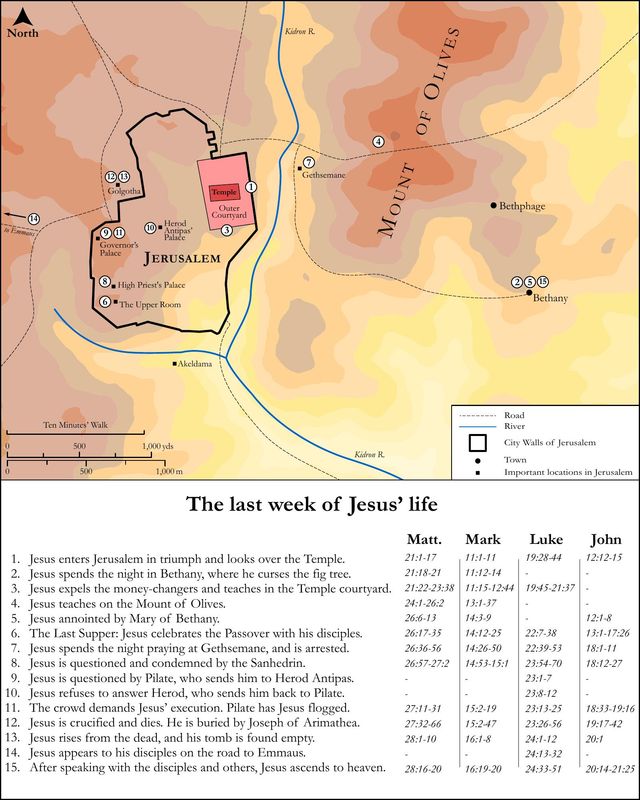
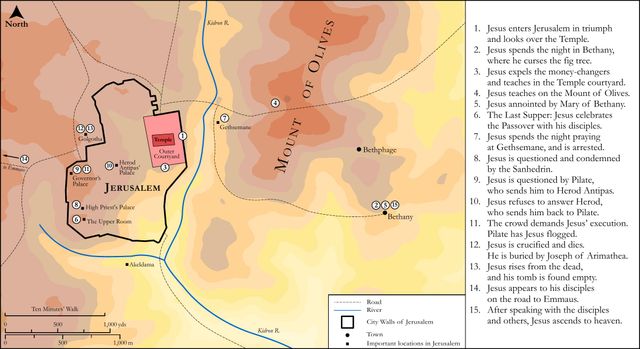
Study this verse
Historical interpretation
Ten Centuries of Reception
14 surviving comments on this verse. Each one is dated, so this reads as a timeline rather than a list.
Select a marker to jump to its quote. Markers stagger vertically where authors wrote within a few decades of each other.
Watch for your life's sake. Let not your lamps be quenched, nor your loins unloosed; but be ye ready, for ye know not the hour in which our Lord cometh. But often shall ye come together, seeking the things which are befitting to your souls: for the whole time of your faith will not profit you, if ye be not made perfect in the last time. For in the last days false prophets and corrupters shall be multiplied, and the sheep shall be turned into wolves, and love shall be turned into hate; for when lawlessness increaseth, they shall hate and persecute and betray one another, and then shall appear the world-deceiver as Son of God, and shall do signs and wonders, and the earth shall be delivered into his hands, and he shall do iniquitous things which have never yet come to pass since the beginning. Then shall the creation of men come into the fire of trial, and many shall be made to stumble and shall perish; but they that endure in their faith shall be saved from under the curse itself. And then shall appear the signs of the truth; first, the sign of an out-spreading in heaven; then the sign of the sound of the trumpet; and the third, the resurrection of the dead; yet not of all, but as it is said: The Lord shall come and all His saints with Him. Then shall the world see the Lord coming upon the clouds of heaven.
"So likewise ye," (He adds), "when ye shall see all these things come to pass, know ye that the kingdom of heaven is nigh at hand." "Watch ye, therefore, and pray always, that ye may be accounted worthy to escape all those things, and to stand before the Son of man; " that is, no doubt, at the resurrection, after all these things have been previously transacted.
The fig tree may be understood to represent the people of the circumcision. The Lord came to them when he was hungry and, “finding no fruit there” but the appearance of life only, said, “May no one ever eat fruit from you again.” At his coming therefore this fig tree, the people of the circumcision, “withered immediately.” But the other fig tree, the one which until that time had been barren and was about to be cut down because no one had ever applied himself diligently to its cultivation, began to bear fruit when fertilizer was spread around it. What was formerly a blight upon the earth will now produce fruit in such abundance sufficient even for the entire time in which it was barren.
Mystically; The Synagogue is likened to the fig treeg; its branch is Antichrist, the son of the Devil, the portion of sin, the maintainer of the law; when this shall begin to swell and to put forth leaves, then summer is nigh, i. e. the approach of the day of judgment shall be perceived.
To give sure credit to the things which should come to pass He adds, Verily I say unto you, this generation shall not pass away until all these things be fulfilled. By saying Verily, He gives asseveration to the truth.
For heaven and earth have in their constitution no necessity of existence, but Christ's words derived from eternity have in them such virtue that they must needs abide.
For in the last days false prophets shall be multiplied, and such as corrupt the word; and the sheep shall be changed into wolves, and love into hatred: for through the abounding of iniquity the love of many shall wax cold. For men shall hate, and persecute, and betray one another. And then shall appear the deceiver of the world, the enemy of the truth, the prince of lies, [2 Thessalonians 2:3-12] whom the Lord Jesus "shall destroy with the spirit of His mouth, who takes away the wicked with His lips; and many shall be offended at Him. But they that endure to the end, the same shall be saved. And then shall appear the sign of the Son of man in heaven;" [Isaiah 11:4; Matthew 24:1-51] and afterwards shall be the voice of a trumpet by the archangel; and in that interval shall be the revival of those that were asleep. And then shall the Lord come, and all His saints with Him, with a great concussion above the clouds, with the angels of His power, [Matthew 16:27] in the throne of His kingdom, to condemn the devil, the deceiver of the world, and to render to every one according to his deeds. "Then shall the wicked go away into everlasting punishment, but the righteous shall go into life eternal," [Matthew 25:46] to inherit those things "which eye has not seen, nor ear heard, nor have entered into the heart of man, such things as God has prepared for them that love Him;" [1 Corinthians 2:9] and they shall rejoice in the kingdom of God, which is in Christ Jesus.
Forasmuch as He had said, "Immediately after the tribulation of those days;" but they sought of this, after how long a time it should be, and desired to know in particular the very day, therefore He puts also the similitude of the fig tree, indicating that the interval was not great, but that in quick succession would occur His advent also. And this He declared not by the parable alone, but by the words that follow, saying, "know that it is near, even at the doors."
Whereby He foretells another thing also, a spiritual summer, and a calm that should be on that day (after the present tempest) for the righteous; but to the sinners the contrary, winter after summer, which He declares in what follows, saying, that the day shall come upon them, when they are living in luxury.
But not for this intent only did He put forward this about the fig tree, in order to declare the interval; for it was possible to have set this before them in other ways as well; but that he might hereby also confirm His saying, as assuredly thus to come to pass. For like as this of the fig tree is of necessity, so that too. For thus, wherever He is minded to speak of that which will assuredly come to pass, He brings forward the necessary courses of nature, both Himself, and the blessed Paul imitating Him. Therefore also when speaking of His resurrection, He saith, "When the corn of wheat hath fallen into the earth, except it die, it abideth alone; but if it die, it bringeth forth much fruit." Whereby also the blessed Paul being instructed uses the same similitude, "Thou fool," he saith, "that which thou sowest is not quickened, except it die."
That the Lord calls His elect by His Angels pertains to the honour of the elect; and Paul also says that they shall be caught into the clouds; (1 Thes. 4:17.) that is, the Angels shall gather together those that have risen, and when they are gathered together, the clouds shall receive them.
(Hom. 77.) Because He had said that these things should come to pass immediately after the tribulation of those days, they might ask, How long time hence? He therefore gives them an instance in the fig
He shows that the interval of time shall not be great, but that the coming of Christ will be presently. By the comparison of the tree He signifies the spiritual summer and peace that the just shall enjoy after their winter, while sinners on the other hand shall have a winter after summer.
This analogy also adds credit to His foregoing discourse; for wherever He speaks of what must by all means come to pass, Christ ever brings forward parallel physical laws.
All these things therefore mean what was said of the end of Jerusalem, of the false prophets, and the false Christs, and all the rest which shall happen down to the time of Christ's coming. That He said, This generation, He meant not of the men then living, but of the generation of the faithful; for so Scripture uses to speak of generations, not of time only, but of place, life, and conversation; as it is said, This is the generation of them that seek the Lord. (Ps. 24:6.) Herein He teaches that Jerusalem shall perish, and the greater part of the Jews be destroyed, but that no trial shall overthrow the generation of the faithful.
He brings forward the elements of the earth to show that the Church is of more value than either heaven or earth, and that He is Maker of all things.
As much as to say, When the tender shoots first show themselves in the stem of the fig tree, and the bud bursts into flower, and the bark puts forth leaves, ye perceive the approach of summer and the season of spring and growth; so when ye shall see all these things that are written, do not suppose that the end of the world is immediate, but that certain monitory signs and precursors are showing its approach.
Or, by generation here He means the whole human race, and the Jews in particular. And He adds, Heaven and earth shall pass away, but my words shall not pass away, to confirm their faith in what has gone before; as though He had said, it is easier to destroy things solid and immovable, than that aught should fail of my words.
The heaven and the earth shall pass away by a change, not by annihilation; for how should the sun be darkened, and the moon not give her light, if earth and heaven in which these are should be no more?
(Verse 32, 33.) But learn a parable from the fig tree: when its branch is already tender and the leaves have sprouted, you know that summer is near. So also, when you see all these things, know that it is near, at the doors. Under the example of the tree, he taught the coming of the consummation. How, he says, when the twigs of the fig tree become tender and a bud comes forth into a flower, and the bark brings forth leaves, you understand the coming of summer, and the entrance of the west winds and spring: so when you see all these things that have been written, do not think that the consummation of the world is already here, but rather like some preludes and forerunners coming, to show that it is near and at the doors.
(Ep. 199, 22.) That now from the Evangelic and Prophetic signs that we see come to pass, we ought to look that the Lord's coming should be nigh, who is there that denies? For daily it draws ever more and more near, but of the exact time it is said, It is not for you to know the times or the seasons. (Acts 1:7.) See how long ago the Apostle said, Now is our salvation nearer than when we believed. (Rom. 13:11.) What he spoke was not false, and yet how many years have elapsed, how much more may we not say that the Lord's coming is at hand now, that so great an accession of time has been made?
(Quaest. Ev. i. 39.) Or, by the fig tree understand the human race, by reason of the temptations of the flesh. When its branch is fender, i. e. when the sons of men through faith in Christ have progressed towards spiritual fruits, and the honour of their adoption to be the sons of God has shone forth in them.
Or, when this fig shall again bud, that is, when the synagogue shall receive the word of holy preaching, as the preaching of Enoch and Elias, then we ought to understand that the day of the consummation is at hand.
"So you also, when you see these things happening, know that the kingdom of God is near." As if He openly said: Just as the approaching summer is known from the fruit of trees, so from the ruin of the world it is recognized that the kingdom of God is near. By these words it is certainly shown that the fruit of the world is ruin. For it grows in order to fall. It sprouts forth in order to consume with disasters whatever it has sprouted. But the kingdom of God is rightly compared to summer, because then the clouds of our sorrow pass away, and the days of life shine bright with the radiance of the eternal sun.
The heaven which shall pass away is not the starry but the atmospheric heaven which of old was destroyed by the deluge.
When all these things occur, He says, the time is not far off from the end and My coming. "Summer" means the age to come and serenity after the winter storm, but only for the righteous; for sinners, it is instead storm and tumult. For when you see, He says, the branches and leaves of the fig tree, you expect summer; so too, when you see those signs of which I spoke, the sun and the moon being altered, expect My coming.
Continue studying Matthew 24:33 across the web’s major study libraries — every link below opens this exact verse, chapter, or book on the destination site.
Read & Compare
 BibleGatewayThis verse in more than 200 translations and 70 languages.
 Bible.comThe YouVersion reader — hundreds of translations, reading plans, and highlights.
 ESV.orgCrossway's official English Standard Version reader.
 NET BibleThe NET translation with 60,000+ translators' notes on every rendering decision.
 STEP BibleTyndale House's free study tool — original text, vocabulary, and scholarly resources.
 BibliaLogos Bible Software's free web reader.
 USCCBThe New American Bible (Revised Edition) with the U.S. bishops' study notes.
Commentaries
 BibleHub CommentariesDozens of classic commentaries on this verse, gathered on one page.
 StudyLightMore than 100 commentary sets — the largest collection on the web.
 BibleRefPlain-English commentary on what this verse means, verse by verse.
 Enduring WordDavid Guzik's free commentary on this chapter, widely used by Bible teachers.
 Bible Study ToolsVerse commentary alongside Greek and Hebrew study aids.
Original Language & Research
- BibleHub InterlinearThe verse word by word — original language, transliteration, and English.
- BibleHub LexiconEvery word's original-language definition and Strong's entry.
 Blue Letter BibleDeep-study tools — Strong's numbers, concordance, and word studies.
 CNTR CollationThe earliest Greek manuscripts of this verse, collated letter by letter.
Sermons, Hymns & Audio


TrulyRandomVerse is not affiliated with these sites and doesn’t control their content. They’re linked because they’re genuinely useful.
Summary
Matthew 24:33 serves as a crucial interpretive key within Jesus' Olivet Discourse, instructing His disciples to discern the signs of the times. Following the parable of the fig tree, this verse emphasizes that just as natural phenomena signal seasonal changes, so too will the prophetic events outlined by Jesus unmistakably indicate the imminent arrival of His glorious Second Coming and the consummation of the age. It is a call to perceptive understanding and an assurance of the certainty and proximity of these ultimate events.
Context
ShowHideLiterary Context
This verse is strategically positioned immediately after the Parable of the Fig Tree, which Jesus uses as an illustrative analogy. In the preceding verses of Matthew 24, Jesus has been responding to the disciples' questions regarding the destruction of the temple and the signs of His coming and the end of the age (Matthew 24:3). He meticulously describes a series of escalating global calamities, false messiahs, persecutions, and the worldwide proclamation of the gospel (Matthew 24:4-14). The parable and subsequent interpretation in Matthew 24:32-33 serve to clarify how His followers should interpret these unfolding events, assuring them that these signs are not random occurrences but precise indicators of His return.
Historical & Cultural Context
Jesus' discourse takes place on the Mount of Olives, overlooking the Jerusalem temple, which He had just prophesied would be utterly destroyed (Matthew 24:1-2). The disciples, steeped in Jewish apocalyptic expectations, would have understood the concept of "signs" preceding a major divine intervention or the arrival of the Messiah. The imagery of a fig tree budding was a common and easily recognizable sign of summer's approach in the agrarian society of ancient Israel. Similarly, the concept of something being "at the doors" was a vivid idiom conveying extreme proximity, often used for an unexpected or imminent arrival, such as a guest or a significant event. This cultural understanding would have underscored the urgency and certainty of Jesus' message.
Key Themes
ShowHideThe overarching themes in Matthew 24 that this verse significantly contributes to include Eschatological Vigilance, emphasizing the need for believers to be spiritually awake and discerning concerning the signs of the end times. It also highlights the Certainty of Prophecy's Fulfillment, asserting that just as natural seasons are predictable, so too are God's prophetic plans infallible and destined to unfold. Furthermore, the verse underscores the theme of Imminent Return, conveying a sense of proximity regarding Christ's Second Coming, which should motivate faithful living and evangelistic fervor (Matthew 24:14). While the exact timing remains unknown to humanity (Matthew 24:36), the signs will clearly indicate its nearness.
Exposition and Analysis
ShowHideKey Word Analysis
ShowHideThis verb signifies more than mere intellectual apprehension; it implies a deep, experiential knowledge or recognition. It's not just about being aware of facts, but about understanding their significance and implications. Here, Jesus commands His disciples not just to observe the signs, but to truly comprehend what they signify concerning His return.
This adverb denotes proximity, either in terms of place or time. In this context, it refers to temporal closeness, indicating that the event of Christ's coming is not distant but rapidly approaching once "all these things" begin to unfold. It conveys a sense of urgency and immediacy.
Literally referring to a portal or entrance, "doors" here is part of an idiomatic expression ("at the doors"). It paints a vivid picture of something or someone standing right outside, poised to enter. This imagery powerfully communicates extreme closeness, suggesting that the event is on the very threshold of occurring.
Verse Breakdown
ShowHide"So likewise ye,"
This phrase connects the verse directly to the preceding parable of the fig tree. "So likewise" (Greek: houtō kai - "thus also") draws a parallel, indicating that the disciples are to apply the same principle of discerning natural signs to the prophetic signs Jesus has just described. It shifts the focus from the general principle to the specific application for the disciples.
"when ye shall see all these things,"
This clause refers to the comprehensive list of signs Jesus enumerated earlier in Matthew 24, including wars, famines, earthquakes, persecutions, false prophets, and the global preaching of the gospel. The "seeing" implies not just passive observation but an active, discerning perception of these events as they unfold in history.
"know that it is near,"
This is an imperative command. Upon discerning "all these things," the disciples are to "know" (understand with certainty) that "it" – referring to the coming of the Son of Man and the end of the age – is "near." This is a definitive statement of proximity, a direct consequence of observing the signs.
"[even] at the doors."
This idiomatic expression reinforces and intensifies the concept of "nearness." It vividly portrays the event as being on the very threshold of manifestation, leaving no doubt about its extreme closeness once the preceding signs have begun to appear. It emphasizes the immediacy and certainty of the Lord's return.
Literary Devices
ShowHideMatthew 24:33 employs several powerful literary devices to convey its urgent message. The most prominent is Analogy, as the verse directly extends the Simile of the fig tree's budding leaves from Matthew 24:32. Just as the natural world provides clear indicators of seasonal change, so too do the prophetic signs indicate the approach of Christ's return. This makes a complex theological concept relatable and understandable through common experience. Furthermore, the phrase "at the doors" functions as a vivid Idiom, an established expression whose meaning is not directly deducible from the individual words. It is a powerful Metaphor for extreme proximity, painting a picture of something standing on the very threshold, ready to enter. The use of the Imperative "know" (Greek: ginōskete) transforms the observation into a command for spiritual discernment, urging active understanding rather than passive awareness. Finally, the entire passage is a form of Prophecy, offering future-oriented insights into the culmination of history, providing both warning and hope.
Theological and Thematic Connections
ShowHideMatthew 24:33 profoundly impacts our understanding of eschatology, emphasizing the importance of discerning the signs of Christ's return not as a means to pinpoint an exact date, but as a call to spiritual readiness and urgent mission. It underscores God's sovereign control over history, assuring believers that events are unfolding according to His divine timetable, culminating in the glorious return of His Son. This verse serves as a constant reminder that while the day and hour remain unknown, the signs will clearly indicate the season of His coming, prompting a life of expectant watchfulness and faithful stewardship until He appears.
Reflection and Application
ShowHideMatthew 24:33 serves as a timeless call to spiritual vigilance and a profound source of hope for believers across generations. It encourages us not to be caught off guard by the unfolding of global events, but to view them through a biblical lens, recognizing them as divinely orchestrated indicators of Christ's imminent return. This understanding should not breed fear or speculative date-setting, but rather a deep sense of purpose and urgency. Knowing that the Lord is "at the doors" should compel us to live with intentionality, prioritizing what truly matters in light of eternity. It motivates us to cultivate a deeper relationship with God, to live lives of holiness and integrity, and to passionately engage in the Great Commission, sharing the hope of the gospel with a world desperately in need. Our anticipation of His coming should fuel our worship, purify our motives, and strengthen our resolve to faithfully serve Him until He appears in glory.
Questions for Reflection
ShowHideFAQ
ShowHideWhat are "all these things" that Jesus refers to in Matthew 24:33?
ShowHide"All these things" refers to the various prophetic signs and events Jesus describes earlier in Matthew 24, particularly from Matthew 24:4-31. These include a series of escalating global distresses such as wars, famines, earthquakes, and pestilences (Matthew 24:6-7). Jesus also mentions the rise of false Christs and prophets, the persecution of believers, the increase of lawlessness, and the global preaching of the gospel to all nations (Matthew 24:11-14). These signs are likened to "birth pains" (Matthew 24:8), indicating an intensifying frequency and severity as the time of His return draws closer.
Christ-Centered Fulfillment
ShowHideMatthew 24:33, while speaking of signs and an imminent future event, finds its ultimate fulfillment and meaning in the person and work of Jesus Christ. The "it" that is "near, even at the doors" is not merely an abstract event, but the glorious return of the King of Kings and Lord of Lords. The signs themselves are not random occurrences but are part of God's sovereign plan, orchestrated to herald the coming of His Son, who will establish His eternal kingdom (Revelation 11:15). Jesus, who first came in humility to suffer and die for the sins of the world (Philippians 2:7-8), will return in power and great glory to judge the living and the dead and to gather His elect (Matthew 24:30-31). Therefore, the "nearness" of these events points directly to the culmination of God's redemptive history in Christ, where every knee will bow and every tongue confess that Jesus Christ is Lord, to the glory of God the Father. His return is the ultimate hope, the blessed expectation that completes the work He began at His first advent, bringing full salvation to His people and righteous judgment to the earth.