


Mark 3:25
Bible text: King James Version (1769 Blayney text) · Public domain
Bible text: Berean Standard Bible · Public domain
Bible text: American Standard Version (1901) · Public domain
Bible text: World English Bible, Messianic edition · Public domain
Bible text: Geneva Bible (1599) · Public domain
Bible text: Young's Literal Translation · Public domain
- καὶkaiAndG2532CONJConjunction
- ἐὰνeanifG1437CONDConjunction
- οἰκίαoikiaa houseG3614N-NSFNoun Nominative Singular Feminine
- ἐφ᾽eph᾽againstG1909PREPPreposition
- ἑαυτὴνhe'autēnitselfG1438F-3ASFReflexive pronoun Accusative 3rd Singular Feminine
- μερισθῇmeristhēashall be dividedG3307V-APS-3SVerb Aorist Passive Subjunctive 3rd Singular
- οὐounotG3756PRT-NNegative Particle Negative
- δυνήσεταιdunēsetaiwill be ableG1410V-FDI-3SVerb Future Middle Deponent Indicative 3rd Singular
- ἡhē<the>G3588T-NSFDefinite article Nominative Singular Feminine
- οἰκίαoikiahouseG3614N-NSFNoun Nominative Singular Feminine
- ἐκείνηekeinēthatG1565D-NSFDemonstrative pronoun Nominative Singular Feminine
- σταθῆναι·stathēnaito standG2476V-APNVerb Aorist Passive Infinitive
English is a literal word-by-word gloss of the Greek, not the KJV's wording. Why?
This is the original text the KJV's translators worked from — each Greek word with its own literal English meaning in this verse, prepared by scholars at Tyndale House, Cambridge. The KJV translates whole sentences, not word by word, so its wording differs: one Greek word can become several English words, and the KJV may choose “charity” where the gloss reads “love”. Both are faithful — they answer different questions. For the KJV's own rendering, switch to the KJV text.
Details
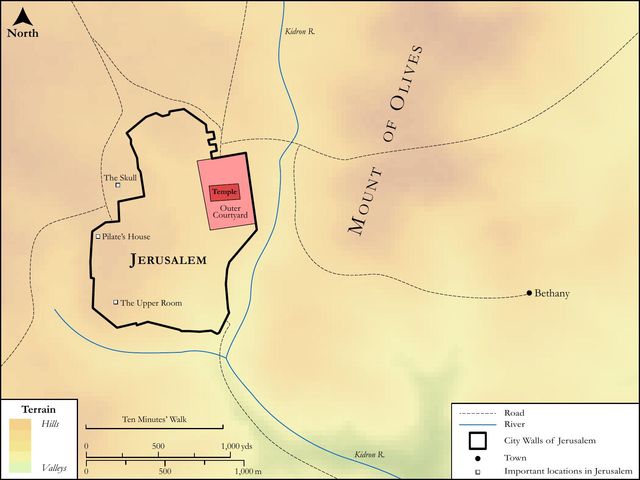
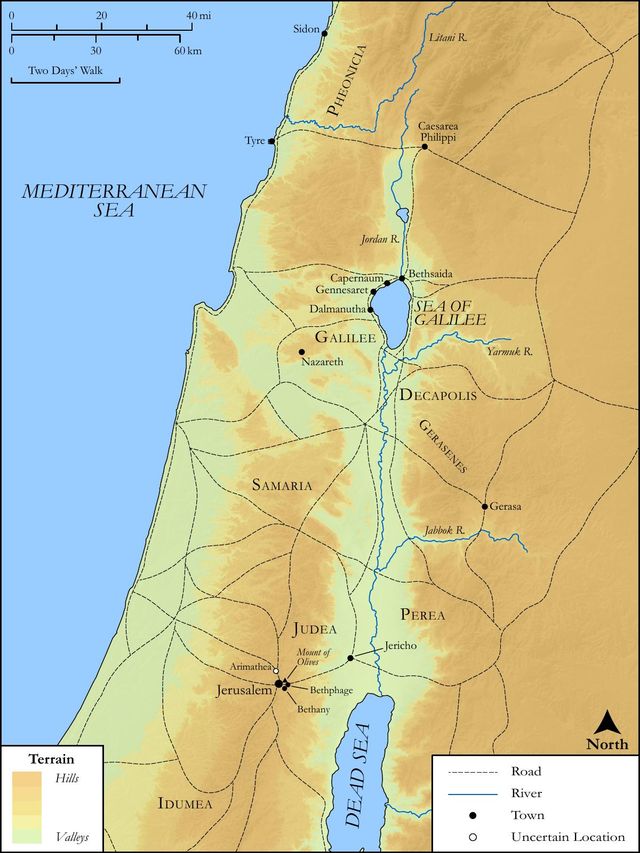
See on the biblical-era maps
Study this verse
Public-domain commentary
Matthew Henry
From his Commentary on the Whole Bible. Henry comments on passages, not single verses — this entry covers Mark 3:22–30. His two-level outline is real structure in the source text, so it is rendered as structure.
I.Here is, The impudent impious brand which the scribes fastened upon Christ's casting out devils, that they might evade and invalidate the conviction of it, and have a poor excuse for not yielding to it. These scribes came down from Jerusalem, Mar 3:22. It should seem they came this long journey on purpose to hinder the progress of the doctrine of Christ; such pains did they take to do mischief; and, coming from Jerusalem, where were the most polite and learned scribes, and where they had opportunity of consulting together against the Lord and his Anointed, they were in the greater capacity to do mischief; the reputation of scribes from Jerusalem would have an influence not only upon the country people, but upon the country scribes; they had never thought of this base suggestion concerning Christ's miracles till the scribes from Jerusalem put it into their heads. They could not deny but that he cast out devils, which plainly bespoke him sent of God; but they insinuated that he had Beelzebub on his side, was in league with him, and by the prince of the devils cast out devils. There is a trick in the case; Satan is not cast out, he only goes out by consent. There was nothing in the manner of Christ's casting out devils, that gave any cause to suspect this; he did it as one having authority; but so they will have it, who resolve not to believe him.
II.The rational answer which Christ gave to this objection, demonstrating the absurdity of it.
1.Satan is so subtle, that he will never voluntarily quit his possession; If Satan cast out Satan, his kingdom is divided against itself, and it cannot stand, Mar 3:23-26. He called them to him, as one desirous they should be convinced; he treated them with all the freedom, friendliness, and familiarity that could be; he vouchsafed to reason the case with them, that every mouth may be stopped. It was plain that the doctrine of Christ made war upon the devil's kingdom, and had a direct tendency to break his power, and crush his interest in the souls of men; and it was as plain that the casting of him out of the bodies of people confirmed that doctrine, and gave it the setting on; and therefore it cannot be imagined that he should come into such a design; every one knows that Satan is no fool, nor will act so directly against his own interest.
2.Christ is so wise, that, being engaged in war with him, he will attack his forces wherever he meets them, whether in the bodies or souls of people, Mar 3:27. It is plain, Christ's design is to enter into the strong man's house, to take possession of the interest he has in the world, and to spoil his goods, and convert them to his own service; and therefore it is natural to suppose that he will thus bind the strong man, will forbid him to speak when he would, and to stay where he would, and thus show that he has gained a victory over him.
III.The awful warning Christ gave them to take heed how they spoke such dangerous words as these; however they might make light of them, as only conjectures, and the language of free-thinking, if they persisted in it, it would be of fatal consequence to them; it would be found a sin against the last remedy, and consequently unpardonable; for what could be imagined possible to bring them to repentance for their sin in blaspheming Christ, who would set aside such a strong conviction with such a weak evasion? It is true, the gospel promiseth, because Christ hath purchased, forgiveness for the greatest sins and sinners, Mar 3:28. Many of those who reviled Christ on the cross (which was a blaspheming of the Son of man, aggravated to the highest degree), found mercy, and Christ himself prayed, Father, forgive them; but this was blaspheming the Holy Ghost, for it was by the Holy Spirit that he cast out devils, and they said, It was by the unclean spirit, Mar 3:30. By this method they would outface the conviction of all the gifts of the Holy Ghost after Christ's ascension, and defeat them all, after which there remained no more proof, and therefore they should never have forgiveness, but were liable to eternal damnation. They were in imminent danger of that everlasting punishment, from which there was no redemption, and in which there was no intermission, no remission.
Historical interpretation
Eight Centuries of Reception
6 surviving comments on this verse. Each one is dated, so this reads as a timeline rather than a list.
Select a marker to jump to its quote. Markers stagger vertically where authors wrote within a few decades of each other.
Or this is meant; that he will not deserve to work out repentance, so as to be accepted, who, understanding who Christ was, declared that He was the prince of the devils.
Mention has been made of the unclean spirit whom the Lord shows to be divided against himself. The Holy Spirit, however, is not divided against himself. Rather he makes those whom he gathers together undivided against themselves, by dwelling within those who have been cleansed, that they may be like those of whom it is written in the Acts of the Apostles, “The multitude of them that believed were of one heart and of one soul.”
(Vict. Ant. e Cat. in Marc.) The blasphemy of the Scribes having been detailed, our Lord shows that what they said was impossible, confirming His proof by an example. Wherefore it says, And having called them together unto him, he said unto them in parables. How can Satan cast out Satan? As if He had said, A kingdom divided against itself by civil war must be desolated, which is exemplified both in a house and in a city. Wherefore also if Satan's kingdom be divided against itself, so that Satan expels Satan from men, the desolation of the kingdom of the devils is at hand. But their kingdom consists in keeping men under their dominion. If therefore they are driven away from men, it amounts to nothing less than the dissolution of their kingdom. But if they still hold their power over men, it is manifest that the kingdom of evil is still standing, and Satan is not divided against himself.
(Vict. Ant. e Cat. in Marc.) He says indeed, that blasphemy concerning Himself was pardonable, because He then seemed to be a man despised and of the most lowly birth, but, that contumely against God has no remission. Now blasphemy against the Holy Ghost is against God, for the operation of the Holy Ghost is the kingdom of God; and for this reason, He says, that blasphemy against the Holy Ghost cannot be remitted. Instead, however, of what is here added, But will be in danger of eternal damnation, another Evangelist says, Neither in this world, nor in the world to come. By which is understood, the judgment which is according to the law, and that which is to come. For the law orders one who blasphemes God to be slain, and in the judgment of the second law he has no remission. nHowever, he who is baptized is taken out of this world; but the Jews were ignorant of the remission which takes place in baptism. He therefore who refers to the devil miracles, and the casting out of devils which belong to the Holy Ghost alone, has no room left him for remission of his blasphemy. Neither does it appear that such a blasphemy as this is remitted, since it is against the Holy Ghost. Wherefore he adds, explaining it, Because they said, He hath an unclean spirit.
(in Marc. i. 17) The Lord has also bound the strong man, that is, the devil: which means, He has restrained him from seducing the elect, and entering into his house, the world; He has spoiled his house, and his goods, that is men, because He has snatched them from the snares of the devil, and has united them to His Church. Or, He has spoiled his house, because the four parts of the world, over which the old enemy had sway, He has distributed to the Apostles and their successors, that they may convert the people to the way of life. But the Lord shows that they committed a great sin, in crying out that that which they knew to be of God, was of the devil, when He subjoins, Verily I say unto you, All sins are forgiven, &c. All sins and blasphemies are not indeed remitted to all men, but to those who have gone through a repentance in this life sufficient for their sins; thus neither is Novatusm right, who denied that any pardon should be granted to penitents, who had lapsed in time of martyrdom; nor Origen, who asserts that after the general judgment, after the revolution of ages, all sinners will receive pardon for their sins, which error the following words of the Lord condemn, when He adds, But he that shall blaspheme against the Holy Ghost, &c.
(ubi sup.) Neither however are those, who do not believe the Holy Spirit to be God, guilty of an unpardonable blasphemy, because they were persuaded to do this by human ignorance, not by devilish malice.
The meaning of the example is this: The devil is the strong man; his goods are the men into whom he is received; unless therefore a man first conquers the devil, how can he deprive him of his goods, that is, of the men whom he has possessed? So also I who spoil his goods, that is, free men from suffering by his possession, first spoil the devils and vanquish them, and am their enemy. How then can ye say that I have Beelzebub, and that being the friend of the devils, I cast them out?
We must however understand, that they will not obtain pardon unless they repent. But since it was at the flesh of Christ that they were offended, even though they did not repent, some excuse was allowed them, and they obtained some remission.
(non occ.) And because He has already shown by an example that a devil cannot cast out a devil, He shows how he can be expelled, saying, No man can enter into a strong man's house, &c.
Continue studying Mark 3:25 across the web’s major study libraries — every link below opens this exact verse, chapter, or book on the destination site.
Read & Compare
 BibleGatewayThis verse in more than 200 translations and 70 languages.
 Bible.comThe YouVersion reader — hundreds of translations, reading plans, and highlights.
 ESV.orgCrossway's official English Standard Version reader.
 NET BibleThe NET translation with 60,000+ translators' notes on every rendering decision.
 STEP BibleTyndale House's free study tool — original text, vocabulary, and scholarly resources.
 BibliaLogos Bible Software's free web reader.
 USCCBThe New American Bible (Revised Edition) with the U.S. bishops' study notes.
Commentaries
 BibleHub CommentariesDozens of classic commentaries on this verse, gathered on one page.
 StudyLightMore than 100 commentary sets — the largest collection on the web.
 BibleRefPlain-English commentary on what this verse means, verse by verse.
 Enduring WordDavid Guzik's free commentary on this chapter, widely used by Bible teachers.
 Bible Study ToolsVerse commentary alongside Greek and Hebrew study aids.
Original Language & Research
- BibleHub InterlinearThe verse word by word — original language, transliteration, and English.
- BibleHub LexiconEvery word's original-language definition and Strong's entry.
 Blue Letter BibleDeep-study tools — Strong's numbers, concordance, and word studies.
 CNTR CollationThe earliest Greek manuscripts of this verse, collated letter by letter.
Sermons, Hymns & Audio


TrulyRandomVerse is not affiliated with these sites and doesn’t control their content. They’re linked because they’re genuinely useful.
Summary
Mark 3:25 encapsulates a fundamental principle articulated by Jesus in response to accusations that He cast out demons by the power of Beelzebul. Through a powerful analogy, Jesus asserts that any entity—be it a kingdom or a household—that is internally fractured by division or conflict cannot endure. This verse underscores the essential nature of unity for stability and survival, serving as a logical refutation of His accusers' claims and a timeless truth about the destructive power of internal strife.
Context
ShowHideLiterary Context
Mark 3:25 is part of Jesus' direct confrontation with the scribes who had traveled from Jerusalem and publicly accused Him of being possessed by Beelzebul, the ruler of demons, and of casting out demons by his authority (Mark 3:22). This accusation was a grave blasphemy, attributing the work of the Holy Spirit to demonic power. Jesus responds with a series of logical arguments, beginning with the broader principle in Mark 3:24 that "if a kingdom be divided against itself, that kingdom cannot stand." Verse 25 then narrows this principle to the more intimate sphere of a "house," reinforcing the same truth with a more relatable image. The passage culminates in the solemn warning against blasphemy against the Holy Spirit in Mark 3:28-30, emphasizing the gravity of their accusations.
Historical & Cultural Context
Among the Jews and the Romans, the "house" (οἰκία, oikía) was not merely a physical dwelling but the fundamental unit of social, economic, and political life. It encompassed the extended family, servants, and all associated property and influence. The stability of society depended heavily on the integrity and unity of these households. Internal division within a family or a household was considered a catastrophic breakdown, leading to ruin and shame. Furthermore, the concept of a "kingdom" (βασιλεία, basileía) was well understood, with the Roman Empire itself being a vast, albeit sometimes internally conflicted, political entity. Jesus' use of these analogies would have resonated deeply with His audience, drawing on common-sense wisdom regarding the prerequisites for any enduring structure or organization.
Key Themes
ShowHideThis verse significantly contributes to several key themes in Mark's Gospel. Firstly, it highlights the authority and wisdom of Jesus as He masterfully refutes His opponents with irrefutable logic, demonstrating His divine insight into spiritual realities. Secondly, it underscores the nature of spiritual warfare, revealing that Satan's kingdom, though powerful, is ultimately self-defeating if internally divided, contrasting with the unified and purposeful advance of God's kingdom. Thirdly, it emphasizes the necessity of unity for any entity to endure, a principle that extends beyond spiritual kingdoms to human institutions like families and the nascent church. This theme of unity is crucial for understanding the coherence of Jesus' ministry and the future mission of His followers, as seen in passages like Mark 3:31-35 where Jesus redefines true kinship based on obedience to God.
Exposition and Analysis
ShowHideKey Word Analysis
ShowHideFrom μέρος (meros), meaning 'part,' this verb signifies to apportion, bestow, share, or figuratively, to disunite or differ. In this context, it clearly denotes internal fracturing and discord, a breaking apart from within, rather than an external attack. It describes a state where components that should be unified are instead at odds.
Derived from οἶκος (oikos), this term primarily refers to a residence or abode, but extends metaphorically to a family, household, lineage, or even a larger institution or community. Here, it represents any unified entity, whether a literal family unit, a spiritual movement, or even the demonic realm itself.
A prolonged form of a primary verb, meaning to stand (transitively or intransitively). It implies stability, endurance, or remaining upright. In this context, it signifies the ability to maintain integrity and existence, to remain firm, or to continue to exist without collapsing. The negative "cannot stand" therefore means inevitable collapse or failure.
Verse Breakdown
ShowHide"And if a house be divided against itself"
This clause sets up a hypothetical condition, applying the principle of internal division from the previous verse (regarding a kingdom) to a smaller, more intimate, yet equally foundational unit—the household. The phrase "against itself" emphasizes that the conflict originates from within, a self-destructive internal strife rather than an external threat.
"that house cannot stand"
This is the inevitable and logical consequence of the condition stated in the first clause. It asserts that internal disunity inherently leads to instability and ultimate collapse or failure. The inability to "stand" implies a loss of integrity, function, and ultimately, existence as a cohesive unit.
Literary Devices
ShowHideJesus employs several literary devices in this concise statement. Primarily, it functions as an Aphorism, a pithy observation that contains a general truth, often expressed in a memorable way. This aphorism is part of a larger Analogy or Parable (though brief), where Jesus compares the internal logic of a human kingdom and house to the spiritual reality of Satan's kingdom. The "house" itself is a powerful Metaphor, representing any cohesive unit—a family, an organization, or even a spiritual domain. The use of Deductive Reasoning is also evident, as Jesus moves from a general premise (division leads to collapse) to a specific conclusion about the illogical nature of His accusers' claims regarding His power source.
Theological and Thematic Connections
ShowHideMark 3:25 is a profound statement on the essential nature of unity for any enduring entity, whether human or spiritual. Theologically, it affirms the inherent order and coherence within God's creation and His kingdom, which stands in stark contrast to the self-destructive nature of evil. Jesus' argument highlights that God's power, which He wields, is fundamentally unified and purposeful, always working towards restoration and freedom, never against itself. This principle of unity is not merely practical but reflects the very nature of God, who is one, yet triune, existing in perfect harmony. The verse implicitly underscores that the work of God cannot be attributed to a kingdom that is inherently divided against itself.
Reflection and Application
ShowHideThe timeless truth embedded in Mark 3:25 resonates deeply across all spheres of human experience, serving as a powerful call to unity and a warning against the corrosive effects of division. For individuals, it speaks to the importance of internal coherence—aligning one's beliefs, values, and actions to avoid being "divided against oneself," which can lead to spiritual and emotional instability. In families, it underscores the critical need for reconciliation, forgiveness, and shared purpose to prevent disintegration. For the church, the body of Christ, this verse is a foundational reminder that internal strife—whether over doctrine, preferences, or personalities—cripples its mission and weakens its witness to a watching world. Just as Jesus demonstrated the unified power of God against the divided kingdom of darkness, so too are His followers called to embody a spirit of unity that reflects the very nature of God. On a broader societal level, it highlights how deep-seated divisions, polarization, and civil unrest can undermine the stability and future of nations. Ultimately, Mark 3:25 challenges us to actively pursue harmony, understanding, and shared vision in all our relationships and communities, recognizing that true strength and enduring purpose are found in unity.
Questions for Reflection
ShowHideFAQ
ShowHideWhat does "divided against itself" mean in this context?
ShowHideIn the context of Mark 3:25, "divided against itself" refers to internal conflict, disunity, or self-destructive opposition within a single entity. Jesus uses this phrase to logically refute the scribes' accusation that He cast out demons by the power of Beelzebul (Satan). His argument is that Satan's kingdom, if it were truly working against itself by casting out its own demons, would inevitably collapse, as no kingdom or house can stand when its internal components are at war with one another. It highlights that the greatest threat to stability often comes from within.
Christ-Centered Fulfillment
ShowHideMark 3:25, while a logical refutation of the scribes' absurd claims, points profoundly to the unified and indivisible nature of God's kingdom, which finds its ultimate expression in Jesus Christ. Jesus, as the head of the new humanity and the King of God's kingdom, embodies perfect unity of purpose and power. His ministry was not a chaotic, self-defeating endeavor, but a perfectly orchestrated assault on the kingdom of darkness, demonstrating the unified power of God the Father, Son, and Holy Spirit. Unlike Satan's kingdom, which is inherently prone to division and ultimately destined for collapse, Christ's kingdom is built on an unbreakable foundation of divine unity, love, and truth. The Church, as the body of Christ, is called to reflect this unity, for it is only as one, Spirit-empowered entity that it can effectively carry out Christ's mission in the world, triumphing over the fragmented and self-destructive forces of evil, as promised in passages like Matthew 16:18 where Jesus declares that the gates of Hades will not prevail against His Church. The ultimate fulfillment of this principle is seen in Christ's victory over sin and death, establishing a kingdom that "cannot be shaken" (Hebrews 12:28), a testament to its inherent and divine unity.