


Mark 13:27
Bible text: King James Version (1769 Blayney text) · Public domain
Bible text: King James Version with Strong's numbers · Public domain
Bible text: Berean Standard Bible · Public domain
Bible text: American Standard Version (1901) · Public domain
Bible text: World English Bible, Messianic edition · Public domain
Bible text: Geneva Bible (1599) · Public domain
Bible text: Young's Literal Translation · Public domain
- καὶkaiAndG2532CONJConjunction
- τότεtotethenG5119ADVAdverb
- ἀποστελεῖaposteleiHe will sendG649V-FAI-3SVerb Future Active Indicative 3rd Singular
- τοὺςtoustheG3588T-APMDefinite article Accusative Plural Masculine
- ἀγγέλουςangelousangelsG32N-APMNoun Accusative Plural Masculine
- αὐτοῦautouof himG846P-GSMPersonal pronoun Genitive Singular Masculine
- καὶkaiandG2532CONJConjunction
- ἐπισυνάξειepisunaxeiwill gather togetherG1996V-FAI-3SVerb Future Active Indicative 3rd Singular
- τοὺςtoustheG3588T-APMDefinite article Accusative Plural Masculine
- ἐκλεκτοὺςeklektouselectG1588A-APMAdjective Accusative Plural Masculine
- αὐτοῦautouof HimG846P-GSMPersonal pronoun Genitive Singular Masculine
- ἐκekfromG1537PREPPreposition
- τῶνtōntheG3588T-GPMDefinite article Genitive Plural Masculine
- τεσσάρωνtessarōnfourG5064A-GPMAdjective Genitive Plural Masculine
- ἀνέμωνanemōnwindsG417N-GPMNoun Genitive Plural Masculine
- ἀπ᾽ap᾽from [the]G575PREPPreposition
- ἄκρουakrouendG206N-GSNNoun Genitive Singular Neuter
- γῆςgēsof earthG1093N-GSFNoun Genitive Singular Feminine
- ἕωςhe'ōsuntil [the]G2193PREPPreposition
- ἄκρουakrouendG206N-GSNNoun Genitive Singular Neuter
- οὐρανοῦouranouof heavenG3772N-GSMNoun Genitive Singular Masculine
English is a literal word-by-word gloss of the Greek, not the KJV's wording. Why?
This is the original text the KJV's translators worked from — each Greek word with its own literal English meaning in this verse, prepared by scholars at Tyndale House, Cambridge. The KJV translates whole sentences, not word by word, so its wording differs: one Greek word can become several English words, and the KJV may choose “charity” where the gloss reads “love”. Both are faithful — they answer different questions. For the KJV's own rendering, switch to the KJV text.
Details
See on the biblical-era maps
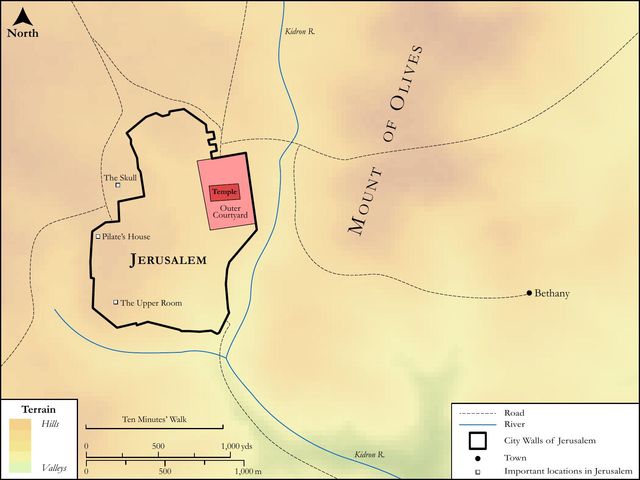
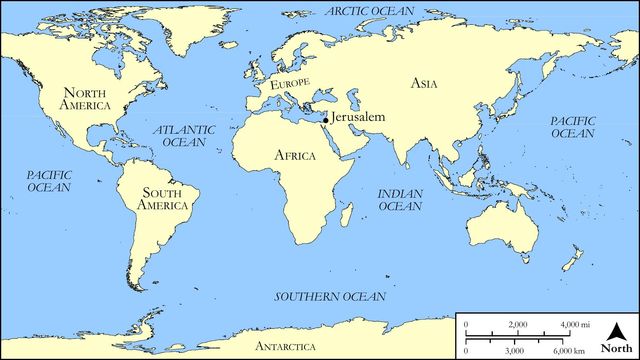
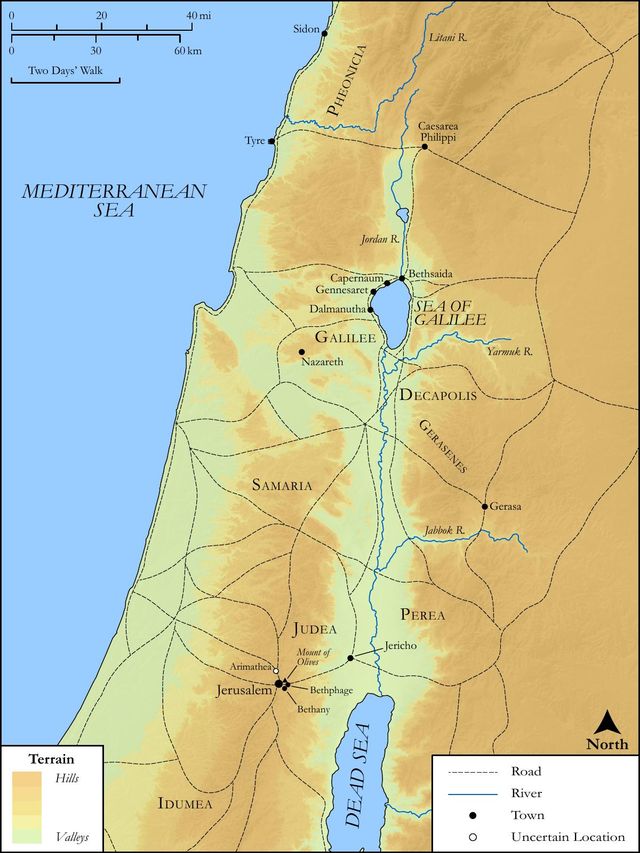
Study this verse
Public-domain commentary
Matthew Henry
From his Commentary on the Whole Bible. Henry comments on passages, not single verses — this entry covers Mark 13:24–27. His two-level outline is real structure in the source text, so it is rendered as structure.
These verses seem to point at Christ's second coming, to judge the world; the disciples, in their question, had confounded the destruction of Jerusalem and the end of the world (Mat 24:3), which was built upon a mistake, as if the temple must needs stand as long as the world stands; this mistake Christ rectifies, and shows that the end of the world in those days, those other days you enquire about, the day of Christ's coming, and the day of judgment, shall be after that tribulation, and not coincident with it. Let those who live to see the Jewish nation destroyed, take heed of thinking that, because the Son of man doth not visibly come in the clouds then, he will never so come; no, he will come after that. And here he foretels,
1.The final dissolution of the present frame and fabric of the world; even of that part of it which seems least liable to change, the upper part, the pure and more refined part; The sun shall be darkened, and the moon shall no more give her light; for they shall be quite outshone by the glory of the Son of man, Isa 24:23. The stars of heaven, that from the beginning had kept their place and regular motion, shall fall as leaves in autumn; and the powers that are in heaven, the heavenly bodies, the fixed stars, shall be shaken.
2.The visible appearance of the Lord Jesus, to whom the judgment of that day shall be committed (Mar 13:26); Then shall they see the Son of man coming in the clouds. Probably he will come over that very place where he sat when he said this; for the clouds are in the lower region of the air. He shall come with great power and glory, such as will be suited to the errand on which he comes. Every eye shall then see him.
3.The gathering together of all the elect to him (Mar 13:27); He shall send his angels, and gather together his elect to him, to meet him in the air, Th1 4:17. They shall be fetched from one end of the world to the other, so that none shall be missing from that general assembly; they shall be fetched from the uttermost part of the earth, most remote from the places where Christ's tribunal shall be set, and shall be brought to the uttermost part of heaven; so sure, so swift, so easy, shall their conveyance be, that there shall none of them miscarry, though they were to be brought from the uttermost part of the earth one way, to the uttermost part of the heaven another way. A faithful Israelite shall be carried safely, though it were from the utmost border of the land of bondage to the utmost border of the land of promise.
Historical interpretation
Eight Centuries of Reception
8 surviving comments on this verse. Each one is dated, so this reads as a timeline rather than a list.
Select a marker to jump to its quote. Markers stagger vertically where authors wrote within a few decades of each other.
But the tribulation shall be great, and the days short, for the sake of the elect, lest the evil of this time should change their understanding.
Or else, the sun shall be darkened, at the coldness of their hearts, as in the winter time. And the moon shall not give her light with serenity, in this time of quarrel, and the stars of heaven shall fail in their light, when the seed of Abraham shall all but disappear, for to it they are likened. (Gen. 22:17) And the powers of heaven shall be stirred up to the wrath of vengeance, when they shall be sent by the Son of Man at His coming, of whose Advent it is said, And then shall they see the Son of Man coming in the clouds with great power and glory, He, that is, who first came down like rain into the fleece of Gideon in all lowliness.
As corn winnowed from the threshing-floor of the whole earth.
"And I saw another angel ascending from the east, having the seal of the living God" He speaks of Elias the prophet, who is the precursor of the times of Antichrist, for the restoration and establishment of the churches from the great and intolerable persecution. We read that these things are predicted in the opening of the Old and New Testament; for He says by Malachi: "Lo, I will send to you Elias the Tishbite, to turn the hearts of the fathers to the children, according to the time of calling, to recall the Jews to the faith of the people that succeed them." And to that end He shows, as we have said, that the number of those that shall believe, of the Jews and of the nations, is a great multitude which no man was able to number. Moreover, we read in the Gospel that the prayers of the Church are sent from heaven by an angel, and that they are received against wrath, and that the kingdom of Antichrist is cast out and extinguished by holy angels; for He says: "Pray that ye enter not into temptation: for there shall be a great affliction, such as has not been from the beginning of the world; and except the Lord had shortened those days, no flesh should be saved." Therefore He shall send these seven great archangels to smite the kingdom of Antichrist; for He Himself also thus said: "Then the Son of man shall send His messengers; and they shall gather together His elect from the four corners of the wind, from the one end of heaven even to the other end thereof." For, moreover, He previously says by the prophet: "Then shall there be peace for our land, when there shall arise in it seven shepherds and eight attacks of men; and they shall encircle Assur," that is, Antichrist, "in the trench of Nimrod," that is, in the nation of the devil, by the spirit of the Church. Similarly when the keepers of the house shall be moved. Moreover, the Lord Himself, in the parable to the apostles, when the labourers had come to Him and said, "Lord, did not we sow good seed in Thy field? whence, then, hath it tares? answered them, An enemy hath done this. And they said to Him, Lord, wilt Thou, then, that we go and root them up? And He said, Nay, but let both grow together until the harvest; and in the time of the harvest I will say to the reapers, that they gather the tares and make bundles of them, and burn them with fire everlasting, but that they gather the wheat into my barns." The Apocalypse here shows, therefore, that these reapers, and shepherds, and labourers, are the angels. And the trumpet is the word of power. And although the same thing recurs in the phials, still it is not said as if it occurred twice, but because what is decreed by the Lord to happen shall be once for all; for this cause it is said twice. What, therefore, He said too little in the trumpets, is here found in the phials. We must not regard the order of what is said, because frequently the Holy Spirit, when He has traversed even to the end of the last times, returns again to the same times, and fills up what He had before failed to say. Nor must we look for order in the Apocalypse; but we must follow the meaning of those things which are prophesied. Therefore in the trumpets and phials is signified either the desolation of the plagues that are sent upon the earth, or the madness of Antichrist himself, or the cutting off of the peoples, or the diversity of the plagues, or the hope in the kingdom of the saints, or the ruin of states, or the great overthrow of Babylon, that is, the Roman state.
Concerning the execution of which power, there is immediately added, And then shall he send his angels.
That he will gather his elect from the four winds means from the whole world. For Adam himself, as I have shown, signifies in Greek the whole world, with the four letters (A, D, A, M). As the Greeks think of these matters, the four quarters of the world have these initial letters, Anatole (east), Dysis (west), Arktos (north), and Mesembria (south). Adam after the fall has been scattered over the whole world. He was in one place, but fell, and as if crushed in tiny pieces, his progeny filled the whole world. But the mercy of God is gathering together the fragments from every side and is forging them together by the fire of love, and making one what was pulverized. That incomparable artist knew just how to do this. So let no one despair. This indeed is a great work of art. But reflect upon who the artist is. The very one who made shall restore. The one who formed shall reform. Where finally shall we come to know righteousness and truth? He will gather together his elect with him to the judgment, and the rest will be separated out.
(v. Greg Hom. in Ezech. lib. i. 9) Why however is it said with a doubt if it were possible, when the Lord knows beforehand what is to be? One of two things is implied; that if they are elect, it is not possible; and if it is possible, they are not elect. (non potest, ap. Cat.) This doubt therefore in our Lord's discourse expresses the trembling in the mind of the elect. And He calls them elect, because He sees that they will persevere in faith and good works; for those who are chosen to remain firm are to be tempted to fall by the signs of the preachers of Antichrist.
(ubi sup.) Some however refer this to the time of the Jewish captivity, where many, declaring themselves to be Christs, drew after them crowds of deluded persons; but during the siege of the city there was no Christian to whom the Divine exhortation, not to follow false teachers, could apply. Wherefore it is better to understand it of heretics, who, coming to oppose the Church, pretended to be Christs; the first of whom was Simon Magus, but that last one, greater than the rest, is Antichrist. It goes on: But take ye heed: behold, I have foretold you all things.
(ubi sup.) For the stars in the day of judgment shall appear obscure, not by any lessening of their own light, but because of the brightness of the true light, that is, of the most high Judge coming upon them; although there is nothing to prevent its being taken to mean, that the sun and moon with all the other heavenly bodies then for a time are really to lose their light, just as we are told was the case with the sun at the time of our Lord's Passion. But after the day of judgment, when there shall be a new sky and a new earth, then shall happen what Isaiah says: Moreover, the light of the moon shall be as the light of the sun, and the light of the sun shall be sevenfold. (Isa. 30:26) There follows, And the powers of heaven shall be shaken.
(ubi sup.) What wonder is it that men should be troubled at this judgment, the sight of which makes the very Angelic powers to tremble? What will the stories of the house do when the pillars shake? What does the shrub of the wilderness undergo, when the cedar of paradise is moved?
By the four winds, He means the four parts of the world, the east, the west, the north, and the south. And lest any one should think that the elect are to be gathered together only from the four edges of the world, and not from the midland regions as well as the borders, He has fitly added, From the uttermost part of earth, to the uttermost part of heaven, that is, from the extremities of the earth to its utmost bounds, where the circle of the heavens appears to those who look from afar to rest upon the boundaries of the earth. No one therefore shall be elect in that day who remains behind and does not meet the Lord in the air, when He comes to judgment. The reprobate also shall come to judgment, that when it is finished they may be scattered abroad and perish from before the face of God.
And then he will send his angels, and they will gather his elect from the four winds, from the ends of the earth to the ends of the sky. By the four winds, he means the four quarters of the world: East, West, North, and South. And lest anyone think it was only from the four sides of the earth, and not rather from its entire bounds including the interior regions, he aptly added: From the ends of the earth to the ends of the sky, that is, from the extreme borders of the earth straight to its farthest limits, where, to those gazing afar, the circle of the sky seems to enclose the earth. Therefore, on that day, no elect will be left behind, who will not meet the Lord coming to judgment in the air, whether still living in the body or already resurrected to life from death. The reprobates also come to judgment, both those found living in the body and those resurrected to life from death. But with this distinction, that the just are gathered into the joy of their Lord; whereas his enemies, after the judgment is finished, are scattered and perish from the presence of God.
After that the Lord had finished all that concerned Jerusalem, He now speaks of the coming of Antichrist, saying, Then if any man shall say to you, Lo, here is Christ; or, lo, he is there; believe him not. But when He says, then, think not that it means immediately after these things are fulfilled about Jerusalem; as Matthew also says after the birth of Christ, In those days came John the Baptist; (Matt. 3:1) does he mean immediately after the birth of Christ? No, but he speaks indefinitely and without precision. So also here, then may be taken to mean not when Jerusalem shall be made desolate, but about the time of the coming of Antichrist. It goes on: For false Christs and false prophets shall arise, and shall show signs and wonders, to seduce, if it were possible, even the elect. For many shall take upon them the name of Christ, so as to seduce even the faithful.
But after the coming of Antichrist, the frame of the world shall be altered and changed, for the stars shall be obscured on account of the abundance of the brightness of Christ. Wherefore it goes on: But in those days, after that tribulation, the sun shall be darkened, and the moon shall not give her light; and the stars of heaven shall fall.
That is, the Angelic virtues shall be astonished, seeing that such great things are done, and that their fellow-servants are judged.
But they shall see the Lord as the Son of Man, that is, in the body, for that which is seen is body.
Observe that Christ sends the Angels as well as the Father; where then are they who say that He is not equal to the Father? For the Angels go forth to gather together the faithful, who are chosen, that they may be carried into the air to meet Jesus Christ. Wherefore it goes on: And gather together his elect from the four winds.
Continue studying Mark 13:27 across the web’s major study libraries — every link below opens this exact verse, chapter, or book on the destination site.
Read & Compare
 BibleGatewayThis verse in more than 200 translations and 70 languages.
 Bible.comThe YouVersion reader — hundreds of translations, reading plans, and highlights.
 ESV.orgCrossway's official English Standard Version reader.
 NET BibleThe NET translation with 60,000+ translators' notes on every rendering decision.
 STEP BibleTyndale House's free study tool — original text, vocabulary, and scholarly resources.
 BibliaLogos Bible Software's free web reader.
 USCCBThe New American Bible (Revised Edition) with the U.S. bishops' study notes.
Commentaries
 BibleHub CommentariesDozens of classic commentaries on this verse, gathered on one page.
 StudyLightMore than 100 commentary sets — the largest collection on the web.
 BibleRefPlain-English commentary on what this verse means, verse by verse.
 Enduring WordDavid Guzik's free commentary on this chapter, widely used by Bible teachers.
 Bible Study ToolsVerse commentary alongside Greek and Hebrew study aids.
Original Language & Research
- BibleHub InterlinearThe verse word by word — original language, transliteration, and English.
- BibleHub LexiconEvery word's original-language definition and Strong's entry.
 Blue Letter BibleDeep-study tools — Strong's numbers, concordance, and word studies.
 CNTR CollationThe earliest Greek manuscripts of this verse, collated letter by letter.
Sermons, Hymns & Audio


TrulyRandomVerse is not affiliated with these sites and doesn’t control their content. They’re linked because they’re genuinely useful.
Summary
Mark 13:27, a pivotal verse within Jesus' Olivet Discourse, prophesies the glorious culmination of the age when the Son of Man, after disturbances in the heavens, will dispatch His angels to meticulously gather His chosen people from every conceivable corner of the universe, spanning from the furthest reaches of the earth to the very boundaries of heaven. This declaration assures believers of their ultimate security and the comprehensive nature of God's redemptive plan, executed by Christ's sovereign power at His triumphant return.
Context
ShowHideLiterary Context
Mark 13, often termed the "Olivet Discourse," records Jesus' extensive eschatological teaching delivered to His disciples on the Mount of Olives. The chapter begins with Jesus' prophecy concerning the destruction of the Jerusalem Temple, prompting the disciples to ask about the timing of these events and the signs of His coming and the end of the age (Mark 13:1-4). Jesus then describes a period of tribulation, false prophets, and disturbances in the heavens (Mark 13:5-23). Immediately preceding verse 27, Jesus vividly portrays the dramatic signs in the heavens that will accompany His return—the darkening of the sun and moon, and the falling of stars—followed by the majestic appearance of the Son of Man "coming in clouds with great power and glory" (Mark 13:24-26). Verse 27 then details the immediate, sovereign action of the Son of Man upon His arrival: the gathering of His elect, emphasizing the purpose and scope of His glorious advent.
Historical & Cultural Context
Jesus' discourse was delivered to Jewish disciples within a first-century Palestinian context, deeply steeped in Old Testament prophetic tradition. The imagery of signs in the heavens and the Son of Man's coming would have resonated with prophecies like Daniel 7, where the "Son of Man" receives an everlasting kingdom (Daniel 7:13-14). The concept of a divine gathering of God's people from dispersion was a well-established theme in Jewish eschatology, often associated with the restoration of Israel (e.g., Isaiah 11:11-12). The "four winds" was a common idiom representing the four cardinal directions, signifying a global reach, a concept familiar from both Hebrew and Greek literature. The disciples would have understood these prophecies in light of God's covenant faithfulness and His ultimate triumph over all opposition.
Key Themes
ShowHideMark 13:27 contributes significantly to several key themes within the broader Olivet Discourse and the Gospel of Mark. Foremost is the Sovereignty and Authority of Christ, as Jesus Himself declares He will "send his angels" and "gather together his elect," demonstrating His divine prerogative and power over the end-time events. This underscores His identity as the Son of God, not merely a prophet. Another crucial theme is the Certainty of God's Promises and the Hope of the Elect. Despite the preceding descriptions of tribulation and upheaval in the heavens, this verse offers profound assurance that God's chosen people will not be lost but will be securely gathered. It highlights the Universal Scope of God's Redemption, as the gathering extends "from the four winds, from the uttermost part of the earth to the uttermost part of heaven," indicating that believers from all nations and all times will be included. Finally, the Active Role of Angels in executing God's divine plan is emphasized, portraying them as instruments in the final, glorious assembly of the redeemed.
Exposition and Analysis
ShowHideKey Word Analysis
ShowHideThis verb means "to collect upon the same place" or "to gather together." It implies a purposeful and comprehensive assembly. In this context, it emphasizes the active and deliberate nature of Christ's act of bringing His chosen people together, rather than a passive or accidental collection. It speaks to the unity and destination of the gathered elect.
Derived from a verb meaning "to choose out," this adjective signifies "select" or "chosen." In biblical theology, "the elect" refers to those whom God has sovereignly chosen for salvation and a relationship with Himself. This term highlights God's initiative and grace in salvation, indicating that the gathering is not random but specifically concerns those who are His by divine selection.
This word refers to "the sky" or "heaven," often understood as the abode of God. In this verse, "to the uttermost part of heaven" signifies the full extent of the universe, encompassing not only those on earth but also perhaps the resurrected saints or those who have already passed into the spiritual realm. It emphasizes the boundless scope of the gathering, leaving no one out from the divine assembly.
Verse Breakdown
ShowHide"And then shall he send his angels,"
This clause immediately follows the description of the Son of Man's glorious appearance. The temporal adverb "then" (G5119, tóte) signifies a direct consequence of His arrival. The active verb "send" (G649, apostéllō) highlights Christ's sovereign authority. He is not merely appearing, but actively commissioning His heavenly messengers, "angels" (G32, ángelos), to execute His divine will. This sets the stage for a deliberate and powerful action.
"and shall gather together his elect"
This is the core action of the verse. The conjunction "and" links this action directly to the sending of angels, indicating their purpose. "Gather together" (G1996, episynágō) implies a comprehensive and purposeful collection. The object of this gathering is "his elect" (G1588, eklektós), emphasizing that this assembly is specifically for those whom Christ has chosen and who belong to Him. This is a moment of divine ingathering for God's chosen people.
"from the four winds,"
This phrase, a common biblical idiom, signifies a global and universal scope. The "four winds" (G5064, téssares G417, ánemos) represent the four cardinal directions (north, south, east, west). This means the elect will be gathered from every part of the earth, irrespective of their geographical location or national origin, emphasizing the comprehensive nature of the gathering.
"from the uttermost part of the earth"
This further reinforces the vastness of the gathering's scope. "Uttermost part" (G206, ákron) means the extremity or furthest point. "Earth" (G1093, gē) refers to the physical world. This clause indicates that the gathering will commence from the most distant and remote corners of the terrestrial globe, ensuring no one is overlooked.
"to the uttermost part of heaven."
This concluding phrase expands the scope beyond the terrestrial. "Heaven" (G3772, ouranós) can refer to the sky or the spiritual abode. This expression, when paired with "uttermost part of the earth," creates a merism (a figure of speech in which a whole is expressed by two contrasting parts), signifying the entirety of creation. It implies that the gathering will encompass not only the living elect on earth but also those who have died and are with the Lord, or perhaps even a heavenly dimension to this final assembly, leaving no part of the universe untouched by Christ's sovereign act.
Literary Devices
ShowHideMark 13:27 employs several powerful Literary Devices to convey its profound message. The most prominent is Hyperbole, which is used to emphasize the vast and comprehensive nature of the gathering. Phrases like "from the four winds" and "from the uttermost part of the earth to the uttermost part of heaven" are not meant to be taken literally as physical boundaries but rather to convey an immeasurable, all-encompassing scope. This hyperbole creates vivid Imagery, painting a picture of a global, even heavenly, assembly where no one is left behind. The use of "four winds" is also an example of Merism, where two contrasting parts (earth and heaven) represent a complete whole, underscoring the universal reach of Christ's power. Furthermore, the verse uses Symbolism, with "angels" representing divine agents executing God's will, and the "elect" symbolizing God's chosen people, underscoring the spiritual reality of their identity and destiny. The entire verse functions as a powerful Prophecy, a direct declaration from Jesus about future events, designed to instill both awe and assurance in His disciples.
Theological and Thematic Connections
ShowHideMark 13:27 stands as a cornerstone of Christian eschatology, affirming the absolute certainty of Christ's return and the secure destiny of His people. Theologically, it underscores the sovereign power of the Son of Man, who not only appears in glory but actively orchestrates the final assembly of His elect. This gathering is a testament to God's faithfulness to His covenant promises, ensuring that His chosen ones, redeemed by grace, will ultimately be united with Him in His eternal kingdom. It speaks to the ultimate triumph of God's redemptive plan over all tribulation and chaos, offering profound hope and assurance to believers across all generations.
Reflection and Application
ShowHideMark 13:27 offers profound comfort and a steadfast anchor of hope for believers navigating a world often characterized by uncertainty, tribulation, and despair. In an age where global crises and anxieties abound, this verse serves as a powerful reminder that the ultimate outcome is not in human hands, but firmly within the sovereign control of Christ. It encourages steadfast perseverance in faith, knowing that regardless of present hardships or the apparent triumph of evil, Jesus' return is a guaranteed reality, and His plans for His people are unshakeable. This truth should ignite a deep sense of security and purpose, knowing that our ultimate destiny is a glorious reunion with Christ and fellow believers, gathered from every corner of existence. It calls us to live with an eternal perspective, prioritizing faithfulness and obedience, and to share this unshakable hope with a world desperately searching for meaning and security.
Questions for Reflection
ShowHideFAQ
ShowHideWho are "his elect" mentioned in Mark 13:27?
ShowHide"His elect" refers to God's chosen people, those whom He has sovereignly selected for salvation and a relationship with Himself through faith in Jesus Christ. This term emphasizes God's initiative in salvation and includes all true believers, both living and resurrected, from every nation and generation. It is not an exclusive group based on human merit, but one chosen by divine grace. The concept of God's elect is deeply rooted in both the Old Testament, where Israel was chosen by God, and the New Testament, where it extends to all who believe in Christ, forming the Church, the new Israel of God (Galatians 6:16).
Christ-Centered Fulfillment
ShowHideMark 13:27 finds its ultimate fulfillment and deepest meaning in the person and work of Jesus Christ. As the "Son of Man" (a title Jesus frequently used for Himself, linking to Daniel 7:13-14), Jesus is the one with the divine authority to send His angels and gather His elect. This act is not merely a logistical operation but the climactic realization of His redemptive mission. His first coming was as the suffering servant, laying down His life as the Lamb of God who takes away the sin of the world, to make possible the very existence of the "elect" through His atoning sacrifice. His second coming, described here, is as the triumphant King and Judge, bringing to completion the salvation He inaugurated. The gathering of the elect signifies the full harvest of those redeemed by His blood, uniting them irrevocably with Himself. This final assembly, encompassing believers from "the uttermost part of the earth to the uttermost part of heaven," demonstrates the scope of Christ's victory over sin and death, fulfilling His promise to build His church against which the gates of hell will not prevail (Matthew 16:18). It is the ultimate manifestation of His power to call His own to Himself, ensuring that none whom the Father has given Him will be lost (John 6:39).