


Luke 17:5
Bible text: King James Version (1769 Blayney text) · Public domain
Bible text: Berean Standard Bible · Public domain
Bible text: American Standard Version (1901) · Public domain
Bible text: World English Bible, Messianic edition · Public domain
Bible text: Geneva Bible (1599) · Public domain
Bible text: Young's Literal Translation · Public domain
- ΚαὶKaiAndG2532CONJConjunction
- εἶπανeipansaidG2036V-2AAI-3PVerb 2nd Aorist Active Indicative 3rd Plural
- οἱhoitheG3588T-NPMDefinite article Nominative Plural Masculine
- ἀπόστολοιapostoloiapostlesG652N-NPMNoun Nominative Plural Masculine
- τῷtōto theG3588T-DSMDefinite article Dative Singular Masculine
- κυρίῳ·kuriōLordG2962N-DSM-TNoun Dative Singular Masculine Title
- πρόσθεςprosthesdo addG4369V-2AAM-2SVerb 2nd Aorist Active Imperative 2nd Singular
- ἡμῖνhēminto usG3165P-1DPPersonal pronoun Dative 1st Plural
- πίστινpistinfaith!G4102N-ASFNoun Accusative Singular Feminine
English is a literal word-by-word gloss of the Greek, not the KJV's wording. Why?
This is the original text the KJV's translators worked from — each Greek word with its own literal English meaning in this verse, prepared by scholars at Tyndale House, Cambridge. The KJV translates whole sentences, not word by word, so its wording differs: one Greek word can become several English words, and the KJV may choose “charity” where the gloss reads “love”. Both are faithful — they answer different questions. For the KJV's own rendering, switch to the KJV text.
Details
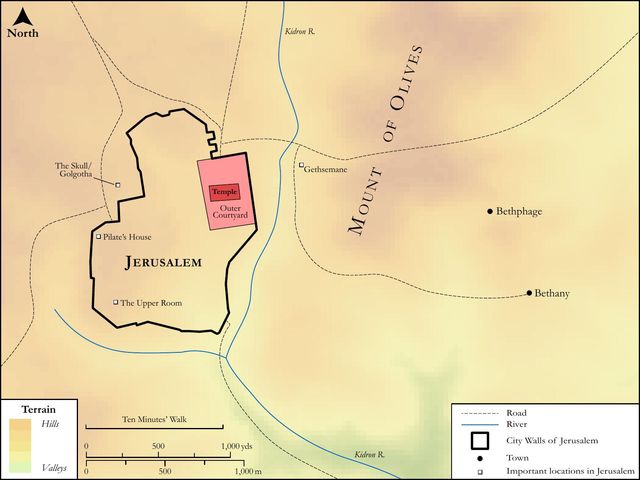
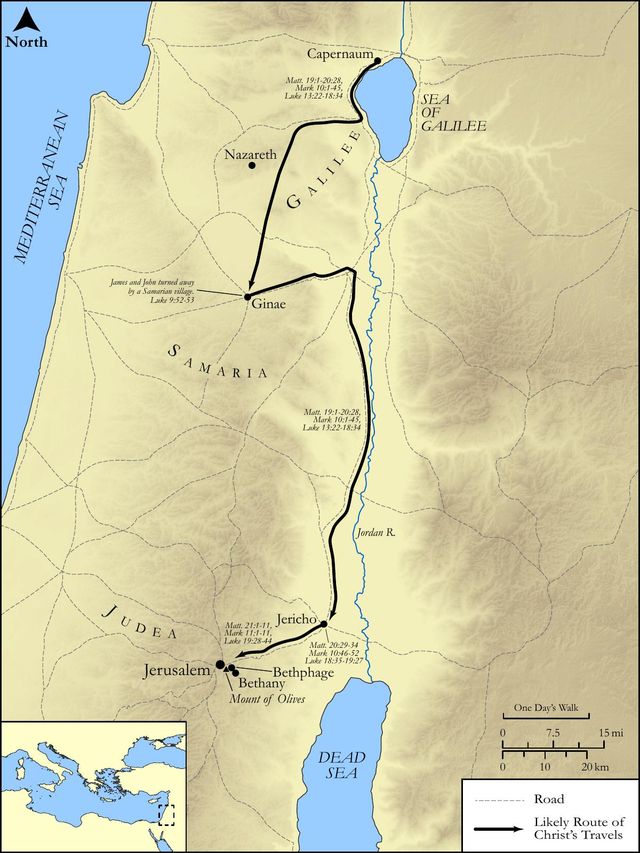
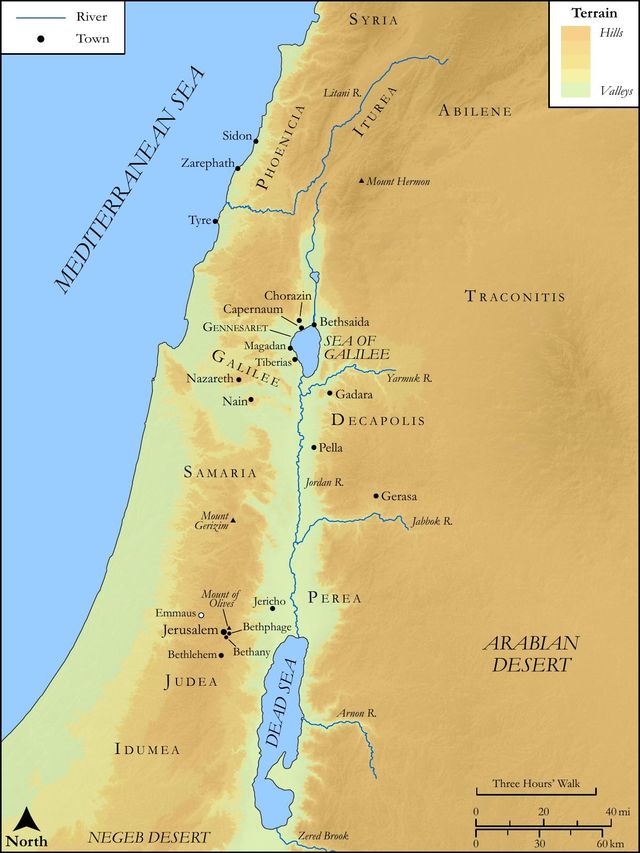
See on the biblical-era maps
Study this verse
Public-domain commentary
Matthew Henry
From his Commentary on the Whole Bible. Henry comments on passages, not single verses — this entry covers Luke 17:1–10. His two-level outline is real structure in the source text, so it is rendered as structure.
We are here taught,
I.That the giving of offences is a great sin, and that which we should every one of us avoid and carefully watch against, Luk 17:1, Luk 17:2.
We can expect no other than that offences will come, considering the perverseness and frowardness that are in the nature of man, and the wise purpose and counsel of God, who will carry on his work even by those offences, and bring good out of evil. It is almost impossible but that offences will come, and therefore we are concerned to provide accordingly; but woe to him through whom they come, his doom will be heavy (Luk 17:2), more terrible than that of the worst of the malefactors who are condemned to be thrown into the sea, for they perish under a load of guilt more ponderous than that of millstones. This includes a woe,
1.To persecutors, who offer any injury to the least of Christ's little ones, in word or deed, by which they are discouraged in serving Christ, and doing their duty, or in danger of being driven off from it.
2.To seducers, who corrupt the truths of Christ and his ordinances, and so trouble the minds of the disciples; for they are those by whom offences come.
3.To those who, under the profession of the Christian name, live scandalously, and thereby weaken the bands and sadden the hearts of God's people; for by them the offence comes, and it is no abatement of their guilt, nor will be any of their punishment, that it is impossible but offences will come.
II.That the forgiving of offences is a great duty, and that which we should every one of us make conscience of (Luk 17:3):
Take heed to yourselves. This may refer either to what goes before, or to what follows: Take heed that you offend not one of these little ones. Ministers must be very careful not to say or do any thing that may be a discouragement to weak Christians; there is need of great caution, and they ought to speak and act very considerately, for fear of this: or, "When your brother trespasses against you, does you any injury, puts any slight or affront upon you, if he be accessary to any damage done you in your property or reputation, take heed to yourselves at such a time, lest you be put into a passion; lest, when your spirits are provoked, you speak unadvisedly, and rashly vow to revenge (Pro 24:29): I will do so to him as he hath done to me. Take heed what you say at such a time, lest you say amiss."
1.If you are permitted to rebuke him, you are advised to do so. Smother not the resentment, but give it vent. Tell him his faults; show him wherein he has not done well nor fairly by you, and, it may be, you will perceive (and you must be very willing to perceive it) that you mistook him, that it was not a trespass against you, or not designed, but an oversight, and then you will beg his pardon for misunderstanding him; as Jos 22:30, Jos 22:31.
2.You are commanded, upon his repentance, to forgive him, and to be perfectly reconciled to him: If he repent, forgive him; forget the injury, never think of it again, much less upbraid him with it. Though he do not repent, you must not therefore bear malice to him, nor meditate revenge; but, it he do not at least say that he repents, you are not bound to be so free and familiar with him as you have been. If he be guilty of gross sin, to the offence of the Christian community he is a member of, let him be gravely and mildly reproved for his sin, and, upon his repentance, received into friendship and communion again. This the apostle calls forgiveness, Co2 2:7.
3.You are to repeat this every time he repeats his trespass, Luk 17:4. "If he could be supposed to be either so negligent, or so impudent, as to trespass against thee seven times in a day, and as often profess himself sorry for his fault, and promise not again to offend in like manner, continue to forgive him." Humanum est errare - To ere is human. Note, Christians should be of a forgiving spirit, willing to make the best of every body, and to make all about them easy; forward to extenuate faults, and not to aggravate them; and they should contrive as much to show that they have forgiven an injury as others to show that they resent it.
III.That we have all need to get our faith strengthened, because, as that grace grows, all other graces grow.
The more firmly we believe the doctrine of Christ, and the more confidently we rely upon the grace of Christ, the better it will be with us every way. Now observe here,
1.The address which the disciples made to Christ, for the strengthening of their faith, Luk 17:5. The apostles themselves, so they are here called, though they were prime ministers of state in Christ's kingdom, yet acknowledged the weakness and deficiency of their faith, and saw their need of Christ's grace for the improvement of it; they said unto the Lord, "Increase our faith, and perfect what is lacking in it." Let the discoveries of faith be more clear, the desires of faith more strong, the dependences of faith more firm and fixed, the dedications of faith more entire and resolute, and the delights of faith more pleasing. Note, the increase of our faith is what we should earnestly desire, and we should offer up that desire to God in prayer. Some think that they put up this prayer to Christ upon occasion of his pressing upon them the duty of forgiving injuries: "Lord, increase our faith, or we shall never be able to practise such a difficult duty as this." Faith in God's pardoning mercy will enable us to get over the greatest difficulties that lie in the way of our forgiving our brother. Others think that it was upon some other occasion, when the apostles were run aground in working some miracle, and were reproved by Christ for the weakness of their faith, as Mat 17:16, etc. To him that blamed them they must apply themselves for grace to mend them; to him they cry, Lord, increase our faith.
2.The assurance Christ gave them of the wonderful efficacy of true faith (Luk 17:6): "If ye had faith as a grain of mustard-seed, so small as mustard-seed, but yours is yet less than the least; or so sharp as mustard-seed, so pungent, so exciting to all other graces, as mustard to the animal spirits," and therefore used in palsies, "you might do wonders much beyond what you now do; nothing would be too hard for you, that was fit to be done for the glory of God, and the confirmation of the doctrine you preach, yea, though it were the transplanting of a tree from the earth to the sea." See Mat 17:20. As with God nothing is impossible, so are all things possible to him that can believe.
IV.That, whatever we do in the service of Christ, we must be very humble, and not imagine that we can merit any favour at his hand, or claim it as a debt; even the apostles themselves, who did so much more for Christ than others, must not think that they had thereby made him their debtor.
1.We are all God's servants (his apostles and ministers are in a special manner so), and, as servants, are bound to do all we can for his honour. Our whole strength and our whole time are to be employed for him; for we are not our own, nor at our own disposal, but at our Master's.
2.As God's servants, it becomes us to fill up our time with duty, and we have a variety of work appointed us to do; we ought to make the end of one service the beginning of another. The servant that has been ploughing, or feeding cattle, in the field, when he comes home at night has work to do still; he must wait at table, Luk 17:7, Luk 17:8. When we have been employed in the duties of a religious conversation, that will not excuse us from the exercises of devotion; when we have been working for God, still we must be waiting on God, waiting on him continually.
3.Our principal care here must be to do the duty of our relation, and leave it to our Master to give us the comfort of it, when and how he thinks fit. No servant expects that his master should say to him, Go and sit down to meat; it is time enough to do that when we have done our day's work. Let us be in care to finish our work, and to do that well, and then the reward will come in due time.
4.It is fit that Christ should be served before us: Make ready wherewith I may sup, and afterwards thou shalt eat and drink. Doubting Christians say that they cannot give to Christ the glory of his love as they should, because they have not yet obtained the comfort of it; but this is wrong. First let Christ have the glory of it, let us attend him with our praises, and then we shall eat and drink in the comfort of that love, and in this there is a feast.
5.Christ's servants, when they are to wait upon him, must gird themselves, must free themselves from every thing that is entangling and encumbering, and fit themselves with a close application of mind to go on, and go through, with their work; they must gird up the loins of their mind. When we have prepared for Christ's entertainment, have made ready wherewith he may sup, we must then gird ourselves, to attend him. This is expected from servants, and Christ might require it from us, but he does not insist upon it. He was among his disciples as one that served, and came not, as other masters, to take state, and to be ministered unto, but to minister; witness his washing his disciples' feet.
6.Christ's servants do not so much as merit his thanks for any service they do him: "Does he thank that servant? Does he reckon himself indebted to him for it? No, by no means." No good works of ours can merit any thing at the hand of God. We expect God's favour, not because we have by our services made him a debtor to us, but because he has by his promises made himself a debtor to his own honour, and this we may plead with him, but cannot sue for a quantum meruit - according to merit.
7.Whatever we do for Christ, though it should be more perhaps than some others do, yet it is no more than is our duty to do. Though we should do all things that are commanded us, and alas! in many things we come short of this, yet there is no work of supererogation; it is but what we are bound to by that first and great commandment of loving God with all our heart and soul, which includes the utmost.
8.The best servants of Christ, even when they do the best services, must humbly acknowledge that they are unprofitable servants; though they are not those unprofitable servants that bury their talents, and shall be cast into utter darkness, yet as to Christ, and any advantage that can accrue to him by their services, they are unprofitable; our goodness extendeth not unto God, nor if we are righteous is he the better, Psa 16:2; Job 22:2; Job 35:7. God cannot be a gainer by our services, and therefore cannot be made a debtor by them. He has no need of us, nor can our services make any addition to his perfections. It becomes us therefore to call ourselves unprofitable servants, but to call his service a profitable service, for God is happy without us, but we are undone without him.
Historical interpretation
Nine Centuries of Reception
10 surviving comments on this verse. Each one is dated, so this reads as a timeline rather than a list.
Select a marker to jump to its quote. Markers stagger vertically where authors wrote within a few decades of each other.
Now if any man set Luke aside, as one who did not know the truth, he will, by so acting, manifestly reject that Gospel of which he claims to be a disciple. For through him we have become acquainted with very many and important parts of the Gospel; for instance, the generation of John, the history of Zacharias, the coming of the angel to Mary, the exclamation of Elisabeth, the descent of the angels to the shepherds, the words spoken by them, the testimony of Anna and of Simeon with regard to Christ, and that twelve years of age He was left behind at Jerusalem; also the baptism of John, the number of the Lord's years when He was baptized. And in His office of teacher this is what He has said to the rich: "Woe unto you that are rich, for ye have received your consolation." There are also many other particulars to be found mentioned by Luke alone: the answer which He gave to His disciples when they said, "Increase our faith;" also His conversation with Zaccheus the publican.
Such were the apostles, in whose case it is said that "faith removed mountains and transplanted trees." Whence, perceiving the greatness of its power, they asked "that faith might be added to them;" a faith which salutarily bites the soil "like a grain of mustard," and grows magnificently in it, to such a degree that the reasons of things sublime rest on it.
Or this number is used because God rested on the seventh day from His works. After the seventh day of the world everlasting rest is promised us, that as the evil works of that world shall then cease, so also may the sharpness of punishment be abated.
(Hom. 57. in Matt.) He mentions the mustard seed, because, though small in size, it is mightier in power than all the others. He implies then that the least part of faith can do great things. But though the Apostles did not transplant the mulberry tree, do not thou accuse them; for our Lord said not, You shall transplant, but, You shall be able to transplant. But they did not, because there was no need, seeing that they did greater things. (Hom. 32 in 1 ad Cor. c. 13:2.). But some one will ask, How does Christ say, that it is the least part of faith which can transplant a mulberry tree or a mountain, whereas Paul says that it is all faith which moves mountains? We must then answer, that the Apostle imputes the moving of mountains to all faith, not as though only the whole of faith could do this, but because this seemed a great thing to carnal men on account of the vastness of the body.
The mulberry may be also compared to the devil, for as by the leaves of the mulberry tree certain worms are fed, so the devil, by the imaginations which proceed from him, is feeding for us a never dying worm; but this mulberry tree faith is able to pluck out of our souls, and plunge it into the deep.
(de Quæst. Ev. lib. 2. qu. 39.) We may indeed understand that they asked for the increase of that faith by which men believe in the things which they see not; but there is further signified a faith in things, whereby not with the words only, but the things themselves present, we believe. And this shall be, when the Wisdom of God, by whom all things were made, shall reveal Himself openly to His saints face to face.
They ask, “Add faith to us.” They do not ask simply for faith, for perhaps you might imagine them to be without faith. They rather ask Christ for an addition to their faith and to be strengthened in faith. Faith partly depends on us and partly is the gift of the divine grace. The beginning of faith depends on us and our maintaining confidence and faith in God with all our power. The confirmation and strength necessary for this comes from the divine grace. For that reason, since all things are possible with God, the Lord says that all things are possible for him who believes. The power that comes to us through faith is of God. Knowing this, blessed Paul also says in the first epistle to the Corinthians, “For to one is given through the Spirit the word of wisdom, to another the word of knowledge according to the same Spirit, and to another faith in the same Spirit.” You see that he has placed faith also in the catalogue of spiritual graces. The disciples requested that they might receive this from the Savior, contributing also what was of themselves. By the descent upon them of the Holy Spirit, he granted it to them after the fulfillment of the dispensation. Before the resurrection, their faith was so feeble that they were liable even to the charge of being “little of faith.”
(22. Mor. c. 21.) That is, that the faith which has already been received in its beginning, might go on increasing more and more unto perfection.
The apostles said to the Lord: Increase our faith. The Lord had said earlier: He who is faithful in a very little is also faithful in much. And if you have not been faithful in that which is another's, who will give you that which is your own? And so the apostles, who were already faithful in what is another's and in the very little, that is, in the contempt of earthly things, ask that faith be increased in what is their own and in what is greater. For no one becomes supreme suddenly, but in good conduct each one begins with little things, so that he may reach great things. For the beginnings of virtue are one thing, its progress another, its perfection yet another. Hence, earnestly seeking, they say to the Lord: Increase our faith.
Or our Lord here compares perfect faith to a grain of mustard seed, because it is lowly in appearance, but fervid in heart. But mystically by the mulberry tree, (whose fruit and branches are red with a blood-red colour,) is represented the Gospel of the cross, which, through the faith of the Apostles being uprooted by the word of preaching from the Jewish nation, in which it was kept as it were in the lineal stock, was removed and planted in the sea of the Gentiles.
The disciples hearing our Lord discoursing of certain arduous duties, such as poverty, and avoiding offences, entreat Him to increase their faith, that so they might be able to follow poverty, (for nothing so prompts to a life of poverty as faith and hope in the Lord,) and through faith to guard against giving offences. Therefore it is said, And the Apostles said unto the Lord, Increase our faith.
But our Lord told them that they asked well, and that they ought to believe stedfastly, forasmuch as faith could do many things; and hence it follows, And the Lord said, If ye had faith as a grain of mustard seed, &c. Two mighty acts are here brought together in the same sentence; the transplanting of that which was rooted in the earth, and the planting thereof in the sea, (for what is ever planted in the waves?) by which two things He declares the power of faith.
Continue studying Luke 17:5 across the web’s major study libraries — every link below opens this exact verse, chapter, or book on the destination site.
Read & Compare
 BibleGatewayThis verse in more than 200 translations and 70 languages.
 Bible.comThe YouVersion reader — hundreds of translations, reading plans, and highlights.
 ESV.orgCrossway's official English Standard Version reader.
 NET BibleThe NET translation with 60,000+ translators' notes on every rendering decision.
 STEP BibleTyndale House's free study tool — original text, vocabulary, and scholarly resources.
 BibliaLogos Bible Software's free web reader.
 USCCBThe New American Bible (Revised Edition) with the U.S. bishops' study notes.
Commentaries
 BibleHub CommentariesDozens of classic commentaries on this verse, gathered on one page.
 StudyLightMore than 100 commentary sets — the largest collection on the web.
 BibleRefPlain-English commentary on what this verse means, verse by verse.
 Enduring WordDavid Guzik's free commentary on this chapter, widely used by Bible teachers.
 Bible Study ToolsVerse commentary alongside Greek and Hebrew study aids.
Original Language & Research
- BibleHub InterlinearThe verse word by word — original language, transliteration, and English.
- BibleHub LexiconEvery word's original-language definition and Strong's entry.
 Blue Letter BibleDeep-study tools — Strong's numbers, concordance, and word studies.
 CNTR CollationThe earliest Greek manuscripts of this verse, collated letter by letter.
Sermons, Hymns & Audio


TrulyRandomVerse is not affiliated with these sites and doesn’t control their content. They’re linked because they’re genuinely useful.
Summary
Luke 17:5 presents a pivotal moment where the apostles, confronted with the Lord's exceedingly high standards for discipleship—particularly regarding radical forgiveness and the avoidance of causing others to stumble—humbly and urgently appeal to Jesus, "Increase our faith." This concise yet profound prayer encapsulates their recognition of spiritual inadequacy in the face of divine expectation, serving as a timeless model for believers who seek deeper trust, conviction, and empowerment to live out challenging biblical commands.
Context
ShowHideLiterary Context
This earnest plea from the apostles directly follows a series of profoundly challenging teachings from Jesus. In the preceding verses, Jesus issues stern warnings about the severe consequences of causing "stumbling blocks" for "little ones" (Luke 17:1-2). Immediately after, He lays down an exceptionally demanding command regarding forgiveness: disciples are to forgive a brother who sins against them, even if it occurs "seven times in a day, and seven times in a day turn again to thee, saying, I repent" (Luke 17:3-4). This radical call to unending, unconditional forgiveness, coupled with the gravity of spiritual responsibility, evidently overwhelmed the disciples, prompting their immediate and heartfelt cry for an increase in the very faith necessary to obey such seemingly impossible directives. Their request highlights the direct link between Jesus' demanding ethics and the spiritual capacity required to live them out.
Historical & Cultural Context
In the Jewish context of the first century, the concept of "faith" (Hebrew: emunah, Greek: pistis) was deeply rooted in trust and faithfulness to God and His covenant. While the Law provided clear guidelines for justice and retribution, Jesus' teachings often transcended or reinterpreted these, pushing His followers towards a new standard of grace and radical love, particularly evident in His commands on forgiveness. The idea of forgiving someone "seven times" in a day would have been culturally revolutionary, as conventional wisdom might suggest a limit to such grace. The apostles, steeped in a culture that understood justice often in terms of "an eye for an eye," would have found Jesus' demands on forgiveness and the avoidance of causing others to stumble to be incredibly counter-cultural and humanly impossible without divine intervention. Their request for "increase" in faith reflects an understanding that such a life could not be lived by mere human will or cultural norms, but required a supernatural empowerment.
Key Themes
ShowHideThe apostles' request in Luke 17:5 contributes significantly to several major themes in Luke's Gospel and the broader biblical narrative. Firstly, it underscores the radical nature of discipleship under Jesus, where human limitations are exposed by divine expectations. Secondly, it highlights faith as an essential prerequisite for obedience, particularly for living out the demanding ethical standards of the Kingdom of God, such as the profound forgiveness commanded in Luke 17:3-4. Thirdly, it reveals the dynamic and progressive nature of faith, demonstrating that faith is not a static possession but a gift that can and should grow, a concept further explored in Luke 17:6. Finally, it emphasizes dependence on God for spiritual capacity, illustrating that true spiritual growth begins with an honest acknowledgment of one's need and a humble appeal to the Lord for empowerment.
Exposition and Analysis
ShowHideKey Word Analysis
ShowHideDerived from a verb meaning "to send away," this term signifies a "delegate," "ambassador of the Gospel," or "commissioner of Christ." In this context, it refers specifically to the twelve disciples chosen by Jesus, who were being trained for their future mission. Their request for increased faith underscores that even those specially called and empowered by Christ recognized their own spiritual limitations in the face of His divine expectations.
This verb literally means "to place additionally," "lay beside," "annex," or "repeat." It implies a desire for augmentation, addition, or growth of something already present. The apostles were not asking for faith de novo (from scratch), but for a deeper, more robust, and more effective measure of the faith they already possessed, indicating a recognition that their current level was insufficient for the demands placed upon them.
This comprehensive term encompasses "persuasion," "credence," "moral conviction," and "reliance upon Christ for salvation." It denotes not just intellectual assent but a profound trust, belief, and faithfulness. The apostles' request for "more" of this pístis reveals their understanding that living out Jesus' radical commands required a living, active confidence in Him and His power, far beyond mere intellectual agreement with His words.
Verse Breakdown
ShowHide"And the apostles said unto the Lord,"
This opening clause establishes the speakers as Jesus' closest disciples, those who had witnessed His miracles and heard His teachings firsthand. Their address to "the Lord" (Greek, kýrios) signifies their recognition of His authority and divine nature, setting the stage for a humble and dependent request. The immediate context of Jesus' challenging teachings on forgiveness and stumbling blocks directly precedes this statement, indicating that their plea is a direct response to the perceived human impossibility of His commands.
"Increase our faith."
This direct and concise plea is the core of the verse. It is a recognition of spiritual need and a cry for divine empowerment. The apostles acknowledge that their current level of faith is insufficient to meet the demands of radical obedience, particularly the command for unending forgiveness. They are not asking for a new gift, but for an augmentation of an existing spiritual capacity, demonstrating both humility and a deep desire to align their lives with Christ's will. This phrase encapsulates the universal human struggle to live up to God's standards and the necessary reliance on Him for the ability to do so.
Literary Devices
ShowHideThe verse primarily employs Direct Address and Supplication. The apostles directly address Jesus as "the Lord," indicating their recognition of His authority and their posture of dependence. Their statement, "Increase our faith," is a clear Supplication or plea, a humble request for divine intervention and empowerment. This simple, declarative sentence carries immense weight, functioning as a concise prayer. There is also an Implied Contrast between the human capacity for forgiveness and the divine standard set by Jesus. The apostles' request implicitly acknowledges their human inadequacy and the need for a supernatural infusion of faith to bridge this gap. The brevity and directness of their plea also lend it a sense of Urgency, reflecting their immediate struggle with the preceding teachings.
Theological and Thematic Connections
ShowHideThe apostles' request in Luke 17:5 underscores a foundational theological truth: that genuine obedience to God's radical commands is not achievable through human effort alone but requires a supernatural empowerment of faith. It highlights that faith is not merely intellectual assent but a dynamic, active trust in God's power and faithfulness, which can be grown and deepened. This verse teaches us that recognizing our spiritual limitations and humbly asking God for more faith is a legitimate and necessary part of the spiritual journey, demonstrating a profound dependence on Christ for the very ability to live a life pleasing to Him. It implicitly connects faith to action, suggesting that increased faith directly correlates with an increased capacity for radical obedience and perseverance in discipleship.
Reflection and Application
ShowHideLuke 17:5 offers a profound and liberating model for every believer. When faced with the seemingly impossible demands of Christian discipleship—whether it's radical forgiveness, unwavering hope in adversity, or selfless love—our natural inclination might be to despair or give up. However, the apostles' simple yet powerful prayer teaches us to turn to the Lord with honesty about our spiritual inadequacy. It reminds us that faith is not a fixed quantity, but a dynamic gift that God delights to increase when we humbly ask Him. This verse encourages us to acknowledge our limitations, confess our need for greater trust, and actively seek divine empowerment to live out God's calling. It assures us that asking for "more faith" is a prayer that aligns with God's will for our growth and transformation, enabling us to obey His commands, overcome obstacles, and live a life that truly honors Him.
Questions for Reflection
ShowHideFAQ
ShowHideWhy did the apostles ask for more faith immediately after Jesus' teachings on forgiveness?
ShowHideThe apostles' request for increased faith came directly after Jesus delivered some of His most challenging ethical commands, particularly the command to forgive a brother "seven times in a day" if he repents (Luke 17:3-4). This level of radical, repeated forgiveness was humanly impossible for them to conceive or enact consistently. They recognized that living up to such a high standard required a supernatural capacity—a deeper trust and conviction in God's power to enable them. Their plea was an honest acknowledgment of their spiritual inadequacy and a humble request for the divine empowerment necessary to obey.
Does this verse imply that faith is something we can "get more of" or that it's a static amount?
ShowHideLuke 17:5 strongly implies that faith is not a static, fixed quantity but something that can and should grow. The apostles did not ask for faith as if they had none, but for an increase or augmentation of their existing faith. This aligns with other New Testament teachings that encourage believers to grow in faith (2 Peter 1:5-8) and describe faith as developing from "faith to faith" (Romans 1:17). It is a gift from God that we can cultivate through prayer, obedience, and reliance on Him, leading to deeper trust and greater capacity for discipleship.
Christ-Centered Fulfillment
ShowHideLuke 17:5, with the apostles' earnest plea to "Increase our faith," finds its ultimate fulfillment and answer in Christ Himself. Jesus is not only the object of our faith but also the "author and perfecter of our faith" (Hebrews 12:2). The very faith that the apostles sought to increase is a gift that flows from Him and is sustained by Him. When we are confronted with the seemingly impossible demands of the Kingdom, such as radical forgiveness or selfless love, our capacity to obey is found not in our own strength but in our union with Christ. He is the one who empowers us through His Spirit, enabling us to live out the very commands that felt insurmountable. Just as the apostles looked to Him for an increase, believers today look to Christ, who through His life, death, and resurrection, provides the perfect example of faith and the divine power necessary for us to walk by faith, not by sight (2 Corinthians 5:7), and to do all things through Him who strengthens us (Philippians 4:13).