


Isaiah 8:22
- וְאֶלve·'eland toH413Conj-w ¦ PrepPrepositionוְandאֶלto
- אֶרֶץ'E·retz[the] earthH776N-fsNoun Singular Feminine Absolute
- יַבִּיטya·Bitit will lookH5027V-Hiphil-Imperf-3msVerb Hiphil Imperfect 3rd Singular Masculine
- וְהִנֵּהve·hi·Nehand there!H2009Conj-w ¦ PrtParticle Interjectionוְandהִנֵּהthere!
- צָרָהtza·RahtroubleH6869N-fsNoun Singular Feminine Absolute
- וַחֲשֵׁכָהva·cha·she·Khahand darknessH2825Conj-w ¦ N-fsNoun Singular Feminine Absoluteוַandחֲשֵׁכָהdarkness
- מְעוּףme·'Ufgloom ofH4588N-mscNoun Singular Masculine Construct
- צוּקָהtzu·KahdistressH6695N-fsNoun Singular Feminine Absolute
- וַאֲפֵלָהva·'a·fe·Lahand gloomH653Conj-w ¦ N-fsNoun Singular Feminine Absoluteוַandאֲפֵלָהgloom
- מְנֻדָּחme·nu·Dach[it is] thrust outH5080V-Pual-PassPrtcpl-msVerb Pual Participle Passive Singular Masculine Absolute
English is a literal word-by-word gloss of the Hebrew, not the KJV's wording. Why?
This is the original text the KJV's translators worked from — each Hebrew word with its own literal English meaning in this verse, prepared by scholars at Tyndale House, Cambridge. The KJV translates whole sentences, not word by word, so its wording differs: one Hebrew word can become several English words, and the KJV may choose “the LORD” where the gloss reads “Yahweh”. Both are faithful — they answer different questions. For the KJV's own rendering, switch to the KJV text.
Details
See on the biblical-era map
Study this verse
Public-domain commentary
Matthew Henry
From his Commentary on the Whole Bible. Henry comments on passages, not single verses — this entry covers Isaiah 8:16–22. His four-level outline is real structure in the source text, so it is rendered as structure.
In these verses we have,
I.The unspeakable privilege which the people of God enjoy in having the oracles of God consigned over to them, and being entrusted with the sacred writings. That they may sanctify the Lord of hosts, may make him their fear and find him their sanctuary, bind up the testimony, Isa 8:16. Note, It is a great instance of God's care of his church and love to it that he has lodged in it the invaluable treasure of divine revelation.
1.It is a testimony and a law; not only this prophecy is so, which must therefore be preserved safely for the comfort of God's people in the approaching times of trouble and distress, but the whole word of God is so; God has attested it, and he has enjoined it. As a testimony it directs our faith; as a law it directs our practice; and we ought both to subscribe to the truths of it and to submit to the precepts of it.
2.This testimony and this law are bound up and sealed, for we are not to add to them nor diminish from them; they are a letter from God to man, folded up and sealed, a proclamation under the broad seal. The binding up and sealing of the Old Testament signified that the full explication of many of the prophecies of it was reserved for the New Testament times. Dan 12:4, Seal the book till the time of the end; but what was then bound up and sealed is now open and unsealed, and revealed unto babes, Mat 11:25. Yet with reference to the other world, and the future state, still the testimony is bound up and sealed, for we know but in part, and prophesy but in part.
3.They are lodged as a sacred deposit in the hands of the disciples of the children of the prophets and the covenant, Act 3:25. This is the good thing which is committed to them, and which they are charged with the custody of, Ti2 1:13, Ti2 1:14. Those that had prophets for their tutors must still keep close to the written word.
II.The good use which we ought to make of this privilege. This we are taught,
1.By the prophet's own practice and resolutions, Isa 8:17, Isa 8:18. He embraced the law ad the testimony, and he had the comfort of them, in the midst of the many discouragements he met with. Note, Those ministers can best recommend the word of God to others that have themselves found the satisfaction of relying upon it. Observe,
(1.)The discouragements which the prophet laboured under. He specifies two: - [1.] The frowns of God, not so much upon himself, but upon his people, whose interests lay very near his heart: "He hides his face from the house of Jacob, and seems at present to neglect them, and lay them under the tokens of his displeasure." The prophet was himself employed in revealing God's wrath against them, and yet grieved thus for it, as one that did not desire the woeful day. If the house of Jacob forsake the God of Jacob, let it not be thought strange that he hides his face from them. [2.] The contempt and reproaches of men, not only upon himself, but upon his disciples, among whom the law and the testimony were sealed: I and the children whom the Lord has given me are for signs and wonders; we are gazed at as monsters or outlandish people, pointed at as we go along the streets. Probably the prophetical names that were given to his children were ridiculed and bantered by the profane scoffers of the town. I am as a wonder unto many, Psa 71:7. God's people are the world's wonder (Zac 3:8) for their singularity, and because they run not with them to the same excess of riot, Pe1 4:4. The prophet was herein a type of Christ; for this is quoted (Heb 2:13) to prove that believers are Christ's children: Behold, I and the children whom God has given me. Parents must look upon their children as God's gifts, his gracious gifts; Jacob did so, Gen 33:5. Ministers must look upon their converts as their children, and be tender of them accordingly (Th1 2:7), and as the children whom God has given them; for, whatever good we are instrumental of to others, it is owing to the grace of God. Christ looks upon believers as his children, whom the Father gave him (Joh 17:6), and both he and they are for signs and wonders, spoken against (Luk 2:34), every where spoken against, Act 28:22.
(2.)The encouragement he took in reference to these discouragements.
[1.]He saw the hand of God in all that which was discouraging to him, and kept his eye upon that. Whatever trouble the house of Jacob is in, it comes from God's hiding his face; nay, whatever contempt was put upon him or his friends, it is from the Lord of hosts; he has bidden Shimei curse David, Job 19:13; Job 30:11.
[2.]He saw God dwelling in Mount Zion, manifesting himself to his people, and ready to hear their prayers and receive their homage. Though, for the present, he hide his face from the house of Jacob, yet they know where to find him and recover the sight of him; he dwells in Mount Zion.
[3.]He therefore resolved to wait upon the Lord and to look for him; to attend his motions even while he hid his face, and to expect with a humble assurance his returns in a way of mercy. Those that wait upon God by faith and prayer may look for him with hope and joy. When we have not sensible comforts we must still keep up our observance of God and obedience to him, and then wait awhile; at evening time it shall be light.
2.By the counsel and advice which he gives to his disciples, among whom the law and the testimony were sealed, to whom were committed the lively oracles.
(1.)He supposes they would be tempted, in the day of their distress, to consult those that had familiar spirits, that dealt with the devil, asked his advice, and desired to be informed by him concerning things to come, that they might take their measures accordingly. Thus Saul, when he was in straits, made his application to the witch of Endor (Sa1 28:7, Sa1 28:15), and Ahaziah to the god of Ekron, Kg2 1:2. These conjurors had strange fantastic gestures and tones: They peeped and muttered; they muffled their heads, that they could neither see nor be seen plainly, but peeped and were peeped at. Or both the words here used may refer to their voice and manner of speaking; they delivered what they had to say with a low, hollow, broken sound, scarcely articulate, and sometimes in a puling or mournful tone, like a crane, or a swallow, or a dove, Isa 38:14. They spoke not with that boldness and plainness which the prophets of the Lord spoke with, but as those who desire to amuse people rather than to instruct them; yet there were those who were so wretchedly sottish as to seek to them and to court others to do so, even the prophet's hearers, who knew better things, whom therefore the prophet warns not to say, A confederacy with such. There were express laws against this wickedness (Lev 19:31; Lev 20:27), and yet it was found in Israel, is found even in Christian nations; but let all that have any sense of religion show it, by startling at the thought of it. Get thee behind me, Satan. Dread the use of spells and charms, and consulting those that by hidden arts pretend to tell fortunes, cure diseases, or discover things lost; for this is a heinous crime, and, in effect, denies the God that is above.
(2.)He furnishes them with an answer to this temptation, puts words into their mouths. "If any go about thus to ensnare you, give them this reply: Should not a people seek to their God? What! for the living to the dead!" [1.] "Tell them it is a principle of religion that a people ought to seek unto their God; now Jehovah is our God, and therefore to him we ought to seek, and to consult with him, and not with those that have familiar spirits. All people will thus walk in the name of their God, Mic 4:5. Those that made the hosts of heaven their gods sought unto them, Jer 8:2. Should not a people under guilt, and in trouble, seek to their God for pardon and peace? Should not a people in doubt, in want, and in danger, seek to their God for direction, supply, and protection? Since the Lord is our God, and we are his people, it is certainly our duty to seek him." [2.] "Tell them it is an instance of the greatest folly in the world to seek for living men to dead idols." What can be more absurd than to seek to lifeless images for life and living comforts, or to expect that our friends that are dead should do that for us, when we deify them and pray to them, which our living friends cannot do? The dead know not any thing, nor is there with them any device or working, Ecc 9:5, Ecc 9:10. It is folly therefore for the living to make their court to them, with any expectation of relief from them. Necromancers consulted the dead, as the witch of Endor, and so proclaimed their own folly. We must live by the living, and not by the dead. What life or light can we look for from those that have no light or life themselves?
(3.)He directs them to consult the oracles of God. If the prophets that were among them did not speak directly to every case, yet they had the written word, and to that they must have recourse. Note, Those will never be drawn to consult wizards that know how to make a good use of their Bibles. Would we know how we may seek to our God, and come to the knowledge of his mind? To the law and to the testimony. There you will see what is good, and what the Lord requires of you. Make God's statutes your counsellors, and you will be counselled aright. Observe,
[1.]What use we must make of the law and the testimony: we must speak according to that word, that is, we must make this our standard, conform to it, take advice from it, make our appeals to it, and in every thing be overruled and determined by it, consent to those wholesome healing words (Ti1 6:3), and speak of the things of God in the words which the Holy Ghost teaches. It is not enough to say nothing against it, but we must speak according to it.
[2.]Why we must make this use of the law and the testimony: because we shall be convicted of the greatest folly imaginable if we do not. Those that concur not with the word of God do thereby evince that there is no light, no morning light (so the word is) in them; they have no right sense of things; they do not understand themselves, nor the difference between good and evil, truth and falsehood. Note, Those that reject divine revelation have not so much as human understanding; nor do those rightly admit the oracles of reason who will not admit the oracles of God. Some read it as a threatening: "If they speak not according to this word, there shall be no light to them, no good, no comfort or relief; but they shall be driven to darkness and despair;" as it follows here, Isa 8:21, Isa 8:22. What light had Saul when he consulted the witch? Sa1 28:18, Sa1 28:20. Or what light can those expect that turn away from the Father of lights?
(4.)He reads the doom of those that seek to familiar spirits and regard not God's law and testimony; there shall not only be no light to them, no comfort or prosperity, but they may expect all horror and misery, Isa 8:21, Isa 8:22.
[1.]The trouble they feared shall come upon them: They shall pass through the land, or pass to and fro in the land, unfixed, unsettled, and driven from place to place by the threatening power of an invading enemy; they shall be hardly bestead whither to go for the necessary supports of life, either because the country would be so impoverished that there would be nothing to be had, or at least themselves and their friends so impoverished that there would be nothing to be had for them; so that those who used to be fed to the full shall be hungry. Note, Those that go away from God go out of the way of all good.
[2.]They shall be very uneasy to themselves, by their discontent and impatience under their trouble. A good man may be in want, but then he quiets himself, and strives to make himself easy; but these people when they shall be hungry shall fret themselves, and when they have nothing to feed on their vexation shall prey upon their own spirits; for fretfulness is a sin that is its own punishment.
[3.]They shall be very provoking to all about them, nay, to all above them; when they find all their measures broken, and themselves at their wits' end, they will forget all the rules of duty and decency, and will treasonably curse their king and blasphemously curse their God, and this more than in their thought and in their bedchamber, Ecc 10:20. They begin with cursing their king for managing the public affairs no better, as if the fault were his, when the best and wisest kings cannot secure success; but, when they have broken the bonds of their allegiance, no marvel if those of their religion do not hold them long: they next curse their God, curse him, and die; they quarrel with his providence, and reproach that, as if he had done them wrong. The foolishness of man perverts his way, and then his heart frets against the Lord, Pro 19:3. See what need we have to keep our mouth as with a bridle when our heart is hot within us; for the language of fretfulness is commonly very offensive.
[4.]They shall abandon themselves to despair, and, which way soever they look, shall see no probability of relief. They shall look upward, but heaven shall frown upon them and look gloomy; and how can it be otherwise when they curse their God? They shall look to the earth, but what comfort can that yield to those with whom God is at war? There is nothing there but trouble, and darkness, and dimness of anguish, every thing threatening, and not one pleasant gleam, not one hopeful prospect; but they shall be driven to darkness by the violence of their own fears, which represent every thing about them black and frightful. This explains what he had said Isa 8:20, that there shall be no light to them. Those that shut their eyes against the light of God's word will justly be abandoned to darkness, and left to wander endlessly, and the sparks of their own kindling will do them no kindness.
Historical interpretation
Historical reception
1 surviving comment on this verse from the historical church.
(Verse 19 and following) And when they say to you, seek from the Pythons and the diviners, who make their enchantments, whether not the people seeks from their God for the living from the dead? To the law more and to the testimony. If they do not speak according to this word, it will not be morning light for them. And they will pass through it: they will fall down and be hungry: and when they are hungry, they will become angry and curse their king and their God. And they will look upwards and gaze downwards, and behold, trouble and darkness, dissolution, distress, and pursuing darkness: and they will not be able to escape from their distress. If the voice of the prophet Isaiah is, as the Jews believe: Behold, me and my children, whom the Lord has given to me as a sign and a portent to Israel; and the things that follow, he himself is to be believed to say to his disciples. When the nations and peoples spoken of above say to you: Weak are the people, and defeated; what do you prophets want to hear, why are you deceived by the words of Isaiah, and do you think that he knows what will come? Seek more from the Pythonians, and from the gods, who hiss in their incantations. Concerning them, it is interpreted in the LXX: Those who speak from the earth, who cry out from the belly. For everyone who is from the earth speaks from the earth (John 3:31). And the one whose god is their belly, and their glory is in their shame (Philippians 3:19), is to be believed as crying out from the belly. You answer them, and say: Does not the people seek from their God for the living from the dead? If you consult those gods whom you believe in for the sake of the variety of your idols (for you have not just one, but many gods), and if you seek advice from the images of the dead or of deceased human beings, how much more should we listen to our God through the prophets? He teaches his disciples and brings them to the law and to the testimony. If you have any doubts about someone, know this: It is written, 'The nations that the Lord your God will drive out before you listen to fortune-tellers and diviners, but the Lord your God has not allowed you to do so. The Lord your God will raise up a prophet for you from among your brothers, like me; you must listen to him' (Deut. XVIII, 15). If you wish to know doubtful things, you should rather read and deliver them with testimonies of the Scriptures. But if your congregation refuses to seek the word of the Lord, it will not have the light of truth, but will wander in error and darkness. The light will pass over it, that is, your congregation or land, and you will fall, and hunger, and when you hunger, you will be angry, as it is written: 'And when they were not satisfied, they murmured' (Ps. 58:16). And you will blaspheme your God and king, and in times of need you will look up to heaven and down to earth, and behold there will be tribulation and darkness, collapse of knees, anguish of mind, darkness of eyes, and you will not be able to escape the distress. This is according to the Hebrews. Moreover, as we have said above, if the person of Christ is speaking, saying: Behold, I and the children whom God has given me, he himself also speaks to the Apostles and to the believers from the Gentiles, who have received his Gospel. If they say, he says, to your fathers whom you have left behind: seek ventriloquists, whom we understand as pythonesses (such as we read about in the Acts of the Apostles with the slave girl, who was a source of income to her masters) and who speak from the earth, promising to perform magic tricks in the evocation of souls, and other kinds of wicked arts; you must know this, that each nation consults its own gods, and inquires about the living from the dead. But God has given you help in the law, so that you can say: divination is not like that of the Gentiles, who often deceive their worshippers, but ours, which is freely given without any reward, from the law. Hence it is interpreted in the Septuagint: not like this word, for which there is no need to give gifts. For you have received freely, he says, freely give (Matthew X, 8). But a most severe famine will come upon the unbelievers, not a famine of bread or a thirst for water, but a famine of hearing the word of God (Amos VIII). And when you are hungry, you will be sad, and you will curse your ruler and your ancestral traditions, which is the devil, and the old errors. But this is said to those who have suffered from hunger for the truth, and who look up to heaven and down to earth, and they will be in distress, in darkness, and in tribulation, so that they may not see until the time when they themselves turn to the Lord. These passages require a broad explanation, but we spare the size of the books in order to avoid boredom in reading. We have briefly addressed this passage according to the LXX translation, which in many places differs from the Hebrew. However, the Nazarenes (also called Nazareni) explain this place as follows: When the scribes and Pharisees tell you to listen to those who do everything for the sake of the belly, and in the manner of the magi, charm their way into your hearts in order to deceive you, you should respond to them: It is not surprising that you follow your own traditions, since every nation consults their own idols. Therefore, we should not seek advice from you who are dead to the living: God has given us His law and the testimonies of the Scriptures. If you do not choose to follow them, you will not have light. Instead, darkness will always oppress you, which will pass through your land and doctrine. Then, when they realize they have been deceived by you and cannot satisfy their hunger for truth, they will be saddened, angered, and curse you, whom they considered to be their gods and kings. And they are in vain to look towards heaven and earth, since they are always in darkness and cannot escape your snares.
Continue studying Isaiah 8:22 across the web’s major study libraries — every link below opens this exact verse, chapter, or book on the destination site.
Read & Compare
 BibleGatewayThis verse in more than 200 translations and 70 languages.
 Bible.comThe YouVersion reader — hundreds of translations, reading plans, and highlights.
 ESV.orgCrossway's official English Standard Version reader.
 NET BibleThe NET translation with 60,000+ translators' notes on every rendering decision.
 STEP BibleTyndale House's free study tool — original text, vocabulary, and scholarly resources.
 BibliaLogos Bible Software's free web reader.
 USCCBThe New American Bible (Revised Edition) with the U.S. bishops' study notes.
Commentaries
 BibleHub CommentariesDozens of classic commentaries on this verse, gathered on one page.
 StudyLightMore than 100 commentary sets — the largest collection on the web.
 BibleRefPlain-English commentary on what this verse means, verse by verse.
 Enduring WordDavid Guzik's free commentary on this chapter, widely used by Bible teachers.
 Bible Study ToolsVerse commentary alongside Greek and Hebrew study aids.
Original Language & Research
- BibleHub InterlinearThe verse word by word — original language, transliteration, and English.
- BibleHub LexiconEvery word's original-language definition and Strong's entry.
 Blue Letter BibleDeep-study tools — Strong's numbers, concordance, and word studies.
 SefariaThe Hebrew text with Rashi and centuries of Jewish commentary.
Sermons, Hymns & Audio


TrulyRandomVerse is not affiliated with these sites and doesn’t control their content. They’re linked because they’re genuinely useful.
Summary
Isaiah 8:22 delivers a stark prophetic warning, depicting the grim consequences awaiting those who reject divine revelation and seek guidance from ungodly sources. It paints a vivid picture of a people plunged into profound despair, spiritual blindness, and inescapable affliction, emphasizing the ultimate futility and suffering that result from turning away from the Lord's light and truth. The verse serves as a powerful testament to the inevitable spiritual and existential darkness that engulfs those who choose rebellion over reliance on God, setting the stage for the dramatic shift in tone that follows in chapter 9.
Context
ShowHideLiterary Context
Isaiah 8:22 concludes a significant prophetic section, primarily chapters 7 and 8, which addresses the Syro-Ephraimite War and King Ahaz's refusal to trust the Lord. Following a series of warnings and prophecies concerning the impending Assyrian invasion and its devastating impact on Judah and Israel, Isaiah shifts focus to the spiritual condition of the people. The preceding verses, particularly Isaiah 8:19-20, condemn the practice of consulting mediums and spiritists, urging the people to turn "to the law and to the testimony." This final verse of the chapter, therefore, serves as a climactic declaration of the dire outcome for those who persist in spiritual rebellion and refuse to seek the true light of God's Word, setting a dark stage for the glorious promise of light in Isaiah 9:1-2. The abrupt shift from the pervasive darkness of Isaiah 8 to the brilliant light of Isaiah 9 highlights the dramatic contrast between judgment for disobedience and the hope of messianic salvation.
Historical & Cultural Context
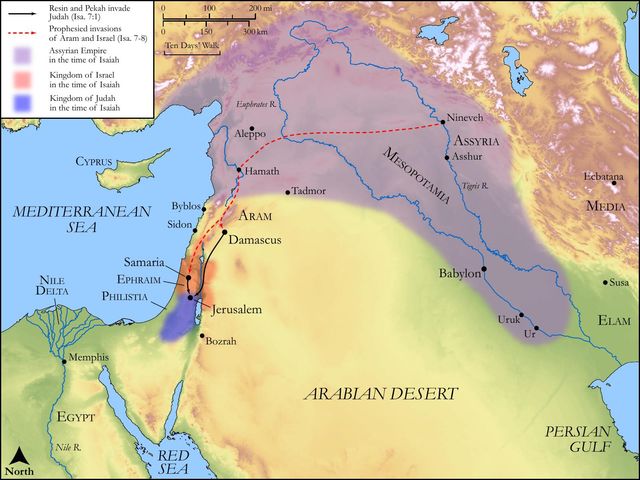
The historical backdrop is the late 8th century BCE, a period of immense geopolitical instability. The northern kingdom of Israel and Aram (Syria) formed an alliance against Judah, prompting King Ahaz to consider an alliance with the formidable Assyrian Empire rather than trusting in God's protection. Culturally, the region was rife with pagan practices, including necromancy and divination, which offered alternative, albeit false, sources of guidance. Isaiah's prophecy directly confronts these practices, highlighting the contrast between the deceptive "whispers and mutterings" of the spiritists and the clear, authoritative voice of the Lord. The "earth" mentioned in the verse can also allude to the land of Judah itself, which would soon experience the desolation brought by the Assyrian invasion, a tangible manifestation of the spiritual darkness. This historical context underscores the real-world consequences of the spiritual choices being made by the nation.
Key Themes
ShowHideThis verse powerfully contributes to several overarching themes in Isaiah. Foremost is the consequences of rejecting divine revelation, illustrating that turning away from God's light leads inevitably to spiritual and existential darkness. The repeated imagery of "darkness" and "anguish" underscores the theme of profound despair and judgment that awaits those who refuse to heed God's warnings and persist in idolatry or ungodly practices. It also reinforces the theme of spiritual blindness, where a people's refusal to see God's truth results in an inability to discern their way, leaving them lost in their own self-inflicted predicament. This bleak portrayal serves as a stark contrast, amplifying the subsequent theme of God's sovereign provision of light and salvation through the coming Messiah, as prophesied immediately after this passage in Isaiah 9, which promises a great light to those who walked in darkness.
Exposition and Analysis
ShowHideKey Word Analysis
ShowHideThis primitive root signifies "to scan, i.e. look intently at; by implication, to regard with pleasure, favor or care." In the context of Isaiah 8:22, the phrase "they shall look unto the earth" suggests a desperate, yet ultimately futile, search for help or answers from earthly sources rather than from the divine. It highlights a misdirected focus, a turning away from God's truth to temporal and unhelpful alternatives, indicating a profound spiritual misorientation.
This feminine noun, derived from a root meaning "tightness," denotes "distress, affliction, anguish, tribulation." It conveys a sense of being hemmed in, restricted, or in a narrow, difficult place. This "trouble" is not a minor inconvenience but a profound, oppressive hardship, both physical and spiritual, that grips those who are depicted in this verse, underscoring the severe consequences of their choices.
This term refers to literal darkness but is used figuratively here to denote "misery" and "ignorance." The verse also employs related terms like mâʻûwph (dimness, implying a covering shade) and ʼăphêlâh (duskiness, gloominess, misfortune, or thick darkness). The pervasive use of these words for "darkness" emphasizes not just an absence of light, but an active, oppressive state of spiritual, moral, and existential obscurity, leading to profound misery and a complete lack of understanding or direction.
Verse Breakdown
ShowHide"And they shall look unto the earth"
This clause describes a futile and misdirected search for help or answers. Instead of looking to God, the source of true light and salvation, the people are depicted as desperately scanning the physical world or relying on human wisdom and pagan practices, which ultimately offer no solace or solution. This signifies a fundamental spiritual disorientation and a rejection of divine counsel.
"and behold trouble and darkness"
This phrase reveals the immediate and inevitable consequence of their misdirected gaze. What they find is not relief, but an overwhelming reality of "trouble" (distress, affliction) and "darkness" (spiritual and moral obscurity, misery). This is the direct result of their choices, a self-inflicted predicament where their spiritual environment becomes one of profound gloom and despair.
"dimness of anguish"
This vivid phrase intensifies the preceding description. "Dimness" (a thick, oppressive gloom) combined with "anguish" (a feeling of being hemmed in, profound distress) paints a picture of suffocating despair. It suggests a state where any remaining light or hope is obscured by an overwhelming cloud of suffering, making it impossible to see a way out or find relief. It's a complete spiritual and emotional entrapment.
"and [they shall be] driven to darkness"
This final clause emphasizes the inescapable nature of their plight. The verb "driven" (Hebrew, nâdach') implies being pushed off, expelled, or compelled into this state. It suggests a relentless force, perhaps the consequence of their own actions or divine judgment, that pushes them deeper into an ultimate, inescapable spiritual and existential darkness, from which there appears to be no escape.
Literary Devices
ShowHideIsaiah 8:22 is rich with literary devices that amplify its somber message. Imagery is central, painting a vivid picture of a desolate landscape filled with "trouble and darkness, dimness of anguish." The repeated use of words related to "darkness" (e.g., "darkness," "dimness," "driven to darkness") is a powerful example of Repetition and Emphasis, underscoring the pervasive and inescapable nature of the spiritual and existential gloom. This "darkness" functions as a profound Symbolism, representing not merely the absence of physical light but also spiritual ignorance, moral depravity, divine judgment, and utter despair. The phrase "dimness of anguish" employs Metaphor and a subtle form of Personification, as anguish itself is given a tangible "dimness," suggesting it casts a literal shadow over the people's very being, obscuring their vision and hope. The cumulative effect of these descriptions creates a sense of Hyperbole, exaggerating the extent of the suffering to impress upon the audience the severity of the consequences of rejecting God.
Theological and Thematic Connections
ShowHideIsaiah 8:22 stands as a stark theological declaration about the consequences of spiritual rebellion and misdirected trust. It underscores the biblical truth that turning away from God, the source of all light and life, inevitably leads to a state of profound spiritual and existential darkness. This darkness is not merely an absence of light but an active, oppressive condition characterized by trouble, anguish, and a complete loss of direction. The verse highlights God's justice in allowing those who reject His counsel to experience the natural, yet severe, outcomes of their choices. It serves as a powerful warning against idolatry, human reliance, and the pursuit of forbidden knowledge, emphasizing that true wisdom and salvation are found only in the Lord. It sets a dire scene, making the subsequent promise of divine light all the more profound.
Reflection and Application
ShowHideIsaiah 8:22 serves as a timeless and sobering reminder of the critical importance of discerning where we seek guidance and hope. In a world constantly offering alternative "lights" and solutions—from worldly philosophies to self-help gurus, from political ideologies to technological advancements—this verse challenges us to ask ourselves: "Where am I looking for answers?" If our gaze is fixed solely "unto the earth," on human wisdom, material pursuits, or even forbidden spiritual practices, we risk plunging ourselves into the very "trouble and darkness, dimness of anguish" that Isaiah describes. The passage calls us to a profound self-examination, urging us to continually re-evaluate our sources of truth and comfort. It compels us to recognize that true peace, clarity, and deliverance from despair are found only when we turn our eyes heavenward, seeking the Lord and His revealed Word as our ultimate source of light and guidance. Embracing this truth is not merely an intellectual exercise but a daily, intentional choice to walk in God's light, thereby avoiding the profound spiritual gloom that results from rejecting Him and instead finding the path to life and hope.
Questions for Reflection
ShowHideFAQ
ShowHideWhat does "dimness of anguish" mean in this context?
ShowHide"Dimness of anguish" is a powerful and evocative phrase that describes a state of profound, suffocating despair. The word "dimness" (Hebrew: mâʻûwph) refers to a thick, oppressive gloom or obscurity, suggesting a clouding of vision or understanding. "Anguish" (Hebrew: tsôwq) conveys a feeling of being hemmed in, distressed, or in a narrow, inescapable situation. Together, they paint a picture of overwhelming suffering where any light of hope or clarity is obscured, leaving individuals trapped in a deep, pervasive spiritual and emotional torment with no apparent way out. It signifies not just hardship, but a complete lack of spiritual discernment and a crushing sense of hopelessness that results from turning away from God's light.
How does Isaiah 8:22 relate to the surrounding verses?
ShowHideIsaiah 8:22 serves as the climactic conclusion to a section (primarily Isaiah 7 and Isaiah 8) where the prophet Isaiah warns Judah against misplaced trust and spiritual rebellion. Immediately preceding this verse, Isaiah 8:19-20 condemns the practice of seeking guidance from mediums and spiritists instead of from the Lord and His law. Therefore, Isaiah 8:22 vividly portrays the ultimate, dire consequence of such choices: a descent into deep trouble, spiritual obscurity, and inescapable darkness for those who reject divine guidance and persist in seeking answers from forbidden or earthly sources. It acts as a stark warning, setting the stage for the glorious promise of light and salvation found in the very next chapter, Isaiah 9.
Christ-Centered Fulfillment
ShowHideWhile Isaiah 8:22 paints a bleak picture of judgment and spiritual darkness for those who reject God, it paradoxically sets the stage for the glorious advent of Christ, who is the ultimate fulfillment of the light promised to those in darkness. The very next verses in Isaiah 9 immediately pivot from this profound gloom to the prophecy of a "great light" shining upon those who "walked in darkness" and "dwelt in the land of the shadow of death" (Isaiah 9:2). This prophetic transition finds its ultimate fulfillment in Jesus Christ. As the Lamb of God, Jesus came into a world steeped in the very "trouble and darkness" described in Isaiah 8:22. He declared Himself to be the "light of the world," promising that "whoever follows me will not walk in darkness, but will have the light of life" (John 8:12). His coming, particularly His ministry in Galilee, directly fulfills the prophecy of Isaiah 9:1-2 as recorded in Matthew 4:16. Through His atoning sacrifice and resurrection, Christ delivers humanity from the "domain of darkness" and transfers believers "into the kingdom of his beloved Son" (Colossians 1:13). Thus, the despair of Isaiah 8:22 underscores the profound necessity and redemptive power of the light that dawned in Christ, offering salvation and true spiritual vision to all who believe.