


Isaiah 42:5
Bible text: King James Version (1769 Blayney text) · Public domain
Bible text: King James Version with Strong's numbers · Public domain
Bible text: Berean Standard Bible · Public domain
Bible text: American Standard Version (1901) · Public domain
Bible text: World English Bible, Messianic edition · Public domain
Bible text: Geneva Bible (1599) · Public domain
Bible text: Young's Literal Translation · Public domain
- כֹּהkohthusH3541AdvAdverb
- אָמַר'a·Marhe saysH559V-Qal-Perf-3msVerb Qal Perfect 3rd Singular Masculine
- הָאֵלha·'El<the> GodH410Art ¦ N-msNoun Singular Masculine Absoluteהָ<the>אֵלGod
- יְהוָהYah·wehYahwehH3068N-properNoun Proper Title
- בּוֹרֵאbo·Re'[who] createdH1254V-Qal-Prtcpl-msVerb Qal Participle Singular Masculine Absolute
- הַשָּׁמַיִםha·sha·Ma·yimthe heavensH8064Art ¦ N-mpNoun Plural Masculine Absoluteהַtheשָּׁמַיִםheavens
- וְנוֹטֵיהֶםve·No·tei·Hemand [who] stretched out themH5186Conj-w ¦ V-Qal-Prtcpl-mp ¦ 3mpVerb Qal Participle Plural Masculine Constructוְandנוֹטֵי[who] stretched outהֶםthem
- רֹקַעro·Ka'[who] spread outH7554V-Qal-Prtcpl-msVerb Qal Participle Singular Masculine Absolute
- הָאָרֶץha·'A·retzthe earthH776Art ¦ N-fsNoun Singular Feminine Absoluteהָtheאָרֶץearth
- וְצֶאֱצָאֶיהָve·tze·'e·tza·'Ei·haand its produce<s>H6631Conj-w ¦ N-mpc ¦ 3fsNoun Plural Masculine Constructוְandצֶאֱצָאֶיproduce<s>הָits
- נֹתֵןno·Ten[who] givesH5414V-Qal-Prtcpl-msVerb Qal Participle Singular Masculine Absolute
- נְשָׁמָהne·sha·MahbreathH5397N-fsNoun Singular Feminine Absolute
- לָעָםla·'Amto the peopleH5971Prep-l ¦ N-msNoun Singular Masculine Absoluteלָto theעָםpeople
- עָלֶיהָ'a·Lei·haon itH5921Prep ¦ 3fsPrepositionעָלֶיonהָit
- וְרוּחַve·Ru·achand spiritH7307Conj-w ¦ N-fsNoun Singular Feminine Absoluteוְandרוּחַspirit
- לַהֹלְכִיםla·ho·le·Khimto <the> [those who] walkH1980Prep-l ¦ V-Qal-Prtcpl-mpVerb Qal Participle Plural Masculine Absoluteלַto <the>הֹלְכִים[those who] walk
- בָּהּBahon itPrep-b ¦ 3fsSuffix Personal 3rd Singular Feminineבָּonהּit
English is a literal word-by-word gloss of the Hebrew, not the KJV's wording. Why?
This is the original text the KJV's translators worked from — each Hebrew word with its own literal English meaning in this verse, prepared by scholars at Tyndale House, Cambridge. The KJV translates whole sentences, not word by word, so its wording differs: one Hebrew word can become several English words, and the KJV may choose “the LORD” where the gloss reads “Yahweh”. Both are faithful — they answer different questions. For the KJV's own rendering, switch to the KJV text.
Details
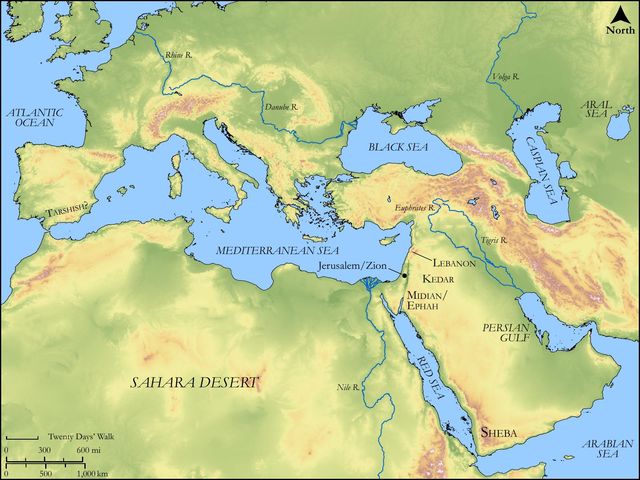
See on the biblical-era map
Study this verse
Public-domain commentary
Matthew Henry
From his Commentary on the Whole Bible. Henry comments on passages, not single verses — this entry covers Isaiah 42:5–12. His three-level outline is real structure in the source text, so it is rendered as structure.
Here is I. The covenant God made with and the commission he gave to the Messiah, Isa 42:5-7, which are an exposition of Isa 42:1, Behold my servant, whom I uphold.
1.The royal titles by which the great God here makes himself known, and distinguishes himself from all pretenders, speak very much his glory (Isa 42:5): Thus saith God the Lord. And who are thou, Lord? Why, he is the fountain of all being and therefore the fountain of all power. He is the fountain of being, 1. In the upper world; for he created the heavens and stretched them out (Isa 40:22), and keeps the vast expanse still upon the stretch. 2. In the lower world: for he spread forth the earth, and made it a capacious habitation, and that which comes out of it is produced by his power. 3. In the world of mankind: He gives breath to the people upon it, not only air to breathe in, but the breath of life itself and organs to breathe with; nay, he gives spirit, the powers and faculties of a rational soul, to those that walk therein. Now this is prefixed to God's covenant with the Messiah, and the commission given him, not only to show that he has authority to make such a covenant and give such a commission, and had power sufficient to bear him out, but that the design of the work of redemption was to maintain the honour of the Creator, and to restore man to the allegiance he owes to God as his Maker.
2.The assurances which he gives to the Messiah of his presence with him in all he did pursuant to his undertaking speak much encouragement to him, Isa 42:6.
(1.)God owns that the Messiah did not take the honour of being Mediator to himself, but was called of God, that he was no intruder, no usurper, but was fairly brought to it (Heb 5:4): I have called thee in righteousness. God not only did him no wrong in calling him to this hard service, he having voluntarily offered himself to it, but did himself right in providing for his own honour and performing the word which he had spoken.
(2.)He promises to stand by him and strengthen him in it, to hold his hand, not only to his work, but in it, to hold his hand, that it might not shake, that it might not fail, and so to keep him. When an angel was sent from heaven to strengthen him in his agonies, and the Father himself was with him, then this promise was fulfilled. Note, Those whom God calls he will own and help, and will hold their hands.
3.The great intentions of this commission speak abundance of comfort to the children of men. He was given for a covenant of the people, for a mediator, or guarantee, of the covenant of grace, which is all summed up in him. God, in giving us Christ, has with him freely given us all the blessings of the new covenant. Two glorious blessings Christ, in his gospel, brings with him to the Gentile world - light and liberty.
(1.)He is given for a light to the Gentiles, not only to reveal to them what they were concerned to know, and which otherwise they could not have known, but to open the blind eyes, that they might know it. By his Spirit in the word he presents the object; by his Spirit in the heart he prepared the organ. When the gospel came light came, a great light, to those that sat in darkness, Mat 4:16; Joh 3:19. And St. Paul was sent to the Gentiles to open their eyes, Act 26:18. Christ is the light of the world.
(2.)He is sent to proclaim liberty to the captives, as Cyrus did, to bring out the prisoners; not only to open the prison-doors, and give them leave to go out, which was all that Cyrus could do, but to bring them out, to induce and enable them to make use of their liberty, which none did but those whose spirits God stirred up. This Christ does by his grace.
II.The ratification and confirmation of this grant. That we may be assured of the validity of it consider,
1.The authority of him that makes the promise (Isa 42:8): I am the Lord, Jehovah, that is my name, and that was the name by which he made himself known when he began to perform the promise made to the patriarchs; whereas, before, he manifested himself by the name of God Almighty, Exo 6:3. If he is the Lord that gives being and birth to all things, he will give being and birth to this promise. If his name be Jehovah, which speaks him God alone, we may be sure his name is jealous, and he will not give his glory to another, whoever it is that stands in competition with him, especially not to graven images. He will send the Messiah to open men's eyes, that so he may turn them from the service of dumb idols to serve the living God, because, though he has long winked at the times of ignorance, he will now maintain his prerogative, and will not give his glory to graven images. He will perform his word because he will not lose the honour of being true to it, nor be ever charged with falsehood by the worshippers of false gods. He will deliver his people from under the power of idolaters because it looks as if he had given his praise to graven images when he gives up his own worshippers to be worshippers of images.
2.The accomplishment of the promises he had formerly made concerning his church, which are proofs of the truth of his word and the kindness he bears to his people (Isa 42:9): "Behold, the former things have come to pass; hitherto the Lord has helped his church, has supported her under former burdens, relieved her in former staits; and this in performance of the promises made to the fathers. There has not failed one word, Kg1 8:56. And now new things do I declare. Now I will make new promises, which shall as certainly be fulfilled in their season as old ones were; now I will bestow new favours, such as have not been conferred formerly. Old Testament blessings you have had abundantly; now I declare New Testament blessings, not a fruitful country and dominion over your neighbours, but spiritual blessings in heavenly things. Before they spring forth in the preaching of the gospel I tell you of them, under the type and figure of the former things." Note, The receipt of former mercies may encourage us to hope for further mercies; for God is constant in his care for his people, and his compassions are still new.
III.The song of joy and praise which should be sung hereupon to the glory of God (Isa 42:10):
Sing unto the Lord a new song, a New Testament song. The giving of Christ for a light to the Gentiles (Isa 42:6) was a new thing, and very surprising. The apostle speaks of it as a mystery which, in other ages, was not made known, as it is now revealed, that the Gentiles should be fellow-heirs, Eph 3:5, Eph 3:6. Now, this being the new thing which God declares, the newness of the song which is to be sung on this occasion is this, that whereas, before, the songs of the Lord were very much confined to the temple at Jerusalem (David's psalms were in the language of the Jews only, and sung by them in their own country only; for, when they were in a strange land, they hung their harps on the willow-trees and could not sing the Lord's song, as we find, Psa 137:2-4), now the songs of holy joy and praise shall be sung all the world over. The Gentile nations shall share equally with the Jews in New Testament blessings, and therefore shall join in New Testament praises and acts of worship. There shall be churches set up in Gentile nations and they shall sing a new song. The conversion of the Gentiles is often foretold under this notion, as appears, Rom 15:9-11. It is here promised that the praises of God's grace shall be sung with joy and thankfulness,
1.By those that live in the end of the earth, in countries that lie most remote from Jerusalem. From the uttermost parts of the earth have we heard songs, Isa 24:16. This was fulfilled when Christianity was planted in our land.
2.By mariners and merchants, and those that go down to the sea, that do business in great waters, and suck the riches of the sea, and so make themselves masters of the fulness thereof and all that is therein, with which they shall praise God, and justly, for it is his, Psa 24:1; Psa 95:5. The Jews traded little at sea; if therefore God's praises be sung by those that go down to the sea, it must be by Gentiles. Sea-faring men are called upon to praise God, Psa 107:23.
3.By the islands and the inhabitants thereof, Isa 42:10, and again, Isa 42:12. Let them declare his praise in the islands, the isles of the Gentiles, probably referring to the islands of Greece.
4.By the wilderness and the cities thereof, and the villages of Kedar. These lay east from Jerusalem, as the islands lay west, so that the gospel songs should be sung from the rising of the sun to the going down of the same. The whole Gentile world had been like an island, cut off from communication with God's church, and like a wilderness, uncultivated and bringing forth no fruit to God; but now the islands and the wilderness shall praise God.
5.By the inhabitants of the rock, and those that dwell on the tops of the mountains, not only the Gentiles, but the poorest and meanest and most despicable, those that dwell in cottages, as well as those that inhabit cities and villages. The rude and most barbarous, as the mountaineers commonly are, shall be civilized by the gospel. Or by the inhabitants of the rock may be meant the inhabitants of that part of Arabia which is called Petraea - the rocky. Perhaps the neighbouring countries shared in the joy of the Israelites when they returned out of Babylon and some of them came and joined with them in their praises; but we find not that it was to any such degree as might fully answer this illustrious prophecy, and must conclude that it reaches further, and was fulfilled in that which many other prophecies of the joy of the nations are said in the New Testament to be fulfilled in, the conversion of the Gentiles to the faith of Christ. When they are brought into the church they are brought to give glory to the Lord; then they are to him for a name and a praise, and they make it their business to praise him. He is glorified in them and by them.
Historical interpretation
Two Centuries of Reception
6 surviving comments on this verse. Each one is dated, so this reads as a timeline rather than a list.
Select a marker to jump to its quote. Markers stagger vertically where authors wrote within a few decades of each other.
The breath of life, which also rendered man [a person] an animated being, is one thing, and the vivifying Spirit another, which also caused him to become spiritual. And for this reason Isaiah said, “Thus says the Lord, who made heaven and established it, who founded the earth and the things therein, and gave breath to the people on it and the Spirit to those walking on it”; thus telling us that breath is indeed given in common to all people on earth but that the Spirit is theirs alone who tread down earthly desires.
And again, “who gave breath to the people on the earth and spirit to those walking on it.” For at first the soul, that is, “breath,” was given to the people who go around on the earth, that is, to those acting in flesh in a fleshly manner; then later the Spirit was given to those who walk on the earth, that is, those who subdue the works of the flesh, as the apostle affirms, “Not that which is spiritual first, but that which is animal and then that which is spiritual.” For although Adam from the beginning prophesied that great mystery in Christ and the church, “this is now bone of my bone and flesh of my flesh, on which account a man will leave his father and mother and cleave to his wife and they two will become one flesh,” he was subject to a falling of the spirit.
It says, “He who gives spirit to the people who are on the earth, and spirit to them who walk on it.” For undoubtedly every one who walks on the earth, that is, every earthly and corporeal being, is a partaker of the Holy Spirit that he receives from God.
The name by which he will be praised as the Lord and God of all, [Isaiah] says, “I will give to no other” but to you alone, whom I shall grant to be light to the nations. Hence, in the promise the Christ of God is called Lord and God by all the nations, the Father having granted him alone that glory. Next comes “nor will I give my powers to the carved images,” or, according to Aquila, “my worship to carved images,” or, with Symmachus, “my praise to carved images.” … According to this, Christ alone is called God since to him alone and to no other has God, who is above all things, given his glory and power.
The Son is both sent and given, and the Spirit also is both sent and given; they have assuredly a oneness of Godhead who have a oneness of action.
(Verse 5, 6 and following) Thus says the Lord God: He who creates the heavens and stretches them out, who spreads out the earth with all that springs from it, who gives breath to its people, and life to those who walk on it: I, the Lord, have called you in righteousness; I will take hold of your hand. I will keep you and will make you to be a covenant for the people and a light for the Gentiles, to open eyes that are blind, to free captives from prison and to release from the dungeon those who sit in darkness. I am the Lord, this is my name; I will not give my glory to another, nor my praise to idols. The things that were first, behold they have come, and new things I declare; before they spring forth, I tell you of them: It was uncertain who has said before: Behold my servant, I will take him: my chosen, my soul has pleased him. I have put my spirit upon him: he shall bring forth judgment to the Gentiles. After the condemnation of idols, a sudden speech had burst forth. Behold my servant, and the rest, which we have interpreted from the Father's perspective on Christ. Therefore, to not leave it ambiguous who said the previous things, he adds and says: Thus says the Lord God, creating the heavens and stretching them out. Or as the Septuagint translated: He made the heaven and fixed it. Therefore, the Creator and Lord of the universe himself promised the coming of his Christ, who not only stretched out and fixed the heavens, but also established the earth with its lofty mass, and everything that springs forth from it, so that the invisible things of him may be understood and seen from the things that are made (Rom. I); as well as his everlasting power and divinity. He who gave breath to all who dwell on earth, the first law of mortals. For God breathed into the face of Adam the breath of life, and he became a living soul (Gen. II). But the Spirit properly belongs to those who tread upon the earth; and the wisdom of the flesh subjects itself to its own power. Therefore, he to whom such great praises are sung has spoken these words to him, whose law the islands await and the nations: I am the Lord who called you in righteousness; of whom he himself speaks in the Gospel, Father, the world does not know you (John XVII, 25); so that he may be not only the God of the Jews, but also of the Gentiles. And I took hold of your hand, for whatever the Son does, the Father does also. And I saved you, who preserves all things yourself. And I gave you into a covenant with the people of Israel, to whom I had promised that you would come. And into the light of the Gentiles, who were sitting in darkness and in the shadow of death, so that you would open the eyes of the blind who had not seen God before. And you would bring out those who were bound in confinement (Prov. 2:16); for each one is bound by the cords of their own sins. And in the Gospel, which Satan had bound, the Lord set free (Matt. VIII). Those sitting in the darkness of the prison house, who were dwelling in the night of error and darkness. And He declares: I am the Lord, this is my name; I will not give my glory to another, nor does He exclude the Son, to whom He said in the Gospel: Father, glorify me with the glory which I had with You before the world was (John XVII, 5), He Himself answered; And I have glorified, and will glorify. For He did not say, 'I will not give My glory to anyone,' for if He had said this, He would have excluded the Son as well, but He said, 'I will not give My glory to another, except to You, to whom I have given it, and to whom I am going to give it.' Therefore, I greatly admire the uniqueness of the holy Scripture, that the phrase 'another' all interpreters have translated consistently, unlike the many other instances where they differ. And so that we may know that the Son is not excluded by this statement, but rather idols are, the following words testify: 'And My praise to carved images.' Pro quo LXX: nec virtutes meas simulacris. Cum enim Christus Dei virtus sit, Deique sapientia, omnes in se virtutes continet Patris. Sequitur, Quae prima fuerunt, ecce venerunt. Et est sensus: Quae locutus sum, quae per Moysen, Prophetasque pollicitus sum, universa completa sunt. Nunc autem annuntio vobis Evangelium, vocationem gentium, passionem Christi, novitatem fidei: ut quomodo priora cernitis rebus expleta, sic et ea quae nunc polliceor, credatis esse ventura.
Continue studying Isaiah 42:5 across the web’s major study libraries — every link below opens this exact verse, chapter, or book on the destination site.
Read & Compare
 BibleGatewayThis verse in more than 200 translations and 70 languages.
 Bible.comThe YouVersion reader — hundreds of translations, reading plans, and highlights.
 ESV.orgCrossway's official English Standard Version reader.
 NET BibleThe NET translation with 60,000+ translators' notes on every rendering decision.
 STEP BibleTyndale House's free study tool — original text, vocabulary, and scholarly resources.
 BibliaLogos Bible Software's free web reader.
 USCCBThe New American Bible (Revised Edition) with the U.S. bishops' study notes.
Commentaries
 BibleHub CommentariesDozens of classic commentaries on this verse, gathered on one page.
 StudyLightMore than 100 commentary sets — the largest collection on the web.
 BibleRefPlain-English commentary on what this verse means, verse by verse.
 Enduring WordDavid Guzik's free commentary on this chapter, widely used by Bible teachers.
 Bible Study ToolsVerse commentary alongside Greek and Hebrew study aids.
Original Language & Research
- BibleHub InterlinearThe verse word by word — original language, transliteration, and English.
- BibleHub LexiconEvery word's original-language definition and Strong's entry.
 Blue Letter BibleDeep-study tools — Strong's numbers, concordance, and word studies.
 SefariaThe Hebrew text with Rashi and centuries of Jewish commentary.
Sermons, Hymns & Audio


TrulyRandomVerse is not affiliated with these sites and doesn’t control their content. They’re linked because they’re genuinely useful.
Summary
Isaiah 42:5 serves as a profound and majestic declaration of God's unparalleled identity and power, establishing Him as the supreme Creator and Sustainer of the heavens and the earth. This foundational statement precedes the introduction of the Servant of the Lord, unequivocally asserting Yahweh's absolute sovereignty over the heavens and the earth, and His intimate provision of life, breath, and spirit to all humanity. The verse sets an authoritative tone, highlighting God's active involvement in both the grand design of creation and the intricate details of human existence, thereby validating the divine message that follows.
Context
ShowHideLiterary Context
Isaiah 42:5 functions as a solemn and majestic preamble to the first of the pivotal "Servant Songs" (Isaiah 42:1-9). Positioned after a section that powerfully emphasizes God's incomparable nature and His judgment against the futility of idolatry (Isaiah 40-41), this verse serves to firmly establish the divine credentials of the speaker—God Himself—before He unveils His chosen Servant. By commencing with such a grand declaration of His creative and sustaining power, God asserts His absolute authority, trustworthiness, and unique ability to bring about His purposes. This rhetorical strategy assures the audience that the promises and the profound mission concerning the Servant, soon to be revealed, are backed by the omnipotence of the universe's Creator. The verse acts as a divine signature, lending an unshakeable validation to the prophetic message that follows and rooting the Servant's mission deeply within God's eternal and sovereign plan.
Historical & Cultural Context
The broader context of Isaiah, particularly chapters 40-55 (often referred to as Deutero-Isaiah), directly addresses the people of Judah either during or on the cusp of their Babylonian exile. This period was characterized by immense despair, profound questioning of God's faithfulness and power, and the ever-present temptation to succumb to the polytheistic idolatry prevalent in their captors' culture. In this challenging environment, Isaiah 42:5 emerges as a powerful theological counter-narrative. By reminding Israel that their God is not merely a localized tribal deity but the Creator of all things—the one who "stretched out" the heavens and "spread forth" the earth—the prophet directly challenges the perceived impotence of Babylonian idols and the gods of other nations. This declaration of sovereignty over all creation offered immense comfort and reassurance, affirming that the God who brought the entire universe into being was more than capable of delivering His people from exile and fulfilling His covenant promises. It powerfully re-establishes Yahweh's unique and supreme status amidst a world saturated with competing deities.
Key Themes
ShowHideThis verse powerfully articulates several core themes central to Isaiah's overarching message and to biblical theology as a whole. Firstly, it champions Divine Sovereignty and Creation, emphasizing God as the ultimate architect and ongoing sustainer of the universe, who not only initiated creation but actively maintains its order and life. This theme is foundational throughout Scripture, from the intricate details of Genesis 1:1 to the New Testament's affirmation of Christ's role over all creation (e.g., Colossians 1:16). Secondly, the verse highlights God's role as the Sustainer of Life, explicitly stating that He "giveth breath unto the people upon it, and spirit to them that walk therein." This demonstrates God's intimate and continuous involvement in the very existence of humanity, providing both physical life and the animating force that enables consciousness and vitality, echoing the divine act of breathing life into Adam in Genesis 2:7. Lastly, the opening phrase "Thus saith God the LORD" underscores God's Unquestionable Authority and Revelation. It asserts the divine origin and infallible truth of the message, positioning God as the supreme source of all revelation and power, thereby validating the prophecies concerning the Servant and Israel's future.
Exposition and Analysis
ShowHideKey Word Analysis
ShowHideH3068 refers to the self-Existent or Eternal; Jehovah, Jewish national name of God; Jehovah, the Lord. This is the sacred covenant name of God, YHWH, which emphasizes His eternal, unchanging nature and His faithfulness to His covenant promises. Its use here underscores that the Creator God is also the personal God of Israel, who enters into a unique and enduring relationship with His people.
H1254 is a primitive root; (absolutely) to create; (qualified) to cut down (a wood), select, feed (as formative processes); choose, create (creator), cut down, dispatch, do, make (fat). This verb is unique in Hebrew in that it is almost exclusively used with God as the subject, signifying creation ex nihilo (out of nothing) or the bringing into existence of something entirely new and unique, beyond human capability. It highlights God's unparalleled power and originality in bringing the heavens and the earth into being.
H5397 refers to a puff, i.e. wind, angry or vital breath, divine inspiration, intellect. or (concretely) an animal; blast, (that) breath(-eth), inspiration, soul, spirit.
H7307 refers to wind; by resemblance breath, i.e. a sensible (or even violent) exhalation; figuratively, life, anger, unsubstantiality; by extension, a region of the sky; by resemblance spirit, but only of a rational being (including its expression and functions); air, anger, blast, (that) breath(-eth), [idiom] cool, courage, mind, [idiom] quarter, [idiom] side, spirit(-ual), tempest, [idiom] vain, (whirl-) wind(-y). The pairing of neshamah and ruach signifies the comprehensive nature of life given by God. Neshamah often denotes the physical breath of life, the animating principle that sustains biological existence, while ruach can refer to the deeper life force, consciousness, intellect, or even the spiritual essence that distinguishes humanity, encompassing vitality and inner being. Together, they emphasize God's complete provision for human life, both physically and spiritually.
Verse Breakdown
ShowHide"Thus saith God the LORD"
This opening phrase functions as a solemn divine oracle, asserting the absolute authority and veracity of the declaration that follows. "God" (ʼêl, H410) signifies His might, power, and divine nature, while "the LORD" (Yᵉhôvâh, H3068) refers to His personal, covenantal name, emphasizing His self-existence and unwavering faithfulness. This establishes that the subsequent words are direct, infallible revelation from the Almighty, covenant-keeping God.
"he that created the heavens, and stretched them out;"
This clause highlights God's role as the transcendent Creator of the celestial realm. The verb "created" (bârâʼ) denotes a unique divine act of bringing something new into existence, an act only God can perform. "Stretched them out" (nâṭâh) portrays the heavens as a vast canopy unfurled by God's hand, emphasizing His immense power, deliberate design, and the boundless expanse of His creation. This imagery evokes the vastness, order, and intricate beauty of the heavens and the earth, all subject to His sovereign will.
"he that spread forth the earth, and that which cometh out of it;"
This continues the theme of creation, focusing now on the terrestrial realm, demonstrating God's comprehensive creative work. "Spread forth" (râqaʼ) suggests the flattening or expansion of the earth, akin to hammering out a metal sheet, signifying God's deliberate formation of the landmasses and their stability. "That which cometh out of it" (tseʼĕtsâʼ) refers to the earth's produce—its vegetation, rivers, and all that springs forth from it—underscoring God's ongoing provision, the fertility He bestows upon the ground, and His sustenance of all earthly life.
"he that giveth breath unto the people upon it, and spirit to them that walk therein:"
This final clause shifts from the creation of the heavens and the earth to the intimate provision of life for humanity, revealing God as not just the distant Creator but the active Sustainer. "Giveth breath" (nâthan neshamah) refers to the physical life-giving breath, the animating principle of biological existence. "Spirit" (ruach) refers to the animating life force, consciousness, intellect, and perhaps even the spiritual capacity unique to humans, enabling them to "walk" (live and behave) in the world. This emphasizes God's direct and continuous involvement in sustaining every individual, highlighting His profound care and the preciousness of human life as a divine gift.
Literary Devices
ShowHideIsaiah 42:5 employs several powerful literary devices to convey God's majesty and absolute authority. The most prominent is Anaphora, the repetition of the phrase "he that" at the beginning of successive clauses ("he that created," "he that spread forth," "he that giveth"). This rhetorical device creates a rhythmic, emphatic declaration, underscoring the singular, multifaceted agency of God in all aspects of creation and sustenance. Parallelism is also evident, particularly in the complementary pairing of "heavens" and "earth," and "breath" and "spirit," which function to convey totality and completeness in God's creative and sustaining work. The vivid verbs "stretched out" and "spread forth" are examples of Anthropomorphism, attributing human actions (like stretching and spreading) to God to make His immense creative power more comprehensible and relatable to human experience. Finally, the entire verse functions as a Divine Oracle, introduced by the authoritative declaration "Thus saith God the LORD," lending an unchallengeable tone to the profound truths being proclaimed and establishing the divine origin of the message.
Theological and Thematic Connections
ShowHideIsaiah 42:5 serves as a profound theological cornerstone, anchoring the subsequent Servant Songs in the absolute sovereignty of God. It reiterates the fundamental biblical truth that God is the sole, incomparable Creator and Sustainer of all life, a theme woven throughout Scripture from Genesis to Revelation. This declaration of God's power over all creation is not merely an abstract theological statement but a deeply personal one, emphasizing His intimate involvement in providing "breath" and "spirit" to every human being. For Israel, facing the existential threat of exile and the allure of foreign gods, this truth was a potent reminder of Yahweh's unique power and faithfulness, assuring them that the God who created the universe was certainly capable of fulfilling His promises of redemption and restoration. For all believers, it establishes a bedrock of trust: if God can create and sustain the heavens and the earth and every living soul, then He is utterly trustworthy with our individual lives and the fulfillment of His grand purposes.
Reflection and Application
ShowHideIsaiah 42:5 offers a profound invitation to reflect on the sheer magnitude of God's power and His intimate involvement in our lives. In a world often characterized by anxiety, uncertainty, and the feeling of being overwhelmed, this verse reminds us that our very existence, our every breath, is a precious gift from the Creator of the universe. This truth should inspire awe, deep gratitude, and a profound sense of humility, shifting our perspective from self-reliance to God-reliance. If the God who stretched out the heavens and spread forth the earth also gives us breath and spirit, then He is intimately acquainted with our struggles, capable of sustaining us through any challenge, and supremely worthy of our complete trust. It calls us to live with a profound awareness of His constant presence and unfailing provision, recognizing that our ultimate security rests not in human strength or worldly resources, but in the unfailing power of the Almighty. This understanding empowers us to face life with courage and confidence, knowing that the same divine power that brought the heavens and the earth into being is actively at work in and for us, sustaining us in every moment.
Questions for Reflection
ShowHideFAQ
ShowHideWhat is the significance of God being identified as "God the LORD" in this verse?
ShowHideThe phrase "God the LORD" (Hebrew: ʼêl Yᵉhôvâh) is highly significant and rich in meaning. "God" (ʼêl, H410) emphasizes His might, power, and supreme divinity, positioning Him as the ultimate, incomparable deity. "The LORD" (Yᵉhôvâh, H3068, often rendered as Yahweh) is God's personal covenant name, revealing His self-existent, eternal nature and His unwavering faithfulness to His promises made to Israel. The combination of these two divine titles underscores that the mighty, transcendent Creator of the universe is also the immanent, relational God who has entered into a faithful covenant relationship with His people. This dual emphasis provides both comfort in His omnipotence and assurance in His fidelity, especially for a people facing the uncertainties of exile and questioning God's presence and power.
How does this verse relate to the "Servant Songs" that follow in Isaiah?
ShowHideIsaiah 42:5 serves as a crucial theological foundation and authoritative preamble for the subsequent "Servant Songs" (Isaiah 42:1-4, 5-9; 49:1-13; 50:4-11; 52:13-53:12). Before introducing the identity and mission of His chosen Servant, God emphatically declares His own credentials as the sovereign Creator and Sustainer of all life. This declaration establishes God's absolute authority, power, and trustworthiness, assuring the audience that the one who sends the Servant is fully capable of accomplishing the Servant's mission, no matter how challenging or seemingly impossible it may appear. It validates the divine origin and ultimate success of the Servant's work, which includes bringing justice to the nations and being a light to the Gentiles, as described in passages like Isaiah 42:6.
What is the distinction between "breath" (neshamah) and "spirit" (ruach) as given by God?
ShowHideWhile both terms relate to life and are often used interchangeably in some contexts, in Isaiah 42:5, their pairing suggests a comprehensive understanding of life as a gift from God. "Breath" (neshamah, H5397) typically refers to the physical breath of life, the animating principle that sustains biological existence, as vividly seen in Genesis 2:7 when God breathes into Adam's nostrils, causing him to become a living being. "Spirit" (ruach, H7307) can denote a broader, deeper life force—the animating principle that gives consciousness, intellect, vitality, and the unique spiritual essence to humans. It encompasses the inner being, mind, and often refers to the wind or the Spirit of God Himself. Together, they emphasize that God is the source of all aspects of human life, from the most basic physiological function to the deepest spiritual and intellectual capacities that enable humanity to "walk" (live and function) in the world.
Christ-Centered Fulfillment
ShowHideIsaiah 42:5, with its majestic portrayal of God as the Creator and Sustainer of all life, finds its ultimate and most profound fulfillment in the person and work of Jesus Christ. The New Testament consistently identifies Jesus as the active agent of creation, the one through whom the Father "created the heavens, and stretched them out." John 1:3 declares, "All things were made through him, and without him was not anything made that was made." Similarly, Colossians 1:16 affirms that "by him all things were created, in heaven and on earth, visible and invisible... all things were created through him and for him." Not only is Jesus the Creator, but He is also the active Sustainer, the one who "upholds the universe by the word of his power," as stated in Hebrews 1:3. The very "breath" and "spirit" that God gives to humanity, as mentioned in Isaiah 42:5, are ultimately sustained by Christ's ongoing work. Moreover, Jesus is the one who gives new spiritual life, the "living water" and the "bread of life," offering eternal "spirit" to those who believe in Him, fulfilling the deeper spiritual implications of God's life-giving provision (e.g., John 6:63 and John 7:38-39). Thus, the omnipotent Creator and Sustainer of Isaiah 42:5 is fully revealed and embodied in Jesus Christ, the one through whom all things exist and in whom all believers find true and eternal life.