


Genesis 47:10
Bible text: King James Version (1769 Blayney text) · Public domain
Bible text: Berean Standard Bible · Public domain
Bible text: American Standard Version (1901) · Public domain
Bible text: World English Bible, Messianic edition · Public domain
Bible text: Geneva Bible (1599) · Public domain
Bible text: Young's Literal Translation · Public domain
- וַיְבָרֶךְvay·Va·rekhand he blessedH1288Conj-w ¦ V-Piel-ConsecImperf-3msVerb Piel Consecutive Imperfect 3rd Singular Masculineוַandיְבָרֶךְhe blessed
- יַעֲקֹבya·'a·KoJacobH3290N-proper-mNoun Proper Masculine
- אֶת'et<obj.>H853DirObjMParticle Object Indicator
- פַּרְעֹהpar·'OhPharaohH6547N-msNoun Title Singular Masculine Absolute
- וַיֵּצֵאvai·ye·Tze'and he went outH3318Conj-w ¦ V-Qal-ConsecImperf-3msVerb Qal Consecutive Imperfect 3rd Singular Masculineוַandיֵּצֵאhe went out
- מִלִּפְנֵיmi·lif·Neifrom to beforeH6440Prep-m ¦ Prep-l ¦ N-mpcNoun Plural Masculine Constructמִfromלִּtoפְנֵיbefore
- פַרְעֹהfar·'OhPharaohH6547N-msNoun Title Singular Masculine Absolute
English is a literal word-by-word gloss of the Hebrew, not the KJV's wording. Why?
This is the original text the KJV's translators worked from — each Hebrew word with its own literal English meaning in this verse, prepared by scholars at Tyndale House, Cambridge. The KJV translates whole sentences, not word by word, so its wording differs: one Hebrew word can become several English words, and the KJV may choose “the LORD” where the gloss reads “Yahweh”. Both are faithful — they answer different questions. For the KJV's own rendering, switch to the KJV text.
Details
See on the biblical-era maps


Study this verse
Public-domain commentary
Matthew Henry
From his Commentary on the Whole Bible. Henry comments on passages, not single verses — this entry covers Genesis 47:1–12. His four-level outline is real structure in the source text, so it is rendered as structure.
Here is, I. The respect which Joseph, as a subject, showed to his prince. Though he was his favourite, and prime-minister of state, and had had particular orders from him to send for his father down to Egypt, yet he would not suffer him to settle till he had given notice of it to Pharaoh, Gen 47:1. Christ, our Joseph, disposes of his followers in his kingdom as it is prepared of his Father, saying, It is not mine to give, Mat 20:23.
II.The respect which Joseph, as a brother, showed to his brethren, notwithstanding all the unkindness he had formerly received from them.
1.Though he was a great man, and they were comparatively mean and despicable, especially in Egypt, yet he owned them. Let those that are rich and great in the world learn hence not to overlook nor despise their poor relations. Every branch of the tree is not a top branch; but, because it is a lower branch, is it therefore not of the tree? Our Lord Jesus, like Joseph here, is not ashamed to call us brethren.
2.They being strangers and no courtiers, he introduced some of them to Pharaoh, to kiss his hand, as we say, intending thereby to put an honour upon them among the Egyptians. Thus Christ presents his brethren in the court of heaven, and improves his interest for them, though in themselves unworthy and an abomination to the Egyptians. Being presented to Pharaoh, according to the instructions which Joseph had given them, they tell him,
(1.)What was their business - that they were shepherds, Gen 47:3. Pharaoh asked them (and Joseph knew it would be one of his first questions, Gen 46:33), What is your occupation? He takes it for granted they had something to do, else Egypt should be no place for them, no harbour for idle vagrants. If they would not work, they should not eat of his bread in this time of scarcity. Note, All that have a place in the world should have an employment in it according to their capacity, some occupation or other, mental or manual. Those that need not work for their bread must yet have something to do, to keep them from idleness. Again, Magistrates should enquire into the occupation of their subjects, as those that have the care of the public welfare; for idle people are as drones in the hive, unprofitable burdens of the commonwealth.
(2.)What was their business in Egypt - to sojourn in the land (Gen 47:4), not to settle there for ever, only to sojourn there for a time, while the famine so prevailed in Canaan, which lay high, that it was not habitable for shepherds, the grass being burnt up much more than in Egypt, which lay low, and where the corn chiefly failed, while there was tolerably good pasture.
3.He obtained for them a grant of a settlement in the land of Goshen, Gen 47:5, Gen 47:6. This was an instance of Pharaoh's gratitude to Joseph; because he had been such a blessing to him and his kingdom, he would be kind to his relations, purely for his sake. He offered them preferment as shepherds over his cattle, provided they were men of activity; for it is the man who is diligent in his business that shall stand before kings. And, whatever our profession or employment is, we should aim to be excellent in it, and to prove ourselves ingenious and industrious.
III.The respect Joseph, as a son, showed to his father.
1.He presented him to Pharaoh, Gen 47:7. And here,
(1.)Pharaoh asks Jacob a common question: How old art thou? Gen 47:8. A question usually put to old men, for it is natural to us to admire old age and to reverence it (Lev 19:32), as it is very unnatural and unbecoming to despise it, Isa 3:5. Jacob's countenance, no doubt, showed him to be very old, for he had been a man of labour and sorrow; in Egypt people were not so long-lived as in Canaan, and therefore Pharaoh looks upon Jacob with wonder; he was as a show in his court. When we are reflecting upon ourselves, this should come into the account, "How old are we?"
(2.)Jacob gives Pharaoh an uncommon answer, Isa 3:9. He speaks as becomes a patriarch, with an air of seriousness, for the instruction of Pharaoh. Though our speech be not always of grace, yet it must thus be always with grace. Observe here,
[1.]He calls his life a pilgrimage, looking upon himself as a stranger in this world, and a traveller towards another world: this earth his inn, not his home. To this the apostle refers (Heb 11:13), They confessed that they were strangers and pilgrims. He not only reckoned himself a pilgrim now that he was in Egypt, a strange country in which he never was before; but his life, even in the land of his nativity, was a pilgrimage, and those who so reckon it can the better bear the inconvenience of banishment from their native soil; they are but pilgrims still, and so they were always.
[2.]He reckons his life by days; for, even so, it is soon reckoned, and we are not sure of the continuance of it for a day to an end, but may be turned out of this tabernacle at less than an hour's warning. Let us therefore number our days (Psa 90:12), and measure them, Psa 39:4.
[3.]The character he gives of them is, First, That they were few. Though he had now lived 130 years, they seemed to him but a few days, in comparison with the days of eternity, the eternal God, and the eternal state, in which a thousand years (longer than ever any man lived) are but as one day. Secondly, That they were evil. This is true concerning man in general, he is of few days, and full of trouble (Job 14:1); and, since his days are evil, it is well they are few. Jacob's life, particularly, had been made up of evil days; and the pleasantest days of his life were yet before him. Thirdly, That they were short of the days of his fathers, not so many, not so pleasant, as their days. Old age came sooner upon him than it had done upon some of his ancestors. As the young man should not be proud of his strength or beauty, so the old man should not be proud of his age, and the crown of his hoary hairs, though others justly reverence it; for those who are accounted very old attain not to the years of the patriarchs. The hoary head is a crown of glory only when it is found in the way of righteousness.
(3.)Jacob both addresses himself to Pharaoh and takes leave of him with a blessing (Gen 47:7): Jacob blessed Pharaoh, and again, Gen 47:10, which was not only an act of civility (he paid him respect and returned him thanks for his kindness), but an act of piety - he prayed for him, as one having the authority of a prophet and a patriarch. Though in worldly wealth Pharaoh was the greater, yet, in interest with God, Jacob was the greater; he was God's anointed, Psa 105:15. And a patriarch's blessing was not a thing to be despised, no, not by a potent prince. Darius valued the prayers of the church for himself and for his sons, Ezr 6:10. Pharaoh kindly received Jacob, and, whether in the name of a prophet or no, thus he had a prophet's reward, which sufficiently recompensed him, not only for his courteous converse with him, but for all the other kindnesses he showed to him and his.
2.He provided well for him and his, placed him in Goshen (Gen 47:11), nourished him and all his with food convenient for them, Gen 47:12. This bespeaks, not only Joseph a good man, who took this tender care of his poor relations, but God a good God, who raised him up for this purpose, and put him into a capacity of doing it, as Esther came to the kingdom for such a time as this. What God here did for Jacob he has, in effect, promised to do for all his, that serve him and trust in him. Psa 37:19, In the days of famine they shall be satisfied.
Continue studying Genesis 47:10 across the web’s major study libraries — every link below opens this exact verse, chapter, or book on the destination site.
Read & Compare
 BibleGatewayThis verse in more than 200 translations and 70 languages.
 Bible.comThe YouVersion reader — hundreds of translations, reading plans, and highlights.
 ESV.orgCrossway's official English Standard Version reader.
 NET BibleThe NET translation with 60,000+ translators' notes on every rendering decision.
 STEP BibleTyndale House's free study tool — original text, vocabulary, and scholarly resources.
 BibliaLogos Bible Software's free web reader.
 USCCBThe New American Bible (Revised Edition) with the U.S. bishops' study notes.
Commentaries
 BibleHub CommentariesDozens of classic commentaries on this verse, gathered on one page.
 StudyLightMore than 100 commentary sets — the largest collection on the web.
 BibleRefPlain-English commentary on what this verse means, verse by verse.
 Enduring WordDavid Guzik's free commentary on this chapter, widely used by Bible teachers.
 Bible Study ToolsVerse commentary alongside Greek and Hebrew study aids.
Original Language & Research
- BibleHub InterlinearThe verse word by word — original language, transliteration, and English.
- BibleHub LexiconEvery word's original-language definition and Strong's entry.
 Blue Letter BibleDeep-study tools — Strong's numbers, concordance, and word studies.
 SefariaThe Hebrew text with Rashi and centuries of Jewish commentary.
Sermons, Hymns & Audio


TrulyRandomVerse is not affiliated with these sites and doesn’t control their content. They’re linked because they’re genuinely useful.
Summary
Genesis 47:10 records a profoundly significant moment where Jacob, the aged patriarch and covenant bearer, concludes his audience with Pharaoh, the reigning monarch of Egypt, by bestowing a blessing upon him. This seemingly simple act powerfully asserts the spiritual authority of God's chosen representative over the world's most formidable temporal power, underscoring the divine favor that rested upon Jacob and, through him, upon the nascent nation of Israel, even as they sought refuge in a foreign land.
Context
ShowHideLiterary Context
This verse is the culmination of Jacob's initial interaction with Pharaoh, immediately following Joseph's introduction of his father and brothers to the Egyptian ruler. The preceding verses (Genesis 47:1-9) detail Joseph's strategic presentation of his family and Jacob's initial blessing of Pharaoh upon entering his presence. The narrative flow emphasizes God's meticulous providence in preserving His covenant people through the famine, relocating them to Egypt, and ensuring their protection and provision under Joseph's high office. Jacob's two blessings of Pharaoh (upon entering and upon departing) frame this pivotal encounter, highlighting the patriarch's unique spiritual standing.
Historical & Cultural Context
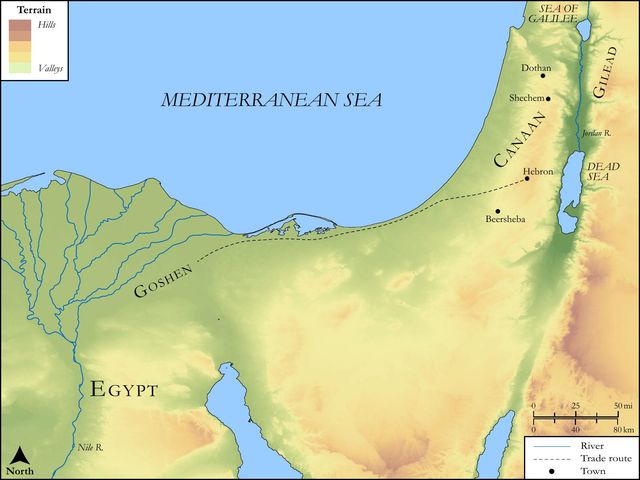
The setting is ancient Egypt during a severe famine, a period when Pharaoh held absolute power, often considered a divine or semi-divine figure. For a foreign, elderly shepherd to bless such a powerful monarch was culturally unconventional and spiritually audacious. In Scripture, blessings were typically conferred by a superior upon an inferior, as Melchizedek blessed Abraham, or by a priest invoking divine favor. Jacob's act, therefore, subtly but powerfully subverted the conventional power dynamics, asserting the supremacy of the God he served over the might of Egypt. The land of Goshen, where Jacob's family was settled, was fertile and separate, facilitating their growth while minimizing cultural assimilation.
Key Themes
ShowHideGenesis 47:10 contributes significantly to several overarching themes in the book of Genesis and the broader biblical narrative. It underscores Divine Providence, demonstrating God's sovereign hand in orchestrating events (like Joseph's rise and the famine) to preserve His covenant people and fulfill His promises. It highlights the theme of Spiritual Authority triumphing over temporal power, as Jacob, God's chosen representative, stands in a position of spiritual superiority to the most powerful ruler on earth. Furthermore, it reinforces Covenant Faithfulness, showing how God continues to work through Abraham's descendants, even in foreign lands, to ensure the growth and eventual blessing of all nations, as promised in Genesis 12:3. This encounter also subtly foreshadows Israel's future role as a people through whom God's light would eventually extend to the Gentiles.
Exposition and Analysis
ShowHideKey Word Analysis
ShowHideDerived from a root meaning "heel-catcher" or "supplanter," this name reflects Jacob's early life of deception and struggle, particularly in his birth and dealings with Esau. However, by this point in his life, Jacob has been transformed through encounters with God, wrestling with an angel (Genesis 32:22-32) and receiving the name Israel ("struggles with God"). His act of blessing Pharaoh here demonstrates his mature faith and his established role as a patriarch, a conduit of God's blessing, transcending his earlier character flaws and embodying the divine favor that now rests upon him.
This primitive root verb carries a rich semantic range, meaning "to kneel," and by implication, "to bless God (as adoration)" or "man (as a benefit)." It can also mean to "confer favor, prosperity, or well-being." In this context, Jacob's blessing of Pharaoh is not merely a polite farewell or a wish for good fortune. It is a formal, authoritative invocation of divine favor upon the Egyptian ruler, stemming from Jacob's unique position as the recipient and bearer of God's covenant promises. It signifies a bestowal of spiritual benefit from a divinely appointed source.
This word, often translated as "face" or "presence," denotes a direct, face-to-face encounter or being in the immediate vicinity of someone. "From before Pharaoh" emphasizes that Jacob was in Pharaoh's direct presence, having concluded a personal audience with the monarch. This detail highlights the intimacy and directness of the interaction, underscoring the significance of Jacob's blessing as a personal act delivered directly to the most powerful man in the world.
Verse Breakdown
ShowHide"And Jacob blessed Pharaoh"
This clause describes the central, climactic action of the verse. Jacob, the patriarch, performs a formal act of spiritual benediction upon Pharaoh, the ruler of Egypt. This blessing is not a mere courtesy but an authoritative invocation of divine favor and prosperity, stemming from Jacob's unique relationship with Yahweh and his position as the inheritor of the Abrahamic covenant. It asserts the spiritual superiority of God's representative over the most powerful earthly ruler.
"and went out from before Pharaoh"
This second clause marks the formal conclusion of the audience. Having delivered the blessing, Jacob physically departs from Pharaoh's immediate presence. This signifies the end of the official meeting and the successful establishment of the terms for Israel's settlement in Egypt. The departure under the weight of Jacob's blessing leaves a lasting spiritual impression on the encounter and, by extension, on Pharaoh and his kingdom.
Literary Devices
ShowHideThe verse employs several powerful literary devices. Contrast is prominent, highlighting the stark difference in worldly status between the aged, humble shepherd, Jacob, and the mighty, divine-like sovereign, Pharaoh. This contrast serves to magnify the spiritual authority inherent in Jacob's act of blessing. There is also a strong element of Symbolism: Jacob's blessing symbolizes the spiritual preeminence of God's covenant people over all earthly powers. The act itself is a Prophetic Act, subtly foreshadowing the future relationship between Israel and the nations, where Israel, as God's chosen instrument, would be a source of blessing to the world. Furthermore, the scene presents a profound Irony: the seemingly lesser figure bestows a blessing upon the ostensibly greater, revealing that true greatness and ultimate authority reside with the one who represents the Most High God.
Theological and Thematic Connections
ShowHideGenesis 47:10 is a profound theological statement on the nature of authority and blessing. It asserts that true power and ultimate favor flow from God, not from human institutions or worldly might. Jacob, as the bearer of God's covenant promises, stands as a conduit of divine blessing, demonstrating that God's chosen people, though often seemingly insignificant in worldly terms, possess a spiritual authority that transcends temporal dominion. This act underscores the biblical principle that those who are blessed by God are empowered to be a blessing to others, fulfilling the Abrahamic covenant's global scope. It also highlights God's meticulous providence in preserving and prospering His lineage, ensuring the conditions for Israel's growth before their eventual exodus.
Reflection and Application
ShowHideGenesis 47:10 offers profound insights for believers today, reminding us of the spiritual authority we carry as representatives of God's kingdom, regardless of our worldly position. Just as Jacob, a humble shepherd, stood with divine authority before the most powerful man of his age, so too are we called to live as ambassadors of Christ, carrying His presence and blessing into every sphere of influence. Our ability to bless others—through prayer, encouragement, acts of service, or simply invoking God's favor in our interactions—is a tangible expression of God's power working through us. This passage encourages us to approach all interactions, especially with those in authority, with a respectful demeanor, yet with the quiet confidence that our ultimate allegiance and source of blessing lie with God, who is sovereign over all earthly powers. It challenges us to be intentional conduits of God's blessing in a world that desperately needs His favor and grace, understanding that our spiritual standing in Christ empowers us to impact our surroundings for His glory.
Questions for Reflection
ShowHideFAQ
ShowHideWhy would Jacob, a seemingly less powerful figure, bless Pharaoh, the ruler of Egypt?
ShowHideJacob's act of blessing Pharaoh was not an assertion of worldly power but of spiritual authority. As the patriarch carrying God's covenant promises to Abraham, Jacob represented the Most High God. In biblical tradition, the lesser is blessed by the greater, as seen in Hebrews 7:7, where Melchizedek blesses Abraham. Jacob, as God's chosen servant and the recipient of divine favor, was in a unique position to invoke God's blessing upon the secular ruler, demonstrating that Pharaoh's well-being ultimately depended on the God whom Jacob served. This act subtly yet profoundly asserted the sovereignty of Yahweh over all earthly rulers.
What does the word "blessed" (Hebrew: barak) imply in this context?
ShowHideThe Hebrew word barak signifies more than a polite greeting or a wish. It implies conferring divine favor, prosperity, and well-being. When Jacob blessed Pharaoh, he was not merely wishing him well but was invoking God's favor upon him, recognizing God as the ultimate source of all blessing and prosperity. It was a formal benediction from a spiritual superior, a patriarchal act that carried divine weight and sought to impart God's goodness upon the recipient.
Does this event imply that God's people should always seek to bless secular rulers?
ShowHideYes, the principle of blessing those in authority is consistent with biblical teaching. Believers are called to pray for kings and all who are in high positions, that they may live peaceable and quiet lives in all godliness and reverence, as exhorted in 1 Timothy 2:1-2. Jacob's act serves as an example of respectfully engaging with secular authority while subtly asserting the higher spiritual authority of God and His kingdom. It demonstrates that God's people are meant to be a source of blessing and positive influence in the world, even within non-believing contexts, reflecting God's desire for the well-being of all humanity.
Christ-Centered Fulfillment
ShowHideJacob's act of blessing Pharaoh serves as a powerful foreshadowing of Christ, the ultimate Blesser and the true King who transcends all earthly authority. Just as Jacob, a patriarch of God's chosen line, invoked divine favor upon a powerful Gentile ruler, so Christ, the Son of God and the fulfillment of the Abrahamic covenant, came to bless all nations. Through His atoning work on the cross, He bestows the ultimate spiritual blessings—redemption, reconciliation with God, forgiveness of sins, and eternal life—upon all who believe, regardless of their earthly status or power, fulfilling the promise that in Abraham's seed "all the families of the earth shall be blessed" (Genesis 12:3). Christ is the one through whom believers receive "every spiritual blessing in the heavenly places" (Ephesians 1:3). He holds "all authority in heaven and on earth" (Matthew 28:18), and it is from Him that all true blessing flows, not only to individuals but also, through His church, to the nations, extending His kingdom and grace throughout the world.