


Genesis 43:7
Bible text: King James Version (1769 Blayney text) · Public domain
Bible text: King James Version with Strong's numbers · Public domain
Bible text: Berean Standard Bible · Public domain
Bible text: American Standard Version (1901) · Public domain
Bible text: World English Bible, Messianic edition · Public domain
Bible text: Geneva Bible (1599) · Public domain
Bible text: Young's Literal Translation · Public domain
- וַיֹּאמְרוּvai·yo·me·Ruand they saidH559Conj-w ¦ V-Qal-ConsecImperf-3mpVerb Qal Consecutive Imperfect 3rd Plural Masculineוַandיֹּאמְרוּthey said
- שָׁאוֹלsha·'olcarefully <to ask>H7592V-Qal-InfAbsVerb Qal Infinitive Absolute
- שָׁאַלsha·'alhe askedH7592V-Qal-Perf-3msVerb Qal Perfect 3rd Singular Masculine
- הָאִישׁHa·'ishthe manH376Art ¦ N-msNoun Singular Masculine Absoluteהָtheאִישׁman
- לָנוּLa·nuof usPrep-l ¦ 1cpSuffix Personal 1st Plural common genderלָofנוּus
- וּלְמוֹלַדְתֵּנוּu·le·mo·lad·Te·nuand of our kindredH4138Conj-w ¦ Prep-l ¦ N-fsc ¦ 1cpNoun Singular Feminine Constructוּandלְofמוֹלַדְתֵּkindredנוּour
- לֵאמֹרle·Mor<to> sayingH559Prep-l ¦ V-Qal-InfVerb Qal Infinitive Constructלֵ<to>אמֹרsaying
- הַעוֹדha·'od¿ stillH5750Interrog ¦ Adj-msAdjective Numerical Singular Masculine Absoluteהַ¿עוֹדstill
- אֲבִיכֶם'a·vi·Khem[is] your fatherH1N-msc ¦ 2mpNoun Singular Masculine Constructאֲבִי[is] fatherכֶםyour
- חַיchailivingH2416Adj-msAdjective Singular Masculine Absolute
- הֲיֵשׁha·Yesh¿ [does] thereH3426Interrog ¦ Adj-csAdjective Numerical Singular common gender Absoluteהֲ¿יֵשׁ[does] there
- לָכֶםla·Khem[belong] to youPrep-l ¦ 2mpSuffix Personal 2nd Plural Masculineלָ[belong] toכֶםyou
- אָח'Acha brotherH251N-msNoun Singular Masculine Absolute
- וַנַגֶּדva·Na·gedand we toldH5046Conj-w ¦ V-Hiphil-ConsecImperf-1cpVerb Hiphil Consecutive Imperfect 1st Plural common genderוַandנַגֶּדwe told
- לוֹloto himPrep-l ¦ 3msSuffix Personal 3rd Singular Masculineלtoוֹhim
- עַל'alonH5921PrepPreposition
- פִּיpi[the] mouth ofH6310N-mscNoun Singular Masculine Construct
- הַדְּבָרִיםha·de·va·Rimthe wordsH1697Art ¦ N-mpNoun Plural Masculine Absoluteהַtheדְּבָרִיםwords
- הָאֵלֶּהha·'E·leh<the> theseH428Art ¦ PrtParticle Demonstrativeהָ<the>אֵלֶּהthese
- הֲיָדוֹעַha·ya·Do·a'¿ really <to know>H3045Interrog ¦ V-Qal-InfAbsVerb Qal Infinitive Absoluteהֲ¿יָדוֹעַreally <to know>
- נֵדַעne·Da'did we knowH3045V-Qal-Imperf-1cpVerb Qal Imperfect 1st Plural common gender
- כִּיkithatH3588PrtParticle Conditional
- יֹאמַרyo·Marhe will sayH559V-Qal-Imperf-3msVerb Qal Imperfect 3rd Singular Masculine
- הוֹרִידוּho·Ri·dubring downH3381V-Hiphil-Imp-2mpVerb Hiphil Imperative 2nd Plural Masculine
- אֶת'et<obj.>H853DirObjMParticle Object Indicator
- אֲחִיכֶם'a·chi·Khemyour brotherH251N-msc ¦ 2mpNoun Singular Masculine Constructאֲחִיbrotherכֶםyour
English is a literal word-by-word gloss of the Hebrew, not the KJV's wording. Why?
This is the original text the KJV's translators worked from — each Hebrew word with its own literal English meaning in this verse, prepared by scholars at Tyndale House, Cambridge. The KJV translates whole sentences, not word by word, so its wording differs: one Hebrew word can become several English words, and the KJV may choose “the LORD” where the gloss reads “Yahweh”. Both are faithful — they answer different questions. For the KJV's own rendering, switch to the KJV text.
Details
See on the biblical-era maps


Study this verse
Public-domain commentary
Matthew Henry
From his Commentary on the Whole Bible. Henry comments on passages, not single verses — this entry covers Genesis 43:1–10.
Here, 1. Jacob urges his sons to go and buy more corn in Egypt, Gen 43:1, Gen 43:2. The famine continued; and the corn they had bought was all spent, for it is meat that perisheth. Jacob, as a good master of a family, is in care to provide for those of his own house food convenient; and shall not God provide for his children, for the household of faith? Jacob bids them go again and buy a little food; now, in time of scarcity, a little must suffice, for nature is content with a little. 2. Judah urges him to consent that Benjamin should go down with them, how much soever it went against his feelings and previous determination. Note, It is not at all inconsistent with the honour and duty which children owe their parents humbly and modestly to advise them, and, as occasion is, to reason with them. Plead with your mother, plead, Hos 2:2. (1.) He insists upon the absolute necessity they were under of bringing Benjamin with them, of which he, who was a witness to all that had passed in Egypt, was a more competent judge than Jacob could be. Joseph's protestation (Gen 43:3) may be alluded to to show upon what terms we must draw nigh to God; unless we bring Christ along with us in the arms of our faith, we cannot see the face of God with comfort. (2.) He engages to take all possible care of him, and to do his utmost for his safety, Gen 43:8, Gen 43:9. Judah's conscience had lately smitten him for what he had done a great while ago against Joseph (Gen 42:21); and, as an evidence of the truth of his repentance, he is ready to undertake, as far as a man could do it, for Benjamin's security. He will not only not wrong him, but will do all he can to protect him. This is restitution, as far as the case will admit; when he knew not how he could restore Joseph, he would make some amends for the irreparable injury he had done him by doubling his care concerning Benjamin.
Continue studying Genesis 43:7 across the web’s major study libraries — every link below opens this exact verse, chapter, or book on the destination site.
Read & Compare
 BibleGatewayThis verse in more than 200 translations and 70 languages.
 Bible.comThe YouVersion reader — hundreds of translations, reading plans, and highlights.
 ESV.orgCrossway's official English Standard Version reader.
 NET BibleThe NET translation with 60,000+ translators' notes on every rendering decision.
 STEP BibleTyndale House's free study tool — original text, vocabulary, and scholarly resources.
 BibliaLogos Bible Software's free web reader.
 USCCBThe New American Bible (Revised Edition) with the U.S. bishops' study notes.
Commentaries
 BibleHub CommentariesDozens of classic commentaries on this verse, gathered on one page.
 StudyLightMore than 100 commentary sets — the largest collection on the web.
 BibleRefPlain-English commentary on what this verse means, verse by verse.
 Enduring WordDavid Guzik's free commentary on this chapter, widely used by Bible teachers.
 Bible Study ToolsVerse commentary alongside Greek and Hebrew study aids.
Original Language & Research
- BibleHub InterlinearThe verse word by word — original language, transliteration, and English.
- BibleHub LexiconEvery word's original-language definition and Strong's entry.
 Blue Letter BibleDeep-study tools — Strong's numbers, concordance, and word studies.
 SefariaThe Hebrew text with Rashi and centuries of Jewish commentary.
Sermons, Hymns & Audio


TrulyRandomVerse is not affiliated with these sites and doesn’t control their content. They’re linked because they’re genuinely useful.
Summary
Genesis 43:7 records the desperate and detailed explanation provided by Joseph's brothers to their father, Jacob, concerning their rigorous interrogation by the Egyptian governor—unbeknownst to them, their own brother, Joseph. They recount how the governor meticulously inquired about their family's well-being and the existence of another brother, thereby justifying their revelation of sensitive information that ultimately led to the demand for Benjamin's presence in Egypt. This verse encapsulates their earnest attempt to alleviate Jacob's profound fears and secure his reluctant permission for Benjamin to accompany them on their essential return journey for more provisions during the severe famine.
Context
ShowHideLiterary Context
This verse is a pivotal moment in the unfolding drama of Jacob's family, following their initial journey to Egypt for food and their encounter with Joseph, who they do not recognize. In Genesis 42, Joseph, acting as governor, accuses his brothers of being spies and demands they bring their youngest brother, Benjamin, to prove their honesty, holding Simeon as a hostage. Upon their return to Canaan, Jacob is distraught by the news and vehemently refuses to send Benjamin, fearing that harm will befall him, especially after the presumed death of Joseph (Genesis 42:38). As the famine intensifies and their food supply dwindles, the brothers are forced to confront Jacob's resistance. Genesis 43:7 provides their detailed defense, explaining why they had to reveal information about Benjamin, setting the stage for Judah's powerful intercession and Jacob's eventual, desperate concession in the verses that follow (Genesis 43:8-14).
Historical & Cultural Context
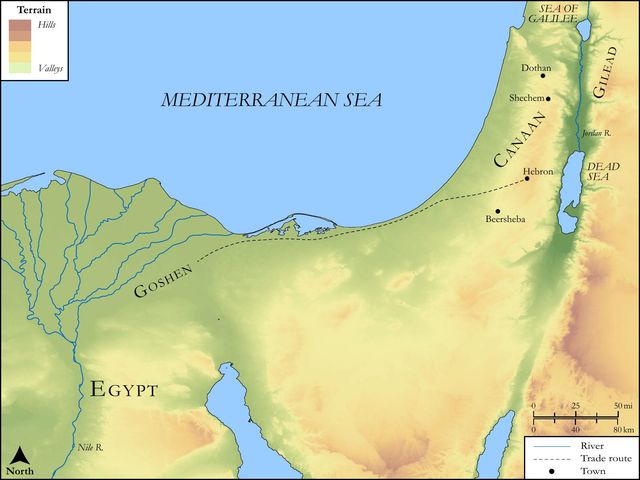
The narrative is set during a severe famine, a common and devastating occurrence in the days of Jacob, which often forced populations to migrate in search of sustenance. Egypt, with its fertile Nile Delta and advanced agricultural practices, was a renowned granary, making it a natural destination for those seeking food. The concept of a powerful governor (like Joseph) controlling food distribution was typical, as was the suspicion of foreigners, who might be spies or raiders. Family structures were patriarchal, with the father (Jacob) holding ultimate authority over his sons and their movements. The deep emotional attachment to a youngest son, particularly one born of a beloved deceased wife (Rachel), was culturally significant, making Jacob's reluctance to part with Benjamin understandable. The brothers' detailed explanation reflects the cultural expectation of accountability to the family patriarch and the gravity of their situation.
Key Themes
ShowHideGenesis 43:7 contributes to several overarching themes in the book of Genesis. It highlights the theme of Divine Providence, as Joseph's seemingly harsh and arbitrary demands are, in reality, part of God's intricate plan to bring the entire family to Egypt, ensuring their survival and setting the stage for the fulfillment of the covenant promises made to Abraham, Isaac, and Jacob (Genesis 12:1-3). The verse also underscores Human Responsibility and Accountability, as the brothers feel compelled to justify their actions and disclosures to their father, reflecting the weight of their familial duty. Furthermore, it continues to develop the theme of Family Reconciliation, as Joseph's actions, though painful, are designed to test his brothers' character and bring about a genuine change of heart, ultimately leading to their reunion and healing. The desperate need for food also emphasizes the theme of Survival and Sustenance in the face of overwhelming natural disaster.
Exposition and Analysis
ShowHideIn Genesis 43:7, the brothers' words serve as a meticulous defense and an urgent plea to Jacob, aiming to justify their actions and the sensitive information they divulged to the Egyptian governor. Their explanation is designed to alleviate Jacob's fears and secure his permission for Benjamin to accompany them.
Key Word Analysis
ShowHideThis word means "to inquire; by implication, to request; by extension, to demand." The KJV's "asked us straitly" emphasizes the intensity and directness of Joseph's interrogation. It was not a casual query but a forceful, penetrating inquiry that left little room for evasion or concealment. The brothers are asserting that they were compelled to reveal details about their family's circumstances and lineage due to the rigorous nature of the questioning.
This primitive word refers to a "father, in a literal and immediate, or figurative and remote application; chief, (fore-) father(-less), [idiom] patrimony, principal." Joseph's specific inquiry, "Is your father yet alive?", directly targeted Jacob, highlighting Joseph's personal interest and emotional investment in his father's well-being, masked by his role as governor. The brothers, unaware of his true identity, perceived this as a standard question from a powerful official verifying their claims.
This primitive root means "to know (properly, to ascertain by seeing); used in a great variety of senses, figuratively, literally, euphemistically and inferentially (including observation, care, recognition; and causatively, instruction, designation, punishment, etc.)." The brothers' rhetorical question, "could we certainly know," uses a repetition of yâdaʻ (H3045, yâdaʻ... yâdaʻ) to emphasize their perceived inability to foresee Joseph's demand. They argue that they could not have anticipated the governor's ultimate requirement for Benjamin based on their truthful answers, thereby shifting responsibility away from themselves.
Verse Breakdown
ShowHide"And they said, The man asked us straitly of our state, and of our kindred,"
The brothers begin their defense by establishing the demanding nature of the interrogation. The "man" (Joseph) was not merely curious but "asked straitly," implying a forceful and insistent inquiry. They were compelled to disclose details about their general "state" (their current situation, perhaps their livelihood or circumstances) and their "kindred" (their family, lineage, and relatives). This sets the stage for why they felt obligated to reveal sensitive information.
"saying, [Is] your father yet alive? have ye [another] brother?"
These are the specific, pointed questions Joseph posed, which the brothers now relay to Jacob. Joseph's inquiries were precise, designed to ascertain the well-being of his father, Jacob, and the existence of his full brother, Benjamin. This reveals Joseph's deeply personal agenda, though the brothers are oblivious to it, perceiving these as standard questions from a powerful official verifying their claims and assessing their potential threat or trustworthiness.
"and we told him according to the tenor of these words:"
The brothers assert their honesty and compliance. They claim they responded truthfully and directly, "according to the tenor" (Hebrew: peh, H6310, meaning "mouth" or "utterance," combined with dâbâr, H1697, "word" or "matter") of Joseph's specific inquiries. This implies they were not careless with information but merely answered what was demanded of them, trying to paint themselves as victims of circumstance rather than negligent in their father's trust.
"could we certainly know that he would say, Bring your brother down?"
This rhetorical question serves as their ultimate justification to Jacob. By asking "could we certainly know" (a double emphasis on "know" in the Hebrew, H3045), they underscore their perceived lack of foresight and control. They argue that it was impossible for them to anticipate Joseph's demand for Benjamin based on their truthful answers, thereby shifting responsibility away from themselves and onto the unexpected and seemingly arbitrary demand of the Egyptian governor.
Literary Devices
ShowHideThe passage employs several Literary Devices to convey the brothers' predicament and their attempt at justification. Rhetorical Question is prominently used in "could we certainly know that he would say, Bring your brother down?" This question is not seeking an answer but is a powerful means for the brothers to deflect blame and emphasize their perceived helplessness in the face of the governor's unexpected demand. The phrase "asked us straitly" functions as Hyperbole, conveying an intensity of interrogation that might have been less severe than portrayed, but which the brothers use to underscore their lack of choice in revealing information. Furthermore, the entire explanation serves as a form of Apologia or defense, where the brothers meticulously recount events to clear their names and persuade Jacob to comply with the governor's demand. The Irony is profound, as the "man" asking the questions is Joseph, their own brother, whose true identity and benevolent intentions remain hidden from them and Jacob, adding a layer of dramatic tension to their desperate plea.
Theological and Thematic Connections
ShowHideGenesis 43:7 powerfully illustrates the intricate workings of divine providence, even amidst human distress and misunderstanding. Unbeknownst to Jacob and his sons, Joseph's seemingly arbitrary demands were not random acts of power but precisely orchestrated steps within God's larger plan to bring the entire family to Egypt, ensuring their survival during the famine and setting the stage for the fulfillment of His covenant promises to Abraham, Isaac, and Jacob. The brothers' detailed explanation reflects their desperate need for justification and accountability to their father, highlighting the weight of their responsibility within the family unit and the profound fear of Jacob's anger and grief. This moment of intense familial negotiation, driven by necessity and past trauma, is a crucial step toward the eventual reconciliation and healing that God intends for this fractured family.
Reflection and Application
ShowHideGenesis 43:7 offers profound insights for believers navigating life's complexities, particularly when circumstances seem overwhelming or inexplicable. Like Jacob's family, we often find ourselves in situations where we cannot discern God's larger purpose, and the immediate path is unclear or fraught with difficulty. This passage encourages us to trust in God's sovereign plan, even when the immediate events appear to be arbitrary or harsh, remembering that He orchestrates all things for our ultimate good and His glory. The brothers' desperate attempt at clear communication, though born of duress, highlights the enduring importance of transparency and honest explanation in resolving relational conflicts and rebuilding trust within families and communities. Even when the truth is uncomfortable or leads to challenging outcomes, open communication, coupled with a reliance on God's unseen hand, can pave the way for healing and reconciliation. This teaches us to communicate with integrity, even under pressure, and to rest in the knowledge that God is at work, even when we cannot trace His hand.
Questions for Reflection
ShowHideFAQ
ShowHideWhat does "asked us straitly" imply about Joseph's interrogation?
ShowHideThe phrase "asked us straitly" (from the Hebrew sha'al, H7592) implies a rigorous, penetrating, and direct inquiry, not a casual conversation. It conveys that Joseph's questions were insistent and left the brothers with little room for evasion or concealment, compelling them to reveal details about their family's state and the existence of Benjamin. This was a deliberate and intense interrogation designed to extract specific information.
Christ-Centered Fulfillment
ShowHideThe narrative of Joseph, culminating in this moment of the brothers' desperate explanation, profoundly foreshadows the person and work of Christ. Joseph, though unrecognized by his brothers and having endured immense suffering and separation, acted as a providential savior figure, orchestrating events that would ultimately preserve his family and bring them into a place of provision in Egypt. This mirrors Christ, who "came unto his own, and his own received him not" (John 1:11), suffering rejection and death, only to be exalted to a position of ultimate power and authority (Philippians 2:9-11). Just as Joseph's seemingly harsh demands and tests were designed to bring about repentance and reconciliation within his family, leading to their salvation from famine, so too Christ's call to repentance and faith, though initially challenging, leads to the ultimate reconciliation of humanity with God and eternal life (2 Corinthians 5:18-19). Joseph's plan, though causing initial distress and fear, ultimately led to the preservation and flourishing of his family, much like Christ's redemptive work, which, through the cross, brings about salvation and abundant life for all who believe (John 10:10).