


Genesis 19:29
- וַיְהִיvay·Hiand it wasH1961Conj-w ¦ V-Qal-ConsecImperf-3msVerb Qal Consecutive Imperfect 3rd Singular Masculineוַandיְהִיit was
- בְּשַׁחֵתbe·sha·Chetwhen destroyedH7843Prep-b ¦ V-Piel-InfVerb Piel Infinitive Constructבְּwhenשַׁחֵתdestroyed
- אֱלֹהִים'E·lo·HimGodH430N-mpNoun Plural Masculine Absolute
- אֶת'et<obj.>H853DirObjMParticle Object Indicator
- עָרֵי'a·Rei[the] cities ofH5892N-mpcNoun Plural Masculine Construct
- הַכִּכָּרha·ki·Karthe valleyH3603Art ¦ N-fsNoun Singular Feminine Absoluteהַtheכִּכָּרvalley
- וַיִּזְכֹּרvai·yiz·Korand he rememberedH2142Conj-w ¦ V-Qal-ConsecImperf-3msVerb Qal Consecutive Imperfect 3rd Singular Masculineוַandיִּזְכֹּרhe remembered
- אֱלֹהִים'E·lo·HimGodH430N-mpNoun Plural Masculine Absolute
- אֶת'et<obj.>H853DirObjMParticle Object Indicator
- אַבְרָהָם'av·ra·HamAbrahamH85N-proper-mNoun Proper Masculine
- וַיְשַׁלַּחvay·sha·Lachand he sent outH7971Conj-w ¦ V-Piel-ConsecImperf-3msVerb Piel Consecutive Imperfect 3rd Singular Masculineוַandיְשַׁלַּחhe sent out
- אֶת'et<obj.>H853DirObjMParticle Object Indicator
- לוֹטlOtLotH3876N-proper-mNoun Proper Masculine
- מִתּוֹךְmi·Tokhfrom [the] middle ofH8432Prep-m ¦ N-mscNoun Singular Masculine Constructמִfromתּוֹךְ[the] middle of
- הַהֲפֵכָהha·ha·fe·Khahthe overthrowH2018Art ¦ N-fsNoun Singular Feminine Absoluteהַtheהֲפֵכָהoverthrow
- בַּהֲפֹךְba·ha·foKhwhen overthrewH2015Prep-b ¦ V-Qal-InfVerb Qal Infinitive Constructבַּwhenהֲפֹךְoverthrew
- אֶת'et<obj.>H853DirObjMParticle Object Indicator
- הֶעָרִיםhe·'a·Rimthe citiesH5892Art ¦ N-mpNoun Plural Masculine Absoluteהֶtheעָרִיםcities
- אֲשֶׁר'a·SherwhichH834RelParticle Relative
- יָשַׁבya·Shavhe had dweltH3427V-Qal-Perf-3msVerb Qal Perfect 3rd Singular Masculine
- בָּהֵןba·Henin <the> themPrep-b ¦ 3fpSuffix Personal 3rd Plural Feminineבָּin <the>הֵןthem
- לוֹטLotLotH3876N-proper-mNoun Proper Masculine
English is a literal word-by-word gloss of the Hebrew, not the KJV's wording. Why?
This is the original text the KJV's translators worked from — each Hebrew word with its own literal English meaning in this verse, prepared by scholars at Tyndale House, Cambridge. The KJV translates whole sentences, not word by word, so its wording differs: one Hebrew word can become several English words, and the KJV may choose “the LORD” where the gloss reads “Yahweh”. Both are faithful — they answer different questions. For the KJV's own rendering, switch to the KJV text.
Details
See on the biblical-era maps


Study this verse
Public-domain commentary
Matthew Henry
From his Commentary on the Whole Bible. Henry comments on passages, not single verses — this entry covers Genesis 19:27–29. His two-level outline is real structure in the source text, so it is rendered as structure.
Our communion with God consists in our gracious regard to him and his gracious regard to us; we have here therefore the communion that was between God and Abraham, in the event concerning Sodom, as before in the consultation concerning it, for communion with God is to be kept up in providences as well as in ordinances.
I.Here is Abraham's pious regard to God in this event, in two things:
- 1. A careful expectation of the event, Gen 19:27. He got up early to look towards Sodom; and, to intimate that his design herein was to see what became of his prayers, he went to the very place where he had stood before the Lord, and set himself there, as upon his watch tower, Hab 2:1. Note, When we have prayed we must look after our prayers, and observe the success of them. We must direct our prayer as a letter, and then look up for an answer, direct our prayer as an arrow, and then look up to see whether it reach the mark, Psa 5:3. Our enquiries after news must be in expectation of an answer to our prayers. 2. An awful observation of it: He looked towards Sodom (Gen 19:28), not as Lot's wife did, tacitly reflecting upon the divine severity, but humbly adoring it and acquiescing in it. Thus the saints, when they see the smoke of Babylon's torment rising up for ever (like Sodom's here), will say again and again, Alleluia, Rev 19:3. Those that have, in the day of grace, most earnestly interceded for sinners, will, in the day of judgment, be content to see them perish, and will glorify God in their destruction.
II.Here is God's favourable regard to Abraham, Gen 19:29.
As before when Abraham prayed for Ishmael, God heard him for Isaac, so now, when he prayed for Sodom, he heard him for Lot. He remembered Abraham, and, for his sake, sent Lot out of the overthrow. Note,
1.God will certainly give an answer of peace to the prayer of faith, in his own way and time; though, for a while, it seem to be forgotten, yet, sooner or later, it will appear to be remembered.
2.The relations and friends of godly people fare the better for their interest in God and intercessions with him; it was out of respect to Abraham that Lot was rescued: perhaps this word encouraged Moses long afterwards to pray (Exo 32:13), Lord, remember Abraham; and see Isa 63:11.
Continue studying Genesis 19:29 across the web’s major study libraries — every link below opens this exact verse, chapter, or book on the destination site.
Read & Compare
 BibleGatewayThis verse in more than 200 translations and 70 languages.
 Bible.comThe YouVersion reader — hundreds of translations, reading plans, and highlights.
 ESV.orgCrossway's official English Standard Version reader.
 NET BibleThe NET translation with 60,000+ translators' notes on every rendering decision.
 STEP BibleTyndale House's free study tool — original text, vocabulary, and scholarly resources.
 BibliaLogos Bible Software's free web reader.
 USCCBThe New American Bible (Revised Edition) with the U.S. bishops' study notes.
Commentaries
 BibleHub CommentariesDozens of classic commentaries on this verse, gathered on one page.
 StudyLightMore than 100 commentary sets — the largest collection on the web.
 BibleRefPlain-English commentary on what this verse means, verse by verse.
 Enduring WordDavid Guzik's free commentary on this chapter, widely used by Bible teachers.
 Bible Study ToolsVerse commentary alongside Greek and Hebrew study aids.
Original Language & Research
- BibleHub InterlinearThe verse word by word — original language, transliteration, and English.
- BibleHub LexiconEvery word's original-language definition and Strong's entry.
 Blue Letter BibleDeep-study tools — Strong's numbers, concordance, and word studies.
 SefariaThe Hebrew text with Rashi and centuries of Jewish commentary.
Sermons, Hymns & Audio


TrulyRandomVerse is not affiliated with these sites and doesn’t control their content. They’re linked because they’re genuinely useful.
Summary
Genesis 19:29 provides a profound theological summary of the cataclysmic judgment visited upon the cities of the plain, particularly Sodom and Gomorrah. Amidst this sweeping destruction, the verse underscores God's unwavering covenant faithfulness to Abraham, revealing that Lot's miraculous deliverance from the universal overthrow was not due to his own merit, but was a direct, purposeful act of divine remembrance and intervention on account of Abraham's intercession and God's prior promises to him, thereby showcasing divine justice perfectly balanced with sovereign mercy.
Context
ShowHideLiterary Context
This verse serves as a concluding and interpretive statement to the dramatic narrative of Genesis chapter 19. The preceding verses detail the arrival of two angels in Sodom, Lot's hospitality, the depravity of the city's inhabitants, the angelic rescue of Lot and his family, and the subsequent fiery destruction of Sodom and Gomorrah. Genesis 19:24-28 vividly describes the raining down of fire and brimstone, turning the entire region into a desolate wasteland. Verse 29 then steps back from the immediate action to offer a theological explanation for Lot's miraculous escape, linking it directly to God's relationship with Abraham, which was established in Genesis chapter 12 and further developed through the covenant in Genesis chapter 15. It functions as a divine commentary, revealing the underlying reason for the selective deliverance amidst widespread judgment.
Historical & Cultural Context
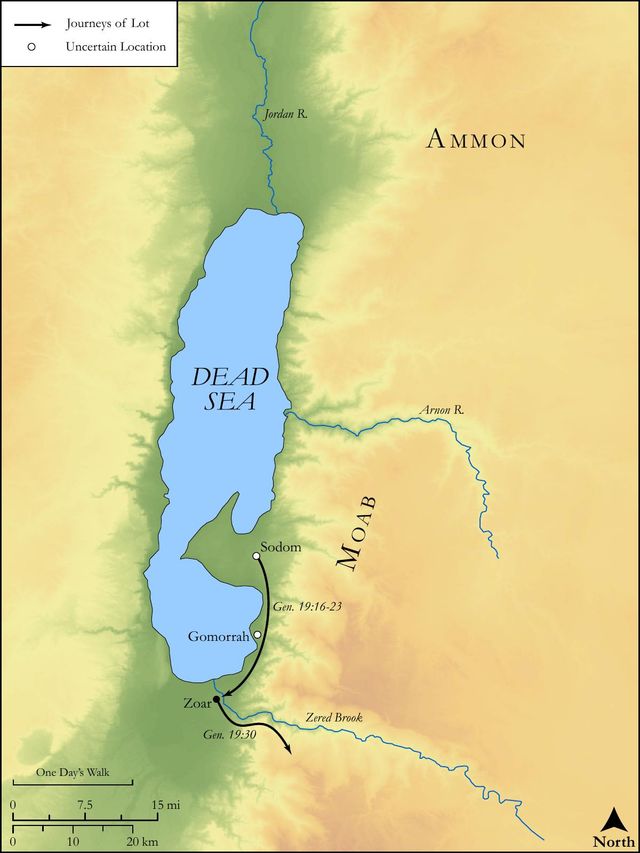
The "cities of the plain" (Sodom, Gomorrah, Admah, Zeboiim, and Bela/Zoar) were located in the fertile Jordan Valley, a region described as "like the garden of the Lord" in Genesis 13:10. This lushness attracted Lot, who chose to settle near Sodom, despite its inhabitants being "exceedingly wicked and sinful against the LORD" (Genesis 13:13). The destruction by fire and brimstone, while miraculous, aligns with geological phenomena possible in the Dead Sea region, which is rich in bitumen and natural gas. However, the biblical account emphasizes divine agency, not merely natural processes. The pervasive wickedness described, particularly the attempted gang rape of the angelic visitors (Genesis 19:4-9), highlights a profound societal breakdown and moral corruption that violated ancient Near Eastern norms of hospitality and justice, signifying a complete rejection of divine order. This context underscores the severity of God's judgment as a just response to entrenched sin.
Key Themes
ShowHideGenesis 19:29 contributes significantly to several overarching themes within Genesis and the broader biblical narrative. Foremost is the theme of Divine Justice and Judgment, demonstrating God's holiness and His intolerance for pervasive sin, as seen in the destruction of the cities. Simultaneously, it powerfully illustrates Divine Mercy and Deliverance, as Lot and his daughters are spared. Crucially, the verse highlights God's Covenant Faithfulness, emphasizing that Lot's deliverance was not arbitrary but directly linked to God's "remembering Abraham," underscoring the enduring nature of God's promises and His active involvement in the lives of His covenant people. This act of remembrance also reinforces the Power of Intercessory Prayer, as Abraham's earlier plea for the righteous in Sodom (Genesis 18:23-32) is implicitly answered through Lot's salvation. Finally, it touches on the theme of Separation and Distinction, as God distinguishes between the righteous (even imperfectly so, like Lot) and the wicked, delivering the former from the judgment intended for the latter.
Exposition and Analysis
ShowHideGenesis 19:29 states, "And it came to pass, when God destroyed the cities of the plain, that God remembered Abraham, and sent Lot out of the midst of the overthrow, when he overthrew the cities in the which Lot dwelt." This verse provides a concise yet profound theological explanation for the selective deliverance amidst widespread destruction, attributing Lot's salvation directly to God's covenant relationship with Abraham.
Key Word Analysis
ShowHideThis word signifies far more than a mere cognitive recall. When God "remembers" in Scripture, it denotes an active, purposeful, and covenantal act of intervention. It means God is moving to fulfill a promise, to act on behalf of His covenant people, or to intervene according to His prior disposition and commitment. In this context, it highlights God's faithfulness to His relationship with Abraham, acting upon Abraham's intercession and His own promises, ensuring the preservation of Abraham's kin.
Derived from the root "to turn about or over," this term specifically denotes a complete destruction or reversal. It emphasizes the totality and finality of God's judgment upon the cities of the plain. The use of this strong term underscores the catastrophic nature of the divine wrath poured out, leaving no doubt about the severity and comprehensiveness of the judgment.
This verb means "to sit down, to dwell, to remain." While seemingly simple, its inclusion here emphasizes Lot's prior choice to settle and make his home within the wicked cities. The fact that God "sent Lot out of the midst of the overthrow, when he overthrew the cities in the which Lot dwelt" highlights that Lot was deeply entrenched in the condemned environment, making his deliverance all the more miraculous and a testament to God's specific intervention.
Verse Breakdown
ShowHide"And it came to pass, when God destroyed the cities of the plain,"
This opening clause establishes the context of divine judgment. It unequivocally attributes the cataclysmic event to God's direct, sovereign action, emphasizing His justice and His intolerance for pervasive wickedness. The destruction of Sodom and Gomorrah was not a natural disaster but a purposeful act of divine wrath against profound sin.
"that God remembered Abraham,"
This is the pivotal theological statement of the verse. It reveals the underlying reason for Lot's deliverance. God's "remembering" is an active, covenantal act, signifying His faithfulness to His promises and His relationship with Abraham. It implies that Abraham's prior intercession for the righteous in Sodom, though not fully granted to spare the cities, was indeed heard and acted upon in the preservation of Lot.
"and sent Lot out of the midst of the overthrow,"
This phrase details the direct consequence of God remembering Abraham. Lot's deliverance is presented as a specific, intentional act of divine intervention. He was literally removed from the epicenter of the judgment, highlighting God's power to protect His chosen ones (or those connected to them) even amidst universal condemnation. This underscores the efficacy of intercessory prayer and the ripple effect of one person's righteous standing before God.
"when he overthrew the cities in the which Lot dwelt."
This final clause reiterates the simultaneity of judgment and deliverance. It emphasizes that God's act of overthrowing the cities was precisely the moment He acted to preserve Lot. This highlights God's absolute sovereign control over all events, His ability to distinguish between the righteous and the wicked, and His capacity to fulfill His purposes and protect His people according to His will, even when they are in close proximity to destruction.
Literary Devices
ShowHideThe verse employs several significant literary devices. Repetition is prominent with the repeated use of "God" (three times) and forms of "overthrow" (twice: "overthrow" and "destroyed," which is related to "ruin/spoil"). This repetition serves to emphasize God's absolute sovereignty and active agency in both the judgment and the deliverance. It underscores that these events were not random but were meticulously orchestrated by the divine hand. The phrase "God remembered Abraham" is an example of Divine Anthropomorphism, attributing a human quality (remembering) to God, but in a way that conveys His active, covenantal faithfulness rather than a human limitation of memory. This device makes God's actions relatable while maintaining His transcendence. Finally, there is a powerful Contrast between the "cities of the plain" being "destroyed" and "overthrown" and Lot being "sent out of the midst of the overthrow." This stark contrast highlights God's ability to discriminate between the wicked and those He chooses to save, even when they are physically intertwined.
Theological and Thematic Connections
ShowHideGenesis 19:29 stands as a profound theological statement, encapsulating the dual nature of God's character: His unyielding justice against sin and His boundless mercy rooted in covenant faithfulness. The phrase "God remembered Abraham" is not a casual aside but a pivotal declaration, revealing that divine action is often predicated on prior promises and relationships. Lot's deliverance, therefore, becomes a powerful testament to the enduring efficacy of God's covenant with Abraham, demonstrating that God actively intervenes to preserve those connected to His chosen servants, even when their own lives are far from exemplary. This verse assures us that God's commitment to His people is unwavering, and His "remembering" is always an active, purposeful movement towards the fulfillment of His divine plan and the protection of His own.
Reflection and Application
ShowHideGenesis 19:29 offers profound and enduring lessons for believers today. It serves as a powerful reminder that even in times of widespread moral decay and impending judgment, God remains utterly faithful to His covenant people and His promises. We can find deep assurance that He "remembers" us and acts on our behalf according to His perfect will, often in ways that are unseen until His sovereign intervention. This account also profoundly underscores the vital importance and impact of intercessory prayer; Abraham's bold pleas, though not saving the cities entirely, directly influenced Lot's deliverance. Our prayers for others, even if they do not entirely avert a situation, can still have a profound and specific impact, leading to divine intervention and deliverance for individuals. Furthermore, this verse reminds us that God is both perfectly just in punishing sin and infinitely merciful in offering salvation and protection to those connected to His covenant, inspiring both reverence for His holiness and hope in His boundless grace. It calls us to trust in God's active remembrance of His promises, even when circumstances seem dire, and to engage earnestly in prayer for those around us.
Questions for Reflection
ShowHideFAQ
ShowHideWhat does "God remembered Abraham" truly mean in this context?
ShowHideThe Hebrew word zakhar (זָכָר), translated as "remembered," does not imply that God had forgotten Abraham and suddenly recalled him. Instead, it signifies an active, purposeful, and covenantal act. When the Bible says God "remembers" someone or something, it means He is moving to fulfill a promise, to act on behalf of His covenant people, or to intervene according to His prior disposition and commitment. Here, it means God acted faithfully on His relationship with Abraham, fulfilling the implicit promise of protection for Abraham's kin and responding to Abraham's intercession for the righteous in Sodom, as detailed in Genesis 18:23-32.
Was Lot saved because of his own righteousness?
ShowHideWhile Lot is later described as "righteous" in 2 Peter 2:7-8, Genesis 19:29 explicitly states that God "remembered Abraham" as the reason for Lot's deliverance. This suggests that Lot's salvation was primarily an act of God's grace, extended due to His covenant faithfulness to Abraham and Abraham's intercession, rather than solely Lot's personal merit. Lot's life in Sodom was compromised, and he made questionable choices, but his connection to Abraham and God's faithfulness to Abraham proved to be the decisive factor in his salvation from the overthrow.
Does this event imply that God's judgment is always preceded by an opportunity for intercession?
ShowHideWhile not always directly as seen with Abraham, the principle of divine patience and the call for repentance often precede judgment. God is described as "slow to anger and abounding in steadfast love" (Psalm 103:8), and He desires that "none should perish but that all should reach repentance" (2 Peter 3:9). This event highlights that even in the face of certain judgment, God's mercy can still find a way to deliver individuals, often through the prayers and faithfulness of others, demonstrating His willingness to extend grace even in the midst of deserved wrath.
Christ-Centered Fulfillment
ShowHideGenesis 19:29 finds its ultimate and most profound fulfillment in the person and work of Jesus Christ, who perfectly embodies God's justice and boundless mercy. Just as Lot was miraculously delivered from the "overthrow" of the cities of the plain through God remembering Abraham, so too are believers delivered from the coming eternal judgment through God remembering His ultimate covenant with Christ. Jesus is the supreme and perfect Intercessor, whose one-time, all-sufficient sacrifice on the cross secured salvation for all who believe, far surpassing Abraham's imperfect plea (Hebrews 7:25 and Hebrews 9:24). He is the one who actively separates His people from the world's condemnation, rescuing them from the "midst of the overthrow" of sin and death, transferring them "from the domain of darkness to his glorious kingdom" (Colossians 1:13). In Christ, God's promise to Abraham finds its climactic realization, as all nations are blessed through His seed, and His people are eternally secured from the wrath to come, demonstrating God's unwavering faithfulness to His redemptive plan through His Son (Galatians 3:16 and Romans 5:9).