


Exodus 38:20
Bible text: King James Version (1769 Blayney text) · Public domain
Bible text: Berean Standard Bible · Public domain
Bible text: American Standard Version (1901) · Public domain
Bible text: World English Bible, Messianic edition · Public domain
Bible text: Geneva Bible (1599) · Public domain
Bible text: Young's Literal Translation · Public domain
- וְכָלve·kholand allH3605Conj-w ¦ N-mscNoun Singular Masculine Constructוְandכָלall
- הַיְתֵדֹתhay·te·Dotthe tent pegsH3489Art ¦ N-fpNoun Plural Feminine Absoluteהַtheיְתֵדֹתtent pegs
- לַמִּשְׁכָּןla·mish·Kanfor the tabernacleH4908Prep-l ¦ N-msNoun Singular Masculine Absoluteלַfor theמִּשְׁכָּןtabernacle
- וְלֶחָצֵרve·le·cha·Tzerand for the courtyardH2691Conj-w ¦ Prep-l ¦ N-csNoun Singular common gender Absoluteוְandלֶfor theחָצֵרcourtyard
- סָבִיבsa·Vivall aroundH5439N-csNoun Singular common gender Absolute
- נְחֹשֶׁתne·Cho·shet[were] bronzeH5178N-fsNoun Singular Feminine Absolute
English is a literal word-by-word gloss of the Hebrew, not the KJV's wording. Why?
This is the original text the KJV's translators worked from — each Hebrew word with its own literal English meaning in this verse, prepared by scholars at Tyndale House, Cambridge. The KJV translates whole sentences, not word by word, so its wording differs: one Hebrew word can become several English words, and the KJV may choose “the LORD” where the gloss reads “Yahweh”. Both are faithful — they answer different questions. For the KJV's own rendering, switch to the KJV text.
Details
See on the biblical-era maps

Study this verse
Public-domain commentary
Matthew Henry
From his Commentary on the Whole Bible. Henry comments on passages, not single verses — this entry covers Exodus 38:9–20.
The walls of the court, or church-yard, were like the rest curtains or hangings, made according to the appointment, Exo 27:9, etc. This represented the state of the Old Testament church: it was a garden enclosed; the worshippers were then confined to a little compass. But the enclosure being of curtains only intimated that the confinement of the church in one particular nation was not to be perpetual. The dispensation itself was a tabernacle-dispensation, movable and mutable, and in due time to be taken down and folded up, when the place of the tent should be enlarged and its cords lengthened, to make room for the Gentile world, as is foretold, Isa 54:2, Isa 54:3. The church here on earth is but the court of God's house, and happy they that tread these courts and flourish in them; but through these courts we are passing to the holy place above. Blessed are those that dwell in that house of God: they well be still praising him. The enclosing of a court before the tabernacle teaches us a gradual approach to God. The priests that ministered must pass through the holy court, before they entered the holy house. Thus before solemn ordinances there ought to be the separated and enclosed court of a solemn preparation, in which we must wash our hands, and so draw near with a true heart.
Continue studying Exodus 38:20 across the web’s major study libraries — every link below opens this exact verse, chapter, or book on the destination site.
Read & Compare
 BibleGatewayThis verse in more than 200 translations and 70 languages.
 Bible.comThe YouVersion reader — hundreds of translations, reading plans, and highlights.
 ESV.orgCrossway's official English Standard Version reader.
 NET BibleThe NET translation with 60,000+ translators' notes on every rendering decision.
 STEP BibleTyndale House's free study tool — original text, vocabulary, and scholarly resources.
 BibliaLogos Bible Software's free web reader.
 USCCBThe New American Bible (Revised Edition) with the U.S. bishops' study notes.
Commentaries
 BibleHub CommentariesDozens of classic commentaries on this verse, gathered on one page.
 StudyLightMore than 100 commentary sets — the largest collection on the web.
 BibleRefPlain-English commentary on what this verse means, verse by verse.
 Enduring WordDavid Guzik's free commentary on this chapter, widely used by Bible teachers.
 Bible Study ToolsVerse commentary alongside Greek and Hebrew study aids.
Original Language & Research
- BibleHub InterlinearThe verse word by word — original language, transliteration, and English.
- BibleHub LexiconEvery word's original-language definition and Strong's entry.
 Blue Letter BibleDeep-study tools — Strong's numbers, concordance, and word studies.
 SefariaThe Hebrew text with Rashi and centuries of Jewish commentary.
Sermons, Hymns & Audio


TrulyRandomVerse is not affiliated with these sites and doesn’t control their content. They’re linked because they’re genuinely useful.
Summary
Exodus 38:20 concludes the detailed inventory of materials for the Tabernacle and its surrounding court, specifically highlighting the "pins" or tent pegs. This verse underscores the meticulous attention to detail in God's divine blueprint for His dwelling place, emphasizing that even the most utilitarian components were essential for the stability and integrity of the sacred structure. It reveals that every element, down to the foundational anchors, was crafted from the strong and enduring material of brass (bronze) according to God's precise specifications, reflecting His comprehensive and perfect design.
Context
ShowHideLiterary Context
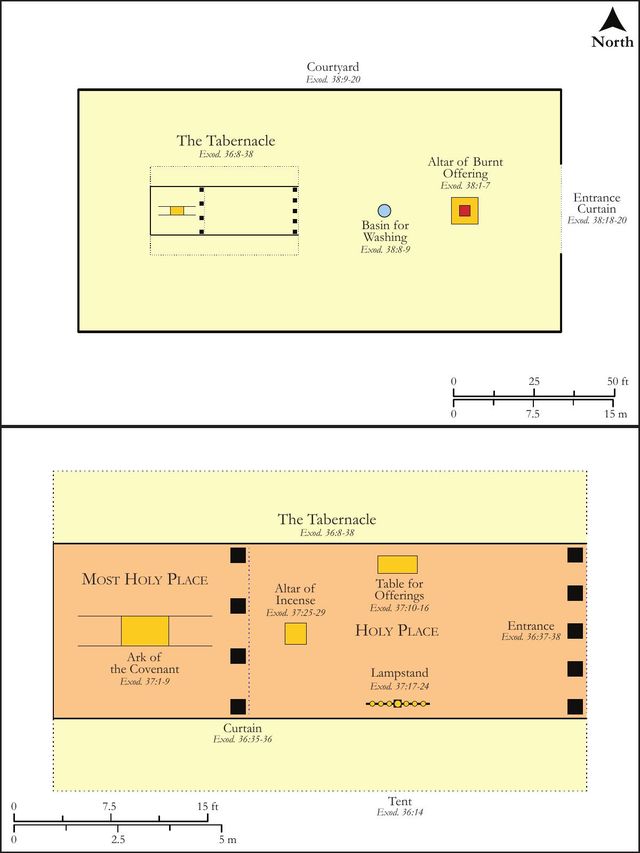
This verse is situated within a lengthy and highly detailed section of Exodus, spanning from chapter 25 through chapter 40, which meticulously describes the construction of the Tabernacle and its furnishings. Following the initial divine instructions given to Moses on Mount Sinai, chapters 35-39 recount the actual execution of these commands by the skilled craftsmen, Bezalel and Oholiab, and the willing contributions of the Israelites. Exodus 38 specifically details the construction of the court of the Tabernacle, including the altar of burnt offering, the laver, and the pillars and hangings of the court. Verse 20, therefore, serves as a concluding statement to this inventory, ensuring that even the foundational and often overlooked elements, like the pins, are accounted for and built according to God's precise specifications, reinforcing the theme of divine completeness and human obedience in the entire project.
Historical & Cultural Context
The Tabernacle was designed as a portable sanctuary, intended to accompany the Israelites during their nomadic journey through the wilderness from Egypt to the Promised Land. In such an environment, exposed to strong desert winds and shifting sands, the stability of any large tent-like structure was paramount. Tent pegs or "pins" were absolutely crucial for anchoring the heavy curtains, coverings, and frameworks of both the Tabernacle proper and the surrounding court. The choice of "brass" (more accurately, bronze) for these pins was not arbitrary. Bronze was a robust and durable metal, far superior to wood or softer metals for resisting the elements and providing firm anchorage. This practical necessity aligns with God's comprehensive provision for His people, ensuring the physical security of His dwelling place amidst the challenging conditions of their wilderness sojourn. The meticulous detailing of every component, down to the pins, reflects the pattern shown to Moses in the mount, where every element of the sanctuary was imbued with significance and constructed with utmost precision to honor the LORD.
Key Themes
ShowHideThis verse contributes significantly to several key themes prevalent in the Tabernacle narrative. Foremost is the theme of Divine Meticulousness and Perfection, illustrating that God's design leaves no detail to chance, no element too small to be precisely specified. It also highlights Human Obedience and Faithfulness, as the Israelites diligently followed every instruction, demonstrating their commitment to God's revealed will. The verse further reinforces the theme of God's Presence and Provision, showing how even the seemingly humble components were essential for establishing a secure and stable dwelling place for the Lord among His people in the wilderness. Finally, the choice of materials, particularly bronze, subtly introduces themes of Strength, Endurance, and Judgment, which are woven throughout the Tabernacle's symbolism.
Exposition and Analysis
ShowHideKey Word Analysis
ShowHideThis term (H3489) refers to a peg, nail, or stake, specifically tent pegs, which were essential for securing structures to the ground. In the context of the Tabernacle, these pins were critical for anchoring the heavy linen curtains, the framework of the Tabernacle, and the surrounding court hangings. Their function underscores the theme of stability, security, and the firm establishment of God's dwelling place. Though seemingly minor, they were foundational to the entire structure's integrity, preventing it from being toppled by wind or shifting, embodying the concept of something "pinned through or fast."
This word (H4908) denotes a residence or dwelling place, specifically referring to the portable sanctuary constructed by the Israelites in the wilderness. It was God's chosen "dwelling place" among His people, symbolizing His presence and covenant relationship. The term emphasizes the temporary, mobile nature of this sacred structure, contrasting with a permanent temple, yet it was meticulously designed to be a stable and secure habitation for the Divine Presence.
While commonly translated as "brass" (H5178) in the KJV, this Hebrew term more accurately refers to copper or, more frequently in biblical contexts, bronze (an alloy of copper and tin). As a metal, bronze was highly valued for its strength, durability, and resilience, making it an ideal material for the pins that needed to withstand significant tension and environmental stress in the desert. Theologically, bronze in the Tabernacle often carries symbolic weight, representing strength, endurance, and divine judgment. It was notably used for the altar of burnt offering and the laver, both associated with atonement, sacrifice, and purification. The use of bronze for the pins subtly connects the Tabernacle's physical stability to God's righteous judgment and His enduring strength and faithfulness.
Verse Breakdown
ShowHide"And all the pins of the tabernacle,"
This phrase emphasizes the totality and universality of the command. Not some, but "all" the pins were to be made of a specific material, highlighting God's meticulousness. The "pins of the tabernacle" refer to those specifically used for the main sanctuary structure, anchoring its frames and coverings, ensuring the stability of God's immediate dwelling place.
"and of the court round about,"
This extends the scope of the command beyond the immediate Tabernacle structure to encompass the entire sacred enclosure. The court, defined by its linen hangings and pillars, also required substantial anchoring to maintain its boundaries and provide a secure, defined space for worship. This demonstrates God's holistic concern for the integrity of the entire sacred complex, from its innermost sanctuary to its outermost perimeter.
"[were of] brass."
This specifies the material, nᵉchôsheth (bronze), for these crucial anchoring elements. The choice of bronze signifies strength, durability, and resilience, ensuring the Tabernacle's steadfastness in the harsh wilderness environment. It also carries the symbolic weight of divine strength and the enduring nature of God's covenant presence, subtly connecting the physical stability of the structure to the unshakeable character of God Himself.
Literary Devices
ShowHideExodus 38:20, though brief, employs several literary techniques that enhance its theological significance. The most prominent is Emphasis through Detail, a characteristic feature of the Tabernacle accounts. By explicitly mentioning the humble "pins" after detailing grander elements like the ark, altar, and lampstand, the text underscores that no detail, however small or utilitarian, was overlooked in God's divine blueprint. This meticulous enumeration reinforces the concept of divine perfection and the sacredness of the entire structure. There is also an element of Symbolism, where the brass (bronze) material itself carries theological weight, representing strength, endurance, and judgment, subtly connecting the physical stability of the Tabernacle to the steadfastness of God's character and covenant. Finally, the phrase "tabernacle, and of the court round about" functions as a form of Merism, encompassing the entirety of the sacred complex, from its innermost sanctuary to its outermost boundaries, ensuring that every part was consecrated and constructed according to divine will.
Theological and Thematic Connections
ShowHideExodus 38:20, by focusing on the seemingly minor detail of the Tabernacle's pins, profoundly illustrates God's meticulous nature and the holistic perfection of His divine design. It conveys that in God's economy, no detail is too small to escape His attention or to be insignificant to the greater whole. Just as the pins were vital for the physical stability of the Tabernacle, every component of God's plan, whether grand or humble, contributes to His overarching purpose. This theme of divine precision and the importance of every part resonates throughout Scripture, reminding us that God's work is comprehensive and perfectly ordered, and that He values faithfulness in all things, great and small.
Reflection and Application
ShowHideThe humble pins of the Tabernacle offer a powerful lesson for our lives of faith. They remind us that true strength and stability often depend on the integrity of the foundational, often unseen, elements. In our spiritual journeys, it's easy to focus on the grand, visible aspects of faith—public service, eloquent prayers, or dramatic testimonies. Yet, this verse calls us to consider the "pins" of our lives: the consistent, quiet disciplines of prayer, diligent study of God's Word, faithful stewardship of small tasks, and unwavering commitment to integrity in private. These are the "brass pins" that provide stability when the winds of life blow, anchoring us firmly in Christ. Just as every pin was essential for the Tabernacle's function, every believer, no matter how seemingly insignificant their role, is indispensable to the body of Christ. We are called to faithfulness in the little things, trusting that God uses every part, seen and unseen, to build His enduring kingdom. Our steadfastness in these foundational practices ensures our spiritual resilience and contributes to the collective strength of the Church.
Questions for Reflection
ShowHideFAQ
ShowHideWhy were the pins so important if they were such a small detail?
ShowHideThe pins, though small, were absolutely critical for the structural integrity and stability of the entire Tabernacle and its court. In the harsh, windy desert environment, these tent pegs were the anchors that secured the heavy curtains, coverings, and frameworks to the ground, preventing the sacred dwelling from being toppled or damaged. Their importance highlights God's meticulous design, where every component, no matter how humble, was essential for the proper function and stability of His dwelling place among His people. It teaches us that in God's kingdom, there are no insignificant parts; every detail contributes to the whole.
What is the significance of "brass" (bronze) as the material for the pins?
ShowHideThe Hebrew word translated "brass" is nᵉchôsheth, which refers to copper or, more accurately, bronze. Bronze was chosen for its strength, durability, and resistance to corrosion, making it an ideal material for anchoring elements that needed to withstand the elements. Theologically, bronze in the Tabernacle often symbolizes strength, endurance, and judgment. It was used for the altar of burnt offering, where sin was judged, and the laver, used for purification. Thus, the bronze pins subtly connect the physical stability of the Tabernacle to the steadfastness of God's righteous character and His enduring covenant promises.
Christ-Centered Fulfillment
ShowHideThe humble brass pins of the Tabernacle, essential for its stability and security, powerfully foreshadow Christ as the ultimate anchor and foundation of our faith. Just as these pins secured God's earthly dwelling, Christ is the one upon whom our eternal hope and salvation are firmly secured. The strength and endurance of the bronze speak to the unshakeable nature of Christ's work and His enduring covenant. He is the cornerstone upon whom the entire spiritual temple, the Church, is built, ensuring its steadfastness against all spiritual winds and storms. The meticulous detail in the Tabernacle's construction, down to the smallest pin, points to the perfect and comprehensive plan of God, fully realized in Jesus Christ, who came not to abolish the Law but to fulfill it. Through His sacrificial death and resurrection, Christ bore the judgment symbolized by the bronze, becoming our righteousness and the secure, eternal foundation upon which we can confidently build our lives, knowing that He is our hope, an anchor for the soul, firm and secure. His finished work provides the ultimate stability for all who believe, ensuring that God's dwelling place among humanity is eternally established.