


Exodus 14:17
Bible text: King James Version (1769 Blayney text) · Public domain
Bible text: King James Version with Strong's numbers · Public domain
Bible text: Berean Standard Bible · Public domain
Bible text: American Standard Version (1901) · Public domain
Bible text: World English Bible, Messianic edition · Public domain
Bible text: Geneva Bible (1599) · Public domain
Bible text: Young's Literal Translation · Public domain
- וַאֲנִיva·'a·Niand IH589Conj-w ¦ Pro-1csPronoun Personal 1st Singular common genderוַandאֲנִיI
- הִנְנִיhi·Nihere IH2005Prt ¦ 1csParticle InterjectionהִנְhereנִיI
- מְחַזֵּקme·cha·Zek[am] about to make strongH2388V-Piel-Prtcpl-msVerb Piel Participle Singular Masculine Absolute
- אֶת'et<obj.>H853DirObjMParticle Object Indicator
- לֵבlev[the] heart ofH3820N-mscNoun Singular Masculine Construct
- מִצְרַיִםmitz·Ra·yimEgyptH4713N-properNoun Proper Location
- וְיָבֹאוּve·ya·Vo·'uso they may goH935Conj-w ¦ V-Qal-ConjImperf-3mpVerb Qal Conjunction+Imperfect 3rd Plural Masculineוְsoיָבֹאוּthey may go
- אַחֲרֵיהֶם'a·cha·rei·Hemafter themH310Adj-mpc ¦ 3mpAdjective Numerical Plural Masculine Constructאַחֲרֵיafterהֶםthem
- וְאִכָּבְדָהve·'i·ka·ve·Dahand I will gain honorH3513Conj-w ¦ V-Niphal-Imperf-1csVerb Niphal Imperfect 1st Singular common genderוְandאִכָּבְדָהI will gain honor
- בְּפַרְעֹהbe·far·'Ohby PharaohH6547Prep-b ¦ N-msNoun Title Singular Masculine AbsoluteבְּbyפַרְעֹהPharaoh
- וּבְכָלu·ve·Kholand by allH3605Conj-w ¦ Prep-b ¦ N-mscNoun Singular Masculine Constructוּandבְbyכָלall
- חֵילוֹchei·Lohis armyH2428N-msc ¦ 3msNoun Singular Masculine Constructחֵילarmyוֹhis
- בְּרִכְבּוֹbe·rikh·Boby his chariot[s]H7393Prep-b ¦ N-msc ¦ 3msNoun Singular Masculine Constructבְּbyרִכְבּchariot[s]וֹhis
- וּבְפָרָשָׁיוu·ve·fa·ra·Shavand by his horsemenH6571Conj-w ¦ Prep-b ¦ N-mpc ¦ 3msNoun Plural Masculine Constructוּandבְbyפָרָשָׁיhorsemenוhis
English is a literal word-by-word gloss of the Hebrew, not the KJV's wording. Why?
This is the original text the KJV's translators worked from — each Hebrew word with its own literal English meaning in this verse, prepared by scholars at Tyndale House, Cambridge. The KJV translates whole sentences, not word by word, so its wording differs: one Hebrew word can become several English words, and the KJV may choose “the LORD” where the gloss reads “Yahweh”. Both are faithful — they answer different questions. For the KJV's own rendering, switch to the KJV text.
Details
See on the biblical-era maps

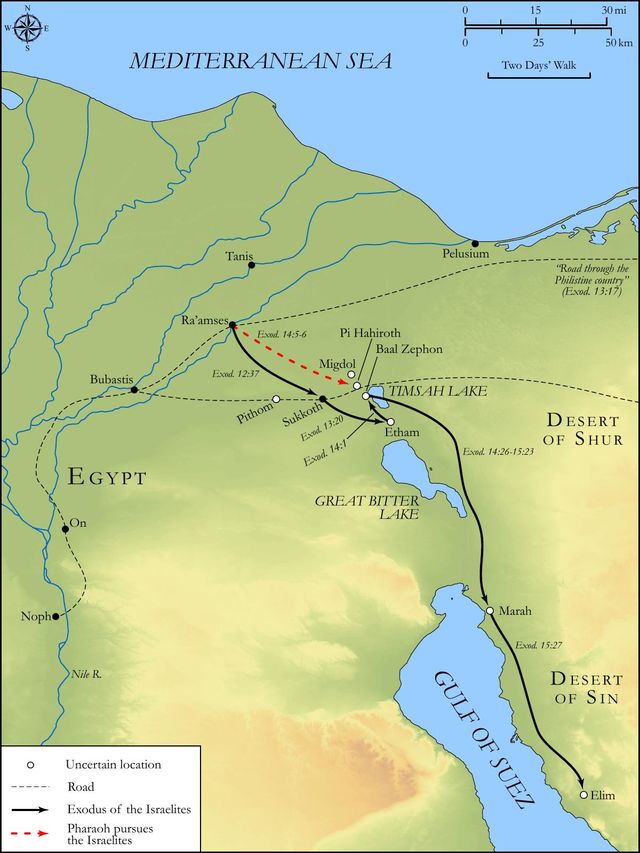
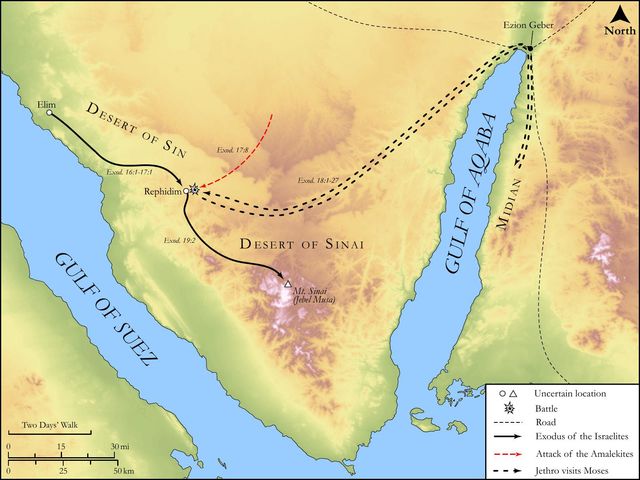
Study this verse
Public-domain commentary
Matthew Henry
From his Commentary on the Whole Bible. Henry comments on passages, not single verses — this entry covers Exodus 14:15–20. His three-level outline is real structure in the source text, so it is rendered as structure.
We have here,
I.Direction given to Israel's leader.
1.What he must do himself. He must, for the present, leave off praying, and apply himself to his business (Exo 14:15): Wherefore cryest thou unto me? Moses, though he was assured of a good issue to the present distress, yet did not neglect prayer. We read not of one word he said in prayer, but he lifted up to God his heart, the language of which God well understood and took notice of. Moses's silent prayers of faith prevailed more with God than Israel's loud outcries of fear, Exo 14:10. Note,
(1.)Praying, if of the right kind, is crying to God, which denotes it to be the language both of a natural and of an importunate desire.
(2.)To quicken his diligence. Moses had something else to do besides praying; he was to command the hosts of Israel, and it was now requisite that he should be at his post. Every thing is beautiful in its season.
2.What he must order Israel to do. Speak to them, that they go forward. Some think that Moses had prayed, not so much for their deliverance (he was assured of that) as for the pardon of heir murmurings, and that God's ordering them to go forward was an intimation of the pardon. There is no going forward with any comfort but in the sense of our reconciliation to God. Moses had bidden them stand still, and expect orders from God; and now orders are given. They thought they must have been directed either to the right hand or to the left. "No," says God, "speak to them to go forward, directly to the sea-side;" as if there had lain a fleet of transport-ships ready for them to embark in. Note, When we are in the way of our duty, though we met with difficulties, we must go forward, and not stand in mute astonishment; we must mind present work and then leave the even to God, use means and trust him with the issue.
3.What he might expect God to do. Let the children of Israel go as far as they can upon dry ground, and then God will divide the sea, and open a passage for them through it, Exo 14:16-18. God designs, not only to deliver the Israelites, but to destroy the Egyptians; and the plan of his counsels is accordingly.
(1.)He will show favour to Israel; the waters shall be divided for them to pass through, Exo 14:16. The same power could have congealed the waters for them to pass over; but Infinite Wisdom chose rather to divide the waters for them to pass through; for that way of salvation is always pitched upon which is most humbling. Thus it is said, with reference to this (Isa 63:13, Isa 63:14), He led them through the deep, as a beast goes down into the valley, and thus made himself a glorious name.
(2.)He will get him honour upon Pharaoh. If the due rent of honour be not paid to the great landlord, by and from whom we have and hold our beings and comforts, he will distrain for it, and recover it. God will be a loser by no man. In order to this, it is threatened: I, behold I, will harden Pharaoh's heart, Exo 14:17. The manner of expression is observable: I, behold I, will do it. "I, that may do it;" so it is the language of his sovereignty. We may not contribute to the hardening of any man's heart, nor withhold any thing that we can do towards the softening of it; but God's grace is his own, he hath mercy on whom he will have mercy, and whom he will be hardeneth. "I, that can do it;" so it is the language of his power; none but the Almighty can make the heart soft (Job 23:16), nor can any other being make it hard. "I, that will do it;" for it is the language of his justice; it is a righteous thing with God to put those under the impressions of his wrath who have long resisted the influences of his grace. It is spoken in a way of triumph over this obstinate and presumptuous rebel: "I even I, will take an effectual course to humble him; he shall break that would not bend." It is an expression like that (Isa 1:24), Ah, I will ease me of my adversaries.
II.A guard set upon Israel's camp where it now lay most exposed, which was in the rear, Exo 14:19, Exo 14:20.
The angel of God, whose ministry was made use of in the pillar of cloud and fire, went from before the camp of Israel, where they did not now need a guide (there was no danger of missing their way through the sea, nor needed they any other word of command than to go forward), and it came behind them, where now they needed a guard (the Egyptians being just ready to seize the hindmost of them), and so was a wall of partition between them. There it was of use to the Israelites, not only to protect them, but to light them through the sea, and, at the same time, it confounded the Egyptians, so that they lost sight of their prey just when they were ready to lay hands on it. The word and providence of God have a black and dark side towards sin and sinners, but a bright and pleasant side towards those that are Israelites indeed. That which is a savour of life unto life to some is a savour of death unto death to others. This was not the first time that he who in the beginning divided between light and darkness (Gen 1:4), and still forms both (Isa 45:7), had, at the same time, allotted darkness to the Egyptians and light to the Israelites, a specimen of the endless distinction which will be made between the inheritance of the saints in light and that utter darkness which for ever will be the portion of hypocrites. God will separate between the precious and the vile.
Continue studying Exodus 14:17 across the web’s major study libraries — every link below opens this exact verse, chapter, or book on the destination site.
Read & Compare
 BibleGatewayThis verse in more than 200 translations and 70 languages.
 Bible.comThe YouVersion reader — hundreds of translations, reading plans, and highlights.
 ESV.orgCrossway's official English Standard Version reader.
 NET BibleThe NET translation with 60,000+ translators' notes on every rendering decision.
 STEP BibleTyndale House's free study tool — original text, vocabulary, and scholarly resources.
 BibliaLogos Bible Software's free web reader.
 USCCBThe New American Bible (Revised Edition) with the U.S. bishops' study notes.
Commentaries
 BibleHub CommentariesDozens of classic commentaries on this verse, gathered on one page.
 StudyLightMore than 100 commentary sets — the largest collection on the web.
 BibleRefPlain-English commentary on what this verse means, verse by verse.
 Enduring WordDavid Guzik's free commentary on this chapter, widely used by Bible teachers.
 Bible Study ToolsVerse commentary alongside Greek and Hebrew study aids.
Original Language & Research
- BibleHub InterlinearThe verse word by word — original language, transliteration, and English.
- BibleHub LexiconEvery word's original-language definition and Strong's entry.
 Blue Letter BibleDeep-study tools — Strong's numbers, concordance, and word studies.
 SefariaThe Hebrew text with Rashi and centuries of Jewish commentary.
Sermons, Hymns & Audio


TrulyRandomVerse is not affiliated with these sites and doesn’t control their content. They’re linked because they’re genuinely useful.
Summary
Exodus 14:17 presents a profound declaration of God's absolute sovereignty and strategic intent, revealing His plan to intentionally harden the hearts of the Egyptians, compelling them to pursue Israel into a divinely orchestrated trap at the Red Sea. This pivotal pronouncement highlights God's ultimate purpose: to magnify His unparalleled power and "get honor" for Himself over Pharaoh, his formidable military, and by extension, the false gods of Egypt, thereby setting the stage for Israel's miraculous deliverance and establishing Yahweh's undeniable supremacy before all nations.
Context
ShowHideLiterary Context
This verse is a direct divine utterance from Yahweh to Moses, situated at a critical juncture immediately preceding the miraculous Red Sea crossing. Following the devastating tenth plague, Pharaoh had finally released the Israelites (Exodus 12:29-32). However, the recurring theme of Pharaoh's hardened heart, evident from earlier encounters (e.g., Exodus 7:3), quickly reasserts itself. Pharaoh swiftly mobilizes his elite military, including a vast array of chariots and horsemen, to pursue the recently liberated slaves. The Israelites find themselves in a seemingly impossible situation, trapped between Pharaoh's advancing army and the impassable waters of the Red Sea (Exodus 14:9-10). In this desperate scenario, God assures Moses of His meticulous plan, which encompasses not only Israel's deliverance but also a grand display of His ultimate authority over human rulers and their might. The immediate preceding verses (Exodus 14:15-16) detail God's instructions for Moses to act, while the subsequent verses (Exodus 14:26-28) describe the dramatic fulfillment of God's declaration as the waters return and engulf the Egyptian host, validating His divine word.
Historical & Cultural Context
Ancient Egypt stood as the preeminent superpower of its era, renowned for its formidable military capabilities, particularly its chariot forces, which represented the cutting edge of military technology. The Pharaoh was not merely a king but was revered as a divine monarch, a living god, the embodiment of the state and its deities. Therefore, God's declaration, "I will get me honour upon Pharaoh, and upon all his host," constituted a direct and audacious challenge to the perceived invincibility of Egypt and the supposed supremacy of its vast pantheon of gods. This confrontation transcended a mere military skirmish; it was a battle for ultimate authority, designed to unequivocally demonstrate Yahweh's unparalleled power and unique sovereignty over all earthly powers and spiritual forces, including the very gods of Egypt. The defeat of Egypt's military was a public humiliation of its gods, proving their impotence before the God of Israel.
Key Themes
ShowHideExodus 14:17 powerfully contributes to several overarching themes within the book of Exodus and the broader Pentateuch. Foremost among these is the theme of Divine Sovereignty, where God actively orchestrates events, even the rebellious actions of His adversaries, to achieve His purposes and reveal His glory. This verse underscores God's control over human will and historical outcomes, a concept echoed throughout the biblical narrative, such as in Exodus 9:16. Another crucial theme is God's Glory and Honor (kavod), which is not an egocentric desire but the inherent manifestation of His unique, weighty presence and power, distinguishing Him from all false gods. The Red Sea event, initiated by this declaration, serves as a foundational act of Divine Deliverance, establishing God as the Redeemer of His people from bondage, a paradigm for future acts of salvation. This deliverance is often accompanied by Divine Judgment upon those who oppose God and His people, showcasing His justice and power over evil. Finally, the verse reinforces the theme of God's Faithfulness to His Covenant Promises, demonstrating His unwavering commitment to liberate Israel and bring them into the land He promised their forefathers, as seen in the broader narrative of Exodus.
Exposition and Analysis
ShowHideExodus 14:17 is a powerful declaration of divine intent, revealing God's active and purposeful role in orchestrating events for His ultimate glory and the deliverance of His people.
Key Word Analysis
ShowHideA primitive root meaning "to fasten upon; hence, to seize, be strong (figuratively, courageous, causatively strengthen, cure, help, repair, fortify), obstinate." In this context, when God "hardens" the hearts of the Egyptians, it implies that He is strengthening or confirming their existing stubbornness and defiance. It is not necessarily an imposition of an unwilling choice but rather God withdrawing His restraining grace or reinforcing a disposition that is already rebellious. This divine action ensures that Pharaoh's pursuit will serve God's ultimate purpose of demonstrating His power and achieving His honor through judgment.
A primitive root meaning "to be heavy, i.e. in a bad sense (burdensome, severe, dull) or in a good sense (numerous, rich, honorable; causatively, to make weighty (in the same two senses)." Here, "honour" refers to God's inherent weight, glory, reputation, and manifest presence. When God declares, "I will get me honour," it signifies His intention to publicly display His intrinsic worth, power, and supremacy. This is a divine imperative to reveal His unique identity as the one true God, in stark contrast to the impotent gods of Egypt and the hubris of Pharaoh. This honor is achieved through the dramatic and decisive overthrow of Egypt's might.
From חוּל, meaning "probably a force, whether of men, means or other resources; an army, wealth, virtue, valor, strength." By targeting "all his host, upon his chariots, and upon his horsemen," God emphasizes the comprehensive nature of His victory over the very symbols of Egypt's power, security, and military might. It signifies a complete and utter defeat of their entire military apparatus.
Verse Breakdown
ShowHide"And I, behold, I will harden the hearts of the Egyptians, and they shall follow them"
This opening clause powerfully underscores God's direct and sovereign agency. The emphatic repetition of "I, behold, I" highlights His personal involvement, deliberate intent, and unwavering resolve. The hardening of hearts is not an arbitrary act but a strategic, purposeful move designed to ensure the Egyptians' pursuit of Israel. This pursuit will lead them directly into the trap God has set, demonstrating God's ultimate control even over the wills and actions of His adversaries. It reveals that human rebellion can be woven into God's larger tapestry of divine purpose.
"and I will get me honour upon Pharaoh, and upon all his host, upon his chariots, and upon his horsemen"
This second clause reveals the ultimate, overarching purpose behind God's sovereign action: His own glory and the manifestation of His inherent worth. The specific enumeration of "Pharaoh," "all his host," "his chariots," and "his horsemen" highlights the totality and comprehensiveness of God's triumph. God's honor is magnified by His decisive victory over the most powerful empire of that age and its seemingly invincible military, unequivocally proving His supremacy over all false gods, human rulers, and earthly might. This public display of power serves to vindicate His name and establish His unique identity.
Literary Devices
ShowHideThe verse employs several potent literary devices to convey its message. Repetition is evident in the emphatic "And I, behold, I," which serves to underscore God's direct, personal, and active involvement in the unfolding events, leaving no doubt about His sovereign agency. Merism (or enumeration) is utilized through the comprehensive listing of "Pharaoh, and upon all his host, upon his chariots, and upon his horsemen." This specific and exhaustive catalog serves to emphasize that every aspect of Egyptian power, from its divine ruler to its most advanced military components, will be utterly subjected to God's judgment and will contribute to His honor. It signifies a complete and total victory, leaving no element of their might untouched. Furthermore, a strong sense of Dramatic Irony pervades the declaration. The Egyptians, in their zealous pursuit, believe they are exercising their formidable power and reclaiming their slaves, yet God has already declared that their very actions will serve as the means for His honor and their inevitable destruction. Their perceived strength becomes the very instrument of their downfall, orchestrated by the God they defy.
Theological and Thematic Connections
ShowHideExodus 14:17 is profoundly rich in theological truth, primarily revealing God's absolute sovereignty, His unyielding justice, and His unwavering commitment to His own glory and the deliverance of His people. This theme of God's sovereignty over human will, and His ability to use even the resistance and evil intentions of adversaries for His divine purposes, resonates powerfully throughout the entire biblical narrative. The Red Sea event, directly initiated by this divine declaration, stands as a foundational act of deliverance, frequently referenced in the Psalms and prophetic books as the quintessential paradigm of God's mighty acts of salvation and His triumph over all opposition. It underscores that God's plans cannot be thwarted, and His glory will ultimately be revealed through His decisive intervention in human history.
Reflection and Application
ShowHideExodus 14:17 offers profound encouragement and a vital perspective for believers navigating the complexities of life today. It serves as a powerful reminder that God is actively sovereign over all circumstances, even over the most formidable resistance and opposition from those who defy Him. When we find ourselves facing seemingly insurmountable obstacles, feeling trapped between an advancing threat and an impassable barrier—whether it be personal struggles, societal injustices, or spiritual warfare—this verse assures us that God's plans will ultimately prevail, and His glory will be magnificently revealed. We can rest in the profound truth that He is meticulously working all things, even the actions of our adversaries, for His ultimate honor and for the good of His people, ultimately leading to our deliverance. This liberating truth frees us from the grip of anxiety and empowers us to trust in His unseen hand, knowing that He orchestrates events with perfect wisdom and power to display His faithfulness and bring about His redemptive purposes.
Questions for Reflection
ShowHideFAQ
ShowHideDoes 'hardening hearts' mean God overrides human free will?
ShowHideThe concept of God hardening hearts in Exodus is complex and multifaceted, inviting careful theological reflection. It does not necessarily imply that God forces an unwilling person to rebel against their true desires. Rather, it often describes God confirming or strengthening a person's existing rebellious disposition, or withdrawing His restraining grace that might otherwise have led to repentance. Pharaoh had repeatedly hardened his own heart through his own choices before God acted to harden it (e.g., Exodus 8:15). God's hardening is always purposeful, serving His ultimate redemptive plan to demonstrate His power, vindicate His name, and deliver His people, not to arbitrarily condemn. It highlights God's ability to work through human choices, even sinful ones, to achieve His sovereign will.
Why would God want 'honor' for Himself? Isn't that prideful?
ShowHideGod's desire for "honor" (kavod) is fundamentally different from human pride or ego. It refers to the appropriate and necessary display and recognition of His inherent worth, His weighty glory, and His unique identity as the supreme, all-powerful, and only true God. For God to "get honor" means He is revealing His true nature and demonstrating His rightful supremacy over all creation, including human rulers and false gods. This revelation is not for His own benefit in the way a human seeks validation, but it is essential for humanity's proper understanding of reality, for genuine worship, and for the pathway to salvation. It is for our ultimate good that God's glory is revealed, as it draws us into right relationship with our Creator and Redeemer.
Is God using people as puppets if He hardens their hearts?
ShowHideNo, the biblical narrative consistently presents Pharaoh as a responsible moral agent who makes his own choices. God's hardening of Pharaoh's heart is not about forcing an unwilling puppet to act against his nature, but about God sovereignly working through Pharaoh's existing rebellion and choices to accomplish His greater purposes. Pharaoh's defiance and refusal to let Israel go were his own, but God used this defiance as the grand stage upon which to display His power and faithfulness, ensuring that His name would be declared throughout the earth. This dynamic highlights God's profound ability to orchestrate events, even through human sin and opposition, without negating human responsibility or free will. It is a testament to His ultimate control over history.
Christ-Centered Fulfillment
ShowHideThe Red Sea deliverance, initiated by God's sovereign declaration in Exodus 14:17, serves as a profound type and foreshadowing of the ultimate salvation wrought by Jesus Christ. Just as God "got honor" upon Pharaoh and his host by delivering Israel from physical slavery and certain death, Jesus Christ, through His perfect life, atoning death, and glorious resurrection, "got honor" for God by delivering humanity from the far greater bondage of sin, spiritual death, and the oppressive power of the devil. The destructive power of Pharaoh's army, representing human might and opposition to God's will, is utterly defeated and engulfed at the Red Sea, a vivid image of divine judgment. Similarly, the cross of Christ represents God's decisive and ultimate victory over the spiritual forces of darkness and the ultimate enemies of humanity—sin and death. The Apostle Paul speaks of Christ "disarming the rulers and authorities and putting them to open shame by triumphing over them in Him" (Colossians 2:15). The Red Sea event was a powerful demonstration of God's power to save His people through judgment upon their enemies; the cross is the supreme demonstration of God's power to save His people through judgment upon sin itself, fulfilled in Christ's atoning sacrifice. Furthermore, the theme of "hardening hearts" finds a deeper theological echo in the New Testament. While some hearts were hardened against Christ, leading to His crucifixion, this very act became the paradoxical means of God's greatest display of honor and salvation for all humanity. The temporary hardening of Israel's heart, for example, is presented by Paul as part of God's sovereign plan to bring salvation to the Gentiles, ultimately leading to a greater, more encompassing display of God's mercy and glory (Romans 11:25-32). Jesus is the ultimate Deliverer, the one through whom God's glory (kavod) is most perfectly revealed, as He is the "radiance of the glory of God and the exact imprint of his nature" (Hebrews 1:3). The Red Sea deliverance thus powerfully points forward to the greater, spiritual deliverance accomplished by the Son of God, who alone secures eternal freedom and brings true honor to His Father.