


Deuteronomy 32:41
Bible text: King James Version (1769 Blayney text) · Public domain
Bible text: Berean Standard Bible · Public domain
Bible text: American Standard Version (1901) · Public domain
Bible text: World English Bible, Messianic edition · Public domain
Bible text: Geneva Bible (1599) · Public domain
Bible text: Young's Literal Translation · Public domain
- אִם'imifH518PrtParticle Conditional
- שַׁנּוֹתִיsha·no·TiI sharpenH8150V-Qal-Perf-1csVerb Qal Perfect 1st Singular common gender
- בְּרַקbe·Rak[the] lightning ofH1300N-mscNoun Singular Masculine Construct
- חַרְבִּיchar·Bimy swordH2719N-fsc ¦ 1csNoun Singular Feminine Constructחַרְבִּswordיmy
- וְתֹאחֵזve·to·Chezso it may take holdH270Conj-w ¦ V-Qal-ConjImperf-3fsVerb Qal Conjunction+Imperfect 3rd Singular Feminineוְsoתֹאחֵזit may take hold
- בְּמִשְׁפָּטbe·mish·Paton judgmentH4941Prep-b ¦ N-msNoun Singular Masculine Absoluteבְּonמִשְׁפָּטjudgment
- יָדִיya·Dimy handH3027N-csc ¦ 1csNoun Singular common gender Constructיָדִhandיmy
- אָשִׁיב'a·ShivI will returnH7725V-Hiphil-Imperf-1csVerb Hiphil Imperfect 1st Singular common gender
- נָקָםna·KamvengeanceH5359N-msNoun Singular Masculine Absolute
- לְצָרָיle·tza·Raito my foesH6862Prep-l ¦ N-mpc ¦ 1csNoun Plural Masculine Constructלְtoצָרָfoesיmy
- וְלִמְשַׂנְאַיve·lim·san·'Aiand to [those who] hate meH8130Conj-w ¦ Prep-l ¦ V-Piel-Prtcpl-mp ¦ 1csVerb Piel Participle Plural Masculine Constructוְandלִtoמְשַׂנְאַ[those who] hateיme
- אֲשַׁלֵּם'a·sha·LemI will repayH7999V-Piel-Imperf-1csVerb Piel Imperfect 1st Singular common gender
English is a literal word-by-word gloss of the Hebrew, not the KJV's wording. Why?
This is the original text the KJV's translators worked from — each Hebrew word with its own literal English meaning in this verse, prepared by scholars at Tyndale House, Cambridge. The KJV translates whole sentences, not word by word, so its wording differs: one Hebrew word can become several English words, and the KJV may choose “the LORD” where the gloss reads “Yahweh”. Both are faithful — they answer different questions. For the KJV's own rendering, switch to the KJV text.
Details
See on the biblical-era map
Study this verse
Public-domain commentary
Matthew Henry
From his Commentary on the Whole Bible. Henry comments on passages, not single verses — this entry covers Deuteronomy 32:39–43. His two-level outline is real structure in the source text, so it is rendered as structure.
This conclusion of the song speaks three things:
I.Glory to God, Deu 32:39.
"See now upon the whole matter, that I, even I, am he. Learn this from the destruction of idolaters, and the inability of their idols to help them." The great God here demands the glory,
1.Of a self-existence: I, even I, am he. Thus Moses concludes with that name of God by which he was first made to know him (Exo 3:14), "I am that I am. I am he that I have been, that I will be, that I have promised to be, that I have threatened to be; all shall find me true to my word." The Targum of Uzzielides paraphrases it thus: When the Word of the Lord shall reveal himself to redeem his people, he shall say to all people, See that I now am what I am, and have been, and I am what I will be, which we know very well how to apply to him who said to John, I am he who is, and was, and is to come, Rev 1:8. These words, I even I, am he, we meet with often in those chapters of Isaiah where God is encouraging his people to hope for their deliverance out of Babylon, Isa 41:4; Isa 43:11, Isa 43:13, Isa 43:25, Isa 46:4.
2.Of a sole supremacy. "There is no god with me. None to help with me, none to cope with me." See Isa 43:10, Isa 43:11.
3.Of an absolute sovereignty, a universal agency: I kill, and I make alive; that is, all evil and all good come from his hand to providence; he forms both the light of life and the darkness of death, Isa 45:7; Lam 3:37, Lam 3:38. Or, He kills and wounds his enemies, but heals and makes alive his own people, kills and wounds with his judgments those that revolt from him and rebel against him; but, when they return and repent, he heals them, and makes them alive with his mercy and grace. Or it denotes his incontestable authority to dispose of all his creatures, and the beings he has given them, so as to serve his own purposes by them: Whom he will he slays, and whom he will he keeps alive, when his judgments are abroad. Or thus, Though he kill, yet he makes alive again: though he cause grief, yet will he have compassion, Lam 3:32. Though he have torn, he will heal us, Hos 6:1, Hos 6:2. The Jerusalem Targum reads it, I kill those that are alive in this world, and make those alive in the other world that are dead. And some of the Jewish doctors themselves have observed that death, and a life after it, that is, eternal life, is intimated in these words.
4.Of an irresistible power, which cannot be controlled: Neither is there any that can deliver out of my hand those that I have marked for destruction. As no exception can be made against the sentence of God's justice, so no escape can be made from the executions of his power.
II.Terror to his enemies, Deu 32:40-42.
Terror indeed to those that hate him, as all those do that serve other gods, that persist in wilful disobedience to the divine law, and that malign and persecute his faithful servants. These are those to whom God will render vengeance, those his enemies that will not have him to reign over them. In order to alarm such in time to repent and return to their allegiance, the wrath of God is here revealed from heaven against them.
1.The divine sentence is ratified with an oath (Deu 32:40): He lifts up his hand to heaven, the habitation of his holiness; this was an ancient and very significant sign used in swearing, Gen 14:22. And, since he could swear by no greater, he swears by himself and his own life. Those are miserable without remedy that have the word and oath of God against them. The Lord hath sworn, and will not repent, that the sin of sinners shall be their ruin if they go on in it.
2.Preparation is made for the execution: The glittering sword is whet. See Psa 7:12. It is a sword bathed in heaven, Isa 34:5. While the sword is in whetting, space is given to the sinner to repent and make his peace, which, if he neglects, will render the wound the deeper. And, as the sword is whet, so the hand that is to wield it takes hold on judgment with a resolution to go through with it.
3.The execution itself will be very terrible: The sword shall devour flesh in abundance, and the arrows be made drunk with blood, such vast quantities of it shall be shed, the blood of the slain in battle, and of the captives, to whom no quarter shall be given, but who shall be put under military execution. When he begins revenge he will make an end; for in this also his work is perfect. The critics are much perplexed with the last clause, From the beginning of revenges upon the enemy. The learned bishop Patrick (that great master) thinks it may admit this reading, From the king to the slave of the enemies, Jer 50:35-37. When the sword of God's wrath is drawn it will make bloody work, blood to the horse-bridles, Rev 14:20.
III.Comfort to his own people (Deu 32:43):
Rejoice, O you nations, with his people. He concludes the song with words of joy; for in God's Israel there is a remnant whose end will be peace. God's people will rejoice at last, will rejoice everlastingly. Three things are here mentioned as the matter of joy: - 1. The enlarging of the church's bounds. The apostle applies the first words of this verse to the conversion of the Gentiles. Rom 15:10, Rejoice you Gentiles with his people. See what the grace of God does in the conversion of souls, it brings them to rejoice with the people of God; for true religion brings us acquainted with true joy, so great a mistake are those under that think it tends to make men melancholy. 2. The avenging of the church's controversies upon her adversaries. He will make inquisition for the blood of his servants, and it shall appear how precious it is to him; for those that spilt it shall have blood given them to drink. 3. The mercy God has in store for his church, and for all that belong to it: He will be merciful to his land, and to his people, that is, to all every where that fear and serve him. Whatever judgments are brought upon sinners, it shall go well with the people of God; in this let Jews and Gentiles rejoice together.
Continue studying Deuteronomy 32:41 across the web’s major study libraries — every link below opens this exact verse, chapter, or book on the destination site.
Read & Compare
 BibleGatewayThis verse in more than 200 translations and 70 languages.
 Bible.comThe YouVersion reader — hundreds of translations, reading plans, and highlights.
 ESV.orgCrossway's official English Standard Version reader.
 NET BibleThe NET translation with 60,000+ translators' notes on every rendering decision.
 STEP BibleTyndale House's free study tool — original text, vocabulary, and scholarly resources.
 BibliaLogos Bible Software's free web reader.
 USCCBThe New American Bible (Revised Edition) with the U.S. bishops' study notes.
Commentaries
 BibleHub CommentariesDozens of classic commentaries on this verse, gathered on one page.
 StudyLightMore than 100 commentary sets — the largest collection on the web.
 BibleRefPlain-English commentary on what this verse means, verse by verse.
 Enduring WordDavid Guzik's free commentary on this chapter, widely used by Bible teachers.
 Bible Study ToolsVerse commentary alongside Greek and Hebrew study aids.
Original Language & Research
- BibleHub InterlinearThe verse word by word — original language, transliteration, and English.
- BibleHub LexiconEvery word's original-language definition and Strong's entry.
 Blue Letter BibleDeep-study tools — Strong's numbers, concordance, and word studies.
 SefariaThe Hebrew text with Rashi and centuries of Jewish commentary.
Sermons, Hymns & Audio


TrulyRandomVerse is not affiliated with these sites and doesn’t control their content. They’re linked because they’re genuinely useful.
Summary
Deuteronomy 32:41 stands as a formidable declaration from the "Song of Moses," articulating God's unwavering commitment to divine justice and righteous retribution. It powerfully portrays the Almighty as a sovereign warrior and judge, poised to execute decisive judgment upon His adversaries and those who have oppressed His chosen people. This verse underscores the absolute certainty of divine recompense, assuring that no rebellion or injustice against God and His eternal purposes will ultimately go unpunished.
Context
ShowHideLiterary Context
This verse is deeply embedded within the "Song of Moses," a profound poetic composition found in Deuteronomy chapter 32. This song serves as Moses' final, prophetic address to the Israelites, delivered just before his death and their momentous entry into the Promised Land. The song is masterfully structured as a covenant lawsuit, recounting God's faithful provision and protection of Israel, their subsequent apostasy and rebellion, and the resulting divine chastisement. Verses 39-43, where this specific declaration is located, mark a pivotal shift in tone. They move from a lament over Israel's suffering and a description of God's disciplinary actions to a powerful affirmation of God's unique power, His ultimate vindication of His people, and His decisive judgment upon their enemies. The song as a whole functions as a solemn witness against Israel, intended to be remembered and recited through generations, serving as an enduring reminder of God's immutable character and the inevitable consequences of their actions.
Historical & Cultural Context
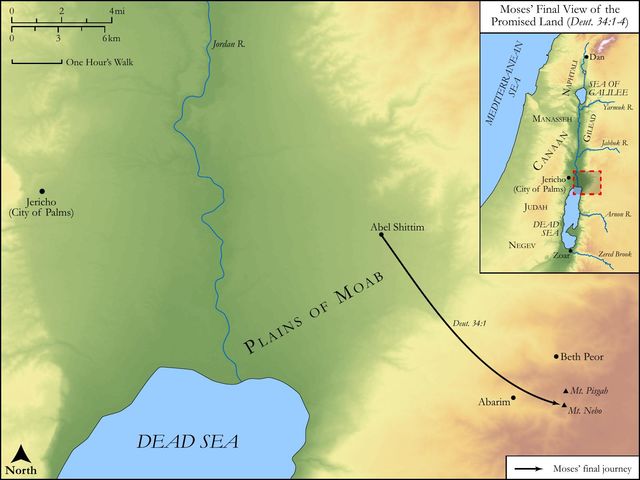
The historical setting for the delivery of this song is the plains of Moab, a critical juncture where the Israelites stood on the cusp of entering Canaan after forty arduous years of wilderness wandering. Moses, at the venerable age of 120, was preparing to transfer leadership to Joshua. In the covenant of Moses, blessings and curses were set out at length, serving as solemn warnings for disobedience and powerful promises for fidelity. This song functions in a similar manner, acting as a divine covenant oath. The vivid imagery of a warrior-God whetting His sword and taking hold of judgment would have resonated profoundly with a people intimately familiar with tribal warfare and the pervasive concept of divine retribution for covenant breaking, a concept understood both from their own experiences and from the surrounding nations. The song's overarching purpose was not merely to predict future events but to serve as a legal testimony, a "witness" (as specifically mentioned in Deuteronomy 31:19), against Israel's anticipated future idolatry and disobedience.
Key Themes
ShowHideDeuteronomy 32:41 powerfully contributes to several overarching themes that permeate the book of Deuteronomy and the broader biblical narrative. Firstly, it emphatically highlights Divine Sovereignty and Unrivaled Power. The potent imagery of God preparing for battle underscores His absolute authority and His unparalleled ability to execute His will, a theme profoundly woven throughout the entire book of Deuteronomy. Secondly, the verse unequivocally emphasizes Divine Justice and Righteous Retribution. God is not indifferent to sin or injustice; He is a God who actively "renders vengeance" and "rewards" those who hate Him, thereby ensuring that all wrongs are ultimately addressed and rectified. This foundational concept of God's holy justice is crucial for understanding His character, as beautifully articulated in Deuteronomy 32:4. Finally, it starkly reinforces the Consequences of Rebellion and Disobedience. For those who actively oppose God and oppress His people, the verse promises a sure and certain recompense, serving as a stark and undeniable warning that actions against God's covenant will not go unpunished, a message powerfully echoed throughout the detailed warnings found in Deuteronomy 28.
Exposition and Analysis
ShowHideKey Word Analysis
ShowHideThis primitive root means "to point (transitive or intransitive); intensively, to pierce; figuratively, to inculcate; prick, sharp(-en), teach diligently, whet." In the context of a sword, it signifies the deliberate act of sharpening, making keen, and preparing for decisive, swift, and effective action. This is not a casual act but a calculated, intentional process, indicating that God's judgment is neither impulsive nor arbitrary, but rather a prepared, inevitable execution of justice. The image conveys an unyielding resolve and readiness for divine intervention.
This word means "lightning; by analogy, a gleam; concretely, a flashing sword; bright, glitter(-ing sword), lightning." When applied to a sword, this term evokes the terrifying majesty and supernatural quality of God's weapon. It suggests the sudden, irresistible, and inescapable nature of divine judgment, akin to a flash of lightning that strikes without warning and cannot be evaded. The gleam of the sword signifies its polished readiness and the terrifying radiance of divine power.
This term refers to "revenge; [phrase] avenged, quarrel, vengeance." In biblical theology, naqam does not denote petty, malicious, or personal revenge as often understood in human terms. Instead, it refers to divine retribution, a righteous act of restitution that vindicates God's holiness, upholds His moral order, and sets right what has been wronged. It is an act of judgment against evil that demonstrates God's sovereignty and ensures that His covenant people are ultimately delivered and His enemies are held accountable. It is a necessary aspect of God's character as a just ruler, ensuring that sin does not go unpunished and that righteousness ultimately prevails.
Verse Breakdown
ShowHide"If I whet my glittering sword,"
This opening clause introduces the divine resolve and preparation for action. The conditional "If" (אִם, im) here functions not as a statement of doubt, but as an emphatic declaration or an oath, signifying absolute certainty. It paints a vivid picture of God actively preparing His instrument of judgment, emphasizing His readiness and the terrifying majesty of His impending intervention. The "glittering sword" symbolizes His swift, powerful, and inescapable justice, ready to be unleashed.
"and mine hand take hold on judgment;"
This phrase further emphasizes the direct, personal, and authoritative nature of God's action. "Mine hand" (יָדִי, yadi, H3027) signifies God's direct involvement and omnipotent power, while "take hold on judgment" (וְתֹאחֵז בְּמִשְׁפָּט, veto'chez bemishpat, H270, H4941) indicates that judgment is not merely an abstract outcome but something God actively grasps, controls, and executes. It is a deliberate, personal administration of justice, ensuring that His righteous decrees are carried out with precision, authority, and unwavering resolve.
"I will render vengeance to mine enemies,"
This is the first explicit declaration of the certain outcome of God's preparation. "Vengeance" (נָקָם, naqam, H5359) here is divine retribution, a righteous act of setting things right and restoring justice. "Mine enemies" (צָר, tsar, H6862) refers primarily to those who actively oppose God's will, His covenant, and His people, often through oppression and idolatry. This clause promises that God will actively and certainly repay those who stand in opposition to Him.
"and will reward them that hate me."
This final clause reiterates and reinforces the previous one through powerful synonymous parallelism. "Reward" (שָׁלַם, šālam, H7999) in this context means to pay back or recompense, carrying negative connotations when applied to adversaries. "Them that hate me" (שָׂנֵא, sânêʼ, H8130) is another descriptor for God's adversaries, emphasizing their active animosity towards Him. Together, these clauses assure that God's justice will be comprehensive, certain, and that all who stand against Him will face appropriate recompense.
Literary Devices
ShowHideDeuteronomy 32:41 is rich in Imagery, painting a vivid and awe-inspiring picture of God as a divine warrior. The phrase "whet my glittering sword" uses the concrete image of a sharpened, flashing blade to convey the swift, decisive, and terrifying nature of God's impending judgment. This visual is further enhanced by Anthropomorphism, attributing human-like actions ("mine hand take hold") and emotions ("hate me") to God. This literary device makes God's actions relatable and impactful, allowing the audience to grasp His power and resolve, while still preserving His transcendent and divine nature. The verse employs Parallelism, specifically synonymous parallelism, in the latter half: "I will render vengeance to mine enemies, and will reward them that hate me." These two clauses express the same core idea using different but closely related words, thereby reinforcing the certainty, comprehensiveness, and unwavering nature of God's retribution. The declaration itself carries a strong sense of Divine Rhetoric, emphasizing the absolute certainty and overwhelming power of God's judgment through dramatic and authoritative language, intended to instill both a healthy fear in His enemies and profound comfort and assurance in His covenant people.
Theological and Thematic Connections
ShowHideDeuteronomy 32:41 profoundly articulates God's character as a righteous, holy, and sovereign judge, a truth absolutely foundational to biblical theology. It reveals that God's justice is not merely a passive attribute but an active, dynamic force that will ultimately confront, conquer, and overcome all forms of evil. This divine "vengeance" is not driven by human malice or petty anger, but by a holy imperative to uphold righteousness, vindicate His sacred name, and restore righteousness in all the earth. It assures His people that He intimately sees their suffering and will actively intervene on their behalf, while simultaneously serving as a stark and sobering warning to those who defy Him. This understanding of God's active, righteous justice provides immense comfort for the oppressed and a solemn, urgent call to repentance for all.
Reflection and Application
ShowHideDeuteronomy 32:41 offers a powerful and multifaceted truth for believers navigating the complexities of life today. In a world often characterized by pervasive injustice, widespread oppression, and seemingly unpunished evil, this verse provides immense comfort and a firm anchor for our hope. It assures us that God is not a passive observer of human affairs but an active, sovereign Judge who sees every wrong, hears every cry of the oppressed, and will, in His perfect timing and manner, bring about righteous judgment. This profound truth liberates us from the heavy burden of seeking personal retribution, calling us instead to trust implicitly in God's perfect justice and to extend forgiveness to others, just as we have received forgiveness through Christ. Simultaneously, it serves as a sobering warning: God is absolutely holy, and sin, especially active rebellion against Him and His people, will not go unpunished. This should cultivate a healthy, reverential fear of the Lord, prompting us to live in humble obedience and to share the good news of salvation, which offers a gracious escape from this coming judgment. Ultimately, it reinforces our unwavering trust in God's ultimate control and His steadfast commitment to righteousness, reminding us that His divine plans for justice and redemption will prevail, regardless of present circumstances or appearances.
Questions for Reflection
ShowHideFAQ
ShowHideDoes God's declaration of "vengeance" in this verse mean He is vengeful in the human sense, driven by malice or petty anger?
ShowHideNo, the biblical concept of God's "vengeance" (Hebrew naqam) is fundamentally and qualitatively different from human revenge. Human revenge is typically motivated by personal injury, malice, or a desire for disproportionate retaliation, often leading to cycles of violence and injustice. God's vengeance, however, is a pure expression of His perfect holiness, righteousness, and justice. It is a necessary act to uphold His moral order, vindicate His sacred name, and set right what has been wronged. It is not an impulsive act but a deliberate, righteous judgment against sin and rebellion. As Romans 12:19 unequivocally states, "Vengeance is Mine, I will repay, says the Lord." This profound truth means that only God, with His perfect knowledge, absolute righteousness, and infinite power, can execute true justice without bias, error, or corruption. His vengeance is an act of restitution that ultimately brings about the triumph of good over evil, ensuring that sin does not have the final word. It is a demonstration of His unwavering commitment to His covenant and His people, and an indispensable aspect of His role as the sovereign Judge of all the earth.
Christ-Centered Fulfillment
ShowHideDeuteronomy 32:41, with its powerful declaration of God's readiness to execute judgment and render vengeance, finds its ultimate and most profound fulfillment in the person and work of Jesus Christ. While the Old Testament often portrays God as a formidable warrior-judge, the New Testament reveals that this divine prerogative has been fully entrusted to the Son. John 5:22 declares that the Father "has committed all judgment to the Son," establishing Christ as the supreme arbiter of divine justice. Christ's first coming was characterized by grace and salvation, where He bore the "sword" of divine judgment on the cross, becoming the ultimate sacrifice for sin, as profoundly prophesied in Isaiah 53:5. He absorbed the righteous wrath of God against humanity's rebellion, offering forgiveness and reconciliation to all who believe. However, His second coming will be marked by the full and final execution of the judgment described in Deuteronomy 32:41. Revelation 19:11-16 vividly depicts Christ returning as the supreme warrior, with a sharp sword coming from His mouth, to strike down the nations and tread the winepress of the fury of the wrath of God Almighty. Thus, the "glittering sword" of divine justice, once poised in the hand of God in the Old Testament, is now wielded by the resurrected Christ, who will ultimately render vengeance upon His enemies and eternally reward those who have faithfully loved and followed Him, bringing about the complete triumph of righteousness.