


Acts 20:9
Bible text: King James Version (1769 Blayney text) · Public domain
Bible text: King James Version with Strong's numbers · Public domain
Bible text: Berean Standard Bible · Public domain
Bible text: American Standard Version (1901) · Public domain
Bible text: World English Bible, Messianic edition · Public domain
Bible text: Geneva Bible (1599) · Public domain
Bible text: Young's Literal Translation · Public domain
- καθεζόμενοςkathezomenossittingG2516V-PNP-NSMVerb Present Middle Or Passive Deponent Participle Nominative Singular Masculine
- δέdethenG1161CONJConjunction
- τιςtisa certainG5100X-NSMIndefinite pronoun Nominative Singular Masculine
- νεανίαςneaniasyoung manG3494N-NSMNoun Nominative Singular Masculine
- ὀνόματιonomatinamedG3686N-DSNNoun Dative Singular Neuter
- ΕὔτυχοςEutuchosEutychusG2161N-NSM-PNoun Nominative Singular Masculine Individual
- ἐπὶepibyG1909PREPPreposition
- τῆςtēstheG3588T-GSFDefinite article Genitive Singular Feminine
- θυρίδοςthuridoswindowG2376N-GSFNoun Genitive Singular Feminine
- καταφερόμενοςkatapheromenosoverpoweredG2702V-PPP-NSMVerb Present Passive Participle Nominative Singular Masculine
- ὕπνῳhupnōby sleepG5258N-DSMNoun Dative Singular Masculine
- βαθεῖbatheideepG901A-DSMAdjective Dative Singular Masculine
- διαλεγομένουdialegomenouas is talkingG1256V-PNP-GSMVerb Present Middle Or Passive Deponent Participle Genitive Singular Masculine
- τοῦtou<the>G3588T-GSMDefinite article Genitive Singular Masculine
- ΠαύλουPaulouPaulG3972N-GSM-PNoun Genitive Singular Masculine Individual
- ἐπὶepionG1909PREPPreposition
- πλεῖονpleionlongerG4119A-ASN-CAdjective Accusative Singular Neuter Comparative
- κατενεχθεὶςkatenechtheishaving been overpoweredG2702V-APP-NSMVerb Aorist Passive Participle Nominative Singular Masculine
- ἀπὸapobyG575PREPPreposition
- τοῦtoutheG3588T-GSMDefinite article Genitive Singular Masculine
- ὕπνουhupnousleepG5258N-GSMNoun Genitive Singular Masculine
- ἔπεσενepesenhe fellG4098V-2AAI-3SVerb 2nd Aorist Active Indicative 3rd Singular
- ἀπὸapofromG575PREPPreposition
- τοῦtoutheG3588T-GSNDefinite article Genitive Singular Neuter
- τριστέγουtristegouthird storyG5152N-GSNNoun Genitive Singular Neuter
- κάτωkatōdownG2736PREPPreposition
- καὶkaiandG2532CONJConjunction
- ἤρθηērthēwas picked upG142V-API-3SVerb Aorist Passive Indicative 3rd Singular
- νεκρόςnekrosdeadG3498A-NSMAdjective Nominative Singular Masculine
English is a literal word-by-word gloss of the Greek, not the KJV's wording. Why?
This is the original text the KJV's translators worked from — each Greek word with its own literal English meaning in this verse, prepared by scholars at Tyndale House, Cambridge. The KJV translates whole sentences, not word by word, so its wording differs: one Greek word can become several English words, and the KJV may choose “charity” where the gloss reads “love”. Both are faithful — they answer different questions. For the KJV's own rendering, switch to the KJV text.
Details
See on the biblical-era maps


Study this verse
Public-domain commentary
Matthew Henry
From his Commentary on the Whole Bible. Henry comments on passages, not single verses — this entry covers Acts 20:7–12. His three-level outline is real structure in the source text, so it is rendered as structure.
We have here an account of what passed at Troas the last of the seven days that Paul staid there.
I.There was a solemn religious assembly of the Christians that were there, according to their constant custom, and the custom of all the churches.
1.The disciples came together, Act 20:7. Though they read, and meditated, and prayed, and sung psalms, apart, and thereby kept up their communion with God, yet that was not enough; they must come together to worship God in concert, and so keep up their communion with one another, by mutual countenance and assistance, and testify their spiritual communion with all good Christians. There ought to be stated times for the disciples of Christ to come together; though they cannot all come together in one place, yet as many as can.
2.They came together upon the first day of the week, which they called the Lord's day (Rev 1:10), the Christian sabbath, celebrated to the honour of Christ and the Holy Spirit, in remembrance of the resurrection of Christ, and the pouring out of the Spirit, both on the first day of the week. This is here said to be the day when the disciples came together, that is, when it was their practice to come together in all the churches. Note, The first day of the week is to be religiously observed by all the disciples of Christ; and it is a sign between Christ and them, for by this it is known that they are his disciples; and it is to be observed in solemn assemblies, which are, as it were, the courts held in the name of our Lord Jesus, and to his honour, by his ministers, the stewards of his courts, to which all that hold from and under him owe suit and service, and at which they are to make their appearance, as tenants at their Lord's courts, and the first day of the week is appointed to be the court-day.
3.They were gathered together in an upper chamber (Act 20:8); they had no temple nor synagogue to meet in, no capacious stately chapel, but met in a private house, in a garret. As they were few, and did not need, so they were poor, and could not build, a large meeting-place; yet they came together, in that despicable inconvenient place. It will be no excuse for our absenting ourselves from religious assemblies that the place of them is not so decent nor so commodious as we would have it to be.
4.They came together to break bread, that is, to celebrate the ordinance of the Lord's supper, that one instituted sign of breaking the bread being put for all the rest. The bread which we break is the communion of the body of Christ, Co1 10:16. In the breaking of the bread, not only the breaking of Christ's body for us, to be a sacrifice for our sins, is commemorated, but the breaking of Christ's body to us, to be food and a feast for our souls, is signified. In the primitive times it was the custom of many churches to receive the Lord's supper every Lord's day, celebrating the memorial of Christ's death in the former, with that of his resurrection in the latter; and both in concert, in a solemn assembly, to testify their joint concurrence in the same faith and worship.
II.In this assembly Paul gave them a sermon, a long sermon, a farewell sermon, Act 20:7.
1.He gave them a sermon: he preached to them. Though they were disciples already, yet it was very necessary they should have the word of God preached to them, in order to their increase in knowledge and grace. Observe, The preaching of the gospel ought to accompany the sacraments. Moses read the book of the covenant in the audience of the people, and then sprinkled the blood of the covenant, which the Lord had made with them concerning all these words, Exo 24:7, Exo 24:8. What does the seal signify without a writing?
2.It was a farewell sermon, he being ready to depart on the morrow. When he was gone, they might have the same gospel preached, but not as he preached it; and therefore they must make the best use of him that they could while they had him. Farewell sermons are usually in a particular manner affecting both to the preacher and to the hearers.
3.It was a very long sermon: He continued his speech until midnight; for he had a great deal to say, and knew not that ever he should have another opportunity of preaching to them. After they had received the Lord's supper, he preached to them the duties they had thereby engaged themselves to, and the comforts they were interested in, and in this he was very large and full and particular. There may be occasion for ministers to preach, not only in season, but out of season. We know some that would have reproached Paul for this as a long-winded preacher, that tired his hearers; but they were willing to hear: he saw them so, and therefore continued his speech. He continued it till midnight; perhaps they met in the evening for privacy, or in conformity to the example of the disciples who came together on the first Christian sabbath in the evening. It is probable he had preached to them in the morning, and yet thus lengthened out his evening sermon even till midnight; we wish we had the heads of this long sermon, but we may suppose it was for substance the same with his epistles. The meeting being continued till midnight, there were candles set up, many lights (Act 20:8), that the hearers might turn to the scriptures Paul quoted, and see whether these things were so; and that this might prevent the reproach of their enemies, who said they met in the night for works of darkness.
III.A young man in the congregation, that slept at sermon, was killed by a fall out of the window, but raised to life again; his name signifies one that had good fortune - Eutychus, bene fortunatus; and he answered his name. Observe,
1.The infirmity with which he was overtaken. It is probable his parents brought him, though but a boy, to the assembly, out of a desire to have him well instructed in the things of God by such a preacher as Paul. Parents should bring their children to hear sermons as soon as they can hear with understanding (Neh 8:2), even the little ones, Deu 29:11. Now this youth was to be blamed,
(1.)That he presumptuously sat in the window, unglazed perhaps, and so exposed himself; whereas, if he could have been content to sit on the floor, he had been safe. Boys that love to climb, or otherwise endanger themselves, to the grief of their parents, consider not how much it is also an offence to God.
(2.)That he slept, nay, he fell into a deep sleep when Paul was preaching, which was a sign he did not duly attend to the things that Paul spoke of, though they were weighty things. The particular notice taken of his sleeping makes us willing to hope none of the rest slept, though it was sleeping time and after supper; but this youth fell fast asleep, he was carried away with it (so the word is), which intimates that he strove against it, but was overpowered by it, and at last sunk down with sleep.
2.The calamity with which he was seized herein: He fell down from the third loft, and was taken up dead. Some think that the hand of Satan was in it, by the divine permission, and that he designed it for a disturbance to this assembly and a reproach to Paul and it. Others think that God designed it for a warning to all people to take heed of sleeping when they are hearing the word preached; and certainly we are to make this use of it. We must look upon it as an evil thing, as a bad sign of our low esteem of the word of God, and a great hindrance to our profiting by it. We must be afraid of it, do what we can to prevent our being sleepy, not compose ourselves to sleep, but get our hearts affected with the word we hear to such a degree as may drive sleep far enough. Let us watch and pray, that we enter not into this temptation, and by it into worse. Let the punishment of Eutychus strike an awe upon us, and show us how jealous God is in the matters of his worship; Be not deceived, God is not mocked. See how severely God visited an iniquity that seemed little, and but in a youth, and say, Who is able to stand before this holy Lord God? Apply to this story that lamentation (Jer 9:20, Jer 9:21), Hear the word of the Lord, for death is come up into our windows, to cut off the children from without and the young men from the streets.
3.The miraculous mercy shown him in his recovery to life again, Act 20:10. It gave a present distraction to the assembly, and an interruption to Paul's preaching; but it proved an occasion of that which was a great confirmation to his preaching, and helped to set it home and make it effectual.
(1.)Paul fell on the dead body, and embraced it, thereby expressing a great compassion to, and an affectionate concern for, this young man, so far was he from saying, "He was well enough served for minding so little what I said!" Such tender spirits as Paul had are much affected with sad accidents of this kind, and are far from judging and censuring those that fall under them, as if those on whom the tower of Siloam fell were sinners above all that dwelt at Jerusalem; I tell you, nay. But this was not all; his falling on him and embracing him were in imitation of Elijah (Kg1 17:21), and Elisha (Kg2 4:34), in order to the raising of him to life again; not that this could as a means contribute any thing to it, but as a sign it represented the descent of that divine power upon the dead body, for the putting of life into it again, which at the same time he inwardly, earnestly, and in faith prayed for.
(2.)He assured them that he had returned to life, and it would appear presently. Various speculations, we may suppose, this ill accident had occasioned in the congregation, but Paul puts an end to them all: "Trouble not yourselves, be not in any disorder about it, let it not put you into any hurry, for his life is in him; he is not dead, but sleepeth: lay him awhile upon a bed, and he will come to himself, for he is now alive." Thus, when Christ raised Lazarus, he said, Father, I thank thee that thou hast heard me.
(3.)He returned to his work immediately after this interruption (Act 20:11): He came up again to the meeting, they broke bread together in a love-feast, which usually attended the eucharist, in token of their communion with each other, and for the confirmation of friendship among them; and they talked a long while, even till break of day. Paul did not now go on in a continued discourse, as before, but he and his friends fell into a free conversation, the subject of which, no doubt, was good, and to the use of edifying. Christian conference is an excellent means of promoting holiness, comfort, and Christian love. They knew not when they should have Paul's company again, and therefore made the best use they could of it when they had it, and reckoned a night's sleep well lost for that purpose.
(4.)Before they parted they brought the young man alive into the congregation, every one congratulating him upon his return to life from the dead, and they were not a little comforted, Act 20:12. It was matter of great rejoicing among them, not only to the relations of the young man, but to the whole society, as it not only prevented the reproach that would otherwise have been cast upon them, but contributed very much to the credit of the gospel.
Historical interpretation
Five Centuries of Reception
12 surviving comments on this verse. Each one is dated, so this reads as a timeline rather than a list.
Select a marker to jump to its quote. Markers stagger vertically where authors wrote within a few decades of each other.
And so, if it were agreed that even the blessed apostles had granted any such indulgence (to any crime) the pardon of which (comes) from God, not from man, it would be competent (for them) to have done so, not in the exercise of discipline, but of power. For they both raised the dead, which God alone (can do), and restored the debilitated to their integrity, which none but Christ (can do); nay, they inflicted plagues too, which Christ would not do.
"And there were many lights in the upper chamber, where they were gathered together. And there sat in a window a certain young man named Eutychus, being fallen into a deep sleep: and as Paul was long preaching, he sunk down with sleep, and fell down from the third loft, and was taken up dead." But the Devil disturbed the feast-not that he prevailed, however-by plunging the hearer in sleep, and causing him to fall down. But observe, I pray you, the theatre, how crowded it was: and the miracle, what it was. "He was sitting in a window," at dead of night. Such was their eagerness to hear him!
Let us take shame to ourselves! "Aye, but a Paul," say you, "was discoursing then." Yes, and Paul discourses now, or rather not Paul, either then or now, but Christ, and yet none cares to hear. No window in the case now, no importunity of hunger, or sleep, and yet we do not care to hear: no crowding in a narrow space here, nor any other such comfort.
That young man was to rebuke all that are careless of the word, he whose death was caused by nothing else than this, that he wished to hear Paul.
And the wonderful circumstance is, that though he was a youth, he was not listless and indifferent; and though he felt himself weighed down by sleep, he did not go away, nor yet fear the danger of falling down. It was not from listlessness that he slumbered, but from necessity of nature. But observe, I beseech you, so fervent was their zeal, that they even assembled in a third loft: for they had not a Church yet.
"When he was come up again, and had broken bread, and eaten." This thing cut short the discourse; it did no harm, however. "When he had eaten," it says, "and discoursed a long while, even till break of day, so he departed." Do you mark the frugality of the supper? Do you observe how they passed the whole night? Such were their meals, that the hearers came away sober, and fit for hearing.
But we, in what do we differ from dogs? Do you mark what a difference between us and those men? "And they brought the young man alive, and," it says, "were not a little comforted," both because they received him back alive, and because a miracle had been wrought.
"Trouble not yourselves," he says. He said not, "He shall come to life again, for I will raise him up:" but mark the unassuming way in which he comforts them: "for his life," says he, "is in him."
Eutychus, alone, banished from the wakeful ones keeping watch, entrusted to a window with limbs sunk in heavy sleep. O rest wrongly won! O hearts always given over to sleep, unprotected by good! How great the disasters he lies open to, whom night alone guards and who never raises his troubled head to better things! He who allows [himself] to fall asleep from God does not know how to be wakeful for danger. Why do you seek the empty chaos of the window, young man, or why are you restful in that place where you will come to disaster? It is a matter harmful for well-being to seek high, hanging [places] and to wish to snatch furtive dreams on a steep couch.
Awakened from sleep, he fell down from the third loft, etc. During the words of preaching, an opportunity for healing arose, so that the word might be strengthened by the sweetness of the miracle and the doctrine, and the labor of vigils might be warded off, and the memory of the teacher soon to depart might be more deeply impressed upon minds. Indeed, the three lofts in which Paul was disputing represent faith, hope, and charity. But the greatest of these is charity (1 Cor. 13). If anyone out of laziness deserts it, and does not fear to slumber among the voice of the Apostle, he will already be counted among the dead. For whoever offends in one point becomes guilty of all (James 2).
A certain young man named Eutychus was sitting at the window, etc. Eutychus in Hebrew means insane, in Greek lucky. One of these fits him who has fallen from the height of virtues due to youthful pleasure, the other to him who, by the preacher's condescension, will return to the height of virtues.
Awoken from sleep, he fell from the third loft. For the third loft, in Greek it is written "τριστέγου," which I wanted to mention so that the reader may know what is in Genesis, where Noah is ordered to build the ark: "Make in it lower, second, and third decks" (Gen. VI); for in Greek, "στέγη" means roof, and "τρίστεγα" means threefold roofs.
Continue studying Acts 20:9 across the web’s major study libraries — every link below opens this exact verse, chapter, or book on the destination site.
Read & Compare
 BibleGatewayThis verse in more than 200 translations and 70 languages.
 Bible.comThe YouVersion reader — hundreds of translations, reading plans, and highlights.
 ESV.orgCrossway's official English Standard Version reader.
 NET BibleThe NET translation with 60,000+ translators' notes on every rendering decision.
 STEP BibleTyndale House's free study tool — original text, vocabulary, and scholarly resources.
 BibliaLogos Bible Software's free web reader.
 USCCBThe New American Bible (Revised Edition) with the U.S. bishops' study notes.
Commentaries
 BibleHub CommentariesDozens of classic commentaries on this verse, gathered on one page.
 StudyLightMore than 100 commentary sets — the largest collection on the web.
 BibleRefPlain-English commentary on what this verse means, verse by verse.
 Enduring WordDavid Guzik's free commentary on this chapter, widely used by Bible teachers.
 Bible Study ToolsVerse commentary alongside Greek and Hebrew study aids.
Original Language & Research
- BibleHub InterlinearThe verse word by word — original language, transliteration, and English.
- BibleHub LexiconEvery word's original-language definition and Strong's entry.
 Blue Letter BibleDeep-study tools — Strong's numbers, concordance, and word studies.
 CNTR CollationThe earliest Greek manuscripts of this verse, collated letter by letter.
Sermons, Hymns & Audio


TrulyRandomVerse is not affiliated with these sites and doesn’t control their content. They’re linked because they’re genuinely useful.
Summary
Acts 20:9 vividly recounts a dramatic incident during Paul's extended farewell sermon in Troas, where a young man named Eutychus, overcome by an exceptionally deep sleep while seated in a window, fell three stories to his death. This verse sets the stage for a profound demonstration of divine power through the Apostle Paul, highlighting the human element within early Christian gatherings and foreshadowing a miraculous intervention.
Context
ShowHideLiterary Context
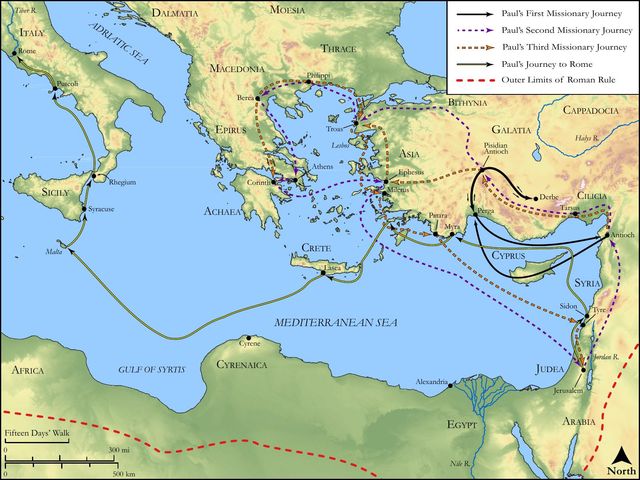
This incident occurs within the broader narrative of Paul's third missionary journey, specifically during his return trip to Jerusalem. Having spent three months in Greece, Paul is now making his way back, intending to be in Jerusalem for Pentecost. The gathering in Troas, described in Acts 20:7-12, is a significant stop, characterized by an intense, prolonged teaching session. The verse immediately precedes the miraculous resuscitation of Eutychus, making it crucial for establishing the severity of the situation and the undeniable nature of the subsequent miracle. It underscores the spiritual earnestness of the early church, willing to meet late into the night to hear apostolic teaching.
Historical & Cultural Context
The setting is Troas, a significant port city in Asia Minor. Early Christian gatherings often took place in upper rooms of private homes, as churches did not yet have dedicated buildings. These rooms, especially when crowded with many people and numerous lamps (as mentioned in Acts 20:8), would have been warm and stuffy, contributing to the conditions that might induce drowsiness. The "first day of the week" meeting (Sunday, Acts 20:7) signifies the early church's practice of gathering for fellowship, breaking bread, and teaching, establishing a pattern that would continue. Paul's "long preaching" (literally, "prolonged discourse") reflects the common practice of extensive teaching in ancient philosophical and religious traditions, where orators would speak for hours.
Key Themes
ShowHideThis verse contributes to several overarching themes in Acts. It powerfully illustrates the human frailty of even devout believers, contrasting it sharply with the divine power at work through God's apostles, particularly in the face of death. The intensity and commitment of early Christian gatherings are also evident, as believers convened late into the night for extended teaching. Furthermore, it highlights Paul's tireless dedication to ministry and his profound passion for communicating the Gospel, even to the point of preaching until midnight. Ultimately, Acts 20:9 serves as the dramatic setup for a miracle of resurrection, emphasizing God's sovereignty over life and death and the authentication of His messengers.
Exposition and Analysis
ShowHideKey Word Analysis
ShowHideThis term, translated as "young man," denotes a youth typically up to about forty years of age. Its use here emphasizes Eutychus's relative youth, making his sudden death all the more tragic and his subsequent revival all the more remarkable. The detail humanizes the account, allowing the audience to connect with the vulnerability of a young life.
Translated as "being fallen into a deep sleep" and "sunk down with sleep," this verb literally means "to bear down" or "to bring down." In this context, it figuratively describes being overcome or weighed down by drowsiness, indicating an irresistible and profound state of slumber, rather than a mere light doze. It underscores the involuntary nature of Eutychus's descent into sleep.
This word, meaning "dead" or "lifeless," is used unequivocally to describe Eutychus's state after his fall. The text leaves no ambiguity about his condition; he was not merely unconscious or severely injured, but genuinely deceased. This explicit declaration is crucial for validating the miraculous nature of his subsequent revival, ensuring that the reader understands a true resurrection took place.
Verse Breakdown
ShowHide"And there sat in a window a certain young man named Eutychus,"
This introduces the central figure of the incident, Eutychus, identifying him as a "young man" and specifying his precarious position "in a window." This detail immediately establishes the physical context for the impending fall, highlighting the potential danger of his chosen spot in a crowded, late-night assembly.
"being fallen into a deep sleep:"
This clause describes Eutychus's state, emphasizing that he was not merely drowsy but had succumbed to a profound and overwhelming slumber. The "deep sleep" (Greek: bathys hypnos) suggests an involuntary and irresistible condition, likely exacerbated by the long sermon, the late hour, and the stuffy atmosphere of the upper room.
"and as Paul was long preaching, he sunk down with sleep,"
This part connects Eutychus's condition directly to Paul's extended discourse. Paul's "long preaching" (Greek: epí pleíōn dialégomai, "speaking for a longer time") indicates the considerable duration of the sermon, which continued until midnight. Eutychus's "sinking down with sleep" reinforces the idea of being completely overcome by drowsiness, leading to his loss of control.
"and fell down from the third loft,"
This is the climactic action of the verse, detailing the tragic consequence of Eutychus's sleep. The "third loft" (Greek: trístegon) specifies the height of the fall, emphasizing its severity. Falling from such a height would inevitably result in grave injury or death, setting the stage for the dramatic outcome.
"and was taken up dead."
This final, stark declaration confirms the immediate and fatal result of the fall. The phrase "taken up dead" (Greek: aírō nekrós) leaves no doubt about Eutychus's condition; he was lifeless. This definitive statement is vital for the narrative, as it underscores the miraculous nature of Paul's subsequent action in Acts 20:10, transforming the event from a mere accident into a powerful display of divine power over death.
Literary Devices
ShowHideThe narrative in Acts 20:9 employs several literary devices to enhance its impact. Realism is evident in the depiction of Eutychus's natural human response to a long, late-night sermon, making the scene relatable and believable. The detail of him sitting in a window and falling from a "third loft" adds a vivid, concrete quality to the account. There is a strong element of dramatic irony and foreshadowing, as the seemingly tragic and final declaration of Eutychus being "taken up dead" sets up the extraordinary miracle that immediately follows, creating anticipation for divine intervention. Furthermore, the passage employs contrast between human vulnerability and the imminent display of divine power, highlighting the limitations of the flesh against the boundless capacity of God.
Theological and Thematic Connections
ShowHideActs 20:9, while a seemingly tragic incident, serves as a powerful theological precursor to the demonstration of God's life-giving power through Paul. It underscores the reality of human limitations—fatigue, vulnerability, and mortality—even in the midst of spiritual fervor. The explicit statement that Eutychus was "taken up dead" is crucial; it removes any ambiguity regarding his condition, thereby magnifying the miraculous nature of his subsequent revival. This event aligns with a consistent biblical theme: God's sovereignty over life and death, and His ability to restore life, often through His chosen servants, to authenticate their message and demonstrate His glory. It reminds us that even in moments of human weakness or tragic accident, God's redemptive purposes can be powerfully revealed.
Reflection and Application
ShowHideThe story of Eutychus is a poignant reminder of the human element in our spiritual journeys. It acknowledges that even in the most sacred and spiritually charged environments, human frailty—be it fatigue, distraction, or simply the demands of a long day—can manifest. Eutychus's profound sleep and subsequent fall serve as a stark illustration of the consequences of losing focus, yet the narrative quickly pivots to God's boundless grace and power. For us today, this incident encourages a posture of mindful engagement with God's Word, recognizing its life-giving importance, even when circumstances might tempt us to drift. It also offers immense comfort: even when human weakness leads to dire circumstances, God's compassion and power can intervene miraculously. It challenges us to remain spiritually alert and physically present, yet also reassures us that our God is one who can bring life out of death, hope out of despair, and redemption out of tragedy. The story ultimately points to the extraordinary power of God at work through His people, transforming seemingly hopeless situations into testimonies of His glory.
Questions for Reflection
ShowHideFAQ
ShowHideWas Eutychus truly dead, or just unconscious?
ShowHideThe biblical text is unambiguous. Acts 20:9 explicitly states he "was taken up dead" (Greek: nekrós). This word is consistently used in the New Testament to denote actual physical death, as seen in the accounts of Jesus raising Lazarus (John 11:43-44) or the widow's son (Luke 7:14-15). The subsequent verses in Acts 20:10-12 describe Paul falling on him and embracing him, then declaring, "Do not be alarmed, for his life is in him." This declaration, combined with the earlier statement of death and the subsequent joy and comfort of the disciples, strongly indicates a genuine resurrection from the dead, not merely a recovery from unconsciousness.
Christ-Centered Fulfillment
ShowHideThe dramatic account of Eutychus's fall and subsequent revival in Acts 20:9-12 finds its ultimate Christ-centered fulfillment in the person and work of Jesus Christ. Paul, as an apostle, acts as an instrument of God's power, mirroring the life-giving authority uniquely possessed by Christ. Just as Paul raises Eutychus from the dead, Jesus Himself demonstrated absolute dominion over death, famously declaring, "I am the resurrection and the life. Whoever believes in me, though he die, yet shall he live" (John 11:25). His own resurrection from the grave stands as the supreme victory over death, guaranteeing the future resurrection of all who believe in Him (1 Corinthians 15:20-22). Eutychus's story, therefore, is not merely a historical anecdote, but a powerful prophetic echo of the greater resurrection power of Christ, foreshadowing the ultimate hope of eternal life and the victory over the grave secured by the Lamb of God (Revelation 1:18). It reminds us that the power at work through Paul was ultimately derived from the resurrected Christ, who alone holds the keys of death and Hades.