


Psalms 60:2
Bible text: King James Version (1769 Blayney text) · Public domain
Bible text: Berean Standard Bible · Public domain
Bible text: American Standard Version (1901) · Public domain
Bible text: World English Bible, Messianic edition · Public domain
Bible text: Geneva Bible (1599) · Public domain
Bible text: Young's Literal Translation · Public domain
- הִרְעַשְׁתָּהhir·'Ash·tahyou have made quakeH7493V-Hiphil-Perf-2msVerb Hiphil Perfect 2nd Singular Masculine
- אֶרֶץ'E·retz[the] earthH776N-fsNoun Singular Feminine Absolute
- פְּצַמְתָּהּpe·tzam·Tahyou have split open itH6480V-Qal-Perf-2ms ¦ 3fsVerb Qal Perfect 2nd Singular Masculineפְּצַמְתָּyou have split openהּit
- רְפָהre·Fahrepair !H7495V-Qal-Imp-2ms ¦ SfxVerb Qal Imperative 2nd Singular Masculineרְפָrepairה!
- שְׁבָרֶיהָshe·va·Rei·haits fracturesH7667N-mpc ¦ 3fsNoun Plural Masculine Constructשְׁבָרֶיfracturesהָits
- כִיkhiforH3588PrtParticle Conditional
- מָטָהMa·tahit is shakingH4131V-Qal-Perf-3fsVerb Qal Perfect 3rd Singular Feminine
English is a literal word-by-word gloss of the Hebrew, not the KJV's wording. Why?
This is the original text the KJV's translators worked from — each Hebrew word with its own literal English meaning in this verse, prepared by scholars at Tyndale House, Cambridge. The KJV translates whole sentences, not word by word, so its wording differs: one Hebrew word can become several English words, and the KJV may choose “the LORD” where the gloss reads “Yahweh”. Both are faithful — they answer different questions. For the KJV's own rendering, switch to the KJV text.
Details
See on the biblical-era map
Study this verse
Public-domain commentary
Matthew Henry
From his Commentary on the Whole Bible. Henry comments on passages, not single verses — this entry covers Psalms 60:1–5. His three-level outline is real structure in the source text, so it is rendered as structure.
The title gives us an account, 1. Of the general design of the psalm. It is Michtam - David's jewel, and it is to teach. The Levites must teach it to the people, and by it teach them both to trust in God and to triumph in him; we must, in it, teach ourselves and one another. In a day of public rejoicing we have need to be taught to direct our joy to God and to terminate it in him, to give none of that praise to the instruments of our deliverance which is due to him only, and to encourage our hopes with our joys. 2. Of the particular occasion of it. It was at a time, (1.) When he was at war with the Syrians, and still had a conflict with them, both those of Mesopotamia and those of Zobah. (2.) When he had gained a great victory over the Edomites, by his forces, under the command of Joab, who had left 12,000 of the enemy dead upon the spot. David has an eye to both these concerns in this psalm: he is in care about his strife with the Assyrians, and in reference to that he prays; he is rejoicing in his success against the Edomites, and in reference to that he triumphs with a holy confidence in God that he would complete the victory. We have our cares at the same time that we have our joys, and they may serve for a balance to each other, that neither may exceed. They may likewise furnish us with matter both for prayer and praise, for both must be laid before God with suitable affections and emotions. If one point be gained, yet in another we are still striving: the Edomites are vanquished, but the Syrians are not; therefore let not him that girds on the harness boast as if he had put it off.
In these verses, which begin the psalm, we have,
I.A melancholy memorial of the many disgraces and disappointments which God had, for some years past, put the people under.
During the reign of Saul, especially in the latter end of it, and during David's struggle with the house of Saul, while he reigned over Judah only, the affairs of the kingdom were much perplexed, and the neighbouring nations were vexatious to them.
1.He complains of hard things which they had seen (that is, which they had suffered), while the Philistines and other ill-disposed neighbours took all advantages against them, Psa 60:3. God sometimes shows even his own people hard things in this world, that they may not take up their rest in it, but may dwell at ease in him only.
2.He owns God's displeasure to be the cause of all the hardships they had undergone: "Thou hast been displeased by us, displeased against us (Psa 60:1), and in thy displeasure hast cast us off and scattered us, hast put us out of thy protection, else our enemies could not have prevailed thus against us. They would never have picked us up and made a prey of us if thou hadst not broken the staff of bands (Zac 11:14) by which we were united, and so scattered us." Whatever our trouble is, and whoever are the instruments of it, we must own the hand of God, his righteous hand, in it.
3.He laments the ill effects and consequences of the miscarriages of the late years. The whole nation was in a convulsion: Thou hast made the earth (or the land) to tremble, Psa 60:2. The generality of the people had dreadful apprehensions of the issue of these things. The good people themselves were in a consternation: "Thou hast made us to drink the wine of astonishment (Psa 60:3); we were like men intoxicated, and at our wits' end, not knowing how to reconcile these dispensations with God's promises and his relation to his people; we are amazed, can do nothing, nor know we what to do." Now this is mentioned here to teach, that is, for the instruction of the people. When God is turning his hand in our favour, it is good to remember our former calamities,
(1.)That we may retain the good impressions they made upon us, and may have them revived. Our souls must still have the affliction and the misery in remembrance, that they may be humbled within us, Lam 3:19, Lam 3:20.
(2.)That God's goodness to us, in relieving us and raising us up, may be more magnified; for it is as life from the dead, so strange, so refreshing. Our calamities serve as foils to our joys.
(3.)That we may not be secure, but may always rejoice with trembling, as those that know not how soon we may be returned into the furnace again, which we were lately taken out of as the silver is when it is not thoroughly refined.
II.A thankful notice of the encouragement God had given them to hope that, though things had been long bad, they would now begin to mend (Psa 60:4): "Thou hast given a banner to those that fear thee (for, as bad as the times are, there is a remnant among us that desire to fear thy name, for whom thou hast a tender concern), that it may be displayed by thee, because of the truth of thy promise which thou wilt perform, and to be displayed by them, in defense of truth and equity," Psa 45:4. This banner was David's government, the establishment and enlargement of it over all Israel. The pious Israelites, who feared God and had a regard to the divine designation of David to the throne, took his elevation as a token for good, and like the lifting up of a banner to them,
1.It united them, as soldiers are gathered together to their colours. Those that were scattered (Psa 60:1), divided among themselves, and so weakened and exposed, coalesced in him when he was fixed upon the throne.
2.It animated them, and put life and courage into them, as the soldiers are animated by the sight of their banner.
3.It struck a terror upon their enemies, to whom they could now hang out a flag of defiance. Christ, the Son of David, is given for an ensign of the people (Isa 11:10), for a banner to those that fear God; in him, as the centre of their unity, they are gathered together in one; to him they seek, in him they glory and take courage. His love is the banner over them; in his name and strength they wage war with the powers of darkness, and under him the church becomes terrible as an army with banners.
III.A humble petition for seasonable mercy.
1.That God would be reconciled to them, though he had been displeased with them. In his displeasure their calamities began, and therefore in his favour their prosperity must begin: O turn thyself to us again! (Psa 60:1) smile upon us, and take part with us; be at peace with us, and in that peace we shall have peace. Tranquillus Deus tranquillat omnia - A God at peace with us spreads peace over all the scene.
2.That they might be reconciled to one another, though they had been broken and wretchedly divided among themselves: "Heal the breaches of our land (Psa 60:2), not only the breaches made upon us by our enemies, but the breaches made among ourselves by our unhappy divisions." Those are breaches which the folly and corruption of man makes, and which nothing but the wisdom and grace of God can make up and repair, by pouring out a spirit of love and peace, by which only a shaken shattered kingdom is set to rights and saved from ruin.
3.That thus they might be preserved out of the hands of their enemies (Psa 60:5): "That thy beloved may be delivered, and not made a prey of, save with thy right hand, with thy own power and by such instruments as thou art pleased to make the men of thy right hand, and hear me." Those that fear God are his beloved; they are dear to him as the apple of his eye. They are often in distress, but they shall be delivered. God's own right hand shall save them; for those that have his heart have his hand. Save them, and hear me. Note, God's praying people may take the general deliverances of the church as answers to their payers in particular. If we improve what interest we have at the throne of grace for blessings for the public, and those blessings be bestowed, besides the share we have with others in the benefit of them we may each of us say, with peculiar satisfaction, "God has therein heard me, and answered me."
Historical interpretation
Historical reception
1 surviving comment on this verse from the historical church.
"You have moved the earth, and hast troubled it" [Psalm 60:2]. How has the earth been troubled? In the conscience of sinners. Whither go we? Whither flee we, when this sword has been brandished, "Repent, for near has drawn the kingdom of Heaven"? [Matthew 3:2] "Heal the crushings thereof, for moved it has been." Unworthy it is to be healed, if moved it has not been: but you speak, preachest, threatenest us with God, of coming judgment holdest not your peace, of the commandment of God you warn, from these things you abstain not; and he that hears, if he fears not, if he is not moved, is not worthy to be healed. Another hears, is moved, is stung, smites the breast, sheds tears....
Continue studying Psalms 60:2 across the web’s major study libraries — every link below opens this exact verse, chapter, or book on the destination site.
Read & Compare
 BibleGatewayThis verse in more than 200 translations and 70 languages.
 Bible.comThe YouVersion reader — hundreds of translations, reading plans, and highlights.
 ESV.orgCrossway's official English Standard Version reader.
 NET BibleThe NET translation with 60,000+ translators' notes on every rendering decision.
 STEP BibleTyndale House's free study tool — original text, vocabulary, and scholarly resources.
 BibliaLogos Bible Software's free web reader.
 USCCBThe New American Bible (Revised Edition) with the U.S. bishops' study notes.
Commentaries
 BibleHub CommentariesDozens of classic commentaries on this verse, gathered on one page.
 StudyLightMore than 100 commentary sets — the largest collection on the web.
 BibleRefPlain-English commentary on what this verse means, verse by verse.
 Enduring WordDavid Guzik's free commentary on this chapter, widely used by Bible teachers.
 Bible Study ToolsVerse commentary alongside Greek and Hebrew study aids.
Original Language & Research
- BibleHub InterlinearThe verse word by word — original language, transliteration, and English.
- BibleHub LexiconEvery word's original-language definition and Strong's entry.
 Blue Letter BibleDeep-study tools — Strong's numbers, concordance, and word studies.
 SefariaThe Hebrew text with Rashi and centuries of Jewish commentary.
Sermons, Hymns & Audio


TrulyRandomVerse is not affiliated with these sites and doesn’t control their content. They’re linked because they’re genuinely useful.
Summary
Psalms 60:2 is a profound lament from a nation experiencing deep distress and instability, which the psalmist directly attributes to God's action. Through vivid imagery of the earth trembling, breaking, and shaking, the verse powerfully conveys a sense of national upheaval, whether due to military defeat, internal division, or divine judgment. Amidst this raw acknowledgment of crisis, the psalmist immediately transitions to an urgent and faithful plea for God to "heal the breaches thereof," demonstrating an unwavering belief in God's power and willingness to restore and mend what has been shattered.
Context
ShowHideLiterary Context
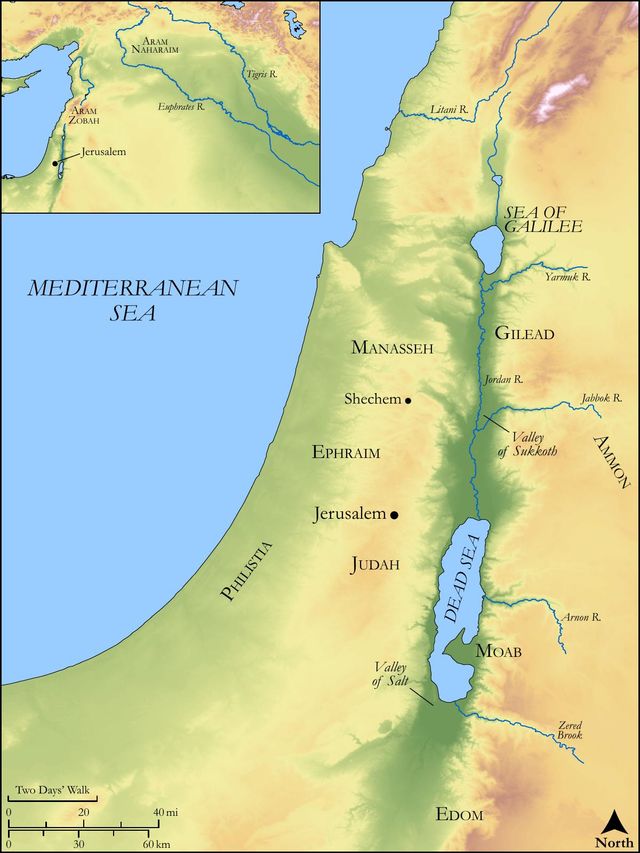
Psalms 60:2 is an integral part of a communal lament, a genre of psalm where the community voices profound distress and appeals to God for deliverance. The psalm's superscription attributes it to David, specifying a period of conflict with Aram-naharaim and Aram-zobah, and Joab's subsequent victory over Edom in the Valley of Salt. This verse immediately follows a stark declaration of God's apparent displeasure and rejection of His people, "O God, thou hast cast us off, thou hast scattered us, thou hast been displeased; O turn thyself to us again" (Psalms 60:1). The imagery of a trembling and broken earth in verse 2 serves as a powerful articulation of the devastating impact of this perceived divine disfavor, setting a desperate tone that undergirds the subsequent petitions for help and expressions of hope in God's ultimate victory, as seen in the psalm's concluding verses where confidence is placed in God's ability to "tread down our enemies" (Psalms 60:12).
Historical & Cultural Context
The historical setting, as indicated by the psalm's title, points to a period of significant military struggle during David's reign, crucial for establishing Israel's regional dominance and securing its borders. The conflicts with Aram (Syria) and Edom were strategic. The "Valley of Salt," possibly located south of the Dead Sea, was vital for controlling trade routes and access to the Red Sea. In Hebrew thought, a stable earth symbolized national prosperity and divine favor, while earthquakes or instability were frequently interpreted as signs of divine wrath or judgment. The concept of "breaches" (Hebrew: sheber) often referred to literal gaps in city walls, making a city vulnerable to attack, or to divisions within the community, signifying a breakdown of social or political order. Thus, the psalmist's language reflects a deep understanding of national vulnerability and the immediate threat of external enemies, coupled with the potential for internal strife or a sense of divine abandonment.
Key Themes
ShowHideThis verse encapsulates several major theological and narrative themes prevalent throughout the book of Psalms and the broader Old Testament. Firstly, it underscores the theme of Divine Sovereignty and Judgment, attributing the national calamity directly to God's action ("Thou hast made... thou hast broken"). This perspective acknowledges God's ultimate control over all circumstances, even those that bring suffering, implying that the nation's distress may be a form of divine discipline or a consequence of their actions, echoing the covenant curses outlined in Deuteronomy 28:15-68. Secondly, it highlights the theme of National Instability and Vulnerability, depicted through the powerful metaphor of a "trembling," "broken," and "shaking" earth with "breaches." This imagery vividly portrays the nation's fractured state, whether due to military defeat, internal disunity, or spiritual decay, reminiscent of prophetic warnings about God shaking nations, as found in Haggai 2:7. Finally, the verse introduces the crucial theme of Plea for Restoration and Healing, as the psalmist immediately appeals to God to "heal the breaches thereof." This demonstrates an enduring faith in God's mercy and His capacity to mend what is broken, a hope often articulated in the prophetic books, such as God's promise to "restore health to you and heal your wounds" in Jeremiah 30:17.
Exposition and Analysis
ShowHideKey Word Analysis
ShowHideThis primitive root (H7493) signifies to undulate, particularly through fear, or to quake and shake. Its use here describes the earth (representing the nation) experiencing a profound, unsettling disturbance, not merely a physical tremor but a deep-seated instability often associated with terror or divine judgment. It conveys the pervasive and profound nature of the national crisis.
This primitive root (H6480) means to rend, specifically by an earthquake, or to break. It denotes severe damage or destruction, suggesting that the nation's structure, unity, or strength has been shattered. This word conveys a sense of violent rupture and profound harm, painting a picture of a nation utterly fragmented and defeated.
This noun (H7667) refers to a fracture, ruin, or breaking. It is often used in the context of a wall being broken down, making a city vulnerable to invasion, or a rupture in a relationship or community. Here, it symbolizes the internal divisions, wounds, or vulnerabilities within the nation, which have left it exposed and weakened. The plea to "heal the breaches" is a petition for the restoration of unity, security, and wholeness.
Verse Breakdown
ShowHide"Thou hast made the earth to tremble;"
This opening clause directly attributes the national upheaval and instability to God's sovereign action. The "earth" here is a metaphor for the land of Israel, its people, and its established order. The "trembling" signifies profound instability, fear, and a sense that the very foundations of their existence have been shaken by divine intervention or permission, implying a state of pervasive anxiety and vulnerability.
"thou hast broken it:"
This continues the direct address to God, further emphasizing His decisive role in the calamity. The "breaking" implies a shattering or fracturing of the nation's unity, strength, or well-being. It suggests that the nation is not merely unstable but has suffered significant, perhaps devastating, damage, leading to internal divisions, external defeats, or a profound loss of national cohesion.
"heal the breaches thereof;"
This marks a pivotal shift from lament to urgent petition. Despite acknowledging God's hand in their suffering, the psalmist appeals to Him for restoration. "Breaches" refer to the cracks, divisions, or wounds within the nation, whether political, social, or spiritual. The plea to "heal" is a desperate cry for God to mend, restore, and unify His people, to repair the damage He has seemingly inflicted or allowed, demonstrating profound faith in His restorative power.
"for it shaketh."
This concluding clause reinforces the initial description of instability, providing the urgent rationale for the plea for healing. The use of a distinct Hebrew word (H4131, môwṭ) for "shaketh" compared to "tremble" (H7493, râʻash) underscores the ongoing and persistent nature of the national crisis. The nation remains in a precarious, unsteady state, necessitating immediate and comprehensive divine intervention for its survival and restoration.
Literary Devices
ShowHidePsalms 60:2 is rich with Metaphor and Symbolism, where the "earth" serves as a powerful symbol for the nation of Israel itself. The physical instability of the ground—trembling, breaking, and shaking—metaphorically represents the profound political, social, and spiritual upheaval experienced by the people. The "breaches" are a specific Metaphor for the divisions, wounds, or vulnerabilities within the nation, reminiscent of broken city walls that leave a community exposed and defenseless. The psalmist employs Personification by attributing human-like actions and states (trembling, breaking, shaking) to the earth, intensifying the sense of a living entity in distress. The repetition of the theme of instability through distinct but related Hebrew words for "tremble" and "shaketh" creates a sense of Emphasis and Reinforcement, underscoring the pervasive and persistent nature of the national crisis. The verse also demonstrates a clear Shift in Tone from a declarative lament of divine judgment to an urgent, hopeful petition for divine restoration, characteristic of the lament psalms.
Theological and Thematic Connections
ShowHidePsalms 60:2 profoundly articulates the ancient Israelite understanding of God's sovereignty over all creation and human affairs, including national calamities. The psalmist attributes the nation's profound instability and brokenness directly to God, viewing it as either divine judgment for sin or a divinely permitted trial. This perspective, while stark, underscores a deep theological conviction that nothing happens outside of God's ultimate control. Yet, this acknowledgment of divine agency does not lead to despair but immediately pivots to a fervent plea for healing and restoration, revealing a resilient faith in God's mercy and His power to mend what He has broken. The "breaches" speak not only to military defeats but also to spiritual and social fragmentation, highlighting the holistic nature of national well-being in the biblical worldview, which is inextricably linked to God's favor. The hope for healing is fundamentally a hope for God's renewed presence and favor, leading to unity, security, and flourishing, demonstrating that even in judgment, God's ultimate desire is restoration.
Reflection and Application
ShowHidePsalms 60:2 offers a profound framework for understanding and responding to periods of deep personal, communal, or national crisis. It invites us to acknowledge God's sovereign hand even when circumstances feel chaotic, broken, and unstable. In moments where our "earth" trembles—whether it's the stability of our relationships, our health, our finances, or the very fabric of our society—this verse encourages us to move beyond mere complaint to a posture of honest lament before God. It reminds us that recognizing the "breaches" is the first step towards seeking healing. We are called to humbly bring our brokenness, our divisions, and our vulnerabilities before the One who has the power to both shake and to heal. The psalmist's plea is a model for our own prayers, urging us to ask God to mend what is broken, restore what is lost, and bring unity out of fragmentation, trusting that His healing power can transform even the most shattered landscapes of our lives. It challenges us to look beyond immediate causes to the ultimate divine authority, fostering both humility and hope.
Questions for Reflection
ShowHideFAQ
ShowHideWhat is the historical context of Psalm 60?
ShowHideThe superscription of Psalm 60 attributes it to David and provides specific historical details: "When he fought with Aram-naharaim and with Aram-zobah, and Joab returned, and smote of Edom in the valley of salt twelve thousand." This indicates a period of significant military conflict during David's reign, likely early in his consolidation of power and expansion of the kingdom. Aram-naharaim and Aram-zobah refer to Aramean kingdoms in Syria, while Edom was a rival nation to the south. The psalm reflects a moment of national distress and defeat, possibly an initial setback or a prolonged struggle that led to widespread suffering before eventual victory, as suggested by the psalm's final verses which express confidence in God's help against the enemy (e.g., Psalms 60:12).
Does "Thou hast made the earth to tremble" imply God causes all suffering?
ShowHideFrom the psalmist's perspective, this phrase reflects a deep theological conviction that God is sovereign over all things, including national calamities and periods of distress. In the Old Testament, suffering, especially national defeat or natural disaster, was often interpreted as a consequence of divine judgment or discipline for the people's sin (e.g., the curses for disobedience outlined in Deuteronomy 28). While this does not mean God directly "causes" every individual instance of suffering or evil in a simplistic sense, it does affirm His ultimate control and His ability to use even difficult circumstances to humble His people, call them to repentance, or achieve His broader purposes. The psalmist's cry is not one of accusation but rather a recognition of God's active involvement in their history, even in their pain, which then provides the basis for an appeal for His restorative intervention.
What does "heal the breaches thereof" mean practically?
ShowHide"Heal the breaches thereof" is a multifaceted plea for comprehensive restoration. Practically, it means:
It's a prayer for God to intervene supernaturally to reverse the destructive effects of judgment or crisis and bring about holistic restoration for the nation, as promised in passages like Isaiah 58:12.
Christ-Centered Fulfillment
ShowHidePsalms 60:2, with its vivid imagery of a trembling, broken earth and a plea to "heal the breaches," finds its ultimate and profound fulfillment in the person and redemptive work of Jesus Christ. The brokenness lamented by the psalmist—national division, vulnerability, and the consequences of sin—is a microcosm of the deeper, universal brokenness of humanity and creation due to the Fall (Romans 8:22). Jesus, as the incarnate Son of God, came precisely to "heal the breaches" that sin had created: the fundamental breach between God and humanity, the divisions between people, and the internal brokenness within the human heart. His crucifixion was the ultimate act of mending, as He became the "Lamb of God who takes away the sin of the world" (John 1:29). Through His atoning sacrifice, He broke down the "dividing wall of hostility" between Jew and Gentile (Ephesians 2:14), reconciling all things to God, "making peace by the blood of his cross" (Colossians 1:20). The stability and peace that the psalmist longed for in a national context are fully realized in Christ's spiritual kingdom, which is eternal and "cannot be shaken" (Hebrews 12:28). Ultimately, in the new heavens and new earth, Christ will bring complete healing, where there will be no more death, sorrow, crying, or pain, for the former things will have passed away, and God will "make all things new" (Revelation 21:4-5). He is the divine Physician who truly heals all breaches.