


Obadiah 1:9
Bible text: King James Version (1769 Blayney text) · Public domain
Bible text: Berean Standard Bible · Public domain
Bible text: American Standard Version (1901) · Public domain
Bible text: World English Bible, Messianic edition · Public domain
Bible text: Geneva Bible (1599) · Public domain
Bible text: Young's Literal Translation · Public domain
- וְחַתּוּve·cha·Tuand they will be dismayedH2865Conj-w ¦ V-Qal-ConsecPerf-3cpVerb Qal Consecutive Perfect 3rd Plural common genderוְandחַתּוּthey will be dismayed
- גִבּוֹרֶיךָgi·bo·Rei·khayour warriorsH1368N-mpc ¦ 2msNoun Plural Masculine Constructגִבּוֹרֶיwarriorsךָyour
- תֵּימָןtei·ManO TemanH8487N-properNoun Proper Location
- לְמַעַןle·Ma·'anso thatH4616PrtParticle Conditional
- יִכָּרֶתyi·ka·rethe may be cut offH3772V-Niphal-Imperf-3msVerb Niphal Imperfect 3rd Singular Masculine
- אִישׁ'isheveryoneH376N-msNoun Singular Masculine Absolute
- מֵהַרme·Harfrom [the] mountain ofH2022Prep-m ¦ N-mscNoun Singular Masculine Constructמֵfromהַר[the] mountain of
- עֵשָׂו'e·SavEsauH6215N-properNoun Proper Location
- מִקָּטֶלmi·Ka·telfrom slaughterH6993Prep-m ¦ N-msNoun Singular Masculine Absoluteמִfromקָּטֶלslaughter
English is a literal word-by-word gloss of the Hebrew, not the KJV's wording. Why?
This is the original text the KJV's translators worked from — each Hebrew word with its own literal English meaning in this verse, prepared by scholars at Tyndale House, Cambridge. The KJV translates whole sentences, not word by word, so its wording differs: one Hebrew word can become several English words, and the KJV may choose “the LORD” where the gloss reads “Yahweh”. Both are faithful — they answer different questions. For the KJV's own rendering, switch to the KJV text.
Details
See on the biblical-era map
Study this verse
Historical interpretation
Historical reception
1 surviving comment on this verse from the historical church.
(Verse 8, 9.) Shall I not in that day, saith the Lord, destroy the wise out of Edom, and understanding out of the mount of Esau? And thy mighty men shall be dismayed, O Teman, to the end that every one of the mount of Esau may be cut off by slaughter. Septuagint: In that day, saith the Lord, I will destroy the wise out of Edom, and understanding out of the mount of Esau. And thy mighty men, O Theman, shall be afraid, that every one from the mount of Esau may be cut off by destruction. When thy despoilers have seized thy borders, and all the men of thy league have mocked thee and have acquired strength against thee: then shall wisdom perish out of Edom and his subtlety shall be made foolishness. Moreover, the Lord will also take away prudence from Mount Esau, that is, from the mountains of Seir, either because the city of Idumea is situated on the mountain, or because all that region which borders on the south is desert, situated high on the mountains. Hence it is also said: Your warriors will be afraid, O Theman, which we interpret as the south. However, as I said above, Esau is called by three names: and likewise, the region of his kingdom, which borders on the south, is called by three names, Darom, Theman, Nageb, which all, according to Ezekiel, signify the south, the west, and the south. But when the strong men of his kingdom who dwelt in the South shall truly fear, then a man from the mountain of Esau, who both used to fight for the city and to wisely give counsel, shall perish. Otherwise: After those who were previously deceived have been converted to the Church, then, with the Lord Himself fighting, the wise men of Edom, who had a taste for worldly and earthly things, shall perish, and wisdom shall be taken away from the mountain of Esau, which was exalted against the knowledge of God. And those who previously fought for Esau and the dialectical art of Edom, and were in the garrisons of Teman, which means completion, will cease to fight for their former masters. Whether those who had promised themselves the light of knowledge and thought they were at noon, will fear and be afraid, with a scholarly man mastering their sophistries: to such an extent that no one will remain who is able to fight, either with the counsel of the king or with warrior men, against the pride and false teaching of the heretics.
Continue studying Obadiah 1:9 across the web’s major study libraries — every link below opens this exact verse, chapter, or book on the destination site.
Read & Compare
 BibleGatewayThis verse in more than 200 translations and 70 languages.
 Bible.comThe YouVersion reader — hundreds of translations, reading plans, and highlights.
 ESV.orgCrossway's official English Standard Version reader.
 NET BibleThe NET translation with 60,000+ translators' notes on every rendering decision.
 STEP BibleTyndale House's free study tool — original text, vocabulary, and scholarly resources.
 BibliaLogos Bible Software's free web reader.
 USCCBThe New American Bible (Revised Edition) with the U.S. bishops' study notes.
Commentaries
 BibleHub CommentariesDozens of classic commentaries on this verse, gathered on one page.
 StudyLightMore than 100 commentary sets — the largest collection on the web.
 BibleRefPlain-English commentary on what this verse means, verse by verse.
 Enduring WordDavid Guzik's free commentary on this chapter, widely used by Bible teachers.
 Bible Study ToolsVerse commentary alongside Greek and Hebrew study aids.
Original Language & Research
- BibleHub InterlinearThe verse word by word — original language, transliteration, and English.
- BibleHub LexiconEvery word's original-language definition and Strong's entry.
 Blue Letter BibleDeep-study tools — Strong's numbers, concordance, and word studies.
 SefariaThe Hebrew text with Rashi and centuries of Jewish commentary.
Sermons, Hymns & Audio


TrulyRandomVerse is not affiliated with these sites and doesn’t control their content. They’re linked because they’re genuinely useful.
Summary
Obadiah 1:9 delivers a stark prophetic declaration of divine judgment against Edom, specifically targeting its renowned military strength and the perceived security of its capital, Teman. The verse foretells that Edom's most formidable warriors will be utterly paralyzed by fear, leading to the complete and decisive eradication of the entire nation of Esau, a consequence of their persistent hostility and pride against God's people.
Context
ShowHideLiterary Context
The Book of Obadiah stands as the shortest book in the Old Testament, a concise yet potent prophetic oracle almost entirely dedicated to pronouncing God's unwavering judgment against the nation of Edom. This verse, Obadiah 1:9, is situated within the initial pronouncements of Edom's downfall, following the declaration of their pride and the certainty of their humiliation in Obadiah 1:1-8. It specifically details the means of their destruction by focusing on the failure of their military and leadership. The subsequent verses, particularly Obadiah 1:10-14, elaborate on the specific transgressions that provoked this severe divine retribution, primarily Edom's cruel indifference and active participation in the downfall of Judah.
Historical & Cultural Context
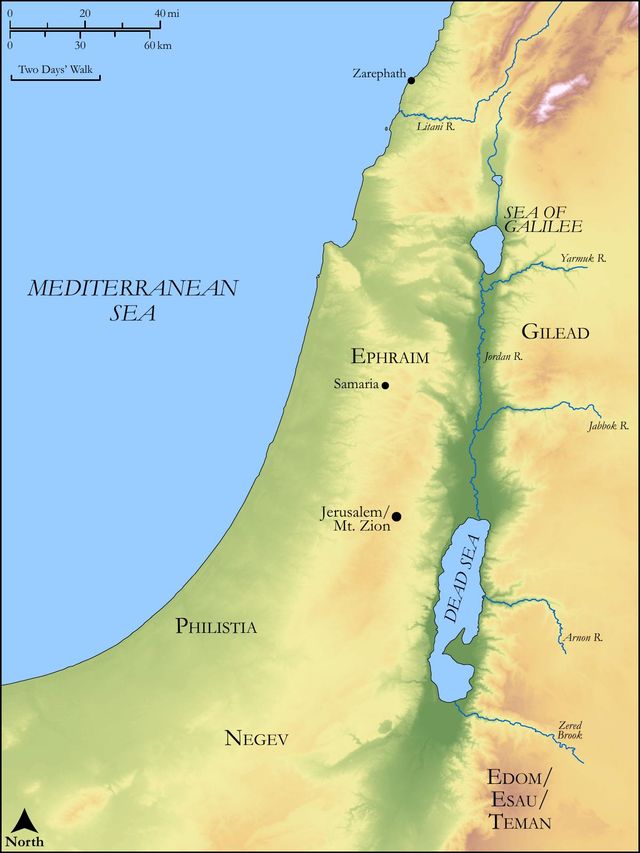
Edom was a neighboring nation to Israel, located south-east of Judah in the mountainous region of Seir. Their lineage traced back to Esau, the twin brother of Jacob (Israel), making them a "brother" nation. Despite this familial connection, a deep-seated animosity characterized their relationship, marked by Edom's consistent hostility towards Judah. Teman, mentioned in the verse, was a prominent city or region within Edom, renowned not only for its wisdom (as seen in Job's friend Eliphaz the Temanite) but also for its military prowess and strategic location. The "mighty men" of Teman represented the elite warriors and strategists of Edom, the very bulwark of their national defense. "Mount Esau" is a poetic and geographical reference to the entire mountainous territory inhabited by the Edomites, symbolizing the nation itself. The prophecy speaks to a time when Edom's perceived impregnability, rooted in its fortified mountain strongholds and military might, would prove futile against divine decree.
Key Themes
ShowHideObadiah 1:9 powerfully contributes to several overarching themes within the book and broader biblical narrative. Firstly, it underscores the theme of Divine Judgment and Retribution, demonstrating God's unwavering commitment to justice. Edom's pride and cruelty, particularly their actions against their "brother" nation Judah, would not go unpunished, echoing the principle that God is a God of justice who sees and responds to all actions, as affirmed in passages like Romans 12:19. Secondly, the verse highlights The Fall of the Arrogant. Edom was notorious for its secure, mountainous strongholds and its profound pride, as explicitly stated in Obadiah 1:3. This prophecy declares that their perceived strength and security, upon which they relied so heavily, would utterly collapse, illustrating that no human power or self-reliance can stand against God's sovereign decree. Finally, it reinforces the Sovereignty of God, showcasing His ultimate authority over all earthly powers and destinies. The dismay of Edom's mighty men and the subsequent "cutting off by slaughter" of the entire nation are not random events but part of God's meticulously orchestrated plan to execute justice and demonstrate His supreme rule.
Exposition and Analysis
ShowHideKey Word Analysis
ShowHideThis word (H2865) is a primitive root meaning "to prostrate" or "to break down." It conveys a profound sense of terror, confusion, and fear, extending beyond mere fright to imply a complete loss of courage, morale, and effectiveness. When applied to Edom's "mighty men," it signifies that their renowned warriors would be utterly paralyzed by dread, their strength rendered useless, and their ability to defend their nation completely shattered.
The Hebrew term (H3772) literally means "to cut (off, down or asunder)," but by implication, it signifies to destroy or consume. While it can refer to making a covenant (by cutting flesh), in this context, it denotes a decisive and complete eradication. Its use here emphasizes the totality and severity of the judgment, pointing to a thorough and irreversible destruction of the Edomite people, leaving no remnant.
This noun (H6993) derives from a root meaning "to kill" and specifically refers to a violent death. Coupled with "cut off," it intensifies the imagery of total destruction. It underscores that the end of Edom would not be a mere decline but a violent, catastrophic demise, a direct consequence of their actions and God's righteous judgment.
Verse Breakdown
ShowHide"And thy mighty [men], O Teman, shall be dismayed"
This opening clause directly addresses Teman, a major city and region of Edom, personifying it as the seat of Edom's strength. The "mighty men" represent the elite military and strategic minds of Edom. The prophecy states that these formidable warriors, the very foundation of Edomite security, will be struck with an overwhelming, paralyzing fear and confusion. Their courage will fail, their strategies will crumble, and their renowned strength will be rendered utterly ineffective in the face of God's impending judgment.
"to the end that every one of the mount of Esau may be cut off by slaughter"
This clause reveals the ultimate purpose and devastating outcome of the dismay experienced by Teman's mighty men. Their paralysis is not an end in itself but a means to a greater, more comprehensive judgment. "Every one of the mount of Esau" signifies the entire population and territory of Edom, emphasizing the totality of the destruction. The phrase "cut off by slaughter" denotes a complete and violent eradication, leaving no survivors or remnants. It highlights the decisive and irreversible nature of God's judgment against the nation of Edom, ensuring their complete demise as a distinct entity.
Literary Devices
ShowHideObadiah 1:9 employs several powerful literary devices to convey the certainty and severity of God's judgment. Personification is evident in the direct address to "O Teman," treating the city as if it embodies the entire military might and wisdom of Edom. This allows for a more direct and impactful prophetic denouncement. Hyperbole is used in the phrase "every one of the mount of Esau may be cut off by slaughter," which, while perhaps not literally meaning every single individual, emphasizes the comprehensive and near-total destruction of the nation, leaving no significant remnant. This serves to underscore the finality of the judgment. The entire verse functions as a Prophetic Oracle, a direct declaration from God through His prophet, indicating a future event that is certain to occur. This authoritative tone lends weight and solemnity to the pronouncement. Finally, there is an implicit Contrast between Edom's self-perceived strength and impregnability (due to its mountainous terrain and "mighty men") and the reality of their utter dismay and destruction at the hand of God. This contrast highlights the futility of human strength when it stands against divine will.
Theological and Thematic Connections
ShowHideObadiah 1:9 is a profound theological statement on God's justice and sovereignty over nations. It reveals that no nation, regardless of its perceived strength or security, is exempt from divine accountability, especially when it acts with pride and cruelty against God's people. The dismay of Edom's mighty men and the subsequent "cutting off" of the entire nation underscore the principle that human power, wisdom, and military might are ultimately fragile and ineffective when they oppose the will of the Almighty. This serves as a timeless reminder that God is actively involved in the affairs of humanity, orchestrating the rise and fall of kingdoms according to His righteous decrees, ensuring that justice will ultimately prevail and that the arrogant will be brought low.
Reflection and Application
ShowHideObadiah 1:9, while a severe prophecy against an ancient nation, holds profound spiritual truths for believers today. It serves as a powerful assurance that God is indeed just and that all forms of injustice, oppression, and pride will ultimately face His righteous judgment. This should both comfort those who suffer under injustice and caution those who might be tempted to rely on their own strength or to act with arrogance. The swift and complete downfall of Edom, a nation confident in its impregnable fortresses and mighty warriors, is a stark reminder that true security and wisdom are found only in humility before God and reliance on His divine power, not in human achievements or perceived invincibility. It challenges us to examine our own hearts for any seeds of pride or self-reliance, and to cultivate a spirit of dependence on God. Furthermore, Edom's fate for its lack of compassion and active participation in the suffering of its "brother" nation calls us to a higher standard of love and empathy, urging us to stand with the vulnerable and to resist the temptation to rejoice in the misfortunes of others, even our adversaries.
Questions for Reflection
ShowHideFAQ
ShowHideWhy is Teman specifically mentioned in this verse?
ShowHideTeman was a significant city and region within Edom, renowned for its wisdom and, crucially, its military strength. By specifically mentioning Teman and its "mighty men," the prophecy targets the very heart of Edom's perceived security and power. It emphasizes that even the most formidable and respected elements of Edom's defense would be rendered useless, highlighting the totality and precision of God's judgment against the nation. This focus underscores that no part of Edom, no matter how strong or wise, would escape the divine decree, as seen in the broader context of Obadiah 1.
What does "cut off by slaughter" imply about Edom's fate?
ShowHideThe phrase "cut off by slaughter" signifies a complete, violent, and decisive eradication of the nation of Edom. It goes beyond mere defeat or subjugation, implying a total destruction that would leave no significant remnant. This severe judgment is a direct consequence of Edom's persistent hostility, pride, and particularly their actions against Judah during its time of distress, as detailed in Obadiah 1:10-14. It underscores the finality of God's retribution for their unrepentant sin.
Christ-Centered Fulfillment
ShowHideWhile Obadiah 1:9 directly prophesies the temporal judgment of Edom, its themes resonate deeply with the ultimate Christ-centered fulfillment of God's justice and sovereignty. The dismay of Edom's mighty men and the complete cutting off of the nation foreshadow the ultimate defeat of all spiritual and earthly powers that set themselves against God's kingdom. Christ, as the Lamb of God, came not only to bear the sins of the world but also to execute divine judgment. He is the one to whom all judgment has been committed by the Father. Just as Edom's strength proved futile, so too will all the forces of evil, sin, and death ultimately be disarmed and triumphed over by Christ on the cross. The "cutting off by slaughter" of Mount Esau finds its ultimate spiritual parallel in Christ's decisive victory over sin and death, effectively "cutting off" their power and dominion over believers. Ultimately, the prophecy points to the day when Christ will return as the King of kings and Lord of lords, bringing final and complete judgment upon all who oppose Him, and establishing His eternal kingdom where justice and righteousness reign supreme, ensuring that no earthly or spiritual foe can stand against His sovereign rule.