


Numbers 4:8
Bible text: King James Version (1769 Blayney text) · Public domain
Bible text: Berean Standard Bible · Public domain
Bible text: American Standard Version (1901) · Public domain
Bible text: World English Bible, Messianic edition · Public domain
Bible text: Geneva Bible (1599) · Public domain
Bible text: Young's Literal Translation · Public domain
- וּפָרְשׂוּu·fa·re·Suand they will spread outH6566Conj-w ¦ V-Qal-ConsecPerf-3cpVerb Qal Consecutive Perfect 3rd Plural common genderוּandפָרְשׂוּthey will spread out
- עֲלֵיהֶם'a·lei·Hemover themH5921Prep ¦ 3mpPreposition Definiteעֲלֵיoverהֶםthem
- בֶּגֶדBe·geda covering ofH899N-mscNoun Singular Masculine Construct
- תּוֹלַעַתto·La·'atscarlet stuff ofH8438N-fscNoun Singular Feminine Construct
- שָׁנִיsha·NiscarletH8144N-msNoun Singular Masculine Absolute
- וְכִסּוּve·khi·Suand they will coverH3680Conj-w ¦ V-Piel-ConsecPerf-3cpVerb Piel Consecutive Perfect 3rd Plural common genderוְandכִסּוּthey will cover
- אֹתוֹ'o·To<obj.> itH853DirObjM ¦ 3msParticle Object Indicatorאֹת<obj.>וֹit
- בְּמִכְסֵהbe·mikh·Sehwith a covering ofH4372Prep-b ¦ N-mscNoun Singular Masculine Constructבְּwithמִכְסֵהa covering of
- עוֹרorskin ofH5785N-mscNoun Singular Masculine Construct
- תָּחַשׁTa·chashdolphinH8476N-msNoun Singular Masculine Absolute
- וְשָׂמוּve·sa·Muand they will put inH7760Conj-w ¦ V-Qal-ConsecPerf-3cpVerb Qal Consecutive Perfect 3rd Plural common genderוְandשָׂמוּthey will put in
- אֶת'et<obj.>H853DirObjMParticle Object Indicator
- בַּדָּיוba·Davits polesH905N-mpc ¦ 3msNoun Plural Masculine Constructבַּדָּיpolesוits
English is a literal word-by-word gloss of the Hebrew, not the KJV's wording. Why?
This is the original text the KJV's translators worked from — each Hebrew word with its own literal English meaning in this verse, prepared by scholars at Tyndale House, Cambridge. The KJV translates whole sentences, not word by word, so its wording differs: one Hebrew word can become several English words, and the KJV may choose “the LORD” where the gloss reads “Yahweh”. Both are faithful — they answer different questions. For the KJV's own rendering, switch to the KJV text.
Details
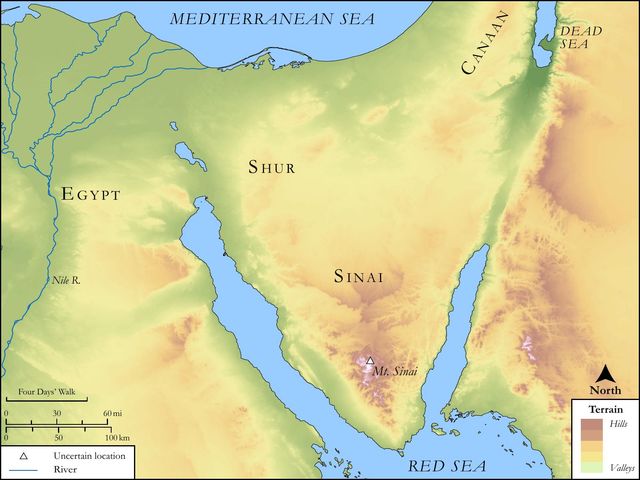
See on the biblical-era map
Study this verse
Public-domain commentary
Matthew Henry
From his Commentary on the Whole Bible. Henry comments on passages, not single verses — this entry covers Numbers 4:1–20. His four-level outline is real structure in the source text, so it is rendered as structure.
We have here a second muster of the tribe of Levi. As that tribe was taken out of all Israel to be God's peculiar, so the middle-aged men of that tribe were taken from among the rest to be actually employed in the service of the tabernacle. Now observe,
I.Who were to be taken into this number.
All the males from thirty years old to fifty. Of the other tribes, those that were numbered to go forth to war were from twenty years old and upward, but of the Levites only from thirty to fifty; for the service of God requires the best of our strength, and the prime of our time, which cannot be better spent than to the honour of him who is the first and best. And a man may make a good soldier much sooner than a good minister. Now,
1.They were not to be employed till they were thirty years old, because till then they were in danger of retaining something childish and youthful and had not gravity enough to do the service, and wear the honour, of a Levite. They were entered as probationers at twenty-five years old, (Num 8:24), and in David's time, when there was more work to be done, at twenty (Ch1 23:24, and so Ezr 3:8); but they must be five years learning and waiting, and so fitting themselves for service; nay, in David's time they were ten years in preparation, from twenty to thirty. John Baptist began his public ministry, and Christ his, at thirty years old. This is not in the letter of it obligatory on gospel ministers now, as if they must either not begin their work till thirty years old or must leave off at fifty; but it gives us two good rules: - (1.) That ministers must not be novices, Ti1 3:6. It is a work that requires ripeness of judgment and great steadiness, and therefore those are very unfit for it who are but babes in knowledge and have not put away childish things. (2.) That they must learn before they teach, serve before they rule, and must first be proved, Ti1 3:10.
2.They were discharged at fifty years old from the toilsome part of the service, particularly that of carrying the tabernacle; for that is the special service to which they are here ordained, and which there was most occasion for while they were in the wilderness. When they began to enter upon old age, they were dismissed,
(1.)In favour to them, that they might no be over-toiled when their strength began to decay. Twenty years' good service was thought pretty well for one man.
(2.)In honour to the work, that it might not be done by those who, through the infirmities of age, were slow and heavy. The service of God should be done when we are in the most lively active frame. Those do not consider this who put off their repentance to old age, and so leave the best work to be done in the worst time.
II.How their work is described.
They are said to enter into the host, or warfare, to do the work in the tabernacle. The ministry is a good work (Ti1 3:1): ministers are not ordained to the honour only, but to the labour, not only to have the wages, but to do the work. It is also a good warfare, Ti1 1:18. Those that enter into the ministry must look upon themselves as entered into the host, and approve themselves good soldiers, Ti2 2:3. Now, as to the sons of Kohath in particular, here is,
1.Their service appointed them, in the removes of the tabernacle. Afterwards, when the tabernacle was fixed, they had other work assigned them; but this was the work of the day, which was to be done in its day. Observe, Wherever the camp of Israel went, the tabernacle of the Lord went with them, and care must be taken for the carriage of it. Note, Wherever we go, we must see to it that we take our religion along with us, and not forget that or any part of it. Now the Koliathites were to carry all the holy things of the tabernacle. They were charged with those things before (Num 3:31), but here they have more particular instructions given them.
(1.)Aaron, and his sons the priests, must pack up the things which the Kohathites were to carry, as here directed, Num 4:5, etc. God had before appointed that none should come into the most holy place, but only Aaron once a year with a cloud of incense (Lev 16:2); and yet, the necessity of their unsettled state requiring it, that law is here dispensed with; for every time they removed Aaron and his sons went in to take down the ark, and make it up for carriage; for (as the learned bishop Patrick suggests) the shechinah, or display of the divine majesty, which was over the mercy-seat, removed for the present in the pillar of cloud, which was taken up, and then the ark was not dangerous to be approached.
(2.)All the holy things must be covered, the ark and table with three coverings, all the rest with two. Even the ashes of the altar, in which the holy fire was carefully preserved and raked up, must have a purple cloth spread over them, Num 4:13. Even the brazen altar, though in the court of the sanctuary it stood open to the view of all, yet was covered in the carriage of it. All these coverings were designed,
[1.]For safety, that these holy things might not be ruffled with the wind, sullied with the rain, nor tarnished with the sun, but that they might be preserved in their beauty; for on all the glory shall be a defence. The coverings of badgers' skins, being thick and strong, would keep out wet; and, while we are in our passage through the wilderness of this world, it concerns us to be fenced for all weathers, Isa 4:5, Isa 4:6.
[2.]For decency and ornament. Most of these things had a cloth of blue, or purple, or scarlet, spread outmost; and the ark was covered with a cloth wholly of blue (Num 4:6), an emblem (say some) of the azure skies, which are spread like a curtain between us and the Majesty on high, Job 26:9. Those that are faithful to God should endeavour likewise to appear beautiful before men, that they may adorn the doctrine of God our Saviour.
[3.]For concealment. It signified the darkness of that dispensation. That which is now brought to light by the gospel, and revealed to babes, was then hidden from the wise and prudent. They saw only the coverings, not the holy things themselves (Heb 10:1); but now Christ has destroyed the face of the covering, Isa 25:7.
(3.)When all the holy things were covered, then the Kohathites were to carry them on their shoulders. These things that had staves were carried by their staves (Num 4:6, Num 4:8, Num 4:11, Num 4:14); those that had not were carried upon a bar, or bier, or bearing barrow, Num 4:10, Num 4:12. See how the tokens of God's presence in this world are movable things; but we look for a kingdom that cannot be moved.
2.Eleazar, now the eldest son of Aaron, is appointed overseer of the Kohathites in this service (Num 4:16); he must take care that nothing was forgotten, left behind, or displaced. As a priest he had more honour than the Levites, but then he had more care; and that care was a heavier burden, no doubt, upon his heart, than all the burdens that were laid upon their shoulders. It is much easier to do the work of the tabernacle than to discharge the trusts of it, to obey than to rule.
3.Great care must be taken to preserve the lives of these Levites, by preventing their unseasonable irreverent approach to the most holy things: Cut you not off the Kohathites, Num 4:18. Note, Those who do not what they can to keep others from sin do what they can to cut them off. [1.] The Kohathites must not see the holy things till the priests had covered them, Num 4:20. Even those that bore the vessels of the Lord saw not what they bore, so much were even those in the dark concerning the gospel whose office it was to expound the law. And, [2.] When the holy things were covered, they might not touch them, at least not the ark, called here the holy thing, upon pain of death, Num 4:15. Uzza was struck dead for the breach of this law. Thus were the Lord's ministers themselves then kept in fear, and that was a dispensation of terror, as well as darkness; but now, through Christ, the case is altered; we have seen with our eyes, and our hands have handles, the word of life (Jo1 1:1), and we are encouraged to come boldly to the throne of grace.
Continue studying Numbers 4:8 across the web’s major study libraries — every link below opens this exact verse, chapter, or book on the destination site.
Read & Compare
 BibleGatewayThis verse in more than 200 translations and 70 languages.
 Bible.comThe YouVersion reader — hundreds of translations, reading plans, and highlights.
 ESV.orgCrossway's official English Standard Version reader.
 NET BibleThe NET translation with 60,000+ translators' notes on every rendering decision.
 STEP BibleTyndale House's free study tool — original text, vocabulary, and scholarly resources.
 BibliaLogos Bible Software's free web reader.
 USCCBThe New American Bible (Revised Edition) with the U.S. bishops' study notes.
Commentaries
 BibleHub CommentariesDozens of classic commentaries on this verse, gathered on one page.
 StudyLightMore than 100 commentary sets — the largest collection on the web.
 BibleRefPlain-English commentary on what this verse means, verse by verse.
 Enduring WordDavid Guzik's free commentary on this chapter, widely used by Bible teachers.
 Bible Study ToolsVerse commentary alongside Greek and Hebrew study aids.
Original Language & Research
- BibleHub InterlinearThe verse word by word — original language, transliteration, and English.
- BibleHub LexiconEvery word's original-language definition and Strong's entry.
 Blue Letter BibleDeep-study tools — Strong's numbers, concordance, and word studies.
 SefariaThe Hebrew text with Rashi and centuries of Jewish commentary.
Sermons, Hymns & Audio


TrulyRandomVerse is not affiliated with these sites and doesn’t control their content. They’re linked because they’re genuinely useful.
Summary
Numbers 4:8 provides meticulous instructions for the preparation and transport of the Table of Showbread, one of the Tabernacle's most sacred furnishings, by the Kohathite clan. This verse, embedded within a larger divine directive for the orderly and reverent handling of holy articles, specifies the precise layering of protective coverings: an inner cloth of vibrant scarlet and an outer, durable covering of badgers' skins, culminating in the insertion of its carrying staves. These detailed commands underscore the profound holiness of God's presence, the necessity of mediation, and the meticulous care required in His service during Israel's wilderness journey.
Context
ShowHideLiterary Context
Numbers 4:8 is situated within the highly structured fourth chapter of the book of Numbers, which meticulously details the specific duties of the three Levitical clans—the Kohathites, Gershonites, and Merarites—concerning the dismantling, transport, and reassembly of the Tabernacle during Israel's nomadic existence. Specifically, verses 1-15 delineate the unique and highly sensitive responsibilities of the Kohathites, who were charged with carrying the most holy articles, including the Ark of the Covenant, the Table of Showbread, the Menorah, and the Altars. A critical prerequisite, emphasized throughout this section, is that Aaron and his sons, the priests, were to cover these sacred objects before the Kohathites could handle them. This strict protocol underscored the extreme holiness of these items and the dire consequences of unauthorized or improper contact, preventing defilement or death (Numbers 4:15). This particular verse zeroes in on the Table of Showbread, ensuring its proper veiling, protection, and readiness for movement as part of the divine procession.
Historical & Cultural Context
The instructions in Numbers 4:8 were given to the Israelites during their formative forty-year sojourn through the arid wilderness, a period defined by their nomadic lifestyle and direct divine guidance. The Tabernacle served as the tangible epicenter of their worship and the visible manifestation of God's presence among His people. Given the harsh realities of the desert environment—characterized by pervasive dust, abrasive sand, and exposure to the elements—the practical necessity for durable, protective coverings for the sacred furnishings was paramount for their preservation. Beyond mere practicality, the exacting nature of these instructions, down to the specific color and material of the coverings, reflected the separation between the holy and the common, as the veil of the Tabernacle shielded the ark within the most holy place, signifying divine ownership, inherent power, and separation from the mundane. This meticulousness also reinforced the overarching concept of ritual purity and the profound reverence due to Yahweh, who condescended to dwell in their midst, a theme pervasive throughout the Mosaic Law (e.g., Leviticus 10:3). The entire process of dismantling, covering, and transporting the Tabernacle was a highly organized and sacred endeavor, reflecting God's precise nature and His desire for order and holiness in all aspects of their communal life and worship.
Key Themes
ShowHideNumbers 4:8 significantly contributes to several overarching theological and narrative themes within the book of Numbers and the Pentateuch. Foremost is the theme of Divine Holiness and Awe, emphasizing that God's presence, though immanent in the Tabernacle, remained utterly transcendent and required strict protocols for approach and handling. The layered coverings serve as a visual testament to this separation and the need for mediation. Secondly, the passage highlights Order and Divine Design, showcasing God's meticulous attention to detail in the organization of His worship and the duties of His servants, ensuring that everything is done "decently and in order" (1 Corinthians 14:40). Thirdly, the instructions underscore God's Providential Care and Protection, as the durable coverings provided practical safeguarding for the sacred articles against the rigors of the wilderness journey, symbolizing God's faithfulness in preserving His covenant and His people. Finally, the constant readiness for transport, signified by the staves, speaks to the Dynamic Nature of God's Presence, indicating that God was actively leading His people through their journey, and His dwelling place was always prepared to move with them, rather than being a static fixture.
Exposition and Analysis
ShowHideKey Word Analysis
ShowHideThis primitive root (H6566) means "to break apart, disperse, etc.; break, chop in pieces, lay open, scatter, spread (abroad, forth, selves, out), stretch (forth, out)." In this context, it denotes the action of laying out or stretching a cloth over the sacred object. It implies a deliberate, careful, and expansive action, ensuring the entire surface of the Table of Showbread is covered with the scarlet cloth, signifying the thoroughness required in handling holy things.
From a primitive root (H3680), meaning "to plump, i.e. fill up hollows; by implication, to cover (for clothing or secrecy); clad self, close, clothe, conceal, cover (self), (flee to) hide, overwhelm." This word emphasizes the act of concealment and protection. The "badgers' skins" were applied as a final, comprehensive covering, completely enclosing the Table and its scarlet layer, thereby shielding it from view and from the elements. This dual aspect of concealment (from human sight) and protection (from environmental damage) is crucial.
This compound term refers to a vibrant, deep red color derived from the tôwlâʻ (H8438), a maggot or crimson-grub, and shânîy (H8144), the color or stuff dyed with it. The color scarlet was highly prized and often associated with royalty, wealth, and distinction. In the Tabernacle context, it frequently symbolized life, vitality, and sometimes atonement or purification (e.g., in the cleansing of leprosy, Leviticus 14:4). Here, its use as the inner layer for the Table of Showbread likely signified the sacredness and intrinsic value of the object, setting it apart as holy and distinct, even when veiled from common sight.
This phrase combines tachash (H8476), likely referring to a durable, waterproof leather from an animal (possibly a dugong, porpoise, or a species of antelope with a tough hide, rather than a badger), and ʻôwr (H5785), meaning "skin (as naked); by implication, hide, leather." The primary characteristic of this material was its ruggedness and resilience. As the outermost covering, it provided essential practical protection against the harsh desert environment—dust, sand, rain, and wear—ensuring the preservation and integrity of the holy articles during transport. Its utilitarian nature contrasts with the symbolic beauty of the inner scarlet cloth, highlighting both the sacredness and the practical necessity of the coverings.
Verse Breakdown
ShowHide"And they shall spread upon them a cloth of scarlet"
This initial instruction details the first, innermost layer of covering for the Table of Showbread. The "they" refers to Aaron and his sons, the priests, who were exclusively authorized to handle and prepare the holy articles. The act of spreading the scarlet cloth signifies the immediate, sacred veiling of the Table, marking it as distinct and holy, even before it was fully concealed. This layer's vibrant color likely served as an internal marker of its sanctity.
"and cover the same with a covering of badgers' skins"
Following the application of the scarlet cloth, a second, more robust and practical layer was to be applied. This "covering of badgers' skins" (or durable leather) served as the primary protective barrier. Its purpose was to shield the Table from the harsh elements of the wilderness journey, providing weatherproofing and physical durability. This dual-layer approach underscores both the inherent holiness (symbolized by scarlet) and the practical need for preservation (provided by the durable skins) of God's sacred furnishings.
"and shall put in the staves thereof"
This final instruction in the verse emphasizes the immediate readiness of the Table for transport. The "staves" were long poles, typically made of acacia wood overlaid with gold (as per Exodus 25:28), designed to be inserted into rings on the sides of the Table. This allowed the Kohathites to carry the Table on their shoulders without directly touching the holy object itself. This detail highlights the constant state of preparedness for movement, reflecting the dynamic nature of Israel's journey with God and the Tabernacle's role as a portable sanctuary.
Literary Devices
ShowHideNumbers 4:8 is rich in Instructional Detail, a pervasive literary feature of the Pentateuchal legal and ritual texts. This meticulousness underscores God's precise nature and the gravity with which He regards His dwelling place and worship. The verse also employs profound Symbolism: the "cloth of scarlet" is symbolic of the sacredness, distinction, and perhaps the life-giving essence associated with the Table of Showbread, a color often linked to royalty and divine presence. The "badgers' skins" (durable leather) likewise carry symbolic weight, representing durability, protection, and God's practical provision for His people's journey through a harsh environment. The entire act of Veiling or covering is itself symbolic of the veiled nature of God's holiness, which, while present among His people, could not be directly accessed or viewed by the common Israelite without mediation, safeguarding both God's glory and human life. The phrase "put in the staves thereof" functions as a form of Metonymy, where the specific action of inserting the staves stands for the broader process of preparing the Table for transport, signifying its constant readiness for movement. The contrast between the inner beauty and outer ruggedness of the coverings also suggests a form of Juxtaposition, highlighting both the intrinsic holiness and the practical necessity of protecting God's sacred articles.
Theological and Thematic Connections
ShowHideNumbers 4:8, with its meticulous instructions for covering the Table of Showbread, profoundly underscores the themes of divine holiness, the necessity of mediation, and God's providential care for His people and their worship. The layered coverings—scarlet symbolizing sanctity and the durable badgers' skins representing protection—illustrate that God's presence, though immanent among Israel, remained utterly distinct and sacred, requiring specific protocols for approach and handling. This passage teaches that reverence for God's presence is not merely an emotional state but is expressed through obedient adherence to His detailed commands, ensuring both the protection of His holy things and the safety of those who serve Him. The readiness for transport, signified by the staves, also speaks to the dynamic nature of God's relationship with His people, always on the move, yet always with His presence centrally protected and carried.
Reflection and Application
ShowHideThe detailed commands in Numbers 4:8, though specific to the ancient Tabernacle, offer enduring principles for our spiritual lives today. They call us to cultivate a profound reverence for God's holiness, recognizing that His presence, whether encountered in His inspired Word, in corporate worship, or in our personal lives through the Holy Spirit, is not to be approached casually but with intentionality, respect, and awe. Just as the Table of Showbread was meticulously covered for protection, we are reminded of the preciousness of spiritual truths—such as the Gospel, our faith, and our relationship with Christ—and the urgent need to guard them diligently against the defilements, distractions, and false doctrines of the world. Furthermore, the constant readiness for transport, symbolized by the staves, encourages us to live with a posture of preparedness, willing to follow God's leading wherever He calls, understanding that our spiritual journey is dynamic and requires adaptability, faithfulness, and a readiness to move in obedience. Our service to God should be marked by diligence, order, and a deep sense of His sacred presence, reflecting the meticulous care commanded for the Tabernacle furnishings.
Questions for Reflection
ShowHideFAQ
ShowHideWhy were there two layers of covering for the Table of Showbread, and what did they signify?
ShowHideThe two distinct layers of covering for the Table of Showbread—an inner scarlet cloth and an outer covering of badgers' skins—served both profound symbolic and essential practical purposes. The scarlet cloth (Hebrew, tôwlâʻ shânîy), with its vibrant, rich red hue, likely symbolized the sanctity, distinction, and intrinsic value of the Table of Showbread. This color was often associated with royalty, wealth, and sacredness, setting the holy object apart and possibly hinting at themes of life or atonement, which were central to the Tabernacle's sacrificial system. The outer covering of badgers' skins (Hebrew, tachash ʻôwr), which was a durable, waterproof leather, provided robust protection against the harsh elements of the wilderness journey, such as dust, sand, and rain. This dual layering underscored that God's holy presence, while veiled from common sight, was both supremely sacred and meticulously preserved, ensuring its integrity and readiness for the journey. It demonstrated God's detailed provision for His dwelling place and the profound reverence required in handling His sacred things, a principle evident throughout the Tabernacle instructions in Exodus 25-40.
Christ-Centered Fulfillment
ShowHideNumbers 4:8, detailing the careful covering and transport of the Table of Showbread, finds its ultimate and profound fulfillment in Jesus Christ. The Table, which bore the bread of presence, powerfully foreshadowed Christ as the Bread of Life who descends from heaven to eternally sustain His people. The meticulous and layered coverings—the inner scarlet cloth and the durable outer badgers' skins—symbolize the two essential aspects of Christ's perfect work that grant us access to God's holy presence. The scarlet, deeply associated with lifeblood and sacrifice, points directly to Christ's atoning blood, which was shed to cover our sins, cleanse us, and make us holy and acceptable in the Father's sight (Hebrews 9:12-14). This sacrifice is our spiritual "scarlet covering," making us righteous. The outer covering of badgers' skins, providing robust and impenetrable protection, speaks to Christ's perfect righteousness, divine power, and unwavering faithfulness, which fully cover and protect His people from the spiritual elements of sin, judgment, and the assaults of the enemy. He is our ultimate shield and refuge (Psalm 91:4). Just as the Tabernacle was portable and always ready for movement, signifying God's dynamic presence with His people, Christ, through His ascension and the sending of the Holy Spirit, ensures that God's presence is no longer confined to a physical structure but dwells within believers, making us living temples of the Spirit (1 Corinthians 6:19). He is the true and perfect covering, enabling us to approach God's holy presence with confidence and security, having been made clean and righteous in Him (Hebrews 10:19-22).