


Matthew 24:40
Bible text: King James Version (1769 Blayney text) · Public domain
Bible text: Berean Standard Bible · Public domain
Bible text: American Standard Version (1901) · Public domain
Bible text: World English Bible, Messianic edition · Public domain
Bible text: Geneva Bible (1599) · Public domain
Bible text: Young's Literal Translation · Public domain
- ΤότεToteThenG5119ADVAdverb
- δύοduotwoG1417A-NUIAdjective
- ἔσονταιesontaiwill beG1510V-FDI-3PVerb Future Middle Deponent Indicative 3rd Plural
- ἐνeninG1722PREPPreposition
- τῷtōtheG3588T-DSMDefinite article Dative Singular Masculine
- ἀγρῷ·agrōfieldG68N-DSMNoun Dative Singular Masculine
- ὁho<the>G3588T-NSMDefinite article Nominative Singular Masculine
- εἷςheisoneG1520A-NSMAdjective Nominative Singular Masculine
- παραλαμβάνεταιparalambanetaiis takenG3880V-PPI-3SVerb Present Passive Indicative 3rd Singular
- καὶkaiandG2532CONJConjunction
- ὁho<the>G3588T-NSMDefinite article Nominative Singular Masculine
- εἷςheisoneG1520A-NSMAdjective Nominative Singular Masculine
- ἀφίεταιaphietaiis leftG863V-PPI-3SVerb Present Passive Indicative 3rd Singular
English is a literal word-by-word gloss of the Greek, not the KJV's wording. Why?
This is the original text the KJV's translators worked from — each Greek word with its own literal English meaning in this verse, prepared by scholars at Tyndale House, Cambridge. The KJV translates whole sentences, not word by word, so its wording differs: one Greek word can become several English words, and the KJV may choose “charity” where the gloss reads “love”. Both are faithful — they answer different questions. For the KJV's own rendering, switch to the KJV text.
Details
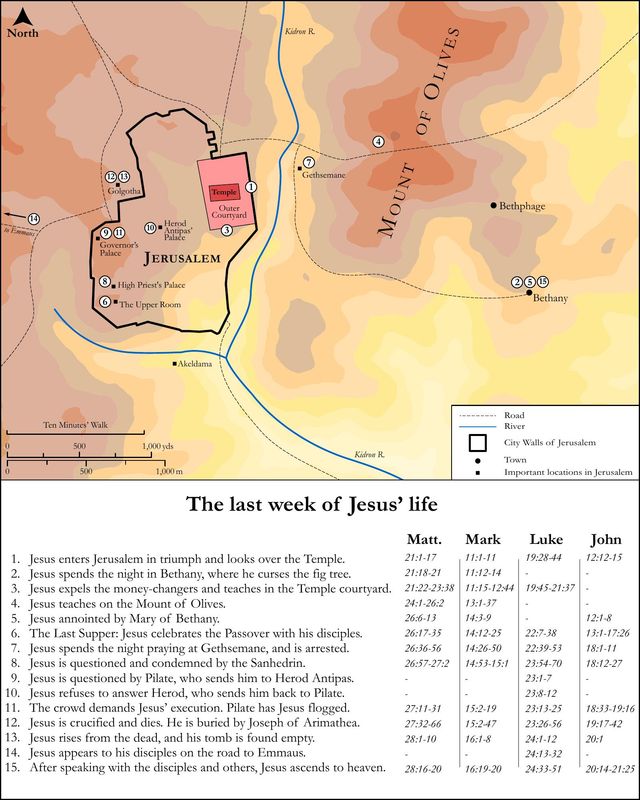
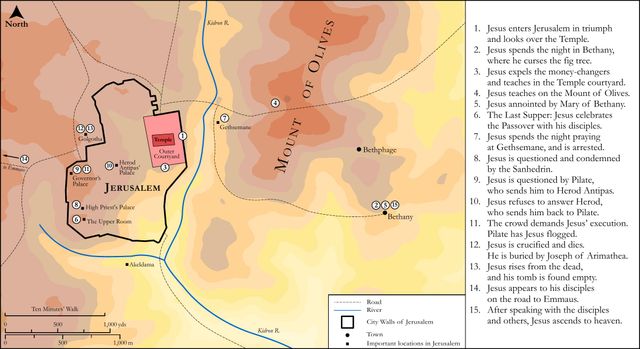
See on the biblical-era maps

Study this verse
Historical interpretation
Eight Centuries of Reception
11 surviving comments on this verse. Each one is dated, so this reads as a timeline rather than a list.
Select a marker to jump to its quote. Markers stagger vertically where authors wrote within a few decades of each other.
Watch for your life's sake. Let not your lamps be quenched, nor your loins unloosed; but be ye ready, for ye know not the hour in which our Lord cometh. But often shall ye come together, seeking the things which are befitting to your souls: for the whole time of your faith will not profit you, if ye be not made perfect in the last time. For in the last days false prophets and corrupters shall be multiplied, and the sheep shall be turned into wolves, and love shall be turned into hate; for when lawlessness increaseth, they shall hate and persecute and betray one another, and then shall appear the world-deceiver as Son of God, and shall do signs and wonders, and the earth shall be delivered into his hands, and he shall do iniquitous things which have never yet come to pass since the beginning. Then shall the creation of men come into the fire of trial, and many shall be made to stumble and shall perish; but they that endure in their faith shall be saved from under the curse itself. And then shall appear the signs of the truth; first, the sign of an out-spreading in heaven; then the sign of the sound of the trumpet; and the third, the resurrection of the dead; yet not of all, but as it is said: The Lord shall come and all His saints with Him. Then shall the world see the Lord coming upon the clouds of heaven.
Or otherwise; The body is laid as sick on the bed of carnal passions, the soul grinds in the mill of this world, and the bodily senses labour in the field of the world.
And has indeed God the Father denied the knowledge of that day to the Son, when He has declared, All things are committed to me of my Father? (Luke 10:22.) but if any thing has been denied, all things are not committed to Him.
Or, the two in the field, are the two people of believers and unbelievers, whom the day of the Lord shall overtake, as it were in the labours of this life. And they shall be separated, one being taken and the other left; this shows the separation that shall be between believers and unbelievers; when God's wrath is kindled, the saints shall be gathered into His garner, and the unbelievers shall be left as fuel for the fire from heaven. The same is the account to be given of that, Two shall be grinding at the mill. The mill is the work of the Law, but as some of the Jews believed through the Apostles, so some shall believe through Elias, and be justified through faith; and one part shall be taken through this same faith of good works, the other part shall be left unfruitful in the work of the Law, grinding in vain, and never to produce the bread of heavenly food.
The two in one bed are those who preach alike the Lord's rest after His passion, about which heretics and catholics have the same confession; but because the Catholic Faith preaches the unity of the Godhead of the Father and the Son, and the false creed of the heretics impugns that, therefore shall the Divine judgment decide between the confession of these two by taking one and leaving the other.
Christ shows that a judgment is coming, since between two people in a field, one is taken up and one left behind. Between two grinding at the mill, one is chosen and one rejected. Between two lying in bed, one departs and one remains. This teaching means that the separation of the faithful from the unfaithful will consist in one being accepted and the other abandoned. For, like the prophet says, when the wrath of God rises, the saints will be hidden in God’s chambers but the faithless will be left exposed to celestial fire. The two in the field therefore represent the faithful and the unfaithful, both of whom will be surprised by the day of the Lord in the midst of the world, in the course of their life’s work. They will be separated, one taken and the other left. It will be the same for the two grinding at the mill, which represents the work of the law. For only some of the Jews, like Elijah, believed through the apostles that they must be justified by faith. One group will be taken up through the faith that produces good works, and the other group will be abandoned in the fruitless works of the law, grinding in vain at a mill that will never produce heavenly food. The two lying in bed are proclaiming the repose of the Lord after his Passion, which both Catholics and heretics confess alike. But because the truth of the Catholic faith preaches the unity of the Father and the Son, which we call their deity, whereas the false doctrine of heretics attacks this unity with many different insults, one of the two lying in bed will be taken up but the other will be left behind. For by accepting one and rejecting the other, God’s judgment will prove the merit of each confession.
For in the last days false prophets shall be multiplied, and such as corrupt the word; and the sheep shall be changed into wolves, and love into hatred: for through the abounding of iniquity the love of many shall wax cold. For men shall hate, and persecute, and betray one another. And then shall appear the deceiver of the world, the enemy of the truth, the prince of lies, [2 Thessalonians 2:3-12] whom the Lord Jesus "shall destroy with the spirit of His mouth, who takes away the wicked with His lips; and many shall be offended at Him. But they that endure to the end, the same shall be saved. And then shall appear the sign of the Son of man in heaven;" [Isaiah 11:4; Matthew 24:1-51] and afterwards shall be the voice of a trumpet by the archangel; and in that interval shall be the revival of those that were asleep. And then shall the Lord come, and all His saints with Him, with a great concussion above the clouds, with the angels of His power, [Matthew 16:27] in the throne of His kingdom, to condemn the devil, the deceiver of the world, and to render to every one according to his deeds. "Then shall the wicked go away into everlasting punishment, but the righteous shall go into life eternal," [Matthew 25:46] to inherit those things "which eye has not seen, nor ear heard, nor have entered into the heart of man, such things as God has prepared for them that love Him;" [1 Corinthians 2:9] and they shall rejoice in the kingdom of God, which is in Christ Jesus.
Then again He sets another sign, by all which things He makes it evident, that He is not ignorant of the day. And what is the sign? "Then shall two be in the field; one shall be taken, and one left. Two women shall be grinding at the mill, one shall be taken, and one left. Watch therefore, for ye know not what hour your Lord doth come." And all these things are both proofs that He knew, and calculated to turn them from their inquiry. So for this cause He spake also of the days of Noah, for this cause He said too, "Two shall be on the bed," signifying this, that He should come upon them thus unexpectedly, when they were thus without thought, and "two women grinding at the mill," which also of itself is not the employment of them that are taking thought.
And together with this, He declares that as well servants as masters should be both taken and left, both those who are at ease, and those in toil, as well from the one rank as from the other; even as in the Old Testament He saith, "From him that sitteth upon the throne to the captive woman that is at the mill." For since He had said, that hardly are the rich saved, He shows that not even these are altogether lost, neither are the poor saved all of them, but both out of these and out of those are men saved, and lost.
And to me He seems to declare, that at night will be the advent. For this Luke too saith. Seest thou how accurately He knows all things?
He brings forward the elements of the earth to show that the Church is of more value than either heaven or earth, and that He is Maker of all things.
The Lord having described all the tokens that shall precede His coming, and brought His discourse to the very doors, yet would not name the day; Of that day and hour knoweth no man, no not the Angels of heaven, but my Father only.
That you may perceive that it is not owing to ignorance that He is silent of the day and hour of the judgment, He brings forward another token, As it the as in we days of Noe, so shall the coming of the Son of Man be. By this He means that He shall come sudden and unlooked for, and while men are taking their pleasure; of which Paul also speaks, When they shall say, Peace and safety, then sudden destruction cometh upon them. (1 Thess. 5:3.)
Or, To such as are thoughtlessly disposed, it shall be a time of peace and enjoyment; as the Apostle said not, 'When there shall be peace,' but When they shall say, Peace and safety, showing their insensibility to be such as was theirs in the days of Noe, when the wicked, and not the good, indulged themselves, but their end was sorrow and tribulation. This shows also, that when Antichrist shall come, those who are wicked, and despair of their salvation, shall ran into illicit pleasures; therefore He chooses an instance suitable. For while the ark was building, Noe preached among them, foretelling the evils that should come; but those wicked giving no heed to him, wantoned as though no evil should ever come; so now, because many would not believe things future, He makes credible what He says from what has happened. Another token He gives to show how unexpectedly that day shall come, and that He is not ignorant of the day, Then two shall be in the field, one shall be taken and the other left. These words show that masters and servants, they that work, and they that work not, shall be taken or left alike.
In some Latin copies is added here, "neither the Son:" but in the Greek copies, and particularly those of Adamantius and Pierius, it is not foundh But because it is read in some, it seems to require our notice.
Whereat Arius and Eunomius rejoice greatly; for say they, He who knows and He who is ignorant cannot be both equal. Against these we answer shortly; Seeing that Jesus, that is, The Word of God, made all times, (for By him all things were made, and without him was not any thing made that was made,) (John 1:3.) and that the day of judgment must be in all time, by what reasoning can He who knows the whole be shown to be ignorant of a part? This we will further say; Which is the greater, the knowledge of the Father, or the knowledge of the judgment? If He knows the greater, how can He be ignorant of the less?
Having then shown that the Son of God cannot be ignorant of the day of the consummation, we must now show a cause why He should be said to be ignorant. When after the resurrection He is demanded concerning this day by the Apostles, He answers more openly; It is not for you to know the times or the seasons which the Father has put in his own power. (Acts 1:7.) Wherein He shows that Himself knows, but that it was not expedient for the Apostles to know, that being in uncertainty of the coming of their Judge, they should live every day as though they were to be judged that day.
It is asked here, how it was said above, Nation shall rise against nation, and kingdom against kingdom, &c. when here only tokens of peace are spoken of as what shall be then? We must suppose, that after the wars and the other miseries which shall waste the human race, shall follow a short peace, offering rest and quiet to approve the faith of the believers.
Or, Two men in one field shall be found performing the same labour, sowing corn together, but not reaping the same fruit of their labour. The two grinding together we may understand either of the Synagogue and the Church, which seem to grind together in the Law, and to make of the same Scriptures meal of the commandments of God; or of other heresies, which out of both or one Testament, seem to grind meal of their own doctrines.
(Verse 40, 41.) Then there will be two in the field: one will be taken, and one will be left. Two women will be grinding at the mill: one will be taken, and one will be left. Then, He said, there will be two in the field, when, at the time of the consummation and judgment, two will be found in the field having the same labor and almost the same sowing, but not receiving the fruits of labor equally. Two women grinding together will also be there: one will be taken, and one will be left. In the two who reside in the field, and in the two who grind together, understand either the Synagogue and the Church, which seem to grind together in the Law, and to grind the flour of God's precepts from the same Scriptures, or the other heresies, which seem to grind the flour of their doctrines from either Testament or from the other, and when they have the same Christian name as their purpose, they will not receive the same reward: some being chosen, and others being left behind.
And Mark has the addition. (Mark 13:32.)
Or, these words denote three orders in the Church. The two men in the field (prædicatores.) denote the order of preachers, to whom is committed the field of the Church; by the two grinding at the mill, (conjugati.) the order of the married priests, who while with a divided heart they are called first to one side, then to the other, do, as it were, ever turn round a mill; by the two in one bed, (continentes.) the order of the continent, whose repose is signified by the bed. But in all these orders are good and bad, righteous and unrighteous, so that some shall be taken, and some left.
I have read also in some one's book, that the Son here is not to be taken of the Only-begotten, but of the adopted, for that He would not have put the Angels before the Only-begotten Son, saying, Not the Angels of heaven, neither the Son.i
Marriage and meats in themselves are not here condemned, as the error of Marcion and Manichæus teaches; for in the one the continuation of the species, in the other that of life, depends; but what is reproved is an unrestrained use of things lawful.
Continue studying Matthew 24:40 across the web’s major study libraries — every link below opens this exact verse, chapter, or book on the destination site.
Read & Compare
 BibleGatewayThis verse in more than 200 translations and 70 languages.
 Bible.comThe YouVersion reader — hundreds of translations, reading plans, and highlights.
 ESV.orgCrossway's official English Standard Version reader.
 NET BibleThe NET translation with 60,000+ translators' notes on every rendering decision.
 STEP BibleTyndale House's free study tool — original text, vocabulary, and scholarly resources.
 BibliaLogos Bible Software's free web reader.
 USCCBThe New American Bible (Revised Edition) with the U.S. bishops' study notes.
Commentaries
 BibleHub CommentariesDozens of classic commentaries on this verse, gathered on one page.
 StudyLightMore than 100 commentary sets — the largest collection on the web.
 BibleRefPlain-English commentary on what this verse means, verse by verse.
 Enduring WordDavid Guzik's free commentary on this chapter, widely used by Bible teachers.
 Bible Study ToolsVerse commentary alongside Greek and Hebrew study aids.
Original Language & Research
- BibleHub InterlinearThe verse word by word — original language, transliteration, and English.
- BibleHub LexiconEvery word's original-language definition and Strong's entry.
 Blue Letter BibleDeep-study tools — Strong's numbers, concordance, and word studies.
 CNTR CollationThe earliest Greek manuscripts of this verse, collated letter by letter.
Sermons, Hymns & Audio


TrulyRandomVerse is not affiliated with these sites and doesn’t control their content. They’re linked because they’re genuinely useful.
Summary
Matthew 24:40, a pivotal verse within Jesus' Olivet Discourse, presents a stark and sobering image of the sudden and decisive separation that will occur at the Son of Man's return. Following a vivid comparison to the days of Noah, this verse underscores the unexpected nature of the eschatological judgment, where individuals engaged in ordinary daily activities will face an immediate and irreversible divine discernment, resulting in some being taken and others left, a powerful call to constant vigilance and spiritual preparedness.
Context
ShowHideLiterary Context
Matthew 24:40 is nestled within Jesus' extensive eschatological teaching known as the Olivet Discourse, delivered on the Mount of Olives in response to His disciples' direct questions about the signs of His coming and the end of the age (Matthew 24:3). The immediate preceding verses, Matthew 24:37-39, establish a crucial interpretive framework by drawing a direct analogy to the flood in Noah's time. Just as people in Noah's day were consumed by ordinary life—eating, drinking, marrying—and remained oblivious until the flood "took them all away," so too will the coming of the Son of Man be sudden and unexpected, catching many unprepared. This analogy is critical for understanding the meaning of "taken" and "left" in verse 40, suggesting that "taken" refers to removal in judgment, while "left" implies preservation. The discourse as a whole emphasizes the need for watchfulness and readiness, culminating in parables like the wise and foolish virgins (Matthew 25:1-13) and the talents (Matthew 25:14-30), all reinforcing the theme of accountability at the Lord's return.
Historical & Cultural Context
First-century Judea and Galilee were predominantly agrarian societies, where daily life revolved around manual labor, particularly farming. The imagery of "two in the field" (and parallel verses like "two women grinding at the mill" in Matthew 24:41) would have resonated deeply with Jesus' audience. Working in the field was a common, everyday activity, symbolizing the mundane routines of life. People lived in close-knit communities, and their livelihoods were directly tied to the land and its produce. The sudden interruption of such ordinary activities by a divine event would have highlighted the unexpected and all-encompassing nature of Christ's return, cutting across all social strata and daily routines. This setting emphasizes that no one, regardless of their occupation or daily engagement, will be exempt from this ultimate separation.
Key Themes
ShowHideMatthew 24:40 contributes significantly to several overarching themes within the Olivet Discourse and the broader New Testament eschatology. Firstly, it powerfully conveys the Suddenness and Unexpectedness of Christ's Return. The comparison to Noah's flood, where people were unaware until judgment arrived, underscores that the Son of Man's coming will be an abrupt and unannounced event, interrupting the normal course of life. This theme is echoed in other warnings, such as the day of the Lord coming "as a thief in the night" (1 Thessalonians 5:2). Secondly, the verse highlights Divine Separation and Judgment. Though two individuals are engaged in identical activities, their ultimate destinies diverge. This implies an inherent, divinely ordained distinction based on spiritual standing, leading to a separation of the righteous from the unrighteous. This theme of ultimate separation is a recurring motif in Jesus' teachings on the end times, culminating in the judgment of the sheep and the goats in Matthew 25:31-46. Lastly, and implicitly, the verse serves as an urgent call to Watchfulness and Preparedness. Since the timing of this decisive event is unknown (Matthew 24:36), believers are exhorted to live in a state of constant readiness, ensuring they are found faithful and prepared when the Lord appears, as emphasized by the concluding exhortation in Matthew 24:42.
Exposition and Analysis
ShowHideKey Word Analysis
ShowHideThis word (G3880) means "to receive near," "to associate with oneself," or "to take unto/with." In the context of Matthew 24:39, where the flood "took them all away," it carries the strong connotation of removal for destruction or judgment. Thus, in verse 40, "taken" signifies removal from the earth in a context of divine judgment, aligning with the fate of those swept away by the flood.
This word (G863) means "to send forth," "to leave," "to forsake," or "to permit." In contrast to "taken," "left" implies being allowed to remain, to be preserved, or to be spared from the impending judgment. This aligns with Noah and his family being "left" to survive the flood and inherit the new earth.
This word (G68) refers to "a field" (as a drive for cattle), "the country," or specifically, "a farm" or "hamlet." Its inclusion highlights the mundane, everyday setting in which this profound and sudden separation will occur, emphasizing that no one's daily routine will prevent or excuse them from this divine reckoning.
Verse Breakdown
ShowHide"Then shall two be in the field"
This clause sets the scene, depicting two individuals engaged in a common, ordinary activity—working in an agricultural field. The use of "then" (tóte) connects this event directly to the preceding discussion of the Son of Man's coming and the unexpected nature of the "days of Noah." It emphasizes that the divine separation will occur amidst the normalcy of daily life, without prior warning or special circumstances.
"the one shall be taken"
This phrase introduces the first outcome of the sudden divine intervention. Based on the Noahic analogy in Matthew 24:37-39, "taken" (from paralambánō) signifies removal for judgment or destruction, similar to those swept away by the flood. It implies a decisive and irreversible act of divine separation, where one individual is removed from the earthly sphere.
"and the other left"
This contrasting phrase describes the second outcome. "Left" (from aphíēmi) implies being permitted to remain, to be preserved, or to be spared from the judgment that befalls the one who is "taken." In the context of the Noahic flood, this would correspond to Noah and his family, who were "left" to survive the cataclysm and enter a new era. This signifies a divine act of preservation for those found righteous or prepared.
Literary Devices
ShowHideMatthew 24:40 employs several potent literary devices. The most prominent is Analogy, specifically the Noahic Analogy, which Jesus explicitly uses in the preceding verses (Matthew 24:37-39) to interpret the meaning of "taken" and "left." This analogy clarifies that "taken" refers to removal in judgment (like those swept away by the flood), while "left" refers to preservation (like Noah and his family). Juxtaposition is also central, presenting two individuals engaged in identical activities ("in the field") who experience radically different fates, highlighting the discerning nature of the divine judgment. The verse also uses Imagery, painting a vivid picture of everyday life suddenly interrupted by a momentous, decisive event, making the abstract concept of end-time judgment tangible and immediate for the audience. Furthermore, the succinct, almost proverbial nature of the statement lends it a sense of Aphorism, making it memorable and impactful as a warning.
Theological and Thematic Connections
ShowHideMatthew 24:40 stands as a profound theological statement on divine sovereignty, eschatological judgment, and the ultimate separation of humanity. It underscores that God's final reckoning will be both sudden and discerning, occurring amidst the ordinary flow of human life. The verse challenges any notion of universal salvation or a lack of accountability, clearly indicating that a definitive distinction will be made between individuals, regardless of their outward circumstances. This separation is not arbitrary but is predicated on one's spiritual standing and preparedness for the Lord's return. The theological implication is a call to constant vigilance and a life lived in anticipation of Christ's coming, emphasizing that true spiritual readiness is paramount above all worldly pursuits. It reinforces the biblical truth that salvation is personal and requires individual response, leading to either preservation or judgment.
Reflection and Application
ShowHideMatthew 24:40 serves as a powerful and timeless call to introspection and spiritual diligence for every believer. The imagery of one being taken and another left, even while engaged in the most mundane of tasks, compels us to consider the state of our own hearts and lives. It shatters any illusion that our daily routines or worldly engagements will exempt us from the ultimate divine reckoning. Instead, it demands that we live with an eternal perspective, recognizing that every moment is lived under the shadow of Christ's imminent return. This should not induce fear or paralysis, but rather a profound sense of purpose and urgency: to live faithfully, to pursue righteousness, and to share the transformative message of the Gospel with those around us. Our preparedness is not about predicting the exact timing, but about cultivating a consistent, obedient relationship with the Lord, ensuring that we are found ready and faithful, actively serving Him, whenever He chooses to appear. This verse challenges us to prioritize our spiritual walk above all else, for our eternal destiny hinges on our readiness.
Questions for Reflection
ShowHideFAQ
ShowHideDoes Matthew 24:40 refer to the "Rapture" of the church?
ShowHideWhile Matthew 24:40, along with its parallel in Luke 17:34-36, is often associated with the concept of the Rapture, a careful examination of its immediate context, particularly the preceding analogy to Noah's flood in Matthew 24:37-39, suggests a different interpretation. In Noah's day, those "taken away" by the flood were the unrighteous, removed in judgment, while Noah and his family were "left" to be preserved through the cataclysm. Therefore, within this specific context, "taken" signifies removal for judgment, and "left" signifies preservation for the new age. This contrasts with the popular understanding of the Rapture, where believers are "taken" to be with Christ, and unbelievers are "left" behind for judgment. While the New Testament does teach about believers being "caught up" to meet the Lord (1 Thessalonians 4:17), the primary meaning of "taken" and "left" in Matthew 24:40, when interpreted through Jesus' own analogy, points to a separation where the unrighteous are "taken" in judgment and the righteous are "left" for salvation and to inherit the earth.
Christ-Centered Fulfillment
ShowHideMatthew 24:40, while a warning of future judgment and separation, finds its ultimate Christ-centered fulfillment in the person and work of Jesus Christ. He is the Son of Man whose coming is described, the sovereign Lord who will execute this decisive separation. His first advent, though in humility, already initiated the process of division, as He declared, "I did not come to bring peace but a sword" (Matthew 10:34). His life, death, and resurrection provide the very basis for who is "taken" in judgment and who is "left" in salvation. Those who are "left" for preservation are those who have put their faith in Him, who have been redeemed by His atoning sacrifice on the cross (Romans 5:8-9). He is not merely the one who separates, but the one who makes the separation possible through His work as Savior and Judge. Ultimately, the "taking" of the unrighteous is a manifestation of His righteous judgment against sin, while the "leaving" of the righteous is a testament to His grace and faithfulness, securing their place in His eternal kingdom (John 5:24). Thus, Matthew 24:40 points to the absolute necessity of a personal relationship with Christ, for He is the one who determines our eternal destiny at His glorious return.