


Luke 8:34
Bible text: King James Version (1769 Blayney text) · Public domain
Bible text: Berean Standard Bible · Public domain
Bible text: American Standard Version (1901) · Public domain
Bible text: World English Bible, Messianic edition · Public domain
Bible text: Geneva Bible (1599) · Public domain
Bible text: Young's Literal Translation · Public domain
- ἸδόντεςIdontesHaving seenG1492V-2AAP-NPMVerb 2nd Aorist Active Participle Nominative Plural Masculine
- δὲdethenG1161CONJConjunction
- οἱhoithoseG3588T-NPMDefinite article Nominative Plural Masculine
- βόσκοντεςboskontesfeeding [them]G1006V-PAP-NPMVerb Present Active Participle Nominative Plural Masculine
- τὸtowhatG3588T-ASNDefinite article Accusative Singular Neuter
- γεγονὸςgegonosalready happeningG1096V-2RAP-ASNVerb 2nd Perfect Active Participle Accusative Singular Neuter
- ἔφυγονephugonthey fledG5343V-2AAI-3PVerb 2nd Aorist Active Indicative 3rd Plural
- καὶkaiandG2532CONJConjunction
- ἀπελθόντεςapelthonteshaving goneG565V-2AAP-NPMVerb 2nd Aorist Active Participle Nominative Plural Masculine
- ἀπήγγειλανapēngeilanthey reported [it]G518V-AAI-3PVerb Aorist Active Indicative 3rd Plural
- εἰςeistoG1519PREPPreposition
- τὴνtēntheG3588T-ASFDefinite article Accusative Singular Feminine
- πόλινpolincityG4172N-ASFNoun Accusative Singular Feminine
- καὶkaiandG2532CONJConjunction
- εἰςeistoG1519PREPPreposition
- τοὺςtoustheG3588T-APMDefinite article Accusative Plural Masculine
- ἀγρούςagrouscountryG68N-APMNoun Accusative Plural Masculine
English is a literal word-by-word gloss of the Greek, not the KJV's wording. Why?
This is the original text the KJV's translators worked from — each Greek word with its own literal English meaning in this verse, prepared by scholars at Tyndale House, Cambridge. The KJV translates whole sentences, not word by word, so its wording differs: one Greek word can become several English words, and the KJV may choose “charity” where the gloss reads “love”. Both are faithful — they answer different questions. For the KJV's own rendering, switch to the KJV text.
Details
See on the biblical-era maps
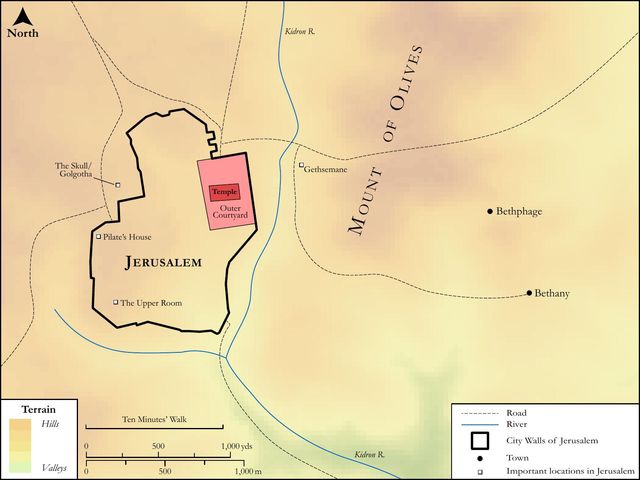
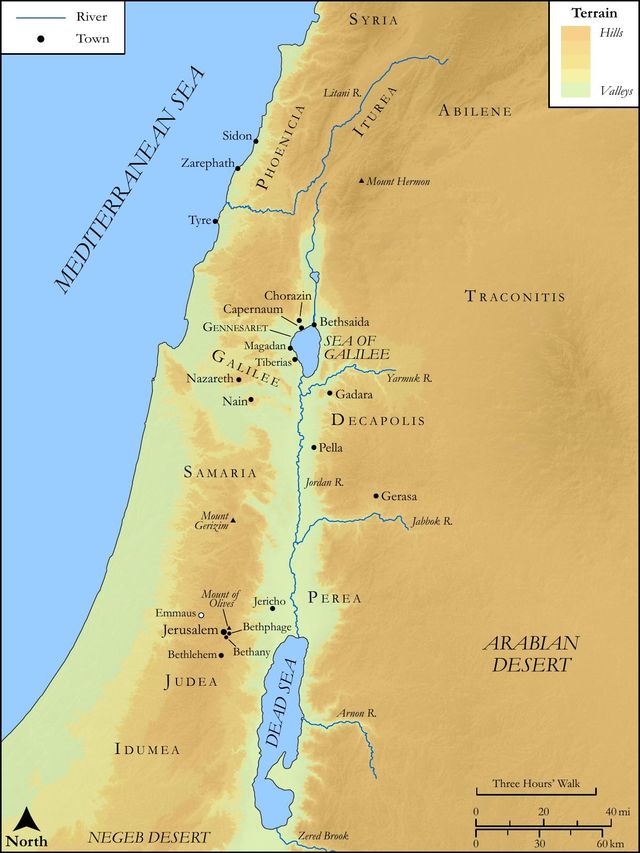
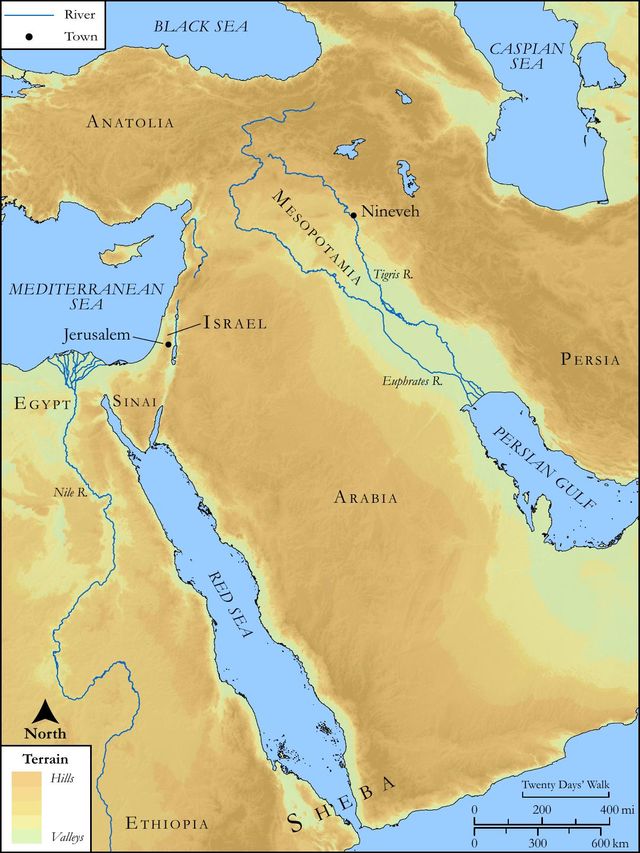
Study this verse
Public-domain commentary
Matthew Henry
From his Commentary on the Whole Bible. Henry comments on passages, not single verses — this entry covers Luke 8:22–39. His three-level outline is real structure in the source text, so it is rendered as structure.
We have here two illustrious proofs of the power of our Lord Jesus which we had before - his power over the winds, and his power over the devils. See Mk. 4 and 5.
I.His power over the winds, those powers of the air that are so much a terror to men, especially upon sea, and occasion the death of such multitudes. Observe,
1.Christ ordered his disciples to put to sea, that he might show his glory upon the water, in stilling the waves, and might do an act of kindness to a poor possessed man on the other side the water: He went into a ship with his disciples, Luk 8:22. They that observe Christ's orders may assure themselves of his presence. If Christ sends his disciples, he goes with them. And those may safely and boldly venture any where that have Christ accompanying them. He said, Let us go over unto the other side; for he had a piece of good work to do there. He might have gone by land, a little way about; but he chose to go by water, that he might show his wonders in the deep.
2.Those that put to sea in a calm, yea, and at Christ's word, must yet prepare for a storm, and for the utmost peril in that storm; There came down a storm of wind on the lake (Luk 8:23), as if it were there, and no where else; and presently their ship was so tossed that it was filled with water, and they were in jeopardy of their lives. Perhaps the devil, who is the prince of the power of the air, and who raiseth winds by the permission of God, had some suspicion, from some words which Christ might let fall, that he was coming over the lake now on purpose to cast that legion of devils out of the poor man on the other side, and therefore poured this storm upon the ship he was in, designing, if possible, to have sunk him and prevented that victory.
3.Christ was asleep in the storm, Luk 8:23. Some bodily refreshment he must have, and he chose to take it when it would be least a hindrance to him in his work. The disciples of Christ may really have his gracious presence with them at sea, and in a storm, and yet he may seem as if he were asleep; he may not immediately appear for their relief, no, not when things seem to be brought even to the last extremity. Thus he will try their faith and patience, and quicken them by prayer to awake, and make their deliverance the more welcome when it comes at last.
4.A complaint to Christ of our danger, and the distress his church is in, is enough to engage him to awake, and appear for us, Luk 8:24. They cried, Master, master, we perish! The way to have our fears silenced is to bring them to Christ, and lay them before him. Those that in sincerity call Christ Master, and with faith and fervency call upon him as their Master, may be sure that he will not let them perish. There is no relief for poor souls that are under a sense of guilt, and a fear of wrath, like this, to go to Christ, and call him Master, and say, "I am undone, if thou do not help me."
5.Christ's business is to lay storms, as it is Satan's business to raise them. He can do it; he has done it; he delights to do it: for he came to proclaim peace on earth. He rebuked the wind and the raging of the water, and immediately they ceased (Luk 8:24); not, as at other times, by degrees, but all of a sudden, there was a great calm. Thus Christ showed that, though the devil pretends to be the prince of the power of the air, yet even there he has him in a chain.
6.When our dangers are over, it becomes us to take to ourselves the shame of our own fears and to give to Christ the glory of his power. When Christ had turned the storm into a calm, then were they glad because they were quiet, Psa 107:30. And then,
(1.)Christ gives them a rebuke for their inordinate fear: Where is your faith? Luk 8:25. Note, Many that have true faith have it to seek when they have occasion to use it. They tremble, and are discouraged, if second causes frown upon them. A little thing disheartens them; and where is their faith then?
(2.)They give him the glory of his power: They, being afraid, wondered. Those that had feared the storm, now that the danger was over with good reason feared him that had stilled it, and said one to another, What manner of man is this! They might as well have said, Who is a God like unto thee? For it is God's prerogative to still the noise of the seas, the noise of their waves, Psa 65:7.
II.His power over the devil, the prince of the power of the air.
In the next passage of story he comes into a closer grapple with him than he did when he commanded the winds. Presently after the winds were stilled they were brought to their desired haven, and arrived at the country of the Gadarenes, and there went ashore (Luk 8:26, Luk 8:27); and he soon met with that which was his business over, and which he thought it worth his while to go through a storm to accomplish.
We may learn a great deal out of this story concerning this world of infernal, malignant spirits, which, though not working now ordinarily in the same way as here, yet we are all concerned at all times to stand upon our guard against.
1.These malignant spirits are very numerous. They that had taken possession of this one man called themselves Legion (Luk 8:30), because many devils were entered into him: he had had devils a long time, Luk 8:27. But perhaps those that had been long in possession of him, upon some foresight of our Saviour's coming to make an attack upon them, and finding they could not prevent it by the storm they had raised, sent for recruits, intending this to be a decisive battle, and hoping now to be too hard for him that had cast out so many unclean spirits, and to give him a defeat. They either were, or at least would be thought to be, a legion, formidable as an army with banners; and now, at least, to be, what the twentieth legion of the Roman army, which was long quartered at Chester, was styled, legio victrix - a victorious legion.
2.They have an inveterate enmity to man, and all his conveniences and comforts. This man in whom the devils had got possession, and kept it long, being under their influence, wore no clothes, neither abode in any house (Luk 8:27), though clothing and a habitation are two of the necessary supports of this life. Nay, and because man has a natural dread of the habitations of the dead, they forced this man to abide in the tombs, to make him so much the more a terror to himself and to all about him, so that his soul had as much cause as ever any man's had to be weary of his life, and to choose strangling and death rather.
3.They are very strong, fierce, and unruly, and hate and scorn to be restrained: He was kept bound with chains and in fetters, that he might not be mischievous either to others or to himself, but he broke the bands, Luk 8:29. Note, Those that are ungovernable by any other thereby show that they are under Satan's government; and this is the language of those that are so, even concerning God and Christ, their best friends, that would not either bind them from or bind them to any thing but for their own good: Let us break their bands in sunder. He was driven of the devil. Those that are under Christ's government are sweetly led with the cords of a man and the bands of love; those that are under the devil's government are furiously driven.
4.They are much enraged against our Lord Jesus, and have a great dread and horror of him: When the man whom they had possession of, and who spoke as they would have him, saw Jesus, he roared out as one in an agony, and fell down before him, to deprecate his wrath, and owned him to be the Son of God most high, that was infinitely above him and too hard for him; but protested against having any league or confederacy with him (which might sufficiently have silenced the blasphemous cavils of the scribes and Pharisees): What have I to do with thee? The devils have neither inclination to do service to Christ nor expectation to receive benefit by him: What have we to do with thee? But they dreaded his power and wrath: I beseech thee, torment me not. They do not say, I beseech thee, save me, but only, Torment me not. See whose language they speak that have only a dread of hell as a place of torment, but no desire of heaven as a place of holiness and love.
5.They are perfectly at the command, and under the power, of our Lord Jesus; and they knew it, for they besought him that he would not command them to go eis ton abusson - into the deep, the place of their torment, which they acknowledge he could easily and justly do. O what a comfort is this to the Lord's people, that all the powers of darkness are under the check and control of the Lord Jesus! He has them all in a chain. He can send them to their own place, when he pleaseth.
6.They delight in doing mischief. When they found there was no remedy, but they must quit their hold of this poor man, they begged they might have leave to take possession of a herd of swine, Luk 8:32. When the devil at first brought man into a miserable state he brought a curse likewise upon the whole creation, and that became subject to enmity. And here, as an instance of that extensive enmity of his, when he could not destroy the man, he would destroy the swine. If he could not hurt them in their bodies, he would hurt them in their goods, which sometimes prove a great temptation to men to draw them from Christ, as here. Christ suffered them to enter into the swine, to convince the country what mischief the devil could do in it, if he should suffer him. No sooner had the devils leave than they entered into the swine; and no sooner had they entered into them than the herd ran violently down a steep place into the lake, and were drowned. For it is a miracle of mercy if those whom Satan possesses are not brought to destruction and perdition. This, and other instances, show that that roaring lion and red dragon seeks what and whom he may devour.
7.When the devil's power is broken in any soul that soul recovers itself, and returns into a right frame, which supposes that those whom Satan gets possession of are put out of the possession of themselves: The man out of whom the devils were departed sat at the feet of Jesus, Luk 8:35. While he was under the devil's power he was ready to fly in the face of Jesus; but now he sits at his feet, which is a sign that he is come to his right mind. If God has possession of us, he preserves to us the government and enjoyment of ourselves; but, if Satan has possession of us, he robs us of both. Let his power therefore in our souls be overturned, and let him come whose right our hearts are, and let us give them to him; for we are never more our own than when we are his.
Let us now see what was the effect of this miracle of casting the legion of devils out of this man.
(1.)What effect it had upon the people of that country who had lost their swine by it: The swineherds went and told it both in city and country (Luk 8:34), perhaps with a design to incense people against Christ. They told by what means he that was possessed of the devils was healed (Luk 8:36), that it was by sending the devils into the swine, which was capable of an invidious representation, as if Christ could not have delivered the man out of their hands, but by delivering the swine into them. The people came out, to see what was done, and to enquire into it; and they were afraid (Luk 8:35); they were taken with great fear (Luk 8:37); they were surprised and amazed at it, and knew not what to say to it. They thought more of the destruction of the swine than of the deliverance of their poor afflicted neighbour, and of the country from the terror of his frenzy, which was become a public nuisance; and therefore the whole multitude besought Christ to depart from them for fear he should bring some other judgment upon them; whereas indeed none need to be afraid of Christ that are willing to forsake their sins and give up themselves to him. But Christ took them at their word: He went up into the ship, and returned back again. Those lose their Saviour, and their hopes in him, that love their swine better.
(2.)What effect it had upon the poor man who had recovered himself by it. He desired Christ's company as much as others dreaded it: he besought Christ that he might be with him as others were that had been healed by him of evil spirits and infirmities (Luk 8:2), that Christ might be to him a protector and teacher, and that he might be to Christ for a name and a praise. He was loth to stay among those rude and brutish Gadarenes that desired Christ to depart from them. O gather not my soul with these sinners! But Christ would not take him along with him, but sent him home, to publish among those that knew him the great things God had done for him, that so he might be a blessing to his country, as he had been a burden to it. We must sometimes deny ourselves the satisfaction even of spiritual benefits and comforts, to gain an opportunity of being serviceable to the souls of others. Perhaps Christ knew that, when the resentment of the loss of their swine was a little over, they would be better disposed to consider the miracle, and therefore left the man among them to be a standing monument, and a monitor to them of it.
Historical interpretation
Seven Centuries of Reception
11 surviving comments on this verse. Each one is dated, so this reads as a timeline rather than a list.
Select a marker to jump to its quote. Markers stagger vertically where authors wrote within a few decades of each other.
(de vita Anton.) But if they have no power over swine, the evil spirits have much less against men who are made after the image of God. We ought then to fear God alone, but despise them.
Many accurate copies have neither "Gerazenes" nor "Gadarenes," but "Gergezenes." For Gadara is a city in Judæa, but neither lake nor sea is found at it; and Geraza is a city of Arabia, having neither lake nor sea near. But Gergeza, from which the Gergezenes are called, is an ancient city near the lake of Tiberias, above which is a rock hanging over the lake, into which they say the swine were dashed down by the devils. But since Gadara and Geraza border upon the land of the Gergezenes, it is probable that the swine were led from thence to their parts.
(Vide Victor. Ant. in Mark 5.) But the shepherds take flight, lest they should perish with the swine. Hence it follows, When they that fed them saw what was done they fled, and went and told it in the city and in the country, and excited the like alarm among the citizens. But the severity of their loss led them to the Saviour; for it follows, Then they went out to see what was done, and came to Jesus; and here remark, that while God punishes men in their substance, He confers a blessing upon their souls. But when they had set out, they see him in his right mind who had been long vexed. It follows, And they found the man out of whom the devils had departed sitting at the feet of Jesus clothed, (whereas before he was naked,) and in his right mind. For he departed not from those feet, where he obtained safety; and so acknowledging the miracle, they were astonished at the cure of the malady, and marvelled at the event; for it follows, And they were afraid. But this thing they discover partly by sight, partly hearing it in words. It follows, They also which saw it told them by what means he that was possessed of the devils was healed. But they ought to have besought the Lord not to depart from them, but to be the guardian of their country, that no evil spirits might come near them; but through fear they lost their own salvation, asking the Saviour to depart. It follows, Then the whole multitude of the country of the Gadarenes round about besought him to depart from, them, for they were taken with great fear.
But as He was departing, the man who had been afflicted will not part from his Saviour, for it follows, Now the man out of whom the devils were departed besought him that he might be with him.
He does not however turn aside from the law of truth, for whatever the Son doth the Father doth. But why does He, who every where charged those who were delivered to tell no one, say to this man who was delivered from the legion, show how great things God hath done for thee? Because in truth that whole country knew not God, and was in bondage to the worship of devils. Or more truly, now that He refers the miracle to His Father, He says, show how great, &c. but when He speaks of Himself He charges to tell no one. But he who was healed of the evil spirits knew Jesus to be God, and therefore published what great things God had done for him. For it follows, And he went through the whole city, &c.
(Hom. 14. in Cantic.) Certain evil spirits imitating the heavenly hosts and the legions of Angels say that they are legions. As also their prince says that he will exalt his throne above the stars that he may be like to the Most High. (Isaiah 14:13.)
But the devils could not endure the clearness of the light of heaven, as those who have weak eyes can not bear the sun's rays.
Now although the number of those healed by Christ is different in Luke and Matthew, yet the mystery is one and the same. For as he who had a devil is the figure of the Gentile people, the two also in like manner take the figure of the Gentiles. For whereas Noah begat three sons, Shem, Ham, and Japhet; the family of Shem only was called to the possession of God, and from the other two the people of different nations were descended. He (as Luke says) had devils long time, inasmuch as the Gentile people was vexed from the deluge down to our Lord's coming. But he was naked, because the Gentiles lost the garment of their nature and virtue.
Or what are the bodies of the unbelieving but kinds of tombs in which the word of God abides not?
They are carried violently down, for they are reclaimed not by the contemplation of any good deed, but thrust as from a higher place to a lower, along the downward path of iniquity, they perish amidst the waves of this world, shut out from the approach of air. For they who are carried to and fro by the rapid tide of pleasure cannot receive the communication of the Spirit; we see then that man himself is the author of his own misery. For unless a man lived like the swine, the devil would never have received power over him, or received it, not to destroy but to prove him. And perhaps the devil, who after the coming of our Lord can no longer steal away the good, seeks not the destruction of all men, but only the wanton, as the robber lies in wait not for armed men, but the unarmed. When those who kept the herd saw this they fled. For neither the teachers of philosophy nor the chief of the synagogue can bring a cure to perishing mankind. It is Christ alone who takes away the sins of the people.
Or there seems to have been a kind of synagogue in the city of the Gerasenes who besought our Lord to depart, because they were seized with great fear. For the weak mind receives not the word of God, nor can it endure the burden of wisdom. And therefore He no longer troubled them, but ascends from the lower parts to the higher, from the Synagogue to the Church, and returned across the lake. For no one passes from the Church to the Synagogue without endangering his salvation. But whoever desires to pass from the Synagogue to the Church, let him take up his cross, that he may avoid the danger.
(Hom. 28. in Matt.) But as soon as our Lord had departed from the sea, He meets with another more awful wonder. For the demoniac, like an evil slave, when he sees Him confirms his bondage, as it follows, And when he went forth to land, there met him out of the city a certain man, &c.
(Hom. 28. in Matt.) Or, Luke selected from the two the one who was most savage. Hence he gives the most melancholy account of his calamity, adding, And he wore no clothes, neither abode in any house, but in the tombs. But the evil spirits visit the tombs of the dead, to instil into men that dangerous notion, that the souls of the dead become evil spirits.
(ubi sup.) But because the people acknowledged Him to be man, the devils came publishing His divinity, which even the sea had proclaimed by its calmness. Hence it follows, When he saw Jesus he fell down before him, and with a loud voice said, &c.
(ubi sup.) Therefore since no one could hold the possessed, Christ goes to him and addresses him. It follows, And Jesus asked him, saying, What is thy name?
(ubi sup.) But when the Lord had overcome the evil spirits which disturbed His creatures, they thought that because of the enormity of those things which had been done, He would not wait the time of their punishment, and therefore since they could not deny their guilt, they entreat that they may not quickly undergo the penalty. As it follows, And they besought him that he would not command them to go out into the deep.
(ubi sup.) But observe the humility of Christ; for when after conferring so great benefits upon them they sent Him away, He offers no obstacle, but departs, leaving those who had proclaimed themselves unworthy of His teaching. It follows, And he went up into the ship, and returned back again.
(ubi sup.) And so abandoning those who had proclaimed themselves unworthy of His teaching, He appoints as their teacher the man who had been released from the evil spirits.
(de Qu. Evan. l. ii. q. 13.) Or, by the herdsmen of the swine flying and telling these things, He represents certain rulers of the wicked, who though they evade the law of Christianity, yet proclaim it among the nations by their astonishment and wonder. But by the Gerasenes, when they knew what was done, asking Jesus to depart from them, for they were struck with great fear, he represents the multitude delighting in their old pleasures, honouring indeed, but unwilling to endure the Christian law, saying that they cannot fulfil it, while they still marvel at the faithful released from their former abandoned mode of life.
(Ep. ad Georgium.) Now the Lord ordains for each class of sinners an appropriate punishment. The fire of Hell unquenchable for fleshly burnings, gnashing of teeth for wanton mirth, intolerable thirst for pleasure and revelry, the worm that dieth not for a crooked and malignant heart, everlasting darkness for ignorance and deceit, the bottomless pit for pride. Hence the deep is assigned to the devils as unto the proud, it follows, And there was there an herd of swine, &c.
When they saw what had happened, those who were feeding the pigs fled and reported it in the city and in the villages. That the pig herders, fleeing, announced these things indicates that even some leaders of the impious, although they flee from the Christian law, nevertheless preach its power among the nations, in awe and wonder.
For Geraza is a famous city of Arabia, on the other side of the Jordan, close to the mountain of Galaad, which was possessed by the tribe of Manasseh, and not far from the lake of Tiberias, into which the swine were cast headlong.
He enquires not his name as ignorant of it, but that when the demoniac had confessed the plague which he endured, the power of the Healer might shine forth more welcome to him. But the priests also of our time, who through the grace of exorcism are able to cast out devils, are wont to say that the sufferers can no otherwise be cured than by openly telling in confession every thing which either waking or sleeping they have endured from the unclean spirits, and above all when they imagine that the devils seek and obtain the possession of the human body. So also here the confession is added, And he said, Legion, because many devils were entered into him.
Now mystically; Gerasa signifies the Gentile nations, whom after His passion and resurrection Christ visited in His preachers. Hence Gerasa or Gergesa, as some say, is by interpretation "casting out an inhabitant," that is, the devil by whom it was before possessed, or, "a stranger approaching," who before was afar off.
When those who had been feeding the swine fled into the city, it became an opportunity for salvation for the Gadarenes, but they did not understand. They ought to have marvelled at the Saviour's power and believed in Him. The Evangelist says that they besought Him to depart from them, instead of calling upon Him in supplication. They did this out of fear of suffering another loss like that of the swine. But the man who had been healed shows indisputable proof of his healing. That he had been healed in his mind is shown by the fact that he now both recognizes Jesus and begs His permission to be with Him. For he was afraid, it would seem, that the demons would again easily assault him when he was separated from Jesus. But the Lord shows him that even if he is not with Jesus, the Lord's grace can shelter him from demonic attack. The Lord says to him, Return to thine own house, and tell what great things God hath done unto thee. By not saying, "what great things I have done unto thee," the Lord gives us an example of humility and teaches us that we should attribute all our accomplishments to God. But though the Lord had commanded him to tell what things God had done for him, he told instead what things Jesus had done for him, so great was his gratitude. Therefore when you do something good for someone, do not desire it to become public knowledge; but he who is the beneficiary of that good deed ought to be moved by gratitude to tell it to others, even though you do not want him to do so.
Which indeed the devils demand, wishing yet longer to mix with mankind.
They feared lest they should again suffer some loss, as they had suffered in the drowning of the swine.
For as one who had been tried by experience, he feared, lest perhaps when far from Jesus he should again become the prey of evil spirits. But the Lord shows him, that though He is not present with him, He can protect by His grace, for it follows, But Jesus sent him away, saying, Return to thine own house, and show how great things God hath done for thee. But he said not, "how great things I have done for thee," giving us an example of humility, that we should attribute all our righteousness to God.
Continue studying Luke 8:34 across the web’s major study libraries — every link below opens this exact verse, chapter, or book on the destination site.
Read & Compare
 BibleGatewayThis verse in more than 200 translations and 70 languages.
 Bible.comThe YouVersion reader — hundreds of translations, reading plans, and highlights.
 ESV.orgCrossway's official English Standard Version reader.
 NET BibleThe NET translation with 60,000+ translators' notes on every rendering decision.
 STEP BibleTyndale House's free study tool — original text, vocabulary, and scholarly resources.
 BibliaLogos Bible Software's free web reader.
 USCCBThe New American Bible (Revised Edition) with the U.S. bishops' study notes.
Commentaries
 BibleHub CommentariesDozens of classic commentaries on this verse, gathered on one page.
 StudyLightMore than 100 commentary sets — the largest collection on the web.
 BibleRefPlain-English commentary on what this verse means, verse by verse.
 Enduring WordDavid Guzik's free commentary on this chapter, widely used by Bible teachers.
 Bible Study ToolsVerse commentary alongside Greek and Hebrew study aids.
Original Language & Research
- BibleHub InterlinearThe verse word by word — original language, transliteration, and English.
- BibleHub LexiconEvery word's original-language definition and Strong's entry.
 Blue Letter BibleDeep-study tools — Strong's numbers, concordance, and word studies.
 CNTR CollationThe earliest Greek manuscripts of this verse, collated letter by letter.
Sermons, Hymns & Audio


TrulyRandomVerse is not affiliated with these sites and doesn’t control their content. They’re linked because they’re genuinely useful.
Summary
Luke 8:34 vividly portrays the immediate and profound reaction of the swineherds to Jesus's miraculous deliverance of the demon-possessed man and the subsequent destruction of their herd. Witnessing the raw, unbridled power of Christ over a legion of demons, they were overcome with fear and fled, rushing to disseminate the astonishing news throughout the nearby city and the surrounding rural areas, thereby setting in motion the wider community's encounter with Jesus's extraordinary authority.
Context
ShowHideLiterary Context
This verse is the direct narrative consequence of the preceding dramatic account in Luke 8:26-33. Jesus has just arrived in the region of the Gerasenes, where He encounters a man tormented by a multitude of demons, who identify themselves as "Legion." After a powerful confrontation, Jesus casts the demons out, allowing them to enter a large herd of pigs. The pigs then rush down a steep bank into the lake and drown. The swineherds were the sole human witnesses to this entire terrifying and awe-inspiring spectacle, from the man's deliverance to the herd's demise. Their flight and subsequent report are the natural, immediate human reaction to such an unprecedented display of spiritual power and economic upheaval, serving to bridge the individual miracle to the community's response in Luke 8:35-37.
Historical & Cultural Context
The region of the Gerasenes (or Gadarenes, depending on manuscript tradition) was located on the eastern side of the Sea of Galilee, a predominantly Gentile area, as evidenced by the presence of a large herd of pigs, which were unclean animals according to Jewish law (Leviticus 11:7). The swineherds, therefore, were likely Gentiles whose livelihood depended on this herd. The sudden and complete destruction of their entire economic asset would have been a catastrophic event, far beyond a mere loss of property; it represented the loss of their means of survival. This economic devastation, coupled with the sheer terror of witnessing a legion of demons manifest and then be utterly vanquished, provides the backdrop for their urgent flight and widespread reporting. Their fear was not merely superstitious but a rational response to an event that defied natural explanation and threatened their entire way of life.
Key Themes
ShowHideLuke 8:34 contributes significantly to several key themes within Luke's Gospel. Firstly, it underscores the theme of Jesus's Absolute Authority over spiritual forces, even those as powerful and numerous as a "Legion" (Luke 8:30). The destruction of the pigs, while economically devastating, serves to highlight the magnitude of the deliverance and the destructive nature of the demonic realm, which Jesus decisively conquers. Secondly, it illustrates the theme of Human Reaction to Divine Power, often characterized by fear and misunderstanding, especially when God's work disrupts established norms or economic interests. The swineherds' flight, driven by terror, contrasts sharply with the delivered man's desire to follow Jesus (Luke 8:38). Finally, this verse initiates the theme of The Unintended Spread of the Gospel Message. Though motivated by fear and a desire to report a calamitous event, the swineherds unwittingly become the first evangelists of Jesus's power in this Gentile region, ensuring that the news of His mighty deed reaches a wide audience (Luke 8:39).
Exposition and Analysis
ShowHideKey Word Analysis
ShowHideThis word, often implying not just physical sight but also perception and understanding, indicates that the swineherds fully comprehended the extraordinary nature of what had transpired. It suggests a direct, undeniable witnessing of the event, leaving no room for doubt about the source of the pigs' demise. Their "seeing" was a profound, impactful experience that compelled their subsequent actions.
This verb denotes a hasty and terrified escape, a running away driven by fear or a desire to shun something. It emphasizes the immediate and instinctual reaction of the swineherds to the overwhelming power they had just witnessed. Their flight was not a calm departure but a frantic scramble, indicative of profound shock and dread.
This word means "to announce," "report," or "bring tidings." It implies a formal or urgent declaration of news. The swineherds were not merely gossiping but actively disseminating a significant report, signaling the urgency and importance they attached to the events they had witnessed. This act of "telling" was crucial for spreading the news of Jesus's miracle throughout the region.
Verse Breakdown
ShowHide"When they that fed them saw what was done"
This opening clause establishes the eyewitness account. The swineherds, directly responsible for the pigs, were in the prime position to observe every detail of Jesus's interaction with the demoniac and the subsequent plunge of the herd. Their observation was complete and direct, leaving no ambiguity about the cause of the pigs' destruction.
"they fled"
This phrase describes the immediate and visceral reaction of the swineherds. Their flight was a response born of profound fear and perhaps a sense of overwhelming dread at the supernatural power they had witnessed, which had also resulted in the destruction of their livelihood. It signifies their inability to comprehend or cope with the divine force unleashed before them.
"and went and told it in the city and in the country"
This final clause details the destination and scope of their report. Driven by their fear, they became unwilling heralds of Jesus's power, disseminating the news widely. "The city" refers to the nearby urban center, while "the country" indicates the surrounding rural hamlets and farms, ensuring that the astonishing event reached every corner of the region.
Literary Devices
ShowHideLuke 8:34 employs several literary devices to enhance its impact. Narrative Irony is evident in the swineherds' actions: though motivated by fear and the loss of their livelihood, their flight and urgent reporting inadvertently serve to spread the news of Jesus's power throughout the region. They become unwilling, yet effective, messengers of the very one who caused their economic ruin. This also demonstrates Foreshadowing, as the widespread dissemination of news about Jesus's miraculous deeds anticipates the future global spread of the Gospel message, often initiated by unexpected means or individuals. The contrast between the swineherds' fear and the delivered man's subsequent desire to proclaim Jesus (Luke 8:38-39) highlights a Thematic Contrast in human responses to divine intervention.
Theological and Thematic Connections
ShowHideThe swineherds' reaction in Luke 8:34 underscores a recurring biblical theme: humanity's often fearful and self-interested response to the manifest power of God. While the miracle brought profound liberation to the demon-possessed man, it brought economic loss and terror to the swineherds, leading them to prioritize their material interests over the spiritual deliverance they witnessed. This tension between the kingdom of God's values and worldly concerns is a constant thread in Scripture. Nevertheless, even in their fear-driven flight, they unwittingly became instruments for the wider proclamation of Jesus's authority, demonstrating that God can use unexpected channels to spread the news of His mighty works. Their report prepared the way for the community's encounter with Jesus, highlighting how divine intervention often ripples outward, impacting entire communities.
Reflection and Application
ShowHideLuke 8:34 serves as a powerful reminder that encounters with divine power often evoke strong and varied human reactions. The swineherds, witnessing an undeniable display of Jesus's authority over spiritual forces, responded with fear and a desire to report what they saw, even if it was driven by terror and concern for their livelihood. This challenges us to consider our own responses when God acts powerfully in our lives or in the world around us. Do we recoil in fear or embrace the transformative power? Do we prioritize our comfort and material security over the radical demands and implications of God's kingdom? This verse also highlights how God can use ordinary people, even those with mixed motives, to spread the news of His work. We are called to be witnesses to Christ's power, sharing our testimonies of His deliverance and authority, even when it might challenge the status quo or our own comfort zones. Our witness, like the swineherds' report, can prepare others to encounter Jesus for themselves.
Questions for Reflection
ShowHideFAQ
ShowHideWhy did Jesus allow the demons to enter the pigs, leading to their destruction?
ShowHideJesus allowed the demons to enter the pigs for several profound reasons. Firstly, it demonstrated the sheer number and destructive nature of the "Legion" of demons; their immediate rush to destruction underscored their malevolent intent and the magnitude of the man's prior torment. Secondly, it provided undeniable, visible proof to the swineherds and the surrounding community that the demons had indeed been cast out, validating the miracle beyond any doubt. The destruction of the pigs, while an economic loss, was a direct consequence of the demons' inherent destructive nature, not an act of wanton destruction by Jesus. It highlighted the immense value of a human soul over material possessions and the cost of true spiritual liberation.
What does this event tell us about the people of the Gerasene region?
ShowHideThe reaction of the swineherds and, subsequently, the people of the city and country (Luke 8:37) reveals their fear and perhaps their preference for economic stability over the unsettling power of Jesus. Their primary concern was the loss of their livelihood, leading them to ask Jesus to depart. This suggests a community more focused on worldly security than on the spiritual deliverance Jesus offered. It also highlights the common human tendency to reject divine intervention when it disrupts established norms or causes discomfort.
Christ-Centered Fulfillment
ShowHideLuke 8:34, though seemingly a simple narrative detail, points profoundly to the Christ-centered fulfillment of God's redemptive plan. The swineherds' terrified flight and urgent report, born out of fear and the destruction of their livelihood, paradoxically serve to announce the arrival of the One who would decisively triumph over the forces of darkness. Jesus's authority over the "Legion" of demons foreshadows His ultimate victory over Satan and all spiritual wickedness, a victory fully realized through His death and resurrection (Colossians 2:15). The destruction of the pigs, while a local event, symbolizes the inevitable judgment and defeat of all that is unclean and opposed to God's kingdom, culminating in the final judgment where evil will be utterly vanquished (Revelation 20:10). Furthermore, the swineherds' unwitting role in spreading the news, despite their fear, subtly prefigures the global mission of the church, where the message of Christ's deliverance would be carried to the ends of the earth, often by unexpected messengers and through challenging circumstances (Acts 1:8). In this small, fear-driven report, we glimpse the unstoppable nature of God's kingdom, which, through Christ, breaks into the world, confronts evil, and announces its presence, even to those who may initially reject its unsettling power.