


Luke 8:33
Bible text: King James Version (1769 Blayney text) · Public domain
Bible text: King James Version with Strong's numbers · Public domain
Bible text: Berean Standard Bible · Public domain
Bible text: American Standard Version (1901) · Public domain
Bible text: World English Bible, Messianic edition · Public domain
Bible text: Geneva Bible (1599) · Public domain
Bible text: Young's Literal Translation · Public domain
- ἐξελθόνταexelthontaHaving gone outG1831V-2AAP-NPNVerb 2nd Aorist Active Participle Nominative Plural Neuter
- δὲdethenG1161CONJConjunction
- τὰtatheG3588T-NPNDefinite article Nominative Plural Neuter
- δαιμόνιαdaimoniademonsG1140N-NPNNoun Nominative Plural Neuter
- ἀπὸapofromG575PREPPreposition
- τοῦtoutheG3588T-GSMDefinite article Genitive Singular Masculine
- ἀνθρώπουanthrōpoumanG444N-GSMNoun Genitive Singular Masculine
- εἰσῆλθονeisēlthonthey enteredG1525V-2AAI-3PVerb 2nd Aorist Active Indicative 3rd Plural
- εἰςeisintoG1519PREPPreposition
- τοὺςtoustheG3588T-APMDefinite article Accusative Plural Masculine
- χοίρουςchoirouspigsG5519N-APMNoun Accusative Plural Masculine
- καὶkaiandG2532CONJConjunction
- ὥρμησενhōrmēsenrushedG3729V-AAI-3SVerb Aorist Active Indicative 3rd Singular
- ἡhētheG3588T-NSFDefinite article Nominative Singular Feminine
- ἀγέληagelēherdG34N-NSFNoun Nominative Singular Feminine
- κατὰkatadownG2596PREPPreposition
- τοῦtoutheG3588T-GSMDefinite article Genitive Singular Masculine
- κρημνοῦkrēmnousteep bankG2911N-GSMNoun Genitive Singular Masculine
- εἰςeisintoG1519PREPPreposition
- τὴνtēntheG3588T-ASFDefinite article Accusative Singular Feminine
- λίμνηνlimnēnlakeG3041N-ASFNoun Accusative Singular Feminine
- καὶkaiandG2532CONJConjunction
- ἀπεπνίγηapepnigēwas drownedG638V-2API-3SVerb 2nd Aorist Passive Indicative 3rd Singular
English is a literal word-by-word gloss of the Greek, not the KJV's wording. Why?
This is the original text the KJV's translators worked from — each Greek word with its own literal English meaning in this verse, prepared by scholars at Tyndale House, Cambridge. The KJV translates whole sentences, not word by word, so its wording differs: one Greek word can become several English words, and the KJV may choose “charity” where the gloss reads “love”. Both are faithful — they answer different questions. For the KJV's own rendering, switch to the KJV text.
Details
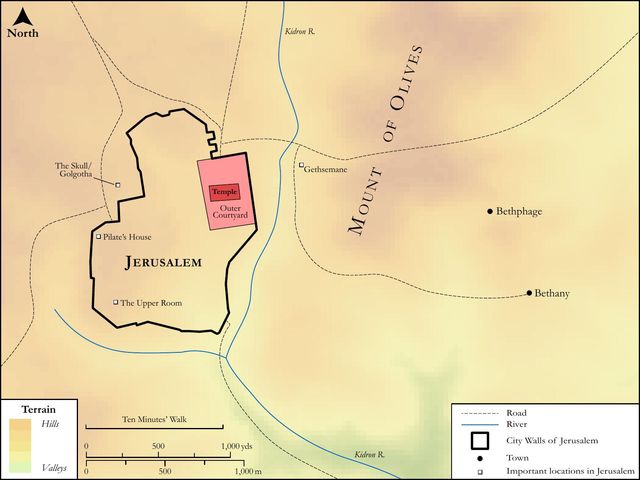
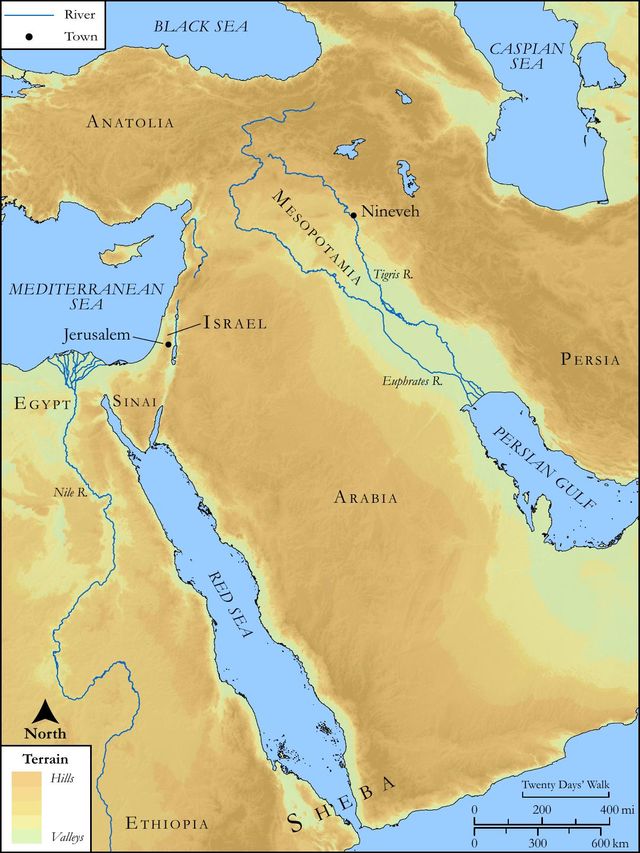
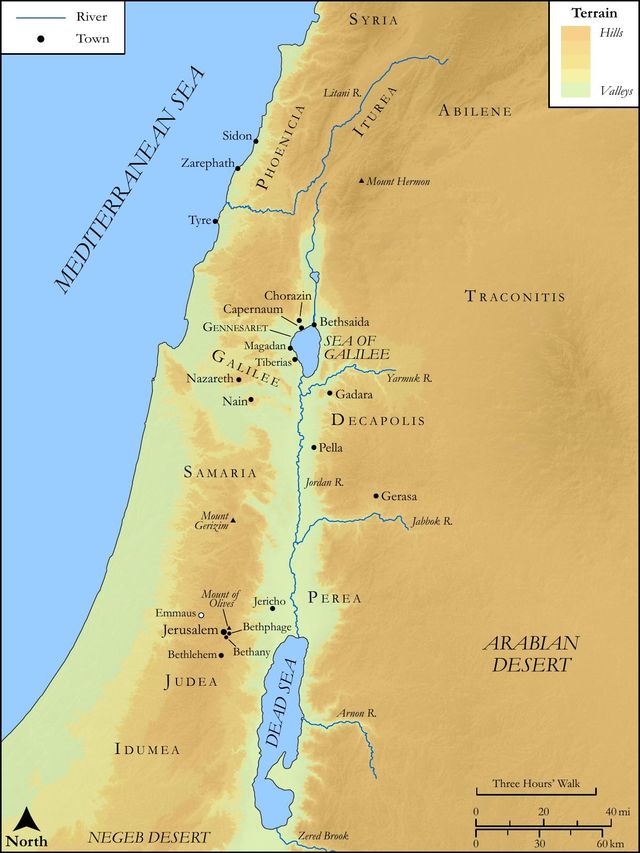
See on the biblical-era maps
Study this verse
Public-domain commentary
Matthew Henry
From his Commentary on the Whole Bible. Henry comments on passages, not single verses — this entry covers Luke 8:22–39. His three-level outline is real structure in the source text, so it is rendered as structure.
We have here two illustrious proofs of the power of our Lord Jesus which we had before - his power over the winds, and his power over the devils. See Mk. 4 and 5.
I.His power over the winds, those powers of the air that are so much a terror to men, especially upon sea, and occasion the death of such multitudes. Observe,
1.Christ ordered his disciples to put to sea, that he might show his glory upon the water, in stilling the waves, and might do an act of kindness to a poor possessed man on the other side the water: He went into a ship with his disciples, Luk 8:22. They that observe Christ's orders may assure themselves of his presence. If Christ sends his disciples, he goes with them. And those may safely and boldly venture any where that have Christ accompanying them. He said, Let us go over unto the other side; for he had a piece of good work to do there. He might have gone by land, a little way about; but he chose to go by water, that he might show his wonders in the deep.
2.Those that put to sea in a calm, yea, and at Christ's word, must yet prepare for a storm, and for the utmost peril in that storm; There came down a storm of wind on the lake (Luk 8:23), as if it were there, and no where else; and presently their ship was so tossed that it was filled with water, and they were in jeopardy of their lives. Perhaps the devil, who is the prince of the power of the air, and who raiseth winds by the permission of God, had some suspicion, from some words which Christ might let fall, that he was coming over the lake now on purpose to cast that legion of devils out of the poor man on the other side, and therefore poured this storm upon the ship he was in, designing, if possible, to have sunk him and prevented that victory.
3.Christ was asleep in the storm, Luk 8:23. Some bodily refreshment he must have, and he chose to take it when it would be least a hindrance to him in his work. The disciples of Christ may really have his gracious presence with them at sea, and in a storm, and yet he may seem as if he were asleep; he may not immediately appear for their relief, no, not when things seem to be brought even to the last extremity. Thus he will try their faith and patience, and quicken them by prayer to awake, and make their deliverance the more welcome when it comes at last.
4.A complaint to Christ of our danger, and the distress his church is in, is enough to engage him to awake, and appear for us, Luk 8:24. They cried, Master, master, we perish! The way to have our fears silenced is to bring them to Christ, and lay them before him. Those that in sincerity call Christ Master, and with faith and fervency call upon him as their Master, may be sure that he will not let them perish. There is no relief for poor souls that are under a sense of guilt, and a fear of wrath, like this, to go to Christ, and call him Master, and say, "I am undone, if thou do not help me."
5.Christ's business is to lay storms, as it is Satan's business to raise them. He can do it; he has done it; he delights to do it: for he came to proclaim peace on earth. He rebuked the wind and the raging of the water, and immediately they ceased (Luk 8:24); not, as at other times, by degrees, but all of a sudden, there was a great calm. Thus Christ showed that, though the devil pretends to be the prince of the power of the air, yet even there he has him in a chain.
6.When our dangers are over, it becomes us to take to ourselves the shame of our own fears and to give to Christ the glory of his power. When Christ had turned the storm into a calm, then were they glad because they were quiet, Psa 107:30. And then,
(1.)Christ gives them a rebuke for their inordinate fear: Where is your faith? Luk 8:25. Note, Many that have true faith have it to seek when they have occasion to use it. They tremble, and are discouraged, if second causes frown upon them. A little thing disheartens them; and where is their faith then?
(2.)They give him the glory of his power: They, being afraid, wondered. Those that had feared the storm, now that the danger was over with good reason feared him that had stilled it, and said one to another, What manner of man is this! They might as well have said, Who is a God like unto thee? For it is God's prerogative to still the noise of the seas, the noise of their waves, Psa 65:7.
II.His power over the devil, the prince of the power of the air.
In the next passage of story he comes into a closer grapple with him than he did when he commanded the winds. Presently after the winds were stilled they were brought to their desired haven, and arrived at the country of the Gadarenes, and there went ashore (Luk 8:26, Luk 8:27); and he soon met with that which was his business over, and which he thought it worth his while to go through a storm to accomplish.
We may learn a great deal out of this story concerning this world of infernal, malignant spirits, which, though not working now ordinarily in the same way as here, yet we are all concerned at all times to stand upon our guard against.
1.These malignant spirits are very numerous. They that had taken possession of this one man called themselves Legion (Luk 8:30), because many devils were entered into him: he had had devils a long time, Luk 8:27. But perhaps those that had been long in possession of him, upon some foresight of our Saviour's coming to make an attack upon them, and finding they could not prevent it by the storm they had raised, sent for recruits, intending this to be a decisive battle, and hoping now to be too hard for him that had cast out so many unclean spirits, and to give him a defeat. They either were, or at least would be thought to be, a legion, formidable as an army with banners; and now, at least, to be, what the twentieth legion of the Roman army, which was long quartered at Chester, was styled, legio victrix - a victorious legion.
2.They have an inveterate enmity to man, and all his conveniences and comforts. This man in whom the devils had got possession, and kept it long, being under their influence, wore no clothes, neither abode in any house (Luk 8:27), though clothing and a habitation are two of the necessary supports of this life. Nay, and because man has a natural dread of the habitations of the dead, they forced this man to abide in the tombs, to make him so much the more a terror to himself and to all about him, so that his soul had as much cause as ever any man's had to be weary of his life, and to choose strangling and death rather.
3.They are very strong, fierce, and unruly, and hate and scorn to be restrained: He was kept bound with chains and in fetters, that he might not be mischievous either to others or to himself, but he broke the bands, Luk 8:29. Note, Those that are ungovernable by any other thereby show that they are under Satan's government; and this is the language of those that are so, even concerning God and Christ, their best friends, that would not either bind them from or bind them to any thing but for their own good: Let us break their bands in sunder. He was driven of the devil. Those that are under Christ's government are sweetly led with the cords of a man and the bands of love; those that are under the devil's government are furiously driven.
4.They are much enraged against our Lord Jesus, and have a great dread and horror of him: When the man whom they had possession of, and who spoke as they would have him, saw Jesus, he roared out as one in an agony, and fell down before him, to deprecate his wrath, and owned him to be the Son of God most high, that was infinitely above him and too hard for him; but protested against having any league or confederacy with him (which might sufficiently have silenced the blasphemous cavils of the scribes and Pharisees): What have I to do with thee? The devils have neither inclination to do service to Christ nor expectation to receive benefit by him: What have we to do with thee? But they dreaded his power and wrath: I beseech thee, torment me not. They do not say, I beseech thee, save me, but only, Torment me not. See whose language they speak that have only a dread of hell as a place of torment, but no desire of heaven as a place of holiness and love.
5.They are perfectly at the command, and under the power, of our Lord Jesus; and they knew it, for they besought him that he would not command them to go eis ton abusson - into the deep, the place of their torment, which they acknowledge he could easily and justly do. O what a comfort is this to the Lord's people, that all the powers of darkness are under the check and control of the Lord Jesus! He has them all in a chain. He can send them to their own place, when he pleaseth.
6.They delight in doing mischief. When they found there was no remedy, but they must quit their hold of this poor man, they begged they might have leave to take possession of a herd of swine, Luk 8:32. When the devil at first brought man into a miserable state he brought a curse likewise upon the whole creation, and that became subject to enmity. And here, as an instance of that extensive enmity of his, when he could not destroy the man, he would destroy the swine. If he could not hurt them in their bodies, he would hurt them in their goods, which sometimes prove a great temptation to men to draw them from Christ, as here. Christ suffered them to enter into the swine, to convince the country what mischief the devil could do in it, if he should suffer him. No sooner had the devils leave than they entered into the swine; and no sooner had they entered into them than the herd ran violently down a steep place into the lake, and were drowned. For it is a miracle of mercy if those whom Satan possesses are not brought to destruction and perdition. This, and other instances, show that that roaring lion and red dragon seeks what and whom he may devour.
7.When the devil's power is broken in any soul that soul recovers itself, and returns into a right frame, which supposes that those whom Satan gets possession of are put out of the possession of themselves: The man out of whom the devils were departed sat at the feet of Jesus, Luk 8:35. While he was under the devil's power he was ready to fly in the face of Jesus; but now he sits at his feet, which is a sign that he is come to his right mind. If God has possession of us, he preserves to us the government and enjoyment of ourselves; but, if Satan has possession of us, he robs us of both. Let his power therefore in our souls be overturned, and let him come whose right our hearts are, and let us give them to him; for we are never more our own than when we are his.
Let us now see what was the effect of this miracle of casting the legion of devils out of this man.
(1.)What effect it had upon the people of that country who had lost their swine by it: The swineherds went and told it both in city and country (Luk 8:34), perhaps with a design to incense people against Christ. They told by what means he that was possessed of the devils was healed (Luk 8:36), that it was by sending the devils into the swine, which was capable of an invidious representation, as if Christ could not have delivered the man out of their hands, but by delivering the swine into them. The people came out, to see what was done, and to enquire into it; and they were afraid (Luk 8:35); they were taken with great fear (Luk 8:37); they were surprised and amazed at it, and knew not what to say to it. They thought more of the destruction of the swine than of the deliverance of their poor afflicted neighbour, and of the country from the terror of his frenzy, which was become a public nuisance; and therefore the whole multitude besought Christ to depart from them for fear he should bring some other judgment upon them; whereas indeed none need to be afraid of Christ that are willing to forsake their sins and give up themselves to him. But Christ took them at their word: He went up into the ship, and returned back again. Those lose their Saviour, and their hopes in him, that love their swine better.
(2.)What effect it had upon the poor man who had recovered himself by it. He desired Christ's company as much as others dreaded it: he besought Christ that he might be with him as others were that had been healed by him of evil spirits and infirmities (Luk 8:2), that Christ might be to him a protector and teacher, and that he might be to Christ for a name and a praise. He was loth to stay among those rude and brutish Gadarenes that desired Christ to depart from them. O gather not my soul with these sinners! But Christ would not take him along with him, but sent him home, to publish among those that knew him the great things God had done for him, that so he might be a blessing to his country, as he had been a burden to it. We must sometimes deny ourselves the satisfaction even of spiritual benefits and comforts, to gain an opportunity of being serviceable to the souls of others. Perhaps Christ knew that, when the resentment of the loss of their swine was a little over, they would be better disposed to consider the miracle, and therefore left the man among them to be a standing monument, and a monitor to them of it.
Historical interpretation
Seven Centuries of Reception
14 surviving comments on this verse. Each one is dated, so this reads as a timeline rather than a list.
Select a marker to jump to its quote. Markers stagger vertically where authors wrote within a few decades of each other.
(de vita Anton.) But if they have no power over swine, the evil spirits have much less against men who are made after the image of God. We ought then to fear God alone, but despise them.
The Gadarenes established a ruling for themselves that they would not come out or view the signs of our Lord. Consequently he drowned their swine so that they would have to come out against their will. “Legion,” which had been chastened, is a symbol of the world. He commanded the demons to enter the swine and not the man. He, concerning whom they had said, “It is by Beelzebub that he casts out,” engaged in battle against Satan on the mountain and against Legion, the chief of his force. When they entered the swine, he drowned them at that very moment. The force of the merciful One who was keeping watch over this man was known by this. They were begging him not to send them out of that region and not to send them to Gehenna.
Many accurate copies have neither "Gerazenes" nor "Gadarenes," but "Gergezenes." For Gadara is a city in Judæa, but neither lake nor sea is found at it; and Geraza is a city of Arabia, having neither lake nor sea near. But Gergeza, from which the Gergezenes are called, is an ancient city near the lake of Tiberias, above which is a rock hanging over the lake, into which they say the swine were dashed down by the devils. But since Gadara and Geraza border upon the land of the Gergezenes, it is probable that the swine were led from thence to their parts.
(Vide Victor. Ant. in Mark 5.) But the shepherds take flight, lest they should perish with the swine. Hence it follows, When they that fed them saw what was done they fled, and went and told it in the city and in the country, and excited the like alarm among the citizens. But the severity of their loss led them to the Saviour; for it follows, Then they went out to see what was done, and came to Jesus; and here remark, that while God punishes men in their substance, He confers a blessing upon their souls. But when they had set out, they see him in his right mind who had been long vexed. It follows, And they found the man out of whom the devils had departed sitting at the feet of Jesus clothed, (whereas before he was naked,) and in his right mind. For he departed not from those feet, where he obtained safety; and so acknowledging the miracle, they were astonished at the cure of the malady, and marvelled at the event; for it follows, And they were afraid. But this thing they discover partly by sight, partly hearing it in words. It follows, They also which saw it told them by what means he that was possessed of the devils was healed. But they ought to have besought the Lord not to depart from them, but to be the guardian of their country, that no evil spirits might come near them; but through fear they lost their own salvation, asking the Saviour to depart. It follows, Then the whole multitude of the country of the Gadarenes round about besought him to depart from, them, for they were taken with great fear.
But as He was departing, the man who had been afflicted will not part from his Saviour, for it follows, Now the man out of whom the devils were departed besought him that he might be with him.
He does not however turn aside from the law of truth, for whatever the Son doth the Father doth. But why does He, who every where charged those who were delivered to tell no one, say to this man who was delivered from the legion, show how great things God hath done for thee? Because in truth that whole country knew not God, and was in bondage to the worship of devils. Or more truly, now that He refers the miracle to His Father, He says, show how great, &c. but when He speaks of Himself He charges to tell no one. But he who was healed of the evil spirits knew Jesus to be God, and therefore published what great things God had done for him. For it follows, And he went through the whole city, &c.
(Hom. 14. in Cantic.) Certain evil spirits imitating the heavenly hosts and the legions of Angels say that they are legions. As also their prince says that he will exalt his throne above the stars that he may be like to the Most High. (Isaiah 14:13.)
People are the authors of their own tribulation. If someone did not live like a swine, the devil would never have received power over him. If he did receive power, it would be power not to destroy but to test him. After the Lord’s coming, the devil could already not corrupt the good, so perhaps he now does not seek the destruction of all people but only of the fickle. A mugger does not lie in wait for armed men but for the defenseless. He who understands that the strong will despise him or the powerful destroy him troubles only the weak with wrongs. Someone says, “Why does God permit this to the devil?” I say, “So that good people may be tested and the wicked punished, for this is the punishment of sin.” This is also according to the law, because the Lord sends fever, trembling, evil spirits, blindness, and all scourges according to the punishment of sinners.
But the devils could not endure the clearness of the light of heaven, as those who have weak eyes can not bear the sun's rays.
Now although the number of those healed by Christ is different in Luke and Matthew, yet the mystery is one and the same. For as he who had a devil is the figure of the Gentile people, the two also in like manner take the figure of the Gentiles. For whereas Noah begat three sons, Shem, Ham, and Japhet; the family of Shem only was called to the possession of God, and from the other two the people of different nations were descended. He (as Luke says) had devils long time, inasmuch as the Gentile people was vexed from the deluge down to our Lord's coming. But he was naked, because the Gentiles lost the garment of their nature and virtue.
Or what are the bodies of the unbelieving but kinds of tombs in which the word of God abides not?
They are carried violently down, for they are reclaimed not by the contemplation of any good deed, but thrust as from a higher place to a lower, along the downward path of iniquity, they perish amidst the waves of this world, shut out from the approach of air. For they who are carried to and fro by the rapid tide of pleasure cannot receive the communication of the Spirit; we see then that man himself is the author of his own misery. For unless a man lived like the swine, the devil would never have received power over him, or received it, not to destroy but to prove him. And perhaps the devil, who after the coming of our Lord can no longer steal away the good, seeks not the destruction of all men, but only the wanton, as the robber lies in wait not for armed men, but the unarmed. When those who kept the herd saw this they fled. For neither the teachers of philosophy nor the chief of the synagogue can bring a cure to perishing mankind. It is Christ alone who takes away the sins of the people.
Or there seems to have been a kind of synagogue in the city of the Gerasenes who besought our Lord to depart, because they were seized with great fear. For the weak mind receives not the word of God, nor can it endure the burden of wisdom. And therefore He no longer troubled them, but ascends from the lower parts to the higher, from the Synagogue to the Church, and returned across the lake. For no one passes from the Church to the Synagogue without endangering his salvation. But whoever desires to pass from the Synagogue to the Church, let him take up his cross, that he may avoid the danger.
(Hom. 28. in Matt.) But as soon as our Lord had departed from the sea, He meets with another more awful wonder. For the demoniac, like an evil slave, when he sees Him confirms his bondage, as it follows, And when he went forth to land, there met him out of the city a certain man, &c.
(Hom. 28. in Matt.) Or, Luke selected from the two the one who was most savage. Hence he gives the most melancholy account of his calamity, adding, And he wore no clothes, neither abode in any house, but in the tombs. But the evil spirits visit the tombs of the dead, to instil into men that dangerous notion, that the souls of the dead become evil spirits.
(ubi sup.) But because the people acknowledged Him to be man, the devils came publishing His divinity, which even the sea had proclaimed by its calmness. Hence it follows, When he saw Jesus he fell down before him, and with a loud voice said, &c.
(ubi sup.) Therefore since no one could hold the possessed, Christ goes to him and addresses him. It follows, And Jesus asked him, saying, What is thy name?
(ubi sup.) But when the Lord had overcome the evil spirits which disturbed His creatures, they thought that because of the enormity of those things which had been done, He would not wait the time of their punishment, and therefore since they could not deny their guilt, they entreat that they may not quickly undergo the penalty. As it follows, And they besought him that he would not command them to go out into the deep.
(ubi sup.) But observe the humility of Christ; for when after conferring so great benefits upon them they sent Him away, He offers no obstacle, but departs, leaving those who had proclaimed themselves unworthy of His teaching. It follows, And he went up into the ship, and returned back again.
(ubi sup.) And so abandoning those who had proclaimed themselves unworthy of His teaching, He appoints as their teacher the man who had been released from the evil spirits.
(ubi sup.) But by their being sent down violently into the lake, it is meant that the Church has been purified, and now that the Gentiles are delivered from the dominion of evil spirits, those who refuse to believe in Christ, carry on their unholy rites in hidden places with dark and secret watchings.
But the Lord granted them permission, that this might be among other things to us an occasion of benefit, and the confidence of our safety. It follows, And he suffered them. We must therefore consider that the evil spirits are hostile to those which are subject to them, and this will be evident from their sending down the swine violently into the waters and choking them; as it follows, Then went the devils out of the man and entered into the swine, and the herd ran violently down a steep place into the lake, and were choked. And this Christ permitted to them which sought it, that it might appear from the event how cruel they are. It was also necessary to show that the Son of God has no less power to foresee than the Father, that equal glory might be manifested in each.
We may also learn this from what befell the herd of swine. Wicked demons are cruel, mischievous, hurtful and treacherous to those who are in their power. The fact clearly proves this, because they hurried the swine over a precipice and drowned them in the waters. Christ granted their request that we might learn from what happened that their disposition is ruthless, bestial, incapable of being softened, and solely intent on doing evil to those whom they can get into their power.If there is anyone among us who is wanton, swinish, filth loving, impure and willingly contaminated with the abominations of sin, God permits such a one to fall into their power and sink into the abyss of damnation. It will never happen that those who love Christ will become subject to them. It will never happen to us as long as we walk in his footsteps, avoid negligence in the performance of what is right, desire those things which are honorable, and belong to that virtuous and praiseworthy lifestyle that Christ has marked out for us by the precepts of the gospel.
(Ep. ad Georgium.) Now the Lord ordains for each class of sinners an appropriate punishment. The fire of Hell unquenchable for fleshly burnings, gnashing of teeth for wanton mirth, intolerable thirst for pleasure and revelry, the worm that dieth not for a crooked and malignant heart, everlasting darkness for ignorance and deceit, the bottomless pit for pride. Hence the deep is assigned to the devils as unto the proud, it follows, And there was there an herd of swine, &c.
For Geraza is a famous city of Arabia, on the other side of the Jordan, close to the mountain of Galaad, which was possessed by the tribe of Manasseh, and not far from the lake of Tiberias, into which the swine were cast headlong.
He enquires not his name as ignorant of it, but that when the demoniac had confessed the plague which he endured, the power of the Healer might shine forth more welcome to him. But the priests also of our time, who through the grace of exorcism are able to cast out devils, are wont to say that the sufferers can no otherwise be cured than by openly telling in confession every thing which either waking or sleeping they have endured from the unclean spirits, and above all when they imagine that the devils seek and obtain the possession of the human body. So also here the confession is added, And he said, Legion, because many devils were entered into him.
Now mystically; Gerasa signifies the Gentile nations, whom after His passion and resurrection Christ visited in His preachers. Hence Gerasa or Gergesa, as some say, is by interpretation "casting out an inhabitant," that is, the devil by whom it was before possessed, or, "a stranger approaching," who before was afar off.
Therefore, the demons went out from the man and entered the pigs, and the herd rushed down the steep bank into the lake and was drowned. This signifies that with the Church now glorified, and the people of the Gentiles liberated from the dominion of demons, they who refuse to believe in Christ conduct their sacrilegious rites in hidden places, submerged in blind and profound curiosity. And it should be noted that the unclean spirits would not have gone even into the pigs unless the kind Savior himself had granted their petition, who certainly could have sent them into the abyss. He wanted to teach us a necessary lesson, namely that we should know that they can harm humans even less by their own power, who could not even harm any animals. However, this power, the just and good God can give to us with hidden justice, but not unjustly.
Which indeed the devils demand, wishing yet longer to mix with mankind.
They feared lest they should again suffer some loss, as they had suffered in the drowning of the swine.
For as one who had been tried by experience, he feared, lest perhaps when far from Jesus he should again become the prey of evil spirits. But the Lord shows him, that though He is not present with him, He can protect by His grace, for it follows, But Jesus sent him away, saying, Return to thine own house, and show how great things God hath done for thee. But he said not, "how great things I have done for thee," giving us an example of humility, that we should attribute all our righteousness to God.
Continue studying Luke 8:33 across the web’s major study libraries — every link below opens this exact verse, chapter, or book on the destination site.
Read & Compare
 BibleGatewayThis verse in more than 200 translations and 70 languages.
 Bible.comThe YouVersion reader — hundreds of translations, reading plans, and highlights.
 ESV.orgCrossway's official English Standard Version reader.
 NET BibleThe NET translation with 60,000+ translators' notes on every rendering decision.
 STEP BibleTyndale House's free study tool — original text, vocabulary, and scholarly resources.
 BibliaLogos Bible Software's free web reader.
 USCCBThe New American Bible (Revised Edition) with the U.S. bishops' study notes.
Commentaries
 BibleHub CommentariesDozens of classic commentaries on this verse, gathered on one page.
 StudyLightMore than 100 commentary sets — the largest collection on the web.
 BibleRefPlain-English commentary on what this verse means, verse by verse.
 Enduring WordDavid Guzik's free commentary on this chapter, widely used by Bible teachers.
 Bible Study ToolsVerse commentary alongside Greek and Hebrew study aids.
Original Language & Research
- BibleHub InterlinearThe verse word by word — original language, transliteration, and English.
- BibleHub LexiconEvery word's original-language definition and Strong's entry.
 Blue Letter BibleDeep-study tools — Strong's numbers, concordance, and word studies.
 CNTR CollationThe earliest Greek manuscripts of this verse, collated letter by letter.
Sermons, Hymns & Audio


TrulyRandomVerse is not affiliated with these sites and doesn’t control their content. They’re linked because they’re genuinely useful.
Summary
Luke 8:33 records the dramatic and climactic moment of Jesus' encounter with the demon-possessed man in the region of the Gerasenes. Following Jesus' permission, a legion of demons exited the man and immediately entered a large herd of swine. The possessed animals then violently rushed down a steep embankment into the nearby lake, where they were drowned, illustrating the destructive and chaotic nature of evil spirits when given agency.
Context
ShowHideLiterary Context
This verse is the culmination of a significant narrative sequence beginning in Luke 8:26. Jesus and His disciples had just crossed the Sea of Galilee, arriving in Gentile territory. They were immediately met by a man who had been grievously afflicted by a multitude of demons for a long time, living in tombs and beyond human control. The demons, recognizing Jesus' divine authority, pleaded with Him not to be cast into the abyss, instead requesting permission to enter a large herd of swine grazing nearby, a request Jesus granted (Luke 8:32). The subsequent destruction of the swine, as described in Luke 8:33, serves as tangible proof of the demons' departure and the man's complete deliverance, setting the stage for the villagers' fearful reaction and the man's subsequent testimony (Luke 8:34-39). This account is also paralleled in Matthew 8:28-34 and Mark 5:1-20.
Historical & Cultural Context
The event takes place in the "country of the Gadarenes" or "Gerasenes," a region east of the Sea of Galilee. This area was predominantly Gentile, which explains the presence of a large herd of swine, animals considered unclean by Jewish law (Leviticus 11:7). The economic impact of losing 2,000 pigs (as specified in Mark's account) would have been substantial for the local swineherds and community, highlighting the cost of deliverance and the villagers' subsequent fear and desire for Jesus to leave. Demonic possession was a recognized phenomenon in that day, often attributed to evil spirits causing physical ailments, mental distress, and social ostracization. Jesus' ability to command these spirits with a word (Luke 4:36) marked Him as possessing unparalleled divine authority, far beyond that of any exorcist or religious leader of the time.
Key Themes
ShowHideThis pivotal verse contributes significantly to several major themes within Luke's Gospel and the broader biblical narrative. Firstly, it powerfully demonstrates Jesus' absolute authority and sovereignty over all spiritual forces, both seen and unseen. The demons, though powerful, are utterly subject to His command, unable to act without His permission and ultimately powerless against His will. Secondly, the immediate and violent destruction of the swine vividly illustrates the inherently destructive and chaotic nature of evil and demonic activity. Left unchecked, evil leads to ruin and death, whether it is the torment of a human soul or the demise of an animal herd. Thirdly, the narrative underscores the immeasurable value Jesus places on a single human soul over any material possession or economic loss. Jesus permitted the destruction of valuable livestock to secure the complete deliverance and restoration of one man, echoing the profound truth that a man profits nothing if he gains the whole world but loses his own soul.
Exposition and Analysis
ShowHideKey Word Analysis
ShowHideThis term, a neuter derivative of daímon, refers to a demonic being or, by extension, a deity. In the New Testament, it consistently denotes evil, subordinate spirits under Satan, distinct from "the Devil" (diabolos), who is Satan himself. Here, it emphasizes the multitude of malevolent entities that had possessed the man.
Derived from eis (to or into) and érchomai (to come), this verb signifies a literal or figurative entry. In this context, it describes the physical movement of the demons from the man into the swine, highlighting the tangible transfer of spiritual influence and the profound shift in their host.
Formed from apó (off, away) and pnígō (to stifle), this word means to stifle by drowning or overgrowth. It vividly describes the immediate and fatal consequence for the swine, emphasizing their suffocation and death in the lake, a direct result of the demonic possession.
Verse Breakdown
ShowHide"Then went the devils out of the man"
This clause marks the successful completion of Jesus' exorcism. The "devils" (demons) are compelled to leave the man, demonstrating Jesus' unparalleled authority over the spiritual realm. Their departure signifies the immediate and complete liberation of the tormented individual.
"and entered into the swine"
Following their expulsion from the man, the demons, with Jesus' permission, immediately inhabit the nearby herd of swine. This transfer highlights their desperate need for a host and Jesus' sovereign control, as they could not act without His express allowance.
"and the herd ran violently down a steep place into the lake"
Upon being possessed, the entire herd of swine reacts with extreme, uncontrolled violence. Their "running violently" and plunging "down a steep place" into the lake indicates the chaotic and self-destructive nature of the demons. The sheer force and lack of control underscore the evil intent of these spirits.
"and were choked"
The final outcome for the swine is their immediate death by drowning in the lake. The term "choked" vividly describes their suffocation. This swift destruction serves as a tangible manifestation of the demons' inherent desire for ruin and provides undeniable proof of their departure from the man and their ultimate fate.
Literary Devices
ShowHideThe passage makes powerful use of several literary devices. Symbolism is evident in the choice of swine as the demons' new hosts; as unclean animals in Jewish culture, they symbolically represent the impurity and destructive nature of the demons themselves. The lake, into which the herd plunges, can symbolize a place of judgment or the abyss, a common biblical motif for the confinement of evil. The narrative also employs Dramatic Irony, as the demons, having pleaded not to be sent into the abyss, are ultimately instrumental in leading their new hosts to a watery grave, a form of destruction that parallels their eventual confinement. The Contrast between the restored, sane man and the violently self-destructive herd highlights the transformative power of Jesus' presence versus the chaotic influence of evil. The sheer scale of the event, involving a large "herd" and a "violent" rush, uses a form of Hyperbole to emphasize the immense power of the demons and, by extension, the even greater power of Jesus who commands them.
Theological and Thematic Connections
ShowHideThis dramatic account profoundly illustrates the reality of spiritual warfare and Jesus' absolute supremacy within it. It underscores that evil, though real and destructive, is ultimately subordinate to God's authority. Jesus' permission for the demons to enter the swine, leading to their demise, serves not as a casual act but as a powerful demonstration of the inherent self-destructive nature of evil and the immense value God places on human life and deliverance. This event foreshadows the ultimate defeat of all evil forces and the complete liberation Christ offers to humanity.
Reflection and Application
ShowHideThe narrative of the Gerasene demoniac and the swine offers profound insights for contemporary believers. It provides immense hope for anyone struggling with spiritual bondage, addiction, or seemingly insurmountable personal battles, reminding us that Jesus' power to deliver is absolute and extends to the deepest forms of human suffering. This account also serves as a stark reminder of the reality of a spiritual realm and the active presence of evil forces, yet it simultaneously reassures us that Jesus has decisively conquered these forces. For those in Christ, there is no power of darkness that can ultimately prevail against God's redemptive will. Furthermore, the willingness of Jesus to allow significant material loss for the sake of one human soul challenges us to re-evaluate our own priorities. Are we, like the villagers who feared Jesus more than they rejoiced over the delivered man, sometimes more concerned with our material comforts and economic stability than with the spiritual well-being and freedom of others? This passage calls us to prioritize people, recognizing their inherent worth in God's eyes, and to trust in Jesus' sovereign power over all circumstances, even those that seem chaotic or costly.
Questions for Reflection
ShowHideFAQ
ShowHideWhy did Jesus allow the demons to enter the swine?
ShowHideJesus permitted the demons to enter the swine for several reasons, all demonstrating His divine wisdom and authority. Firstly, it provided undeniable, tangible proof to the villagers that the demons had truly departed from the man. The immediate and violent destruction of the herd served as a powerful, visible sign of the spiritual transaction that had occurred. Secondly, it revealed the inherently destructive nature of the demonic realm; left to their own devices, these evil spirits seek only chaos, ruin, and death, as evidenced by the swine's immediate demise. Thirdly, it underscored Jesus' absolute authority over the demons; they could not act without His express permission, and even then, their actions were ultimately contained and served His purposes. Finally, it highlighted the immense value Jesus places on a single human soul over any material possession, even a large herd of animals. The cost of the swine was insignificant compared to the liberation and restoration of the man's life.
Why were there swine in a region that Jesus, a Jew, was visiting?
ShowHideThe region where this event occurred is identified as the "country of the Gadarenes" or "Gerasenes" (depending on the Gospel account), which was located on the eastern side of the Sea of Galilee. This area was part of the Decapolis, a group of ten cities with a strong Hellenistic (Greek) influence. Unlike the predominantly Jewish regions of Galilee and Judea, the Decapolis had a significant Gentile population. For Gentiles, raising pigs was a common agricultural practice, and pork was a regular part of their diet. Therefore, the presence of a large herd of swine would be entirely consistent with the cultural and economic practices of this Gentile-dominated region, even though pigs were considered unclean animals under Jewish dietary laws (Leviticus 11:7).
Christ-Centered Fulfillment
ShowHideThe dramatic expulsion of demons into the swine and their subsequent destruction in Luke 8:33 serves as a powerful foreshadowing of Christ's ultimate victory over the forces of evil. Jesus' command over the legion of demons demonstrates His inherent deity and His mission to dismantle the kingdom of darkness. This event points forward to the cross, where Christ decisively triumphed over "principalities and powers," disarming them and making a public spectacle of them (Colossians 2:15). The immediate and self-destructive plunge of the swine into the lake symbolizes the ultimate fate of Satan and his demonic forces, who will eventually be cast into the "lake of fire" for eternal judgment (Revelation 20:10). More broadly, Jesus' deliverance of the man from profound spiritual bondage signifies the spiritual liberation He offers to all humanity, freeing us from the enslavement to sin and the power of the devil (1 John 3:8). Through His atoning work, Christ provides not just temporary relief but eternal freedom, inviting all who believe to experience the new life and dominion found in His kingdom (Romans 6:18).