


Luke 8:23
Bible text: King James Version (1769 Blayney text) · Public domain
Bible text: King James Version with Strong's numbers · Public domain
Bible text: Berean Standard Bible · Public domain
Bible text: American Standard Version (1901) · Public domain
Bible text: World English Bible, Messianic edition · Public domain
Bible text: Geneva Bible (1599) · Public domain
Bible text: Young's Literal Translation · Public domain
- πλεόντωνpleontōnWhen were sailingG4126V-PAP-GPMVerb Present Active Participle Genitive Plural Masculine
- δὲdethenG1161CONJConjunction
- αὐτῶνautōntheyG846P-GPMPersonal pronoun Genitive Plural Masculine
- ἀφύπνωσενaphupnōsenHe fell asleepG879V-AAI-3SVerb Aorist Active Indicative 3rd Singular
- καὶkaiAndG2532CONJConjunction
- κατέβηkatebēcame downG2597V-2AAI-3SVerb 2nd Aorist Active Indicative 3rd Singular
- λαῖλαψlailapsa stormG2978N-NSFNoun Nominative Singular Feminine
- ἀνέμουanemouof windG417N-GSMNoun Genitive Singular Masculine
- εἰςeisonG1519PREPPreposition
- τὴνtēntheG3588T-ASFDefinite article Accusative Singular Feminine
- λίμνηνlimnēnlakeG3041N-ASFNoun Accusative Singular Feminine
- καὶkaiandG2532CONJConjunction
- συνεπληροῦντοsuneplērountothey were being swampedG4845V-IPI-3PVerb Imperfect Passive Indicative 3rd Plural
- καὶkaiandG2532CONJConjunction
- ἐκινδύνευονekinduneuonwere in dangerG2793V-IAI-3PVerb Imperfect Active Indicative 3rd Plural
English is a literal word-by-word gloss of the Greek, not the KJV's wording. Why?
This is the original text the KJV's translators worked from — each Greek word with its own literal English meaning in this verse, prepared by scholars at Tyndale House, Cambridge. The KJV translates whole sentences, not word by word, so its wording differs: one Greek word can become several English words, and the KJV may choose “charity” where the gloss reads “love”. Both are faithful — they answer different questions. For the KJV's own rendering, switch to the KJV text.
Details
See on the biblical-era maps
Study this verse
Public-domain commentary
Matthew Henry
From his Commentary on the Whole Bible. Henry comments on passages, not single verses — this entry covers Luke 8:22–39. His three-level outline is real structure in the source text, so it is rendered as structure.
We have here two illustrious proofs of the power of our Lord Jesus which we had before - his power over the winds, and his power over the devils. See Mk. 4 and 5.
I.His power over the winds, those powers of the air that are so much a terror to men, especially upon sea, and occasion the death of such multitudes. Observe,
1.Christ ordered his disciples to put to sea, that he might show his glory upon the water, in stilling the waves, and might do an act of kindness to a poor possessed man on the other side the water: He went into a ship with his disciples, Luk 8:22. They that observe Christ's orders may assure themselves of his presence. If Christ sends his disciples, he goes with them. And those may safely and boldly venture any where that have Christ accompanying them. He said, Let us go over unto the other side; for he had a piece of good work to do there. He might have gone by land, a little way about; but he chose to go by water, that he might show his wonders in the deep.
2.Those that put to sea in a calm, yea, and at Christ's word, must yet prepare for a storm, and for the utmost peril in that storm; There came down a storm of wind on the lake (Luk 8:23), as if it were there, and no where else; and presently their ship was so tossed that it was filled with water, and they were in jeopardy of their lives. Perhaps the devil, who is the prince of the power of the air, and who raiseth winds by the permission of God, had some suspicion, from some words which Christ might let fall, that he was coming over the lake now on purpose to cast that legion of devils out of the poor man on the other side, and therefore poured this storm upon the ship he was in, designing, if possible, to have sunk him and prevented that victory.
3.Christ was asleep in the storm, Luk 8:23. Some bodily refreshment he must have, and he chose to take it when it would be least a hindrance to him in his work. The disciples of Christ may really have his gracious presence with them at sea, and in a storm, and yet he may seem as if he were asleep; he may not immediately appear for their relief, no, not when things seem to be brought even to the last extremity. Thus he will try their faith and patience, and quicken them by prayer to awake, and make their deliverance the more welcome when it comes at last.
4.A complaint to Christ of our danger, and the distress his church is in, is enough to engage him to awake, and appear for us, Luk 8:24. They cried, Master, master, we perish! The way to have our fears silenced is to bring them to Christ, and lay them before him. Those that in sincerity call Christ Master, and with faith and fervency call upon him as their Master, may be sure that he will not let them perish. There is no relief for poor souls that are under a sense of guilt, and a fear of wrath, like this, to go to Christ, and call him Master, and say, "I am undone, if thou do not help me."
5.Christ's business is to lay storms, as it is Satan's business to raise them. He can do it; he has done it; he delights to do it: for he came to proclaim peace on earth. He rebuked the wind and the raging of the water, and immediately they ceased (Luk 8:24); not, as at other times, by degrees, but all of a sudden, there was a great calm. Thus Christ showed that, though the devil pretends to be the prince of the power of the air, yet even there he has him in a chain.
6.When our dangers are over, it becomes us to take to ourselves the shame of our own fears and to give to Christ the glory of his power. When Christ had turned the storm into a calm, then were they glad because they were quiet, Psa 107:30. And then,
(1.)Christ gives them a rebuke for their inordinate fear: Where is your faith? Luk 8:25. Note, Many that have true faith have it to seek when they have occasion to use it. They tremble, and are discouraged, if second causes frown upon them. A little thing disheartens them; and where is their faith then?
(2.)They give him the glory of his power: They, being afraid, wondered. Those that had feared the storm, now that the danger was over with good reason feared him that had stilled it, and said one to another, What manner of man is this! They might as well have said, Who is a God like unto thee? For it is God's prerogative to still the noise of the seas, the noise of their waves, Psa 65:7.
II.His power over the devil, the prince of the power of the air.
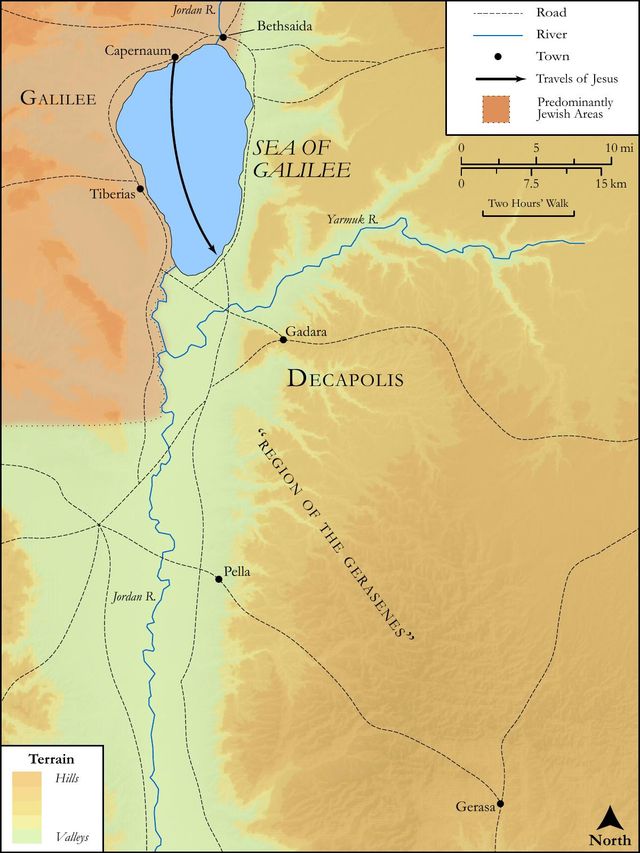
In the next passage of story he comes into a closer grapple with him than he did when he commanded the winds. Presently after the winds were stilled they were brought to their desired haven, and arrived at the country of the Gadarenes, and there went ashore (Luk 8:26, Luk 8:27); and he soon met with that which was his business over, and which he thought it worth his while to go through a storm to accomplish.
We may learn a great deal out of this story concerning this world of infernal, malignant spirits, which, though not working now ordinarily in the same way as here, yet we are all concerned at all times to stand upon our guard against.
1.These malignant spirits are very numerous. They that had taken possession of this one man called themselves Legion (Luk 8:30), because many devils were entered into him: he had had devils a long time, Luk 8:27. But perhaps those that had been long in possession of him, upon some foresight of our Saviour's coming to make an attack upon them, and finding they could not prevent it by the storm they had raised, sent for recruits, intending this to be a decisive battle, and hoping now to be too hard for him that had cast out so many unclean spirits, and to give him a defeat. They either were, or at least would be thought to be, a legion, formidable as an army with banners; and now, at least, to be, what the twentieth legion of the Roman army, which was long quartered at Chester, was styled, legio victrix - a victorious legion.
2.They have an inveterate enmity to man, and all his conveniences and comforts. This man in whom the devils had got possession, and kept it long, being under their influence, wore no clothes, neither abode in any house (Luk 8:27), though clothing and a habitation are two of the necessary supports of this life. Nay, and because man has a natural dread of the habitations of the dead, they forced this man to abide in the tombs, to make him so much the more a terror to himself and to all about him, so that his soul had as much cause as ever any man's had to be weary of his life, and to choose strangling and death rather.
3.They are very strong, fierce, and unruly, and hate and scorn to be restrained: He was kept bound with chains and in fetters, that he might not be mischievous either to others or to himself, but he broke the bands, Luk 8:29. Note, Those that are ungovernable by any other thereby show that they are under Satan's government; and this is the language of those that are so, even concerning God and Christ, their best friends, that would not either bind them from or bind them to any thing but for their own good: Let us break their bands in sunder. He was driven of the devil. Those that are under Christ's government are sweetly led with the cords of a man and the bands of love; those that are under the devil's government are furiously driven.
4.They are much enraged against our Lord Jesus, and have a great dread and horror of him: When the man whom they had possession of, and who spoke as they would have him, saw Jesus, he roared out as one in an agony, and fell down before him, to deprecate his wrath, and owned him to be the Son of God most high, that was infinitely above him and too hard for him; but protested against having any league or confederacy with him (which might sufficiently have silenced the blasphemous cavils of the scribes and Pharisees): What have I to do with thee? The devils have neither inclination to do service to Christ nor expectation to receive benefit by him: What have we to do with thee? But they dreaded his power and wrath: I beseech thee, torment me not. They do not say, I beseech thee, save me, but only, Torment me not. See whose language they speak that have only a dread of hell as a place of torment, but no desire of heaven as a place of holiness and love.
5.They are perfectly at the command, and under the power, of our Lord Jesus; and they knew it, for they besought him that he would not command them to go eis ton abusson - into the deep, the place of their torment, which they acknowledge he could easily and justly do. O what a comfort is this to the Lord's people, that all the powers of darkness are under the check and control of the Lord Jesus! He has them all in a chain. He can send them to their own place, when he pleaseth.
6.They delight in doing mischief. When they found there was no remedy, but they must quit their hold of this poor man, they begged they might have leave to take possession of a herd of swine, Luk 8:32. When the devil at first brought man into a miserable state he brought a curse likewise upon the whole creation, and that became subject to enmity. And here, as an instance of that extensive enmity of his, when he could not destroy the man, he would destroy the swine. If he could not hurt them in their bodies, he would hurt them in their goods, which sometimes prove a great temptation to men to draw them from Christ, as here. Christ suffered them to enter into the swine, to convince the country what mischief the devil could do in it, if he should suffer him. No sooner had the devils leave than they entered into the swine; and no sooner had they entered into them than the herd ran violently down a steep place into the lake, and were drowned. For it is a miracle of mercy if those whom Satan possesses are not brought to destruction and perdition. This, and other instances, show that that roaring lion and red dragon seeks what and whom he may devour.
7.When the devil's power is broken in any soul that soul recovers itself, and returns into a right frame, which supposes that those whom Satan gets possession of are put out of the possession of themselves: The man out of whom the devils were departed sat at the feet of Jesus, Luk 8:35. While he was under the devil's power he was ready to fly in the face of Jesus; but now he sits at his feet, which is a sign that he is come to his right mind. If God has possession of us, he preserves to us the government and enjoyment of ourselves; but, if Satan has possession of us, he robs us of both. Let his power therefore in our souls be overturned, and let him come whose right our hearts are, and let us give them to him; for we are never more our own than when we are his.
Let us now see what was the effect of this miracle of casting the legion of devils out of this man.
(1.)What effect it had upon the people of that country who had lost their swine by it: The swineherds went and told it both in city and country (Luk 8:34), perhaps with a design to incense people against Christ. They told by what means he that was possessed of the devils was healed (Luk 8:36), that it was by sending the devils into the swine, which was capable of an invidious representation, as if Christ could not have delivered the man out of their hands, but by delivering the swine into them. The people came out, to see what was done, and to enquire into it; and they were afraid (Luk 8:35); they were taken with great fear (Luk 8:37); they were surprised and amazed at it, and knew not what to say to it. They thought more of the destruction of the swine than of the deliverance of their poor afflicted neighbour, and of the country from the terror of his frenzy, which was become a public nuisance; and therefore the whole multitude besought Christ to depart from them for fear he should bring some other judgment upon them; whereas indeed none need to be afraid of Christ that are willing to forsake their sins and give up themselves to him. But Christ took them at their word: He went up into the ship, and returned back again. Those lose their Saviour, and their hopes in him, that love their swine better.
(2.)What effect it had upon the poor man who had recovered himself by it. He desired Christ's company as much as others dreaded it: he besought Christ that he might be with him as others were that had been healed by him of evil spirits and infirmities (Luk 8:2), that Christ might be to him a protector and teacher, and that he might be to Christ for a name and a praise. He was loth to stay among those rude and brutish Gadarenes that desired Christ to depart from them. O gather not my soul with these sinners! But Christ would not take him along with him, but sent him home, to publish among those that knew him the great things God had done for him, that so he might be a blessing to his country, as he had been a burden to it. We must sometimes deny ourselves the satisfaction even of spiritual benefits and comforts, to gain an opportunity of being serviceable to the souls of others. Perhaps Christ knew that, when the resentment of the loss of their swine was a little over, they would be better disposed to consider the miracle, and therefore left the man among them to be a standing monument, and a monitor to them of it.
Historical interpretation
Four Centuries of Reception
8 surviving comments on this verse. Each one is dated, so this reads as a timeline rather than a list.
Select a marker to jump to its quote. Markers stagger vertically where authors wrote within a few decades of each other.
He who was sleeping was awakened and cast the sea into a sleep. He reveals the wakefulness of his divinity that never sleeps by the wakefulness of the sea that was now sleeping. He rebuked the wind and it became still. What is this power, or what is this goodness of Jesus? See, he subjected by force that which was not his. Our Lord showed that he was the Son of the Creator by means of the wind of the sea and by the spirits and demons that he silenced.
We are told above, moreover, that He passed the night in prayer. How then does He here fall asleep in a storm? The security of power is expressed, that while all were afraid, He alone lay fearless; but He lay asleep in the body, while in the mind he was in the mystery of divinity. For nothing happens without the Word.
Our Lord therefore, who knew that He came upon earth for a divine mystery, having left His kinsfolk, went up into the ship.
You must remember that no one can pass from the course of this life without temptations, for temptation is the trial of faith. We are therefore subject to the storms of spiritual wickedness, but as watchful sailors we must awake the Pilot, who does not obey but commands the winds, who although He now no longer sleeps in the sleep of His own body, yet let us beware, lest through the sleep of our bodies He is to us asleep and at rest. But they are rightly reproved who feared, when Christ was present; since he surely who clings to Him can in no wise perish.
(Hom. 27. in Matt.) Luke indeed avoids the question which might be put to him with regard to the order of time, saying, that He went into a ship on a certain day. Now if the storm had arisen when our Lord was awake, the disciples either had not feared, or not believed that He could do such a thing. For this cause He sleeps, giving them an occasion for fear; for it follows, But as they sailed he fell asleep; and there came down a storm of wind on the lake.
We are also sailing on a voyage, not from one land to another but from earth to heaven. Let us prepare our power of reasoning as a pilot able to conduct us on high, and let us gather a crew obedient to it. Let us prepare a strong ship, the kind that the buffeting and discouragements of this life will not submerge, or the wind of false pretense raise up, but will be sleek and swift. If we prepare the ship, pilot and the crew in this way, we will sail with a favoring wind and draw to ourselves the Son of God, the true Pilot. He will not permit our ship to be overwhelmed, even if countless winds blow. He will rebuke the winds and the sea and will bring about a great calm in place of the tempest. COMMENTARY ON ST.
When the disciples saw that all men received help from Christ, it seemed fitting that they themselves also should in turn rejoice in the benefits of Christ. For no one regards that which happens in the person of another equally with that to himself. The Lord therefore exposed the disciples to the sea and the winds, as it follows, Now it came to pass on a certain day that he went into a ship with his disciples; and he said unto them, Let us go over unto the other side of the lake: and they launched forth.
(ubi sup.) But it seems to have been especially and wonderfully ordained that they should not seek His assistance when first the storm began to affect the boat, but after the danger had increased, in order that the power of the Divine Majesty might be made more manifest. Hence it is said, And they were filled with water, and were in jeopardy. This indeed our Lord allowed for the sake of trial, that having confessed their danger they should acknowledge the greatness of the miracle. Hence when their great danger had driven them into intolerable fear, having no other hope of safety but the Lord of power Himself, they awoke Him. It follows, And they came to him, and awoke him, saying, Master, we perish.
But it could not be that they should perish while the Almighty was with them. Christ then arose, Who has power over all things, and immediately quells the storm and the violence of the wind, and the tempest ceased, and there was a calm. Herein He shows Himself to be God, to Whom it is said, Thou rulest the raging of the sea: when the waves thereof arise, thou stillest them (Ps. 89:10.). So then as He sailed, our Lord manifested both natures in one and the same person, seeing that He who as man slept in the ship, as God by His word stilled the raging of the sea.
But together with the raging of the waters, He quiets also the tumult of their souls, as it follows, And he said unto them, Where is your faith? By which word He showed, that it is not so much the assault of temptation which causes fear, as faint-heartedness. For as gold is proved in the fire, so is faith in temptation.
When the tempest was quelled at the command of Christ, the disciples in astonishment whispered one to the other, as it follows, And they being afraid wondered, &c. Now the disciples said not this as ignorant of Him, for they knew that He was God, and Jesus the Son of God. But they marvel at the exceeding vastness of His natural power, and the glory of His divinity, although He was like to us, and visible in the flesh. Hence they say, Who is this? that is, of what manner of man? how great, and with what great power and majesty? for it is a mighty work, a lordly command, no abject petition.
Or, it was not His disciples, but the sailors and others in the ship who wondered.
But allegorically, the sea or lake is the dark and bitter tide of the world, the ship is the wood of the cross, by help of which the faithful, having passed the waves of this world, reach the shore of a heavenly country.
His disciples also, when summoned, enter in with Him. Hence He says, If any one will come after me, let him deny himself, and take up his cross, and follow me. (Mat. 16:24.) While His disciples are sailing, that is, the faithful passing through this world, and meditating in their minds the rest of the world to come, and by the breath of the Holy Spirit, or also their own exertions, eagerly leaving behind them the unbelieving pride of the world, suddenly our Lord fell asleep, that is, the time of our Lord's passion was come, and the storm descended. For when our Lord entered the sleep of death upon the cross, the waves of persecution rose, stirred up by the breath of the devil, but while the patience of the Lord is not disturbed by the waves, the faint hearts of the disciples are shaken and tremble. They awoke our Lord lest they should perish while He slept, because having seen His death they wish for His resurrection, for if that were delayed they would perish for ever. He rises therefore and rebukes the wind, since by His sudden rising again He put down the pride of the devil who had the power of death. (Heb. 2:14.) But He makes the tempest of nature to cease, since by His resurrection He baffled the rage of the Jews, who plotted His death.
In like manner, when He appeared after His death to His disciples, He upbraided them with their unbelief, (Mark 16:14.) and thus having calmed the swelling waves, He made plain to all the power of His divinity.
As they were sailing, He fell asleep. Christ fell asleep while the disciples were sailing because, as the faithful tread the world and contemplate in their minds the rest of the future kingdom, and, either by the favorable breath of the Holy Spirit or by their own arduous rowing efforts, cast behind them with zeal the infidel pomp of the world, suddenly the time of the Lord's passion arrived. Hence, Mark rightly attests that this happened at the imminent hour of night to signify not only the Lord's sleep but also the very hour of the declining light.
And a storm of wind descended on the lake, and they were filling with water and were in danger. As the Lord was ascending the stern of the cross, where He would embrace the sleep of death, the waves of blasphemous persecutors, stirred by demonic agents, rise up. Yet, it is not His patience that is disturbed by these waves, but the weakness of the disciples is shaken, terrified, and endangered.
Continue studying Luke 8:23 across the web’s major study libraries — every link below opens this exact verse, chapter, or book on the destination site.
Read & Compare
 BibleGatewayThis verse in more than 200 translations and 70 languages.
 Bible.comThe YouVersion reader — hundreds of translations, reading plans, and highlights.
 ESV.orgCrossway's official English Standard Version reader.
 NET BibleThe NET translation with 60,000+ translators' notes on every rendering decision.
 STEP BibleTyndale House's free study tool — original text, vocabulary, and scholarly resources.
 BibliaLogos Bible Software's free web reader.
 USCCBThe New American Bible (Revised Edition) with the U.S. bishops' study notes.
Commentaries
 BibleHub CommentariesDozens of classic commentaries on this verse, gathered on one page.
 StudyLightMore than 100 commentary sets — the largest collection on the web.
 BibleRefPlain-English commentary on what this verse means, verse by verse.
 Enduring WordDavid Guzik's free commentary on this chapter, widely used by Bible teachers.
 Bible Study ToolsVerse commentary alongside Greek and Hebrew study aids.
Original Language & Research
- BibleHub InterlinearThe verse word by word — original language, transliteration, and English.
- BibleHub LexiconEvery word's original-language definition and Strong's entry.
 Blue Letter BibleDeep-study tools — Strong's numbers, concordance, and word studies.
 CNTR CollationThe earliest Greek manuscripts of this verse, collated letter by letter.
Sermons, Hymns & Audio


TrulyRandomVerse is not affiliated with these sites and doesn’t control their content. They’re linked because they’re genuinely useful.
Summary
Luke 8:23 vividly portrays a critical moment in Jesus' ministry, showcasing His profound humanity alongside the sudden and life-threatening perils faced by His disciples. As they embarked on a seemingly routine journey across the Sea of Galilee, Jesus, weary from His relentless teaching and healing, succumbed to deep sleep. Unbeknownst to Him, a violent squall rapidly descended upon the lake, engulfing their vessel and placing the lives of everyone on board in dire jeopardy. This scene sets the stage for a powerful demonstration of divine authority over creation and a profound lesson in faith amidst overwhelming adversity.
Context
ShowHideLiterary Context
This verse is strategically placed within Luke's narrative, immediately following a series of parables, most notably the Parable of the Sower and its subsequent explanations, which highlight the varied responses to God's Word. Jesus also defines His true family as those who hear and do the word of God. The journey across the lake, initiated by Jesus' instruction to "go over unto the other side of the lake," serves as a transition from His public teaching ministry on the shore to an encounter with a demon-possessed man in the country of the Gerasenes. This transition is not merely geographical but also thematic, moving from teaching about the kingdom to demonstrating the King's power over natural forces and spiritual darkness. The storm, therefore, interrupts a deliberate movement and provides a dramatic backdrop for the ensuing miracle.
Historical & Cultural Context
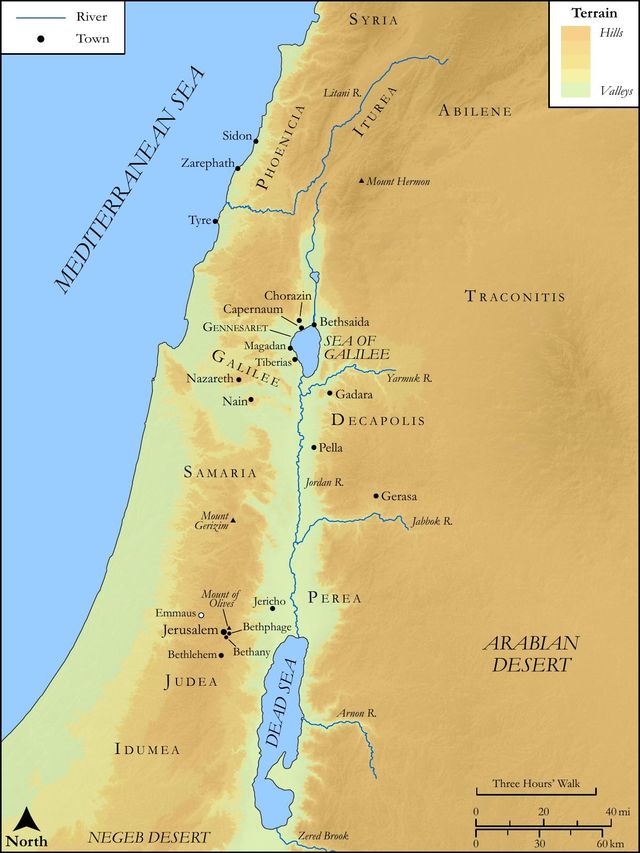
The Sea of Galilee, or Lake Gennesaret, is a freshwater lake situated in a deep basin approximately 700 feet below sea level, surrounded by steep hills. This unique topography makes it highly susceptible to sudden and violent windstorms. Cold air descending rapidly from the surrounding hills can collide with the warm, moist air over the lake, creating intense, localized squalls that can develop with little to no warning, transforming the calm waters into a raging tempest within minutes. For fishermen, even experienced ones like many of Jesus' disciples, such storms posed an existential threat, often capsizing boats and leading to drownings. The description of the boat being "filled [with water]" and the disciples being "in jeopardy" is not an exaggeration but a realistic portrayal of the immediate and life-threatening danger inherent to sailing on this particular body of water.
Key Themes
ShowHideLuke 8:23 contributes significantly to several overarching themes within the Gospel. Firstly, it powerfully underscores Jesus' Humanity and Dependence. The fact that Jesus "fell asleep" highlights His genuine human fatigue, vulnerability, and need for rest, contrasting sharply with His divine power that is about to be revealed. Secondly, the sudden and severe "storm of wind" introduces the theme of Unexpected Adversity and Chaos. Life's trials and dangers can arise without warning, even when one is in the very presence of Christ, challenging faith and revealing human limitations. Thirdly, the disciples being "filled [with water], and were in jeopardy" emphasizes the theme of Human Vulnerability and Desperation. Despite their experience, they were utterly helpless against the forces of nature, leading to a desperate cry for help in the subsequent verse, Luke 8:24. This sets the stage for Jesus' display of sovereign authority, which is a key theme throughout Luke's Gospel, demonstrating His power over all creation, including the elements.
Exposition and Analysis
ShowHideKey Word Analysis
ShowHideThis verb (G879) literally means "to become awake" but is used idiomatically here to mean "to drop (off) in slumber." It emphasizes the depth and naturalness of Jesus' sleep, suggesting profound exhaustion. This is a crucial detail, highlighting His genuine humanity and physical limitations, which makes His subsequent display of power even more remarkable.
The word (G2978) denotes a "whirlwind" or "squall," specifically a sudden, violent tempest. It is not merely a strong wind (ánemos, G417, also present in the phrase "storm of wind") but a destructive, swirling force, indicating the extreme and perilous nature of the weather event. This term conveys the intensity and unexpected ferocity of the natural phenomenon.
This verb (G2793) means "to undergo peril," "to be in danger," or "to be at risk." It vividly describes the life-threatening situation the disciples faced. Their lives were genuinely imperiled, emphasizing the severity of the storm and the imminent danger of drowning, which underscores their desperate plea to Jesus.
Verse Breakdown
ShowHide"But as they sailed he fell asleep:"
The conjunction "But" (G1161, dé) introduces a contrast or a new development. While the disciples were actively engaged in sailing (G4126, pléō), Jesus was in a state of deep repose. This clause highlights Jesus' humanity and weariness, a direct consequence of His demanding ministry. His sleep is profound, indicating a complete surrender to rest, even amidst the activity of the boat.
"and there came down a storm of wind on the lake;"
The conjunction "and" (G2532, kaí) introduces the sudden and dramatic shift in circumstances. The phrase "came down" (G2597, katabaínō) emphasizes the rapid and forceful descent of the storm, typical of the Sea of Galilee. The "storm of wind" (G2978, laîlaps G417, ánemos) indicates a violent, swirling tempest, not merely a strong breeze. Its sudden appearance on the lake (G3041, límnē) underscores the unexpected nature of the crisis.
"and they were filled [with water], and were in jeopardy."
This final clause describes the immediate and dire consequences of the storm. The boat was being "filled [with water]" (G4845, symplēróō), meaning it was swamping or taking on so much water that it was on the verge of sinking. Consequently, the disciples "were in jeopardy" (G2793, kindyneúō), facing imminent danger to their lives, a situation that would naturally evoke fear and desperation, setting the stage for their urgent appeal to Jesus.
Literary Devices
ShowHideLuke 8:23 employs several literary devices to heighten the drama and convey its theological significance. Juxtaposition is prominent, contrasting Jesus' profound sleep with the raging tempest and the disciples' mounting terror. This stark contrast emphasizes both Jesus' humanity (His need for rest) and His divine composure (His ability to sleep through such chaos). Symbolism is also at play, with the "storm of wind" serving as a powerful symbol of life's unexpected trials, the forces of chaos, and the spiritual opposition that believers may face. The boat, carrying Jesus and His disciples, can be seen as a symbol of the Church or the individual believer's journey through a turbulent world. Finally, the verse contains an element of Foreshadowing, as the disciples' peril and Jesus' calm prefigure His ultimate victory over death and chaos, hinting at His sovereign power that will be fully revealed in the subsequent verses when He calms the storm.
Theological and Thematic Connections
ShowHideLuke 8:23 is deeply theological, revealing profound truths about Jesus' dual nature and the nature of discipleship. It affirms Christ's genuine humanity, demonstrating His physical vulnerability to exhaustion, yet simultaneously sets the stage for a dramatic display of His divine authority over creation. The disciples' predicament underscores the reality that following Jesus does not exempt one from life's storms, but rather, it is in these storms that one's faith is tested and God's power is revealed. The immediate danger they faced highlights human helplessness in the face of overwhelming forces, pointing to the necessity of divine intervention. This passage serves as a powerful reminder that even when God seems "asleep" or inactive in our trials, He is present, and His power is ultimately supreme over all circumstances.
Reflection and Application
ShowHideLuke 8:23 offers a timeless and deeply resonant message for believers navigating the complexities of life. It reminds us that even with Christ in our "boat," we are not immune to "storms"—sudden crises, overwhelming fears, or periods of intense spiritual or emotional turbulence. The disciples, experienced fishermen, were utterly terrified, demonstrating that expertise and effort are often insufficient against life's fiercest tempests. This verse invites us to honestly assess our own reactions when unexpected adversity strikes. Do we, like the disciples, succumb to panic and fear, or do we remember that Christ, though seemingly "asleep" or inactive from our limited perspective, is indeed present and sovereign? It challenges us to cultivate a deeper trust in His ultimate control, even when circumstances seem dire and His intervention feels delayed. The passage sets a crucial foundation for the subsequent lesson in faith, encouraging us to cry out to Him and to rest in the assurance that He has power over all things, including the storms that threaten to overwhelm us.
Questions for Reflection
ShowHideFAQ
ShowHideWhy was Jesus asleep during such a violent storm?
ShowHideJesus' sleep in Luke 8:23 highlights His genuine humanity. He had been engaged in extensive teaching and ministry, including delivering several parables (Luke 8:4-18), which would have been physically and mentally exhausting. His ability to sleep so profoundly amidst the chaos of a violent storm underscores His deep physical fatigue and perhaps also His perfect peace and trust in the Father, undisturbed by external circumstances. It demonstrates that He truly shared in the human experience, including the need for rest.
What kind of storm was this, and why was it so dangerous?
ShowHideThe Greek word used for "storm" (laîlaps, G2978) specifically denotes a sudden, violent whirlwind or squall, often associated with a tempest. The Sea of Galilee is geographically prone to such events; its deep basin surrounded by hills creates conditions where cold air can rapidly descend and collide with warm lake air, generating intense, localized storms with little warning. For a small fishing boat, even with experienced sailors like the disciples, such a storm could quickly swamp and capsize the vessel, putting everyone's lives in "jeopardy" (Luke 8:23). The danger was real and immediate, threatening drowning.
Christ-Centered Fulfillment
ShowHideLuke 8:23, while depicting Jesus' humanity in His need for sleep, powerfully foreshadows His divine authority and ultimate victory. The raging storm, a symbol of chaos and the forces hostile to God's order, is ultimately powerless against the sleeping Christ. This scene points forward to Jesus' greater victory over the ultimate storm of sin and death. Just as He rises to command the winds and waves, proclaiming "Peace, be still!" in the parallel account, so too does He confront and conquer the chaos of humanity's fallen state. His ability to bring calm to the tempest foreshadows His role as the Prince of Peace, who through His atoning work on the cross, brings reconciliation to all things and offers a profound peace that surpasses all understanding. The disciples' fear and subsequent awe at His power reveal Him not just as a weary man, but as the Son of God, the Lord of creation, whose very presence guarantees ultimate safety and triumph over every earthly and spiritual threat, offering true rest and security in Him, even amidst life's most terrifying storms.