


Luke 23:23
Bible text: King James Version (1769 Blayney text) · Public domain
Bible text: Berean Standard Bible · Public domain
Bible text: American Standard Version (1901) · Public domain
Bible text: World English Bible, Messianic edition · Public domain
Bible text: Geneva Bible (1599) · Public domain
Bible text: Young's Literal Translation · Public domain
- οἱhoi<the>G3588T-NPMDefinite article Nominative Plural Masculine
- δὲdeButG1161CONJConjunction
- ἐπέκειντοepekeintothey were urgentG1945V-INI-3PVerb Imperfect Middle Or Passive Deponent Indicative 3rd Plural
- φωναῖςphōnaiswith voicesG5456N-DPFNoun Dative Plural Feminine
- μεγάλαιςmegalaisloudG3173A-DPFAdjective Dative Plural Feminine
- αἰτούμενοιaitoumenoiasking forG154V-PMP-NPMVerb Present Middle Participle Nominative Plural Masculine
- αὐτὸνautonHimG846P-ASMPersonal pronoun Accusative Singular Masculine
- σταυρωθῆναιstaurōthēnaito be crucifiedG4717V-APNVerb Aorist Passive Infinitive
- καὶkaiAndG2532CONJConjunction
- κατίσχυονkatischuonwere prevailingG2729V-IAI-3PVerb Imperfect Active Indicative 3rd Plural
- αἱhaitheG3588T-NPFDefinite article Nominative Plural Feminine
- φωναὶphōnaivoicesG5456N-NPFNoun Nominative Plural Feminine
- αὐτῶνautōnof themG846P-GPMPersonal pronoun Genitive Plural Masculine
- καὶkaiandG2532CONJConjunction
- τῶνtōnof theG3588T-GPMDefinite article Genitive Plural Masculine
- ἀρχιερέωνarchiereōnchief priestsG749N-GPMNoun Genitive Plural Masculine
English is a literal word-by-word gloss of the Greek, not the KJV's wording. Why?
This is the original text the KJV's translators worked from — each Greek word with its own literal English meaning in this verse, prepared by scholars at Tyndale House, Cambridge. The KJV translates whole sentences, not word by word, so its wording differs: one Greek word can become several English words, and the KJV may choose “charity” where the gloss reads “love”. Both are faithful — they answer different questions. For the KJV's own rendering, switch to the KJV text.
Details
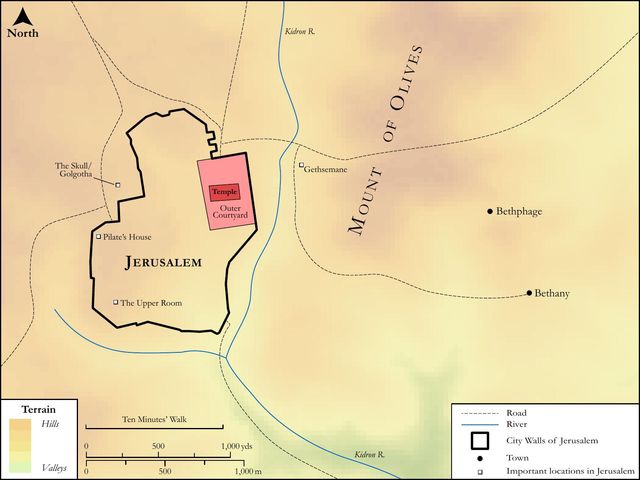
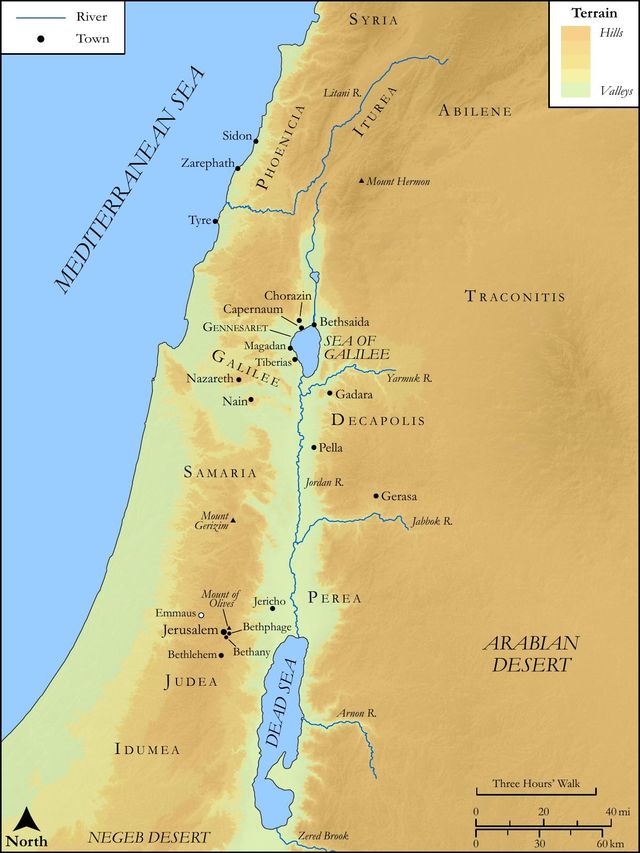
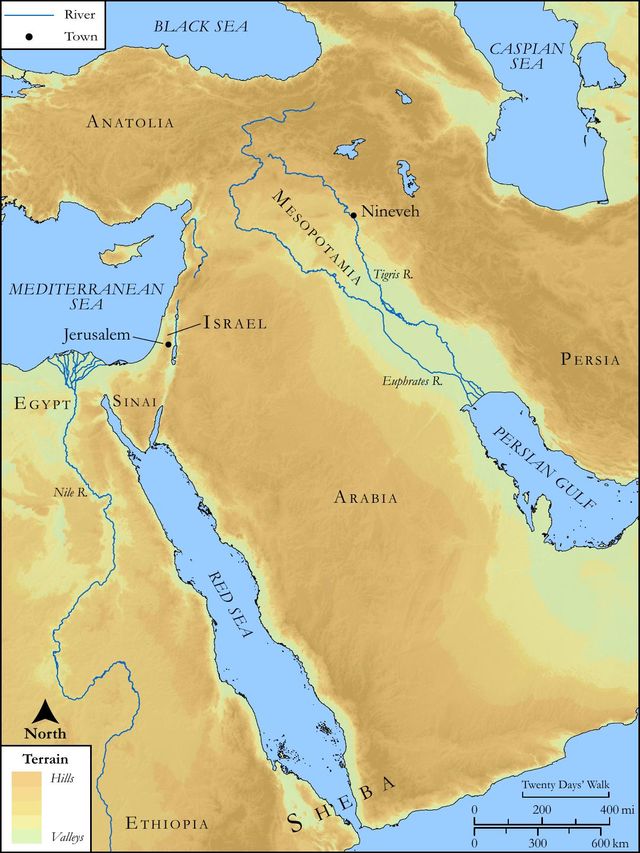
See on the biblical-era maps
Study this verse
Public-domain commentary
Matthew Henry
From his Commentary on the Whole Bible. Henry comments on passages, not single verses — this entry covers Luke 23:13–25. His two-level outline is real structure in the source text, so it is rendered as structure.
We have here the blessed Jesus run down by the mob, and hurried to the cross in the storm of a popular noise and tumult, raised by the malice and artifice of the chief priests, as agents for the prince of the power of the air.
I.Pilate solemnly protests that he believes he has done nothing worthy of death or of bonds.
And, if he did believe so, he ought immediately to have discharged him, and not only so, but to have protected him from the fury of the priests and rabble, and to have bound his prosecutors to their good behaviour for their insolent conduct. But, being himself a bad man, he had no kindness for Christ, and, having made himself otherwise obnoxious, was afraid of displeasing either the emperor or the people; and therefore, for want of integrity, he called together the chief priests, and rulers, and people (whom he should have dispersed, as a riotous and seditious assembly, and forbid them to come near him), and will hear what they have to say, to whom he should have turned a deaf ear, for he plainly saw what spirit actuated them (Luk 23:14): "You have brought," saith he, "this man to me, and, because I have a respect for you, I have examined him before you, and have heard all you have to allege against him, and I can make nothing of it: I find no fault in him; you cannot prove the things whereof you accuse him."
II.He appeals to Herod concerning him (Luk 23:15):
"I sent you to him, who is supposed to have known more of him than I have done, and he has sent him back, not convicted of any thing, nor under any mark of his displeasure; in his opinion, his crimes are not capital. He has laughed at him as a weak man, but has not stigmatized him as a dangerous man." He thought Bedlam a fitter place for him than Tyburn.
III.He proposes to release him, if they will but consent to it.
He ought to have done it without asking leave of them, Fiat justitia, ruat coelum - Let justice have its course, though the heavens should be desolated. But the fear of man brings many into this snare, that, whereas justice should take place, though heaven and earth come together, they will do an unjust thing, against their consciences, rather than pull an old house about their ears. Pilate declares him innocent, and therefore has a mind to release him; yet, to please the people,
1.He will release him under the notion of a malefactor, because of necessity he must release one (Luk 23:17); so that whereas he ought to have been released by an act of justice, and thanks to nobody, he would have him released by an act of grace, and not be beholden to the people for it.
2.He will chastise him, and release him. If no fault be to be found in him, why should he be chastised? There is as much injustice in scourging as in crucifying an innocent man; nor would it be justified by pretending that this would satisfy the clamours of the people, and make him the object of their pity who was not to be the object of their envy. We must not do evil that good may come.
IV.The people choose rather to have Barabbas released, a wretched fellow, that had nothing to recommend him to their favour but the daringness of his crimes. He was imprisoned for a sedition made in the city, and for murder (of all crimes among men the least pardonable), yet this was the criminal that was preferred before Christ: Away with this man, and release unto us Barabbas, Luk 23:18, Luk 23:19. And no wonder that such a man is the favourite and darling of such a mob, he that was really seditious, rather than he that was really loyal and falsely accused of sedition.
V.When Pilate urged the second time that Christ should be released, they cried out, Crucify him, crucify him, Luk 23:20, Luk 23:21.
They not only will have him die, but will have him die so great a death; nothing less will serve but he must be crucified: Crucify him, crucify him.
VI.When Pilate the third time reasoned with them, to show them the unreasonableness and injustice of it, they were the more peremptory and outrageous (Luk 23:22): "Why? What evil hath he done? Name his crime. I have found no cause of death, and you cannot say what cause of death you have found in him; and therefore, if you will but speak the word, I will chastise him and let him go." But popular fury, the more it is complimented, the more furious it grows; they were instant with loud voices, with great noises or outcries, not requesting, but requiring, that he might be crucified; as if they had as much right, at the feast, to demand the crucifying of one that was innocent as the release of one that was guilty.
VII.Pilate's yielding, at length, to their importunity.
The voice of the people and of the chief priests prevailed, and were too hard for Pilate, and overruled him to go contrary to his convictions and inclinations. He had not courage to go against so strong a stream, but gave sentence that it should be as they required, Luk 23:24. Here is judgment turned away backward, and justice standing afar off, for fear of popular fury. Truth is fallen in the street, and equity cannot enter, Isa 59:14. Judgment was looked for, but behold oppression; righteousness, but behold a cry, Isa 5:7. This is repeated in Luk 23:25, with the aggravating circumstance of the release of Barabbas: He released unto them him that for sedition and murder was cast into prison, who hereby would be hardened in his wickedness, and do the more mischief, because him they had desired, being altogether such a one as themselves; but he delivered Jesus to their will, and he could not deal more barbarously with him than to deliver him to their will, who hated him with a perfect hatred, and whose tender mercies were cruelty.
Historical interpretation
Nine Centuries of Reception
11 surviving comments on this verse. Each one is dated, so this reads as a timeline rather than a list.
Select a marker to jump to its quote. Markers stagger vertically where authors wrote within a few decades of each other.
The word of the Lord is rich, and according to the opinion of Solomon, "it must be written on the heart" not once but also twice and "three times." Let us to the best of our ability also now attempt to add something to what was said long ago. Let us show how "as a type of things to come" this one male goat was sacrificed to the Lord as an offering and the other one was sent away "living." Hear in the Gospels what Pilate said to the priests and the Jewish people: "Which of these two do you want me to send out to you: Jesus, who is called the Christ, or Barabbas?" Then all the people cried out to release Barabbas and to hand Jesus over to be killed. Look, you have a male goat who was sent "living into the wilderness." He carried with him the sins of the people who cried out and said, "Crucify, crucify!" The first is a male goat sent "living into the wilderness." The second is the male goat that was offered to God as an offering to atone for sins. Christ made a true atonement for those who believe in him.
Celsus goes on to say that "those who killed Jesus suffered nothing for a long a time afterwards." We must inform him and all who are prone to learn the truth. The Jewish people called for the crucifixion of Jesus with shouts of "Crucify him, crucify him!" They preferred to set free the robber who had been thrown into prison for sedition and murder. They wanted Jesus, who had been delivered through envy, to be crucified. The city where all these things happened was attacked shortly after this. After a long siege, it was totally overthrown and destroyed. God judged the inhabitants of that place unworthy of living the life of citizens together. Although it may seem incredible to say, God spared this people in delivering them to their enemies. He saw that they were incurably against any improvement and were daily sinking deeper and deeper into evil. All this happened to them because the blood of Jesus was shed at their instigation and on their land. The land was no longer able to bear those who were guilty of so fearful a crime against Jesus.
Many have been crucified throughout the world, but the demons are not afraid of any of these. These people died because of their own sins, but Christ died for the sin of others. He “did not sin, neither was deceit found in his mouth.” It was not Peter, who could be suspected of partiality, who said this, but Isaiah, who, although not present in the flesh, in spirit foresaw the Lord’s coming in the flesh. Why do I bring only the prophet as a witness? Take the witness of Pilate himself. He passed judgment on him, by saying, “I find no guilt in this man.” When he delivered him over and washed his hands, he said, “I am innocent of the blood of this just man.” The robber is another witness to Jesus’ innocence. He is the first man to enter paradise. He rebuked his friend and said, “We are receiving what our deeds deserved, but this man has done nothing wrong, because you and I were present at his judgment.”
Here Pilate, who as a judge acquits Christ, is made the minister of His crucifixion. He is sent to Herod, sent back to Pilate, as it follows, Nor yet Herod, for I sent you to him, and behold nothing worthy of death is done unto him. They both refuse to pronounce Him guilty, yet for fear's sake, Pilate gratifies the cruel desires of the Jews.
Not unreasonably do they seek the pardon of a murderer, who were themselves demanding the death of the innocent. Such are the laws of iniquity, that what innocence hates, guilt loves. And here the interpretation of the name affords a figurative resemblance, for Barabbas is in Latin, the son of a father. Those then to whom it is said, Ye are of your father the Devil, are represented as about to prefer to the true Son of God the son of their father, that is, Antichrist.
Similarly, I think that this is a prototype of all judgments that they would condemn those whom they believed to be innocent. However, it is evident that the Gentiles are more tolerant than the Jews, as Pilate's association with them demonstrates, and they are more persuaded by divine works. But what about those who crucified the Lord of majesty? It is not without reason that murderers seek absolution, as they sought the destruction of the innocent. Such unjust laws have the quality of hating innocence and loving crime. However, in the interpretation of the name, it gives the appearance of a figure; for Barabbas is translated to mean 'son of the father' in Latin: therefore, those to whom it is said, 'You are of your father the devil,' are shown to prefer the son of their father, Antichrist, over the true Son of God.
He is sent to Herod, sent back to Pilate. And although neither of them pronounce him guilty, they still comply with the desires of someone else's cruelty. Indeed, Pilate washed his hands, but he did not wash away his deeds; for a judge ought not to yield to envy or fear, so as to deliver the blood of an innocent person. His wife warned him: grace shone in the darkness; divinity was evident; yet she did not temper the sacrilegious sentence in this way.
For they thought they could add this, namely, that Jesus was worse than a robber, and so wicked, that neither for mercy's sake, or by the privilege of the feast, ought He to be let free.
They brought the holy and just One to Pilate. They spoke violent and unrestrained words against him and poured out falsely invented accusations. They persisted in the ferocity with which they accused him. Pilate then ruled that it should be as they desired, although he had publicly said, “I find no wickedness in this man.” It says, “They cried out, ‘Away with him, crucify him!’ ” The Lord had rebuked this unmerciful and unlawful cry by the voice of the prophet Isaiah. It is written, “The vineyard of the Lord of hosts is the house of Israel, and the men of Judah are his pleasant planting; and he looked for justice, but behold, bloodshed; for righteousness, but behold, a cry!” In another place, he said of them, “Woe to them, for they have strayed from me! Destruction to them, for they have rebelled against me! I would redeem them, but they speak lies against me.” It is written again, “Their princes shall fall by the sword, because of the rudeness of their tongue.”
But they insisted with loud voices, demanding that he be crucified, and their voices prevailed. Because they saw that the entire accusation they had brought against the Lord had been invalidated by the frequent and diligent interrogation by Pilate, finally, without shame, they only turned to pleas so that what they could not achieve by accusing and reasoning, they might now accomplish by demanding and shouting. This method of raging, even the persecutors of the blessed martyrs held onto, as demonstrated sufficiently by ecclesiastical history.
Perish then those writings, which, composed so long a time after Christ, convict not the accused of magical arts against Pilate, but the writers themselves of treachery and lying against Christ.
As if he said, I will subject Him to all the scourgings and mockings you desire, but do not thirst after the innocent blood. It follows, For of necessity he must release one unto them, &c. an obligation not imposed by a decree of the imperial law, but binding by the annual custom of the nation, whom in such things he was glad to please.
Even to this day their request still clings to the Jews. For since when they had the choice given to them, they chose a robber for Jesus, a murderer for a Saviour; rightly lost they both life and salvation, and became subject to such robberies and seditions among themselves as to forfeit both their country and kingdom.
With the worst kind of death, that is, crucifixion, they long to murder the innocent. For they who hung on the cross, with their hands and feet fixed by nails to the wood, suffered a prolonged death, that their agony might not quickly cease; but the death of the cross was chosen by our Lord, as that which having overcome the Devil, He was about to place as a trophy on the brows of the faithful.
This chastisement wherewith Pilate sought to satisfy the people, lest their rage should go even so far as to crucify Jesus, John's words bear testimony that he not only threatened but performed together with mockings and scourgings. But when they saw all their charges which they brought against the Lord baffled by Pilate's diligent questioning, they resort at last to prayers only; entreating that He might be crucified.
Wherefore by the testimony of two men, Jesus is declared innocent, but the Jews His accusers brought forward no witness whom they could believe. See then how truth triumphs. Jesus is silent, and His enemies witness for Him; the Jews make loud cries, and not one of them corroborates their clamour.
Pilate therefore lenient and easy, yet wanting in firmness for the truth, because afraid of being accused, adds, I will therefore chastise him and release him.
For the Romans permitted the Jews to live according to their own laws and customs. And it was a natural custom of the Jews to seek pardon of the prince for those who were condemned, as they asked Jonathan of Saul. And hence it is now added, with respect to their petition, And they cried all at once, Away with this man, and release unto us Barabbas, &c. (1 Sam. 14:45.)
Thus it came to pass, the once holy nation rages to slay, the Gentile Pilate forbids slaughter; as it follows, Pilate therefore spoke again unto them, but they cried out, Crucify, &c.
Three times did Pilate acquit Christ, for it follows, And he said unto them the third time, Why, what evil hath he done? I will chastise him, and let him go.
They cry out the third time against Christ, that by this third voice, they may approve the murder to be their own, which by their entreaties they extorted; for it follows, And Pilate gave sentence that it should be as they required. And he released him that for sedition and murder was cast into prison, but delivered Jesus to their will.
Continue studying Luke 23:23 across the web’s major study libraries — every link below opens this exact verse, chapter, or book on the destination site.
Read & Compare
 BibleGatewayThis verse in more than 200 translations and 70 languages.
 Bible.comThe YouVersion reader — hundreds of translations, reading plans, and highlights.
 ESV.orgCrossway's official English Standard Version reader.
 NET BibleThe NET translation with 60,000+ translators' notes on every rendering decision.
 STEP BibleTyndale House's free study tool — original text, vocabulary, and scholarly resources.
 BibliaLogos Bible Software's free web reader.
 USCCBThe New American Bible (Revised Edition) with the U.S. bishops' study notes.
Commentaries
 BibleHub CommentariesDozens of classic commentaries on this verse, gathered on one page.
 StudyLightMore than 100 commentary sets — the largest collection on the web.
 BibleRefPlain-English commentary on what this verse means, verse by verse.
 Enduring WordDavid Guzik's free commentary on this chapter, widely used by Bible teachers.
 Bible Study ToolsVerse commentary alongside Greek and Hebrew study aids.
Original Language & Research
- BibleHub InterlinearThe verse word by word — original language, transliteration, and English.
- BibleHub LexiconEvery word's original-language definition and Strong's entry.
 Blue Letter BibleDeep-study tools — Strong's numbers, concordance, and word studies.
 CNTR CollationThe earliest Greek manuscripts of this verse, collated letter by letter.
Sermons, Hymns & Audio


TrulyRandomVerse is not affiliated with these sites and doesn’t control their content. They’re linked because they’re genuinely useful.
Summary
Luke 23:23 vividly portrays the escalating intensity of Jesus' trial, capturing the moment when the relentless demands of the Jewish religious leaders and the incited crowd culminated in a decisive victory over Pontius Pilate's attempts to release Jesus. The verse underscores the overwhelming pressure exerted by their "loud voices," which insisted on crucifixion and ultimately prevailed, sealing Jesus' fate despite Pilate's repeated declarations of His innocence.
Context
ShowHideLiterary Context
This verse is situated at a critical juncture in Luke's passion narrative, immediately following Pilate's third attempt to release Jesus, having found "no fault in this man" Luke 23:4, and again after examining Him Luke 23:14. Pilate had even offered to chastise Jesus and release Him according to the Passover custom Luke 23:16, but the crowd, stirred by the chief priests and scribes, vehemently demanded Barabbas instead Luke 23:18-19. Luke 23:23 marks the point of no return, where the collective will of the people and their leaders completely overrides Pilate's judicial authority and personal conviction, leading directly to Jesus' sentencing to death by crucifixion. The narrative here highlights the stark contrast between Pilate's wavering justice and the unwavering, albeit unjust, demand for Jesus' death.
Historical & Cultural Context
The trial of Jesus took place under Roman occupation in Judea. Pontius Pilate, as the Roman governor, held ultimate judicial authority, including the power of capital punishment. It was a Roman custom, particularly during festivals like Passover, to release a prisoner as an act of clemency, a tradition Pilate attempted to leverage. The Jewish religious leaders, primarily the chief priests and scribes, wielded significant influence over the populace, especially during religious festivals when large crowds gathered in Jerusalem. Their ability to incite and manipulate the crowd was crucial in this scenario, turning public sentiment against Jesus. The demand for crucifixion was particularly brutal, as it was a Roman method of execution reserved for the worst criminals and rebels, designed to inflict maximum suffering and public humiliation. This context underscores the political and religious pressures Pilate faced, caught between maintaining Roman order and appeasing the volatile Jewish populace during a sensitive religious holiday.
Key Themes
ShowHideLuke 23:23 powerfully illustrates several profound themes. Firstly, it showcases the destructive force of mob mentality and crowd pressure, where a collective, incited will can override reason, justice, and individual conscience. The "loud voices" symbolize the irrationality and overwhelming power of a group swayed by influential figures. Secondly, it highlights the stark reality of injustice and the perversion of justice, as an innocent man is condemned due to political expediency and popular demand, despite the presiding judge's clear recognition of His blamelessness Luke 23:22. Thirdly, the active role of the "chief priests" underscores the theme of religious corruption and incitement, revealing how spiritual leadership can be tragically misused to pursue personal agendas and manipulate the masses. Finally, underlying these human actions, the verse subtly points to the theme of divine sovereignty amidst human sin, where even the most egregious acts of injustice are ultimately woven into God's larger, redemptive plan, as later articulated in Acts 2:23.
Exposition and Analysis
ShowHideKey Word Analysis
ShowHideMeaning "to rest upon," "to press upon," or "to be urgent and insistent." In this context, it conveys the relentless, unyielding, and forceful pressure exerted by the crowd. They were not merely asking but were vehemently and persistently demanding Jesus' crucifixion, indicating a forceful imposition of their will.
Meaning "to ask (in genitive case)," "to beg," "to call for," or "to demand." While it can mean a simple request, when combined with "instant" and "loud voices," it signifies a strong, insistent demand that borders on coercion, rather than a polite plea.
Meaning "to be strong against," "to overcome," or "to overpower." This word emphasizes the decisive victory of the crowd's will over Pilate's authority and his attempts to maintain justice. Their clamor was so overwhelming that it effectively overpowered Pilate's resistance, forcing his hand.
Verse Breakdown
ShowHide"And they were instant with loud voices"
This clause describes the fervent and persistent nature of the crowd's demand. The term "instant" (epíkeimai) indicates a pressing, unyielding insistence, while "loud voices" (mégas phōnḗ) conveys the sheer volume, intensity, and collective force of their clamor, creating an atmosphere of overwhelming pressure and intimidation.
"requiring that he might be crucified"
This specifies the precise and brutal nature of their demand. They were not merely asking for Jesus' death, but specifically for crucifixion, the most agonizing and humiliating form of execution. This reveals the depth of their animosity and their desire for His public degradation.
"And the voices of them and of the chief priests prevailed"
This final clause states the tragic outcome. The combined, insistent voices of the common people ("them") and their influential religious leaders ("the chief priests") ultimately triumphed over Pilate's attempts to release Jesus. "Prevailed" (katischýō) signifies that their will was stronger, overcoming any resistance Pilate might have offered, leading directly to the unjust condemnation.
Literary Devices
ShowHideLuke 23:23 employs several powerful literary devices to convey the gravity of the moment. The phrase "loud voices" functions as synecdoche, where a part (voices) represents the whole (the crowd and chief priests), emphasizing the auditory assault and the overwhelming nature of their collective demand. This also borders on hyperbole, as the volume and intensity of their clamor are exaggerated to convey the immense pressure on Pilate. There is a profound irony in the scene: the very people who should have recognized their Messiah vehemently demand His death, unknowingly fulfilling divine prophecy. Furthermore, the verse stands in stark contrast to Jesus' own silent suffering, fulfilling prophecies like Isaiah 53:7, highlighting the unrighteousness of the crowd against the righteousness of Christ. The "prevailing" of the voices also serves as a form of foreshadowing, indicating the inevitable outcome of the trial and Jesus' journey to the cross.
Theological and Thematic Connections
ShowHideLuke 23:23 is a profound theological statement on human sin, divine sovereignty, and the nature of justice. It reveals humanity's capacity for profound injustice and mob rule, where collective passion can override truth and reason. The chief priests' manipulation of the crowd underscores the danger of religious authority becoming corrupt and self-serving. Yet, in this darkest hour of human depravity, the verse implicitly points to the overarching sovereignty of God. While the actions of the crowd and leaders were undeniably sinful, they unwittingly participated in God's predetermined plan for the redemption of humanity. This moment, therefore, is not merely a historical tragedy but a pivotal event in God's redemptive narrative, demonstrating how even human evil can be woven into His perfect will for salvation.
Reflection and Application
ShowHideLuke 23:23 serves as a powerful and sobering mirror for contemporary society and individual believers. It cautions us against the seductive and dangerous power of popular opinion, especially when it is fueled by emotion, misinformation, or a desire for conformity rather than truth and justice. The "loud voices" of the crowd remind us that what is popular is not always what is right, and that societal pressure can easily lead to moral compromise and the perversion of justice. For believers, this verse is a call to courageous discernment: to stand firm in biblical truth, even when it is unpopular or goes against the prevailing cultural narrative. It challenges us to examine our own susceptibility to groupthink and to cultivate a conscience rooted in God's Word, rather than swayed by the clamor of the world. Ultimately, it reinforces the truth that even in moments of profound human failure and injustice, God's sovereign plan is at work, offering hope and reminding us that His purposes will always prevail, even through the darkest valleys.
Questions for Reflection
ShowHideFAQ
ShowHideWhy did Pilate give in to the crowd's demands despite declaring Jesus innocent?
ShowHidePilate was a Roman governor, and his primary concern was maintaining peace and order in a volatile province, especially during a major Jewish festival like Passover. He recognized Jesus' innocence and attempted to release Him multiple times Luke 23:4, Luke 23:14, Luke 23:22. However, the relentless and increasingly violent demands of the crowd, incited by the chief priests, presented a significant threat of riot or insurrection. Pilate feared that if he did not appease them, it could lead to widespread unrest, which would jeopardize his position with Emperor Tiberius. Ultimately, political expediency and the desire to avoid a riot "prevailed" over his sense of justice, leading him to condemn an innocent man.
What does "instant" mean in the context of Luke 23:23?
ShowHideIn the King James Version, "instant" (from the Greek epíkeimai) does not mean "immediate" or "at once" in the modern sense. Instead, it conveys the idea of being "urgent," "insistent," or "pressing upon." The crowd was not merely making a request; they were applying intense, unyielding pressure, vehemently demanding Jesus' crucifixion. This word highlights the forceful and persistent nature of their clamor, indicating that they were not letting up until their demand was met.
Who were "the chief priests" and what was their role in this event?
ShowHide"The chief priests" (Greek archiereús) refers to the leading members of the Jewish priestly aristocracy, including the high priest (Caiaphas at the time), former high priests, and heads of the priestly families. They were the most powerful religious and political figures among the Jews, holding significant influence over the Temple and the Sanhedrin (the Jewish supreme court). In this event, they played a crucial role in orchestrating Jesus' arrest, conducting His trial before the Sanhedrin, and then actively inciting the crowd against Him before Pilate. Their motive was largely to eliminate Jesus, whom they perceived as a threat to their authority, their interpretation of the Law, and their political stability with Rome John 11:48. They were instrumental in turning public opinion and pressuring Pilate to condemn Jesus.
Christ-Centered Fulfillment
ShowHideLuke 23:23, though depicting a moment of profound human injustice and sin, is ultimately a testament to the sovereign plan of God for the redemption of humanity through Jesus Christ. The "loud voices" demanding crucifixion, and their ultimate "prevailing" over Pilate, were not a defeat for God's purposes but the very means by which His eternal plan was brought to fruition. Jesus, the sinless Lamb of God, willingly submitted to this unjust condemnation, not as a victim of human malice, but as the obedient Son fulfilling the will of His Father. His crucifixion, demanded by the crowd, was the ultimate act of self-sacrifice, where He bore the sins of the world upon Himself 1 Peter 2:24. This moment, seemingly a triumph of evil, was in fact the strategic fulfillment of prophecy and the necessary prelude to His resurrection, which secured victory over sin and death for all who believe. Thus, the injustice of Luke 23:23 underscores the depth of God's love, demonstrating that "while we were still sinners, Christ died for us" Romans 5:8, looking beyond the shame of the cross to the joy set before Him Hebrews 12:2.