


Judges 8:12
Bible text: King James Version (1769 Blayney text) · Public domain
Bible text: King James Version with Strong's numbers · Public domain
Bible text: Berean Standard Bible · Public domain
Bible text: American Standard Version (1901) · Public domain
Bible text: World English Bible, Messianic edition · Public domain
Bible text: Geneva Bible (1599) · Public domain
Bible text: Young's Literal Translation · Public domain
- וַיָּנוּסוּvai·ya·Nu·suand they fledH5127Conj-w ¦ V-Qal-ConsecImperf-3mpVerb Qal Consecutive Imperfect 3rd Plural Masculineוַandיָּנוּסוּthey fled
- זֶבַחZe·vachZebahH2078N-proper-mNoun Proper Masculine
- וְצַלְמֻנָּעve·tzal·mu·Na'and ZalmunnaH6759Conj-w ¦ N-proper-mNoun Proper MasculineוְandצַלְמֻנָּעZalmunna
- וַיִּרְדֹּףvai·yir·Dofand he pursuedH7291Conj-w ¦ V-Qal-ConsecImperf-3msVerb Qal Consecutive Imperfect 3rd Singular Masculineוַandיִּרְדֹּףhe pursued
- אַחֲרֵיהֶם'a·cha·rei·Hemafter themH310Adj-mpc ¦ 3mpAdjective Numerical Plural Masculine Constructאַחֲרֵיafterהֶםthem
- וַיִּלְכֹּדvai·yil·Kodand he capturedH3920Conj-w ¦ V-Qal-ConsecImperf-3msVerb Qal Consecutive Imperfect 3rd Singular Masculineוַandיִּלְכֹּדhe captured
- אֶת'et<obj.>H853DirObjMParticle Object Indicator
- שְׁנֵיshe·Nei[the] twoH8147N-cdcNoun Dual common gender Construct
- מַלְכֵיmal·Khei[the] kings ofH4428N-mpcNoun Plural Masculine Construct
- מִדְיָןmid·YanMidianH4080N-properNoun Proper Location
- אֶת'et<obj.>H853DirObjMParticle Object Indicator
- זֶבַחze·vachZebahH2078N-proper-mNoun Proper Masculine
- וְאֶתve·'Etand <obj.>H853Conj-w ¦ DirObjMParticle Object Indicatorוְandאֶת<obj.>
- צַלְמֻנָּעtzal·mu·Na'ZalmunnaH6759N-proper-mNoun Proper Masculine
- וְכָלve·kholand allH3605Conj-w ¦ N-mscNoun Singular Masculine Constructוְandכָלall
- הַמַּחֲנֶהha·ma·cha·Nehthe armyH4264Art ¦ N-fsNoun Singular Feminine Absoluteהַtheמַּחֲנֶהarmy
- הֶחֱרִידhe·che·Ridhe routedH2729V-Hiphil-Perf-3msVerb Hiphil Perfect 3rd Singular Masculine
English is a literal word-by-word gloss of the Hebrew, not the KJV's wording. Why?
This is the original text the KJV's translators worked from — each Hebrew word with its own literal English meaning in this verse, prepared by scholars at Tyndale House, Cambridge. The KJV translates whole sentences, not word by word, so its wording differs: one Hebrew word can become several English words, and the KJV may choose “the LORD” where the gloss reads “Yahweh”. Both are faithful — they answer different questions. For the KJV's own rendering, switch to the KJV text.
Details
See on the biblical-era maps
Study this verse
Public-domain commentary
Matthew Henry
From his Commentary on the Whole Bible. Henry comments on passages, not single verses — this entry covers Judges 8:4–17. His four-level outline is real structure in the source text, so it is rendered as structure.
In these verses we have,
I.Gideon, as a valiant general, pursuing the remaining Midianites, and bravely following his blow.
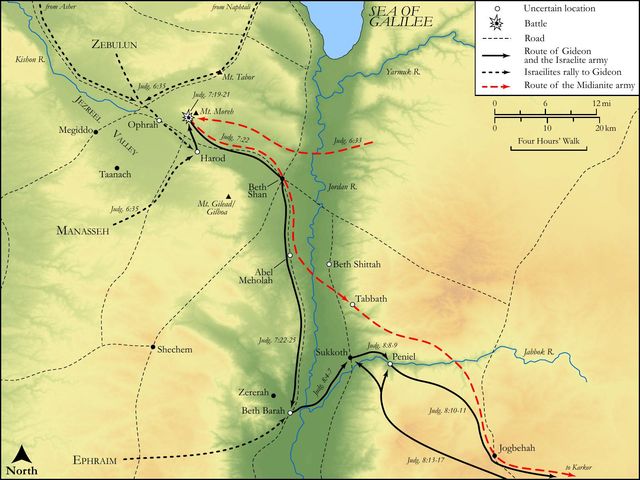
A very great slaughter was made of the enemy at first: 120,000 men that drew the sword, Jdg 8:10. Such a terrible execution did they make among themselves, and so easy a prey were they to Israel. But, it seems, the two kings of Midian, being better provided than the rest for an escape, with 15,000 men got over Jordan before the passes could be secured by the Ephraimites, and made towards their own country. Gideon thinks he does not fully execute his commission to save Israel if he let them escape. He is not content to chase them out of the country, but he will chase them out of the world, Job 18:18. This resolution is here pushed on with great firmness, and crowned with great success.
1.His firmness was very exemplary. He effected his purpose under the greatest disadvantages and discouragements that could be.
(1.)He took none with him but his 300 men, who now laid aside their trumpets and torches, and betook themselves to their swords and spears. God had said, By these 300 men will I save you (Jdg 7:7); and, confiding in that promise, Gideon kept to them only, Jdg 8:4. He expected more from 300 men, supported by a particular promise, than from so many thousands supported only by their own valour.
(2.)They were faint, and yet pursuing, much fatigued with what they had done, and yet eager to do more against the enemies of their country. Our spiritual warfare must thus be prosecuted with what strength we have, though we have but little; it is many a time the true Christina's case, fainting and yet pursuing.
(3.)Though he met with discouragement from those of his own people, was jeered for what he was doing, as going about what he could never accomplish, yet he went on with it. If those that should be our helpers in the way of our duty prove hindrances to us, let not this drive us off from it. Those know not how to value God's acceptance that know not how to despise the reproaches and contempts of men.
(4.)He made a very long march by the way of those that dwelt in tents (Jdg 8:11), either because he hoped to find them kinder to him than the men of Succoth and Penuel, that dwelt in walled towns (sometimes there is more generosity and charity found in country tents than in city palaces), or because that was a road in which he would be least expected, and therefore that way it would be the greater surprise to them. It is evident he spared no pains to complete his victory. Now he found it an advantage to have his 300 men such as could bear hunger, and thirst, and toil. It should seem, he set upon the enemy by night, as he had done before, for the host was secure. The security of sinners often proves their ruin, and dangers are most fatal when least feared.
2.His success was very encouraging to resolution and industry in a good cause. He routed the army (Jdg 8:11), and took the two kings prisoners, Jdg 8:12. Note, The fear of the wicked shall come upon him. Those that think to run from the sword of the Lord and of Gideon do but run upon it. If he flee from the iron weapon, yet the bow of steel shall strike him through; for evil pursueth sinners.
II.Here is Gideon, as a righteous judge, chastising the insolence of the disaffected Israelites, the men of Succoth and the men of Penuel, both in the tribe of Gad, on the other side Jordan.
1.Their crime was great. Gideon, with a handful of feeble folk was pursuing the common enemy, to complete the deliverance of Israel. His way led him through the city of Succoth first and afterwards of Penuel. He expected not that the magistrates should meet him in their formalities, congratulate him upon his victory, present him with the keys of their city, and give him a treat, much less that they should send forces in to his assistance, though he was entitled to all this; but he only begs some necessary food for his soldiers that were ready to faint for want, and he does it very humbly and importunately: Give, I pray you, loaves of bread unto the people that follow me, Jdg 8:5. The request would have been reasonable if they had been but poor travellers in distress; but considering that they were soldiers, called, and chose, and faithful (Rev 17:14), men whom God had greatly honoured and to whom Israel was highly obliged, who had done great service to their country and were now doing more, - that they were conquerors, and had power to put them under contribution, - and that they were fighting God's battles and Israel's, - nothing could be more just than that their brethren should furnish them with the best provisions their city afforded. But the princes of Succoth neither feared God nor regarded man. For,
(1.)In contempt of God, they refused to answer the just demands of him whom God had raised up to save them, affronted him, bantered him, despised the success he had already been honoured with, despaired of the success of his present undertaking, did what they could to discourage him in prosecuting the war, and were very willing to believe that the remaining forces of Midian, which they had now seen march through their country, would be too hard for him: Are the hands of Zebah and Zalmunna now in thy hand? "No, nor ever will be," so they conclude, judging by the disproportion of numbers.
(2.)The bowels of their compassion were shut up against their brethren; they were as destitute of love as they were of faith, would not give morsels of bread (so some read it) to those that were ready to perish. Were these princes? were these Israelites? unworthy either title, base and degenerate men! Surely they were worshippers of Baal, or in the interests of Midian. The men of Penuel gave the same answer to the same request, defying the sword of the Lord and of Gideon, Jdg 8:8.
2.The warning he gave them of the punishment of their crime was very fair.
(1.)He did not punish it immediately, because he would not lose so much time from the pursuit of the enemy that were flying from him, because he would not seem to do it in a neat of passion, and because he would do it more to their shame and confusion when he had completed his undertaking, which they thought impracticable. But,
(2.)He told them how he would punish it (Jdg 8:7, Jdg 8:9), to show the confidence he had of success in the strength of God, and that, if they had the least grain of grace and consideration left, they might upon second thoughts repent of their folly, humble themselves, and contrive how to atone for it, by sending after him succours and supplies, which if they had done, no doubt, Gideon would have pardoned them. God gives notice of danger, and space to repent, that sinners may flee from the wrath to come.
3.The warning being slighted, the punishment, though very severe, was really very just.
(1.)The princes of Succoth were first made examples. Gideon got intelligence of their number, seventy-seven men, their names, and places of abode, which were described in writing to him, Jdg 8:14. And, to their great surprise, when they thought he had scarcely overtaken the Midianites, he returned a conqueror. His 300 men were now the ministers of his justice; they secured all these princes, and brought them before Gideon, who showed them his royal captives in chains. "These are the men you thought me an unequal match for, and would give me no assistance in the pursuit of," Jdg 8:15. And he punished them with thorns and briers, but, it should seem, not unto death. With these,
[1.]He tormented their bodies, either by scourging or by rolling them in the thorns and briers; some way or other he tore their flesh, Jdg 8:7. Those shall have judgment without mercy that have shown no mercy. Perhaps he observed them to be soft and delicate men, who despised him and his company for their roughness and hardiness, and therefore Gideon thus mortified them for their effeminacy.
[2.]He instructed their minds: With these he taught the men of Succoth, Jdg 8:16. The correction he gave them was intended, not for destruction, but wholesome discipline, to make them wiser and better for the future. He made them know (so the word is), made them know themselves and their folly, God and their duty, made them know who Gideon was, since they would not know by the success wherewith God had crowned him. Note, Many are taught with the briers and thorns of affliction that would not learn otherwise. God gives wisdom by the rod and reproof, chastens and teaches, and by correction opens the ear to discipline. Our blessed Saviour, though he was a Son, yet learnt obedience by the things which he suffered, Heb 5:8. Let every pricking brier, and grieving thorn, especially when it becomes a thorn in the flesh, be thus interpreted, thus improved. "By this God designs to teach me; what good lesson shall I learn?"
(2.)The doom of the men of Penuel comes next, and it should seem he used them more severely than the other, for good reason, no doubt, Jdg 8:17.
[1.]He beat down their tower, of which they gloried, in which they trusted, perhaps scornfully advising Gideon and his men rather to secure themselves in that than to pursue the Midianites. What men make their pride is justly by its ruin made their shame.
[2.]He slew the men of the city, not all, perhaps not the elders or princes, but those that had affronted him, and those only. He slew some of the men of the city that were most insolent and abusive, for terror to the rest, and so he taught the men of Penuel.
Continue studying Judges 8:12 across the web’s major study libraries — every link below opens this exact verse, chapter, or book on the destination site.
Read & Compare
 BibleGatewayThis verse in more than 200 translations and 70 languages.
 Bible.comThe YouVersion reader — hundreds of translations, reading plans, and highlights.
 ESV.orgCrossway's official English Standard Version reader.
 NET BibleThe NET translation with 60,000+ translators' notes on every rendering decision.
 STEP BibleTyndale House's free study tool — original text, vocabulary, and scholarly resources.
 BibliaLogos Bible Software's free web reader.
 USCCBThe New American Bible (Revised Edition) with the U.S. bishops' study notes.
Commentaries
 BibleHub CommentariesDozens of classic commentaries on this verse, gathered on one page.
 StudyLightMore than 100 commentary sets — the largest collection on the web.
 BibleRefPlain-English commentary on what this verse means, verse by verse.
 Enduring WordDavid Guzik's free commentary on this chapter, widely used by Bible teachers.
 Bible Study ToolsVerse commentary alongside Greek and Hebrew study aids.
Original Language & Research
- BibleHub InterlinearThe verse word by word — original language, transliteration, and English.
- BibleHub LexiconEvery word's original-language definition and Strong's entry.
 Blue Letter BibleDeep-study tools — Strong's numbers, concordance, and word studies.
 SefariaThe Hebrew text with Rashi and centuries of Jewish commentary.
Sermons, Hymns & Audio


TrulyRandomVerse is not affiliated with these sites and doesn’t control their content. They’re linked because they’re genuinely useful.
Summary
Judges 8:12 marks the decisive climax of Gideon's relentless campaign against the Midianite oppressors. This verse meticulously records Gideon's successful capture of Zebah and Zalmunna, the two kings of Midian, and the complete and utter discomfiture of their remaining forces. It signifies the definitive end of Midianite tyranny over Israel, underscoring the profound interplay of divine empowerment, human perseverance, and the comprehensive nature of God's deliverance in bringing a significant chapter of Israel's history to its triumphant close.
Context
ShowHideLiterary Context
Judges 8:12 serves as the narrative's resolution to Gideon's extended pursuit of the Midianite kings, following the miraculous and unconventional victory initiated by God in Judges 7. The preceding verses in Judges 8 detail Gideon's extraordinary perseverance, as he and his 300 men, though "faint, yet pursuing" (Judges 8:4), pressed on beyond the initial rout. This verse brings the active military campaign to its definitive conclusion, setting the stage for Gideon to exact justice for his brothers and consolidate Israel's freedom, as further elaborated in the subsequent narrative of Judges 8:13-21. It is the moment where the fleeing enemy leaders are finally apprehended, transforming the pursuit into a capture and ensuring the completeness of the victory.
Historical & Cultural Context
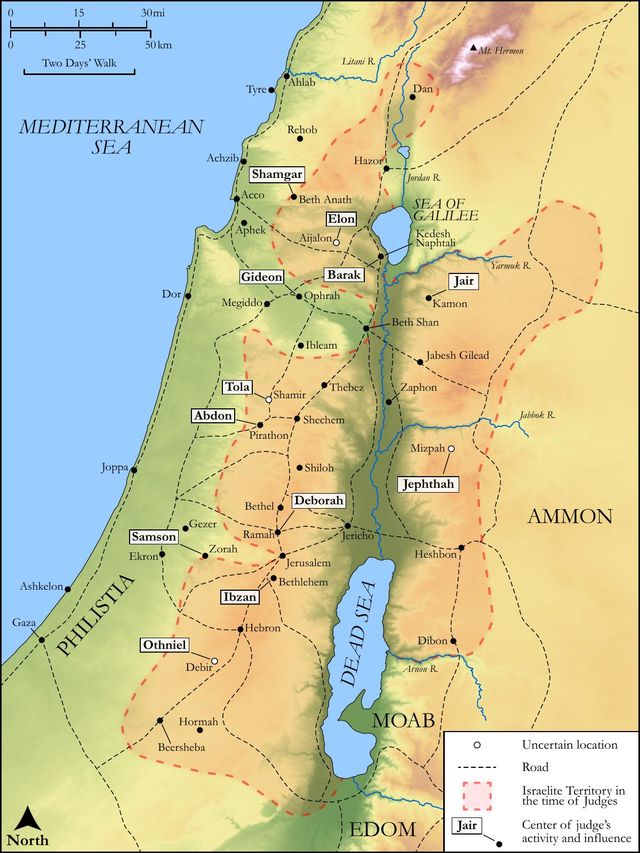
The period of the Judges was characterized by cycles of Israelite apostasy, divine judgment through foreign oppression, and subsequent deliverance by God-raised judges. For seven years, the Midianites, along with their allies, had inflicted severe economic and social hardship upon Israel, systematically raiding their lands and destroying their crops (Judges 6:1-6). The Midianites were a formidable nomadic people, renowned for their camel cavalry, which made them highly mobile and difficult to counter. In the warfare of that day, the capture or death of enemy kings was not merely a tactical success but held profound symbolic significance. It represented the total collapse of the enemy's power, the complete subjugation of their people, and the definitive end of their threat. Such captured kings were often subjected to public humiliation, interrogation, and execution, serving as a powerful deterrent and a demonstration of the victor's supremacy. Gideon's actions here align perfectly with these cultural norms, signifying the absolute defeat of Midian.
Key Themes
ShowHideJudges 8:12 powerfully encapsulates several core themes woven throughout the book of Judges and the broader Old Testament narrative. Firstly, it underscores Divine Sovereignty and Empowerment, demonstrating that while Gideon acted with human resolve, it was God who ultimately delivered the enemy into his hands, ensuring a comprehensive victory far beyond human capabilities. This is consistent with the miraculous reduction of Gideon's army in Judges 7:2-7. Secondly, the verse highlights Perseverance and Completion, as Gideon's unwavering determination to pursue the fleeing kings, despite exhaustion and the refusal of aid from certain Israelite towns (Judges 8:5-9), emphasizes the critical importance of seeing God's assigned tasks through to their definitive end. This commitment ensures that the initial triumph translates into lasting freedom. Finally, the capture of Zebah and Zalmunna paves the way for Justice and Retribution, particularly for the murder of Gideon's brothers (Judges 8:18-19), bringing a personal and decisive resolution to the Midianite reign of terror and fulfilling God's promise of deliverance for His people.
Exposition and Analysis
ShowHideKey Word Analysis
ShowHideThis verb signifies "to flit," "to vanish away," or "to escape." In the context of warfare, it describes the act of retreating rapidly from danger, often in disarray. Here, it establishes the initial state of Zebah and Zalmunna, highlighting their desperate attempt to evade capture and survive the rout of their army. Their flight underscores the completeness of the Midianite defeat, forcing their kings into a humiliating retreat.
This primitive root means "to run after," typically with hostile intent, implying a relentless chase or hunt. In this verse, it emphasizes Gideon's unwavering determination and active commitment to not merely defeat the Midianites in battle but to utterly neutralize their leadership. This pursuit was not a casual follow-up but a strategic, exhaustive chase, demonstrating Gideon's resolve to complete the victory God had initiated, ensuring no resurgence of the Midianite threat.
This verb means "to catch" (as in a net or trap), "to seize," or "to capture." Its use here denotes a definitive and successful act of apprehension, marking the climactic conclusion of the pursuit. It highlights the physical capture of the kings, transforming them from fleeing enemies into helpless prisoners. This act symbolizes the complete reversal of power and the definitive end of their reign of terror, making the victory concrete and irreversible.
This term translates to "to shudder with terror," "to be terrified," or "to rout." When applied to an army, as here, it implies a state of utter panic, disarray, and psychological collapse that leads to a complete and shattering defeat. It signifies more than just a military loss; it is a profound psychological and physical disintegration of the enemy's fighting capacity, ensuring they would no longer pose any organized threat. The "host" (Hebrew, machăneh') refers to the entire encampment or army, indicating the comprehensive nature of this terror-induced routing.
Verse Breakdown
ShowHide"And when Zebah and Zalmunna fled, he pursued after them,"
This opening clause establishes the initial situation: the Midianite kings, having survived the main battle, are in desperate flight. The immediate follow-up, "he pursued after them," highlights Gideon's unwavering and relentless determination. This pursuit was not a casual follow-up but a strategic, exhaustive chase, demonstrating Gideon's commitment to complete the victory God had initiated, ensuring no escape for the primary architects of Israel's oppression.
"and took the two kings of Midian, Zebah and Zalmunna,"
This is the pivotal action of the verse, marking the successful and definitive capture of the two primary enemy leaders. The repetition of their names emphasizes their identity and the profound significance of their apprehension. This act signifies the end of their reign of terror and the definitive victory of Israel over their oppressors. Their capture was essential for ensuring the Midianite threat was truly neutralized and for allowing Gideon to exact personal and national justice.
"and discomfited all the host."
This final phrase describes the comprehensive and devastating nature of the victory over the remaining Midianite forces. "Discomfited" (as explained above) indicates that the remnants of the Midianite army were not merely defeated or scattered but utterly demoralized, terrified, and rendered militarily ineffective. This ensured that the Midianite army, even its surviving elements, could no longer regroup or pose a future threat to Israel, cementing the completeness of God's deliverance and the security of His people.
Literary Devices
ShowHideJudges 8:12 employs several potent literary devices to underscore the significance of Gideon's victory. The most prominent is Climax, as this verse represents the peak of Gideon's military campaign, bringing the long and arduous pursuit to its decisive and dramatic conclusion. It resolves the tension built up through the chase described in previous verses. Repetition is also evident in the naming of "Zebah and Zalmunna" twice within the same short clause, which serves to emphasize their importance as the primary targets and the profound significance of their capture for the narrative's resolution. Furthermore, the phrase "discomfited all the host" functions as Hyperbole to underscore the totality of the defeat, suggesting a level of psychological and physical collapse that leaves no doubt about the Midianites' inability to recover or pose a future threat. This complete routing also subtly hints at Divine Agency, implying that such a comprehensive "discomfiture" was ultimately God's doing, even through human instruments, aligning with the overarching theme of God fighting for His people.
Theological and Thematic Connections
ShowHideJudges 8:12 stands as a powerful testament to God's unwavering faithfulness in delivering His people and the indispensable necessity of human perseverance in the face of divine calling. The capture of Zebah and Zalmunna, and the utter discomfiture of their army, underscores a profound theological truth: God's victories are comprehensive and decisive, not partial or temporary. It is not enough to merely win a battle; the enemy's power must be completely broken to ensure lasting peace and freedom. This verse teaches that God empowers His chosen instruments to see His will fully accomplished, even when the task seems daunting or requires sustained effort beyond initial triumphs. It highlights the principle that divine deliverance often requires human cooperation, marked by obedience, courage, and relentless follow-through, ensuring that the initial divine intervention is brought to its full and intended conclusion.
Reflection and Application
ShowHideJudges 8:12 offers profound and enduring lessons for believers today, reminding us that the spiritual battles we face often require not just an initial burst of faith and courage, but sustained perseverance to see God's victory fully manifest in our lives and circumstances. Just as Gideon relentlessly pursued the fleeing kings to ensure the complete eradication of the Midianite threat, we are called to be tenacious in our pursuit of holiness, in resisting the temptations and schemes of the enemy, and in fulfilling the calling God has placed upon us. This verse encourages us to not grow weary in doing good, even when the initial "victory" seems to have been won, or when the path ahead is arduous and our resources feel depleted. It affirms that God's faithfulness ensures that the work He begins in us, and through us, will be brought to completion. We are to press on, trusting that the same God who "discomfited" the Midianite host will ultimately grant us triumph over every spiritual foe, bringing true freedom and lasting peace into our lives and communities.
Questions for Reflection
ShowHideFAQ
ShowHideWhy did Gideon pursue Zebah and Zalmunna so relentlessly, even after the main battle was won?
ShowHideGideon's relentless pursuit was driven by a multifaceted set of motivations, encompassing military, cultural, theological, and personal factors. Militarily, capturing the kings was crucial for ensuring the complete and utter defeat of the Midianite threat, preventing any future resurgence or retaliation. Culturally, the capture of enemy kings was the ultimate symbol of victory and subjugation in the warfare of that day, signifying the total collapse of their power. Theologically, it was about completing the deliverance God had initiated, fulfilling the divine mandate to free Israel from oppression and ensure lasting peace. Personally, as revealed later in Judges 8:18-19, Zebah and Zalmunna had killed Gideon's brothers at Tabor, making the pursuit also an act of personal justice and retribution. This comprehensive motivation underscores Gideon's commitment to seeing God's will fully accomplished and justice served.
What is the significance of the phrase "discomfited all the host"?
ShowHideThe phrase "discomfited all the host" (from the Hebrew chârad) signifies much more than a mere military defeat; it implies a total and shattering psychological and physical collapse of the Midianite army. It means they were thrown into such terror, confusion, and disarray that their military power was effectively broken beyond recovery. This was not a mere retreat or scattering, but a complete routing that ensured the Midianites would no longer pose an organized threat to Israel. It highlights the comprehensive nature of God's victory through Gideon, ensuring lasting peace and freedom for His people. This echoes other biblical accounts where God "discomfited" or threw enemies into panic, such as the Lord troubling the Egyptians at the Red Sea in Exodus 14:24, demonstrating His sovereign power over the forces arrayed against His people.
Christ-Centered Fulfillment
ShowHideJudges 8:12, with Gideon's decisive capture of the Midianite kings and the complete discomfiture of their host, powerfully foreshadows the ultimate and eternal victory achieved by Jesus Christ. While Gideon's triumph was a temporary deliverance from a physical oppressor, Christ's work on the cross represents the definitive "pursuit" and "taking" of the true enemies of humanity: sin, death, and the devil. Just as Gideon relentlessly pursued Zebah and Zalmunna to ensure the complete eradication of the Midianite threat, Christ, through His incarnation, life, atoning death, and glorious resurrection, pursued humanity in its fallen state to deliver it from spiritual bondage. On the cross, He "disarmed the rulers and authorities and put them to open shame, by triumphing over them in Him" (Colossians 2:15). He is the true Deliverer who "took captivity captive" (Ephesians 4:8), utterly "discomfiting" the powers of darkness and establishing an everlasting kingdom of peace and righteousness. Unlike Gideon's victory, which still left the potential for future threats and the need for ongoing vigilance, Christ's victory is complete, final, and eternal, securing for His people ultimate freedom from the dominion of sin and death. Through Him, believers are promised a future where "death shall be no more, neither shall there be mourning, nor crying, nor pain anymore" (Revelation 21:4), a fulfillment far surpassing any earthly deliverance.