


Judges 7:23
Bible text: King James Version (1769 Blayney text) · Public domain
Bible text: Berean Standard Bible · Public domain
Bible text: American Standard Version (1901) · Public domain
Bible text: World English Bible, Messianic edition · Public domain
Bible text: Geneva Bible (1599) · Public domain
Bible text: Young's Literal Translation · Public domain
- וַיִּצָּעֵקvai·yi·tza·'Ekand it was summonedH6817Conj-w ¦ V-Niphal-ConsecImperf-3msVerb Niphal Consecutive Imperfect 3rd Singular Masculineוַandיִּצָּעֵקit was summoned
- אִישׁ'ish[the] man ofH376N-mscNoun Singular Masculine Construct
- יִשְׂרָאֵלYis·ra·'ElIsraelH3478N-properNoun Proper Location
- מִנַּפְתָּלִיmi·naf·ta·Lifrom NaphtaliH5321Prep-m ¦ N-proper-mNoun Proper MasculineמִfromנַּפְתָּלִיNaphtali
- וּמִןu·minand fromH4480Conj-w ¦ PrepPrepositionוּandמִןfrom
- אָשֵׁר'a·SherAsherH836N-proper-mNoun Proper Masculine
- וּמִןu·minand fromH4480Conj-w ¦ PrepPrepositionוּandמִןfrom
- כָּלkolallH3605N-mscNoun Singular Masculine Construct
- מְנַשֶּׁהme·na·ShehManassehH4519N-proper-mNoun Proper Masculine
- וַיִּרְדְּפוּvai·yir·de·Fuand they pursuedH7291Conj-w ¦ V-Qal-ConsecImperf-3mpVerb Qal Consecutive Imperfect 3rd Plural Masculineוַandיִּרְדְּפוּthey pursued
- אַחֲרֵי'a·cha·ReiafterH310Adj-mpcAdjective Numerical Plural Masculine Construct
- מִדְיָןmid·YanMidianH4080N-properNoun Proper Location
English is a literal word-by-word gloss of the Hebrew, not the KJV's wording. Why?
This is the original text the KJV's translators worked from — each Hebrew word with its own literal English meaning in this verse, prepared by scholars at Tyndale House, Cambridge. The KJV translates whole sentences, not word by word, so its wording differs: one Hebrew word can become several English words, and the KJV may choose “the LORD” where the gloss reads “Yahweh”. Both are faithful — they answer different questions. For the KJV's own rendering, switch to the KJV text.
Details
See on the biblical-era maps
Study this verse
Public-domain commentary
Matthew Henry
From his Commentary on the Whole Bible. Henry comments on passages, not single verses — this entry covers Judges 7:23–25.
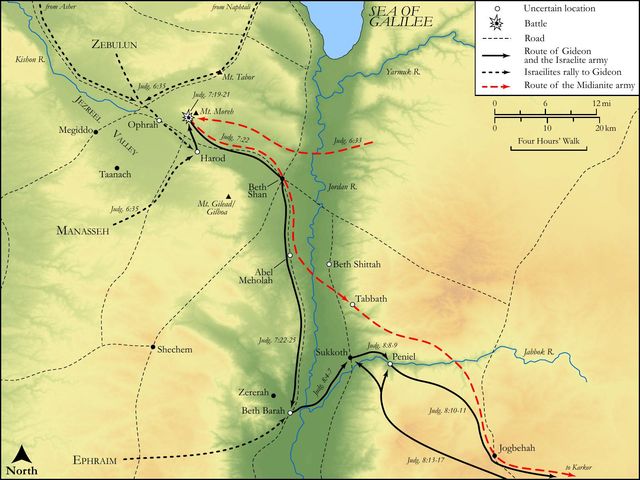
We have here the prosecution of this glorious victory. 1. Gideon's soldiers that had been dismissed, and perhaps had begun to disperse themselves, upon notice of the enemies' flight got together again, and vigorously pursued those whom they had not courage to face. The men of Israel out of Naphtali and Asher who did this (Jdg 7:23) were not such as now came from those distant countries, but the same that had enlisted themselves (Jdg 6:35), but had been cashiered. Those who were fearful and afraid to fight (Jdg 7:3) now took heart, when the worst was over, and were ready enough to divide the spoil, though backward to make the onset. Those also that might not fight though they had a mind to it, and were disbanded by order from God, did not as those, Ch2 25:10, Ch2 25:13, return in great anger, but waited for an opportunity of doing service in pursuing the victory, though they were denied the honour of helping to force the lines. 2. The Ephraimites, upon a summons from Gideon, came in unanimously, and secured the passes over Jordan, by the several fords, to cut off the enemies' retreat into their own country, that they might be entirely destroyed, to prevent the like mischief to Israel another time. Now that they had begun to fall, it was easy to say, Down with them, Est 6:13. They took the waters (Jdg 7:24), that is, posted themselves along the river side, so that the Midianites, who fled from those who pursued them, fell into the hands of those that waited to intercept them. Here were fear, and the pit, and the snare, Isa 24:17. 3. Two of the chief commanders of the host of Midian were taken and slain by the Ephraimites on this side Jordan, Jdg 7:25. Their names perhaps signified their nature, Oreb signifies a raven, and Zeeb a wolf (corvus and lupus). These in their flight had taken shelter, one in a rock (Isa 2:21; Rev 6:15), the other by a wine-press, as Gideon for fear of them had lately hid his corn by a wine-press, Jdg 6:11. But the places of their shelter were made the places of their slaughter, and the memory of it was preserved to posterity in the names of the places, to their perpetual infamy: Here fell the princes of Midian.
Continue studying Judges 7:23 across the web’s major study libraries — every link below opens this exact verse, chapter, or book on the destination site.
Read & Compare
 BibleGatewayThis verse in more than 200 translations and 70 languages.
 Bible.comThe YouVersion reader — hundreds of translations, reading plans, and highlights.
 ESV.orgCrossway's official English Standard Version reader.
 NET BibleThe NET translation with 60,000+ translators' notes on every rendering decision.
 STEP BibleTyndale House's free study tool — original text, vocabulary, and scholarly resources.
 BibliaLogos Bible Software's free web reader.
 USCCBThe New American Bible (Revised Edition) with the U.S. bishops' study notes.
Commentaries
 BibleHub CommentariesDozens of classic commentaries on this verse, gathered on one page.
 StudyLightMore than 100 commentary sets — the largest collection on the web.
 BibleRefPlain-English commentary on what this verse means, verse by verse.
 Enduring WordDavid Guzik's free commentary on this chapter, widely used by Bible teachers.
 Bible Study ToolsVerse commentary alongside Greek and Hebrew study aids.
Original Language & Research
- BibleHub InterlinearThe verse word by word — original language, transliteration, and English.
- BibleHub LexiconEvery word's original-language definition and Strong's entry.
 Blue Letter BibleDeep-study tools — Strong's numbers, concordance, and word studies.
 SefariaThe Hebrew text with Rashi and centuries of Jewish commentary.
Sermons, Hymns & Audio


TrulyRandomVerse is not affiliated with these sites and doesn’t control their content. They’re linked because they’re genuinely useful.
Summary
Judges 7:23 captures the pivotal moment immediately following God's miraculous routing of the Midianite army through Gideon's 300 men. After the divine intervention caused widespread panic and self-destruction within the enemy ranks, this verse details the rapid mobilization of Israelite tribes—specifically Naphtali, Asher, and Manasseh—who rallied to pursue and decisively subdue the fleeing Midianite forces, thereby consolidating the divinely granted victory and ensuring a comprehensive deliverance for Israel.
Context
ShowHideLiterary Context
Judges 7:23 directly follows the astonishing, divinely orchestrated rout of the Midianites described in Judges 7:19-22. Gideon's small, hand-picked force of 300, armed only with trumpets, pitchers, and torches, executed God's precise and unconventional strategy. The resulting cacophony and sudden burst of light created such profound confusion within the enemy camp that the Midianites turned their swords against one another, leading to a chaotic and self-destructive flight. This verse marks a crucial narrative transition: from the exclusive, miraculous work of God through a tiny remnant to the broader involvement of the Israelite populace in the "mopping-up" operation. It signifies the shift from the initial, decisive divine blow to the necessary human follow-through in securing the victory, emphasizing that divine power empowers, rather than negates, human responsibility in the unfolding of God's redemptive plan. The preceding verses highlighted God's sovereignty; this verse underscores human participation.
Historical & Cultural Context
For seven oppressive years, the Midianites, Amalekites, and other "people of the East" had severely afflicted Israel, systematically raiding their crops and livestock, and forcing the Israelites to seek refuge in mountain strongholds and caves (Judges 6:1-6). This period of subjugation was a direct consequence of Israel's persistent idolatry and disobedience, as highlighted by the prophet in Judges 6:7-10. The tribes specifically mentioned—Naphtali, Asher, and Manasseh—were predominantly located in the northern and central regions of Israel, making them particularly vulnerable to these nomadic raiders. Their eager and swift response to the call to arms reflects their profound desire for liberation from years of economic devastation, famine, and terror. The act of "pursuing" a defeated enemy was a common and crucial ancient military tactic, designed to ensure the complete annihilation of the retreating forces, thereby preventing their regrouping, recovery, and future threat.
Key Themes
ShowHideThis verse powerfully illustrates several foundational themes prevalent throughout the book of Judges and the broader biblical narrative. Firstly, it underscores the theme of Divine Victory, Human Participation. While God alone secured the initial, impossible victory with Gideon's minimal force of 300 (Judges 7:7), Israel is subsequently called to actively participate in the consolidation of that victory. This demonstrates that divine power does not diminish human responsibility but rather empowers and necessitates it. Secondly, the gathering of multiple tribes highlights the theme of Unity in Response. Despite the pervasive tribal fragmentation and disunity often depicted in the book of Judges, this moment reveals a nascent, collective Israelite effort against a common oppressor, signifying a crucial, albeit temporary, unity in the face of a shared existential threat. Finally, the imperative to "pursued after the Midianites" emphasizes the theme of Thoroughness of Deliverance. It was insufficient for the enemy merely to be scattered; they needed to be completely eradicated to ensure lasting peace and prevent future oppression, a principle that finds deep resonance in the biblical understanding of dealing with sin and spiritual adversaries.
Exposition and Analysis
ShowHideKey Word Analysis
ShowHideThis primitive root (H6817) primarily means "to shriek" or "to cry out," but by implication, it also signifies "to proclaim (an assembly)" or "to call together." In this context, it denotes a deliberate and urgent mustering or assembly of the Israelite men. It implies a conscious decision by the tribes to unite and respond to the call, not merely a spontaneous, disorganized rush. Following God's miraculous intervention, this gathering represents the human side of the covenant, where Israel actively participates in the work of deliverance, demonstrating their commitment to the victory God has already initiated.
This primitive root (H7291) signifies "to run after," usually with hostile intent, or "to chase, hunt down, or hot pursuit." It carries the strong connotation of an aggressive, determined effort to overtake and destroy. This word highlights the thoroughness required in securing the victory and preventing the Midianites from regrouping or posing a future threat. It's not a casual follow-up but a relentless drive to eliminate the enemy entirely, ensuring the full realization of the divine deliverance.
Verse Breakdown
ShowHide"And the men of Israel gathered themselves together"
This phrase marks the critical shift from God's singular, miraculous action through Gideon's small band to the broader, national involvement of the Israelite population. It signifies a widespread mobilization beyond the initial 300, indicating a collective and responsive engagement to the divine deliverance that had just occurred.
"out of Naphtali, and out of Asher, and out of all Manasseh"
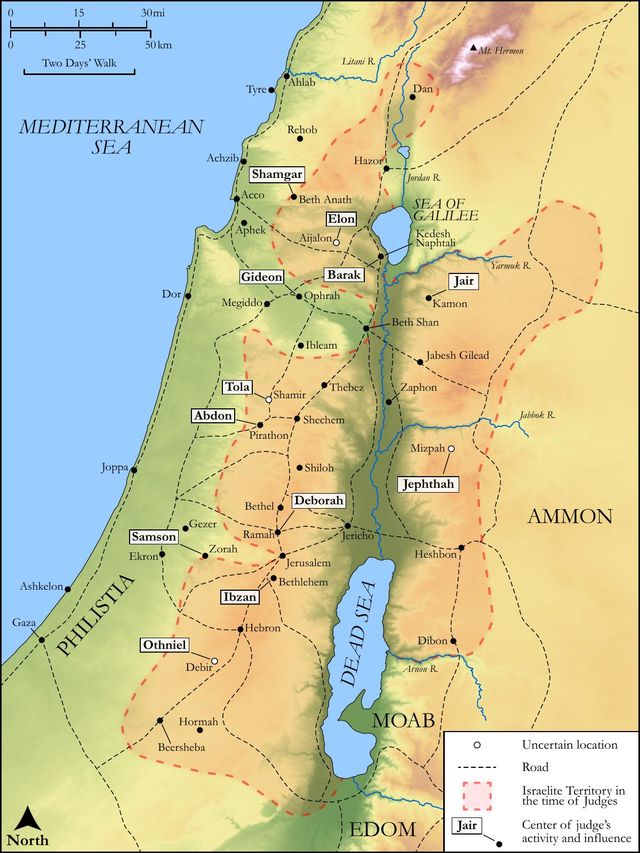
This specifies the geographical and tribal scope of the mobilization. These tribes, situated in the northern and central regions, had borne the brunt of Midianite oppression and thus possessed a profound vested interest in the complete eradication of the enemy. Their inclusion underscores the widespread nature of the Midianite threat and the collective desire for freedom. Manasseh, being Gideon's own tribe, suggests a particularly strong and localized response within that region.
"and pursued after the Midianites"
This final clause articulates the immediate objective of the gathering: to chase down the fleeing Midianite army with the intent of complete defeat. This pursuit was absolutely crucial for consolidating the initial victory, ensuring the enemy's utter destruction, and preventing their return. It represents the necessary human effort required to finalize and secure the divine deliverance, transforming a rout into a decisive and lasting triumph.
Literary Devices
ShowHideJudges 7:23 employs several effective literary devices. There is a clear Narrative Shift from the preceding verses, which focused exclusively on the miraculous, singular divine action, to the broader, human participation in the pursuit. This shift serves to emphasize that while God initiates and secures the impossible victory, He subsequently calls His people to engage in the necessary follow-through. The mention of specific tribes—Naphtali, Asher, and Manasseh—functions as a form of Synecdoche, where these parts represent the broader Israelite nation responding to the call to arms. This also highlights the Geographical Specificity, grounding the narrative firmly in the historical reality of the land and identifying the tribes most directly affected by the Midianite incursions. Furthermore, the verse powerfully contributes to the overarching Theme of Divine Sovereignty and Human Responsibility, illustrating how God's omnipotence enables and necessitates human action in the unfolding of His redemptive plan, demonstrating a divine-human partnership in securing deliverance.
Theological and Thematic Connections
ShowHideJudges 7:23 beautifully illustrates a profound biblical principle: while salvation and decisive victory belong solely to the Lord, He sovereignly chooses to involve and empower His people in the ongoing work of consolidation, application, and pursuit. God's initial, miraculous intervention ensures that the victory is undeniably His, preventing any human boasting or self-glory (Judges 7:2). However, once the enemy is routed by divine power, the community of faith is summoned to engage in the "mopping-up" operation, ensuring the enemy's complete defeat and the full realization of the deliverance. This dynamic partnership between divine initiative and human obedience is a recurring pattern throughout Scripture, emphasizing that true faith is not passive but active and responsive to God's mighty acts, diligently working out what God has already worked in.
Reflection and Application
ShowHideJudges 7:23 offers a profound and enduring lesson for believers today: God's decisive victory in our lives and in the world does not negate, but rather necessitates, our call to active participation. Christ has secured the ultimate triumph over sin, death, and the devil, but we are called to "pursue" the implications of that victory in our daily lives. This means actively disarming the remnants of sin's influence, pressing forward in holiness, and diligently spreading the good news of His kingdom. Just as the Israelites pursued the fleeing Midianites to ensure their complete eradication and prevent future oppression, we are called to be vigilant in our spiritual walk, not allowing any ground to be regained by the enemy. Our pursuit is one of faith, obedience, and perseverance, building upon the finished work of Christ and living out the freedom He has already won. It reminds us that while salvation is entirely God's work, sanctification involves our diligent cooperation and active engagement in the spiritual battle, empowered by His Spirit.
Questions for Reflection
ShowHideFAQ
ShowHideWhy did God use only 300 men for the initial victory, but then call thousands more to join the pursuit?
ShowHideGod deliberately reduced Gideon's army from 32,000 to 300 men (Judges 7:2-7) to ensure that the victory would be clearly and undeniably attributed to His power alone, not to human strength, numbers, or strategic genius. This prevented Israel from boasting in themselves and underscored God's absolute sovereignty. However, once the miraculous, initial victory was secured and the Midianites were in disarray and fleeing, God called the broader Israelite population to join the pursuit. This served several crucial purposes: it allowed for a more complete and decisive eradication of the enemy, preventing their regrouping and future threat; it involved the people in the consolidation of the victory, fostering a sense of shared deliverance, responsibility, and ownership; and it powerfully demonstrated that while God initiates the impossible and secures the ultimate triumph, He often uses and empowers His people to carry out the practical, ongoing work of His kingdom, establishing a pattern of divine sovereignty working in tandem with human responsibility.
Christ-Centered Fulfillment
ShowHideJudges 7:23, with its vivid depiction of Israel's unified pursuit of a divinely defeated enemy, finds its ultimate and glorious fulfillment in the triumphant work of Jesus Christ and the ongoing mission of His church. Just as God secured the impossible victory over Midian through Gideon's small, divinely chosen band, Christ, through His singular, decisive, and perfect work on the cross, secured the ultimate victory over sin, death, and the principalities and powers of darkness (Colossians 2:15). He disarmed these spiritual rulers and authorities, making a public spectacle of them, triumphing over them in the cross. While Christ accomplished this definitive and finished victory, believers are called to "pursue" the implications of this triumph in their daily lives and in the world. We are not fighting for victory, but from victory. This "pursuit" involves living out the new life in Christ, actively putting off the old self with its corrupt practices and putting on the new self, created to be like God in true righteousness and holiness (Ephesians 4:22-24). It also entails actively participating in the Great Commission, making disciples of all nations, teaching them to observe all that Christ has commanded, knowing that He is with us always (Matthew 28:19-20). The unified effort of the Israelite tribes foreshadows the church, the body of Christ, united in Him and empowered by His Spirit, pressing forward to see His kingdom fully realized and the spiritual enemies of humanity utterly subdued, building on the unshakeable foundation of His finished work.