


Joshua 22:6
Bible text: King James Version (1769 Blayney text) · Public domain
Bible text: Berean Standard Bible · Public domain
Bible text: American Standard Version (1901) · Public domain
Bible text: World English Bible, Messianic edition · Public domain
Bible text: Geneva Bible (1599) · Public domain
Bible text: Young's Literal Translation · Public domain
- וַיְבָרְכֵםvay·va·re·Khemand he blessed themH1288Conj-w ¦ V-Piel-ConsecImperf-3ms ¦ 3mpVerb Piel Consecutive Imperfect 3rd Singular Masculineוַandיְבָרְכֵhe blessedםthem
- יְהוֹשֻׁעַye·ho·Shu·a'JoshuaH3091N-proper-mNoun Proper Masculine
- וַיְשַׁלְּחֵםvay·sha·le·Chemand he sent away themH7971Conj-w ¦ V-Piel-ConsecImperf-3ms ¦ 3mpVerb Piel Consecutive Imperfect 3rd Singular Masculineוַandיְשַׁלְּחֵhe sent awayםthem
- וַיֵּלְכוּvai·ye·le·Khuand they wentH1980Conj-w ¦ V-Qal-ConsecImperf-3mpVerb Qal Consecutive Imperfect 3rd Plural Masculineוַandיֵּלְכוּthey went
- אֶל'eltoH413PrepPreposition
- אָהֳלֵיהֶם'o·ho·lei·Hemtheir tentsH168N-mpc ¦ 3mpNoun Plural Masculine Constructאָהֳלֵיtentsהֶםtheir
English is a literal word-by-word gloss of the Hebrew, not the KJV's wording. Why?
This is the original text the KJV's translators worked from — each Hebrew word with its own literal English meaning in this verse, prepared by scholars at Tyndale House, Cambridge. The KJV translates whole sentences, not word by word, so its wording differs: one Hebrew word can become several English words, and the KJV may choose “the LORD” where the gloss reads “Yahweh”. Both are faithful — they answer different questions. For the KJV's own rendering, switch to the KJV text.
Details
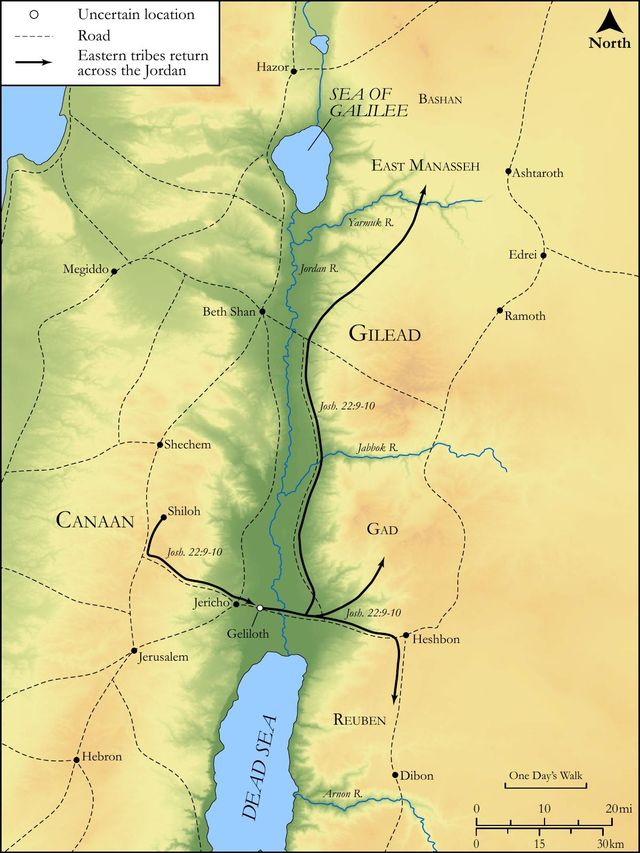
See on the biblical-era map
Study this verse
Historical interpretation
Historical reception
1 surviving comment on this verse from the historical church.
After these things Jesus [Joshua] assembles the sons of Reuben and the sons of Gad and the half-tribe of Manasseh, who had served as soldiers with him to overcome the foes of the Israelites, and he dismisses them to go to their inheritance with certain gifts given to them, as it is written. Whereby this seems to indicate the mystery that “when the fullness of the nations will come in,” they receive from the Lord Jesus what was promised to them, those who had been taught and instructed by Moses and who by prayers and entreaties brought aid to us who are placed in the contest. They have not yet “attained the promises,” waiting so that our calling might also be fulfilled, as the apostle says. But now at last with the gifts they receive from Jesus they may attain the perfection that had been deferred for them so that each one may dwell in peace with every war and every battle ceasing.
Continue studying Joshua 22:6 across the web’s major study libraries — every link below opens this exact verse, chapter, or book on the destination site.
Read & Compare
 BibleGatewayThis verse in more than 200 translations and 70 languages.
 Bible.comThe YouVersion reader — hundreds of translations, reading plans, and highlights.
 ESV.orgCrossway's official English Standard Version reader.
 NET BibleThe NET translation with 60,000+ translators' notes on every rendering decision.
 STEP BibleTyndale House's free study tool — original text, vocabulary, and scholarly resources.
 BibliaLogos Bible Software's free web reader.
 USCCBThe New American Bible (Revised Edition) with the U.S. bishops' study notes.
Commentaries
 BibleHub CommentariesDozens of classic commentaries on this verse, gathered on one page.
 StudyLightMore than 100 commentary sets — the largest collection on the web.
 BibleRefPlain-English commentary on what this verse means, verse by verse.
 Enduring WordDavid Guzik's free commentary on this chapter, widely used by Bible teachers.
 Bible Study ToolsVerse commentary alongside Greek and Hebrew study aids.
Original Language & Research
- BibleHub InterlinearThe verse word by word — original language, transliteration, and English.
- BibleHub LexiconEvery word's original-language definition and Strong's entry.
 Blue Letter BibleDeep-study tools — Strong's numbers, concordance, and word studies.
 SefariaThe Hebrew text with Rashi and centuries of Jewish commentary.
Sermons, Hymns & Audio


TrulyRandomVerse is not affiliated with these sites and doesn’t control their content. They’re linked because they’re genuinely useful.
Summary
Joshua 22:6 marks a profound moment of culmination and transition in Israel's early history, signifying the honorable conclusion of the Transjordanian tribes' dedicated military service alongside their brethren. Following years of unwavering commitment to the conquest of Canaan, Joshua, as the divinely appointed leader, formally bestows a blessing upon them and grants their dismissal. This verse encapsulates the powerful themes of covenant fidelity, the profound value of leadership affirmation, and the deep satisfaction derived from returning to one's inheritance and settled life after a period of arduous, unified effort for the nation.
Context
ShowHideLiterary Context
This verse serves as the immediate and climactic conclusion to a significant narrative arc within the book of Joshua, specifically detailing the fulfillment of a long-standing covenant obligation. Chapters 13-21 meticulously recount the intricate process of land allocation to the various Israelite tribes west of the Jordan. Joshua 22:1-6 then focuses on Joshua's final commendation and formal dismissal of the tribes of Reuben, Gad, and the half-tribe of Manasseh, who had chosen to settle east of the Jordan River. Their commitment, initially made to Moses in Numbers 32 and solemnly reaffirmed to Joshua in Joshua 1:12-18, was to cross the Jordan and fight alongside their Israelite kin until the entire land of Canaan was subdued and divided. Joshua 22:6 directly follows Joshua's heartfelt commendation of their faithfulness (Joshua 22:2-5) and immediately precedes the dramatic and almost catastrophic incident of the altar of witness (Joshua 22:10ff), which ironically threatened the very national unity celebrated in this verse. Thus, this moment stands as a poignant high point of relief, national cohesion, and the successful completion of a shared divine mandate, occurring just before a new challenge to Israel's unity emerges.
Historical & Cultural Context
In Israel, oaths, vows, and covenant obligations held immense societal and spiritual weight, often sealed with elaborate ceremonies, blessings, or curses. The vow undertaken by the Transjordanian tribes was not merely a casual promise but a solemn commitment to their national and covenantal identity, demonstrating an extraordinary level of self-sacrifice and inter-tribal solidarity. For many years, these warriors had left their families and their newly acquired land east of the Jordan to participate in the arduous, often brutal, and prolonged campaigns west of the river. Joshua's blessing, therefore, was far more than a polite farewell; it constituted a formal, spiritual act, invoking divine favor and prosperity upon them, akin to a priestly benediction. This act underscored the sacred nature of their fulfilled obligation. The concept of "tents" (אֹהֶל, ohel) in this context is a pervasive biblical idiom for one's established home, family, and settled dwelling place, signifying a return to domestic life and the peaceful enjoyment of their hard-won inheritance. The geographical separation imposed by the Jordan River, while practical for land division, also presented a perpetual challenge to national unity, rendering this formal act of dismissal and blessing even more critical for maintaining Israel's cohesion.
Key Themes
ShowHideJoshua 22:6 powerfully encapsulates several foundational themes central to the book of Joshua and the broader Old Testament narrative. Firstly, it highlights the fulfillment of covenant obligation and unwavering faithfulness to one's word. The Transjordanian tribes meticulously honored their arduous commitment, demonstrating integrity, perseverance, and corporate responsibility. This echoes the Lord's own faithfulness in fulfilling His promises to Israel, as seen in Joshua 21:43-45. Secondly, the verse underscores the importance of faithful leadership and the power of commendation. Joshua, as a godly leader, not only recognizes but publicly affirms the dedication and sacrifice of these warriors, bestowing a blessing that carries significant spiritual weight and acknowledges their vital service. This act of blessing reinforces his role as God's chosen instrument for guiding Israel into their inheritance. Thirdly, the verse points to the enduring theme of national unity and solidarity. Despite geographical separation and distinct tribal inheritances, the tribes acted as one people with a shared purpose, fulfilling a common divine mission. Their return to their "tents" also signifies the satisfaction of returning to one's inheritance and rest after a period of intense labor and conflict, a recurring motif throughout the book of Joshua, as the people finally enter and settle in the land promised to their ancestors, experiencing the rest the Lord had promised them, as detailed in Joshua 23:1.
Exposition and Analysis
ShowHideKey Word Analysis
ShowHideThis primitive root signifies "to kneel," and by implication, "to bless God (as an act of adoration)" or "man (as a benefit)." In this context, Joshua's act of blessing the tribes is a formal pronouncement of well-being, prosperity, and God's favor upon the recipients, specifically acknowledging their faithfulness and obedience. It carries significant spiritual weight, akin to a solemn benediction, recognizing God as the ultimate source of all good. Joshua's action here is a public commendation and an invocation of God's continued presence and favor upon them as they return to their homes, echoing the priestly blessing in Numbers 6:24-26.
This primitive root means "to send away, for, or out," encompassing a wide variety of applications. In Joshua 22:6, it denotes an official, honorable dismissal from military service. It implies that their arduous duty was fully completed, and they were released with full authorization to return to their homes and families. It is a formal act of release, signifying the successful and recognized conclusion of their long-standing covenant obligation to their brethren.
Derived from a root meaning "to be clearly conspicuous from a distance," this noun literally refers to a "tent." However, in this biblical idiom, "tents" represents one's dwelling place, home, or family. It symbolizes the settled life, the domestic sphere, and the secure enjoyment of one's inheritance. Their return "unto their tents" marks the end of their nomadic military campaign and their re-entry into the normalcy of tribal and family life within their allotted territory east of the Jordan, signifying rest and peace after conflict.
Verse Breakdown
ShowHide"So Joshua blessed them"
This opening clause emphasizes Joshua's authoritative and spiritual role as Israel's leader. His act of blessing is not a mere formality but a deliberate, divinely sanctioned act of commendation and invocation of God's favor upon the Transjordanian tribes. It acknowledges their unwavering commitment and successful fulfillment of their covenant obligations, signifying official recognition of their service and spiritual well-wishes for their future. This blessing carries the weight of a leader acting under God's authority.
"and sent them away"
This phrase denotes the formal and honorable dismissal of the warriors from their shared national military duty. Their long-standing commitment, which had extended for many years, was now officially and completely discharged. This act of "sending away" is a release from their collective responsibility, granting them permission and encouragement to return to their own lands and families, having fulfilled their arduous vow with integrity.
"and they went unto their tents"
This final clause describes the physical and symbolic act of returning home. "Unto their tents" functions as a powerful idiom for returning to their respective families, communities, and inherited lands east of the Jordan River. It marks the definitive end of their demanding military campaign and the beginning of their settled life, allowing them to enjoy the fruits of the conquest and their own tribal inheritance in peace and security.
Literary Devices
ShowHideJoshua 22:6, though concise, effectively employs several significant literary devices to convey its profound meaning. The verse functions as a Climax to the extended narrative of the Transjordanian tribes' military service, bringing their long-standing commitment to a formal, blessed, and honorable conclusion. The phrase "went unto their tents" is a classic biblical Idiom, widely understood to mean "returned home" or "returned to their dwelling places," symbolizing the crucial transition from the rigors of military campaign to the tranquility of settled domestic life. Furthermore, Joshua's act of "blessing" carries profound Symbolism, representing not just personal goodwill but a divine endorsement and invocation of God's favor upon those who have demonstrated faithfulness and obedience. The "tents" themselves also serve as a potent Symbol of rest, family, security, and the peaceful enjoyment of one's inheritance after a period of intense labor and conflict, signifying the fulfillment of God's promise of land and rest.
Theological and Thematic Connections
ShowHideJoshua 22:6 is rich with theological significance, powerfully underscoring God's unwavering faithfulness to His covenant people and the paramount importance of human fidelity to divine commands. The verse demonstrates that God honors obedience, perseverance, and integrity; the peaceful dismissal and blessing of the Transjordanian tribes illustrate that fulfilling one's commitments, especially those made in covenant with God and neighbor, brings divine favor, commendation, and the deep satisfaction of a task completed well. Joshua's blessing, as God's appointed leader, reflects God's own character as a benevolent Father who acknowledges and rewards diligent service. This pivotal moment also reinforces the concept of national unity under God's sovereign leadership, even across geographical divides, highlighting that shared purpose, mutual support, and adherence to covenant are vital for the flourishing of God's people. The return to their "tents" symbolizes the rest and inheritance that God graciously provides for those who walk in His ways, serving as a tangible foretaste of the ultimate rest found in Him.
Reflection and Application
ShowHideJoshua 22:6 offers profound and enduring lessons for contemporary believers, providing a powerful paradigm for faithfulness, leadership, and the rhythm of life. Just as the Transjordanian tribes faithfully fulfilled their arduous commitment, enduring years of separation and conflict, we too are called to be people of our word, diligently pursuing the responsibilities and vows we undertake, whether in our personal lives, professional callings, or spiritual service to God and neighbor. There is immense satisfaction, divine favor, and deep personal integrity to be gained from completing a task with diligence, integrity, and perseverance, knowing that our labor is not in vain. Furthermore, Joshua's exemplary leadership reminds leaders and individuals alike of the transformative power of affirmation and blessing. Acknowledging, commending, and publicly blessing faithful service—whether in the church, workplace, family, or any sphere of influence—can be profoundly encouraging, validating, and motivating for those who have served. Finally, the "return to their tents" speaks powerfully to the necessity of rest, integration, and returning to one's primary sphere of influence after periods of intense labor or spiritual battle. We are not designed to be perpetually in "campaign mode"; there is a divinely ordained time for rest, for family, for nurturing our domestic lives, and for integrating the lessons learned from our service into the very fabric of our daily existence, trusting that God continues to bless us in our homes and vocations. This balance is crucial for sustained faithfulness and well-being.
Questions for Reflection
ShowHideFAQ
ShowHideWhy was it significant that Joshua "blessed" the Transjordanian tribes?
ShowHideJoshua's blessing was far more than a polite farewell; it was a formal, spiritual act with profound significance in the biblical context. To "bless" (Hebrew: bârak) means to invoke divine favor, prosperity, and peace upon someone. As God's appointed leader, Joshua's blessing carried the weight of divine approval and authority, acknowledging the tribes' faithfulness, perseverance, and integrity in fulfilling their covenant obligations. It was a public commendation of their arduous service and a heartfelt prayer for God's continued protection, guidance, and prosperity as they returned to their homes and families. This act solidified their standing as an integral part of the unified nation of Israel, despite their geographical separation, and powerfully affirmed that God honors those who are obedient and faithful to His commands, much like the solemn priestly blessing found in Numbers 6:24-26.
What does the phrase "they went unto their tents" mean in this context?
ShowHideThe phrase "they went unto their tents" is a common and significant biblical idiom that signifies returning home, to one's family, and settled dwelling place. It does not necessarily mean they literally lived in nomadic tents at this point, but rather that they were returning to their established domestic lives and their allotted inheritance east of the Jordan River. This phrase marks the successful and honorable completion of their military campaign and their transition from a period of arduous service, warfare, and communal living to a settled existence within their own tribal territories. It symbolizes the end of their shared national duty and the beginning of their peaceful enjoyment of the land God had provided for them, fulfilling the promise made to them earlier, as seen in Joshua 1:15.
Christ-Centered Fulfillment
ShowHideJoshua 22:6, while a narrative of ancient Israel's faithfulness and rest, resonates with profound Christ-centered fulfillment, revealing layers of typological significance. Joshua, whose very name (Yᵉhôwshûwaʻ) means "Yahweh saves" and is the Hebrew equivalent of "Jesus," serves as a powerful type of Christ, the greater Joshua. Just as Joshua led Israel into their promised land and granted them rest from their enemies, so Jesus leads His people into a spiritual inheritance and eternal rest from the bondage of sin and death. The Transjordanian tribes' faithful fulfillment of their arduous vow, enduring years of separation and conflict before returning to their inheritance, powerfully foreshadows Christ's perfect obedience and complete fulfillment of the Father's will, even unto death on the cross, as profoundly articulated in Philippians 2:8. He "finished the work" that the Father gave Him to do (John 17:4) and then, like Joshua, blessed His disciples before His ascension, commissioning them to return to their "tents" (their earthly lives) to bear witness to His completed redemptive work (Luke 24:50-51). Our own "return to our tents" in this life, after periods of service, spiritual battle, or fulfilling God's call, is empowered and sanctified by Christ's abiding blessing and the promise of His perpetual presence (Matthew 28:20). Ultimately, the temporary "tents" of this earthly life point to the eternal "tents" or dwelling places that Christ has prepared for us in His Father's house (John 14:2-3), where we will experience ultimate rest, full enjoyment of our inheritance, and unending communion with Him. Thus, Joshua 22:6 beautifully prefigures the completed work of Christ, His gracious blessing upon His faithful people, and their ultimate rest and glorious inheritance in Him.