


John 5:25
Bible text: King James Version (1769 Blayney text) · Public domain
Bible text: King James Version with Strong's numbers · Public domain
Bible text: Berean Standard Bible · Public domain
Bible text: American Standard Version (1901) · Public domain
Bible text: World English Bible, Messianic edition · Public domain
Bible text: Geneva Bible (1599) · Public domain
Bible text: Young's Literal Translation · Public domain
- ἈμὴνAmēnAmenG281INJ-HEBInterjection
- ἀμὴνamēnAmenG281INJ-HEBInterjection
- λέγωlegōI sayG3004V-PAI-1SVerb Present Active Indicative 1st Singular
- ὑμῖνhuminto youG4771P-2DPPersonal pronoun Dative 2nd Plural
- ὅτιhotithatG3754CONJConjunction
- ἔρχεταιerchetaiis comingG2064V-PNI-3SVerb Present Middle Or Passive Deponent Indicative 3rd Singular
- ὥραhōraan hourG5610N-NSFNoun Nominative Singular Feminine
- καὶkaiandG2532CONJConjunction
- νῦνnunnowG3568ADVAdverb
- ἐστινestinisG1510V-PAI-3SVerb Present Active Indicative 3rd Singular
- ὅτεhotewhenG3753PREPPreposition
- οἱhoitheG3588T-NPMDefinite article Nominative Plural Masculine
- νεκροὶnekroideadG3498A-NPMAdjective Nominative Plural Masculine
- ἀκούσουσινakousousinwill hearG191V-FAI-3PVerb Future Active Indicative 3rd Plural
- τῆςtēstheG3588T-GSFDefinite article Genitive Singular Feminine
- φωνῆςphōnēsvoiceG5456N-GSFNoun Genitive Singular Feminine
- τοῦtouof theG3588T-GSMDefinite article Genitive Singular Masculine
- υἱοῦhuiouSonG5207N-GSMNoun Genitive Singular Masculine
- τοῦtou<the>G3588T-GSMDefinite article Genitive Singular Masculine
- θεοῦtheouof GodG2316N-GSM-TNoun Genitive Singular Masculine Title
- καὶkaiandG2532CONJConjunction
- οἱhoithoseG3588T-NPMDefinite article Nominative Plural Masculine
- ἀκούσαντεςakousanteshaving heardG191V-AAP-NPMVerb Aorist Active Participle Nominative Plural Masculine
- ζήσουσινzēsousinwill liveG2198V-FAI-3PVerb Future Active Indicative 3rd Plural
English is a literal word-by-word gloss of the Greek, not the KJV's wording. Why?
This is the original text the KJV's translators worked from — each Greek word with its own literal English meaning in this verse, prepared by scholars at Tyndale House, Cambridge. The KJV translates whole sentences, not word by word, so its wording differs: one Greek word can become several English words, and the KJV may choose “charity” where the gloss reads “love”. Both are faithful — they answer different questions. For the KJV's own rendering, switch to the KJV text.
Details
See on the biblical-era maps
Study this verse
Public-domain commentary
Matthew Henry
From his Commentary on the Whole Bible. Henry comments on passages, not single verses — this entry covers John 5:17–30. His four-level outline is real structure in the source text, so it is rendered as structure.
We have here Christ's discourse upon occasion of his being accused as a sabbath-breaker, and it seems to be his vindication of himself before the sanhedrim, when he was arraigned before them: whether on the same day, or two or three days after, does not appear; probably the same day. Observe,
I.The doctrine laid down, by which he justified what he did on the sabbath day (v.
17): He answered them. This supposes that he had something laid to his charge: or what they suggested one to another, when they sought to slay him (v. 16), he knew, and gave this reply to, My Father worketh hitherto, and I work. At other times, in answer to the like charge, he had pleaded the example of David's eating the show-bread, of the priests' slaying the sacrifices, and of the people's watering their cattle on the sabbath day; but here he goes higher and alleges the example of his Father and his divine authority; waiving all other pleas, he insists upon that which was instar omnium—equivalent to the whole, and abides by it, which he had mentioned, Matt. xii. 8. The Son of man is Lord even of the sabbath day; but he here enlarges on it. 1. He pleads that he was the Son of God, plainly intimated in his calling God his Father; and, if so, his holiness was unquestionable and his sovereignty incontestable; and he might make what alterations he pleased of the divine law. Surely they will reverence the Son, the heir of all things. 2. That he was a worker together with God. (1.) My Father worketh hitherto. The example of God's resting on the seventh day from all his work is, in the fourth commandment, made the ground of our observing it as a sabbath or day of rest. Now God rested only from such work as he had done the six days before; otherwise he worketh hitherto, he is every day working, sabbath days and week-days, upholding and governing all the creatures, and concurring by his common providence to all the motions and operations of nature, to his own glory; therefore, when we are appointed to rest on the sabbath day, yet we are not restrained from doing that which has a direct tendency to the glory of God, as the man's carrying his bed had. (2.) I work; not only therefore I may work, like him, in doing good on sabbath days as well as other days, but I also work with him. As God created all things by Christ, so he supports and governs all by him, Heb. i. 3. This sets what he does above all exception; he that is so great a worker must needs be an uncontrollable governor; he that does all is Lord of all, and therefore Lord of the sabbath, which particular branch of his authority he would now assert, because he was shortly to show it further, in the change of the day from the seventh to the first.
II.The offence that was taken at his doctrine (v.
18): The Jews sought the more to kill him. His defence was made his offence, as if by justifying himself he had made bad worse. Note, Those that will not be enlightened by the word of Christ will be enraged and exasperated by it, and nothing more vexes the enemies of Christ than his asserting his authority; see Ps. ii. 3-5. They sought to kill him,
1.Because he had broken the sabbath; for, let him say what he would in his own justification, they are resolved, right or wrong, to find him guilty of sabbath breaking. When malice and envy sit upon the bench, reason and justice may even be silent at the bar, for whatever they can say will undoubtedly be over-ruled.
2.Not only so, but he had said also that God was his Father. Now they pretend a jealousy for God's honour, as before for the sabbath day, and charge Christ with it as a heinous crime that he made himself equal with God; and a heinous crime it had been if he had not really been so. It was the sin of Lucifer, I will be like the Most High. Now,
(1.)This was justly inferred from what he said, that he was the Son of God, and that God was his Father, patera idion—his own Father; his, so as he was no one's else. He had said that he worked with his Father, by the same authority and power, and hereby he made himself equal with God. Ecce intelligunt Judæi, quod non intelligunt Ariani—Behold, the Jews understand what the Arians do not.
(2.)Yet it was unjustly imputed to him as an offence that he equalled himself with God, for he was and is God, equal with the Father (Phil. ii. 6); and therefore Christ, in answer to this charge, does not except against the innuendo as strained or forced, makes out his claim and proves that he is equal with God in power and glory.
III.Christ's discourse upon this occasion, which continues without interruption to the end of the chapter.
In these verses he explains, and afterwards confirms, his commission, as Mediator and plenipotentiary in the treaty between God and man. And, as the honours he is hereby entitled to are such as it is not fit for any creature to receive, so the work he is hereby entrusted with is such as it is not possible for any creature to go through with, and therefore he is God, equal with the Father.
1.In general. He is one with the Father in all he does as Mediator, and there was a perfectly good understanding between them in the whole matter. It is ushered in with a solemn preface (v. 19): Verily, verily, I say unto you; I the Amen, the Amen, say it. This intimates that the things declared are,
(1.)Very awful and great, and such as should command the most serious attention.
(2.)Very sure, and such as should command an unfeigned assent.
(3.)That they are matters purely of divine revelation; things which Christ has told us, and which we could not otherwise have come to the knowledge of. Two things he saith in general concerning the Son's oneness with the Father in working:—
[1.]That the Son conforms to the Father (v. 19): The Son can do nothing of himself but what he sees the Father do; for these things does the Son. The Lord Jesus, as Mediator, is First, Obedient to his Father's will; so entirely obedient that he can do nothing of himself, in the same sense as it is said, God cannot lie, cannot deny himself, which expresses the perfection of his truth, not any imperfection in his strength; so here, Christ was so entirely devoted to his Father's will that it was impossible for him in any thing to act separately. Secondly, He is observant of his Father's counsel; he can, he will, do nothing but what he sees the Father do. No man can find out the work of God, but the only-begotten Son, who lay in his bosom, sees what he does, is intimately acquainted with his purposes, and has the plan of them ever before him. What he did as Mediator, throughout his whole undertaking, was the exact transcript or counterpart of what the Father did; that is, what he designed, when he formed the plan of our redemption in his eternal counsels, and settled those measures in every thing which never could be broken, nor ever needed to be altered. It was the copy of that great original; it was Christ's faithfulness, as it was Moses's, that he did all according to the pattern shown him in the mount. This is expressed in the present tense, what he sees the Father do, for the same reason that, when he was here upon earth, it was said, He is in heaven (ch. iii. 13), and is in the bosom of the Father (ch. i. 18); as he was even then by his divine nature present in heaven, so the things done in heaven were present to his knowledge. What the Father did in his counsels, the Son had ever in his view, and still he had his eye upon it, as David in spirit spoke of him, I have set the Lord always before me, Ps. xvi. 8. Thirdly, Yet he is equal with the Father in working; for what things soever the Father does these also does the Son likewise; he did the same things, not such things, but tauta, the same things; and he did them in the same manner, homoios, likewise, with the same authority, and liberty, and wisdom, the same energy and efficacy. Does the Father enact, repeal, and alter, positive laws? Does he over-rule the course of nature, know men's hearts? So does the Son. The power of the Mediator is a divine power.
[2.]That the Father communicates to the Son, v. 20. Observe,
First, The inducement to it: The Father loveth the Son; he declared, This is my beloved Son. He had not only a good will to the undertaking, but an infinite complacency in the undertaker. Christ was now hated of men, one whom the nation abhorred (Isa. xlix. 7); but he comforted himself with this, that his Father loved him.
Secondly, The instances of it. He shows it, 1. In what he does communicate to him: He shows him all things that himself doth. The Father's measures in making and ruling the world are shown to the Son, that he may take the same measures in framing and governing the church, which work was to be a duplicate of the work of creation and providence, and it is therefore called the world to come. He shows him all things ha autos poiei—which he does, that is, which the Son does, so it might be construed; all that the Son does is by direction from the Father; he shows him. 2. In what he will communicate; he will show him, that is, will appoint and direct him to do greater works than these. (1.) Works of greater power than the curing of the impotent man; for he should raise the dead, and should himself rise from the dead. By the power of nature, with the use of means, a disease may possibly in time be cured; but nature can never, by the use of any means, in any time raise the dead. (2.) Works of greater authority than warranting the man to carry his bed on the sabbath day. They thought this a daring attempt; but what was this to his abrogating the whole ceremonial law, and instituting new ordinances, which he would shortly do, "that you may marvel!" Now they looked upon his works with contempt and indignation, but he will shortly do that which they will look upon with amazement, Luke vii. 16. Many are brought to marvel at Christ's works, whereby he has the honour of them, who are not brought to believe, by which they would have the benefit of them.
2.In particular. He proves his equality with the Father, by specifying some of those works which he does that are the peculiar works of God. This is enlarged upon, v. 21-30. He does, and shall do, that which is the peculiar work of God's sovereign dominion and jurisdiction—judging and executing judgment, v. 22-24, 27. These two are interwoven, as being nearly connected; and what is said once is repeated and inculcated; put both together, and they will prove that Christ said not amiss when he made himself equal with God.
(1.)Observe what is here said concerning the Mediator's power to raise the dead and give life. See [1.] His authority to do it (v. 21): As the Father raiseth up the dead, so the Son quickeneth whom he will. First, It is God's prerogative to raise the dead, and give life, even his who first breathed into man the breath of life, and so made him a living soul; see Deut. xxxii. 30; 1 Sam. ii. 6; Ps. lxviii. 20; Rom. iv. 17. This God had done by the prophets Elijah and Elisha, and it was a confirmation of their mission. A resurrection from the dead never lay in the common road of nature, nor ever fell within the thought of those that studied only the compass of nature's power, one of whose received axioms was point blank against it: A privatione ad habitum non datur regressus—Existence, when once extinguished, cannot be rekindled. It was therefore ridiculed at Athens as an absurd thing, Acts xvii. 32. It is purely the work of a divine power, and the knowledge of it purely by divine revelation. This the Jews would own. Secondly, The Mediator is invested with this prerogative: He quickens whom he will; raises to life whom he pleases, and when he pleases. He does not enliven things by natural necessity, as the sun does, whose beams revive of course; but he acts as a free agent, has the dispensing of his power in his own hand, and is never either constrained, or restrained, in the use of it. As he has the power, so he has the wisdom and sovereignty, of a God; has the key of the grave and of death (Rev. i. 18), not as a servant, to open and shut as he is bidden, for he has it as the key of David, which he is master of, Rev. iii. 7. An absolute prince is described by this (Dan. v. 19): Whom he would he slew or kept alive; it is true of Christ without hyperbole.
[2.]His ability to do it. Therefore he has power to quicken whom he will as the Father does, because he has life in himself, as the Father has, v. 26. First, It is certain that the Father has life in himself. Not only he is a self-existent Being, who does not derive from, or depend upon, any other (Exod. iii. 14), but he is a sovereign giver of life; he has the disposal of life in himself; and of all good (for so life sometimes signifies); it is all derived from him, and dependent on him. He is to his creatures the fountain of life, and all good; author of their being and well-being; the living God, and the God of all living. Secondly, It is as certain that he has given to the Son to have life in himself. As the Father is the original of all natural life and good, being the great Creator, so the Son, as Redeemer, is the original of all spiritual life and good; is that to the church which the Father is to the world; see 1 Cor. viii. 6; Col. i. 19. The kingdom of grace, and all the life in that kingdom, are as fully and absolutely in the hand of the Redeemer as the kingdom of providence is in the hand of the Creator; and as God, who gives being to all things, has his being of himself, so Christ, who gives life, raised himself to life by his own power, ch. x. 18.
[3.]His acting according to this authority and ability. Having life in himself, and being authorized to quicken whom he will, by virtue hereof there are, accordingly, two resurrections performed by his powerful word, both which are here spoken of:—
First, A resurrection that now is (v. 29), a resurrection from the death of sin to the life of righteousness, by the power of Christ's grace. The hour is coming, and now is. It is a resurrection begun already, and further to be carried on, when the dead shall hear the voice of the Son of God. This is plainly distinguished from that in v. 28, which speaks of the resurrection at the end of time. This says nothing, as that does, of the dead in their graces, and of all of them, and their coming forth. Now, 1. Some think this was fulfilled in those whom he miraculously raised to life, Jairus's daughter, the widow's son, and Lazarus; and it is observable that all whom Christ raised were spoken to, as, Damsel, arise; Young man, arise; Lazarus, come forth; whereas those raised under the Old Testament were raised, not by a word, but other applications, 1 Kings xvii. 21; 2 Kings iv. 34; xiii. 21. Some understand it of those saints that rose with Christ; but we do not read of the voice of the Son of God calling them. But, 2. I rather understand it of the power of the doctrine of Christ, for the recovering and quickening of those that were dead in trespasses and sins, Eph. ii. 1. The hour was coming when dead souls should be made alive by the preaching of the gospel, and a spirit of life from God accompanying it: nay, it then was, while Christ was upon earth. It may refer especially to the calling of the Gentiles, which is said to be as life from the dead, and, some think, was prefigured by Ezekiel's vision (ch. xxxvii. 1), and foretold, Isa. xxvi. 19. Thy dead men shall live. But it is to be applied to all the wonderful success of the gospel, among both Jews and Gentiles; an hour which still is, and is still coming, till all the elect be effectually called. Note, (1.) Sinners are spiritually dead, destitute of spiritual life, sense, strength, and motion, dead to God, miserable, but neither sensible of their misery nor able to help themselves out of it. (2.) The conversion of a soul to God is its resurrection from death to life; then it begins to live when it begins to live to God, to breathe after him, and move towards him. (3.) It is by the voice of the Son of God that souls are raised to spiritual life; it is wrought by his power, and that power conveyed and communicated by his word: The dead shall hear, shall be made to hear, to understand, receive, and believe, the voice of the Son of God, to hear it as his voice; then the Spirit by it gives life, otherwise the letter kills. (4.) The voice of Christ must be heard by us, that we may live by it. They that hear, and attend to what they hear, shall live. Hear and your soul shall live, Isa. lv. 3.
Secondly, A resurrection yet to come; this is spoken of, v. 28, 29, introduced with, "Marvel not at this, which I have said of the first resurrection, do not reject it as incredible and absurd, for at the end of time you shall all see a more sensible and amazing proof of the power and authority of the Son of man." As his own resurrection was reserved to be the final and concluding proof of his personal commission, so the resurrection of all men is reserved to be a like proof of his commission to be executed by his spirit. Now observe here,
a.When this resurrection shall be: The hour is coming; it is fixed to an hour, so very punctual is this great appointment. The judgment is not adjourned sine die—to some time not yet pitched upon; no, he hath appointed a day. The hour is coming. (a.) It is not yet come, it is not the hour spoken of at v. 25, that is coming, and now is. Those erred dangerously who said that the resurrection was past already, 2 Tim. ii. 18, But, (b.) It will certainly come, it is coming on, nearer every day than other; it is at the door. How far off it is we know not; but we know that it is infallibly designed and unalterably determined.
b.Who shall be raised: All that are in the graves, all that have died from the beginning of time, and all that shall die to the end of time. It was said (Dan. xii. 2), Many shall arise; Christ here tells us that those many shall be all; all must appear before the Judge, and therefore all must be raised; every person, and the whole of every person; every soul shall return to its body, and every bone to its bone. The grave is the prison of dead bodies, where they are detained; their furnace, where they are consumed (Job xxiv. 19); yet, in prospect of their resurrection, we may call it their bed, where they sleep to be awaked again; their treasury, where they are laid up to be used again. Even those that are not put into graves shall arise; but, because most are put into graves, Christ uses this expression, all that are in the graves. The Jews used the word sheol for the grave, which signifies the state of the dead; all that are in that state shall hear.
c.How they shall be raised. Two things are here told us:—(a.) The efficient of this resurrection: They shall hear his voice; that is, he shall cause them to hear it, as Lazarus was made to hear that word, Come forth; a divine power shall go along with the voice, to put life into them, and enable them to obey it. When Christ rose, there was no voice heard, not a word spoken, because he rose by his own power; but at the resurrection of the children of men we find three voices spoken of, 1 Thess. iv. 16. The Lord shall descend with a shout, the shout of a king, with the voice of the archangel; either Christ himself, the prince of the angels, or the commander-in-chief, under him, of the heavenly hosts; and with the trumpet of God: the soldier's trumpet sounding the alarm of war, the judge's trumpet publishing the summons to the court. (b.) The effect of it: They shall come forth out of their graves, as prisoners out of their prison-house; they shall arise out of the dust, and shake themselves from it; see Isa. lii. 1, 2, 11. But this is not all; they shall appear before Christ's tribunal, shall come forth as those that are to be tried, come forth to the bar, publicly to receive their doom.
d.To what they shall be raised; to a different state of happiness or misery, according to their different character; to a state of retribution, according to what they did in the state of probation.
(a.)They that have done good shall come forth to the resurrection of life; they shall live again, to live for ever. Note, [a.] Whatever name men are called by, or whatever plausible profession they make, it will be well in the great day with those only that have done good, have done that which is pleasing to God and profitable to others. [b.] The resurrection of the body will be a resurrection of life to all those, and those only, that have been sincere and constant in doing good. They shall not only be publicly acquitted, as a pardoned criminal, we say, has his life, but they shall be admitted into the presence of God, and that is life, it is better than life; they shall be attended with comforts in perfection. To live is to be happy, and they shall be advanced above the fear of death; that is life indeed in which mortality is for ever swallowed up.
(b.)They that have done evil to the resurrection of damnation; they shall live again, to be for ever dying. The Pharisees thought that the resurrection pertained only to the just, but Christ here rectifies that mistake. Note, [a.] Evil doers, whatever they pretend, will be treated in the day of judgment as evil men. [b.] The resurrection will be to evil doers, who did not by repentance undo what they had done amiss, a resurrection of damnation. They shall come forth to be publicly convicted of rebellion against God, and publicly condemned to everlasting punishment; to be sentenced to it, and immediately sent to it without reprieve. Such will the resurrection be.
(2.)Observe what is here said concerning the Mediator's authority to execute judgment, v. 22-24, 27. As he has an almighty power, so he has a sovereign jurisdiction; and who so fit to preside in the great affairs of the other life as he who is the Father and fountain of life? Here is,
[1.]Christ's commission or delegation to the office of a judge, which is twice spoken of here (v. 22): He hath committed all judgment to the Son; and again (v. 27): he hath given him authority.
First, The Father judges no man; not that the Father hath resigned the government, but he is pleased to govern by Jesus Christ; so that man is not under the terror of dealing with God immediately, but has the comfort of access to him by a Mediator. Having made us, he may do what he pleases with us, as the potter with the clay; yet he does not take advantage of this, but draws us with the cords of a man. 2. He does not determine our everlasting condition by the covenant of innocency, nor take the advantage he has against us for the violation of that covenant. The Mediator having undertaken to make a vicarious satisfaction, the matter is referred to him, and God is willing to enter upon a new treaty; not under the law of the Creator, but the grace of the Redeemer.
Secondly, He has committed all judgment to the Son, has constituted him Lord of all (Acts x. 36; Rom. xiv. 9), as Joseph in Egypt, Gen. xli. 40. This was prophesied of, Ps. lxxii. 1; Isa. xii. 3, 4; Jer. xxiii. 5; Mic. v. 1-4; Ps. lxvii. 4; xcvi. 13; xcviii. 9. All judgment is committed to our Lord Jesus; for 1. He is entrusted with the administration of the providential kingdom, is head over all things (Eph. i. 11), head of every man, 1 Cor. xii. 3. All things consist by him, Col. i. 17. 2. He is empowered to make laws immediately to bind conscience. I say unto you is now the form in which the statues of the kingdom of heaven run. Be it enacted by the Lord Jesus, and by his authority. All the acts now in force are touched with his sceptre. 3. He is authorized to appoint and settle the terms of the new covenant, and to draw up the articles of peace between God and man; it is God in Christ that reconciles the world, and to him he has given power to confer eternal life. The book of life is the Lamb's book; by his award we must stand or fall. 4. He is commissioned to carry on and complete the war with the powers of darkness; to cast out and give judgment against the prince of this world, ch. xii. 31. He is commissioned not only to judge, but to make war, Rev. xix. 11. All that will fight for God against Satan must enlist themselves under his banner. 5. He is constituted sole manager of the judgment of the great day. The ancients generally understood these words of that crowning act of his judicial power. The final and universal judgment is committed to the Son of man; the tribunal is his, it is the judgment-seat of Christ; the retinue is his, his mighty angels; he will try the causes, and pass the sentence. Acts xvii. 31.
Thirdly, He has given him authority to execute judgment also, v. 27. Observe, 1. What the authority is which our Redeemer is invested with: An authority to execute judgment; he has not only a legislative and judicial power, but an executive power too. The phrase here is used particularly for the judgment of condemnation, Jude 15. poiesai krisin—to execute judgment upon all; the same with his taking vengeance, 2 Thess. i. 8. The ruin of impenitent sinners comes from the hand of Christ; he that executes judgment upon them is the same that would have wrought salvation for them, which makes the sentence unexceptionable; and there is no relief against the sentence of the Redeemer; salvation itself cannot save those whom the Saviour condemns, which makes the ruin remediless. 2. Whence he has that authority: the Father gave it to him. Christ's authority as Mediator is delegated and derived; he acts as the Father's Viceregent, as the Lord's Anointed, the Lord's Christ. Now all this redounds very much to the honour of Christ, acquitting him from the guilt of blasphemy, in making himself equal with God; and very much to the comfort of all believers, who may with the greatest assurance venture their all in such hands.
[2.]Here are the reasons (reasons of state) for which this commission was given him. He has all judgment committed to him for two reasons:—
First, Because he is the Son of man; which denotes these three things:—1. His humiliation and gracious condescension. Man is a worm, the son of man a worm; yet this was the nature, this the character, which the Redeemer assumed, in pursuance of the counsels of love; to this low estate he stooped, and submitted to all the mortifications attending it, because it was his Father's will; in recompence therefore of this wonderful obedience, God did thus dignify him. Because he condescended to be the Son of man, his Father made him Lord of all, Phil. ii. 8, 9. 2. His affinity and alliance to us. The Father has committed the government of the children of men to him, because, being the Son of man, he is of the same nature with those whom he is set over, and therefore the more unexceptionable, and the more acceptable, as a Judge. Their governor shall proceed from the midst of them, Jer. xxx. 21. Of this that law was typical; One of thy brethren shalt thou set king over thee, Deut. xvii. 15. 3. His being the Messiah promised. In that famous vision of his kingdom and glory, Dan. vii. 13, 14, he is called the Son of man; and Ps. viii. 4-6. Thou has made the Son of man have dominion over the works of thy hands. He is the Messiah, and therefore is invested with all this power. The Jews usually called the Christ the Son of David; but Christ usually called himself the Son of man, which was the more humble title, and bespeaks him a prince and Saviour, not the Jewish nation only, but to the whole race of mankind.
Secondly, That all men should honour the Son, v. 23. The honouring of Jesus Christ is here spoken of as God's great design (the Son intended to glorify the Father, and therefore the Father intended to glorify the Son, ch. xii. 32); and as man's great duty, in compliance with that design. If God will have the Son honoured, it is the duty of all to whom he is made known to honour him. Observe here, 1. The respect that is to be paid to our Lord Jesus: We must honour the Son, must look upon him as one that is to be honoured, both on account of his transcendent excellences and perfections in himself, and of the relations he stands in to us, and must study to give him honour accordingly; must confess that he is Lord, and worship him; must honour him who was dishonoured for us. 2. The degree of it: Even as they honour the Father. This supposes it to be our duty to honour the Father; for revealed religion is founded on natural religion, and directs us to honour the Son, to honour him with divine honour; we must honour the Redeemer with the same honour with which we honour the Creator. So far was it from blasphemy for him to make himself equal with God that it is the highest injury that can be for us to make him otherwise. The truths and laws of the Christian religion, so far as they are revealed, are as sacred and honourable as those of natural religion, and to be equally had in estimation; for we lie under the same obligations to Christ, the Author of our being; and have as necessary a dependence upon the Redeemer's grace as upon the Creator's providence, which is a sufficient ground for this law—to honour the Son as we honour the Father. To enforce this law, it is added, He that honours not the Son honours not the Father who has sent him. Some pretend a reverence for the Creator, and speak honourably of him, who make light of the Redeemer, and speak contemptibly of him; but let such know that the honours and interests of the Father and Son are so inseparably twisted and interwoven that the Father never reckons himself honoured by any that dishonour the Son. Note, (1.) Indignities done to the Lord Jesus reflect upon God himself, and will so be construed and reckoned for in the court of heaven. The Son having so far espoused the Father's honour as to take to himself the reproaches cast on him (Rom. xv. 3), the Father does no less espouse the Son's honour, and counts himself struck at through him. (2.) The reason of this is because the Son is sent and commissioned by the Father; it is the Father who hath sent him. Affronts to an ambassador are justly resented by the prince that sends him. And by this rule those who truly honour the Son honour the Father also; see Phil. ii. 11.
[3.]Here is the rule by which the Son goes in executing this commission, so those words seem to come in (v. 24): He that heareth and believeth hath everlasting life. Here we have the substance of the whole gospel; the preface commands attention to a thing most weighty, and assent to a thing most certain: "Verily, verily, I say unto you, I, to whom you hear all judgment is committed, I, in whose lips is a divine sentence; take from me the Christian's character and charter."
First, The character of a Christian: He that heareth my word, and believeth on him that sent me. To be a Christian indeed is, 1. To hear the word of Christ. It is not enough to be within hearing of it, but we must attend on it, as scholars on the instructions of their teachers; and attend to it, as servants to the commands of their masters; we must hear and obey it, must abide by the gospel of Christ as the fixed rule of our faith and practice. 2. To believe on him that sent him; for Christ's design is to bring us to God; and, as he is the first original of all grace, so is he the last object of all faith. Christ is our way; God is our rest. We must believe on God as having sent Jesus Christ, and recommended himself to our faith and love, by manifesting his glory in the face of Jesus Christ (2 Cor. iv. 6), as his Father and our Father.
Secondly, The charter of a Christian, in which all that are Christians indeed are interested. See what we get by Christ. 1. A charter of pardon: He shall not come into condemnation. The grace of the gospel is a full discharge from the curse of the law. A believer shall not only not lie under condemnation eternally, but shall not come into condemnation now, not come into the danger of it (Rom. viii. 1), not come into judgment, not be so much as arraigned. 2. A charter of privileges: He is passed out of death to life, is invested in a present happiness in spiritual life and entitled to a future happiness in eternal life. The tenour of the first covenant was, Do this and live; the man that doeth them shall live in them. Now this proves Christ equal with the Father that he has power to propose the same benefit to the hearers of his word that had been proposed to the keepers of the old law, that is, life: Hear and live, believe and live, is what we may venture our souls upon, when we are disabled to do and live; see ch. xvii. 2.
[4.]Here is the righteousness of his proceedings pursuant to this commission, v. 30. All judgment being committed to him, we cannot but ask how he manages it. And here he answers, My judgment is just. All Christ's acts of government, both legislative and judicial, are exactly agreeable to the rules of equity; see Prov. viii. 8. There can lie no exceptions against any of the determinations of the Redeemer; and therefore, as there shall be no repeal of any of his statutes, so there shall be no appeal from any of his sentences. His judgments are certainly just, for they are directed,
First, By the Father's wisdom: I can of my ownself do nothing, nothing without the Father, but as I hear I judge, as he had said before (v. 19), The Son can do nothing but what he sees the Father do; so here, nothing but what he hears the Father say: As I hear, 1. From the secret eternal counsels of the Father, so I judge. Would we know what we may depend upon in our dealing with God? Hear the word of Christ. We need not dive into the divine counsels, those secret things which belong not to us, but attend to the revealed dictates of Christ's government and judgment, which will furnish us with an unerring guide; for what Christ has adjudged is an exact copy or counterpart of what the Father has decreed. 2. From the published records of the Old Testament. Christ, in all the execution of his undertaking, had an eye to the scripture, and made it his business to conform to this, and fulfil it: As it was written in the volume of the book. Thus he taught us to do nothing of ourselves, but, as we hear from the word of God, so to judge of things, and act accordingly.
Secondly, By the Father's will: My judgment is just, and cannot be otherwise, because I seek not my own will, but his who sent me. Not as if the will of Christ were contrary to the will of the Father, as the flesh is contrary to the spirit in us; but, 1. Christ had, as man, the natural and innocent affections of the human nature, sense of pain and pleasure, an inclination to life, an aversion to death: yet he pleased not himself, did not confer with these, nor consult these, when he was to go on his undertaking, but acquiesced entirely in the will of his Father. 2. What he did as Mediator was not the result of any peculiar or particular purpose and design of his own; what he did seek to do was not for his own mind's sake, but he was therein guided by his Father's will, and the purpose which he had purposed to himself. This our Saviour did upon all occasions refer himself to and govern himself by.
Historical interpretation
Ten Centuries of Reception
16 surviving comments on this verse. Each one is dated, so this reads as a timeline rather than a list.
Select a marker to jump to its quote. Markers stagger vertically where authors wrote within a few decades of each other.
And that our bodies are to rise again, He shows when He says, "Verily I say unto you, that the hour cometh, in the which all that are in the graves shall hear the voice of the Son of God; and they that hear shall live." And [says] the apostle, "For this corruptible must put on incorruption, and this mortal must put on immortality." And that we must live soberly and righteously, he [shows when he] says again, "Be not deceived: neither adulterers, nor effeminate persons, nor abusers of themselves with mankind, nor fornicators, nor revilers, nor drunkards, nor thieves, can inherit the kingdom of God." And again, "If the dead rise not, then is not Christ raised; our preaching therefore is vain, and your faith is also vain: ye are yet in your sins. Then they also that are fallen asleep in Christ have perished. If in this life only we have hope in Christ, we are of all men most miserable. If the dead rise not, let us eat and drink, for to-morrow we die." But if such be our condition and feelings, wherein shall we differ from asses and dogs, who have no care about the future, but think only of eating, and of indulging such appetites as follow after eating? For they are unacquainted with any intelligence moving within them.
Thus, in the present instance, we have the Spirit giving life to the flesh which has been subdued by death; for "the hour," says He, "is coming, when the dead shall hear the voice of the Son of God, and they that hear shall live." Now, what is "the dead" but the flesh? and what is "the voice of God" but the Word? and what is the Word but the Spirit, who shall justly raise the flesh which He had once Himself become, and that too from death, which He Himself suffered, and from the grave, which He Himself once entered? Then again, when He says, "Marvel not at this: for the hour is coming, in which all that are in the graves shall hear the voice of the Son of God, and shall come forth; they that have done good, to the resurrection of life; and they that have done evil, unto the resurrection of damnation," -none will after such words be able to interpret the dead "that are in the graves" as any other than the bodies of the flesh, because the graves themselves are nothing but the resting-place of corpses: for it is incontestable that even those who partake of "the old man," that is to say, sinful men-in other words, those who are dead through their ignorance of God (whom our heretics, forsooth, foolishly insist on understanding by the word "graves" )-are plainly here spoken of as having to come from their graves for judgment.
Moreover, concerning the resurrection and the kingdom of the saints, Daniel says, "And many of them that sleep in the dust of the earth shall arise, some to everlasting life, (and some to shame and everlasting contempt)." Esaias says, "The dead men shall arise, and they that are in their tombs shall awake; for the dew from thee is healing to them." The Lord says, "Many in that day shall hear the voice of the Son of God, and they that hear shall live." And the prophet says, "Awake, thou that sleepest, and arise from the dead, and Christ shall give thee light." And John says, "Blessed and holy is he that hath part in the first resurrection: on such the second death hath no power." For the second death is the lake of fire that burneth. And again the Lord says, "Then shall the righteous shine forth as the sun shineth in his glory." And to the saints He will say, "Come, ye blessed of my Father, inherit the kingdom prepared for you from the foundation of the world." But what saith He to the wicked? "Depart from me, ye cursed, into everlasting fire, prepared for the devil and his angels, which my Father hath prepared." And John says, "Without are dogs, and sorcerers, and whoremongers, and murderers, and idolaters, and whosoever maketh and loveth a lie; for your part is in the hell of fire." And in like manner also Esaias: "And they shall go forth and look upon the carcases of the men that have transgressed against me. And their worm shall not die, neither shall their fire be quenched; and they shall be for a spectacle to all flesh."
As these things, therefore, of which we have spoken before are in the future, beloved, when the one week is divided into parts, and the abomination of desolation has arisen then, and the forerunners of the Lord have finished their proper course, and the whole world, in fine, comes to the consummation, what remains but the manifestation of our Lord and Saviour Jesus Christ, the Son of God, from heaven, for whom we have hoped; who shall bring forth fire and all just judgment against those who have refused to believe in Him? For the Lord says, "For as the lightning cometh out of the east, and shineth even unto the west, so shall also the coming of the Son of man be; for wheresoever the carcase is, there will the eagles be gathered together." For the sign of the cross shall arise from the east even unto the west, in brightness exceeding that of the sun, and shall announce the advent and manifestation of the Judge, to give to every one according to his works. For concerning the general resurrection and the kingdom of the saints, Daniel says: "And many of them that sleep in the dust of the earth shall awake, some to everlasting life, and some to shame and everlasting contempt." And Isaiah says: "The dead shall rise, and those in the tombs shall awake, and those in the earth shall rejoice." And our Lord says: "Many in that day shall hear the voice of the Son of God, and they that hear shall live."
The heretics, driven hard by Scripture proofs, are obliged to attribute to the Son at any rate a likeness, in respect of virtue, to the Father. But they do not admit a likeness of nature, not being able to see that a likeness of virtue, could not arise but from a likeness of nature; as an inferior nature can never attain to the virtue of a higher and better one. And it cannot be denied that the Son of God has the same virtue with the Father, when He says, What things soever (the Father) doeth, the same doeth the Son likewise. But an express mention of the likeness of nature follows: As the Father hath life in Himself, so hath He given to the Son to have life in Himself. In life are comprehended nature and essence. And the Son, as He hath it, so hath He it given to Him. For the same which is life in both, is essence in both; and the life, i. e. essence, which is begotten from life, is born; though not born unlike the other. For, being life from life, it remains like in nature to its origin.
(vii. de Trin. c. 27, 28) Living born from living, hath the perfection of nativity, without the newness of nature. For there is nothing new implied in generation from living to living, the life not coming at its birth from nothing. And the life which derives its birth from life, must by the unity of nature, and the sacrament of a perfect birth, both be in the living being, and have the being who lives it, in itself. Weak human nature indeed is made up of unequal elements, and brought to life out of inanimate matter; nor does the human offspring live for some time after it is begotten. Neither does it wholly live from life, since much grows up in it insensibly, and decays insensibly. But in the case of God, the whole of what He is, lives: for God is life, and from life, can nothing be but what is living.
For the person of the receiver, is distinct from that of the giver: it being inconceivable that one and the same person, should give to and receive from Himself. He who lives of Himself is one person: He who acknowledges an Author of His life is another.
The one who made the body of Adam out of the earth will raise up the bodies of the rest, and that of the first man, after their decay … He, therefore, who brings about that decay will himself bring about the resurrection. And he who said, “The Lord took dust from the ground, and formed man and breathed into his face the breath of life, and man became a living soul,” added after humanity’s disobedience, “Earth you are, and to earth you shall return.” This same one promised us resurrection afterwards, for he says, “All that are in the graves shall hear the voice of the Son of God, and those that hear shall live.”
"Verily, verily, I say unto you, the hour cometh, and now is, when the dead shall hear the voice of the Son of God: and they that have heard shall live."
Having said the words, He speaketh also of the proof by deeds. For when He had said, "As the Father raiseth up the dead and quickeneth them, even so the Son quickeneth whom He will," that the thing may not seem to be mere boasting and pride, He affordeth proof by works, saying, "The hour cometh"; then, that thou mayest not deem that the time is long, He addeth, "and now is, when the dead shall hear the voice of the Son of God, and they that have heard shall live." Seest thou here His absolute and unutterable authority? For as it shall be in the Resurrection, even so, He saith, it shall be "now." Then too when we hear His voice commanding us we are raised; for, saith the Apostle, "at the command of God the dead shall arise." "And whence," perhaps some one will ask, "is it clear that the words are not mere boast?" From what He hath added, "and now is"; because had His promises referred only to some future time, His discourse would have been suspected by them, but now He supplieth them with a proof: "While I," saith He, "am tarrying among you, this thing shall come to pass"; and He would not, had He not possessed the power, have promised for that time, lest through the promise He should incur the greater ridicule.
(Hom. xxxix. 2) After, The hour cometh, He adds, and now is; to let us know that it will not be long before it comes. For as in the future resurrection we shall be roused by hearing His voice speaking to us, so is it now.
This hour, however, is still passing. For the hour of which the Lord spoke will not be an hour of the twelve hours of a day. From the time when He spoke even to the present, and even to the end of the world, the same one hour is passing; of which hour John saith in his epistle, "Little children, it is the last hour." Therefore, is now. Whoso is alive, let him live; whoso was dead, let him live; let him hear the voice of the Son of God, who lay dead; let him arise and live. The Lord cried out at the sepulchre of Lazarus, and he that was four days dead arose. He who stank in the grave came forth into the air. He was buried, a stone was laid over him: the voice of the Saviour burst asunder the hardness of the stone; and thy heart is so hard, that Divine Voice does not yet break it! Rise in thy heart; go forth from thy tomb. For thou wast lying dead in thy heart as in a tomb, and pressed down by the weight of evil habit as by a stone. Rise, and go forth. What is Rise, and go forth? Believe and confess. For he that has believed has risen; he that confesses is gone forth.
"Verily, verily, I say unto you, The hour is coming, and now is." We did look for a resurrection of the dead in the end, for so we have believed; yea, not we looked, but are manifestly bound to look for it: for it is not a false thing we believe, when we believe that the dead will rise in the end. When the Lord Jesus, then, was willing to make known to us a resurrection of the dead before the resurrection of the dead, it is not as that of Lazarus, or of the widow's son, or of the ruler of the synagogue's daughter, who were raised to die again (for in their case there was a resurrection of the dead before the resurrection of the dead); but, as He says here, "hath," says He, "eternal life, and cometh not into judgment, but is passed from death into life." To what life? To life eternal. Not, then, as the body of Lazarus: for he indeed passed from the death of the tomb to the life of men, but not to life eternal, seeing he was to die again; whereas the dead, that are to rise again at the end of the world, will pass to eternal life.
When our Lord Jesus Christ, then, our heavenly Master, the Word of the Father, and the Truth, was willing to represent to us a resurrection of the dead to eternal life before the resurrection of the dead to eternal life, "The hour cometh," saith He. Doubtless thou, imbued with a faith of the resurrection of the flesh, didst look for the hour of the end of the world, which, that thou shouldst not look for here, He added, "and now is." Therefore He saith not this, "The hour cometh," of that last hour, when "at the command and the voice of the archangel and the trump of God, the Lord Himself shall descend from heaven, and the dead in Christ shall rise first; then we who are alive and remain shall be caught up together with them in the clouds, to meet Christ in the air: and so shall we be ever with the Lord." That hour will come, but is not now. But consider what this hour is: "The hour cometh, and now is." What happens in that hour? What, but a resurrection of the dead? And what kind of resurrection? Such that they who rise live for ever. This will be also in the last hour.
"The hour cometh, and now is, when the dead shall hear the voice of the Son of God; and they that hear shall live." From what source shall they live? From life. From what life? From Christ. How do we prove that the source is Christ the life? "I am," saith He, "the way, the truth, and the life." Dost thou wish to walk? "I am the way." Dost thou wish not to be deceived? "I am the truth." Wouldest thou not die? "I am the life." This saith thy Saviour to thee: There is not whither thou mayest go but to me; there is not whereby thou mayest go but by me. Therefore this hour is going on now, this act is clearly taking place, and does not at all cease. Men who were dead, rise; they pass over to life; at the voice of the Son of God they live; from Him they live, while persevering in the faith of Him. For the Son hath life, whence He has it that they that believe shall live.
(de Verb. Dom. Serm. lxiv) We see the lovers of this present transitory life so intent on its welfare, that when in danger of death, they will take any means to delay its approach, though they can not hope to drive it off altogether. If so much care and labour then is spent on gaining a little additional length of life, how ought we to strive after life eternal? And if they are thought wise, who endeavour in every way to put off death, though they can live but a few days longer; how foolish are they who so live, as to lose the eternal day?
(Tr. xxiii. s. 14) Some one might ask thee, The Father quickeneth him who believes on Him; but what of thee? dost thou not quicken? Observe thou that the Son also quickens whom He will: Verily, verily, I say unto you, The hour is coming, and now is, when the dead shall hear the voice of the Son of God; and they that hear shall live.
(Tr. xxii. s. 12) Or, He means to guard against our thinking, that the being passed from death to life, refers to the future resurrection; its meaning being, that he who believes is passed: and therefore He says, Verily, verily, I say unto you, The hour cometh, (what hour?) and now is, when the dead shall hear the voice of the Son of God, and they that hear shall live. He saith not, because they live, they hear; but in consequence of hearing, they come to life again. But what is hearing, but obeying? For they who believe and do according to the true faith, live, and are not dead; whereas those who believe not, or, believing, live a bad life, and have not love, are rather to be accounted dead. And yet that hour is still going on, and will go on, the same hour, to the end of the world: as John says, It is the last hour. (1 John 2:13)
When the dead, i. e. unbelievers, shall hear the voice of the Son of God, i. e. the Gospel: and they that hear, i. e. who obey, shall live, i. e. be justified, and no longer remain in unbelief.
What then? How do we understand these two resurrections? Do we, it may be, understand that they who rise now will not rise then; that the resurrection of some is now, of some others then? It is not so. For we have risen in this resurrection, if we have rightly believed; and we ourselves, who have already risen, are looking for another resurrection in the end. Moreover, both now are we risen to eternal life, if we perseveringly continue in the same faith; and then, too, we shall rise to eternal life, when we shall be made equal with the angels. But let Himself distinguish and open up what we have made bold to speak; how there happens to be a resurrection before a resurrection, not of different but of the same persons; nor like that of Lazarus, but into eternal life. He will open it clearly.
Hear ye the Master, while dawning upon us, and as our Sun gliding in upon our hearts; not such as the eyes of flesh desire to look upon, but on whom the eyes of the heart fervently long to be opened. To Him, then, let us give ear: "Verily, verily, I say unto you, The hour cometh, and now is, when the dead" - you see that a resurrection is asserted - "shall hear the voice of the Son of God; and they that hear shall live." Why hath He added, "they that hear shall live"? Why, could they hear unless they lived? It would have been enough, then, to say, "The hour cometh, and now is, when the dead shall hear the voice of the Son of God." We should immediately understand them to be living, since they could not hear unless they lived. No, saith He, not because they live they hear; but by hearing they come to life again: "Shall hear, and they that hear shall live."
What, then, is "shall hear," but "shall obey"? For, as to the hearing of the ear, not all who hear shall live. Many, indeed, hear and do not believe; by hearing and not believing, they obey not; by not obeying, they live not. And so here, they that "shall hear" are they that "shall obey." They that obey, then, shall live: let them be sure and certain of it, shall live.
Christ, the Word of God, is preached to us; the Son of God, by whom all things were made, who, for the dispensation's sake, surely took flesh, was born of a virgin, was an infant in the flesh, a young man in the flesh, suffering in the flesh, dying in the flesh, rising again in the flesh, ascending in the flesh, promising a resurrection to the flesh, promising a resurrection to the mind - to the mind before the flesh, to the flesh after the mind. Whoso heareth and obeyeth, shall live; whoso heareth and obeyeth not, that is, heareth and despiseth, heareth and believeth not, shall not live. Why shall not live? Because he heareth not. What is "heareth not"? Obeyeth not. Thus, then, "they that hear shall live."
Himself explains that already, and goes on, "Verily, verily, I say unto you." In case, because He said "is passed from death to life," we should understand this of the future resurrection, and willing to show that he who believes is passed, and that to pass from death to life is to pass from unbelief to faith, from injustice to justice, from pride to humility, from hatred to charity, He saith now, "Verily, verily, I say unto you, The hour cometh, and now is." What more evident? "And now is, when the dead shall hear the voice of the Son of God, and they that hear shall live." We have already spoken of these dead. What think we, my brethren? Are there no dead in this crowd that hear me? They who believe and act according to the true faith do live, and are not dead. But they who either do not believe, or believe as the devils believe, trembling, and living wickedly, confessing the Son of God, and without charity, must rather be esteemed dead.
Having said that believers shall pass from death to life, He introduces Himself as Performer of the promise, and Accomplisher of the whole thing, partly hinting to the Jews, that marvellous in truth is the Power shown in the case of the paralytic, but that the Son will be revealed as a Worker of things yet more glorious, driving away from the bodies of men not only sickness and the infirmities of diseases, but also overthrowing death and the heavily-pressing corruption (for this was what was said a little before, The Father loveth the Son and showeth Him all things that Himself doeth and greater works than these will He show Him, that YE may marvel; for the greater wonder is shown in the raising of the dead), partly also preparing the way for that which would probably in no slight degree affright the hearers. For He plainly declares that He will raise the dead, and will bring the creature to judgment, that through the expectation of one day being brought before Him and giving account of everything, they might be found more backward in their daring to persecute Him, and might receive more zealously the word of teaching and guidance.
To these things then the aim of the chapter looks and tends: but we must now explain the words. The common account then is (as it seems) that the time will come, when the dead shall hear the Voice of Him That raiseth them: and they suppose that it is now too no less present, either as when Lazarus for instance is to hear the Voice of the Saviour, or as saying that the dead are those not yet called through faith unto eternal life, who will surely attain unto it, by having received the doctrine of the Saviour. And this method of considering it does indeed preserve a plausible appearance, but accuracy not at all. Wherefore ruminating again the force of the words, we will affix a more suitable sense, and thus open the reading:
Verily verily I say unto you, the hour is coming and now is, when the dead shall hear the Voice of the Son of God; the hour again that is, when they that hear shall live. By the words then in the beginning, He means the time of the resurrection, wherein He teaches through the word of the Judge that they that sleep shall rise again to answer for their life in the world, that as I said before, devising the fear thence arising as a bridle, He might persuade them to live full excellently and wisely: by the closing words He shows that the due time of believing is now come, but also says that everlasting life will be the reward of obedience: all but declaring, Ye shall all come to judgement, sirs, that is at the time of the Resurrection, but if it seem bitter to you to be punished, and to undergo endless penalties at the hand of the offended Judge, suffer not the time of obedience to pass by, but laying hold of it while yet present, haste ye to attain to everlasting life.
Here He speaks with a reference to those whom He was about to raise from the dead: viz. the daughter of the ruler of the synagogue, the son of the widow, and Lazarus.
Continue studying John 5:25 across the web’s major study libraries — every link below opens this exact verse, chapter, or book on the destination site.
Read & Compare
 BibleGatewayThis verse in more than 200 translations and 70 languages.
 Bible.comThe YouVersion reader — hundreds of translations, reading plans, and highlights.
 ESV.orgCrossway's official English Standard Version reader.
 NET BibleThe NET translation with 60,000+ translators' notes on every rendering decision.
 STEP BibleTyndale House's free study tool — original text, vocabulary, and scholarly resources.
 BibliaLogos Bible Software's free web reader.
 USCCBThe New American Bible (Revised Edition) with the U.S. bishops' study notes.
Commentaries
 BibleHub CommentariesDozens of classic commentaries on this verse, gathered on one page.
 StudyLightMore than 100 commentary sets — the largest collection on the web.
 BibleRefPlain-English commentary on what this verse means, verse by verse.
 Enduring WordDavid Guzik's free commentary on this chapter, widely used by Bible teachers.
 Bible Study ToolsVerse commentary alongside Greek and Hebrew study aids.
Original Language & Research
- BibleHub InterlinearThe verse word by word — original language, transliteration, and English.
- BibleHub LexiconEvery word's original-language definition and Strong's entry.
 Blue Letter BibleDeep-study tools — Strong's numbers, concordance, and word studies.
 CNTR CollationThe earliest Greek manuscripts of this verse, collated letter by letter.
Sermons, Hymns & Audio


TrulyRandomVerse is not affiliated with these sites and doesn’t control their content. They’re linked because they’re genuinely useful.
Summary
John 5:25 is a profound declaration by Jesus Christ, asserting His unique and immediate authority over both spiritual and future physical life. In this pivotal statement, Jesus reveals that a critical time is at hand—even now—when those who are spiritually dead will respond to His divine voice, leading to their spiritual awakening and eternal life. This verse underscores the transformative power of Christ's word and His co-equal authority with God the Father in bestowing life.
Context
ShowHideLiterary Context
This declaration is situated within a larger discourse in John 5, which begins with Jesus' healing of an invalid at the Pool of Bethesda on the Sabbath. This act sparks intense opposition from the Jewish leaders, who accuse Jesus of breaking the Sabbath and, more significantly, of making Himself equal with God (John 5:18). In response, Jesus delivers a comprehensive defense and explanation of His unique relationship with the Father, emphasizing their shared will and authority. Verse 25 serves as a foundational statement within this defense, immediately preceding His further elaboration on the Father's delegation of judgment and life-giving power to the Son (John 5:26-27). It also sets the stage for the distinction between spiritual resurrection (present) and physical resurrection (future) in John 5:28-29.
Historical & Cultural Context
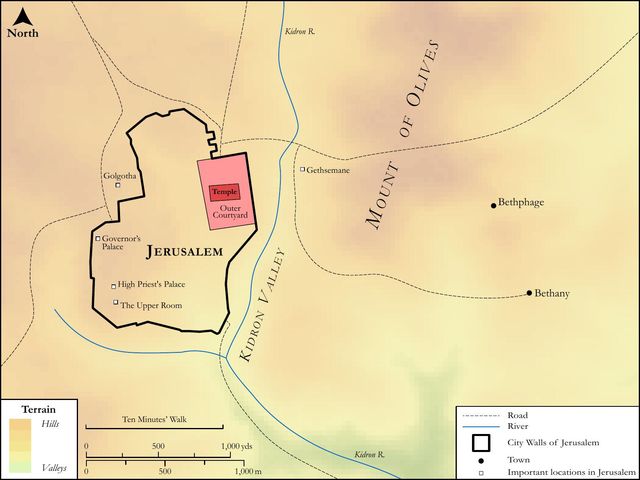
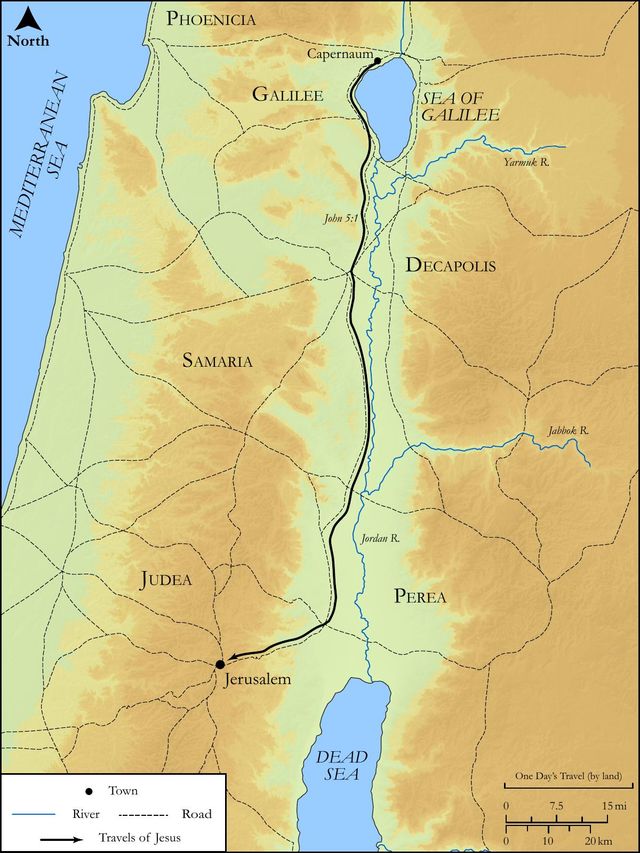
The backdrop for this discourse is Jerusalem, a city steeped in Jewish religious tradition and law. The Sabbath healing was a direct challenge to the strict interpretations of the Mosaic Law held by the Pharisees and other Jewish authorities, who viewed any work on the Sabbath as a transgression. Jesus' claim to be working in conjunction with His Father ("My Father worketh hitherto, and I work" John 5:17) was understood as an assertion of divine equality, which was considered blasphemous by His opponents. The concept of "the dead" hearing a voice and living would have resonated with Old Testament prophecies of restoration and new life (e.g., Ezekiel 37), but Jesus' application of it to a present spiritual reality, tied to His own voice, would have been revolutionary and deeply challenging to the established religious order.
Key Themes
ShowHideJohn 5 is rich with theological themes that converge in verse 25. A central theme is Jesus' Divine Authority, particularly His co-equality with the Father in giving life and executing judgment. The emphatic "Verily, verily" underscores the absolute truth and divine origin of His words. Another crucial theme is Spiritual Resurrection, highlighting that humanity, apart from God, is in a state of spiritual death (Ephesians 2:1). Jesus' declaration introduces the radical idea that His voice—His message, His call—has the power to quicken these spiritually dead souls, bringing them into new life. This theme is closely linked to The Power of Christ's Voice, emphasizing that true hearing involves not just auditory reception but a receptive faith that leads to transformation. Finally, the phrase "the hour is coming, and now is" introduces the theme of Immediate and Future Reality, signifying that Christ's life-giving power is both presently active in spiritual regeneration and will be ultimately manifested in the future physical resurrection of all humanity (John 5:28-29).
Exposition and Analysis
ShowHideKey Word Analysis
ShowHideProperly firm, trustworthy; adverbially, surely, so be it. This double "Verily, verily" (Amen, Amen) is a unique Johannine emphatic phrase, used by Jesus to introduce a statement of profound truth and absolute certainty, demanding the listener's full attention and belief. It signifies divine authority behind the declaration.
From an apparently primary (a corpse); dead (literally or figuratively; also as noun). In this context, "the dead" refers primarily to those who are spiritually separated from God due to sin, existing in a state of spiritual lifelessness. It implies an inability to respond to God without divine intervention.
A primary verb; to hear (in various senses):--give (in the) audience (of), come (to the ears), (shall) hear(-er, -ken), be noised, be reported, understand. Here, "hear" implies more than mere auditory perception; it denotes a receptive, understanding, and obedient response to the voice of the Son of God, leading to spiritual life.
Verse Breakdown
ShowHide"Verily, verily, I say unto you"
This emphatic double "Amen" serves as a solemn and authoritative introduction, signaling that what follows is a truth of utmost importance and divine certainty, directly from Jesus. It demands the listener's full attention and belief, underscoring Jesus' unique authority as the Son of God.
"The hour is coming, and now is"
This phrase highlights the dual nature of Christ's life-giving work. "The hour is coming" points to a future, ultimate realization, while "and now is" emphasizes the present, immediate reality of spiritual transformation. It means that the power to awaken the dead is not merely a future promise but is actively at work in the present moment through Jesus' ministry.
"when the dead shall hear the voice of the Son of God"
"The dead" here refers primarily to those who are spiritually alienated from God due to sin, in a state of spiritual lifelessness. "The voice of the Son of God" signifies Jesus' divine call, His authoritative word, and the Gospel message. This clause declares that His divine utterance has the power to penetrate the spiritual deafness of humanity.
"and they that hear shall live"
This is the outcome of truly hearing. "They that hear" implies not just auditory reception but a receptive, obedient faith that responds to Jesus' divine call. "Shall live" refers to the impartation of spiritual life, a transition from spiritual death to a vibrant, eternal relationship with God, initiated by faith in Christ.
Literary Devices
ShowHideJohn 5:25 employs several powerful literary devices. Metaphor is central, particularly in the phrase "the dead shall hear." "The dead" are not physically deceased but are metaphorically described as spiritually lifeless, emphasizing their separation from God due to sin. This metaphor highlights the profound spiritual transformation that Jesus offers. The "voice of the Son of God" also functions as a metonymy, representing not just an audible sound but the entirety of Jesus' authoritative word, His Gospel message, and His divine call to salvation. The phrase "The hour is coming, and now is" is a form of paradox or oxymoron, presenting a truth that seems contradictory yet is deeply profound. It conveys the immediate availability of spiritual life while also hinting at a future, ultimate fulfillment, underscoring the timeless and ever-present nature of Christ's power. The repeated "Verily, verily" is a powerful anaphora and emphasis, drawing immediate attention to the solemnity and absolute truth of Jesus' declaration.
Theological and Thematic Connections
ShowHideJohn 5:25 is a cornerstone for understanding Jesus' unique authority and the nature of salvation. It establishes Christ as the ultimate source of life, not merely a prophet or a teacher, but one who possesses inherent, divine power to quicken the spiritually dead. This power is exercised through His "voice," which represents His authoritative word and the Gospel message. The verse highlights that spiritual regeneration is not a human achievement but a divine work, initiated by God's call and received through faith. It foreshadows the broader eschatological reality that Jesus' voice will one day call all humanity, both righteous and unrighteous, from their graves for judgment and resurrection, demonstrating His comprehensive dominion over life and death in every dimension.
Reflection and Application
ShowHideJohn 5:25 offers profound hope and a clear call to action for every individual. It reminds us that our natural state, apart from Christ, is one of spiritual death—a separation from the life of God. Yet, Jesus, the Son of God, possesses the unique power to speak life into this spiritual void. For those who feel spiritually lost, empty, or burdened by sin, this verse is a beacon: Jesus' voice is calling, offering not just forgiveness, but a complete transformation from death to life. The "now is" aspect means that this life is available immediately upon hearing and responding to His call. For believers, it serves as a powerful reminder of the source of our new life and encourages us to continually listen to and obey His voice, allowing His word to shape our daily existence. It also challenges us to share this life-giving message with others, knowing that His voice can awaken even the most resistant hearts.
Questions for Reflection
ShowHideFAQ
ShowHideWhat does "the hour is coming, and now is" mean in this verse?
ShowHideThis phrase highlights the dual nature of Jesus' life-giving power. "The hour is coming" refers to a future, ultimate manifestation of His authority, particularly the physical resurrection of all humanity for judgment, as further explained in John 5:28-29. However, "and now is" emphasizes that this power is not solely a future promise but is actively at work in the present moment. It signifies the immediate spiritual transformation and new life available to those who respond to Jesus' voice through faith. Thus, Jesus is asserting His present authority to bring spiritual life to the "dead" even as He anticipates His future authority over physical resurrection.
Christ-Centered Fulfillment
ShowHideJohn 5:25 finds its ultimate fulfillment in the person and work of Jesus Christ, who is the very embodiment of life. He is the one through whom all things were made and in whom was life (John 1:3-4). This verse foreshadows His ultimate victory over death, both spiritual and physical, through His own crucifixion and resurrection. As the Son of God, Jesus possesses inherent life-giving power, a power demonstrated not only in raising Lazarus from the tomb (John 11:43-44) but, more profoundly, in His ability to quicken those dead in trespasses and sins (Ephesians 2:1-5). His "voice" is the Gospel, the authoritative declaration of salvation and new creation, which when heard and believed, brings spiritual resurrection. Therefore, Jesus is not merely announcing a future event but proclaiming His present, active role as the source of eternal life, fulfilling the Old Testament prophecies of a new covenant where God's Spirit would bring dead hearts to life (Ezekiel 36:26-27). He is the Resurrection and the Life (John 11:25), and His voice continues to call the spiritually dead to live.