


John 17:18
- καθὼςkathōsEven asG2531CONJConjunction
- ἐμὲemeMe myselfG1473P-1ASPersonal pronoun Accusative 1st Singular
- ἀπέστειλαςapesteilasYou sentG649V-AAI-2SVerb Aorist Active Indicative 2nd Singular
- εἰςeisintoG1519PREPPreposition
- τὸνtontheG3588T-ASMDefinite article Accusative Singular Masculine
- κόσμονkosmonworldG2889N-ASMNoun Accusative Singular Masculine
- κἀγὼkagōI myself alsoG2532P-1NS + G2532=CONJ
- ἀπέστειλαapesteilasentG649V-AAI-1SVerb Aorist Active Indicative 1st Singular
- αὐτοὺςautousthemG846P-APMPersonal pronoun Accusative Plural Masculine
- εἰςeisintoG1519PREPPreposition
- τὸνtontheG3588T-ASMDefinite article Accusative Singular Masculine
- κόσμονkosmonworldG2889N-ASMNoun Accusative Singular Masculine
English is a literal word-by-word gloss of the Greek, not the KJV's wording. Why?
This is the original text the KJV's translators worked from — each Greek word with its own literal English meaning in this verse, prepared by scholars at Tyndale House, Cambridge. The KJV translates whole sentences, not word by word, so its wording differs: one Greek word can become several English words, and the KJV may choose “charity” where the gloss reads “love”. Both are faithful — they answer different questions. For the KJV's own rendering, switch to the KJV text.
Details
See on the biblical-era map
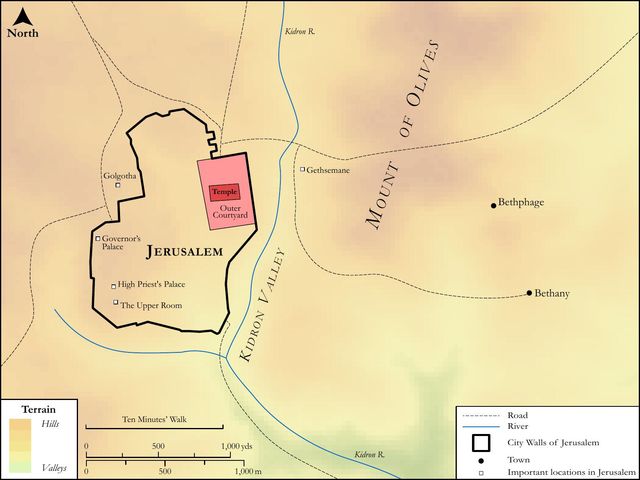
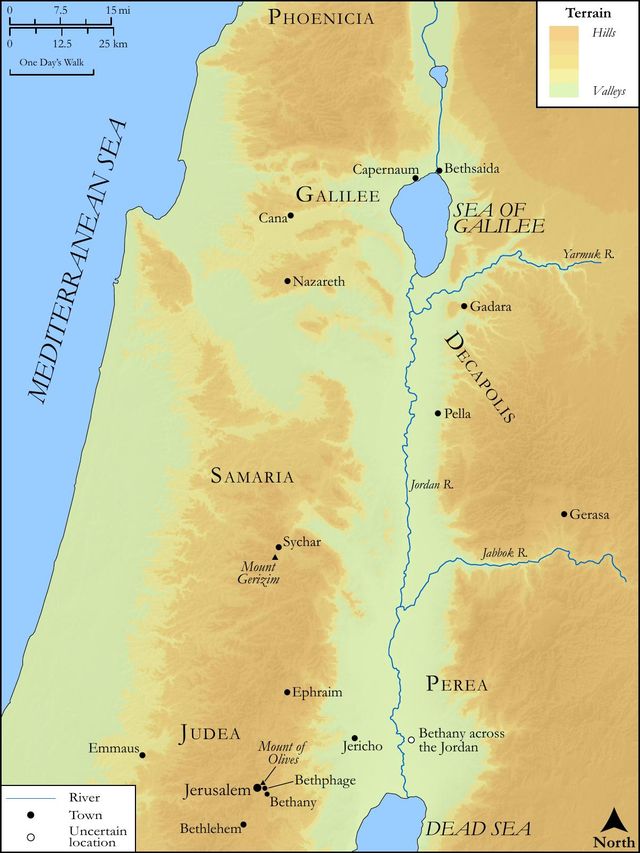
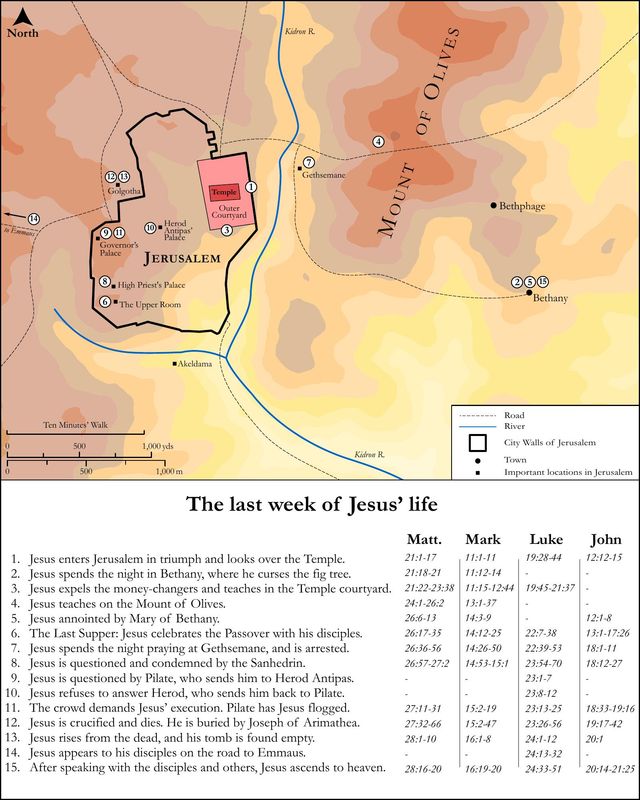
Study this verse
Public-domain commentary
Matthew Henry
From his Commentary on the Whole Bible. Henry comments on passages, not single verses — this entry covers John 17:17–19. His four-level outline is real structure in the source text, so it is rendered as structure.
The next thing he prayed for for them was that they might be sanctified; not only kept from evil, but made good.
I.Here is the petition (Joh 17:17):
Sanctify them through thy truth, through thy word, for thy word is truth; it is true - it is truth itself. He desires they may be sanctified,
1.As Christians. Father, make them holy, and this will be their preservation, Th1 5:23. Observe here,
(1.)The grace desired - sanctification. The disciples were sanctified, for they were not of the world; yet he prays, Father sanctify them, that is, [1.] "Confirm the work of sanctification in them, strengthen their faith, inflame their good affections, rivet their good resolutions." [2.] "Carry on that good work in them, and continue it; let the light shine more and more." [3.] "Complete it, crown it with the perfection of holiness; sanctify them throughout and to the end." Note, First, It is the prayer of Christ for all that are his that they may be sanctified; because he cannot for shame own them as his, either here or hereafter, either employ them in his work or present them to his Father, if they be not sanctified. Secondly, Those that through grace are sanctified have need to be sanctified more and more. Even disciples must pray for sanctifying grace; for, if he that was the author of the good work be not the finisher of it, we are undone. Not to go forward is to go backward; he that is holy must be holy still, more holy still, pressing forward, soaring upward, as those that have not attained. Thirdly, It is God that sanctifies as well as God that justified, Co2 5:5. Fourthly, It is an encouragement to us, in our prayers for sanctifying grace, that it is what Christ intercedes for for us.
(2.)The means of conferring this grace - through thy truth, thy word is truth. Not that the Holy One of Israel is hereby limited to means, but in the counsel of peace among other things it was settled and agreed,
[1.]That all needful truth should be comprised and summed up in the word of God. Divine revelation, as it now stands in the written word, is not only pure truth without mixture, but entire truth without deficiency.
[2.]That this word of truth should be the outward and ordinary means of our sanctification; not of itself, for then it would always sanctify, but as the instrument which the Spirit commonly uses in beginning and carrying on that good work; it is the seed of the new birth (Pe1 1:23), and the food of the new life, Pe1 2:1-2.
2.As ministers. "Sanctify them, set them apart for thyself and service; let their call to the apostleship be ratified in heaven." Prophets were said to be sanctified, Jer 1:5. Priests and Levites were so. Sanctify them; that is, (1.) "Qualify them for the office, with Christian graces and ministerial gifts, to make them able ministers of the New Testament." (2.) "Separate them to the office, Rom 1:1. I have called them, they have consented; Father, say Amen to it." (3.) "Own them in the office; let thy hand go along with them; sanctify them by or in thy truth, as truth is opposed to figure and shadow; sanctify them really, not ritually and ceremonially, as the Levitical priests were, by anointing and sacrifice. Sanctify them to thy truth, the word of thy truth, to be the preachers of thy truth to the world; as the priests were sanctified to serve at the altar, so let them be to preach the gospel." Co1 9:13, Co1 9:14. Note, [1.] Jesus Christ intercedes for his ministers with a particular concern, and recommends to his Father's grace those stars he carries in his right hand. [2.] The great thing to be asked of God for gospel ministers is that they may be sanctified, effectually separated from the world, entirely devoted to God, and experimentally acquainted with the influence of that word upon their own hearts which they preach to others. Let them have the Urim and Thummim, light and integrity.
II.We have here two pleas or arguments to enforce the petition for the disciples' sanctification: -
1.The mission they had from him (Joh 17:18): "As thou hast sent me into the world, to be thine ambassador to the children of men, so now that I am recalled have I sent them into the world, as my delegates." Now here,
(1.)Christ speaks with great assurance of his own mission: Thou hast sent me into the world. The great author of the Christian religion had his commission and instructions from him who is the origin and object of all religion. He was sent of God to say what he said, and do what he did, and be what he is to those that believe on him; which was his comfort in his undertaking, and may be ours abundantly in our dependence upon him; his record was on high, for thence his mission was.
(2.)He speaks with great satisfaction of the commission he had given his disciples "So have I sent them on the same errand, and to carry on the same design;" to preach the same doctrine that he preached, and to confirm it with the same proofs, with a charge likewise to commit to other faithful men that which was committed to them. He gave them their commission (Joh 20:21) with a reference to his own, and it magnifies their office that it comes from Christ, and that there is some affinity between the commission given to the ministers of reconciliation and that given to the Mediator; he is called an apostle (Heb 3:1), a minister (Rom 15:8), a messenger, Mal 3:1. Only they are sent as servants, he as a Son. Now this comes in here as a reason,
[1.]Why Christ was concerned so much for them, and laid their case so near his heart; because he had himself put them into a difficult office, which required great abilities for the due discharge of it. Note, Whom Christ sends he will stand by, and interest himself in those that are employed for him; what he calls us out to he will fit us out for, and bear us up in.
[2.]Why he committed them to his Father; because he was concerned in their cause, their mission being in prosecution of his, and as it were an assignment out of it. Christ received gifts for men (Psa 68:18), and then gave them to men (Eph 4:8), and therefore prays aid of his Father to warrant and uphold those gifts, and confirm his grant of them. The Father sanctified him when he sent him into the world, Joh 10:36. Now, they being sent as he was, let them also be sanctified.
2.The merit he had for them is another thing here pleaded (Joh 17:19): For their sakes I sanctify myself. Here is,
(1.)Christ's designation of himself to the work and office of Mediator: I sanctified myself. He entirely devoted himself to the undertaking, and all the parts of it, especially that which he was now going about - the offering up of himself without spot unto God, by the eternal Spirit. He, as the priest and altar, sanctified himself as the sacrifice. When he said, Father, glorify thy name - Father, thy will be done - Father, I commit my spirit into thy hands, he paid down the satisfaction he had engaged to make, and so sanctified himself. This he pleads with his Father, for his intercession is made in the virtue of his satisfaction; by his own blood he entered into the holy place (Heb 9:12), as the high priest, on the day of atonement, sprinkled the blood of the sacrifice at the same time that he burnt incense within the veil, Lev 16:12, Lev 16:14.
(2.)Christ's design of kindness to his disciples herein; it is for their sakes, that they may be sanctified, that is, that they may be martyrs; so some. "I sacrifice myself, that they may be sacrificed to the glory of God and the church's good." Paul speaks of his being offered, Phi 2:17; Ti2 4:6. Whatever there is in the death of the saints that is precious in the sight of the Lord, it is owing to the death of the Lord Jesus. But I rather take it more generally, that they may be saints and ministers, duly qualified and accepted of God.
[1.]The office of the ministry is the purchase of Christ's blood, and one of the blessed fruits of his satisfaction, and owes its virtue and value to Christ's merit. The priests under the law were consecrated with the blood of bulls and goats, but gospel ministers with the blood of Jesus.
[2.]The real holiness of all good Christians is the fruit of Christ's death, by which the gift of the Holy Ghost was purchased; he gave himself for his church, to sanctify it, Eph 5:25, Eph 5:26. And he that designed the end designed also the means, that they might be sanctified by the truth, the truth which Christ came into the world to bear witness to and died to confirm. The word of truth receives its sanctifying virtue and power from the death of Christ. Some read it, that they may be sanctified in truth, that is, truly; for as God must be served, so, in order to this, we must be sanctified, in the spirit, and in truth. And this Christ has prayed for, for all that are his; for this is his will, even their sanctification, which encourages them to pray for it,
Historical interpretation
Nine Centuries of Reception
5 surviving comments on this verse. Each one is dated, so this reads as a timeline rather than a list.
Select a marker to jump to its quote. Markers stagger vertically where authors wrote within a few decades of each other.
"As Thou hast sent Me into the world, even so have I also sent them into the world." As Paul also saith, "Having put in us the word of reconciliation." For the same end for which Christ came, for the same did these take possession of the world. In this place again the "as" is not put to signify resemblance in the case of Himself and the Apostles; for how was it possible for men to be sent otherwise? But it was His custom to speak of the future as having come to pass.
The participation in the Spirit will not only give them the power to be freed from evil but will make them so strong that they will travel throughout the world and preach as I have preached.
But now He still goes on to speak of the apostles, for He proceeds to add, "As Thou hast sent me into the world, even so have I also sent them into the world." Whom did He so send but His apostles? For even the very name of apostles, which is a Greek word, signifies in Latin nothing more than, those that are sent. God, therefore, sent His Son, not in sinful flesh, but in the likeness of sinful flesh; and His Son sent those who, born themselves in sinful flesh, were sanctified by Him from the defilement of sin.
CHAPTER X. That Christ is not holy from participation in anything different from Himself; and that the sanctification through the Spirit is not alien to His Substance.
After giving the Father here especially the name of Holy, and praying that the disciples might be kept in the truth, that is, in His Spirit (for the Spirit is the truth, as John says, as He is also the Spirit of truth, that is, of the Only-begotten Himself), He declares that He sent them into the world after the fashion of His own mission; for Jesus is the Apostle and High Priest of our confession, as Paul says, in the appropriate character of His Manhood, and by the way of His humiliation. He says, then, that the disciples, after having been once for all thereto prepared, stand wholly in need of sanctification by the Holy Father, Who implanteth in them the Holy Spirit through the Son. For in truth the disciples of the Saviour would never have become so illustrious as to be the torchbearers of the whole world, nor would they have withstood the brunt of the temptations of their enemies, nor the terrible assaults of the devil, had they not had their minds fortified by communion with the Spirit; and had they not been continually thereby enabled to accomplish a bidding unheard of before and passing mere human power; and had they not been ever led by the light of the Spirit, without effort, to a perfect knowledge of the inspired writings and the holy doctrines of the Church. Furthermore, the Saviour, being assembled together with them after His resurrection from the dead, as is recorded, and bidding them preach grace through faith throughout the whole world, charged them not to depart from Jerusalem, but to wait for the promise of the Father, which they had heard of Him as well as by the mouth of the holy prophets. For it shall come to pass in those days, saith the Lord, that I will pour out My Spirit upon all flesh. And the Saviour Himself plainly declared that His Holy Spirit would be shed forth upon them, in the words: I have yet many things to say unto you, but ye cannot bear them now. Howbeit, when He, the Spirit of Truth, is come, He shall guide you into all truth; and again: I will pray the Father, and He shall give you another Comforter. For the Spirit belongeth unto God the Father, and none the less also unto the Son Himself, not as distinct Entities, or as though He was inherent or existed in Either divisibly; but, inasmuch as the Son by Nature proceeds from the Father and is in Him (being the true Offspring of His Essence), the Spirit----Which is the Father's by Nature----is brought down to men; shed forth indeed from the Father, but through the Son Himself conveyed to the creature; not merely ministerially or in the manner of a servant, but, as I said just now, proceeding from the Substance Itself of God the Father; and shed forth on those worthy to receive Him through the Word, Which is Consubstantial with and proceeded from Him, and so proceeded as to have a self-dependent being, and ever abideth in Him, at the same time in unity, and also, as it were, with an individual existence. For we maintain that the Son has an independent existence, but still inheres in His Father, and has in Himself Him that begat Him; and that the Spirit of the Father is indeed the Spirit of the Son; and that, when the Father sends or promises to distribute the Spirit to the Saints, the Son also vouchsafes the Spirit to them as His own, because of His identity in Substance with the Father. And that the Father works in every respect through Him He has Himself very clearly pointed out to us in the words: It is expedient for you that I go away: for if I go not away the Comforter cannot come unto you; but when I depart I will send Him unto you. And again: I will pray the Father, and He shall give you another Comforter. Plainly here He promises to send us the Comforter.
Since, then, the disciples, who respect My sayings, have been sent forth on their mission in the world, even as I myself, keep them, Holy Father, in Thy truth; that is, in Thy Word, in Which, and through Which, the Spirit Which sanctifies is and proceeds. And what is the Saviour's aim in saying this? He besought the Father for that sanctification which is in and through the Spirit to be given to ourselves; and He desires that which was in us at the first age of the world, and at the beginning of creation by gift of God, to be quickened anew into life. This we say, because the Only-begotten is our Mediator, and fulfils the part of Advocate for us before our Father Which is in heaven. But that we may free our explanation from all obscurity, and make the meaning of what is said clear to our hearers, let us say a few words about the creation of the first man.
The inspired Moses said concerning him, that God took dust from the earth and formed man of it. He then goes on to tell the manner in which, after the body was perfectly joined together, life was given to it. He breathed, he says, into his nostrils the breath of life; signifying that not without sanctification by the Spirit was life given to man, nor yet was it wholly devoid or barren of the Divine Nature. For never could anything, which had so base an origin, have been seen to be created in the Image of the Most High, had it not taken and received, through the Spirit moulding it, so to speak, a fair mask, by the Will of God. For as His Spirit is a perfect Likeness of the Substance of the Only-begotten, according to the saying of Paul: For whom He foreknew, He also fore-ordained to be conformed to the Image of His Son, He maketh those in whom He abides to be conformed to the Image of the Father, that is, the Son; and thus all thoughts are uplifted through the Son to the Father, from Whom He proceeds by the Spirit. He desires, therefore, the nature of man to be renewed, and moulded anew, as it were, into its original likeness, by communion with the Spirit; in order that, putting on that pristine grace, and being shaped anew into conformity with Him, we may be found able to prevail over the sin that reigns in this world, and may simply cling to the love of God, striving with all our might after whatsoever things be good, and, lifting our minds above fleshly lusts, may keep the beauty of His Image implanted in ourselves unspoiled. For this is spiritual life, and this is the meaning of worship in the Spirit.
As Thou hast sent Me into the world, even so have I also sent them into the world. For what Christ was sent into the world, for the same end were they; as saith Paul, God was in Christ reconciling the world unto Himself; and hath given to us the word of reconciliation. (2 cor. 5:19) As does not express perfect likeness between our Lord and His Apostles, but only as much as was possible in men. Have sent them, He says, according to His custom of putting the past for the future.
Continue studying John 17:18 across the web’s major study libraries — every link below opens this exact verse, chapter, or book on the destination site.
Read & Compare
 BibleGatewayThis verse in more than 200 translations and 70 languages.
 Bible.comThe YouVersion reader — hundreds of translations, reading plans, and highlights.
 ESV.orgCrossway's official English Standard Version reader.
 NET BibleThe NET translation with 60,000+ translators' notes on every rendering decision.
 STEP BibleTyndale House's free study tool — original text, vocabulary, and scholarly resources.
 BibliaLogos Bible Software's free web reader.
 USCCBThe New American Bible (Revised Edition) with the U.S. bishops' study notes.
Commentaries
 BibleHub CommentariesDozens of classic commentaries on this verse, gathered on one page.
 StudyLightMore than 100 commentary sets — the largest collection on the web.
 BibleRefPlain-English commentary on what this verse means, verse by verse.
 Enduring WordDavid Guzik's free commentary on this chapter, widely used by Bible teachers.
 Bible Study ToolsVerse commentary alongside Greek and Hebrew study aids.
Original Language & Research
- BibleHub InterlinearThe verse word by word — original language, transliteration, and English.
- BibleHub LexiconEvery word's original-language definition and Strong's entry.
 Blue Letter BibleDeep-study tools — Strong's numbers, concordance, and word studies.
 CNTR CollationThe earliest Greek manuscripts of this verse, collated letter by letter.
Sermons, Hymns & Audio


TrulyRandomVerse is not affiliated with these sites and doesn’t control their content. They’re linked because they’re genuinely useful.
Summary
In this profound statement, part of Jesus' High Priestly Prayer, the Lord articulates a foundational principle of Christian mission: a direct and intentional parallel between His own commission from the Father and the commission He bestows upon His disciples. Just as the Father purposefully sent Jesus into the world to accomplish His redemptive plan, so too does Jesus purposefully send His followers into the very same world, not to be conformed to it, but to continue His work of revealing God and extending His kingdom. This verse underscores the divine authority and sacred purpose behind the believer's presence and activity in a world that desperately needs the light of Christ.
Context
ShowHideLiterary Context
John 17:18 is nestled within Jesus' "High Priestly Prayer," a deeply intimate and significant discourse recorded in John 17. This prayer immediately follows Jesus' Farewell Discourse (John 13-16), where He prepares His disciples for His departure, promises the Holy Spirit, and warns them of persecution. The prayer itself is structured into three main petitions: for Himself (John 17:1-5), for His immediate disciples (John 17:6-19), and for all future believers (John 17:20-26). Verse 18 falls squarely within the section for His disciples, specifically after Jesus has prayed for their sanctification by truth and their protection from the evil one while they remain in the world (John 17:15). Having established their distinct identity as "not of the world" (John 17:16), Jesus now clarifies their purpose in the world, transitioning from their preservation to their active commission.
Historical & Cultural Context
Jesus' prayer takes place on the eve of His crucifixion, likely in the upper room or on the way to Gethsemane, a moment of profound transition for His disciples. They were about to lose their physical proximity to their Master and would soon face intense opposition. The concept of "sending" (apostle) was not entirely new in Jewish thought, as prophets and messengers were often "sent" by God. However, Jesus' unique claim to be "sent" by the Father, and His subsequent commissioning of His disciples with a parallel authority, elevated this concept to an unprecedented level. The "world" (kosmos) in John's Gospel often carries a dual meaning: the created order, which God loves (John 3:16), and humanity in its fallen state, alienated from God and hostile to His truth (John 1:10). Jesus' statement acknowledges the reality of this fallen world as the arena for their mission, even as it is distinct from their spiritual origin.
Key Themes
ShowHideThis verse powerfully articulates several core themes central to John's Gospel and Christian theology. The primary theme is Divine Commission and Mission, emphasizing that believers are not merely left in the world but are purposefully dispatched with a divine mandate. This directly links to the theme of Representation and Authority, as the disciples are sent in the same manner and with the same authority that Jesus was sent by the Father, implying they are His representatives. The verse also reinforces the Paradox of Presence, where believers are "in" the world but "not of" the world, maintaining a distinct identity while engaging actively with society. Finally, it foreshadows the Continuation of Christ's Work, highlighting that the disciples' mission is an extension of Jesus' own redemptive ministry, a theme that finds its ultimate expression in the Great Commission (e.g., Matthew 28:18-20).
Exposition and Analysis
ShowHideKey Word Analysis
ShowHideThis verb (G649) means "to send out (properly, on a mission) literally or figuratively." It implies a deliberate commission with authority and purpose. It is the root word from which "apostle" (apostolos) is derived, meaning "one who is sent." Here, it underscores the intentionality of both the Father's sending of Jesus and Jesus' sending of His disciples. It's not a casual dispatch but a purposeful assignment with a specific task and inherent authority.
This noun (G2889) refers to "orderly arrangement, i.e. decoration; by implication, the world (in a wide or narrow sense, including its inhabitants, literally or figuratively (morally))." In John's Gospel, kosmos often carries a negative connotation, referring to humanity alienated from God, a system opposed to divine truth. However, it also denotes the sphere of God's redemptive activity. In this verse, it signifies the specific arena where both Jesus' and the disciples' missions are to be carried out – the human society and created order that needs salvation.
This conjunction and pronoun combination (G2504) emphasizes the direct parallel and reciprocal nature of the sending. Kagō means "and I" or "even I," highlighting that Jesus Himself, the one sent by the Father, is now the one sending them. It underscores the profound continuity and authority in the chain of divine commission, from Father to Son, and from Son to disciples.
Verse Breakdown
ShowHide"As thou hast sent me into the world"
This clause establishes the divine precedent and model for the disciples' mission. Jesus affirms His own identity as the Father's ultimate Messenger, sent with a specific purpose and authority into the human sphere. His mission was not self-initiated but divinely ordained, encompassing the revelation of God's character, the demonstration of His love, and the accomplishment of salvation. The phrase "into the world" defines the destination and context of this divine commission.
"even so have I also sent them into the world."
This clause declares the direct, authoritative parallel. The "even so" (Greek: kathōs and kagō) signifies that the manner, purpose, and authority of Jesus' sending of His disciples mirror that of the Father's sending of Jesus. The disciples are not merely remaining in the world by chance; they are being actively and purposefully dispatched by Jesus Himself. Their mission, like His, is to engage with the world, to be His representatives, and to continue the work of making God known and bringing salvation. The repetition of "into the world" stresses that their sphere of operation is the same as Jesus' own.
Literary Devices
ShowHideJohn 17:18 is rich with Parallelism, a key literary device where similar phrases or clauses are used to highlight a comparison or contrast. Here, the structure "As thou hast sent me... even so have I also sent them..." creates a perfect parallel, emphasizing the direct correspondence and continuity between the Father's mission for Jesus and Jesus' mission for His disciples. This parallelism is further reinforced by the Repetition of the phrase "into the world," which underscores the shared arena of their respective missions. The act of "sending" itself functions as a powerful Metaphor for divine commission and delegation of authority, transforming the disciples from mere followers into divinely appointed agents. This verse, therefore, is not just a statement of fact but a profound theological declaration of the church's foundational purpose.
Theological and Thematic Connections
ShowHideThis verse is a cornerstone for understanding the missional nature of the church. It establishes that the very identity of the believer is tied to being "sent," mirroring the divine pattern of the Father sending the Son. This sending is not merely an activity but a foundational aspect of Christian existence, implying that believers are Christ's representatives and ambassadors in a world that needs the gospel. Our presence in the world is not accidental but purposeful, an extension of Christ's ongoing work of reconciliation and redemption. We are called to embody His love, proclaim His truth, and demonstrate His kingdom, engaging with the world not by conforming to its values but by transforming it through the power of God.
Reflection and Application
ShowHideJohn 17:18 calls every believer to a profound awareness of their divine commission. We are not called to withdraw from the world, nor to be absorbed by it, but to be actively engaged within it as Christ's emissaries. This means living intentionally, understanding that our daily lives, our vocations, our relationships, and our interactions are all part of the "world" into which we have been sent. Our mission is to reflect the character of Christ, to be salt and light, and to share the good news of salvation, not just through words but through our very lives. This sending empowers us with purpose and reminds us that we do not go alone, but with the same divine authority and presence that accompanied Jesus. It challenges us to consider how we are actively fulfilling this mission in our spheres of influence, bringing the Kingdom of God to bear on the realities of our world.
Questions for Reflection
ShowHideFAQ
ShowHideWhat does it mean that Jesus "sent" His disciples into the world "even so" as the Father sent Him?
ShowHideThe phrase "even so" (Greek: kathōs) indicates a profound parallel and continuity. It means that Jesus sent His disciples with the same authority, purpose, and mission that He Himself received from the Father. Just as the Father commissioned Jesus to reveal God, demonstrate His love, and accomplish salvation in the world, Jesus now commissions His followers to continue that very work. It implies that the disciples are His representatives, acting with His authority and for His purposes, in the same sphere of operation (the world) that Jesus Himself engaged. This is not about equality in divine nature, but equality in the nature of the commission and the sphere of operation.
Does "into the world" imply that believers should be involved in worldly affairs or withdraw from them?
ShowHideIn John's Gospel, "the world" (kosmos) often refers to human society in its fallen, anti-God state (John 1:10). However, it is also the object of God's love and redemption (John 3:16). Therefore, "into the world" means that believers are to be present and active within human society, not withdrawn from it. While we are "not of the world" in our values and allegiance (John 17:16), we are purposefully sent into it to be salt and light, to bear witness to Christ, and to participate in His redemptive work. This involves engaging with culture, serving others, and proclaiming the gospel, all while maintaining our distinct identity in Christ.
Christ-Centered Fulfillment
ShowHideJohn 17:18 finds its Christ-centered fulfillment in the profound reality that Jesus' mission from the Father is the ultimate basis and enabling power for the disciples' mission. He is not merely a historical figure who once lived and sent others; He is the living Lord who continues to send His people. His sending by the Father culminated in His atoning death and resurrection, which secured salvation and inaugurated the new creation. It is from this position of ultimate authority, having "all authority in heaven and on earth" (Matthew 28:18), that Jesus commissions His followers. Our mission is therefore a direct participation in His ongoing redemptive work, empowered by the Holy Spirit whom He promised and sent (John 14:26). The content of our message, the very reason we are sent, is Christ Himself – His person, His work, and His call to repentance and faith. Thus, the church's mission is not an independent venture but a Christ-dependent, Christ-empowered, and Christ-proclaiming extension of the Father's original sending of His Son into the world. Our being "sent into the world" is a continuous echo of the incarnate Word, who "dwelt among us" (John 1:14).