


Job 36:22
Bible text: King James Version (1769 Blayney text) · Public domain
Bible text: Berean Standard Bible · Public domain
Bible text: American Standard Version (1901) · Public domain
Bible text: World English Bible, Messianic edition · Public domain
Bible text: Geneva Bible (1599) · Public domain
Bible text: Young's Literal Translation · Public domain
- הֶןhenthere!H2005PrtParticle Interjection
- אֵל'elGodH410N-msNoun Singular Masculine Absolute
- יַשְׂגִּיבyas·Givhe is exaltedH7682V-Hiphil-Imperf-3msVerb Hiphil Imperfect 3rd Singular Masculine
- בְּכֹחוֹbe·kho·Choin his powerH3581Prep-b ¦ N-msc ¦ 3msNoun Singular Masculine Constructבְּinכֹחpowerוֹhis
- מִיmiwho?H4310InterrogPronoun Interrogative
- כָמֹהוּkha·Mo·hulike himH3644Prep ¦ 3msPrepositionכָמֹlikeהוּhim
- מוֹרֶהmo·Reh[is] a teacherH4175N-msNoun Singular Masculine Absolute
English is a literal word-by-word gloss of the Hebrew, not the KJV's wording. Why?
This is the original text the KJV's translators worked from — each Hebrew word with its own literal English meaning in this verse, prepared by scholars at Tyndale House, Cambridge. The KJV translates whole sentences, not word by word, so its wording differs: one Hebrew word can become several English words, and the KJV may choose “the LORD” where the gloss reads “Yahweh”. Both are faithful — they answer different questions. For the KJV's own rendering, switch to the KJV text.
Details
See on the biblical-era map
Study this verse
Public-domain commentary
Matthew Henry
From his Commentary on the Whole Bible. Henry comments on passages, not single verses — this entry covers Job 36:15–23. His three-level outline is real structure in the source text, so it is rendered as structure.
Elihu here comes more closely to Job; and,
I.He tells him what God would have done for him before this if he had been duly humbled under his affliction.
"We all know how ready God is to deliver the poor in his affliction (Job 36:15); he always was so. The poor in spirit, those that are of a broken and contrite heart, he looks upon with tenderness, and, when they are in affliction, is ready to help them. He opens their ears, and makes them to hear joy and gladness, even in their oppressions; while he does not yet deliver them he speaks to them good words and comfortable words, for the encouragement of their faith and patience, the silencing of their fears, and the balancing of their griefs; and even so (Job 36:16) would he have done to thee if thou hadst submitted to his providence and conducted thyself well; he would have delivered and comforted thee, and we should have had none of these complaints. If thou hadst accommodated thyself to the will of God, thy liberty and plenty would have been restored to thee with advantage." 1. "Thou wouldst have been enlarged, and not confined thus by thy sickness and disgrace: He would have removed thee into a broad place where is no straitness, and thou wouldst no longer have been cramped thus and have had all thy measures broken." 2. "Thou wouldst have been enriched, and wouldst not have been left in this poor condition; thou wouldst have had thy table richly spread, not only with food convenient, but with the finest of the wheat" (see Deu 32:14) "and the fattest of the flesh." Note, It ought to silence us under our afflictions to consider that, if we were better, it would be every way better with us: if we had answered the ends of an affliction, the affliction would be removed; and deliverance would come if we were ready for it. God would have done well for us if we had conducted ourselves well; Psa 81:13, Psa 81:14; Isa 48:18.
II.He charges him with standing in his own light, and makes him the cause of the continuance of his own trouble (Job 36:17):
"But thou hast fulfilled the judgment of the wicked," that is, "Whatever thou art really, in this thing thou hast conducted thyself like a wicked man, hast spoken and done like the wicked, hast gratified them and served their cause; and therefore judgment and justice take hold on thee as a wicked man, because thou goest in company with them, actest as if thou wert in their interest, aiding and abetting. Thou hast maintained the cause of the wicked; and such as a man's cause is such will the judgment of God be upon him;" so bishop Patrick. It is dangerous being on the wrong side: accessaries to treason will be dealt with as principals.
III.He cautions him not to persist in his frowardness. Several good cautions he gives him to this purport.
1.Let him not make light of divine vengeance, nor be secure, as if he were in no danger of it (Job 36:18): "Because there is wrath" (that is, "because God is a righteous governor, who resents all the affronts given to his government, because he has revealed his wrath from heaven against all ungodliness and unrighteousness of men, and because thou hast reason to fear that thou art under God's displeasure) therefore beware lest he take thee away suddenly with his stroke, and be so wise as to make thy peace with him quickly and get his anger turned away from thee." A warning to this purport Job had given his friends (Job 19:29): Be you afraid of the sword, for wrath brings the punishment of the sword. Thus contenders are apt, with too much boldness, to bind one another over to the judgment of God and threaten one another with his wrath; but he that keeps a good conscience needs not fear the impotent menaces of proud men. But his was a friendly caution to Job, and necessary. Even good men have need to be kept to their duty by the fear of God's wrath. "Thou art a wise and good man, but beware lest he take thee away, for the wisest and best have enough in them to deserve his stroke."
2.Let him not promise himself that, if God's wrath should kindle against him, he could find out ways to escape the strokes of it.
(1.)There is no escaping by money, no purchasing a pardon with silver, or gold, and such corruptible things: "Even a great ransom cannot deliver thee when God enters into judgment with thee. His justice cannot be bribed, nor any of the ministers of his justice. Will he esteem thy riches, and take from them a commutation of the punishment? No, not gold, Job 36:19. If thou hadst as much wealth as ever thou hadst, that would not ease thee, would not secure thee from the strokes of God's wrath, in the day of the revelation of which riches profit not," Pro 11:4. See Psa 49:7, Psa 49:8.
(2.)There is no escaping by rescue: "If all the forces of strength were at thy command, if thou couldst muster ever so many servants and vassals to appear for thee to force thee out of the hands of divine vengeance, it were all in vain; God would not regard it. There is none that can deliver out of his hand." (3.) There is no escaping by absconding (Job 36:20): "Desire not the night, which often favours the retreat of a conquered army and covers it; think not that thou canst so escape the righteous judgment of God, for the darkness hideth not from him," Psa 139:11, Psa 139:12. See Job 34:22. "Think not, because in the night people retire to their place, go up to their beds, and it is then easy to escape being discovered by them, that God also ascends to his place, and cannot see thee. No; he neither slumbers nor sleeps. His eyes are open upon the children of men, not only in all places, but at all times. No rocks nor mountains can shelter us from his eye." Some understand it of the night of death; that is the night by which men are cut off from their place, and Job had earnestly breathed for that night, as the hireling desires the evening, Job 7:2. "But do not do so," says Elihu; "for thou knowest not what the night of death is." Those that passionately wish for death, in hopes to make that their shelter from God's wrath, may perhaps be mistaken. There are those whom wrath pursues into that night.
3.Let him not continue his unjust quarrel with God and his providence, which hitherto he had persisted in when he should have submitted to the affliction (Job 36:21): "Take heed, look well to thy own spirit, and regard not iniquity, return not to it (so some), for it is at thy peril if thou do." Let us never dare to think a favourable thought of sin, never indulge it, nor allow ourselves in it. Elihu thinks Job had need of this caution, he having chosen iniquity rather than affliction, that is, having chosen rather to gratify his own pride and humour in contending with God than to mortify it by a submission to him and accepting the punishment. We may take it more generally, and observe that those who choose iniquity rather than affliction make a very foolish choice. Those that ease their cares by sinful pleasures, increase their wealth by sinful pursuits, escape their troubles by sinful projects, and evade sufferings for righteousness' sake by sinful compliances against their consciences, make a choice they will repent of; for there is more evil in the least sin than in the greatest affliction. It is an evil, and only evil.
4.Let him not dare to prescribe to God, nor give him his measures (Job 36:22, Job 36:23): "Behold, God exalteth by his power," that is, "He does, may, and can set up and pull down whom he pleases, and therefore it is not for thee nor me to contend with him." The more we magnify God the more do we humble and abase ourselves. Now consider,
(1.)That God is an absolute sovereign: He exalts by his own power, and not by strength derived from any other. He exalts whom he pleases, exalts those that were afflicted and cast down, by the strength and power which he gives his people; and therefore who has enjoined him his way? Who presides above him in his way? Is there any superior from whom he has his commission and to whom he is accountable? No; he himself is supreme and independent. Who puts him in mind of his way? so some. Does the eternal Mind need a remembrancer? No; his own way, as well as ours, is ever before him. He has not received orders or instructions from any (Isa 60:13, Isa 60:14), nor is he accountable to any. He enjoins to all the creatures their way; let not us then enjoin him his, but leave it to him to govern the world, who is fit to do it.
(2.)That he is an incomparable teacher: Who teaches like him? It is absurd for us to teach him who is himself the fountain of light, truth, knowledge, and instruction. He that teaches man knowledge, and so as none else can, shall not he know? Psa 94:9, Psa 94:10. Shall we light a candle to the sun? Observe, When Elihu would give glory to God as a ruler he praises him as a teacher, for rulers must teach. God does so. He binds with the cords of a man. In this, as in other things, he is unequalled. None so fit to direct his own actions as he himself is. He knows what he has to do, and how to do it for the best, and needs no information nor advice. Solomon himself had a privy-council to advise him, but the King of kings has none. Nor is any so fit to direct our actions as he is. None teaches with such authority and convincing evidence, with such condescension and compassion, nor with such power and efficacy, as God does. He teaches by the Bible, and that is the best book, teaches by his Son, and he is the best Master.
(3.)That he is unexceptionably just in all his proceedings: Who can say, Thou hast wrought iniquity? Not, Who dares say it? (many do iniquity, and those who tell them of it do so at their peril), but Who can say it? Who has any cause to say it? Who can say it and prove it? It is a maxim undoubtedly true, without limitation, that the King of kings can do no wrong.
Historical interpretation
Two Centuries of Reception
2 surviving comments on this verse. Each one is dated, so this reads as a timeline rather than a list.
Select a marker to jump to its quote. Markers stagger vertically where authors wrote within a few decades of each other.
And you certainly, he says, were tested so far in the furnace of correction. But God will indeed restore you and will bring you back to your former wealth and dignity.
3. As if he said plainly, He, Who will appear humble in weakness, remains lofty in strength, Paul also witnessing this, who says, For though He was crucified through weakness, yet He liveth by the power of God. [2 Cor. 13, 4] Of Whom it is rightly subjoined, None is like Him among lawgivers. Moses was a lawgiver, Joshua a lawgiver, the Prophets lawgivers also. We can term all lawgivers, who, we know, admonish the people rightly from the Law. But there is no one like to this Mediator among lawgivers. For they, having been called by grace from their sins, return to innocence, and, from what they have experienced in themselves, bring back others by their preaching. But our Redeemer is Man without sin, a Son without adoption, and has never committed any thing which He has disapproved. And He so speaks to the world by His Manhood, as yet to be still the Lord of the same world before all ages by His Godhead. Hence certain persons believed that the Mediator between God and men was like the lawgivers. For when He asked, Whom do men say that the Son of Man is, the disciples answered and said, Some say that He is John the Baptist, others Elias, others Jeremias, or one of the Prophets. [Matt.16, 13. 14.] But He doubtless disclosed to Peter how lofty He was in strength; for looking on Him truly, he separated Him from an equality with lawgivers, saying, Thou art Christ, the Son of the living God. [ib. 16] Whence the Bride rightly says of Him in the Song of Songs, By night on my bed I sought Him Whom my soul loveth, I sought Him, and I found Him not. [Cant. 3, 1] And a little after, The watchmen who guard the city found me. [ib. 3] Of Whom she says again, They wounded me, they took my cloak. [ib. 5, 7] And she asks them again, saying, Saw ye Him Whom my soul loveth? When I had passed by them but a little, I found Him Whom my soul loveth. [ib. 3, 4]
4. For the Beloved is sought for by night on the bed; because He is longed for in tribulation of spirit, in the secret chambers of the heart. Whom yet the Bride, though seeking, finds not; because every Elect soul is already kindled with the torches of His love, but the sight of Him, which is sought for, is still denied, that the longing of the lover may increase; and water is, as it were, withdrawn in thirst, that the heat of the thirst may be augmented, and that the longer a person thirsts, and longs for it, the more eagerly may he seize it at last when he has found it. But the watchers find her when seeking for Him; and wound her, and take away her cloak: because when anxious teachers meet with any soul, already seeking for a sight of its Redeemer, they wound it, by the word of preaching, with the darts of heavenly love: and if it has any covering of its former conversation, they take it away; in order that the more it is stripped of the burden of this world, the more quickly may He, Who is sought for, be found by her. But it is well added, When I had passed by them but a little, I found Him Whom my soul loveth? because the mind, eager for the sight of Him, would not find Him, Who is above man, unless it were to go beyond the estimate of the Prophets, the loftiness of the Patriarchs, and the standard of all men. To pass by the watchers, then, is to postpone, in comparison of Him, those even whom the soul admires. And He, Who was sought for, is then beheld, if He is believed to be a Man, but yet above the measures of men. Whence it is now well said, None is like Him among lawgivers. But He in truth, appearing to our sight through the infirmity of the flesh, as He rejects some, and calls others, has displayed marvellous judgments, which can be thought upon, and yet not be comprehended by us. For He says, For judgment have I come into this world, that they which see not, might see, and that they which see might be made blind. [John 9, 39] And again, I thank Thee, O Father, Lord of heaven and earth, because Thou hast hid these things from the wise and prudent, and hast revealed them unto babes. [Matt. 11, 25] In which judgments the Jews are doubtless rejected, the Gentiles gathered. Which fact in truth we can certainly wonder at, but are not at all able to search into.
Continue studying Job 36:22 across the web’s major study libraries — every link below opens this exact verse, chapter, or book on the destination site.
Read & Compare
 BibleGatewayThis verse in more than 200 translations and 70 languages.
 Bible.comThe YouVersion reader — hundreds of translations, reading plans, and highlights.
 ESV.orgCrossway's official English Standard Version reader.
 NET BibleThe NET translation with 60,000+ translators' notes on every rendering decision.
 STEP BibleTyndale House's free study tool — original text, vocabulary, and scholarly resources.
 BibliaLogos Bible Software's free web reader.
 USCCBThe New American Bible (Revised Edition) with the U.S. bishops' study notes.
Commentaries
 BibleHub CommentariesDozens of classic commentaries on this verse, gathered on one page.
 StudyLightMore than 100 commentary sets — the largest collection on the web.
 BibleRefPlain-English commentary on what this verse means, verse by verse.
 Enduring WordDavid Guzik's free commentary on this chapter, widely used by Bible teachers.
 Bible Study ToolsVerse commentary alongside Greek and Hebrew study aids.
Original Language & Research
- BibleHub InterlinearThe verse word by word — original language, transliteration, and English.
- BibleHub LexiconEvery word's original-language definition and Strong's entry.
 Blue Letter BibleDeep-study tools — Strong's numbers, concordance, and word studies.
 SefariaThe Hebrew text with Rashi and centuries of Jewish commentary.
Sermons, Hymns & Audio


TrulyRandomVerse is not affiliated with these sites and doesn’t control their content. They’re linked because they’re genuinely useful.
Summary
Job 36:22, a profound declaration by Elihu, asserts God's inherent and unparalleled majesty, stemming directly from His immeasurable power. The verse then poses a rhetorical challenge, questioning if any teacher can compare to the Almighty, thereby underscoring God's unique and supreme capacity to instruct, guide, and reveal truth. This statement encapsulates Elihu's central argument regarding God's sovereign wisdom and His multifaceted use of various means, including suffering, for the purpose of divine instruction, discipline, and purification, ultimately leading humanity to a deeper understanding of His character.
Context
ShowHideLiterary Context
Job 36:22 is situated within Elihu's final and most extensive discourse, spanning Job 32-37. Elihu, the youngest of Job's interlocutors, positions himself as a mediator, offering a perspective that critiques both Job's self-righteousness and the traditional, simplistic retribution theology of the three friends. In Job 36, Elihu shifts his focus from Job's specific plight to a broader exposition of God's greatness, power, and justice, particularly as manifested in nature and His providential dealings with humanity. He emphasizes that God is far greater than human comprehension, using suffering not merely as punishment for sin but as a means of instruction, discipline, and revelation. This verse, therefore, acts as a pivotal summary of God's omnipotence and His role as the ultimate instructor, setting the stage for the dramatic appearance of God Himself in the whirlwind in Job 38.
Historical & Cultural Context
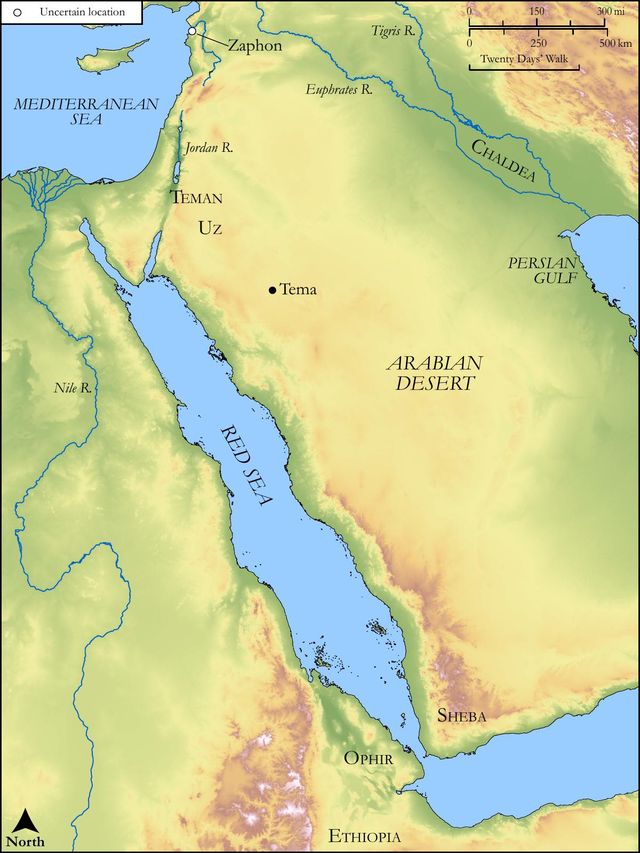
The Book of Job is set in the land of Uz, a region likely east of Israel, suggesting a patriarchal, pre-Mosaic era. The setting reflects the concerns of the wisdom books, where the concept of divine justice and the relationship between suffering and sin were central concerns. While the friends adhere to a rigid cause-and-effect theology (suffering equals sin), Elihu introduces a more nuanced view, suggesting that God's ways are inscrutable and that suffering can serve a pedagogical purpose. The idea of a powerful, wise deity who instructs humanity through various means was common, but Elihu elevates this concept to an unparalleled degree, asserting God's absolute uniqueness in this regard. The emphasis on God's power and His ability to "exalt" also resonates with the authority of kings in Scripture, where a ruler's power was directly linked to his ability to elevate or abase individuals, as of Nebuchadnezzar, "whom he would he set up; and whom he would he put down."
Key Themes
ShowHideThis verse powerfully contributes to several overarching themes in the Book of Job and broader biblical theology. Firstly, it highlights Divine Omnipotence and Sovereignty, asserting that God's supreme position and authority are inherent to His boundless strength. He does not need external validation; His power is the source of His greatness and ability to govern all creation, as seen in Psalm 115:3. Secondly, it elevates God as the Ultimate Teacher, emphasizing His unique and unparalleled ability to instruct. God teaches not only through direct revelation and His Word, but also through life experiences, natural phenomena, and the consequences of actions, as illuminated in Psalm 94:12. His teaching is perfect, comprehensive, and ultimately for our good, even when it comes through difficult circumstances. Lastly, the rhetorical question points to Unsearchable Wisdom, underscoring the profound depth of God's wisdom, which far surpasses human understanding. This wisdom is evident in His power and His methods of instruction, which are often beyond our comprehension, as emphasized in Isaiah 55:9.
Exposition and Analysis
ShowHideKey Word Analysis
ShowHideThe Hebrew verb סָגַב (sâgab) means "to be high," "to be lofty," "to be inaccessible," or "to be strong." In this context, it signifies God's inherent loftiness and His self-exaltation. It speaks to a divine act of raising to a higher position, whether in status, dignity, or power. This is not an external validation bestowed upon God, but an intrinsic quality of His being, demonstrating His supreme authority and majesty, making Him unassailable and beyond human reach or comprehension.
The Hebrew noun כֹּחַ (kôach) refers to vigor, strength, might, or ability. It denotes the inherent capacity or force by which God operates. Elihu emphasizes that God's exaltation is not arbitrary or dependent on external factors, but is directly rooted in His boundless and unchallengeable power. This divine power is the engine of creation, providence, and instruction, demonstrating that God's actions are always backed by infinite strength and capacity.
The Hebrew verb יָרָה (yârâh) properly means "to flow as water," or "to throw" (like an arrow), but figuratively, it means "to point out," "to direct," or "to instruct." In its pedagogical sense, it implies a comprehensive form of instruction that not only imparts knowledge but also guides one along a path, showing the right direction. The rhetorical question, "who teacheth like him?", highlights God's unique pedagogical role, implying that no one else possesses such perfect wisdom, authority, and ability to instruct effectively and comprehensively, leading to true understanding and transformation.
Verse Breakdown
ShowHide"Behold, God exalteth by his power:"
This opening clause functions as a direct, emphatic declaration, calling the listener's attention to a profound truth about God. The interjection "Behold" (הֵן, hen) serves to underscore the certainty and significance of the statement. It asserts that God's supreme position, His inherent majesty, and His ability to elevate or bring low are not contingent on anything external but flow directly and solely from His own infinite power. This emphasizes God's self-sufficiency and His absolute sovereignty over all creation and all circumstances, presenting His exaltation as an intrinsic quality rather than an acquired status.
"who teacheth like him?"
This is a powerful rhetorical question that demands a negative answer, implying that no one can teach or instruct with the same wisdom, authority, and effectiveness as God. It challenges any human or divine entity to compare their pedagogical abilities to God's. This clause highlights God's unique role as the ultimate source of all knowledge, understanding, and wisdom. His teaching encompasses not only direct revelation but also the lessons learned through life experiences, natural phenomena, and even suffering, all orchestrated for His purposes and for the ultimate good of those who learn from Him.
Literary Devices
ShowHideJob 36:22 employs several potent literary devices to convey its profound theological message. The most prominent is the Rhetorical Question, "who teacheth like him?" This question is not meant to elicit an answer but to emphasize the absolute uniqueness and unparalleled superiority of God's teaching ability. By posing it, Elihu forces his audience to acknowledge that no other being, human or divine, possesses the wisdom, authority, or comprehensive instructional capacity of the Almighty. This device serves to magnify God's wisdom and authority. The verse also begins with an Interjection, "Behold" (KJV), which functions as an attention-grabber, signaling that a significant and foundational truth is about to be declared. This draws the listener into the profundity of Elihu's statement regarding God's power and wisdom. Furthermore, the verse utilizes Assertion or Declaration ("God exalteth by his power"), presenting a foundational truth about God's nature directly and unequivocally. This direct statement, combined with the rhetorical question, creates a powerful and undeniable affirmation of God's supreme attributes.
Theological and Thematic Connections
ShowHideJob 36:22 encapsulates a profound theological truth about God's nature as both supremely powerful and infinitely wise. It asserts His absolute sovereignty, emphasizing that His exaltation is not a conferred status but an inherent quality derived from His boundless might. This power is not arbitrary but is inextricably linked to His perfect wisdom, which He employs in His role as the ultimate instructor of humanity. God's teaching methods are multifaceted, encompassing the grandeur of creation, the intricacies of providence, the discipline of suffering, and the direct revelation of His Word. This verse calls us to a posture of humble submission and eager receptivity, recognizing that true understanding and spiritual growth come only from learning at the feet of the One who teaches like no other.
Reflection and Application
ShowHideJob 36:22 invites us to contemplate the awe-inspiring reality of a God who is both infinitely powerful and perfectly wise. In a world often characterized by chaos, uncertainty, and a constant search for knowledge, this verse anchors us in the truth that God's power ensures His ultimate control, and His wisdom guarantees the perfection of His purposes, even when they are beyond our comprehension. Recognizing that God "exalteth by his power" encourages us to trust in His sovereign plan, even when circumstances are difficult or seemingly unjust, as they were for Job. His power is not merely brute force but is always exercised in conjunction with His perfect wisdom and righteous character. Furthermore, the rhetorical question, "who teacheth like him?", challenges our reliance on human wisdom and calls us to eagerly seek God's instruction above all else. Whether through His written Word, the lessons embedded in creation, the discipline of life's trials, or the guidance of the Holy Spirit, God is continually teaching. This verse encourages us to cultivate a posture of humility, attentiveness, and teachability, knowing that His guidance is unparalleled and leads to true understanding, spiritual maturity, and a deeper relationship with Him.
Questions for Reflection
ShowHideFAQ
ShowHideWhat is the main message Elihu is trying to convey in Job 36:22?
ShowHideElihu's main message in Job 36:22 is a dual assertion of God's absolute supremacy and His unparalleled wisdom as the ultimate instructor. He wants to emphasize that God's power is the foundation of His inherent greatness and that there is no one who can teach or guide humanity with the same perfection and authority as God. This serves to justify God's actions and wisdom, particularly in the context of suffering, which Elihu suggests can be a means of divine instruction and purification, rather than solely punishment. He is preparing Job and his friends for a deeper understanding of God's ways, which are beyond human comprehension, foreshadowing God's own appearance in Job 38.
How does this verse relate to the broader theme of suffering in the Book of Job?
ShowHideThis verse significantly contributes to the theme of suffering by reframing its purpose. While Job's friends insisted that suffering was solely a punishment for sin, Elihu introduces the idea that God's power and wisdom are also manifested in His use of suffering as a pedagogical tool. He suggests that God disciplines and instructs through trials, leading to purification and a deeper understanding of His ways. Thus, Job's suffering, from Elihu's perspective, might not be solely punitive but a unique form of divine teaching, designed to draw Job closer to God and reveal profound truths about His character, aligning with the idea that God "chastens whom he loves" as seen in Hebrews 12:6.
What does "exalteth by his power" mean in a practical sense for believers today?
ShowHide"Exalteth by his power" means that God's inherent greatness and supreme authority are not dependent on human recognition or circumstances; they are intrinsic to His boundless might. For believers today, this means we can trust in God's unwavering sovereignty and control over all things, even when life feels chaotic or unjust. It reassures us that His plans are always backed by infinite strength and wisdom. Practically, it calls us to humble ourselves before His majesty, to acknowledge His supreme rule in our lives, and to find security in the fact that the One who governs the universe does so with perfect power and purpose, as described in Psalm 103:19.
Christ-Centered Fulfillment
ShowHideJob 36:22, with its declaration of God's unparalleled power and unique teaching ability, finds its ultimate and most profound fulfillment in the person of Jesus Christ. He is the very embodiment of God's power, being "the power of God and the wisdom of God" (1 Corinthians 1:24). In Christ, God's power to exalt is fully displayed, not only in His resurrection and ascension, where He was "highly exalted" (Philippians 2:9), but also in His ability to lift up humanity from sin and death. Furthermore, Jesus is the supreme Teacher, the one of whom it was said, "Never has anyone spoken like this man!" (John 7:46). He is the living Word, the perfect revelation of God's wisdom, who came to instruct humanity not merely through words, but through His life, death, and resurrection. All the wisdom and knowledge of God are "hidden in Christ" (Colossians 2:3), making Him the ultimate fulfillment of Elihu's rhetorical question, for truly, "who teacheth like him?" He is the Way, the Truth, and the Life, guiding us into all understanding and leading us to the Father (John 14:6).