


Isaiah 35:2
- פָּרֹחַpa·Ro·achcompletely <to bud>H6524V-Qal-InfAbsVerb Qal Infinitive Absolute
- תִּפְרַחtif·Rachit will budH6524V-Qal-Imperf-3fsVerb Qal Imperfect 3rd Singular Feminine
- וְתָגֵלve·ta·Geland let it be gladH1523Conj-w ¦ V-Qal-Imperf-3fsVerb Qal Imperfect 3rd Singular Feminineוְandתָגֵלlet it be glad
- אַף'afalsoH637PrtParticle Interjection
- גִּילַתgi·LatgladnessH1525N-fscNoun Singular Feminine Construct
- וְרַנֵּןve·ra·Nenand shouting for joyH7442Conj-w ¦ V-Piel-InfVerb Piel Infinitive Constructוְandרַנֵּןshouting for joy
- כְּבוֹדke·Vod[the] glory ofH3519N-mscNoun Singular Masculine Construct
- הַלְּבָנוֹןha·le·va·nOn<the> LebanonH3844Art ¦ N-properNoun Proper Locationהַ<the>לְּבָנוֹןLebanon
- נִתַּןni·tanit will be givenH5414V-Niphal-Perf-3msVerb Niphal Perfect 3rd Singular Masculine
- לָהּLahto <the> itPrep-l ¦ 3fsSuffix Personal 3rd Singular Feminineלָto <the>הּit
- הֲדַרha·Dar[the] splendor ofH1926N-mscNoun Singular Masculine Construct
- הַכַּרְמֶלha·kar·Mel<the> CarmelH3760Art ¦ N-properNoun Proper Locationהַ<the>כַּרְמֶלCarmel
- וְהַשָּׁרוֹןve·ha·sha·Ronand <the> SharonH8289Conj-w ¦ Art ¦ N-properNoun Proper Locationוְandהַ<the>שָּׁרוֹןSharon
- הֵמָּהHe·mahtheyH1992Pro-3mpPronoun Personal 3rd Plural Masculine
- יִרְאוּyir·'Uthey will seeH7200V-Qal-Imperf-3mpVerb Qal Imperfect 3rd Plural Masculine
- כְבוֹדkhe·Vod[the] glory ofH3519N-mscNoun Singular Masculine Construct
- יְהוָהYah·wehYahwehH3068N-properNoun Proper Title
- הֲדַרha·Dar[the] splendor ofH1926N-mscNoun Singular Masculine Construct
- אֱלֹהֵינוּ'e·lo·Hei·nuour GodH430N-mpc ¦ 1cpNoun Plural Masculine ConstructאֱלֹהֵיGodנוּour
English is a literal word-by-word gloss of the Hebrew, not the KJV's wording. Why?
This is the original text the KJV's translators worked from — each Hebrew word with its own literal English meaning in this verse, prepared by scholars at Tyndale House, Cambridge. The KJV translates whole sentences, not word by word, so its wording differs: one Hebrew word can become several English words, and the KJV may choose “the LORD” where the gloss reads “Yahweh”. Both are faithful — they answer different questions. For the KJV's own rendering, switch to the KJV text.
Details
See on the biblical-era map
Study this verse
Public-domain commentary
Matthew Henry
From his Commentary on the Whole Bible. Henry comments on passages, not single verses — this entry covers Isaiah 35:1–4. His two-level outline is real structure in the source text, so it is rendered as structure.
In these verses we have,
I.The desert land blooming.
In the foregoing chapter we had a populous and fruitful country turned into a horrid wilderness; here we have in lieu of that, a wilderness turned into a good land. When the land of Judah was freed from the Assyrian army, those parts of the country that had been made as a wilderness by the ravages and outrages they committed began to recover themselves, and to look pleasantly again, and to blossom as the rose. When the Gentile nations, that had been long as a wilderness, bringing forth no fruit to God, received the gospel, joy came with it to them, Psa 67:3, Psa 67:4; Psa 96:11, Psa 96:12. When Christ was preached in Samaria there was great joy in that city (Act 8:8); those that sat in darkness saw a great and joyful light, and then they blossomed, that is, gave hopes of abundance of fruit; for that was it which the preachers of the gospel aimed at (Joh 15:16), to go and bring forth fruit, Rom 1:13; Col 1:6. Though blossoms are not fruit, and often miscarry and come to nothing, yet they are in order to fruit. Converting grace makes the soul that was a wilderness to rejoice with joy and singing, and to blossom abundantly. This flourishing desert shall have all the glory of Lebanon given to it, which consisted in the strength and stateliness of its cedars, together with the excellency of Carmel and Sharon, which consisted in corn and cattle. Whatever is valuable in any institution is brought into the gospel. All the beauty of the Jewish church was admitted into the Christian church, and appeared in its perfection, as the apostle shows at large in his epistle to the Hebrews. Whatever was excellent an desirable in the Mosaic economy is translated into the evangelical institutes.
II.The glory of God shining forth:
They shall see the glory of the Lord. God will manifest himself more than ever in his grace and love to mankind (for that is his glory and excellency), and he shall give them eyes to see it, and hearts to be duly affected with it. This is that which will make the desert blossom. The more we see by faith of the glory of the Lord and the excellency of our God the more joyful and the more fruitful shall we be.
III.The feeble and faint-hearted encouraged, Isa 35:3, Isa 35:4.
God's prophets and ministers are in a special manner charged, by virtue of their office, to strengthen the weak hands, to comfort those who could not yet recover the fright they had been put into by the Assyrian army with an assurance that God would now return in mercy to them. This is the design of the gospel,
1.To strengthen those that are weak and to confirm them - the weak hands, which are unable either to work or fight, and can hardly be lifted up in prayer, and the feeble knees, which are unable either to stand or walk and unfit for the race set before us. The gospel furnishes us with strengthening considerations, and shows us where strength is laid up for us. Among true Christians there are many that have weak hands and feeble knees, that are yet but babes in Christ; but it is our duty to strengthen our brethren (Luk 22:32), not only to bear with the weak, but to do what we can to confirm them, Rom 15:1; Th1 5:14. It is our duty also to strengthen ourselves, to lift up the hands which hang down (Heb 12:12), improving the strength God has given us, and exerting it.
2.To animate those that are timorous and discouraged: Say to those that are of a fearful heart, because of their own weakness and the strength of their enemies, that are hasty (so the word is), that are for betaking themselves to flight upon the first alarm, and giving up the cause, that say, in their haste, "We are cut off and undone" (Psa 31:22), there is enough in the gospel to silence these fears; it says to them, and let them say it to themselves and one to another, Be strong, fear not. Fear is weakening; the more we strive against it the stronger we are both for doing and suffering; and, for our encouragement to strive, he that says to us, Be strong has laid help for us upon one that is mighty.
IV.Assurance given of the approach of a Saviour:
"Your God will come with vengeance. God will appear for you against your enemies, will recompense both their injuries and your losses." The Messiah will come, in the fulness of time, to take vengeance on the powers of darkness, to spoil them, and make a show of them openly, to recompense those that mourn in Zion with abundant comforts. He will come and save us. With the hopes of this the Old Testament saints strengthened their weak hands. He will come again at the end of time, will come in flaming fire, to recompense tribulation to those who have troubled his people, and, to those who were troubled, rest, such a rest as will be not only a final period to, but a full reward of, all their troubles, Th2 1:6, Th2 1:7. Those whose hearts tremble for the ark of God, and who are under a concern for his church in the world, may silence their fears with this, God will take the work into his own hands. Your God will come, who pleads your cause and owns your interest, even God himself, who is God alone.
Historical interpretation
Four Centuries of Reception
4 surviving comments on this verse. Each one is dated, so this reads as a timeline rather than a list.
Select a marker to jump to its quote. Markers stagger vertically where authors wrote within a few decades of each other.
I believe the passage, “And my people shall see the glory of the Lord, and the majesty of God,” refers to the presence of our Savior at the baptism, because it was there that the glory of the Savior was seen.
(Chapter 35, verses 1, 2) The desolate and impassable will rejoice, and solitude will exult and flourish like a lily. It will sprout and blossom; with joy and praise it will exult. The glory of Lebanon has been given to it, the splendor of Carmel and Sharon. They will see the glory of the Lord and the splendor of our God. LXX: Rejoice, O desert, thirsting, and let the solitude exult and flourish like a lily. The deserts of the Jordan will blossom and exult; the glory of Lebanon has been given to it, and the honor of Carmel. And my people will see the glory of the Lord and the majesty of our God. Since Jerusalem has been turned into pitch and its smoke rises forever, and it is inhabited by the pelican and the hedgehog, the ibis and the raven, the dragons and the ostriches, demons and half-man half-horse creatures, lamia and hairy beings: and the Lord's fulfilled sentence is upon it: 'Your house will be left to you desolate' (Luke 13:35): therefore, what was once deserted, of which it is said in the Psalm: 'The voice of the Lord shaking the wilderness', and the Lord will shake the wilderness of Kadesh. The voice of the Lord prepares the stags; and it reveals the thickets of the forests (Psalm 28:8,9), it will be transformed into the abundance of all things, and the beasts of the nations will be driven out from the fighting stags, from all the forests, which previously possessed them, so that what is said in the same Prophet may be fulfilled: Rejoice, O barren one, you who do not bear; burst forth and cry out, you who are not in labor; for the children of the desolate one will be more than the children of her who has a husband (Isaiah 54:1). This was previously thirsty, or impassable, not having life-giving waters, and the Lord did not walk (or enter) through it, which now will blossom into a lily, or as the Eagle expressed more significantly, an opening, which we can call a swelling rose with not yet expanded leaves. However, it will blossom, as the Apostle declares: We are the good odor of Christ in every place (II Cor. II, 15). And that from the Song of Songs: Flowers have been seen in the land; mandrakes have given forth their fragrance (Cant. VII, 12, 13). And what is placed in the LXX, 'and the deserts of the Jordan shall rejoice,' is not found in Hebrew, but we can say: in the Jordan river, the baptism of repentance was shown, which the Lord signed and confirmed with his washing. And because it is figuratively said about the wilderness, which refers to the nations, in which John was, it can be subsequently joined to the Jordan, so that through the desert of the nations we come to the baptism of the Savior. And what follows, the glory of Lebanon was given to him, and the beauty of Carmel and Sharon, according to the previous explanation we must understand, in which we said that Lebanon or the Temple of Jerusalem is meant, as Zachariah says: Open, Lebanon, your gates (Zach. XI, 1); and Ezekiel: A great eagle with great wings and full of feathers, which has a direction to enter Lebanon and Carmel (Ezek. XVII. 3): the former meaning the people, of whom it has been said above: And it will be a desert in Carmel, and Carmel will be counted as a wilderness (Isa. XXIII, 9); and Sharon has the same meaning, Scripture saying: Sharon has become like a desert. Therefore, all brightness, worship of God, and knowledge of circumcision, and the most fertile and open places, which are called Sharon, for which Symmachus interpreted as fields, will be given to the once deserted Church, and its inhabitants will see the glory of the Lord, and the beauty or greatness of our God.
Observe how he names him Lord and calls him God, seeing that he speaks in the Spirit; note that he knew the Emmanuel would not be simply a man bearing God nor, of a truth, as one assumed as an agent. But he knew that he was truly God and incarnate.… For our Lord Jesus Christ showed himself to us having divine strength, and his arm with authority, that is, with power and dominion.
Because a multitude of Gentiles followed it after Judah came to faith in the Lord’s incarnation and an astonished partaker of the same grace hastened its own unexpected conversion, Judah exclaimed in surprise, “Who is this that ascends from the desert, flowing with delights, leaning upon my beloved?” The church of the Gentiles ascends from the desert because the one who was deserted by its Creator for a very long time now arrives at his grace by the incremental steps of faith and good works, thus fulfilling what the prophet Isaiah said: “The desert and the dry land will rejoice, and the wilderness will exult and bloom like the lily.” Indeed, she is truly flowing with those delights about which the spouse spoke above: “How beautiful you are, and how lovely, my dear, with delights,” that is, with the delights of heavenly life. “Leaning upon my beloved” means leaning upon him without whose assistance she would be able neither to ascend above nor to rise again, for we are unable to possess either advancement in the virtues or the beginning of faith itself unless the Lord bestows them upon us.Therefore, Judah was even more awestruck by this grace of the Gentiles’ new conversion, a grace that it believed pertained only to itself and to those who were received in its rite through the mystery of circumcision, as the Acts of the Apostles made abundantly clear.
Continue studying Isaiah 35:2 across the web’s major study libraries — every link below opens this exact verse, chapter, or book on the destination site.
Read & Compare
 BibleGatewayThis verse in more than 200 translations and 70 languages.
 Bible.comThe YouVersion reader — hundreds of translations, reading plans, and highlights.
 ESV.orgCrossway's official English Standard Version reader.
 NET BibleThe NET translation with 60,000+ translators' notes on every rendering decision.
 STEP BibleTyndale House's free study tool — original text, vocabulary, and scholarly resources.
 BibliaLogos Bible Software's free web reader.
 USCCBThe New American Bible (Revised Edition) with the U.S. bishops' study notes.
Commentaries
 BibleHub CommentariesDozens of classic commentaries on this verse, gathered on one page.
 StudyLightMore than 100 commentary sets — the largest collection on the web.
 BibleRefPlain-English commentary on what this verse means, verse by verse.
 Enduring WordDavid Guzik's free commentary on this chapter, widely used by Bible teachers.
 Bible Study ToolsVerse commentary alongside Greek and Hebrew study aids.
Original Language & Research
- BibleHub InterlinearThe verse word by word — original language, transliteration, and English.
- BibleHub LexiconEvery word's original-language definition and Strong's entry.
 Blue Letter BibleDeep-study tools — Strong's numbers, concordance, and word studies.
 SefariaThe Hebrew text with Rashi and centuries of Jewish commentary.
Sermons, Hymns & Audio


TrulyRandomVerse is not affiliated with these sites and doesn’t control their content. They’re linked because they’re genuinely useful.
Summary
Isaiah 35:2 presents a breathtaking prophetic vision of future restoration, depicting a dramatic transformation where desolate landscapes burst forth with unparalleled beauty, fertility, and exuberant celebration. This verse, embedded within a larger prophecy of God's redemptive work, foretells a wilderness blossoming profusely and rejoicing with unbridled joy and singing, endowed with the majestic splendor of Lebanon and the rich excellence of Carmel and Sharon. Ultimately, this profound renewal serves as a divine revelation, enabling all to witness the resplendent glory and magnificent excellency of the LORD God.
Context
ShowHideLiterary Context
Isaiah 35 functions as a powerful, climactic interlude, offering a stark and glorious contrast to the preceding chapters (Isaiah 28-34) which detail God's pronouncements of judgment upon Judah and surrounding nations. While chapters 28-33 emphasize the consequences of human rebellion and the certainty of divine wrath, and chapter 34 vividly describes the desolation of Edom as a type of universal judgment, chapter 35 pivots dramatically to a triumphant vision of future restoration and redemption. It serves as a hopeful conclusion to this prophetic section, providing comfort and assurance after severe warnings. The chapter immediately sets the stage for this verse by opening with the desert and solitary place rejoicing and blossoming like a rose, demonstrating the immediate and radical nature of God's restorative power to turn barrenness into vibrant beauty and sorrow into resounding joy, directly preceding the abundant flourishing described in Isaiah 35:2.
Historical & Cultural Context
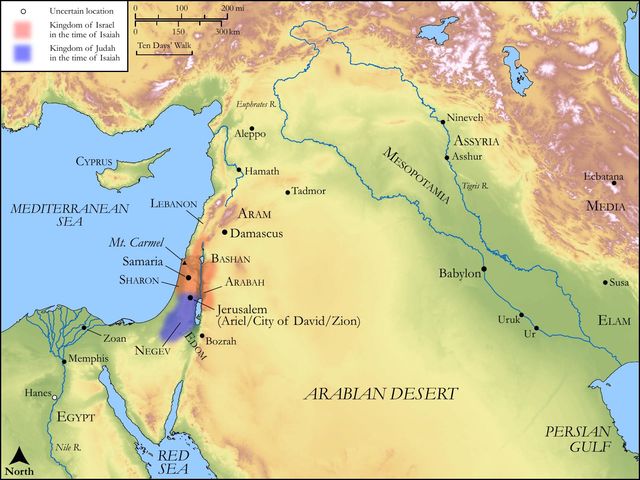
The powerful imagery in Isaiah 35:2 leverages the well-known geography and agricultural renown of ancient Israel to convey its profound message. Lebanon, celebrated for its towering cedars and majestic mountain ranges, symbolized strength, grandeur, and unparalleled natural beauty. Carmel, a fertile mountain range extending to the Mediterranean Sea, was renowned for its lush vegetation, vineyards, and agricultural abundance, representing prosperity and fruitfulness. Sharon, a coastal plain situated south of Carmel, was famous for its rich pastures, wildflowers, and fertile fields, signifying pastoral beauty and verdant productivity. For an audience intimately familiar with these iconic regions, the prophecy that a desolate land would be endowed with the "glory of Lebanon" and the "excellency of Carmel and Sharon" was a promise of unimaginable transformation. This message would have resonated deeply with a people who had experienced or were facing the desolation of war, exile, and national decline, offering a vibrant hope for a divinely orchestrated return to a land of surpassing beauty and abundance, far beyond any natural capacity.
Key Themes
ShowHideThis verse significantly contributes to several overarching themes pervasive throughout the book of Isaiah and broader biblical prophecy. A primary theme is Divine Transformation and Restoration, where God supernaturally intervenes to change barrenness into abundant life and beauty, symbolizing not only the physical renewal of the land but also the spiritual renewal of His people. This profound transformation is inextricably linked with Joy and Celebration, expressed through the land's "rejoicing" with "joy and singing," indicating an overwhelming and exuberant emotional response to God's redemptive work, a recurring motif in prophecies of restoration (e.g., Isaiah 55:12). Most importantly, the ultimate purpose and outcome of this glorious restoration is Divine Manifestation – "they shall see the glory of the LORD, and the excellency of our God." This emphasizes that the renewed creation serves as a tangible and undeniable testament to God's power, majesty, and inherent worth, leading to a deeper knowledge and experience of Him, a theme powerfully echoed in other prophetic visions of God's universal glory (e.g., Habakkuk 2:14).
Exposition and Analysis
ShowHideKey Word Analysis
ShowHideThis primitive root signifies "to break forth as a bud, i.e., bloom; generally, to spread; specifically, to fly (as extending the wings); figuratively, to flourish." In Isaiah 35:2, its usage emphasizes a spontaneous, vigorous, and abundant bursting forth of life and beauty, indicating a powerful and undeniable act of divine renewal that transforms barrenness into vibrant, flourishing growth.
This root means "to spin round (under the influence of any violent emotion), i.e., usually rejoice." It conveys a sense of exuberant, even ecstatic, joy and gladness. When personified and applied to the land, it highlights creation's overwhelming delight and celebratory response to God's restorative work, signifying a complete reversal of its former desolate state.
Derived from a root meaning "weight," this word figuratively denotes "splendor or copiousness; honour(-able)." In this verse, it refers to the majestic, inherent splendor and honor of God, which is manifested through the transformed creation. The "glory of Lebanon" and "excellency of Carmel and Sharon" are earthly representations of ultimate beauty and majesty that are "given" to the desolate land, but the ultimate "glory of the LORD" is the divine presence and power revealed through this miraculous renewal.
Verse Breakdown
ShowHide"It shall blossom abundantly, and rejoice even with joy and singing:"
This opening clause personifies the previously desolate land (referring to the "wilderness and the solitary place" from Isaiah 35:1). The Hebrew construction for "blossom abundantly" (פָּרֹחַ תִּפְרַח, pāroach tiphrach) employs an infinitive absolute before the finite verb, intensifying the action and emphasizing the certainty, profuseness, and sheer exuberance of the blooming. The land is not merely blooming, but bursting forth with life in an overwhelming display. This physical transformation is paralleled by an emotional one: the land will "rejoice" and express its gladness through "joy and singing." This vivid imagery conveys an overflowing, uncontainable delight, signifying a complete and radical reversal of its former state of desolation and sorrow into one of vibrant celebration.
"the glory of Lebanon shall be given unto it, the excellency of Carmel and Sharon,"
This clause specifies the nature and source of the promised transformation. The "glory of Lebanon" (renowned for its majestic cedars and rugged, awe-inspiring beauty) and the "excellency of Carmel and Sharon" (famed for their lush fertility, productive vineyards, and rich pastures) represent the pinnacle of natural beauty, richness, and abundance within ancient Israel. The prophecy declares that this unparalleled splendor will not merely be like these regions, but will be given to the previously barren land. This implies a divine impartation, a supernatural endowment that elevates the transformed land to a state of beauty and fruitfulness far surpassing its natural capacity, making it a veritable paradise through God's direct intervention.
"they shall see the glory of the LORD, and the excellency of our God."
This final clause reveals the ultimate purpose and profound outcome of the miraculous transformation. The "they" refers to the inhabitants, or perhaps all who witness this extraordinary divine work. The physical beauty and abundance of the land are not ends in themselves, but serve as a tangible, undeniable manifestation of God's character and presence. To "see the glory of the LORD" and "the excellency of our God" signifies a profound revelation and experiential encounter with God's majestic presence, omnipotent power, and inherent worth. The striking parallelism between "glory of the LORD" and "excellency of our God" emphasizes the singular, magnificent nature of the divine being revealed. The restored creation becomes a visible, living testament to the Creator's power, goodness, and faithfulness, leading to a deeper knowledge, worship, and awe of Him.
Literary Devices
ShowHideIsaiah 35:2 is richly imbued with Personification, a literary device that attributes human emotions and actions to the inanimate land. The wilderness is vividly depicted as "rejoicing" and expressing "joy and singing," powerfully portraying its transformation from a desolate, lifeless place to one vibrant with sentient life and exuberant celebration. This device underscores the profound and almost conscious response of creation to God's redemptive work. The verse also employs Metaphor and Simile through its comparison of the future splendor of the barren land to the renowned beauty and fertility of Lebanon, Carmel, and Sharon. While not explicitly using "like" or "as," the declaration "the glory of Lebanon shall be given unto it" functions as a powerful metaphor, implying that the transformed land will embody the ultimate beauty and fruitfulness these regions represent. Furthermore, Hyperbole is evident in phrases like "blossom abundantly" and "joy and singing," which suggest an overflowing, intense, and almost unimaginable degree of flourishing and gladness, emphasizing the miraculous nature of God's intervention. Finally, the verse features striking Parallelism, particularly in the concluding phrase "the glory of the LORD, and the excellency of our God." This synonymous parallelism reinforces the singular, magnificent nature of the divine revelation, emphasizing that the transformed land serves as a clear and unmistakable testament to the majesty, inherent worth, and supreme power of the one true God.
Theological and Thematic Connections
ShowHideIsaiah 35:2 speaks profoundly to God's sovereign power to transform and restore, not only physical landscapes but also human lives and spiritual conditions. It underscores the biblical theme that God delights in bringing life out of death, beauty out of ashes, and joy out of sorrow. This transformation is not merely aesthetic; it is fundamentally revelatory, designed to showcase the inherent glory and excellency of God Himself. The flourishing of the land serves as a tangible sign of God's presence and blessing, inviting all who witness it to a deeper encounter with the Creator. This vision of a restored creation, filled with divine glory, points forward to the ultimate renewal promised in eschatological hope, where God's presence will fully permeate all things, culminating in a new heaven and new earth.
Reflection and Application
ShowHideIsaiah 35:2 offers a powerful and enduring message of hope for all who face periods of desolation, barrenness, or despair, whether literally or spiritually. It reminds us that God's transformative power is not limited by the severity of our circumstances. Just as He can cause a desert to blossom with unparalleled beauty and joy, He can bring life, healing, and purpose to the most desolate areas of our lives, our communities, and our world. This verse calls us to trust in God's redemptive plan, even when current realities seem bleak. It encourages us to look beyond immediate difficulties to the glorious future God promises, a future where His presence is fully revealed and brings ultimate joy and flourishing. Our response to this hope should be one of anticipation and active participation, living in a way that reflects the glory we anticipate and becoming agents of His transformative love in a broken world.
Questions for Reflection
ShowHideFAQ
ShowHideWhat is the significance of Lebanon, Carmel, and Sharon in this verse?
ShowHideLebanon, Carmel, and Sharon were renowned regions in ancient Israel, each symbolizing peak natural beauty, fertility, and abundance. Lebanon was known for its majestic cedars and mountainous grandeur, representing strength and splendor. Carmel, a fertile mountain range extending to the Mediterranean, was famous for its lush vegetation and vineyards, signifying fruitfulness and abundance. Sharon, a coastal plain, was celebrated for its rich pastures and wildflowers, epitomizing pastoral beauty and richness. By stating that the transformed wilderness would receive the "glory of Lebanon" and the "excellency of Carmel and Sharon," Isaiah uses these well-known symbols to convey that the future restoration will be of an unparalleled, almost paradisiacal, beauty and fruitfulness, far exceeding any natural state. It emphasizes the supernatural quality of God's restorative work and the divine impartation of splendor that will mark the new creation, making it a visible testament to God's power and goodness, as seen in the broader context of Isaiah 35.
Christ-Centered Fulfillment
ShowHideIsaiah 35:2 finds its ultimate and most profound fulfillment in Jesus Christ, who is the very embodiment of God's glory and the divine agent of true transformation. The physical blossoming of the wilderness foreshadows the spiritual new creation that occurs in Christ. Through His life, atoning death, and glorious resurrection, Jesus brings life to those who are spiritually dead, transforming barren hearts, once desolate with sin, into fertile ground for God's Spirit. Where there was the desolation of sin and despair, He offers abundant grace and overflowing joy, as He declared, "I have come that they may have life, and have it to the full" (John 10:10). The "joy and singing" anticipated in the prophecy is realized in the Holy Spirit, who fills believers with "joy in the Holy Spirit" (Romans 14:17). Furthermore, the "glory of Lebanon" and "excellency of Carmel and Sharon" point to the transcendent beauty and perfection found in Christ, who is "the radiance of God's glory and the exact representation of his being" (Hebrews 1:3). Ultimately, the promise that "they shall see the glory of the LORD, and the excellency of our God" is supremely fulfilled in Christ, for "no one has ever seen God, but the one and only Son, who is himself God and is in closest relationship with the Father, has made him known" (John 1:18). Through Christ, we not only witness God's glory but are also transformed into His likeness, reflecting that glory "with ever-increasing glory" (2 Corinthians 3:18), anticipating the day when the knowledge of the glory of the LORD will indeed cover the earth as the waters cover the sea (Habakkuk 2:14).