


Isaiah 29:15
Bible text: King James Version (1769 Blayney text) · Public domain
Bible text: Berean Standard Bible · Public domain
Bible text: American Standard Version (1901) · Public domain
Bible text: World English Bible, Messianic edition · Public domain
Bible text: Geneva Bible (1599) · Public domain
Bible text: Young's Literal Translation · Public domain
- הוֹיHowoe to!H1945PrtParticle Interjection
- הַמַּעֲמִיקִיםha·ma·'a·mi·Kimthose [who] make deepH6009Art ¦ V-Hiphil-Prtcpl-mpVerb Hiphil Participle Plural Masculine Absoluteהַthoseמַּעֲמִיקִים[who] make deep
- מֵיהוָהme·Yah·wehfrom YahwehH3068Prep-m ¦ N-properNoun Proper TitleמֵfromיהוָהYahweh
- לַסְתִּרlas·Tirto hideH5641Prep-l ¦ V-Hiphil-InfVerb Hiphil Infinitive Constructלַtoסְתִּרhide
- עֵצָה'e·Tzaha planH6098N-fsNoun Singular Feminine Absolute
- וְהָיָהve·ha·Yahand it isH1961Conj-w ¦ V-Qal-ConsecPerf-3msVerb Qal Consecutive Perfect 3rd Singular Masculineוְandהָיָהit is
- בְמַחְשָׁךְve·mach·shoKhin a dark placeH4285Prep-b ¦ N-msNoun Singular Masculine Absoluteבְinמַחְשָׁךְa dark place
- מַעֲשֵׂיהֶםma·'a·sei·Hemtheir deedsH4639N-mpc ¦ 3mpNoun Plural Masculine Constructמַעֲשֵׂיdeedsהֶםtheir
- וַיֹּאמְרוּvai·Yo·me·Ruand they have saidH559Conj-w ¦ V-Qal-ConsecImperf-3mpVerb Qal Consecutive Imperfect 3rd Plural Masculineוַandיֹּאמְרוּthey have said
- מִיmiwho?H4310InterrogPronoun Interrogative
- רֹאֵנוּro·'E·nu[is] seeing usH7200V-Qal-Prtcpl-ms ¦ 1cpVerb Qal Participle Singular Masculine Constructרֹאֵ[is] seeingנוּus
- וּמִיu·Miand who?H4310Conj-w ¦ InterrogPronoun Interrogativeוּandמִיwho?
- יוֹדְעֵנוּyod·'E·nu[is] perceiving usH3045V-Qal-Prtcpl-ms ¦ 1cpVerb Qal Participle Singular Masculine Constructיוֹדְעֵ[is] perceivingנוּus
English is a literal word-by-word gloss of the Hebrew, not the KJV's wording. Why?
This is the original text the KJV's translators worked from — each Hebrew word with its own literal English meaning in this verse, prepared by scholars at Tyndale House, Cambridge. The KJV translates whole sentences, not word by word, so its wording differs: one Hebrew word can become several English words, and the KJV may choose “the LORD” where the gloss reads “Yahweh”. Both are faithful — they answer different questions. For the KJV's own rendering, switch to the KJV text.
Details
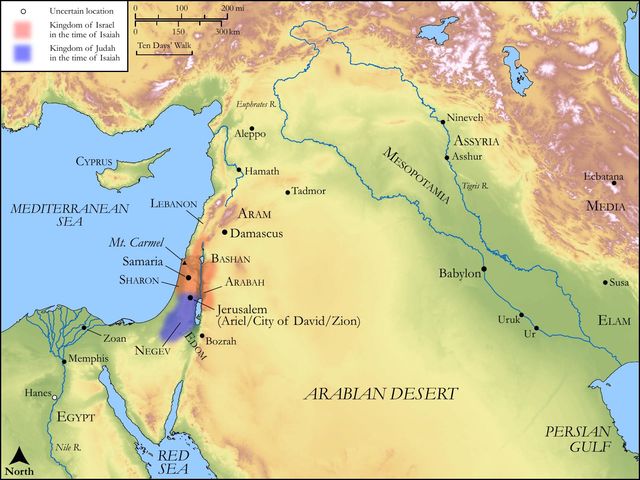
See on the biblical-era map
Study this verse
Public-domain commentary
Matthew Henry
From his Commentary on the Whole Bible. Henry comments on passages, not single verses — this entry covers Isaiah 29:9–16. His three-level outline is real structure in the source text, so it is rendered as structure.
Here, I. The prophet stands amazed at the stupidity of the greatest part of the Jewish nation. They had Levites, who taught the good knowledge of the Lord and had encouragement from Hezekiah in doing so, Ch2 30:22. They had prophets, who brought them messages immediately from God, and signified to them what were the causes and what would be the effects of God's displeasure against them. Now, one would think, surely this great nation, that has all the advantages of divine revelation, is a wise and understanding people, Deu 4:6. But, alas! it was quite otherwise, Isa 29:9. The prophet addresses himself to the sober thinking part of them, calling upon them to be affected with the general carelessness of their neighbours. It may be read, "They delay, they put off, their repentance, but wonder you that they should be so sottish. They sport themselves with their own deceivings; they riot and revel; but do you cry out, lament their folly, cry to God by prayer for them. The more insensible they are of the hand of God gone out against them the more do you lay to heart these things." Note, The security of sinners in their sinful way is just matter of lamentation and wonder to all serious people, who should think themselves concerned to pray for those that do not pray for themselves. But what is the matter? What are we thus to wonder at? 1. We may well wonder that the generality of the people should be so sottish and brutish, and so infatuated, as if they were intoxicated: They are drunken, but not with wine (not with wine only, though with that they were often drunk), and they erred through wine, Isa 28:7. They were drunk with the love of pleasures, with prejudices against religion, and with the corrupt principles they had imbibed. Like drunken men, they know not what they do or say, nor whither they go. They are not sensible of the divine rebukes they are under. They have beaten me, and I felt it not, says the drunkard, Pro 23:35. God speaks to them once, yea, twice; but, like men drunk, they perceive it not, they understand it not, but forget the law. They stagger in their counsels, are unstable and unsteady, and stumble at every thing that lies in their way. There is such a thing as spiritual drunkenness. 2. It is yet more strange that God himself should have poured out upon them a spirit of deep sleep, and closed their eyes (Isa 29:10), that he who bids them awake and open their eyes should yet lay them to sleep and shut their eyes; but it is in a way of righteous judgment, to punish them for their loving darkness rather than light, their loving sleep. When God by his prophets called them they said, Yet a little sleep, a little slumber; and therefore he gave them up to strong delusions, and said, Sleep on now. This is applied to the unbelieving Jews, who rejected the gospel of Christ, and were justly hardened in their infidelity, till wrath came upon them to the uttermost. Rom 11:8, God has given them the spirit of slumber. And we have reason to fear it is the woeful case of many who live in the midst of gospel light. 3. It is very sad that this should be the case with those who were their prophets, and rulers, and seers, that those who should have been their guides were themselves blindfolded; and it is easy to tell what the fatal consequences will be when the blind lead the blind. This was fulfilled when, in the latter days of the Jewish church, the chief priests, and the scribes, and the elders of the people, were the great opposers of Christ and his gospel, and brought themselves under a judicial infatuation. 4. The sad effect of this was that all the means of conviction, knowledge, and grace, which they enjoyed, were ineffectual, and did not answer the end (Isa 29:11, Isa 29:12): "The vision of all the prophets, true and false, has become to you as the words of a book, or letter, that is sealed up; you cannot discern the truth of the real visions and the falsehood of the pretended ones." Or, every vision particularly that this prophet had seen for them, and published to them, had become unintelligible; they had it among them, but were never the wiser for it, any more than a man (though a good scholar) is for a book delivered to him sealed up, and which he must not open the seals of. He sees it is a book, and that is all; he knows nothing of what is in it. So they knew that what Isaiah said was a vision and prophecy, but the meaning of it was hidden from them; it was only a sound of words to them, which they were not at all alarmed by, nor affected with; it answered not the intention, for it made no impression at all upon them. Neither the learned nor the unlearned were the better for all the messages God sent them by his servants the prophets, nor desired to be so. The ordinary sort of people excused themselves from regarding what the prophets said with their want of learning and a liberal education, as if they were not concerned to know and do the will of God because they were not bred scholars: It is nothing to me, I am not learned. Those of better rank pretended that the prophet had a peculiar way of speaking, which was obscure to them, and which, though they were men of letters, they had not been used to; and, Si non vis intelligi, debes negligi - If you wish not to be understood, you deserve to be neglected. Both these are groundless pretences; for God's prophets have been no unfaithful debtors either to the wise or to the unwise, Rom 1:14. Or we may take it thus: - The book of prophecy was given to them sealed, so that they could not read it, as a just judgment upon them; because it had often been delivered to them unsealed, and they would not take pains to learn the language of it, and then made excuse for their not reading it because they were not learned. But observe, "The vision has become thus to you whose minds the god of this world has blinded; but it is not so in itself, it is not so to all; the same vision which to you is a savour of death unto death to others is and shall be a savour of life unto life." Knowledge is easy to him that understands.
II.The prophet, in God's name, threatens those that were formal and hypocritical in their exercises of devotion, Isa 29:13, Isa 29:14. Observe here,
1.The sin that is here charged upon them - dissembling with God in their religious performances, Isa 29:13. He that knows the heart, and cannot be imposed upon with shows and pretences, charges it upon them, whether their hearts condemn them for it or no. He that is greater than the heart, and knows all things, knows that though they draw nigh to him with their mouth, and honour him with their lips, yet they are not sincere worshippers. To worship God is to make our approaches to him, and to present our adorations of him; it is to draw nigh to him as those that have business with him, with an intention therein to honour him. This we are to do with our mouth and our lips, in speaking of him and in speaking to him; we must render to him the calves of our lips, Hos 14:2. And, if the heart be full of his love and fear, out of the abundance of that the mouth will speak. But there are many whose religion is lip-labour only. They say that which expresses an approach to God and an adoration of him, but it is only from the teeth outward. For,
(1.)They do not apply their minds to the service. When they pretend to be speaking to God they are thinking of a thousand impertinences: The have removed their hearts far from me, that they might not be employed in prayer, nor come within reach of the word. When work was to be done for God, which required the heart, that was sent out of the way on purpose, with the fool's eyes, into the ends of the earth.
(2.)They do not make the word of God the rule of their worship, nor his will their reason: Their fear towards me is taught by the precept of men. They worshipped the God of Israel, not according to his appointment, but their own inventions, the directions of their false prophets or their idolatrous kings, or the usages of the nations that were round about them. The tradition of the elders was of more value and validity with them than the laws which God commanded Moses. Or, if they did worship God in a way conformable to his institution in the days of Hezekiah, a great reformer, they had more an eye to the precept of the king than to God's command. This our Saviour applies to the Jews in his time, who were formal in their devotions and wedded to their own inventions, and pronounces concerning them that in vain they did worship God, Mat 15:8, Mat 15:9.
2.It is a spiritual judgment with which God threatens to punish them for their spiritual wickedness (Isa 29:14): I will proceed to do a marvellous work. They did one strange thing; they removed all sincerity from their hearts. Now God will go on and do another; he will remove all sagacity from their heads. The wisdom of their wise men shall perish. They played the hypocrite, and thought to put a cheat upon God, and now they are left to themselves to play the fool, and not only to put a cheat upon themselves, but to be easily cheated by all about them. Those that make religion no more than a pretence, to serve a turn, are out in their politics; and it is just with God to deprive those of their understanding who part with their uprightness. This was fulfilled in the wretched infatuation which the Jewish nation were manifestly under, after they had rejected the gospel of Christ; they removed their hearts far from God, and therefore God justly removed wisdom far from them, and hid from their eyes the things that belonged even to their temporal peace. This is a marvelous work; it is surprising, it is astonishing, that wise men should of a sudden lose their wisdom and be given up to strong delusions. Judgments on the mind, though least taken notice of, are to be most wondered at.
III.He shows the folly of those that though to act separately and secretly from God, and were carrying on designs independent upon God and which they projected to conceal from his all-seeing eye. Here we have,
1.Their politics described (Isa 29:15): They seek deep to hide their counsel from the Lord, that he may not know either what they do or what they design; they say, "Who sees us? No man, and therefore not God himself." The consultations they had about their own safety they kept to themselves, and never asked God's advice concerning them; nay, they knew they were displeasing to him, but thought they could conceal them from him; and, if he did not know them, he could not baffle and defeat them. See what foolish fruitless pains sinners take in their sinful ways; they seek deep, they sink deep, to hide their counsel from the Lord, who sits in heaven and laughs at them. Note, A practical disbelief of God's omniscience is at the bottom both of the carnal worships and of the carnal confidences of hypocrites; Psa 94:7; Eze 8:12; Eze 9:9.
2.The absurdity of their politics demonstrated (Isa 29:16): "Surely your turning of things upside down thus, your various projects, turning your affairs this and that way to make them shape as you would have them - or rather your inverting the order of things, and thinking to make God's providence give attendance to your projects, and that God must know no more than you think fit, which is perfectly turning things upside down and beginning at the wrong end - shall be esteemed as the potter's clay. God will turn and manage you, and all your counsels, with as much ease and as absolute a power as the potter forms and fashions his clay." See how God despises, and therefore what little reason we have to dread, those contrivances of men that are carried on without God, particularly those against him.
(1.)Those that think to hide their counsels from God do in effect deny him to be their Creator. It is as if the work should say of him that made it, "He made me not; I made myself." If God made us, he certainly knows us as the Psalmist shows, (Psa 139:1, Psa 139:13-16); so that those who say that he does not see them might as well say that he did not make them. Much of the wickedness of the wicked arises from this, they forget that God formed them, Deu 32:18. Or,
(2.)Which comes to the same thing, they deny him to be a wise Creator: The thing framed saith of him that framed it, He had no understanding; for if he had understanding to make us so curiously, especially to make us intelligent beings and to put understanding into the inward part (Job 38:36), no doubt he has understanding to know us and all we say and do. As those that quarrel with God, so those that think to conceal themselves from him, do in effect charge him with folly; but he that formed the eye, shall he not see? Psa 94:9.
Historical interpretation
Two Centuries of Reception
2 surviving comments on this verse. Each one is dated, so this reads as a timeline rather than a list.
Select a marker to jump to its quote. Markers stagger vertically where authors wrote within a few decades of each other.
He forgets the words of the Educator: “Every man that passes beyond his own bed, who says in his soul: Who sees me? Darkness compasses me about, and the walls cover me, and no man sees my sins: whom do I fear? The Most High will not remember.” Such a person is most wretched, for he fears only the human observation and thinks to hide from God. “He does not know,” Scripture continues, “that the eyes of the Most High Lord are far brighter than the sun, beholding all the ways of men and looking into the most hidden parts.” Another time, the Educator gives warning through Isaiah: “Woe to you who made your counsel in secret and say: Who sees us?” A light that can be seen by the senses may pass unnoticed, but that which illumines the mind cannot be ignored.
(Vers. 15, 16.) Woe to those who are deep in heart, who hide their counsel from the Lord. Their works are in darkness, and they say: Who sees us, and who knows us? Your thoughts are perverse, as if clay should think against the potter, and the work should say to its maker: You did not make me; and the thing formed should say to its former: You do not understand. LXX: Woe to those who make deep counsel, and their works are in darkness, and they say: Who sees us? Who will know us and what we do? Will we not be regarded as clay in the potter's hands? Will the work say to the one who made it, 'You did not make me wisely,' or the creation to its creator, 'You did not make me?' Against those of whom he spoke before, I will destroy the wisdom of the wise and reject the intelligence of the intelligent. As the prophet writes, I will hide it away. Now even the word of God is directed towards those who are wise in themselves and prudent in his sight. From these things it can be very well understood: 'They have failed examining with examination' (Psalm 63); since it is written about the wisdom of God: 'For if someone is perfect in the sons of men without your wisdom, he will be considered as nothing' (Wisdom 3). Those who believe that God is unaware of their plans because their works are in darkness, say: 'Who sees us? And who knows us?' But this is also said by the wise of this world, and by the masters of heretics, and by the Pharisees of the Jews, because no one understands them; not remembering what is said to God: 'Darkness will not obscure you, and the night will be illuminated like day' (Psalm 138, 12). And as his darkness, so also his light (Genesis 3). Deceived by this error, Adam and Eve, upon hearing the sound of footsteps walking in the paradise of God, hid themselves under the tree in which was the knowledge of good and evil; and Cain also, saying: If you cast me out today from your presence, I will hide (Genesis 4, 14), thought foolishly that God was ignorant. And through Amos, it is said of the wicked and sinners: If they hide themselves from my eyes in the depths of the sea: there I will command the serpent and it will bite them (Amos 9, 3). Even if someone is wise and of fervent genius, if they do not have God's wisdom and teaching, let us say of them: Unless the Lord builds the house, those who build it labor in vain. Unless the Lord guards the city, the one who guards it stays awake in vain (Psalm 127:1-2). Let us make ourselves similar: Unless the Lord assists knowledge, the one who thinks themselves wise labors in vain. Unless the Lord keeps our hearts in every watch, the one who thinks it can be kept by their diligence stays awake in vain. He says, 'Your thinking is perverse, to think that the Creator does not know what He has made, and that the Creator is ignorant of His creation, as if clay were to say to the potter and to its maker, 'You did not make me,' or 'You did not make me well,' and you do not understand your own creation.' The Apostle also uses this testimony in other words to refute the slander of humans and to discuss the deep knowledge of God with the Romans: 'O man, who are you to answer back to God?' Does the thing formed say to its creator, 'Why have you made me like this?' Does not the potter have power over the clay, to make one vessel for honor and another for dishonor? (Romans 9:20-21). In all these things, the following rule is always to be observed: that the Evangelists and Apostles may without harm to the sense be translated into Greek from Hebrew, as it seems best to them.
Continue studying Isaiah 29:15 across the web’s major study libraries — every link below opens this exact verse, chapter, or book on the destination site.
Read & Compare
 BibleGatewayThis verse in more than 200 translations and 70 languages.
 Bible.comThe YouVersion reader — hundreds of translations, reading plans, and highlights.
 ESV.orgCrossway's official English Standard Version reader.
 NET BibleThe NET translation with 60,000+ translators' notes on every rendering decision.
 STEP BibleTyndale House's free study tool — original text, vocabulary, and scholarly resources.
 BibliaLogos Bible Software's free web reader.
 USCCBThe New American Bible (Revised Edition) with the U.S. bishops' study notes.
Commentaries
 BibleHub CommentariesDozens of classic commentaries on this verse, gathered on one page.
 StudyLightMore than 100 commentary sets — the largest collection on the web.
 BibleRefPlain-English commentary on what this verse means, verse by verse.
 Enduring WordDavid Guzik's free commentary on this chapter, widely used by Bible teachers.
 Bible Study ToolsVerse commentary alongside Greek and Hebrew study aids.
Original Language & Research
- BibleHub InterlinearThe verse word by word — original language, transliteration, and English.
- BibleHub LexiconEvery word's original-language definition and Strong's entry.
 Blue Letter BibleDeep-study tools — Strong's numbers, concordance, and word studies.
 SefariaThe Hebrew text with Rashi and centuries of Jewish commentary.
Sermons, Hymns & Audio


TrulyRandomVerse is not affiliated with these sites and doesn’t control their content. They’re linked because they’re genuinely useful.
Summary
Isaiah 29:15 delivers a potent prophetic indictment, pronouncing a "woe" upon those who meticulously plot and act in secrecy, believing their hidden intentions and dark deeds can escape the divine scrutiny of the Lord. This verse exposes the profound spiritual arrogance and self-deception of individuals who operate under the delusion that their clandestine activities are beyond God's reach and knowledge. It serves as a stark warning against the futility of attempting to outwit or evade the omniscient and omnipresent God, highlighting the inevitable judgment that awaits those who persist in such rebellious hypocrisy.
Context
ShowHideLiterary Context
Isaiah 29 is a complex oracle primarily directed at Jerusalem, metaphorically named "Ariel," signifying both "lion of God" (a strong, perhaps fierce, city) and "altar hearth of God" (a place of sacrifice and judgment). The chapter begins with a lament over Jerusalem's impending siege and distress, yet it also holds a promise of future deliverance and restoration for a faithful remnant. Prior to verse 15, Isaiah has sharply criticized the spiritual apathy and moral blindness of the people. He describes them as being in a deep spiritual slumber, their prophets and seers covered as if by a veil, unable to discern divine truth, as seen in Isaiah 29:10. This spiritual dullness extends to their worship, which is depicted as mere lip service, a ritualistic performance devoid of genuine heart devotion, where their reverence for God is merely "taught by the precept of men" rather than arising from a transformed heart, as highlighted in Isaiah 29:13. Verse 15 builds directly upon this critique, escalating from outward hypocrisy to the deeper, more insidious sin of actively seeking to conceal their rebellious counsel and works from the Lord. This reveals a profound internal corruption and a dangerous self-sufficiency that denies God's inherent nature.
Historical & Cultural Context
The prophecies of Isaiah are deeply rooted in the tumultuous political and spiritual landscape of Judah during the 8th century BCE, particularly under the looming threat of the Assyrian Empire. During this period, Judah's leaders and populace frequently wavered between trusting in the Lord for protection and seeking pragmatic, often deceptive, alliances with powerful foreign nations like Egypt to secure their safety. Such political maneuvering often involved secret negotiations, clandestine agreements, and deceptive practices, all driven by a fundamental lack of faith in God's sovereign protection. Culturally, the concept of a deity who observes and knows all was not unique to Israel among the nations. However, Isaiah's emphasis is on the singular and unique omniscience of Yahweh, the covenant God of Israel, who not only sees outward actions but discerns the deepest intentions, motives, and hidden counsels of the human heart. The "darkness" mentioned in the verse is not merely a physical absence of light but serves as a powerful metaphor for moral obscurity, secrecy, and evil, standing in stark contrast to God's inherent light, truth, and righteousness.
Key Themes
ShowHideThis verse powerfully contributes to several overarching themes prevalent in Isaiah and the broader prophetic literature. A primary theme is Divine Omniscience versus Human Folly, which underscores the absolute futility and ultimate absurdity of attempting to conceal anything from an all-knowing God. The rhetorical questions posed by the people, "Who seeth us? and who knoweth us?", vividly illustrate a profound spiritual arrogance and a dangerous delusion that one can escape divine scrutiny and accountability. This concept is consistently challenged throughout Scripture, powerfully articulated in passages such as Psalm 139:7-12. Another crucial theme is Hypocrisy and Deception, where the "counsel" and "works" being "in the dark" signify actions characterized by secrecy, deceit, and often malevolent intent. These are deeds that cannot withstand the light of truth or divine judgment, implying their inherently corrupt nature. Finally, the opening "Woe unto them" introduces the theme of Certainty of Judgment, serving as a solemn prophetic declaration of impending condemnation and underscoring the severe consequences for those who persist in spiritual blindness and open rebellion against God, foolishly believing their secret sins will remain unpunished.
Exposition and Analysis
ShowHideKey Word Analysis
ShowHideThis interjection, a prolonged form akin to "oh!" or "alas!", functions as a strong exclamation of lament or, more commonly in prophetic contexts, a solemn threat. It is not merely an expression of sorrow but a divine pronouncement of impending judgment or misfortune upon those who engage in the described behavior. In this verse, it underscores the severe, certain consequences awaiting those who attempt to deceive or evade the omniscient God, signaling a declaration of doom.
Derived from a primitive root meaning "to be (causatively, make) deep or profound," this verb in its participial form describes individuals who make deep their efforts. It implies a deliberate, concerted, and cunning attempt to conceal their plans or intentions. This is not a casual or accidental hiding but a meticulous, profound, and often elaborate endeavor to bury their intentions beyond detection, highlighting the depth of their rebellion, their spiritual arrogance, and their calculated defiance of God's knowledge.
This primitive root is exceptionally rich in its semantic range, encompassing far more than mere intellectual apprehension. It signifies experiential knowledge, intimate acquaintance, recognition, discernment, and even care. When the people defiantly ask, "Who knoweth us?", they are not merely questioning God's intellectual awareness of their actions but challenging His profound, intimate understanding of their hidden motives, secret deeds, and the very core of their being. The profound irony lies in the fact that God's knowledge is not superficial but extends to the deepest recesses of their hearts, making their question a testament to their profound self-deception.
Verse Breakdown
ShowHide"Woe unto them that seek deep to hide their counsel from the LORD,"
This opening clause establishes a tone of severe divine condemnation. The phrase "seek deep to hide" vividly emphasizes the deliberate, profound, and often elaborate effort made by these individuals to conceal their "counsel" (Hebrew: ʻêtsâh, meaning advice, plan, or purpose). They actively strive to keep their strategic designs and decisions secret from Yahweh (the LORD, H3068), presuming they can outwit, evade, or simply be unknown to His divine knowledge. This reveals a fundamental, dangerous misunderstanding of God's inherent nature and His absolute sovereignty.
"and their works are in the dark,"
This clause further elaborates on the nature of their hidden "counsel." Their "works" (Hebrew: maʻăseh, meaning actions, deeds, or transactions) are conducted "in the dark" (Hebrew: machshâk, referring to darkness or a dark place). Darkness here functions as a potent metaphor for secrecy, moral corruption, and evil. It strongly implies that their deeds are inherently wicked, deceptive, or shameful, unable to withstand the revealing light of truth or the piercing scrutiny of God's righteous judgment.
"and they say, Who seeth us? and who knoweth us?"
These two rhetorical questions expose the profound spiritual blindness, arrogance, and dangerous delusion of the people. They are not genuine inquiries but rather defiant assertions of their perceived invisibility and unknowability to God. "Who seeth us?" (Hebrew: râʼâh, to see, observe, perceive) challenges God's visual perception and awareness, while "who knoweth us?" (Hebrew: yâdaʻ, to know intimately, discern, be acquainted with) challenges His comprehensive and intimate understanding of their deepest motives, hidden actions, and secret thoughts. This demonstrates a complete denial of God's omniscience and omnipresence, revealing a perilous self-deception that inevitably invites divine judgment.
Literary Devices
ShowHideIsaiah 29:15 is replete with powerful literary devices that amplify its message of divine condemnation and human folly. The verse opens with "Woe," a classic example of Prophetic Lament/Indictment, immediately establishing a tone of severe judgment and impending doom. The phrase "seek deep to hide their counsel" employs vivid Imagery of profound and deliberate concealment, suggesting a meticulous, almost physical act of burying intentions and plans beneath layers of secrecy. The subsequent description, "their works are in the dark," utilizes potent Symbolism, where "dark" represents not merely the absence of light but profound moral obscurity, wickedness, and the clandestine nature of their actions, contrasting sharply with God's inherent light and truth. The verse culminates in two rhetorical Questions: "Who seeth us? and who knoweth us?" These are not posed to elicit information but to highlight the profound folly, spiritual arrogance, and self-delusion of those who utter them, emphasizing the absolute certainty of God's omniscience. This strategic use of Irony is particularly biting, as the very act of asking these questions underscores their ignorance of the God who truly sees and knows all, rendering their attempts at concealment utterly futile.
Theological and Thematic Connections
ShowHideIsaiah 29:15 stands as a profound theological statement on the intrinsic nature of God and the inherent folly of human rebellion. It unequivocally affirms God's omniscience and omnipresence, declaring with absolute certainty that no human plan, however deeply laid, cunningly conceived, or secretly executed, can ever escape His divine gaze and comprehensive knowledge. This truth is foundational to biblical theology, serving as a constant reminder to humanity that true wisdom and security lie not in attempting to hide from God, but rather in living transparently and humbly before Him. The verse powerfully highlights the inherent sinfulness of a heart that actively seeks to operate outside of God's light, revealing a spirit of defiant independence and dangerous self-deception that inevitably leads to divine judgment. It underscores that genuine faith involves a humble recognition of God's absolute sovereignty and an unreserved submission to His all-knowing presence, challenging believers to cultivate lives of integrity and authenticity, knowing that all things are laid bare before the eyes of Him to whom we must ultimately give account.
Reflection and Application
ShowHideIsaiah 29:15 serves as a piercing mirror, inviting us to examine the hidden corners of our own hearts, motives, and actions. In a world often characterized by secrecy, manipulation, and the pursuit of hidden agendas, this verse stands as a potent and sobering reminder that we cannot deceive the One who truly matters – the God who sees and knows all. It challenges us to honestly consider whether our "counsel" and "works" are truly aligned with God's revealed will, or if we are, perhaps subtly or overtly, attempting to operate "in the dark," believing ourselves exempt from divine scrutiny. For the genuine believer, this verse issues a profound call for a life of radical transparency, integrity, and authenticity before God and others. It reminds us that true freedom and profound peace come not from concealing our flaws, failures, or hidden sins, but rather from humbly confessing them before the Lord and courageously walking in His illuminating light. Ultimately, it encourages us to cultivate a heart that desires to be fully known by God, trusting implicitly in His boundless grace and transformative power rather than relying on our own cunning or deceptive strategies.
Questions for Reflection
ShowHideFAQ
ShowHideWhat does "seek deep to hide their counsel" mean in this context?
ShowHideThis phrase refers to a deliberate, profound, and often cunning effort to conceal plans, intentions, or decisions from God. It implies a meticulous and strategic attempt to keep their actions and motives secret, believing they can outwit or evade divine scrutiny. It's not a casual oversight or an accidental hiding, but an active, rebellious endeavor to operate independently of God's knowledge and authority, demonstrating a deep-seated spiritual arrogance.
Why do the people ask, "Who seeth us? and who knoweth us?"
ShowHideThese rhetorical questions reveal the profound spiritual arrogance, self-deception, and dangerous delusion of the people. They are not genuinely seeking information from an unknown source but are defiantly expressing their belief that their hidden actions and motives are beyond detection by God or anyone else. It's a manifestation of their spiritual blindness and a dangerous underestimation of God's omnipresence and omniscience, demonstrating a heart that has turned away from acknowledging His absolute authority and all-seeing eye, much like the wicked who say, "God has forgotten; he hides his face; he will never see it."
How does this verse relate to God's omniscience?
ShowHideIsaiah 29:15 is a powerful and unequivocal affirmation of God's omniscience, which is His divine attribute of being all-knowing. The "woe" is pronounced precisely because the people deny, ignore, or actively work against this fundamental truth about God's nature. Despite their meticulous attempts to "hide their counsel" and perform "works in the dark," the verse declares that God sees and knows everything. It serves as a stark reminder that nothing is hidden from God; all things are exposed and laid bare before Him, as powerfully affirmed in Hebrews 4:13.
Christ-Centered Fulfillment
ShowHideWhile Isaiah 29:15 pronounces a severe "woe" against those who futilely attempt to hide their counsel and works from God, it simultaneously foreshadows the perfect transparency and ultimate revelation found in the person and work of Jesus Christ. Humanity's inherent inclination to hide, a direct consequence of the Fall when Adam and Eve sought to conceal themselves from God in the garden (Genesis 3:8), finds its ultimate antithesis in Christ. Jesus perfectly embodied truth and light, consistently exposing the hypocrisy of those who sought to hide their true motives, particularly the religious leaders of His day, who performed their "works" for outward show rather than genuine devotion (Matthew 6:1-6). He boldly declared Himself to be the "light of the world," stating that "whoever follows me will not walk in darkness, but will have the light of life" (John 8:12). Through His atoning work on the cross, Christ provides the only way for humanity to step out of the darkness of hidden sin and into the glorious, liberating light of God's grace. In Christ, there is no longer a need to conceal, but rather a profound invitation to be fully known, fully forgiven, and fully transformed. The Cross reveals God's perfect knowledge of our deepest, most hidden sins, yet simultaneously offers the perfect solution, allowing us to approach God not in deceit or fear, but with boldness and truth, in the freedom found in the Lamb of God who takes away the sin of the world.