


Hosea 13:2
Bible text: King James Version (1769 Blayney text) · Public domain
Bible text: King James Version with Strong's numbers · Public domain
Bible text: Berean Standard Bible · Public domain
Bible text: American Standard Version (1901) · Public domain
Bible text: World English Bible, Messianic edition · Public domain
Bible text: Geneva Bible (1599) · Public domain
Bible text: Young's Literal Translation · Public domain
- וְעַתָּהve·'a·Tahand nowH6258Conj-w ¦ AdvAdverbוְandעַתָּהnow
- יוֹסִפוּyo·Si·futhey increaseH3254V-Hiphil-Imperf-3mpVerb Hiphil Imperfect 3rd Plural Masculine
- לַחֲטֹאla·cha·To'to sinH2398Prep-l ¦ V-Qal-InfVerb Qal Infinitive Constructלַtoחֲטֹאsin
- וַיַּעְשׂוּvai·ya'·Suand they have madeH6213Conj-w ¦ V-Qal-ConsecImperf-3mpVerb Qal Consecutive Imperfect 3rd Plural Masculineוַandיַּעְשׂוּthey have made
- לָהֶםla·Hemfor themselvesPrep-l ¦ 3mpSuffix Personal 3rd Plural Masculineלָforהֶםthemselves
- מַסֵּכָהma·se·Khaha molten imageH4541N-fsNoun Singular Feminine Absolute
- מִכַּסְפָּםmi·kas·Pamfrom their silverH3701Prep-m ¦ N-msc ¦ 3mpNoun Singular Masculine Constructמִfromכַּסְפָּsilverםtheir
- כִּתְבוּנָםkit·vu·Namaccording to their skillH8394Prep-k ¦ N-fsc ¦ 3mpNoun Singular Feminine Constructכִּaccording toתְבוּנָskillםtheir
- עֲצַבִּים'a·tza·BimidolsH6091N-mpNoun Plural Masculine Absolute
- מַעֲשֵׂהma·'a·Seh[is the] work ofH4639N-mscNoun Singular Masculine Construct
- חָרָשִׁיםcha·ra·ShimcraftsmenH2796N-mpNoun Plural Masculine Absolute
- כֻּלֹּהku·Lohall of itH3605N-msc ¦ 3msNoun Singular Masculine Constructכֻּלֹּall ofהit
- לָהֶםla·Hemof themPrep-l ¦ 3mpSuffix Personal 3rd Plural Masculineלָofהֶםthem
- הֵםhemtheyH1992Pro-3mpPronoun Personal 3rd Plural Masculine
- אֹמְרִים'o·me·Rim[are] sayingH559V-Qal-Prtcpl-mpVerb Qal Participle Plural Masculine Absolute
- זֹבְחֵיzoe·Chei[those who] offer sacrifice ofH2076V-Qal-Prtcpl-mpVerb Qal Participle Plural Masculine Construct
- אָדָם'a·DamhumankindH120N-msNoun Singular Masculine Absolute
- עֲגָלִים'a·ga·LimcalvesH5695N-mpNoun Plural Masculine Absolute
- יִשָּׁקוּןyi·sha·Kunthey will kiss !H5401V-Qal-Imperf-3mp ¦ SfxVerb Qal Imperfect 3rd Plural Masculineיִשָּׁקוּthey will kissן!
English is a literal word-by-word gloss of the Hebrew, not the KJV's wording. Why?
This is the original text the KJV's translators worked from — each Hebrew word with its own literal English meaning in this verse, prepared by scholars at Tyndale House, Cambridge. The KJV translates whole sentences, not word by word, so its wording differs: one Hebrew word can become several English words, and the KJV may choose “the LORD” where the gloss reads “Yahweh”. Both are faithful — they answer different questions. For the KJV's own rendering, switch to the KJV text.
Details
See on the biblical-era map
Study this verse
Public-domain commentary
Matthew Henry
From his Commentary on the Whole Bible. Henry comments on passages, not single verses — this entry covers Hosea 13:1–4. His two-level outline is real structure in the source text, so it is rendered as structure.
Idolatry was the sin that did most easily beset the Jewish nation till after the captivity; the ten tribes from the first were guilty of it, but especially after the days of Ahab; and this is the sin which, in these verses, they are charged with. Observe,
I.The provision that God made to prevent their falling into idolatry.
This we have, Hos 13:4. God did what was fit to be done to keep them close to himself; what could have been done more?
1.He made known himself to them as the Lord their God, and took them to be his people in a peculiar manner. Both by his word and by his works all along from the land of Egypt he declared, I am the Lord thy God; he told them so from heaven at Mount Sinai, that he was the Lord and their God, who brought them out of the land of Egypt. This he continued both to declare and to prove to them by his prophets and by his providences.
2.He gave them a law forbidding them to worship any other: "Thou shalt know no God but me; not only shalt not own and worship any other, but shalt not acquaint thyself with any other, nor make the rites and usages of the Gentiles familiar to thee." Note, It is a happy ignorance not to know that which we ought not to meddle with. We find those commended who have not known the depths of Satan.
3.He gave them a good reason for it: There is no saviour besides me. Whatever we take for our God we expect to have for our saviour, to make us happy here and hereafter; as, where we have protection, we owe allegiance, so where we have salvation, and hope for it, we owe adoration.
II.The honour that Ephraim had, while he kept himself clear from idolatry (Hos 13:1):
While Ephraim spoke trembling, or with trembling (that is, as Dr. Pocock understands it, while he behaved himself towards God as his father Jacob did, with weeping and supplications, and spoke not proudly and insolently against God and his prophets, while he kept up a holy fear of God, and worshipped him in that fear) so long he exalted himself in Israel, that is, he was very considerable among the tribes and made a figure. Jeroboam, who was of that tribe, exalted himself and his family. When he spoke there was trembling, that is, all about him stood in awe of him; so some understand it. Note, Those that humble themselves, especially that humble themselves before God, shall be exalted. When people speak with modesty and jealousy of themselves, with a diffidence of their own judgment and a deference to others, they exalt themselves, they gain a reputation. But as for Ephraim he soon lost himself: When he offended in Baal he died, that is, he lost his reputation, his honour soon dwindled and sunk, and was laid in the dust. Baal is here put for all idolatry; when Ephraim forsook God, and took to worship images, the state received its death's wound and was never good for any thing afterwards. Note, Deserting God is the death of any person or persons.
III.The lamentable growth of idolatry among them (Hos 13:2):
Now they sin more and more. When once he began to offend in Baal the ice was broken, and he grew worse and worse, coveted more idols, doted more upon those he had, and grew more ridiculous in the worship of them. Note, The way of idolatry, as of other sins, is down-hill, and men cannot easily stop themselves. It is the sad case of all those who have forsaken God that they sin yet more and more. Let us trace them in their apostasy.
1.They made themselves molten images, proud to have gods that they could cast into what mould they pleased; probably these were the calves in miniature like the silver shrines for Diana; the zealots for the calf-worship carried about with them, it may be, images of the gods they worshipped, made on purpose for themselves.
2.They made them of their silver, and then doubted not of their property in them, when they purchased them with their own money or made them of their own plate melted down for that purpose. See what cost they put themselves to in the service of their idols, which they honoured with the best they had, and therefore made their molten images of silver.
3.They made them according to their own understanding, according to their own fancy. They consulted with themselves what shape they should make their idol in, and made it accordingly, a god according to the best of their judgment. Or according to their own likeness, in the form of a man. And, when they made their idols men like themselves in shape, they made themselves stocks and stones like them in reality; for those that make them are like unto them, and so is every one that trusts in them.
4.It was all the work of the craftsmen. Their images did not pretend, like that of Diana, to have come down from Jupiter (Act 19:35); no, perhaps the workmen stamped their names upon them, such an idol was such a man's work. See Hos 8:6; Isa 44:9, etc.
5.Though they were thus the work of their hands, yet they were the beloved of their souls; for they say of them, Let the men that sacrifice kiss the calves. Either the priests called upon the people thus to pay their homage, or the people, who were not allowed to come so near themselves, called upon the men that sacrificed, the priests that attended for them, to kiss the calves in their name and stead, because they could not reach to do it, so very fond were they of paying their utmost respects to such an idol as they were taught to have a veneration for. Though they were calves, yet, if they were gods, the worshippers, by themselves or their proxies, thus made their honours to them. They kissed the calves, in token of the adoration of them, affection for them, and allegiance to them, as theirs. Thus we are directed to kiss the Son, to take him for our Lord and our God.
IV.Threatenings of wrath for their idolatry.
The Lord, whose name is Jealous, is a jealous God, and will not give his glory to another; and therefore all those that worship images shall be confounded, especially if Ephraim do it, Psa 97:7. Because they are so fond of kissing their calves, therefore God will give them sensible convictions of their folly, Hos 13:3. They promise themselves a great del of safety and satisfaction in the worship of their idols, and that their prosperity will thereby be established; but God tells them that they shall be disappointed, and driven away in their wickedness. This is illustrated by four similitudes: - They shall be,
1.As the morning cloud, which promises showers of rain to the parched ground.
2.As the early dew, which seems to be an earnest of such showers. But both pass away, and the day proves as dry and hot as ever; so fleet and transitory their profession of piety was (Hos 6:4), and so had they disappointed God's expectation from them, and therefore it is just that so their prosperity should be, and so their expectations from their idols should be disappointed, and so will all theirs be that make an idol of this world.
3.They are as the chaff, light and worthless; and they shall be driven as the chaff is driven with the whirlwind out of the floor, Psa 1:4; Psa 25:5; Job 21:18. Nay,
4.They are as the smoke, noisome and offensive (see Isa 65:5), and they shall be driven away as the smoke out of the chimneys, that is soon dissipated and disappears, Psa 68:2. Note, No solid lasting comfort is to be expected any where but in God.
Historical interpretation
Historical reception
1 surviving comment on this verse from the historical church.
"While Ephraim was speaking, horror invaded Israel, and he sinned in Baal and died, and now they have added more sins. They made an idol for themselves from their silver, resembling the idols made by craftsmen. They say of them, “Let them sacrifice humans and adore calves.”" LXX: "According to the word, Ephraim received justification in Israel, and placed it by Baal, and he died, and now he has appointed himself to sin, and they have made for themselves a molten image of gold and silver, according to the likeness of idols, the work of craftsmen complete; they say to them, 'Offer men, for the calves have failed.'" Because the seventy [translators] interpreted "Slay ye men, for the calves are failing," and we render [it], "Slay ye men that worship calves"; and Symmachus has interpreted [it], "Slay ye, men, [those] who worship calves"; so that the sense is, "Slay, that is, sacrifice to the idols, and thus let the distinction follow: rational animals, [namely] men, worship calves; mute animals [worship calves]." Therefore, when Ephraim spoke, that is, Jeroboam son of Nabat from the tribe of Ephraim, horror invaded Israel, that is, the ten tribes. For "horror," which is said in Hebrew Rathath, which Symmachus and Theodotion interpreted as "tremor"; while wishing for something, they translated δικαιώματα, that is, "justifications," in the LXX. And so great a horror invaded Israel, that he sinned and offended God in Baal and died, losing him who said, "I am the life" (John XIV, 6). For every soul that sins shall die (Ezekiel 18). And the Apostle said: "But she that is a widow indeed, and desolate, let her trust in God, and continue in supplications and prayers night and day. For she that liveth in pleasures is dead while she is living" (I Timothy 5:5-6). And not only was he dead in Baal, but he also added sins to sins, so that from the silver which the Lord had given, idols were made, the work of men's hands. To which they themselves say, that is, the priests and princes who ought to have taught the people good things: "Slay men, worshipping calves"; which is also said in the Psalms: "They sacrificed their sons and daughters to devils" (Psalm 106:37). Because we translate it according to Symmachus and Theodotion, as "adoring;" but Aquila interpreted it as καταφιλοῦντες, that is, "kissing." For those who adore, they are accustomed to kiss their own hand; which Job denies having done, saying: "If I have kissed my hand with my mouth and my right hand the envious man hath deserved it" (Job 31:27-28). But, as some believe, if demons speak to the people saying, "Sacrifice men, for the calves have failed," then their appetite is revealed of those who are nourished by the blood of the victims and the smoke of the holocausts because as the victims run short, they desire to have men sacrificed to them, not only with their death but also with their blood. But, as the heretics spoke, rather the leaders of the heretics, that is, Ephraim, horror and trembling invaded the unhappy people; and they fell into idols, which they fashioned from their own hearts, and died with the people they seduced. And it is not enough to have fallen, but they also turn the tongue that they received to sing to God into images of idols, and compose dogma with eloquent words similar to truth, which is nothing else but an invention of human wickedness. And they command their disciples, that they themselves also sacrifice men, that is, are furious against the Church of God, and lead them to heretics, and kill those whom they have deceived; And what follows, "The calves have failed," has this meaning: Do not seek those whom you have deceived from the Gentiles, who are called brute animals; but seize them, sacrifice them, who are established in the Church, are considered in the name of Christ, and are called men.
Continue studying Hosea 13:2 across the web’s major study libraries — every link below opens this exact verse, chapter, or book on the destination site.
Read & Compare
 BibleGatewayThis verse in more than 200 translations and 70 languages.
 Bible.comThe YouVersion reader — hundreds of translations, reading plans, and highlights.
 ESV.orgCrossway's official English Standard Version reader.
 NET BibleThe NET translation with 60,000+ translators' notes on every rendering decision.
 STEP BibleTyndale House's free study tool — original text, vocabulary, and scholarly resources.
 BibliaLogos Bible Software's free web reader.
 USCCBThe New American Bible (Revised Edition) with the U.S. bishops' study notes.
Commentaries
 BibleHub CommentariesDozens of classic commentaries on this verse, gathered on one page.
 StudyLightMore than 100 commentary sets — the largest collection on the web.
 BibleRefPlain-English commentary on what this verse means, verse by verse.
 Enduring WordDavid Guzik's free commentary on this chapter, widely used by Bible teachers.
 Bible Study ToolsVerse commentary alongside Greek and Hebrew study aids.
Original Language & Research
- BibleHub InterlinearThe verse word by word — original language, transliteration, and English.
- BibleHub LexiconEvery word's original-language definition and Strong's entry.
 Blue Letter BibleDeep-study tools — Strong's numbers, concordance, and word studies.
 SefariaThe Hebrew text with Rashi and centuries of Jewish commentary.
Sermons, Hymns & Audio


TrulyRandomVerse is not affiliated with these sites and doesn’t control their content. They’re linked because they’re genuinely useful.
Summary
Hosea 13:2 vividly exposes the escalating spiritual rebellion of the Northern Kingdom of Israel (Ephraim), revealing their persistent and deepening sin through the widespread practice of idolatry. Despite God's covenant faithfulness and repeated warnings, the people continued to invent and worship deities of their own making, crafted from their precious silver and conceived by their own distorted understanding, culminating in the public act of homage to the golden calves established by Jeroboam. This verse underscores the profound human tendency to deviate from divine truth and create a religion that conforms to personal preferences rather than God's revealed will, leading to inevitable judgment.
Context
ShowHideLiterary Context
Hosea 13 is situated within the latter half of the book, where the prophet shifts from extended lament and pleading to stern pronouncements of judgment against Israel for its persistent apostasy. Chapters 11 and 12 recount God's tender, fatherly love for Israel from their infancy, contrasting it sharply with their ungrateful and rebellious nature. While God's compassion is evident in Hosea 11:8-9, chapter 13 intensifies the prophetic indictment, highlighting Israel's pride, their rejection of God as their true King, and the severe consequences that will follow their idolatry. This particular verse, Hosea 13:2, serves as a poignant summary of their spiritual decline, illustrating how their sin had become ingrained and progressive, moving them further away from the covenant relationship.
Historical & Cultural Context
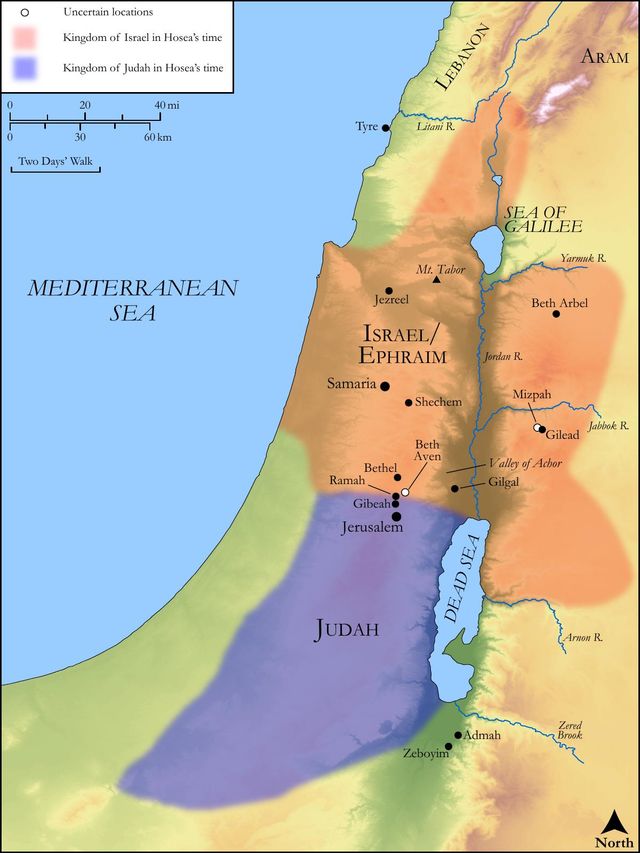
The "calves" mentioned in this verse directly refer to the golden calves set up by King Jeroboam I in Bethel and Dan shortly after the division of the kingdom (c. 931 BC). As recorded in 1 Kings 12:28-30, Jeroboam instituted this alternative worship system to prevent the northern tribes from returning to Jerusalem for worship, fearing their allegiance might shift back to the Davidic dynasty. These calves became the central objects of worship for the Northern Kingdom, embodying their national apostasy. The act of "kissing the calves" was a common gesture of homage and reverence in the ancient Near East, signifying devotion and submission to a deity or ruler. By performing this act, the Israelites were explicitly declaring their allegiance to these man-made idols over the one true God, Yahweh, who had delivered them from Egypt and established a covenant with them.
Key Themes
ShowHideThis verse powerfully contributes to several major themes woven throughout Hosea and the broader prophetic literature. Firstly, it underscores the theme of Progressive Sin and Apostasy. The phrase "more and more" indicates a continuous, escalating departure from God's commands, illustrating that Israel's unfaithfulness was not a momentary lapse but a persistent, deepening choice to rebel and embrace spiritual corruption. Secondly, the verse highlights Idolatry and Man-Made Religion. Israel's sin is concretely manifested in their creation of "molten images of their silver" and "idols according to their own understanding." This emphasizes the human-centric nature of their worship – gods crafted by human hands and conceived by human minds, standing in stark contrast to the living God who revealed Himself and created them. This self-devised religion, based on "their own understanding" rather than divine revelation, echoes the prophet Jeremiah's lament that God's people had forsaken Him, the fountain of living waters, for broken cisterns that can hold no water, as seen in Jeremiah 2:13. Finally, the verse speaks to the Rejection of True Worship and the Covenant. The act of "kissing the calves" signifies the complete devotion of the Israelites to these false gods, an act of explicit defiance against the God who had delivered them and established a covenant at Sinai, where the making of graven images was strictly forbidden, as outlined in Exodus 20:4.
Exposition and Analysis
ShowHideKey Word Analysis
ShowHideThis primitive root primarily means "to miss," as in missing a target. Figuratively and generally, it refers to "to sin," implying a deviation from a standard or a failure to meet an obligation. In Hosea 13:2, it signifies Israel's consistent and deliberate failure to adhere to the covenant requirements and their repeated transgression against God's revealed will, missing the mark of righteousness and faithfulness.
This primitive root means "to add or augment," often used adverbially to indicate continuation or increase. When combined with "sin," as here, it powerfully conveys the idea of a progressive, escalating, and persistent pattern of rebellion. Israel was not merely sinning, but actively adding to their sin, deepening their apostasy with each new act of idolatry.
This noun refers to "intelligence," "discretion," "reason," or "wisdom." In the context of "idols according to their own understanding," it highlights the human-centered origin of Israel's false worship. Their idols were not divinely revealed or commanded, but products of human intellect, reasoning, or even caprice, reflecting their own desires and distorted perceptions rather than God's truth. This underscores the dangerous autonomy of human thought when it deviates from divine revelation.
Verse Breakdown
ShowHide"And now they sin more and more,"
This opening clause emphasizes the continuous and escalating nature of Israel's transgression. The "now" (וְעַתָּה, wə‘attāh) marks a present reality of intensified rebellion, building upon past unfaithfulness. It suggests a spiritual decline that is not static but actively worsening, indicating a deep-seated and persistent rejection of God's ways.
"and have made them molten images of their silver,"
This specifies the primary form of their sin: idolatry. "Molten images" (מַסֵּכָה, massēkhāh) refers to idols cast from metal, often precious metals. The mention of "their silver" highlights the significant material resources and effort the Israelites invested in creating these false gods, demonstrating a profound misdirection of their wealth and devotion away from Yahweh.
"[and] idols according to their own understanding,"
This phrase further clarifies the nature of their idolatry, emphasizing its human origin. The idols were not merely physical objects but manifestations of human intellect and will ("their own understanding," תְּבוּנָה, təḇūnāh). This contrasts sharply with the worship of the true God, whose nature and commands are revealed, not invented, by humanity. It points to a self-devised religion that caters to human desires rather than divine truth.
"all of it the work of the craftsmen:"
This clause underscores the futility and absurdity of their worship. The objects of their devotion were undeniably "the work of the craftsmen" (מַעֲשֵׂה חָרָשׁ, ma‘ăśēh ḥārāš), highlighting their inanimate, powerless, and created nature. It serves as a stark reminder that these "gods" were products of human hands, utterly dependent on their makers, and therefore incapable of offering salvation, guidance, or power.
"they say of them, Let the men that sacrifice kiss the calves."
This final clause describes the specific act of worship and the public declaration of allegiance to these idols. "Kissing the calves" (יִשָּׁקוּ עֲגָלִים, yiššāqū ‘ăgālîm) was a common gesture of adoration and submission in the ancient Near East. This command, uttered by the people themselves, signifies their complete and willing devotion to the golden calves, which represented the national sin established by Jeroboam. It portrays a society that not only practiced idolatry but actively promoted and commanded it among its populace, cementing their rebellion against God.
Literary Devices
ShowHideHosea 13:2 employs several potent literary devices to convey its message of Israel's profound apostasy. Irony is prominent, as the very people whom God delivered and blessed now expend their precious silver and human ingenuity to create powerless idols, "the work of the craftsmen," to which they then offer homage. The created worships the creation, a stark reversal of divine order. Metonymy is also at play, where "silver" stands in for wealth and resources, highlighting the significant investment Israel made in their false worship. The phrase "according to their own understanding" functions as a form of Contrast, setting human wisdom and invention against divine revelation, emphasizing the self-serving nature of their chosen religion. Finally, the vivid imagery of "kiss the calves" is powerful Symbolism, representing not just a physical act but a complete spiritual surrender and devotion to false gods, embodying the nation's utter rejection of Yahweh.
Theological and Thematic Connections
ShowHideHosea 13:2 profoundly illustrates the insidious nature of idolatry, revealing it not merely as the worship of physical objects but as a fundamental rejection of God's sovereignty and a substitution of divine truth with human invention. The Israelites' sin was progressive, marked by a continuous departure from the covenant, reflecting a heart that increasingly chose self-will over divine obedience. This verse underscores the theological truth that true worship must stem from God's revelation, not human understanding or desire. When humanity attempts to create God in its own image or according to its own preferences, it inevitably leads to spiritual barrenness and judgment, as such "gods" are powerless and reflect only the limitations of their makers. This act of "kissing the calves" symbolizes the ultimate betrayal of the covenant, where the people offered their deepest devotion to that which could not save or sustain them, forsaking the living God for dead idols.
Reflection and Application
ShowHideHosea 13:2 serves as a timeless mirror reflecting the human heart's propensity for idolatry, even in the midst of divine grace. While modern expressions of idolatry may not involve physical calves, the core principle remains: anything that displaces God as the supreme object of our affection, trust, and devotion becomes an idol. This can manifest as the worship of wealth, career, personal image, relationships, pleasure, intellectual pursuits, or even our own opinions and understanding. The phrase "sin more and more" is a sobering reminder of how spiritual compromise can be a gradual, escalating process, leading us further away from God if left unchecked. This verse calls us to a rigorous self-examination, prompting us to identify any "molten images of our silver" – our most cherished resources, time, or talents – that we might be dedicating to pursuits other than God's glory. It challenges us to critically assess whether our faith is truly rooted in God's revealed truth or if we are crafting a "god according to our own understanding," one that fits comfortably into our preconceived notions rather than transforming us. Authentic worship demands our whole heart, directed solely to the one true God, lest we, like ancient Israel, find ourselves "kissing calves" in our own lives and facing the consequences of a divided heart.
Questions for Reflection
ShowHideFAQ
ShowHideWhy were calves specifically worshipped in Israel?
ShowHideThe worship of calves in Israel originated with King Jeroboam I, who, after the division of the kingdom, set up golden calves in Bethel and Dan (the northern and southern borders of his kingdom) as alternative worship centers to Jerusalem. This was a political move to prevent his people from returning to Jerusalem, which was the capital of the southern kingdom of Judah, for their religious festivals. While the Bible condemns this as idolatry, it's possible Jeroboam intended these calves to represent Yahweh, perhaps as pedestals for the invisible God (similar to the cherubim on the ark), or as a visible representation of His strength and fertility, drawing on ancient Near Eastern symbolism where bulls were associated with deities like Baal. However, regardless of the original intent, this practice quickly devolved into outright idolatry, leading the people away from the true worship of Yahweh and violating the second commandment against making graven images, as seen in Exodus 20:4.
What does "according to their own understanding" mean for our faith today?
ShowHideThe phrase "according to their own understanding" (Hebrew: tâbûwn) highlights that Israel's idolatry was not merely a passive acceptance of foreign customs but an active, intellectual choice to create a religious system that suited their own desires, reasoning, or convenience, rather than adhering to God's revealed truth. For believers today, this serves as a powerful warning against "self-made" religion or a faith shaped primarily by personal preferences, cultural trends, or human logic, rather than by the authoritative Word of God. It challenges us to ensure that our theological beliefs, moral convictions, and worship practices are grounded in divine revelation, not in what "makes sense" to us or what is comfortable. When we prioritize our own understanding over God's, we risk crafting a "god" that is merely a reflection of ourselves, rather than submitting to the true and living God as He has revealed Himself in Scripture and supremely in Jesus Christ. This can lead to a deceptive form of spiritual pride where our intellect becomes an idol, as warned against in Proverbs 3:5-6.
Christ-Centered Fulfillment
ShowHideHosea 13:2, with its stark portrayal of Israel's escalating idolatry and their creation of gods "according to their own understanding," finds its profound Christ-centered fulfillment in the person and work of Jesus Christ. Israel's sin was fundamentally a rejection of God's true revelation and a turning to human-made substitutes. In contrast, Jesus is the ultimate and perfect revelation of God, the very "image of the invisible God" (Colossians 1:15). Where Israel sought wisdom in their own understanding, Christ is "the wisdom of God" (1 Corinthians 1:24), offering truth that transcends human invention. The futility of worshipping idols "made of their silver" and "work of the craftsmen" is shattered by Christ, who, through His perfect life, atoning death, and glorious resurrection, accomplished what no human effort or idol ever could: reconciliation with God and victory over sin and death (Romans 5:8). The call to "kiss the calves" is replaced by the call to worship God "in spirit and truth" through Christ (John 4:23-24), recognizing Him as the one true object of devotion and the sole mediator between God and humanity (1 Timothy 2:5). Thus, Hosea's lament over Israel's idolatry ultimately points to the necessity of Christ, through whom humanity can be freed from the bondage of self-made religion and restored to genuine, Spirit-empowered worship of the living God.